Independent tourism and recreation in the city of Kortrijk Historical information about the city of Kortrijk K...
Kortrijk is one of the oldest cities in Belgium and an important historical center of Flanders. The city is located on the Lis River, near the French border. Its history dates back almost two thousand years and is associated with the Roman Empire, medieval trade, flax production and the famous Battle of the Golden Spurs of 1302. Today Kortrijk combines a well-preserved medieval heritage with modern architecture, design and cultural life.
Roman period
The history of Kortrijk begins in antiquity. On the site of the modern city there was a Gallo-Roman settlement Cortoriacum, which arose in the area of an important intersection of roads near the river Lis.
Through this territory passed Roman roads connecting various settlements of Gaul. Due to its favorable location, the settlement gradually turned into a noticeable commercial and transport point.
Archaeological finds indicate the presence of the Romans here already in the I century AD. In the late Roman period, the settlement continued to maintain strategic importance.
Early Middle Ages
After the collapse of the Western Roman Empire, the territory became part of the possessions of Frankish rulers. In the ninth century, the region was threatened by Viking raids.
To protect the settlement and surrounding lands, the counts of Flanders began to build fortifications. Gradually, Kortrijk turned from a small settlement into a fortified city.
Its position on the Lis River was particularly important: the river provided transport opportunities and facilitated trade.
Obtaining city rights
In 1190, Kortrijk received city rights from the Count of Flanders Philip of Alsace. This was an important stage in the development of the city.
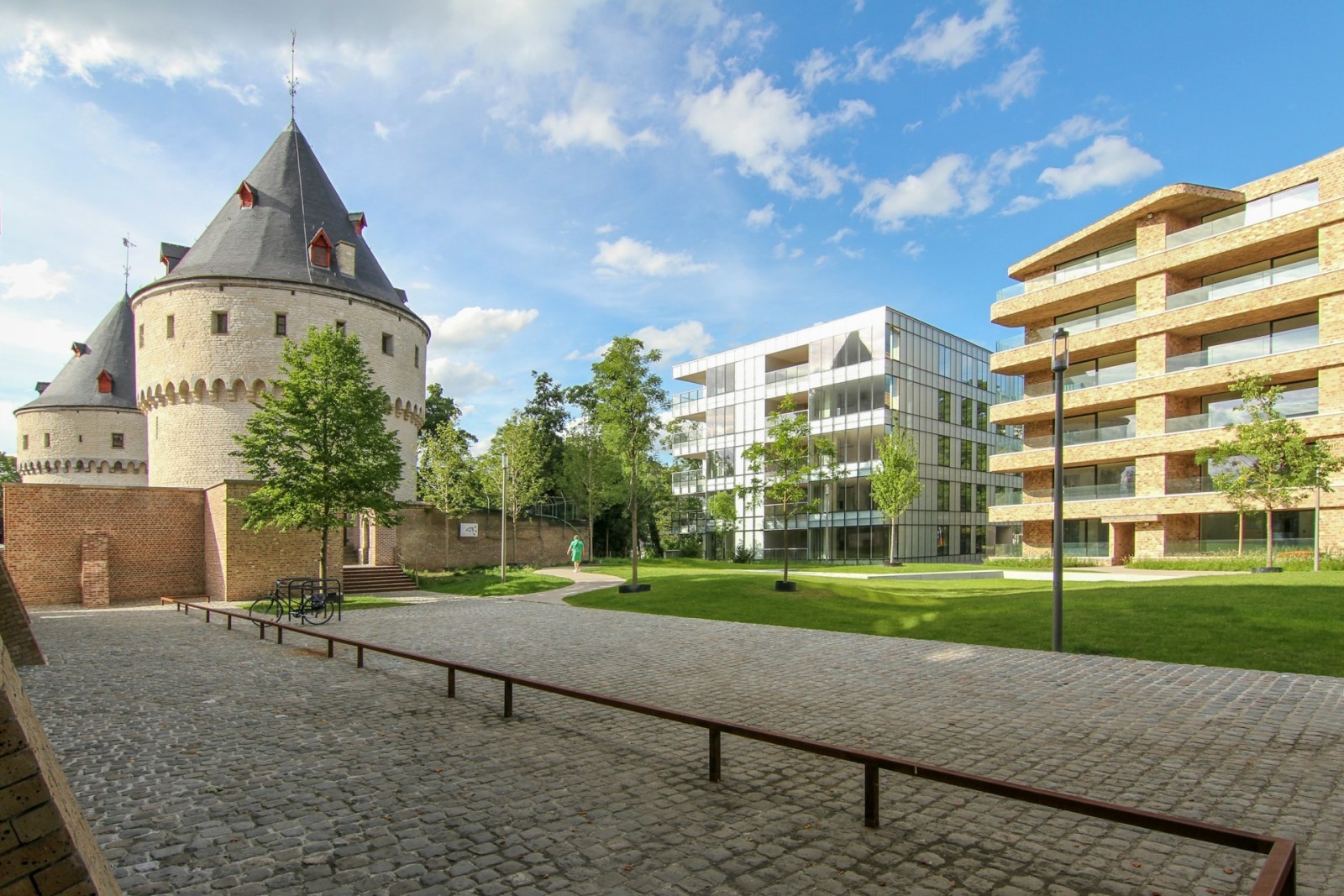
Population growth required the construction of defensive structures. Around Kortrijk appeared city walls, gates and towers. Some elements of medieval defense have survived to the present day, among them the famous Broeltorens.
At the same time, the city began to actively develop as a trade and craft center.
Trade and production development
In the XIII century, Kortrijk experienced an economic boom. Especially important were textile production, trade in wool and flax.
The city was in a very good position: Flanders was one of the most important commercial and industrial regions of medieval Europe, and Kortrijk was included in trade relations with other Flemish cities, France and England.
Subsequently, the production of linen fabrics became one of the main features of the local economy.
Flanders' struggle with France
In the XIII-XIV centuries, Flanders was at the center of the confrontation between the local Flemish rulers and the French crown.
The French kings sought to strengthen control over the wealthy Flanders, while the local cities and merchants tried to preserve their rights and economic independence.
Kortrijk was directly involved in this conflict.
Battle of the Golden Spurs - 1302
The most famous event in the history of the city took place on July 11, 1302.
At the walls of Kortrijk, the Battle of the Golden Spurs (Guldensporenslag) took place between the French knightly army and the Flemish forces, based on urban militias, artisans and infantrymen.
The French army counted on the superiority of heavy cavalry, but the Flemish were able to organize an effective defense and inflicted a heavy defeat on the French knights. After the battle, a large number of golden spurs of fallen French knights were collected on the battlefield – this gave the battle its famous name.
The victory became one of the most famous episodes of the medieval history of Flanders. Over time, the battle gained even more symbolic significance and came to be seen as an example of Flanders' resistance to French domination.
July 11th is the Flemish Community of Belgium. Historians note that the modern national significance of the battle was formed much later than the event itself.
XIV-XV centuries
After the battle, the city continued to develop, but Flanders remained the scene of political and military conflicts.
In the XIV century, Kortrijk repeatedly became a participant in uprisings and military clashes. The city was destroyed, but thanks to trade and textile production, it quickly recovered.
In the XV century Kortrijk was under the rule of the Dukes of Burgundy. This period was generally favorable for the economy of Flanders. The cities of the region actively traded, crafts, architecture and culture developed.
It was in the Middle Ages that a significant part of the historical appearance of Kortrijk was formed, which tourists can see today.
Beginage and religious life
An important role in the medieval history of the city was played by the religious complex Beginage of St. Elizabeth, founded in 1238.
Beginks were women who lived in a religious community but did not necessarily become nuns. In Kortrijk, a small independent quarter was formed with residential houses, a chapel and an inner courtyard.
Beginage has survived to this day and since 1998 is included in the UNESCO World Heritage List.
XVI century - religious conflicts
The sixteenth century was a difficult period for Kortrijk. The Reformation led to serious religious and political conflicts.
Flanders became the scene of a confrontation between Catholics and Protestants, and then part of a large-scale uprising of the Netherlands against Spanish rule.
Military actions, political instability and religious conflicts have adversely affected the trade and prosperity of the city. The economy was in crisis and the population was shrinking.
XVII-XVIII centuries
In the XVII-XVIII centuries Kortrijk repeatedly found himself in the zone of conflicts between European powers.
French troops occupied the city several times. During the reign of Louis XIV, Cortrijk was captured by the French five times in about six decades.
Urban fortifications gradually lost their military importance, and some defensive structures were destroyed.
After the Treaty of Utrecht in 1713, Kortrijk came under Austrian Habsburg rule.
The French Revolution and the Napoleonic Era
At the end of the eighteenth century, the French Revolution changed the political map of Europe.
Flanders was annexed by France, and Kortrijk became part of the French administrative system. The city was undergoing political and social changes associated with revolutionary changes.
After the defeat of Napoleon and the Congress of Vienna, the territory became part of the United Kingdom of the Netherlands, and after the Belgian Revolution of 1830, Kortrijk became part of an independent Belgium.
XIX century - industrial upsurge
The nineteenth century was a new period of economic development.
Linen industry, textile production and trade developed especially rapidly. Kortrijk has become one of the important flax processing centers.
The Lis River played a huge role in this industry. Its waters were used in flax processing processes, and the river itself provided transportation of raw materials and finished products.
By the middle of the XIX century, the population of the city increased significantly and amounted to about 18 thousand people.
The industrial revolution gradually changed the urban appearance: factories, railway infrastructure, new working quarters appeared.
Railroad and modernization
The development of railway communication was the most important event of the XIX century. Kortrijk gained closer ties with other Belgian cities and neighboring France.
This significantly accelerated trade and allowed local businesses to expand markets.
The city gradually transformed from a medieval trading center into a modern industrial city.
First World War
During the First World War, Kortrijk was in a combat zone.
In 1917, the city was heavily bombed. The following year it was liberated by British forces during the Allied offensive.
The military actions caused significant damage to infrastructure and historical buildings.
Interwar period
After the First World War, Kortrijk gradually recovered.
Textile enterprises continued to operate, trade, transport and industry developed. The city gradually modernized, although its economy remained heavily dependent on textile manufacturing.
World War II
During World War II, Kortrijk was under German occupation.
The city was of strategic importance due to the railway tracks used by German troops. Therefore, Kortrijk became the target of numerous Allied air attacks.
The bombing of 21 July 1944 was particularly devastating. More than 5,000 bombs were dropped on the city, severely damaging the historic center. Many buildings in the central square and the old railway station were destroyed.
After the liberation, the restoration of the city began.
Post-war development
After 1945, Kortrijk gradually restored the economy and urban infrastructure.
The textile industry remained the backbone of the local economy for a long time, but over time its importance began to decline due to international competition and changes in European industry.
The city began to actively develop services, trade, education, design, culture and modern technologies.
Cortrike in the Modern Era
In the XXI century, the city has preserved its historical heritage, but at the same time became a modern regional center.
Special attention is paid to the restoration of the historical center, the improvement of the shores of the Fox, the development of museums, cultural spaces and modern architecture.
Today, the tourist image of Kortrijk is built around a combination of medieval history and modern urban culture. The official tourist portal emphasizes this combination: historical heritage is adjacent to modern architecture, design, restaurants, cultural venues and events.
Kortrijk today
Modern Kortrijk is a city where in a relatively small area you can see traces of different historical epochs.
Here are preserved medieval Beginage, Brula towers, bell tower, historic town hall, churches and ancient squares, and nearby are modern buildings, designer spaces and reconstructed areas near the river Lis.
A special place is occupied by the memory of the battle of the Golden Spurs of 1302. The modern tourist is dedicated to the multimedia historical project “1302”, which tells about the events of the battle and its significance for the history of Flanders.
1. Medieval Historical Center
The main reason to visit Kortrijk is a compact historical center that is convenient to explore on foot. Here are the Great Market Square, the town hall, the bell tower, churches, ancient streets and preserved elements of medieval fortifications.
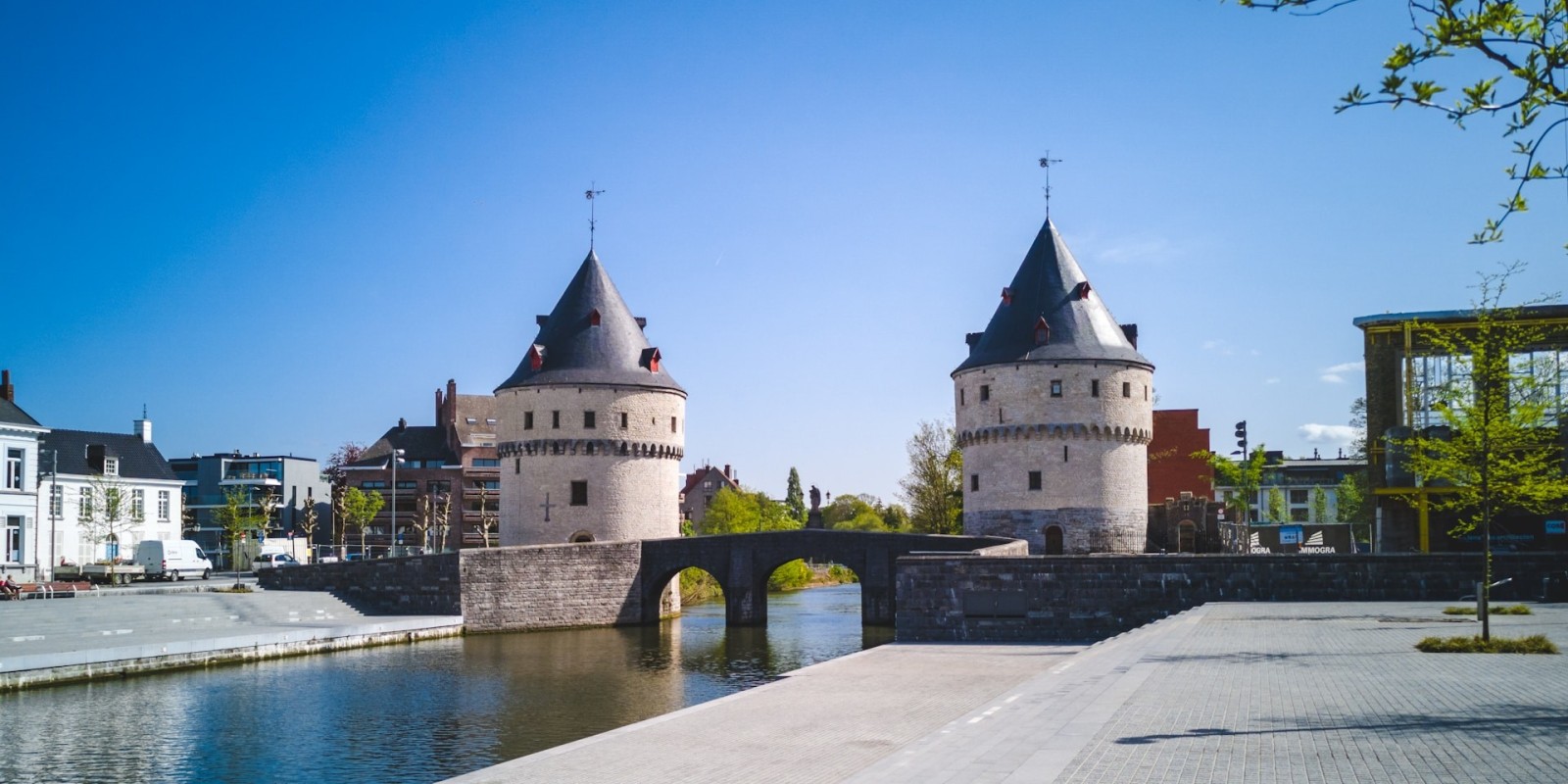
Especially impressive are the Broeltorens, two medieval towers on the banks of the Lis River, which have become one of the main symbols of the city.
2. Place Grote-Marct
Grote Markt is the central square of Kortrijk, around which historical buildings, cafes and restaurants are concentrated.
Here is the famous bell tower of Kortrijk (Belfry), which is part of the UNESCO World Heritage Site. The tower has a carillon of 48 bells.
This is one of the best places to start exploring the city.
3. beginage
Begijnhof is one of the most atmospheric corners of Kortrijk. It was founded in 1238 and is included in the UNESCO World Heritage List.
Small white houses, quiet courtyards, chapel and green spaces create a completely different atmosphere compared to the lively center.
For tourists, this is a particularly attractive place for leisurely walks and photos.
4. River Fox
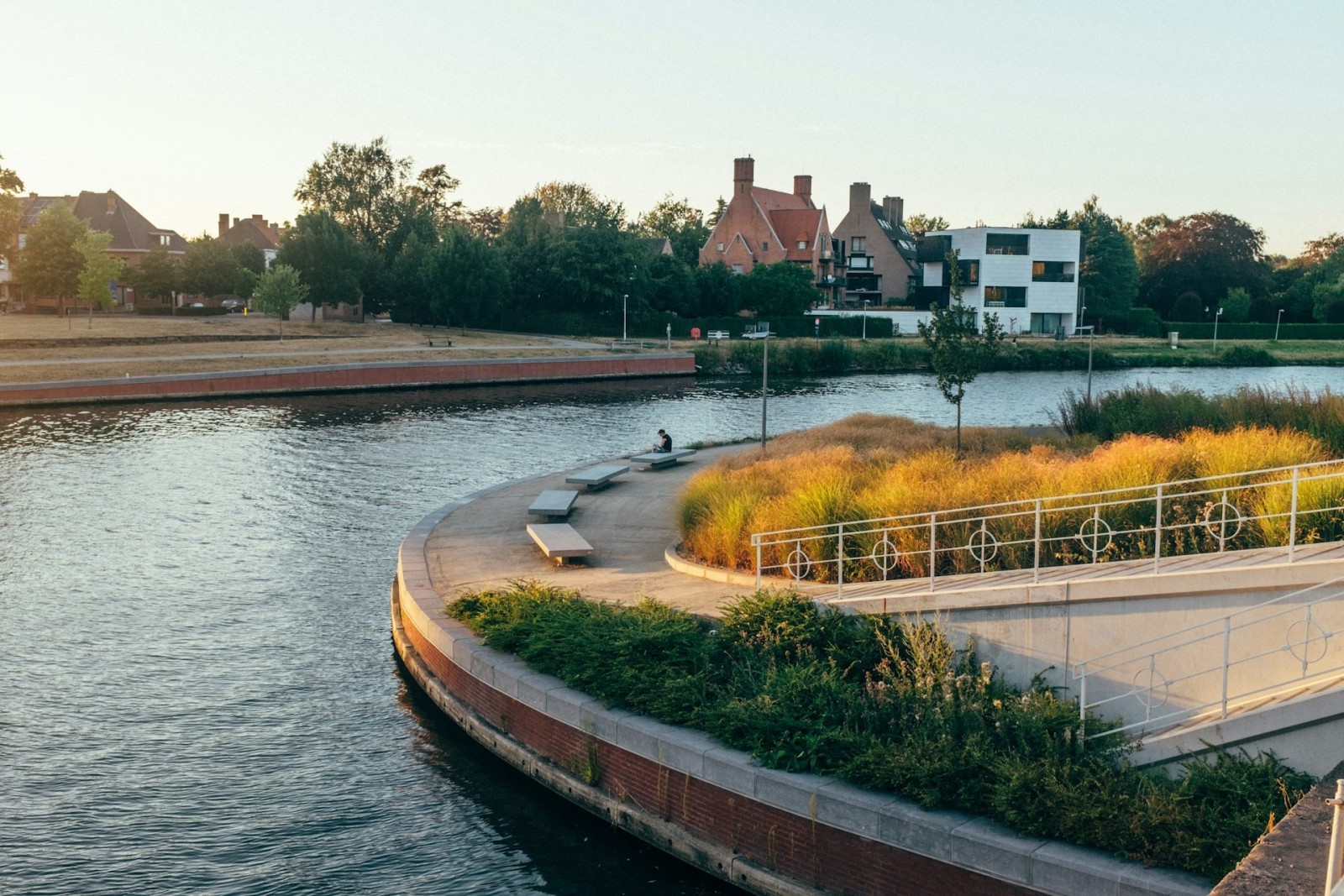
The Leie River is an important part of the cityscape. Its embankments were landscaped and today are a popular holiday destination.
Here you can walk, sit on the terraces of cafes, take pictures of the Brula Towers or go for a walk on the water. Kayaks, SUP and other water activities are also available.
5. Buda Island
Buda Island is located between the sleeves of the Fox and is a modern cultural quarter.
Here are creative spaces, the Budascoop cinema, exhibition venues and objects of modern culture. On the shore there are places for recreation, so the area is especially pleasant in the warm season.
6. Museum of Flanders History and Battle of 1302
Kortrijk is famous for the Battle of the Golden Spurs of 1302, which became one of the most important events in the medieval history of Flanders.
The interactive museum Kortrijk 1302 uses multimedia technologies to tell about the battle, its participants and the significance of this event for the history of Flanders.
For history lovers, this is one of the most interesting sights of the city.
7. Texture Textile Museum
Kortrijk is historically associated with the production of linen and textiles. In the Texture Museum, you can learn how flax cultivation and processing influenced the development of the entire region.
The museum is especially interesting for those who want to see not only traditional sights, but also to understand the economic history of Flanders.
8. Modern art and design
Kortrijk is not only a medieval city. Design, modern art and creative industries are actively developing here.
The city is officially positioned as a UNESCO City of Design, so modern architecture and design spaces are an important part of its tourist image.
9. gastronomy
Kortrijk is well suited for gastronomic travel. The center has restaurants, cafes, coffee shops, bars and establishments with street food.
The local Belgian beer deserves special attention. In the vicinity of the city there are breweries where you can get acquainted with local varieties and traditions of Belgian brewing.
10. Cycling travel
Kortrijk and its surroundings are convenient for cycling. Tourist routes run along the Lis, through historic areas and the countryside.
The bicycle allows you to combine the tour of the city with a trip through the Flemish landscapes. The official tourist portal separately offers cycling routes around Kortrijk.
1. High-level hotels – 4 stars and above
Hotel Damier is a historic four-star hotel on the main square of Grote Markt. This is one of the most famous hotels in the city, whose history dates back to 1398. Suitable for tourists who want to live directly in the historic center, close to shops, museums and main attractions.
Hotel Messeyne is an elegant four-star family hotel in the heart of Kortrijk, about a five-minute walk from Grote Markt. The hotel has a restaurant, terrace, sauna, hammam, fitness area and free parking.
Parkhotel Kortrijk is a modern four-star hotel right next to the train station. It is especially convenient for tourists who plan to travel to other cities in Belgium.
Cobergher Hotel is one of the most prestigious accommodation options in the city, designed for travelers who prefer a high level of service and a designer atmosphere. The official tourist portal places it in the category of 4 stars and above.
2. Mid-range hotels - 3 stars
This is the most practical option for a regular tourist trip. Usually it offers comfortable rooms, private bathroom, Wi-Fi and additional services.
ibis Kortrijk Centrum is a three-star hotel in the historic center, just about 250 meters from the train station. Good for short trips and independent travelers.
Square Hotel is a modern three-star hotel close to the historic center, next to the museums and Brula Towers.
The Market by Parkhotel is a three-star hotel next to the central square and train station. It is convenient for tourists who need a combination of central location and moderate cost.
Focus Hotel is a small mid-level hotel located near the station and the city center.
ibis Styles Kortrijk Expo is a mid-level option near the Kortrijk Xpo exhibition complex. Especially convenient during major exhibitions and business events.
3. More affordable hotels
For tourists looking to reduce their living costs, there are smaller hotels in Kortrijk with simpler rooms and fewer extras.
Hotel Full House is a small budget option for a short trip.
Hotel Duivels Paterke is a compact hotel with an unusual atmosphere, which can be considered as an alternative to large hotels.
Barbootel Ahoi - an unusual option for accommodation on board the ship. It is suitable for tourists who want to get a non-standard experience of living.
The official tourist portal of the city separately distinguishes these options as more affordable compared to high-level hotels.
4. Hostels
Hostel Groeninghe is the main option for budget travelers and young tourists. Suitable for those who are more important low cost and the opportunity to meet other travelers than the presence of a large number of hotel services.
The hostel is located near the center, so the main attractions can be visited on foot.
5. B&B and guesthouses
The Bed & Breakfast format is very well suited for Kortrijk. These are small accommodation facilities with a homely atmosphere, often located in historic buildings or quiet areas.
B&B Ar’Home is a cozy option in the city, suitable for couples and independent travelers.
B&B Pura Vida is a higher level option focused on relaxing.
B&B The View Bis is a small guest facility that is suitable for tourists who prefer a chamber atmosphere.
B&B Sediba and B&B Broel are a few more options to consider when looking for accommodation with a personalized approach. Such objects are presented in the official catalog of the tourist portal Kortrijk.
6. Boutique hotels
Kortrijk is interesting with a large number of small designer and historical hotels.
Broel 4 Boetiekhotel is a boutique hotel near the Lis River and the Brule Towers. It is well suited for couples and tourists who are interested in the atmosphere, design and proximity to historical sights.
Square Hotel can also be considered as a modern option for those who prefer small hotels over large chain hotels.
1. Grote Markt, Town Hall and Bell Tower
Grote Markt is the main square of the city, surrounded by historic buildings, cafes and restaurants. In the center of the square is the famous bell tower of Kortrijk (Belfry) - part of the UNESCO World Heritage Site. There is a historic town hall nearby.
Transport: From the train station about 6 minutes walk. From other areas you can get by city bus, but for a tourist it is more convenient walking.
2. Beginage of Saint Elizabeth
Begijnhof is one of the most atmospheric historical corners of Kortrijk. It was founded in the XIII century and since 1998 is included in the UNESCO World Heritage List. Here are preserved small white houses, courtyard and chapel.
Transport: located almost in the center, so you can walk from Grote Markt in a few minutes. It is also convenient to walk from the station.
3. Brulean towers
The Broeltorens are one of the main symbols of Kortrijk. The medieval towers are located directly by the Lis River. The south tower was built in 1385 and was used to control the movement of the river, the north one dates back to 1415.
Transport: From the central square you can walk in about 5-10 minutes. From the station - about 15 minutes walk. The area around the towers is particularly convenient for walking and taking pictures.
4. St. Martin's Church
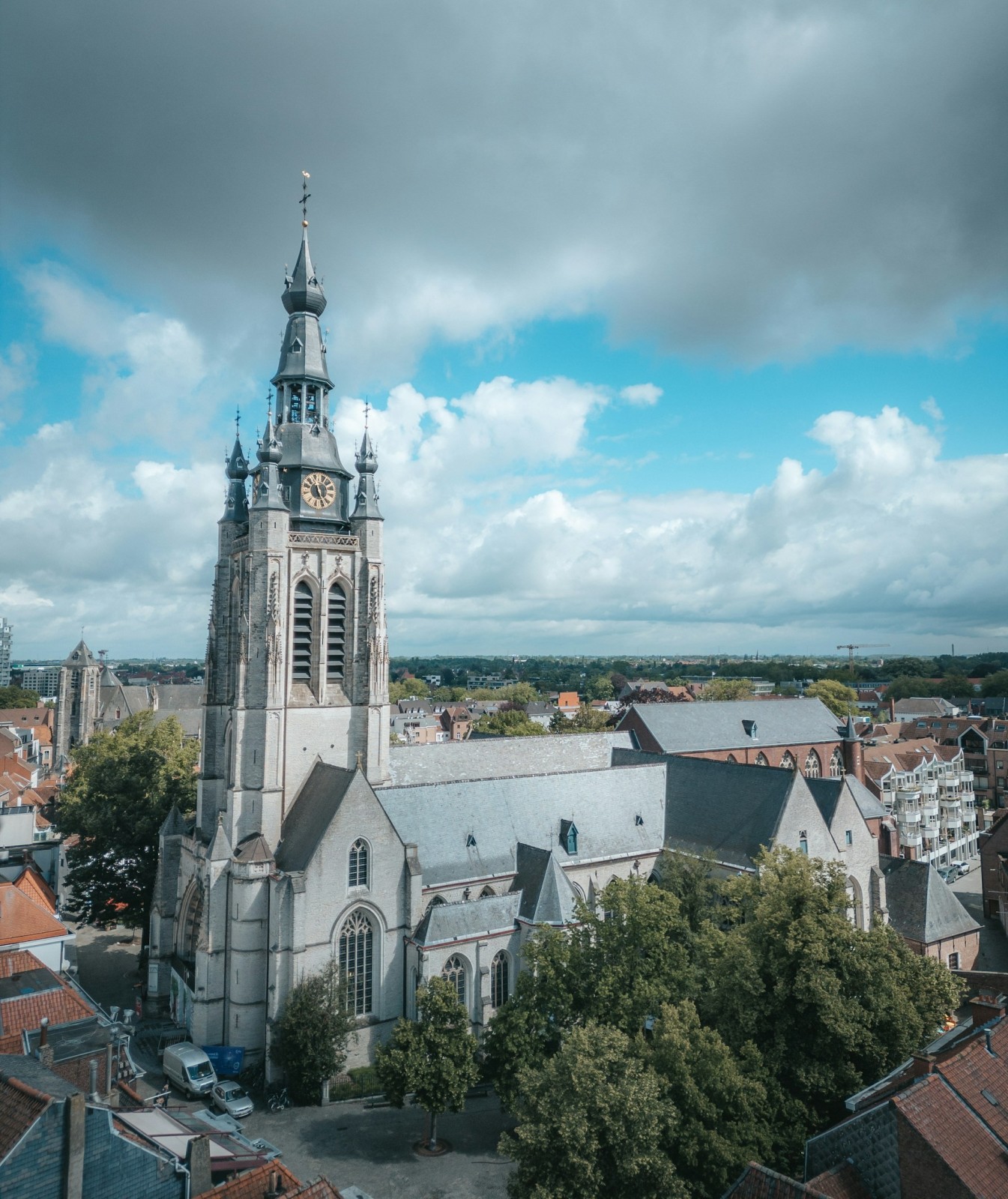
St. Martin's Church is a historic church whose history dates back to the XII century. Inside are works of art and historical relics. The tower of the church reaches about 65 meters and allows you to see the panorama of the city.
Transport: located in the historic center, near Grote-Marct. It's better to walk.
5. Church of Our Lady
The Church of Our Lady (Onze-Lieve-Vrouwekerk) is one of the oldest temples in Kortrijk. In its interior are works of art, including the famous painting by Antonis van Dijk “The Raising of the Cross”.
Transport: located in the center, near Beginage and the Brule Towers. All these attractions are conveniently combined into one walking tour.
6. Artillery Tower
The Artillery Tower is one of the few surviving elements of the medieval city fortifications. The tower belongs to the XIV century and is located next to the Church of Our Lady.
Transport: on foot from Beginage and the central square. A separate trip by transport is not required.
7. Texture Textile Museum
Texture, a flax and textile museum, tells the story of flax production, which for centuries has been one of the most important industries in the region. The museum is located in a former linen warehouse in 1912 on the banks of the Lis River.
Transport: From the historic center you can walk in about 10-15 minutes. You can also use a bicycle or city bus.
8. Kortrijk 1302 Museum
Kortrijk 1302 is dedicated to the famous Battle of the Golden Spurs of 1302. The exposition uses modern multimedia technologies and allows you to learn more about the medieval history of Flanders.
Transport: the museum is located in the historical part of the city, so it is most convenient to get on foot, combining a visit with Beginage, the Church of Our Lady and the Brula Towers.
9. Buda Island
Buda Island is a modern cultural area between the arms of the Lis River. There are cultural venues, a cinema, creative spaces and places to relax by the water.
Transport: From the historic center you can walk across bridges. The area is also convenient for cyclists. The tourist portal recommends Buda as one of the main areas for exploring modern Kortrijk.
10. Lis River Embankments
The promenades of the Fox (Leieboorden) are one of the best places for walking and relaxing. The banks of the river are landscaped, there are terraces of cafes, places for rest and walks.
Transport: from the railway station to the embankments about 15 minutes walk. You can also use a bicycle or public transport.
11. Monument to Gruninge and Gruninge Park
The Groeningemonument is dedicated to the Battle of the Golden Spurs. It is located next to Gruninge Park - a green area suitable for a quiet walk.
Transport: From the center you can walk in about 10-15 minutes. It is also convenient to travel by bicycle.
12. Botanical Garden Baggaertshof
Baggaertshof is a historical complex with a small botanical garden. This is a quiet place that allows you to relax from the busy center.
Transport: located in the central part of Kortrijk, so it is convenient to reach on foot.
13. International Rosary
The International Rose Garden is located on the grounds of 't Hooghe Castle. There are numerous varieties of roses, and the territory is suitable for walking and relaxing.
Transport: The attraction is already outside the historic center. It is most convenient to get by car, bicycle or city bus; walking from the center will take much longer.
14. Kortrijk Weide
Kortrijk Weide is a modern recreation and entertainment area located near the center. There are sports facilities, places for recreation and family entertainment.
Transport: You can walk from the center or take a bike and bus.
15. The brewery in Bellegham
To get acquainted with regional traditions, you can go to the brewery in Bellegham (Brewery Omer), located in the vicinity of Kortrijk. Here you can get acquainted with the traditions of Belgian brewing.
Transport: since the facility is outside the center, it is more convenient to travel by car or bicycle; it is also possible to travel by public transport followed by walking part of the route.
Spinrag (February–March) is an arts festival for children and families with theatre, music, dance and creative activities.
The Easter Fair (April) is a traditional spring fair with trade tents, entertainment and festive events.
Festival of Flanders Kortrijk (May) is a series of classical and contemporary music concerts.
Sinksen (May–June) is one of the city’s largest festivals with concerts, street performances, theater, sports events, gastronomy and a large flea market.
Tower Music (June-August) is a cycle of carillon music concerts at the historic bell tower of the city.
Summer concerts and open-air events (June-August) – musical performances, theater productions, film screenings and open-air cultural programs.
Velofolies (January) is a major event dedicated to bicycles, cycling and cycling tourism.
Alcatraz Open Air (August) is a major festival of heavy music, rock and metal.
Kamping Kitsch Club (August) is an unusual music festival with concerts, bright costumes, entertainment and themed shows.
Konvert Koerse (August) is a cycling-related sporting event.
September Fair (September) is a city fair with attractions, trade, entertainment and concerts.
Car-free Day (September) is a city holiday with walks, sporting events and entertainment on the streets temporarily freed from traffic.
WONDER Festival (October–November) is a festival of contemporary art, design, technology and creative projects.
UNWRAP Festival (October) – events dedicated to digital art, innovation, music and modern technologies.
Boektopia (October–November) is a major literary event with book presentations, meetings with writers and a cultural program.
Sonic City is a festival of contemporary, alternative and experimental music.
NEXT Festival (November) is an international festival of contemporary theatre, dance and performance.
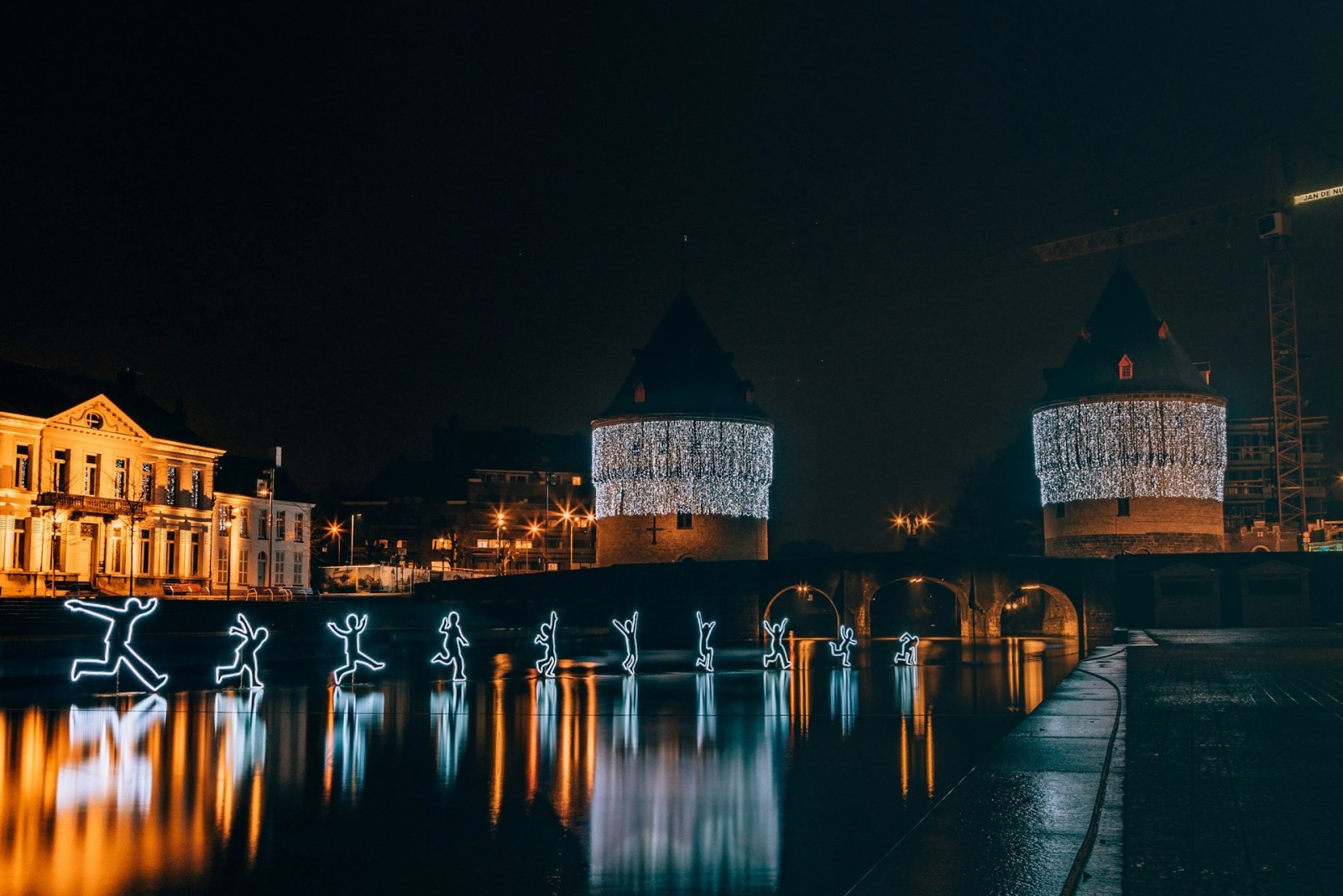
Christmas Fair (December) - festive shopping pavilions, food, drinks, souvenirs and entertainment.
Christmas concerts and performances (December) – musical performances, theater programs and activities for families.
New Year's events (December-January) - festive concerts, city entertainment and programs dedicated to the New Year.
1. Winter - December, January, February. During the day, usually about 6-7 ° C, at night 1-3 ° C. Rain, wet snow and rare snowfalls are possible. January and February are the coolest months. The water temperature is about 6-8 °C.
2. Spring - March, April, May. In March, about 9-10 ° C, in April 13-14 ° C, in May already 17-18 ° C. The weather is gradually getting sunnier, but the rains are still quite frequent. The water temperature rises from about 7 °C in March to 12-13 °C in May.
3. Summer - June, July, August. The warmest time of year. The average daily temperature is about 20-22 °C, and in the warmest periods can rise above 25 °C. July and August are the warmest months. The average water temperature reaches about 17-18 °C in June, 19 °C in July and 18 °C in August.
4. Autumn - September, October, November. In September, comfortable heat is maintained - about 18-19 ° C, in October about 14 ° C, in November about 9 ° C. Precipitation becomes more, and the weather is cooler and cloudier. The water temperature gradually decreases from about 17 °C in September to 11-12 °C in November.
The best season to travel
The best time to travel is from late June to early September. During this period, the most comfortable temperature for walking, excursions, cycling trips and visiting festivals. July and August are especially pleasant.
Language of communication
1. Dutch is the main language of communication in Kortrijk, as the city is located in Flanders. The local version of Dutch is often called Flemish.
2. Due to its proximity to French-speaking areas and the border with France, it can also be heard and used in some situations.
3. English is widely used in hotels, restaurants, shops, museums and tourism. For a traveler, basic English is usually sufficient.
Traditions and characteristics of behavior
1. Politeness and quiet communication. In Belgium, it is customary to say hello when addressing staff, use polite forms of communication and respect personal space.
2. Punctuality. When meeting, excursions, attending events and booking tables, it is advisable to arrive on time.
3. Lines. In shops, ticket offices, museums and public transport, it is customary to observe the queue and not try to pass without a queue.
4. Restaurants and cafes. Service is usually quite calm and unobtrusive. Tipping is optional, as service fees are usually already factored into the cost, but a small amount can be left for good service.
5. Respect for historic sites. When visiting churches, Beginage, memorials and other historical sites, silence should be observed and not disturb other visitors.
6. Bicycles. Bicycles are an important part of urban culture. Do not walk on bicycle paths unnecessarily or block them while walking.
7. Photography. In museums and historic buildings, you should pay attention to signs that prohibit or restrict photography.
Basic laws and regulations
1. Documents. Tourists are advised to carry an identity document, especially when traveling, checking into a hotel and buying tickets.
2. Alcohol. Drinking alcohol in public places may be restricted by local regulations. You cannot drive in a state of alcoholic intoxication.
3. Smoking. Smoking is prohibited in many enclosed public spaces, restaurants and other places. Attention should be paid to special designations.
4. Traffic rules. Special attention should be paid to cyclists: they have specially designated lanes and paths. Pedestrians must cross the road in permitted places.
5. Garbage. The city has rules for sorting waste. Garbage should be disposed of in appropriate containers and not left on the streets.
6. Noise. Peace of mind should be respected, especially in the evening and at night. In residential areas, it is not recommended to talk loudly, turn on music or arrange noisy events.
7. Nature and public spaces. In parks and on the embankments it is necessary to observe the established rules, not to damage plants and not to leave garbage.
8. Photographing people. Do not obsessively photograph strangers close-up without their consent, especially children.
1. Main greetings
Hallo! Hello! / Hello! Transcription: Hallo
Goedemorgen! - Good morning! Transcription: Hude Morhan
Goedemiddag! - Good afternoon! Transcription: Hude-midah
Goedenavond! - Good evening! Transcription: Hude-navont
Tot ziens! - Goodbye! Transcription: That Zins
Tot straks! - See you soon! Transcription: that strax
Dank u wel. - Thank you very much. Transcription: dank yu val
Bedankt! - Thank you! Transcription: badanct
Alstublieft. - Please take this. Transcription: Alstublift
Graag gedaan. - You're welcome. Transcription: crap Hadan
2. Polite expressions
Ja. - Yes. Transcription: I
Nee. Nope. Transcription: Nei
Misschien. - Maybe. Transcription: mishin
Goed. - All right. Transcription: Hut
Prima. - Good/good. Transcription: prima
Sorry. - Sorry/sorry. Transcription: Sori
Pardon. - Excuse me. Transcription: Pardon
Geen probleem. - No problem. Transcription: Hayne problems
3. If you need to ask the way
Waar is het centrum? - Where's the center? Transcription: Waar is this sentiment?
Waar is het station? - Where's the station? Transcription: va'ar is this station?
Waar is de bushalte? - Where's the bus stop? Transcription: va'ar is de bushalte?
Hoe kom ik bij de Grote Markt? - How to get to Grote-Markt?Transcription: hukom ik bei de Chrote Markt?
Is het ver? - Is that far? Transcription: Is this fair?
Is het dichtbij? - Is it close? Transcription: Is this dichtbey?
Links. - Left. Transcription: linx
Rechts. - To the right. Transcription: Rachts
Rechtdoor. - Straight. Transcription: Rachtdor
4. At the hotel.
Ik heb een reservatie. - I have a reservation. Transcription: Ik Hap En Razervasi
Ik heb een kamer gereserveerd. - I booked a room. Transcription: Ick Happen Camer Herezerwert
Heeft u mijn reservatie? - Do you have my reservation? Transcription: Heft Yu Maine Razervasi?
Hoe laat is het ontbijt? - What time is breakfast? Transcription: Hu lat is this ontbait?
Waar is mijn kamer? - Where's my number? Transcription: Waar is Maine Mayor?
Heeft de kamer wifi? - Is there Wi-Fi in the room? Transcription: Heft de Camer Wifi?
Ik heb hulp nodig. - I need help. Transcription: Ik Hulp Nodih
5. Cafe and restaurant
Een tafel voor twee, alstublieft. - Table for two, please. Transcription: En Tafel Thief Tway, Alstublift
Heeft u een menu in het Engels? - Do you have a menu in English? Transcription: Heft yu en menyu in this engels?
Wat raadt u aan? - What do you recommend? Transcription: wat rat u an?
Ik wil graag dit bestellen. - I'd like to order this. Transcription: Ik wihl chrach dit bestelen
Een koffie, alstublieft. - Coffee, please. Transcription: En Kofi, Alstublift
Een bier, alstublieft. - Beer, please. Transcription: en bir, alstublift
De rekening, alstublieft. - Check, please. Transcription: de rakening, alstublift
Kan ik met kaart betalen? - Can I pay with a card? Transcription: Can I see the heart of Batalan?
6. In the store.
Hoeveel kost dit? - How much does it cost? Transcription: Hufeil Costa dit?
Heeft u dit in een andere maat? - Is it in a different size? Transcription: Heft yut dit in an adre mat?
Heeft u een kleinere maat? - Is there a smaller size? Transcription: Heft yu en Kleiner mat?
Heeft u een grotere maat? - Is there a bigger size? Transcription: Heft yu en hrotere mat?
Ik neem deze. - I'll take this. Transcription: Ik nam dese
Kan ik met kaart betalen? - Can I pay with a card? Transcription: Can I see the heart of Batalan?
Heeft u een zakje? - Do you have a package? Transcription: Heft yu en zake?
1. Food and local products
Kortrijk layered gingerbread (Kortrijkse peperkoek) is a traditional local sweet based on spicy bread. It is well suited as a small souvenir.
Belgian chocolate is one of the most popular gifts from the trip. In Kortrijk you can buy chocolates, praline, truffles and tiles with various fillings.
Belgian waffles – you can try fresh in the city or purchase packaged options for transportation home.
Flemish cheeses – the region produces various varieties of cheeses that can be found in markets and specialty stores.
Flanders is known for a wide variety of Belgian beers. It is interesting to try regional varieties and buy a few bottles as a souvenir, if the rules of transportation allow.
Chocolate pralines are a particularly convenient gift as they are compact and well suited for a tourist set.
2. What you can try in the region
French fries in Belgian are one of the gastronomic features of the country. In Belgium, it is traditionally served with various sauces.
Stoofvlees is a Flemish stew, often made with Belgian beer. This is one of the dishes you should try during your trip.
Waterzooi is a traditional Flemish dish, which is a thick soup or stew with fish or chicken.
Flemish waffles are especially popular options with sugar, chocolate, fruit or whipped cream.
3. Useful and traditional remedies
Natural soap and cosmetics – in Belgian stores you can find soap, creams, balms and other cosmetics based on plant components.
Herbal teas are a good light souvenir from local shops and specialized shops.
Belgian cosmetics – you can pay attention to skin and body care products, especially products of small local manufacturers.
At the same time, it is better not to buy medicines without the need to buy them as a souvenir: the composition and rules for importing medicines differ in different countries.
4. Souvenirs
Linen products are one of the most characteristic souvenirs of the region. Kortrijk is historically closely associated with the cultivation and processing of flax, so it is worth paying attention to linen towels, tablecloths, napkins, bags and other textile products.
Belgian textiles are quality products made of linen and other natural materials.
Lace is a traditional Belgian souvenir, especially decorative napkins, small products and decoration elements.
Belgian chocolate is a universal gift for friends and family.
Souvenirs depicting the Brula Towers - postcards, magnets, small paintings and decorative products with one of the main symbols of Kortrijk.
Souvenirs with the image of the Kortrijk bell tower are a good option for those who want to bring a city souvenir.
Miniatures of medieval buildings are small decorative models of Beginage, Brula Towers and other historical sites.
Ceramics and decorative products – you can look for products of Belgian craftsmen in small shops and fairs.
1. Documents required
To travel to Kortrijk, you must have a valid foreign passport. Citizens of countries requiring a Schengen visa need a valid Schengen visa category C. For short-term tourism, it is allowed to stay in the Schengen area for no more than 90 days during any 180-day period.
It is also desirable to have:
Hotel reservation or other proof of accommodation.
Tickets or documents confirming the travel itinerary.
Health insurance.
Confirmation of sufficient funds.
Copy of passport and visa separately from the originals.
A bank card and a small amount of cash.
At the border may be asked to confirm the purpose of the trip, place of residence and availability of sufficient funds.
2. Health insurance
For a tourist trip, it is recommended to obtain insurance valid in Belgium and other Schengen countries.
To apply for a Schengen visa, medical insurance must cover emergency medical care and repatriation; the minimum amount of coverage is 30,000 euros.
Even if a tourist does not require a visa, it is still advisable to issue insurance. It can cover treatment, hospitalization, transportation to a medical institution and return to the homeland for medical reasons.
3. Emergency phones
112 is a single European emergency number: ambulance, fire service and other emergency services.
101 - Belgian police for urgent police calls.
When calling, it is advisable to provide the address or name of the place where the emergency occurred and briefly describe the problem. In Belgium, there is also an 112 BE application that allows you to request emergency assistance.
4. Mobile communications
The main national operators operate in Belgium:
Proximus is one of the largest operators in the country.
Orange Belgium is a major mobile operator.
Telenet is a mobile and fixed communications operator.
BASE is the Telenet mobile communications brand.
For a short tourist trip, it is usually more convenient to roam your operator or purchase a Belgian SIM/eSIM. Before traveling, it is worth checking the cost of roaming and the availability of a mobile Internet package.
For EU citizens, the principle of Roam Like at Home applies, so when traveling within the EU, communication is usually used under the conditions of a home fare with restrictions provided by the operator.
5. Safety on the streets
1. Keep an eye on things around the train station, markets, festivals and crowded public transport.
2. Do not leave your phone, wallet and documents unattended in cafes, bars and public places.
3. It is better to keep the passport in a safe place, and have a copy with you if the original is not required.
4. Be mindful of bicycles. In Kortrijk, cycling is actively developed, so when crossing the road you need to look not only at cars, but also at cyclists.
5. At night, it is better to stick to well-lit streets and central areas.
6. Do not leave luggage and valuables in the car.
6. How long can you stay without leaving the country?
For tourists subject to the short-stay rule, the maximum period is 90 days in any 180-day period throughout the Schengen area and not separately in Belgium. After 90 days, you can’t just leave Belgium for a few days and get a new 90-day period.
If you plan to stay for more than 90 days, an appropriate basis for a long-term stay and usually a national D visa or other permit is required.
7. An important rule from 2026
From 10 April 2026, non-EU nationals staying in Belgium for a short period of time will be required to register their presence within three days of arrival. Registration is carried out through the My Address in Belgium (MAB) system; for those staying in a hotel or similar accommodation facility, an exemption is provided, since information about the stay is transmitted by the hotel.
Create a query and local guides will offer you the best options
