Independent tourism and recreation in the city of Belo Horizonte Historical information about the city of Belo...
Belo Horizonte is the capital of Minas Gerais and one of the largest cities in Brazil. Unlike many old Brazilian cities, its history is relatively recent: the modern city was specially designed and built as a new state capital in the late nineteenth century. That is why Belo Horizonte is interesting to travelers not only as a major metropolis, but also as an example of how a modern city was created in Brazil at the turn of the XIX-XX centuries.
The first settlements and Curral del Rey
Before the appearance of the modern capital, there was a small settlement of Curral del Rey on this territory. Its origin was associated with the development of the interior of Minas Gerais after the advance of the bandeirants - colonial expeditions that explored the territory of Brazil in search of gold, precious stones and new lands.
Gradually, the settlement became a small agricultural and commercial center. Here developed livestock, agriculture and livestock trade.
In the XVIII century, the settlement became more noticeable due to the expansion of trade and an increase in population. In 1750, Curral del Rey received parish status. However, subsequent development was limited, and by the end of the nineteenth century it was still a relatively small settlement.
Why you decided to build a new capital
Before Belo Horizonte, the capital of Minas Gerais was Ouro Preto.
Oro Preto played a huge role in the history of Brazil and was one of the most important centers of gold mining. But by the end of the XIX century, the old capital had serious problems.
The city was in a mountainous area, had a difficult terrain and limited opportunities for expansion. In addition, the gold cycle was gradually ending, and the region’s economy was changing.
After the proclamation of the Brazilian Republic in 1889, the idea arose to create a new capital that would correspond to the ideas of a modern, rationally organized and progressive city.
The authorities wanted a spacious city with wide streets, good ventilation, sanitary infrastructure and the possibility of further growth.
As a result, the territory of the former Curral del Rey was chosen for the construction of a new capital.
Creation of a city
The design of the new capital was entrusted to the engineer Aarão Reis.
Construction continued mainly in the period 1894-1897. For its time, it was an extremely ambitious project.
The new capital was named Cidade de Minas.
The city was created according to a predetermined plan. In its central part, wide straight streets and avenues appeared, and the layout was designed for a significant expansion.
Particular attention was paid to:
wide avenues;
quarterly planning;
squares;
landscaping;
health conditions;
administrative buildings;
transport links.
The central urban area was originally confined to the future Avenida do Contorno. The planners deliberately separated the new administrative capital from the old settlement.
The official birth of Belo Horizonte
On December 12, 1897, the new capital was officially opened, and the government of Minas Gerais was moved here from Auro Preto. The corresponding decree officially declared the city established and transferred the state administration here.
Soon the city was called Belo Horizonte, which translates from Portuguese as “Beautiful Horizon”.
The name corresponds very well to the geography of the city: Belo Horizonte is surrounded by mountains, and Serra do Curral plays a particularly important role in its appearance.
The First Years of the New Capital
In the early years of Belo Horizonte, the city looked very different than it does today.
It was a small but rapidly developing administrative capital. Officials, specialists, entrepreneurs and workers moved here.
Gradually built:
government agencies;
residential areas;
schools;
shops;
hotels;
theaters;
squares;
churches.
In 1899, the first legislative body of the new capital, the Deliberative Council, was created, which began work in 1900.
At the same time, a problem common to many fast-growing cities arose: the real population began to expand much faster than the original plan.
How the city went beyond the original plan
The Belo Horizonte project was designed for organized development, but the population grew rapidly.
Workers, builders, traders and migrants came to the city in search of work. New areas began to form outside the originally planned central zone.
So gradually there was a modern huge urban organism, which greatly exceeds the original size of the city.
Interestingly, the original layout is still well read in central Belo Horizonte. Straight streets and wide avenues allow you to see the idea of engineers of the late XIX century.
The beginning of the XX century - the transformation into a modern city
In the first decades of the twentieth century, Belo Horizonte continued to develop rapidly.
The city was getting:
administrative center;
shopping center;
educational center;
industrial hub;
transport center of Minas Gerais.
Especially important was the development of railways, which connected the capital with other regions of the state and the country.
Belo Horizonte gradually ceased to be just an administrative capital and became an important economic center.
1930s - Industrial upsurge
The real economic breakthrough occurred in the first half of the XX century.
The region developed industry, especially related to the natural resources of Minas Gerais.
The state was rich in iron ore and other minerals, so Belo Horizonte was at the center of large-scale economic development.
New businesses, working districts, roads and public institutions appeared in the city.
It was during this period that Belo Horizonte began to acquire the character of a major modern Brazilian city. IPHAN notes that the final transformation of the capital into a major urban center has accelerated especially since the 1930s.
Zhucelina Kubicek and new architecture
One of the most important figures in the history of Belo Horizonte was Jucelino Kubitschek.
In the 1940s, he served as mayor of the city and supported large-scale modernization projects.
It is with his name that one of the most famous architectural projects of Belo Horizonte is associated - the Pampulha complex.
For its creation, a young architect Oscar Niemeyer was invited.
Around the artificial lake of Pampulha appeared an unusual architectural ensemble, which included the Church of St. Francis of Assisi, a casino, a yacht club and a ballroom.
Famous Brazilian masters worked on the decoration, including the artist Candidou Portinari, and the landscape concept was created by Roberto Burle-Marx.
Pampulha - the beginning of the architectural revolution
Pampulha has become a symbol of the new Brazilian modernism.
Niemeyer buildings were distinguished by unusual curved shapes, the use of reinforced concrete, large open spaces and a close connection of architecture with the landscape.
For tourists today, Pampulha is especially interesting because here you can see the early works of one of the most famous architects of the XX century.
In 2016, the Pampulha Ensemble was inscribed on the UNESCO World Heritage List as an outstanding example of modern architecture and cultural landscape.
Post-war development
After World War II, the population of Belo Horizonte continued to grow rapidly.
People came to the city from different areas of Minas Gerais and other states of Brazil. Industry, construction, trade and services developed.
As a result, the city gradually turned into a major metropolis.
At the same time, there were problems characteristic of rapidly growing cities:
lack of housing;
growth of suburbs;
transport problems;
social inequality;
expansion of the urban area.
Belo Horizonte gradually became the center of a huge agglomeration.
1960s-1980s
In the second half of the twentieth century, the city continued to industrialize.
Belo Horizonte and neighboring municipalities have become an important part of Brazil’s industrial economy. Metallurgy, mining, engineering and construction were particularly important.
At the same time, universities, cultural institutions, theaters and museums developed.
The city became not only an industrial but also a cultural center.
Modern Belo Horizonte
Today Belo Horizonte is a major economic, educational and cultural center of Brazil.
The city's economy is largely tied to services, trade and management, and industry is particularly important to the entire metropolitan area.
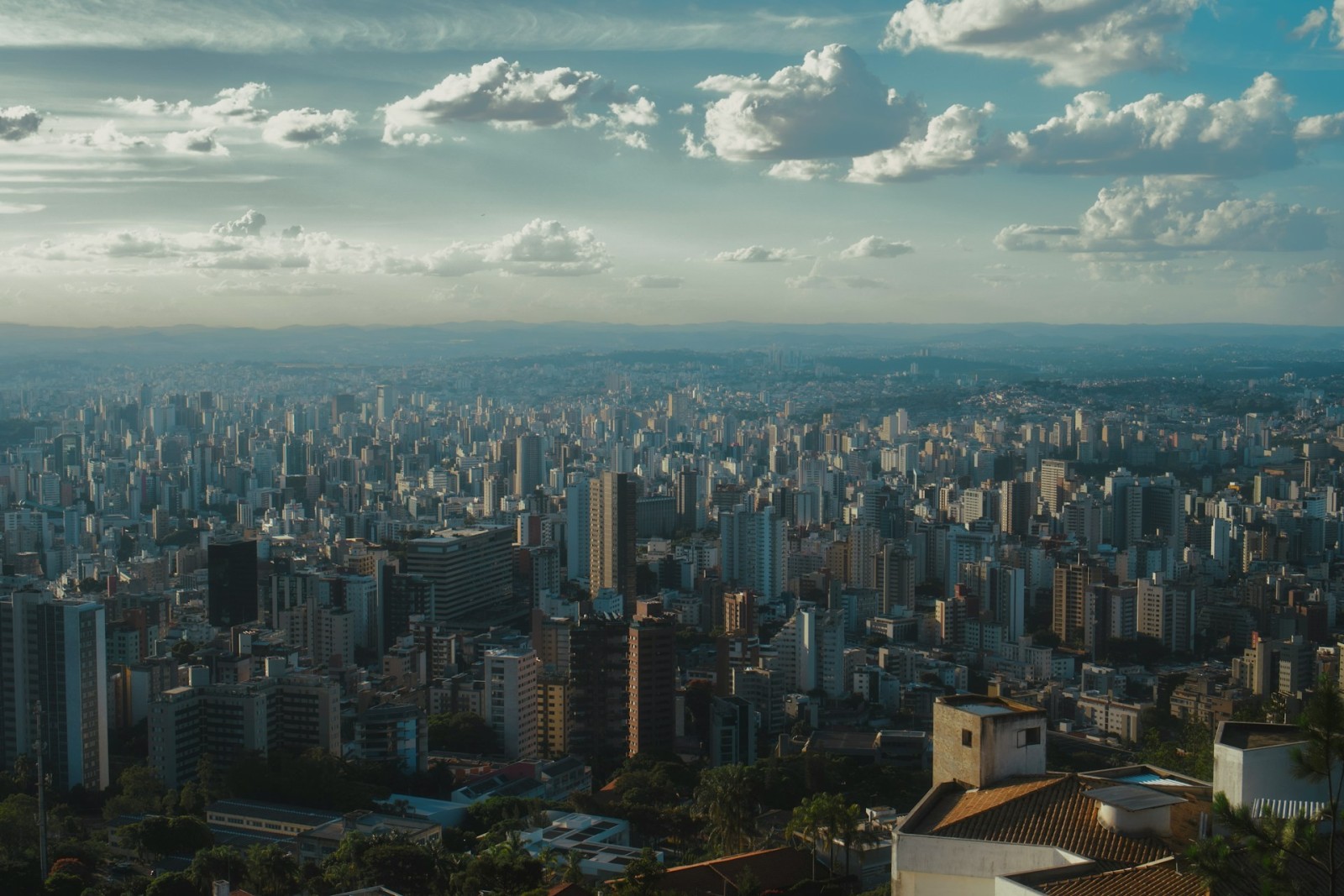
The historical center retained the character of the original city of the late XIX century, and next to it grew a modern metropolis with skyscrapers, large shopping centers, universities, museums and cultural venues.
One of the main cultural areas is the Square of Liberty (Praça da Liberdade). Here are historical buildings, museums, gardens and cultural institutions.
City of Architecture
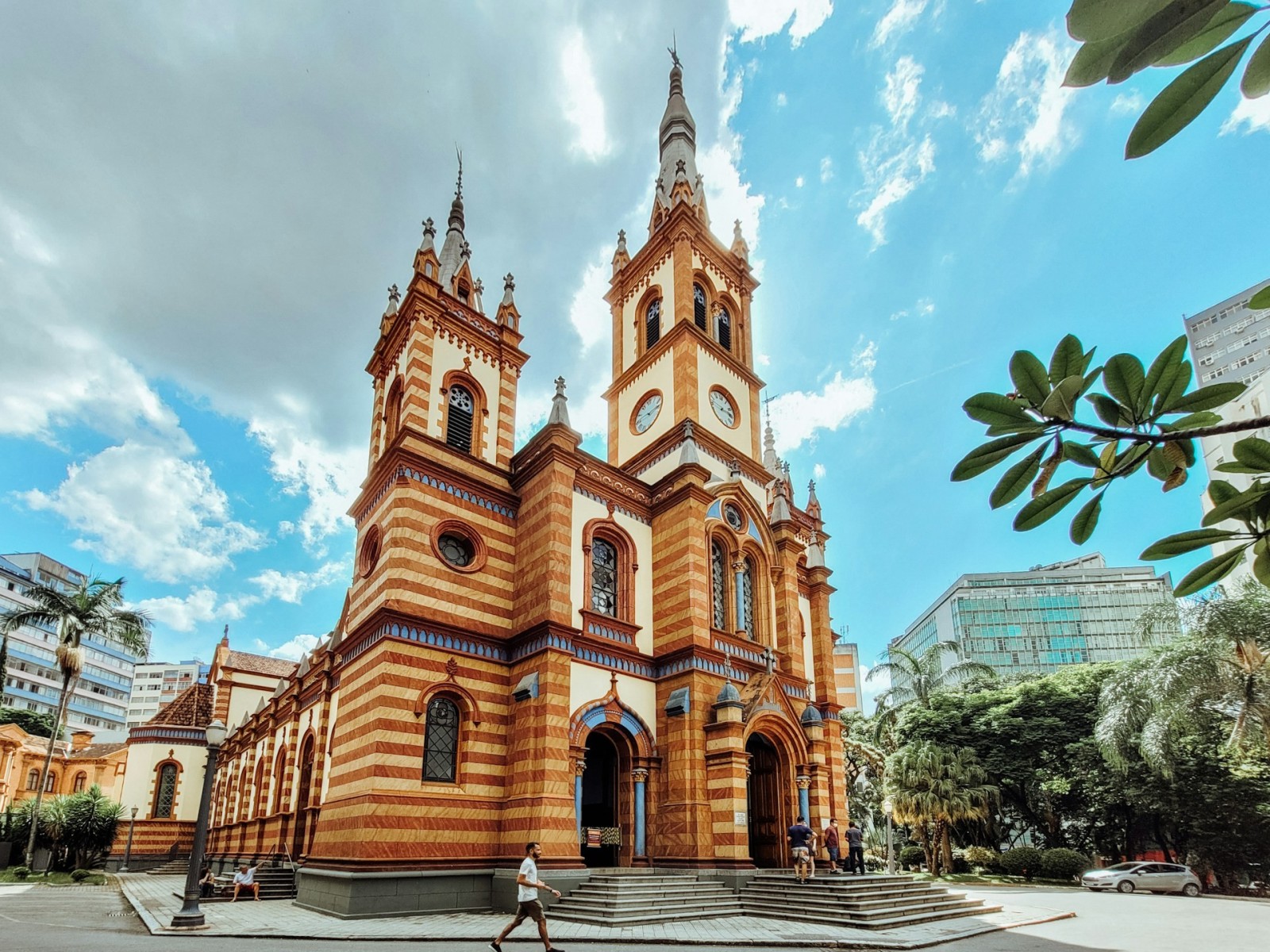
Belo Horizonte is especially interesting to people who love architecture. Here you can see the buildings of the late XIX century, classical Brazilian architecture of the XX century and the famous modernism of Oscar Niemeyer.
The main architectural landmark is the architectural complex of Pampulha. It includes the Church of St. Francis of Assisi, a former casino, the House of Dance and a yacht club. The complex was created in the 1940s and in 2016 received the status of a UNESCO World Heritage Site.
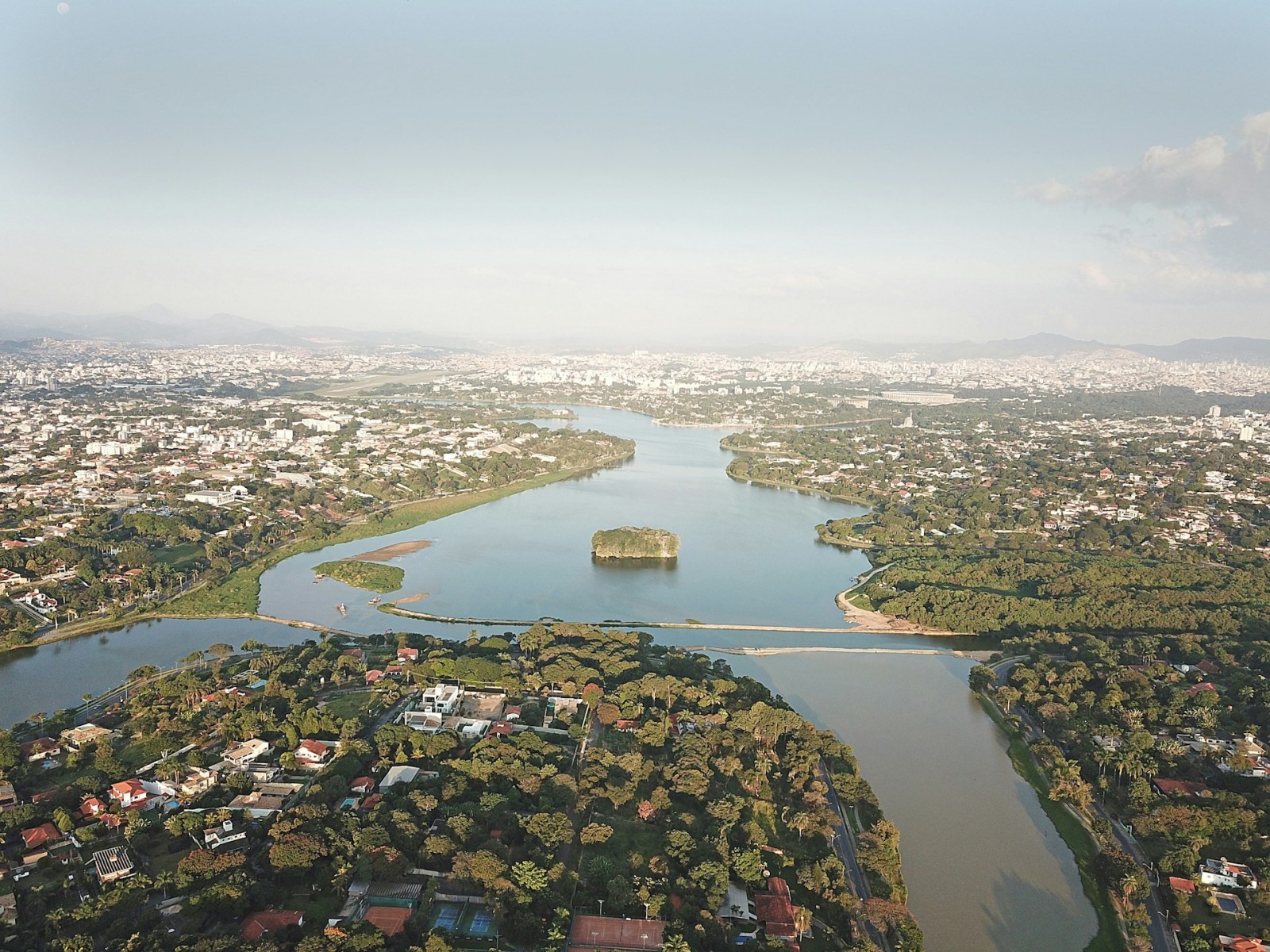
Pampulia is especially good for walking around the lake: here you can simultaneously get acquainted with the architecture, photograph buildings and enjoy the scenery.
Freedom Square and the cultural center of the city
One of the best places to explore Belo Horizonte is the Square of Liberty (Praça da Liberdade).
It is a large historical square with gardens, fountains and buildings of the former state administrative center. Today there are many museums and cultural institutions around it.
Praça da Liberdade is especially attractive in the evening when locals and tourists walk here.
The area is home to the Circuito Liberdade, a cultural route with museums, exhibition spaces and historic buildings. Circuito Liberdade
Central Market - acquaintance with the real Minas Gerais
One of the must-see destinations is Mercado Central de Belo Horizonte.
Mercado Central de Belo Horizonte has been operating since 1929 and is considered one of the main symbols of the local gastronomic culture.
Here you can try and buy:
Minas cheese;
pão de queijo - the famous cheese buns;
Doce de leite - milk sweetness;
feijão-tropeiro;
sausages;
spices;
coffee;
sweets;
local alcoholic beverages;
craftsmanship.
For tourists, the market is interesting not only for shopping: it is a place where you can feel the everyday atmosphere of the city and get acquainted with the cuisine of the state.
Gastronomic tourism
Belo Horizonte is considered one of the best cities in Brazil to experience the cuisine of Minas Gerais.
The local cuisine is distinguished by hearty homemade dishes and a large number of cheeses, meat, corn, beans and sweets.
Worth a try:
pão de queijo;
feijão-tropeiro;
tutu de feijão;
torresmo;
frango com quiabo;
vaca atolada;
doce de leite;
queijo Minas;
local coffee.
Food here is almost an independent tourist attraction. The official tourist resource of Brazil also highlights the gastronomy of Minas Gerais as one of the main reasons to visit Belo Horizonte.
Parks and nature
Despite the status of a large metropolis, Belo Horizonte has a large number of green areas.
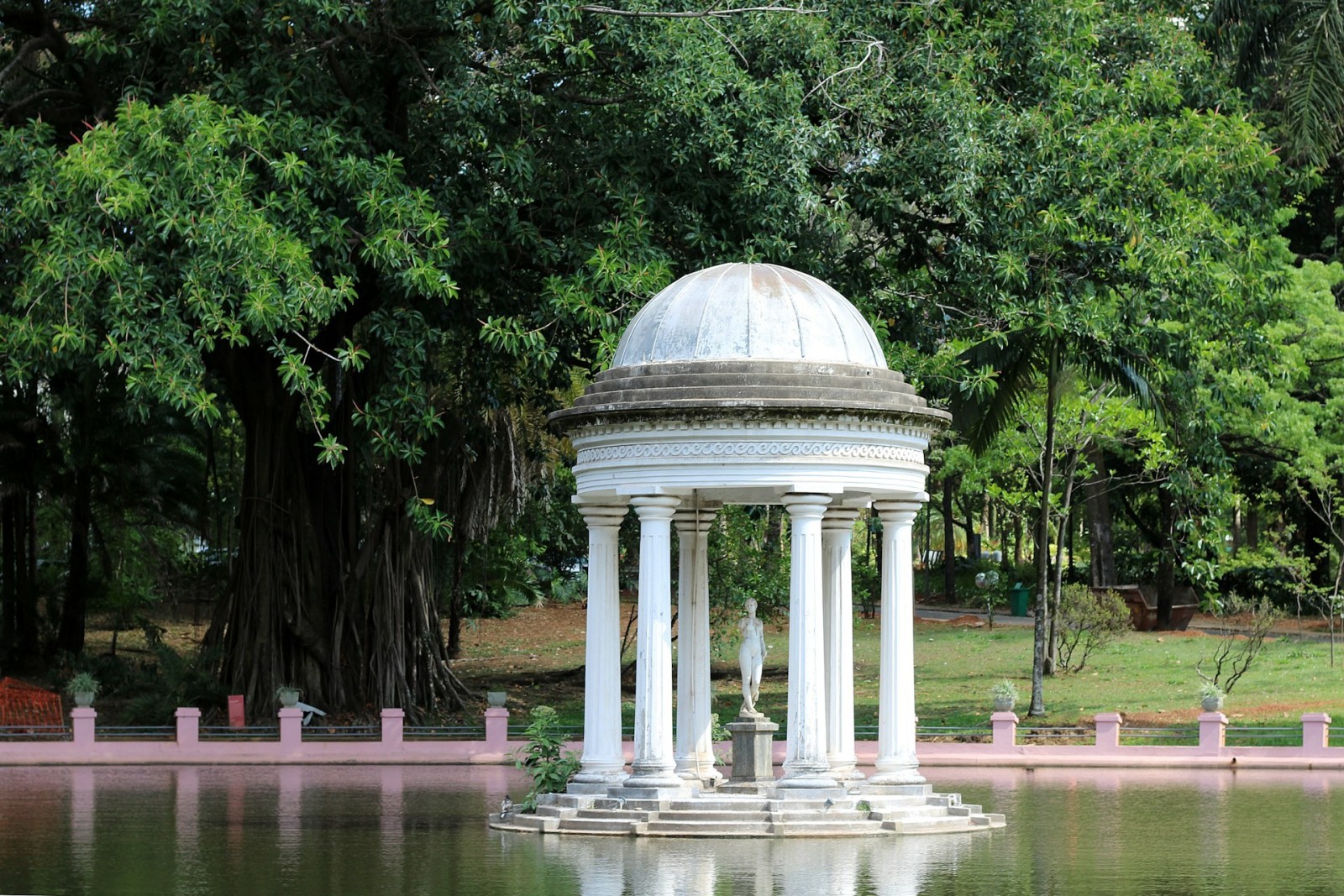
For quiet walks suitable Municipal Park America Renne Janetti (Parque Municipal Américo Renné Giannetti), located in the central part of the city.
For panoramic views, it is better to go to the Mangabeiras area. Observation platforms allow you to see a huge urban agglomeration against the background of mountains.
Especially beautiful views of the city from Serra do Curral.
Museums
Belo Horizonte is also suitable for museum lovers.
Interesting, for example:
Mineiro Museum – introduces the history and culture of Minas Gerais.
Museu Histórico Abílio Barreto is dedicated to the history of Belo Horizonte.
Toy Museum is an unusual option for a family trip.
The Museum of Image and Sound of Belo Horizonte is interesting for those who want to get acquainted with the history of the visual and musical culture of the city.
In the area of Pampulha is also located the Museum of Art of Pampulha (Museu de Arte da Pampulha), associated with the architectural complex of Niemeyer; before traveling there is worth checking the current status of the building. Pampulha Museum of Art (MAP)
Football
Brazilian football is an important part of urban culture.
For sports fans, the Brazilian Football Museum, located in the Pampulha area, is interesting. Brazilian Football Museum
Belo Horizonte is also associated with famous Brazilian football clubs, so attending a match can be a separate travel experience.
Carnival and city holidays
Belo Horizonte is known for its active cultural life. One of the main events of the year is the carnival, which attracts a large number of locals and tourists. The city hosts street processions, musical performances and numerous events.
In addition to the carnival, concerts, theater performances, exhibitions, food festivals and various cultural events are held throughout the year.
One of the main venues of cultural life is the Palácio das Artes, which hosts theatrical and musical performances, as well as art exhibitions.
Areas for walking and evening rest
Tourists should pay attention to the Savassi, Lourdes and Santa Tereza areas.
Here are:
café
restaurants;
bars;
shops;
music venues;
Small cultural spaces.
The local bar culture is particularly interesting. Belo Horizonte is often called the city of bars, and an evening visit to a small local bar is one way to feel the character of the city.
Hotels 5 stars - premium holiday
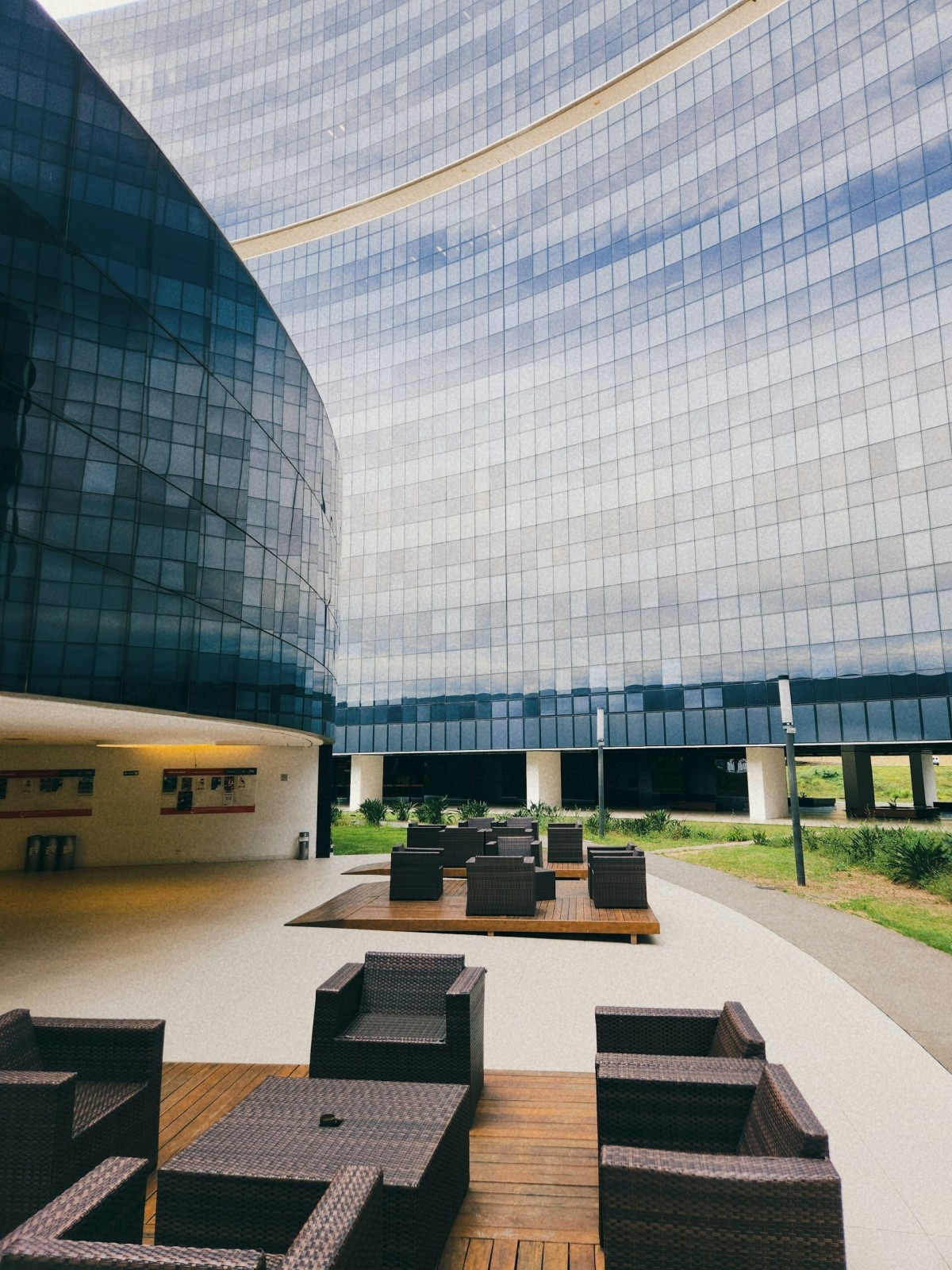
This is an option for travelers who want to get a high level of service, a spacious room, a swimming pool, a restaurant, a fitness center, a round-the-clock check-in desk and additional services.
Good options:
Hotel Fasano Belo Horizonte is one of the most prestigious options in the Lourdes area. Suitable for a luxury holiday and business trip.
Radisson Blu Belo Horizonte, Savassi is a modern hotel close to the Savassi district, restaurants and urban infrastructure.
Ouro Minas Palace Hotel is a large hotel complex with a wide range of services.
Premium hotels are best chosen by those who appreciate comfort and plan to spend some time directly in the hotel.
Hotels 4 stars - optimal comfort
For most tourists, this is the most interesting category in terms of price and quality. Usually there is air conditioning, Wi-Fi, breakfast, restaurant, swimming pool or fitness room.
Attention may be paid to:
Royal Collection Savassi Hotel is a good option for exploring the Savassi area.
Belo Horizonte Plaza Lourdes is located in Lourdes, near the central part of the city.
Tribe Belo Horizonte Savassi is a modern version in the city center.
The areas of Savassi and Lourdes are especially convenient for tourists who want to combine excursions, restaurants and evening walks. According to travelers, Savassi is more lively, and Lourdes is usually perceived as a quieter area.
Hotels 3 stars - a practical option
Three-star hotels are well suited to tourists who spend most of the day on excursions and return to the hotel only in the evening.
For example:
Samba Belo Horizonte Centro is the central version with a convenient location.
Ibis is a simple and understandable accommodation option in Lourdes.
Bourbon Hotel Belo Horizonte is a more spacious option with additional hotel services.
Budget hotels
For economical travel suitable hotels 2-3 stars and networks of budget format.
Especially convenient:
Ibis Budget Savassi is a budget hotel in Savassi. Rooms are designed for economical accommodation, there is Wi-Fi and air conditioning. The official information of the network also emphasizes the convenient location near the restaurants, bars and attractions of Savassi.
Royal Center Hotel Lourdes is another relatively inexpensive option in Lourdes.
A budget hotel is especially beneficial for the traveler who plans to spend most of the time in the city and just wants to have a clean place to stay.
Aparthotels and apartments
Aparthotels are especially convenient to stay for a few days or weeks. The room can have a small kitchen, refrigerator, work area and additional household amenities.
This option is well suited:
families with children;
couples;
small companies;
tourists who stay for 1-2 weeks;
People who prefer to cook their own food.
In the areas of Lourdes and Savassi, there are enough offers of apartments and apart-hotel. For example, in Lourdes there are apartments with kitchen, swimming pool, sauna and parking.
Hostels
Hostels are one of the cheapest accommodation options in Belo Horizonte. You can choose a place in a common room or a separate room.
Popular options:
BR Hostel is located directly in Savassi.
Nuhh Hostel & Café Lourdes is a café hostel in Lourdes.
Belô Hostel - Home & Office - option in the city center.
Home Center Hostel is located in Funcionários.
Hostel Trem de Minas is a budget option for independent travelers.
Hostels are especially suitable for young tourists, solo travelers and those who want to meet other travelers.
1. Freedom Square (Praça da Liberdade)
Freedom Square is one of the main attractions of Belo Horizonte and one of the best points to start exploring the city. It was laid during the construction of the new capital of Minas Gerais in the late XIX century.
The square is surrounded by historical buildings, museums, cultural centers and beautiful gardens. Here you can see the architecture of different eras - from eclecticism and neoclassicism to modernism of the XX century.
Transport accessibility: the square is located in the central part of the city, between the districts of Savassi, Functiononarios and Lourdes. It is convenient to come from these areas on foot. From other parts of the city you can take a bus or taxi. The distance to the nearest metro station is quite large, so the metro with the subsequent transfer to the bus is not always the most convenient option.
For the tourist: it is worth allocating 1-2 hours to the square itself, and then continue a walk through the museums and cultural institutions around it.
2. Freedom Square Cultural Route (Circuito Liberdade)
A large cultural district has formed around Freedom Square, where museums, exhibition centers, libraries, historical buildings and cultural spaces are located.
Particularly interesting are the Minas Gerais Museum (Museu Mineiro) and the Mines and Metals Museum (MM Gerdau). The latter is dedicated to the history of the mining industry and the wealth of the state of Minas Gerais.
Transport accessibility: Most of the facilities are located next to each other, so it is easier to walk between them.
For tourists: it is better to allocate 3 to 5 hours for the whole Circuito Liberdade if you want to visit several museums.
3. Mercado Central de Belo Horizonte
The central market is one of the main gastronomic attractions of the city. This place is especially interesting for those who want to get acquainted with the daily life of Belo Horizonte and the cuisine of Minas Gerais.
Local cheeses, sweets, spices, coffee, meat products, traditional products and souvenirs are sold here. The market is also known for its small establishments where you can taste local dishes.
Transport accessibility: The market is located in the central part of the city. From the Freedom Square area, it can be reached by bus, taxi or on foot in about 20-30 minutes depending on the route.
For tourists, it is better to come in the morning or closer to lunch. For a visit and lunch should lay 2-3 hours.
4. Renné Giannetti (Parque Municipal Américo Renné Giannetti)
It is one of the oldest parks in Belo Horizonte. It is located directly in the central part of the city and is a green island among dense urban development.
Here you can walk along the alleys, relax from the bustle of the city and combine a visit to the park with other central attractions.
Transport accessibility: Due to the location in the center, the park is convenient to visit on foot. There are numerous bus routes nearby, you can also use a taxi.
For tourists: 1-2 hours is enough. It is especially convenient to include the park in the itinerary after the Central Market or before visiting Palacio das Artes.
5. Palacio das Artes (Palácio das Artes)
Palacio das Artes is one of the main cultural centers of the city. It hosts concerts, theater performances, art exhibitions and other cultural events.
The building is located in the central part of Belo Horizonte, next to the Municipal Park.
Transport accessibility: convenient to get on foot from central areas, by bus or taxi.
For tourists: if during the trip there is an interesting concert, performance or exhibition, a visit to Palacio das Artes can be made part of the evening program.
6. Place de Setembro (Praça Sete de Setembro)
The area of Sete de Setembro is one of the main landmarks of the central Belo Horizonte. In the center is the famous obelisk, which the locals call Pirulito.
The square is located at the intersection of major city highways and shows a completely different side of the city - a busy business and shopping center.
Transport accessibility: very good. Numerous bus routes pass through this area, the transport infrastructure of the center and the metro are located nearby.
For tourists: enough 20-40 minutes. It is better to visit it as part of a walking tour around the center.
7. Museum of Arts and Crafts (Museu de Artes e Ofícios)
The museum is located next to the historic Central Station. Its exposition is dedicated to the crafts, labor and traditional professions of Brazil.
Here you can see tools and objects related to various types of work, which allows you to better understand the history of daily life of the residents of Minas Gerais.
Transport accessibility: one of the most convenient places to visit museums. Nearby is the Central railway station and the Central metro station, so it is convenient to come here from different parts of the city.
For tourists: 1-2 hours is enough.
8. Architectural complex of Pampulha (Conjunto Moderno da Pampulha)
Pampulha is the main architectural attraction of Belo Horizonte and one of the main reasons to come to the city.
The complex was created in the 1940s on the initiative of Jucelin Kubitschek. The architect was Oscar Niemeyer, and famous Brazilian artists and landscape architects participated in the design.
The complex includes several buildings around Lake Pampulha. Due to its architectural and cultural significance, it is included in the UNESCO World Heritage List.
Transport accessibility: Pampulha is far from the historic center. You can use the bus, but the tourist is much more convenient taxi or car.
For tourists, it is better to allocate half or a whole day to Pampulha.
9. Church of St. Francis of Assisi (Igreja de São Francisco de Assisi)
The Church of St. Francis is one of the most recognizable symbols of Belo Horizonte.
The building was designed by Oscar Niemeyer. Its unusual curved shapes, concrete structures and decoration made the church one of the most important monuments of Brazilian modernism.
From the outside, the church looks especially good against the backdrop of Lake Pampulha.
Transport accessibility: located directly on the shore of Lake Pampulha. It is most convenient to get by taxi or car, but buses also go to the area.
For tourists: 30-60 minutes to visit and photograph.
10. Lake Pampulha (Lagoa da Pampulha)
Lake Pampulha is not just a natural object, but a central part of the architectural and cultural ensemble of the district.
Along the lake are the main buildings of Pampulha, so a walk along its shore allows you to see the architecture of Niemeyer in its natural surroundings.
Transport accessibility: buses approach different sections of the embankment. For self-examination of several objects more convenient taxi or car.
For tourists, it is worth a few hours. It is especially pleasant to walk in the morning or towards the evening.
11. The House of Dance (Casa do Baile)
The House of Dance is another work by Oscar Niemeyer as part of the Pampulha complex.
The building is interesting for its unusual curvilinear shapes and location on a small peninsula by the lake.
Today cultural and exhibition events are held here.
Transport accessibility: located on the bank of Pampulha. It is most convenient to include it in a car or taxi route around the lake.
For tourists: a visit is convenient to combine with the Church of St. Francis, the Museum of Juselino Kubitschek and other objects of Pampulha.
12. Museum of Jucelino Kubitschek (Museu Casa Kubitschek)
The museum is located in the former house of Jucelin Kubitschek in the Pampulha area.
It allows you to get acquainted with the history of Kubicek himself and the period when he was the mayor of Belo Horizonte and supported the development of modernist architecture of the city.
Transport accessibility: located on the bank of Pampulha. It is better to visit with other objects of the area.
For tourists: approximately 1-1.5 hours.
13. Brazilian Football Museum (Museu Brasileiro do Futebol)
Belo Horizonte is impossible to imagine without football. The museum is located next to the Mineirão Stadium and is dedicated to the history of Brazilian football.
This is a particularly interesting place for sports fans.
Transport accessibility: located in Pampulje. It is most convenient to include the museum in a trip to the area.
For tourists: approximately 1-2 hours. A visit can be combined with a tour of the stadium and Lake Pampulha.
1. Carnival of Belo Horizonte (February)
Best time: January-February.
Carnival is the largest and most famous mass event of the city. The main feature of Belo Horizonte is not only traditional parades, but also a huge number of street music blocks blocos de rua.
Kandandu is a meeting of Afro-Brazilian carnival blocks. In 2026, it took place at the Station Square (Praça da Estação) and was dedicated to Afro-Brazilian culture and traditions.
What the tourist will see:
colorful costumes;
street musical performances;
dancing;
drum ensembles;
Samba;
Afro-Brazilian musical traditions;
procession of carnival blocks;
concerts.
If you want to see Belo Horizonte as bright and festive as possible, February is one of the best months.
2. Arraial de Belô (July-August)
Best time: late July - early August.
It is one of the most important traditional festivals of the city. It is dedicated to the festa junina (Festa Junina) - popular Brazilian holidays associated with rural culture, music and traditional dance.
Famous Brazilian performers are on stage. In 2026, participants included Mumuzinho, Zé Vaqueiro and Felipe Araújo, as well as the bands Chama Chuva and Pisa na Fulô. Entrance to the event was free.
What is especially interesting for tourists:
traditional costumes;
Quadrill dances (quadrilha)
forra;
folk music;
corn and other traditional dishes;
sweets;
festive fairs;
concerts.
This is one of the best options for a tourist who wants to get acquainted with the traditional culture of Minas Gerais, and not only with modern Brazil.
3. Cultural Night of Belo Horizonte (August)
Usually August.
Virada Cultural is a large-scale cultural event, during which the city turns into a huge venue for concerts, performances, exhibitions and other events for several hours.
The programme usually includes:
concerts;
samba;
Brazilian popular music;
electronic music;
theatre performances;
dance performances;
exhibitions;
cinema;
street art;
Cultural workshops.
For tourists, this is a very good time to visit the city if you want to see the modern cultural life of Belo Horizonte.
4. Belo Horizonte Black Art Festival (FAN BH) – June
Usually: June.
FAN BH is a festival dedicated to Afro-Brazilian culture, art, music, dance, theater and historical memory.
For tourists, this is an interesting opportunity to get acquainted with:
Afro-Brazilian music;
dances;
theatre;
contemporary art;
History of the Afro-Brazilian population;
Samba traditions.
5. Music festivals and concerts - all year round
Belo Horizonte regularly hosts concerts of Brazilian and foreign performers.
The musical life of the city is particularly diverse: you can hear samba, forra, MPB, rock, jazz, electronic music and classical music.
Concerts are held in major cultural centers, theaters, concert venues, clubs and outdoor venues.
For example, the municipal program Música de Domingo hosts Sunday music performances.
For tourists, it is best to watch a specific poster just before the trip, as the concerts change every month.
6. Gastronomy and local cuisine festivals - throughout the year
Belo Horizonte is known for the gastronomic culture of Minas Gerais, so the city regularly hosts food festivals, gastronomic fairs and special restaurant events.
Particularly interesting are events related to:
Minas cheese.
pão de queijo;
coffee;
traditional dishes of Minas Gerais;
Brazilian beer.
street food.
The official calendar of the city regularly appears gastronomic festivals. For example, in July 2026, the FICC – Festival Internacional de Cerveja e Cultura, an international festival of beer and culture, was held.
7. Samba festivals - June and other months
Samba occupies an important place in the cultural life of the city. Belo Horizonte regularly hosts samba family meetings, concerts and cultural programs dedicated to this musical direction.
For the tourist, this is a good way to see the calmer side of Brazilian musical culture - not only a huge carnival, but also small performances by local musicians.
8. Fair on Avenue Afonso Pena (Feira Hippie de Belo Horizonte) - Sunday
This is not a festival in the classical sense, but for the tourist it is one of the most interesting regular events of the city.
The fair takes place on Sundays at Avenida Afonso Pena and is considered one of the largest fairs of this type in Latin America.
Here you can find:
products of local craftsmen;
paintings;
jewelry;
clothing;
leather goods;
decorative objects;
souvenirs;
traditional food.
Best time: Sunday morning.
During the carnival, the schedule of the fair may change.
Summer - December, January, February
Air temperature: usually during the day 26-29 ° C, at night 18-20 ° C.
This is the wettest and rainiest time of the year. Especially a lot of precipitation falls in December and January: heavy downpours and thunderstorms are possible, sometimes in the afternoon or evening. In December, an average of about 300 mm of precipitation, and in January - about 296 mm according to WMO.
February is slightly drier, but remains hot and humid. This is one of the warmest months of the year.
For travel: suitable for those who normally tolerate heat and tropical downpours. For long walks and excursions, this is not the most convenient period.
Water: Belo Horizonte itself has no sea - the city is about 500 km from the Atlantic Ocean. Therefore, the “water temperature” for the city itself refers more to pools, lakes and reservoirs. In the surrounding water bodies in summer, the water is usually the most comfortable - approximately 23-27 ° C, but the specific temperature depends on the reservoir and weather.
Autumn - March, April, May
Air temperature: during the day about 23-29 ° C, at night 15-19 ° C.
March is still quite humid and warm, but since April, the amount of precipitation is sharply reduced. In April, the average maximum is about 27–28 °C, and in May it is about 26 °C.
April is one of the best months to explore the city: warm, but not so stuffy, rain is much less.
In May it becomes noticeably drier and cooler, especially in the morning and evening.
Water: approximately 21-25 °C, depending on the specific reservoir.
For travel: April and May is a very good period for excursions, walks, trips to the surrounding natural areas and acquaintance with the culture of Minas Gerais.
Winter - June, July, August
Air temperature: during the day usually 23-27 ° C, at night 11-15 ° C.
This is the driest time of year. June, July and August are distinguished by a small amount of rainfall and a large number of clear days. In July, the average minimum temperature according to the WMO is about 13 °C, the maximum is about 25 °C.
At the same time, the word “winter” here should not be misleading: it can be quite warm and sunny during the day, and coolness is especially felt early in the morning and after sunset.
July is the driest month, so the likelihood of rain during excursions is especially small.
Water: approximately 19–23 °C in natural water bodies. Swimming can be cool, especially in the morning.
For travel: June-August is one of the best periods of the year. The weather is suitable for hiking excursions, architectural and cultural attractions, trips outside the city and outdoor activities.
Spring - September, October, November
Air temperature: during the day about 26-29 ° C, at night 15-19 ° C.
In September, it is still relatively dry and sunny, but the temperature begins to rise. In October, the amount of rain increases markedly, and November is already getting quite wet.
September is a transitional month between the dry and rainy seasons. In October, frequent showers and thunderstorms are already possible.
Water: approximately 21–25 °C, gets warmer by the end of spring.
For travel: September is a great option, October is also good, especially in the first half of the month. November is less predictable due to increased rainfall.
Language of communication in Belo Horizonte
The main language is Brazilian Portuguese. It is in Portuguese that almost all everyday communication takes place: in shops, cafes, restaurants, transport, government agencies and most hotels.
In Belo Horizonte, a tourist may find that English is much less common than in popular international tourist centers. In good hotels, major restaurants, airports, and tourist destinations, employees can speak English, but they can’t expect to communicate in English throughout the city.
In Brazil, it is useful to treat people politely, especially strangers. A simple “bom dia”, “boa tarde” or “boa noite” before a request is perceived much more natural than immediately proceeding to the question.
Traditions and customs
Brazilians usually have an open and friendly manner of communication. When dating, a handshake, smile and eye contact are often used. Between well-known people, hugs and a kiss on the cheek are possible, but it is better for a tourist to focus on the behavior of the interlocutor and not show excessive familiarity first.
The treatment of people is very important. You should not show annoyance because the service or fulfillment of the request takes longer than you are used to. A calm and friendly tone usually works better.
Lateness is more common than in countries with very strict punctuality. However, it is better to arrive in advance for excursions, transfers, flights and other services with a specific time.
In restaurants and cafes it is customary to leave tips. The bill often includes a service fee of about 10%; it is worth checking the bill before paying. Additional tips on top of the included fee are not mandatory.
Don’t talk about money too directly. It is also undesirable to publicly display large amounts of cash or expensive jewelry.
In Belo Horizonte, the culture of food and communication at the table is especially noticeable. Minas Gerais is famous for its cuisine, and a joint lunch or dinner is an important part of social life. Respect for local cuisine and the desire to try traditional dishes are usually perceived positively.
Rules of conduct
When visiting churches and other religious sites, it is advisable to observe a more restrained style of dress and behavior. Do not talk loudly during worship or take pictures of people without permission.
When photographing locals, especially children, street performers or workers, it is best to ask permission first. Additional permissions may be required for commercial photography.
Do not touch other people’s things, even out of curiosity. It is also not recommended to photograph police officers, military installations, secure buildings and sensitive infrastructure without permission.
In public transport, it is desirable to give way to the elderly, pregnant women, people with disabilities and passengers to whom it is intended according to the rules of a particular transport.
Important laws and restrictions
Documents. The tourist must have a valid passport and comply with the conditions of his entry and stay in Brazil. It is better to keep the passport in a safe place, and for everyday walks have a copy or digital copy of the documents.
Alcohol. In Brazil, it is illegal to sell alcohol to people under 18. There is a strict ban on driving after drinking alcohol.
Drugs. Drug trafficking is a serious criminal offence. No substance should be transported across the border to another person, even if it is claimed to be a “medicine” or “harmless powder”.
Weapons. Gun ownership and carrying regulations in Brazil are strict. A tourist may not carry weapons or ammunition without appropriate permits.
Smoking. Smoking is prohibited in many closed public areas. Specially designated places should be used.
Photo and video footage. In public places, normal tourist photography is usually allowed, but you can not assume that you can photograph everything. Particular care should be taken when shooting people, protected objects and private property.
Greetings and polite expressions
Olá! Ola! Hello! Hello!
Oh, hello!
Bom dia!Bon jia!Good morning!
Boa tarde! Boa tarjee!
Boa noite! Boa noichi! Good evening! Good night!
Tudo bem? Bane there? You okay? How are you?
Tudo bem! It's okay!
Como você está? Who wants one? How are you?
Prazer! Nice to meet you!
Até logo!Ate Logu!See you soon!
Até amanhã!Ate amanya!See you tomorrow!
Tchau! Chow! Bye!
Por favor. Por favor. Please.
Obrigado. Obegade. Thank you, the man says.
Obrigada. Obligada. Thank you, the woman says.
De nada. G nada. You're welcome.
Desculpe. Desculpie. Excuse me.
Com licença. Con Lisence. Excuse me, excuse me, we can go through.
Nao tem problema. Nau Tain is a problem. No problem.
Sim.Shin.Yes.
Nao. Nau. Nope.
If you do not understand Portuguese
These phrases are especially useful for independent travel.
Eu não falo português. Ew nau falu Portuguese. I don't speak Portuguese.
Eu não entendo português. I don't understand Portuguese.
Você fala inglês? Wose Fala Inglesh? Do you speak English?
Você fala espanhol? Do you speak Spanish? do you speak Spanish?
Pode falar mais devagar, por favor? Poji Falar Mays Jievagar, por favor? Can you speak more slowly, please?
Pode repetir, por favor? Poji tutor, por favor? Can you repeat it, please?
Nao entendi. Nau Entenji. I don't understand.
Entendi. Entenji. I understand/understood.
Como se diz isso em português? Who wants jizz issu en portugesh? How do you say that in Portuguese?
O que significa? Signify? What does that mean?
Pode escrever, por favor? Pogja sparker, por favor? Can you write, please?
Orientation in the city
Onde fica... Onji fica... ?Where is the...?
Onde fica o centro? Onji fika at the centru? Where is the center?
Onde fica o banheiro? Banheiro's onji fiq? Where's the toilet?
Onde fica a estação? Onji fika and estasaun? Where is the station?
Onde fica o ponto de ônibus? Onji fika at pontou ji onibus? Where's the bus stop?
A longie? Is it far?
É perto? Is that close?
To whom does the chegar la dress? How do I get there?
Pode me mostrar no mapa? Poji mi moshtrar nut mapa? Can you show me on the map?
À direita. A jireita. Right.
À esquerda. A sparke. Left.
Em frente. Ayn Frenchy. Straight.
Aqui. Aki. Here.
Ali.Ali.There.
Perto daqui. Perth Daki. Not far from here.
Muito longe. Mountoo longies. Very far away.
Taxis and travel
Preciso de um táxi. Precise Ji Un taxi. I need a cab.
Pode me levar para este endereço? Poji mi levar couple esti endaresu? Can you take me to this address?
Quanto custa até o centro? Kuantu bush ate ate at centru? How much does it cost to the center?
Quanto tempo demora? Kuantu tenpu demora? How long will it take?
Pode parar aqui, por favor. Poji parar aki, por favor. Stop here, please.
Pode me deixar aqui. Poji mi deishar aki. Get me out here.
Estou indo para o hotel. Ashtow indu couple at the hotel. I'm going to the hotel.
Este endereço está correto? Esty Endares of corret? Is this address correct?
Food and food
Minas cheese (Queijo Minas) is perhaps the main gastronomic souvenir of the region. This is the traditional cheese of the state of Minas Gerais, which can be fresh, semi-hard and aged. Especially interesting are the aged versions of Queijo Minas Artesanal. Cheese can be bought at markets and specialty cheese shops.
For transportation home, it is better to choose a vacuum package and check the veterinary and customs regulations of the country where you are returning.
Pão de queijo are the famous Brazilian cheese buns made of starch cassava and cheese. In Belo Horizonte and Minas Gerais, this is a real gastronomic visiting card. In fresh form, it is better to eat them on the spot, and at home you can buy a dry mixture for cooking or packaged options.
Doce de leite is a milk caramel made from milk and sugar. In Minas Gerais it is a very popular delicacy. It is sold in banks and other sealed packaging, so it is one of the most convenient edible souvenirs.
Goiabada is a sweet paste or dense guava marmalade. It is especially interesting to try it together with cheese - a combination called Romeu e Julieta. As a souvenir, it is convenient to buy factory-packed guava paste.
Coffee from Minas Gerais is a great option for coffee lovers. The state is one of the largest coffee regions in Brazil. It is possible to search for grains from small roasters and coffee indicating a specific farm or region of origin.
Cachaça is a traditional Brazilian strong alcoholic drink made of sugar cane. Minas Gerais has a long-standing cachassa culture, so a bottle of a local drink can be an interesting gift. When buying and transporting alcohol, it is necessary to take into account the customs regulations of the destination country.
Pequi is the fruit of the Brazilian tree, especially characteristic of the cuisine of central Brazil. It has a very specific smell and taste. This is more an option for a gastronomic experiment than a universal souvenir.
Doce de banana is a banana sweet, often sold as a thick paste or small portioned candy.
Cocada is a sweetness made of coconut and sugar. There are many varieties in Brazil, from soft to dense.
What is especially worth trying in Belo Horizonte
If you want to get acquainted with the local cuisine, you should pay attention to:
Feijão tropeiro - beans with cassava flour, sausage, eggs and other additives. One of the traditional dishes of Minas Gerais.
Frango com quiabo is a chicken with okra. A traditional dish of regional cuisine.
Tutu de feijão is a mashed bean dish with cassava flour.
Leitão à pururuca is a baked pig with a crispy crust.
Vaca atolada is stewed beef with cassava.
Pão de queijo – be sure to try it fresh, hot.
Romeu e Julieta is a cheese with guava marmalade. It is a simple but very characteristic combination for Brazil.
Medicines and natural products
Here it is important to separate traditional Brazilian herbal products and real medicines. Medicines should not be bought as a “souvenir” without understanding the composition and indications.
Teas from native plants – herbal teas and plant mixtures are widespread in Brazil. They can be purchased in specialty stores of natural products.
Brazil is known for the production of propolis, especially green propolis. It can be found in the form of extracts, sprays and other products.
Honey is a good natural souvenir, especially if you can find the products of the local apiary.
Guaraná is a plant from Brazil whose seeds are used in beverages and foods. You can find guarana powder and products based on it.
Açaí is a popular Brazilian product made of acai berries. However, fresh and frozen food is almost inconvenient for transportation. It is better to choose factory-packaged long-term storage products.
Oils and cosmetics based on Brazilian plants - you can find products with oils of acai, Brazil nut, coconut and other plant components. For a gift, it is most convenient to take industrially produced cosmetics in factory packaging.
When buying any products with medicinal promises, it is worth checking the composition, shelf life and registration of the product, and for international transportation - the rules for the import of medicines and herbal preparations.
Souvenirs
Wood products
In Brazil you can find beautiful handicrafts made of wood: small figures, kitchen utensils, decorative objects.
When buying, it is important to make sure that the wood is not a protected species, and the seller can confirm its legal origin.
Ceramics
A very good option is the products of local craftsmen: cups, plates, small decorative items.
Especially interesting products made in the traditional style of Minas Gerais.
Textiles
It can be purchased:
cloths;
napkins;
decorative towels;
handicrafts;
small textile panels.
Such things are easy to transport, they do not take up much space and are well suited as gifts.
Leather products
Minas Gerais has a developed tradition of working with skin. You can find belts, purses, bags, shoes and small accessories.
When buying leather products from exotic animals, you need to be especially careful: some materials may require CITES documents or other permits.
Jewelry and stones
Minas Gerais is one of the most famous regions in Brazil for the extraction of various minerals and precious and semi-precious stones.
We can look for:
amethyst;
topaz;
aquamarine;
tourmaline
quartz
products with local minerals.
It is better to buy stones in a specialized store with a check and documents, especially if we are talking about an expensive copy.
Recreational safety in Belo Horizonte
Belo Horizonte is a major city in Brazil, so you should follow the usual precautions, especially regarding pickpocketing, phone ripping and robberies. The most sensible strategy is not to show expensive things, use proven transport and not walk at night in unfamiliar and sparsely populated areas.
Travel documents
If we are talking about a Russian citizen with an ordinary foreign passport, a visa is not required for a tourist trip to Brazil. According to the Brazilian Embassy in Moscow, the visa-free regime is valid for short-term tourist and business trips up to 90 days in any 180-day period.
For travel it is desirable to have:
a valid foreign passport;
round-trip air tickets or a ticket for a further route;
confirmation of hotel reservation;
medical travel insurance;
confirmation of the availability of funds for the trip - it is desirable to have a bank card and a small supply of cash;
a copy of the passport separately from the original;
electronic copies of documents in a phone or cloud storage.
A domestic Russian passport is not suitable for entry into Brazil – you need a foreign passport.
If the trip involves not tourism, but work, study, internship, long-term treatment and other special purposes, an appropriate visa or other migration status may be required.
Health insurance
Travel health insurance is strongly recommended prior to travel, even though foreigners can apply for emergency care in the state SUS system. The Ministry of Health of Brazil indicates that a foreign tourist with health problems can contact the state network of emergency medical care.
For travel it is desirable that the policy includes:
outpatient and emergency medical care;
hospitalization;
call an ambulance;
treatment of injuries;
medical evacuation or repatriation;
assistance in accidents;
round-the-clock support;
Possibility to communicate with the insurance company in Russian or English.
It is especially useful to have an electronic policy in your phone and its number, so that in an emergency situation you do not look for documents in your luggage.
Emergency phones
The main numbers in Brazil are short three-digit numbers. The state communications regulator Anatel confirms the following numbers:
190 – Military Police (Polícia Militar) Call in case of robbery, assault, threat to life and other urgent situations requiring immediate police intervention.
192 – SAMU Ambulance for serious illnesses, injuries and other medical emergencies. SAMU works around the clock, the call is free.
193 – Fire service (Corpo de Bombeiros) Fire, rescue operations, certain types of accidents and other emergencies.
191 – Federal Highway Police (Polícia Rodoviária Federal) Actually in emergency situations on federal highways.
197 – Civil Police (Polícia Civil) for appeals related to crimes and investigations.
199 - Civil Defense (Defesa Civil) Used in emergency situations, such as natural disasters.
Calls to the main emergency numbers are free.
What to do in case of theft or robbery
If there is a theft:
Step back to a safe place first.
In case of immediate danger, call 190.
Block your bank cards.
Block the SIM card and phone through the operator.
Change the passwords of important accounts.
If your passport is stolen, contact your country’s consulate.
Get a police report if the insurance company needs it.
It is not recommended to try to catch up or detain the offender on your own. Even if it seems like a stolen phone can be recovered, security is more important than property.
Safety on the streets
In Belo Horizonte, it is advisable to follow a few simple rules.
Do not carry your phone in your hand all the time. This is especially true near roads and in places of large crowds of people. Taking smartphones out of your hands is a common form of street theft.
Do not display large amounts of cash. It is better to distribute the money between a wallet, a card and a safe place.
Do not wear expensive watches and notable jewelry if you are going to walk around the city for a long time.
The backpack in crowded places is better to keep in front.
At night, use an official taxi or app to order a car. Do not get into a random car, especially if the driver offers a trip on the street without a clear fare.
Do not explore unfamiliar suburbs or areas with a bad reputation. For a tourist trip, it is better to build a route between specific attractions in advance.
Transport security
When traveling by taxi, it is recommended to check the car and driver in the app before boarding.
When traveling by regular taxi, it is better to use official parking lots and licensed cars. The Brazilian Civil Aviation Agency also recommends that tourists use authorized taxis and pay attention to the procedure for calculating the cost of the trip.
In public transport, the main problem for a tourist is not so much the safety of the transport itself as theft in crowded places.
Phone, passport and wallet should not be kept in external pockets.
Mobile communications
There are several major mobile operators in Brazil. Among the main ones are Claro, TIM and Vivo; their presence and mobile coverage indicators are published by the national regulator Anatel.
For tourists, the most practical are:
Vivo is one of the largest operators in the country.
Claro is a large operator with a developed network.
TIM is another major national operator.
Before the trip, you can:
connect international roaming of the Russian operator;
Buy a Brazilian SIM card;
Use eSIM if your smartphone supports it.
For Belo Horizonte, it is more convenient to have mobile Internet permanently turned on, since it is useful for cards, translator, taxi ordering and communication with the insurance company.
Anatel official data show that the actual quality of the coverage depends on the area, terrain, buildings and the specific location of the user, so even a large operator should not count on the perfect signal absolutely everywhere.
Money and bank cards
The main currency is the Brazilian real (BRL).
In large stores, restaurants, hotels and shopping centers, cards are usually widely used, but a small supply of cash is still desirable to have.
Better:
use of bank cards;
have two different cards;
Don’t keep all your money in one place.
Do not use suspicious exchangers;
check the amount before confirming payment;
Do not pass the card to outsiders without need.
Medical features
For Brazil, protection from mosquito bites is relevant. Depending on the region and season, mosquito-borne diseases can occur, so it is worth using repellent, especially when traveling outside the city.
Good to have:
sunscreen;
repellent;
individual medicines;
a small first aid kit;
remedies for indigestion;
antiseptic
Band-aids.
If you take prescription drugs, it is advisable to carry them in their original packaging and have a prescription or medical certificate.
Vaccination
Before the trip, it is worth checking the current recommendations of the Ministry of Health of Brazil and the requirements for the route.
Particular attention should be paid to yellow fever, as requirements and recommendations may depend on the route of travel and the countries through which the tourist enters Brazil.
If the trip includes not only Belo Horizonte, but also other regions of Brazil, it is better to check the requirements and medical recommendations for the entire route, not just for the city.
How long can I stay in Brazil?
For Russian citizens, there is currently a visa-free regime:
up to 90 days in any period of 180 days for short-term tourist and business travel.
That is, a standard tourist trip can last up to 90 days, after which it is necessary to leave Brazil, unless the traveler has other legal grounds for further stay.
The Russian Foreign Ministry also notes that the stay can be extended for another 90 days, but this already requires contacting the Federal Police of Brazil and should not be taken as an automatic right.
It is important to keep in mind the 90 days rule over 180 days: simply leaving for a few days and returning immediately is not enough to automatically get a new 90-day period. The Brazilian Embassy explicitly points to a 90-day limit for any 180-day period.
Create a query and local guides will offer you the best options

