Independent tourism and recreation in the city of Bielefeld Historical information about the city of Bielefeld...
Bielefeld is a large city in East Westphalia in the state of North Rhine-Westphalia. Its history goes back over 800 years. The city went from a medieval trading settlement to an important industrial, university and cultural center.
1. Ancient settlement
The territory of modern Bielefeld was inhabited long before the city. Archaeological finds indicate the presence of people in the Stone Age. Later there were agricultural settlements here.
Especially important was the location of the Teutoburg forest. Local trade and transport routes passed through the passage in this forest range, which subsequently contributed to the emergence of the city.
2. Foundation of the city
Bielefeld's official founding date is 1214. The city was founded by Count Hermann IV von Ravensberg.
The ruler sought to create a fortified and cost-effective center that could control the important passage through the Teutoburg Forest and generate revenue from trade.
Bielefeld gained city rights and gradually began to attract merchants and artisans. The first urban core was formed around the market.
3. Medieval city
In the XIII-XV centuries Bielefeld became an important trading center of the County of Ravensberg.
The historical center developed around the Old Market (Alter Markt). Here were houses of merchants and artisans, shops, warehouses and workshops.
Gradually, two parts of the city were formed - the Old Town (Altstadt) and the New Town (Neustadt), which later became a single urban system.
4. sparrenburg
The main symbol of the medieval Bielefeld was the fortress of Sparrenburg, the construction of which is attributed to the XIII century.
The fortress belonged to the counts of Ravensberg and performed several functions at once: it protected the city, controlled the passage through the Teutoburg forest and served as the administrative center.
Due to its location on a hill, Schparrenburg allowed to control the surrounding area. Today it is one of the main attractions of Bielefeld.
5. Trade in flax
Since the XVI century, the main wealth of the city was the trade of linen and linen.
In the vicinity, flax was grown, which was then processed and turned into fabric. Bielefeld merchants sold the canvas far beyond the region.
To check the quality of products, there was a special Legge system - the canvas was measured, checked and marked. Due to this, Bielefeld gained a reputation as a well-known center for the production and trade of linen fabrics.
6. Seventeenth century wars
The seventeenth century was a difficult period. Bielefeld and the surrounding territories suffered from the Thirty Years' War (1618–1648).
The hostilities led to requisitions, economic hardship, disease, and reduced trade. However, after the end of the war, the city gradually recovered.
7. Prussian period
In the XVIII century Bielefeld was part of the Prussian possessions. The city retained its importance as a trading center, but the traditional economy gradually faced a new challenge: the Industrial Revolution.
In the early nineteenth century, the region was also influenced by the Napoleonic Wars. After the defeat of Napoleon, Bielefeld finally entered Prussia and became part of the province of Westphalia.
8. The Industrial Revolution
The real change occurred in the XIX century.
Mechanization greatly changed the traditional production of linen fabrics. Instead of small home workshops, large factories began to appear.
In Bielefeld, they developed rapidly:
textile industry;
spinning and weaving production;
engineering;
metalworking;
Production of sewing machines and equipment.
The railway played an important role, which accelerated the delivery of raw materials and finished products.
9. Ravensberg spinning mill
One of the most important industrial enterprises was the Ravensberg spinning factory (Ravensberger Spinnerei).
It became a symbol of the industrial Bielefeld of the XIX century. Around the factories there were working areas, warehouses and new transport infrastructure.
At the same time, the city grew rapidly: workers from the countryside moved here, the industrial working class was formed.
10. Engineering
Gradually, Bielefeld ceased to depend only on textiles. Engineering has become particularly important.
The enterprises of Dürkopp were engaged in the production of mechanical equipment, sewing machines, and later bicycles, machines and other equipment.
This turned Bielefeld into one of Westphalia’s notable industrial centers.
11. First and Second World Wars
During the First World War, the city's industry was partially reoriented to military needs. After the war, Bielefeld experienced economic hardship, inflation and unemployment.
During the Nazi regime in 1933, the city was part of a dictatorship. Political opponents and the Jewish population were persecuted.
During World War II, Bielefeld's industrial importance made him a target of aerial attacks. The city suffered especially hard in 1944-1945. A significant part of the historical and residential buildings was destroyed.
12. Post-war reconstruction
After the end of the war in 1945, Bielefeld found himself in the British occupation zone.
The city had to be almost rebuilt. Industrial enterprises were quickly resumed, residential areas, roads and public buildings were built.
At the same time, the historical center has changed: part of the old building was lost, and modern buildings appeared next to the preserved buildings.
13. University and Modern City
An important event was the establishment of the University of Bielefeld in 1969.
This strengthened the city’s role as an educational and scientific center.
In 1973, as a result of an administrative reform, numerous surrounding territories were added to Bielefeld, significantly increasing the area and population of the city.
In the late XX - early XXI century, the economy became more diverse. Along with industry, education, medicine, research, trade and services were of great importance.
14. Bielefeld today.
Today Bielefeld combines several historical epochs.
The medieval town resembles the Old Market, old churches and the fortress of Sparrenburg.
The trade past is associated with the centuries-old trade of flax.
The industrial era is represented by former factories and machine-building enterprises.
Modern Bielefeld is the university, industrial, scientific and business center of East Westphalia.
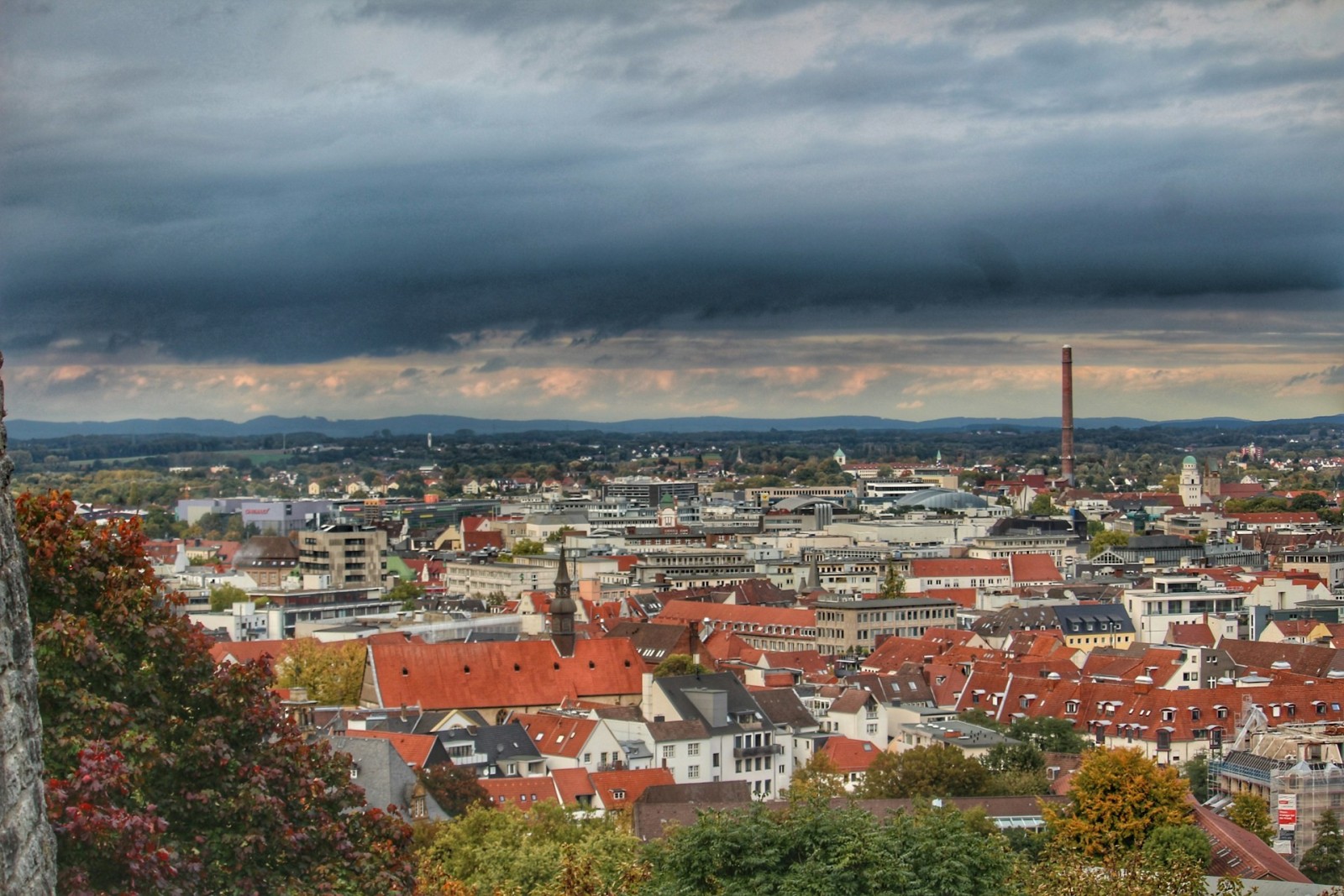
1. Historical atmosphere
Bielefeld has more than 800 years of history, so during the trip you can see the heritage of different eras.
The Old Town (Altstadt) has preserved historic streets, squares, churches and old buildings. Especially interesting is the Old Market (Alter Markt) - one of the most atmospheric places in the central part of the city.
The historic center is well suited for leisurely walks: here you can combine the inspection of architecture with visits to shops, cafes and restaurants.
2. Sparrenburg Fortress
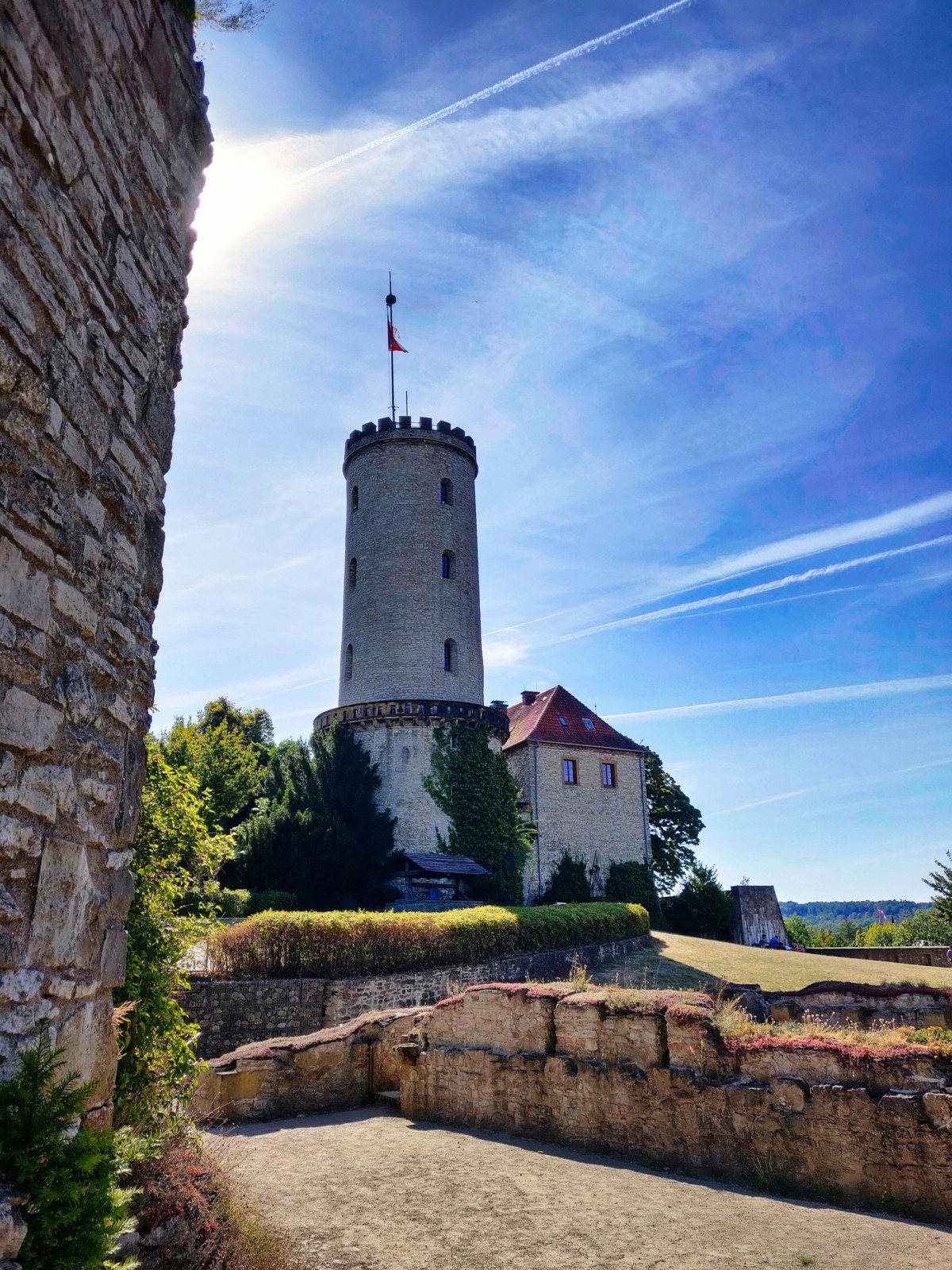
The main attraction of Bielefeld is the fortress of Sparrenburg.
It is located on a hill above the city and is the main historical symbol of Bielefeld. The fortress was associated with the counts of Ravensberg and for centuries performed defensive and administrative functions.
Today, Sparrenburg attracts tourists with its medieval history and panoramic views of Bielefeld and the surrounding area.
3. Teutoburg forest
One of the main advantages of the city is the close proximity of the Teutoburg Forest (Teutoburger Wald).
For tourists, this is an opportunity to combine a sightseeing trip with active rest. In the vicinity of the city there are numerous walking and cycling routes.
You can take a short walk or take a longer route through wooded hills and natural areas.
Bielefeld will especially appeal to travelers who do not want to spend the whole holiday only among urban buildings.
4. Walking downtown
The central part of Bielefeld is convenient to explore on foot.
After the Old Market, you can walk through the historic streets of the Old Town, see churches, squares, shops and small city quarters.
The architecture here is diverse: historical buildings coexist with modern buildings. Therefore, Bielefeld does not look like a preserved city-museum, but like a living modern city with a historical core.
5. Church architecture
Lovers of history and architecture should pay attention to the city temples.
Especially interesting are the Church of St. Nicholas (Altstädter Nicolaikirche) and the Church of St. Mary (Neustädter Marienkirche).
They are connected with the history of the medieval Bielefeld and help to imagine what the city was like in previous centuries.
6. Industrial heritage
Bielefeld has a rich industrial past.
In the XIX century, the city became one of the important centers of textile production in Germany. Later, mechanical engineering and metalworking were of great importance.
One of the most famous monuments of the industrial era is the Ravensberg Spinnerei.
Today it is no longer a functioning factory in the original sense, but a cultural space that recalls the industrial development of the city.
7. Museums and culture
Bielefeld offers an interesting cultural program.
The Historic Museum Bielefeld introduces the history of the city, its trade, industry and everyday life of the inhabitants.
Art lovers should visit Kunsthalle Bielefeld, where works of modern and classical art are presented.
Thus, the cultural program of the city is suitable for both history lovers and art fans.
8. Quiet tourism
Bielefeld is not one of the most popular tourist destinations in Germany, and this may be its advantage.
Here you can safely walk through the streets, visit museums, sit in a cafe and get acquainted with the ordinary life of the German city.
Bielefeld is especially interesting for those who have already visited Berlin, Munich or Cologne and now want to see a calmer and less touristic Germany.
9. gastronomy
During the trip you can get acquainted with the traditional cuisine of North Rhine - Westphalia.
Local establishments offer meat dishes, sausages, potato dishes, bread, pastries and other regional products.
At the same time, Bielefeld has a modern gastronomic scene: the center has international restaurants, coffee shops, bakeries and modern cuisine.
10. Shopping and urban life
In the center there are shops, shopping streets, cafes and restaurants.
During the day you can devote time to walks and shopping, and in the evening - restaurants, bars and cultural events.
Due to this, Bielefeld is suitable not only for a sightseeing trip, but also for a full-fledged city holiday.
1. High-level hotels
Hotel Bielefelder Hof
One of the most famous and comfortable hotels in Bielefeld. Suitable for tourists who need a high level of service, convenient location and additional hotel services.
The hotel is especially convenient for travelers coming by train, as it is close to the main station. It is also a good option for business trips and short city holidays.
Légère Hotel Bielefeld
Modern hotel in the city center with designer interiors. Suitable for city holidays, business trips and travelers who prefer a modern format of accommodation.
The hotel has a restaurant and bar, a fitness room, workspaces and several categories of rooms.
2. Mid-range hotels
Altstadt Hotel Bielefeldt
A small hotel in the Old Town. This is one of the most interesting options for tourists who want to live near historical sights.
The main advantage is the location: nearby are the Old Market, Town Hall, restaurants, cafes and shops.
Locals Stadthotel Bielefeld
City hotel of medium level, located in the central part of Bielefeld. It is well suited for independent tourists who need to be close to the station and the center.
This is a practical option for a short tourist trip.
Sunday Hotel Bielefeld Johannisberg
Hotel in Johannisberg, suitable for those who prefer a more peaceful environment.
It can be interesting for tourists who want to combine a visit to the city with walks in the green areas of Bielefeld.
3. Budget hotels
B&B Hotel Bielefeld-City
One of the most convenient economical options in the city. The hotel offers modern basic rooms suitable for a short stay.
It is especially convenient for tourists who spend most of the day on excursions and prefer to spend more money on impressions rather than hotel services.
B&B Hotel Bielefeld-Ost
Another budget option of the B&B Hotel network.
It is located further from the historical center, so it can be interesting for travelers, for whom the price of accommodation is more important than close proximity to the sights.
Ravensberger Hof
Small city hotel with more affordable accommodation.
Suitable for independent tourists who need basic hotel facilities and the opportunity to stay near the central part of the city.
4. Aparthotels and long-term accommodation
STAYERY Bielefeld Hauptbahnhof
Modern apartment hotel near the main station.
The main difference from a regular hotel is the format of a more independent stay. The rooms have kitchens, so the option is especially convenient for tourists who stay for a few days and want to cook on their own.
It is also good for long trips.
Stay-Inn Boardinghouse Bielefeld Zentrum
Boardinghouse in the city center.
This is an intermediate option between a hotel and a separate apartment. Suitable for independent travelers, seconded travelers and tourists who want to get more space and independence.
1. Fortress of Sparrenburg (Sparrenburg)
The main historical symbol of Bielefeld and one of the most famous sights of the city. The fortress is located on a hill above the center and is associated with the history of the counts of Ravensberg.
Tourists are interested in the fortress walls, tower, interior rooms and underground passages. From the territory of the fortress there are good views of Bielefeld and Teutoburg Forest.
Accessibility: You can walk from the Old Town. You can also use StadtBahn and get off in the area of Adenauerplatz or Landgericht, and then continue on foot.
For tourists: a mandatory place for the first visit to Bielefeld.
2. The Old Market (Alter Markt)
The main historical square of the Old Town. Around it are ancient buildings, restaurants, cafes and shops.
Especially stands out the historical Kröllwellhaus with a characteristic facade. The square is a good place to start a walk around the Old Town.
Accessibility: It is most convenient to walk from the center. From the main station can be reached in about 15-20 minutes.
For tourists: one of the main places to get acquainted with the historical Bielefeld.
3. Old Town Hall (Altes Rathaus)
The historical building of the town hall, located in the central part of Bielefeld.
The town hall is of interest primarily as part of the historical architectural ensemble of the city. It is convenient to explore along with the Old Market and other buildings of the Old Town.
Transport accessibility: It is centrally located, so it is best to visit on foot.
4. St. Nicholas Church (Altstädter Nicolaikirche)
One of the most important historical churches of Bielefeld, located in the Old Town.
The temple is associated with the centuries-old history of the city and is of interest to lovers of medieval architecture and religious heritage.
Transport accessibility: located near the main attractions of the Old Town, so it is most convenient to get on foot.
5. St. Mary's Church (Neustädter Marienkirche)
The historical church of the New City, which is of great architectural and historical value.
It is connected with the development of Neustadt and allows you to see the other side of the historical Bielefeld.
Accessibility: You can walk from the Old Market. A visit is conveniently combined with a walk through the central streets.
6. Kunsthalle Bielefeld (Kunsthalle Bielefeld)
One of the main art museums of the city. The building itself is of interest to lovers of modern architecture.
The museum hosts exhibitions of modern and classical art, and there is a sculptural park nearby.
Transport accessibility: it is convenient to get to Adenauerplatz by StadtBahn and then walk.
For tourists: especially recommended for fans of art and architecture.
7. History Museum Bielefeld (Historisches Museum Bielefeld)
The museum is dedicated to the history of the city and the region.
Expositions tell about the medieval Bielefeld, flax trade, crafts, the industrial revolution, the development of factories and the daily life of residents.
The museum is especially useful for tourists who want to gain a deeper understanding of the city’s history, not just its architecture.
Accessibility: Located in Ravensberger Park. From the center you can walk or take public transport.
8. Ravensberg spinning factory (Ravensberger Spinnerei)
One of the main monuments of Bielefeld’s industrial history.
In the XIX century, a large-scale textile industry developed here, which played an important role in turning the city into an industrial center.
Today, the territory of the former factory is used for cultural and social purposes.
Transport accessibility: located near the center. From the Old Town you can walk in about 15-20 minutes.
For tourists: especially interesting for those who want to get acquainted with the industrial past of the city.
9. Heimat-Tierpark Olderdissen
Large natural park with animals, located next to the Teutoburg forest.
This is a good place for family holidays and walks. Here you can see various representatives of local and European fauna and spend time in nature at the same time.
Transport accessibility: It is more convenient to get by bus as the park is further away from the historic center. There are also walking routes here.
For tourists: especially recommended for families with children.
10. Bielefeld Botanical Garden (Botanischer Garten Bielefeld)
A quiet green area with collections of plants, located near the Teutoburg forest.
The botanical garden is well suited for a leisurely walk and relaxation after visiting museums and historical sights.
Transport accessibility: You can take the bus and then walk a short distance.
11. Historic Park Johannisberg (Historischer Park Johannisberg)
Green zone on the slopes of the Teutoburg forest.
The park combines natural areas with historical landscape and walking routes. Some areas offer views of Bielefeld.
Transport accessibility: the nearest areas can be reached by public transport, after which you can continue walking.
For a tourist: a good option for a relaxing holiday, walks and acquaintance with the nature of the city.
12. Rudolf-Oetker-Halle (Rudolf-Oetker-Halle)
The famous Bielefeld concert hall, built in 1930.
The building is of interest due to its architecture and acoustics. Classical music concerts and other cultural events are held here.
Transport accessibility: you can use StadtBahn or bus and then walk.
For tourists: especially interesting when visiting the city during a concert or cultural event.
13. Theater Bielefeld (Theater Bielefeld)
One of the main cultural centers of the city, which includes several theater venues.
The location in the central part makes it easy to combine a visit to the theater with a walk around the Old Town, dinner in a restaurant or visiting other attractions.
Transport accessibility: very convenient - the theatre is centrally located and accessible on foot from the Old Market and the central StadtBahn stops.
14. Natural History Museum (Naturkunde-Museum Bielefeld)
The museum is dedicated to the nature of the region, the animal and plant world.
It is especially interesting for families with children and tourists who want to supplement the historical program with natural history themes.
Transport accessibility: located in the central part of the city and accessible on foot or by public transport.
15. The Teutoburg Forest (Teutoburger Wald)
One of the main natural resources of Bielefeld.
The forest is directly connected to the city and offers many opportunities for hiking, cycling and outdoor activities.
It is especially convenient that some routes connect natural areas with Schparrenburg, Johannisberg and other attractions.
Transport accessibility: different parts of the forest can be reached by bus or StadtBahn, and then continue on foot.
The Night of Museums, Galleries and Churches (Nachtansichten, April) is an annual cultural event during which museums, galleries, cultural centers and historic buildings work late. There are exhibitions, concerts, theatrical performances, light installations and various artistic events.
Lineweber Market (Leineweber-Markt, May-June) is the main city holiday of Bielefeld and one of the largest annual events. In the city center, scenes are set, concerts, street performances, a fair, gastronomic events and entertainment for families are held. The Old Market is particularly busy.
Carnival of Cultures (Carnival der Kulturen, June) is a colorful festival of cultural diversity. A festive procession is held around the city with musical and dance groups, costumed groups and representatives of various cultures.
The Campus Festival Bielefeld (June) is a major youth music event related to the university life of the city. Various musicians and groups perform, so the festival is especially popular among students and young people.
The Bielefeld Dance Festival (Tanzfestival Bielefeld, July) is a contemporary dance festival with performances by professional groups, performances, master classes and various dance events.
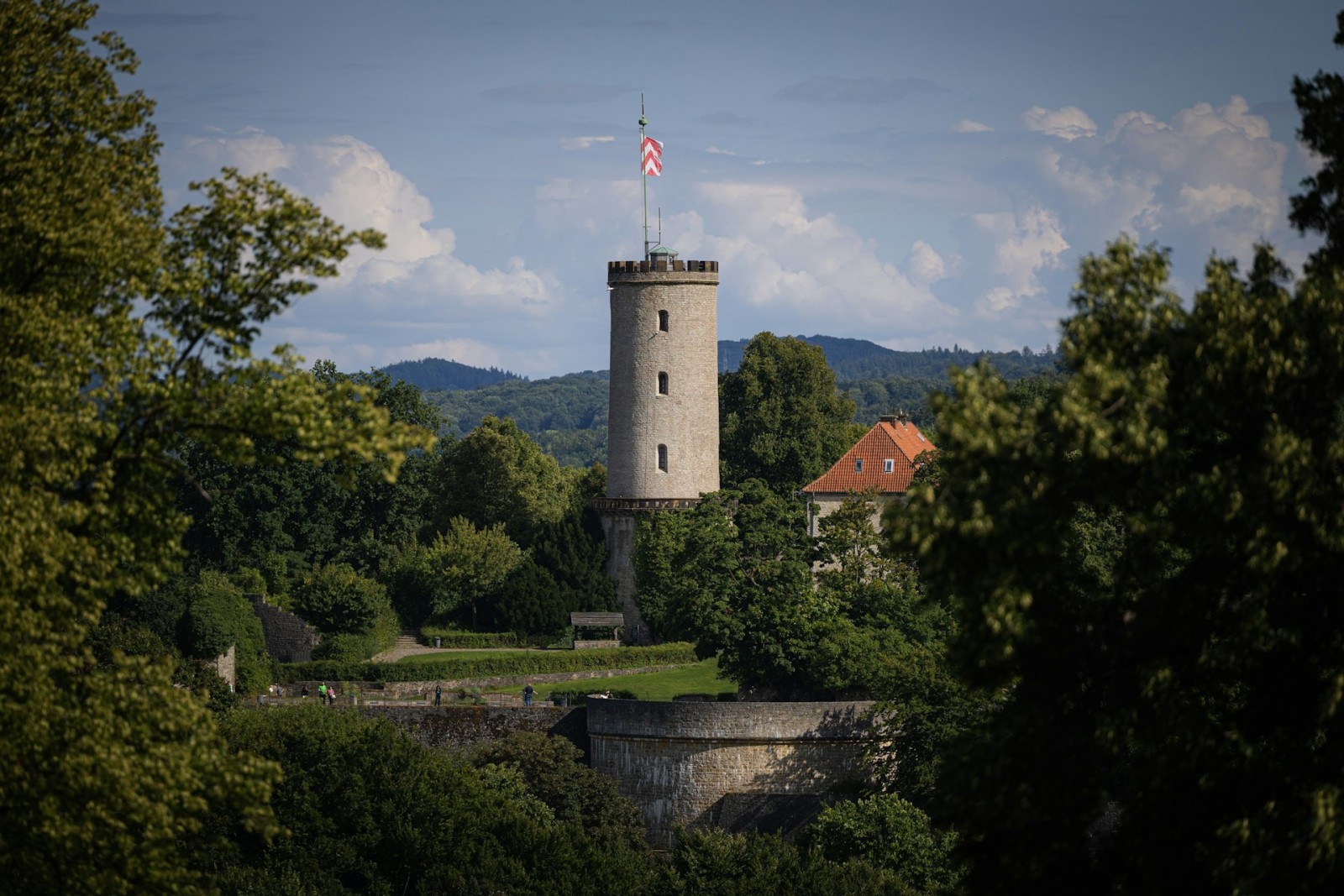
The Sparrenburgfest (July) is one of Bielefeld’s most interesting historical festivals. It takes place at the fortress of Schparrenburg and is dedicated to the medieval history of the city. Visitors are waiting for knights, historical costumes, artisans, musicians, trading tents, theatrical performances and thematic entertainment.
Wackelpeter Kinderkulturfest (August) is a big family holiday in Ravensberger Park. The program includes children's performances, concerts, games, creative master classes and other entertainment. Especially suitable for families with children.
Summer concerts (Sommerkonzerte, May-September) - the city hosts many concerts in outdoor venues, clubs and concert halls. You can hear rock, pop, jazz, electronic and classical music.
The Luna Summer Cinema (July-September) is an open-air cinema. In the evening, films are shown in the park, creating a calm atmosphere for relaxing after walking around the city.
Bielefeld Wine Market (Bielefelder Weinmarkt, September) is a city wine festival. The venues in the center feature wines and gastronomic specialties, music performances and festive events.
Cycling tour (RadKulTour, summer-autumn) is an event that combines cycling and acquaintance with the cultural objects of the city. A good option for tourists who prefer active rest.
1. Winter - December, January, February
Winter in Bielefeld is relatively mild compared to many regions of Central and Eastern Europe, but the weather is often cloudy, wet and windy.
Air temperature:
December: approximately +2...+6 °C during the day, at night about 0...+2 °C.
January: about +2 ... +5 °C during the day, at night about -1 ... +1 °C.
February: approximately +3 ... +6 °C during the day, at night about -1 ... +1 °C.
Snow is possible, but sustained snow cover is not guaranteed for Bielefeld. Rain and wet snow are more common.
Water temperature: Natural water bodies are usually too cold for swimming - approximately +3 ... +6 ° C. Only covered swimming pools are suitable for swimming.
For travel: Winter is suitable for museums, the historic center, concerts and Christmas events. Especially interesting is December, when the city is decorated for Christmas.
2. Spring - March, April, May
In spring, the temperature gradually rises, the duration of daylight hours increases, parks and forests begin to actively green.
Air temperature:
March: about +8...+10 °C day, night +1...+3 °C
April: about +13 ... +15 °C day, night +4 ... +6 °C.
May: About +18... +19 °C day and night +8... +10°C.
May is already comfortable enough for long walks and excursions. Average climate data show a noticeable increase in temperature from about 5-6 °C in March to 13-14 °C in May.
Water temperature: natural water bodies in spring are still cold - about +6 ... +15 ° C depending on the month and weather. This period is not suitable for normal swimming.
For travel: April and May are good for exploring the city, walking through the Teutoburg Forest, visiting museums and parks. In April, the Night of Museums, Galleries and Churches (Nachtansichten) is especially interesting.
3. Summer - June, July, August
Summer is the most comfortable time for active tourism. The weather is usually moderately warm, with no prolonged extreme heat, although some hot periods are possible.
Air temperature:
June: about +21 ... +22 °C day, night +11 ... +13 °C.
July: about +23 ... +24 °C day, night +13 ... +14 °C.
August: about +23 °C during the day, at night +13 °C.
July and August are the warmest months. Summer can also be rainy: July is usually the wettest month of the year.
Water temperature: in the natural reservoirs of the region in the summer is usually about +18. +22 °C, and in some warm small lakes it can be higher. In Naturbad Brackwede, water is usually around 21–24 °C. In urban Wiesenbad, water is maintained at about 27°C.
For travel: this is the best time to walk through the Teutoburg Forest, visit Schparrenburg, parks, outdoor areas and festivals.
June and July are especially attractive when the Lineweber Market, the Carnival of Cultures, the Dance Festival and the Schparrenburg Festival are held.
4. Autumn - September, October, November
Autumn begins quite softly, but it gets cooler every month. In September, the weather is often comfortable for walking.
Air temperature:
September: around +18... +19 °C day, night +10 °C.
October: about +13 ... +14 °C day, night +6 ... +7 °C.
November: about +8 ... +9 °C day, night +3 ... +4 °C.
September is especially pleasant for tourist trips, and October is suitable for museums, architectural excursions and walks in the autumn forest. In November it becomes much cooler and cloudier.
Water temperature: about +17 ... +19 °C in September, +12 ... +14 °C in October and about +8 ... +10 °C in November. For swimming, natural water bodies are already cool in autumn.
For travel: September is one of the most enjoyable months. At this time, the Bielefeld wine market takes place, and the autumn forests around the city become especially picturesque.
1. Language of communication
German (Deutsch) is the main and official language of the city.
Standard German is used in everyday life, although locals can use the regional features of North Rhine-Westphalia speech.
English is quite common among young people and employees of the tourism sector. On it you can communicate in hotels, restaurants, museums and other popular tourist places.
Russian is not a common language of service, so you should not count on the opportunity to constantly communicate in Russian.
To travel, it is desirable to know at least a few simple expressions: greeting, gratitude, request for help, question about the price and direction to the right place.
2. Greetings and communication
In Germany, great importance is attached to politeness and respectful treatment.
When meeting strangers, it is better to use Sie - a polite form of treatment.
When addressing hotel staff, waiters, sellers and other employees, it is advisable to maintain a calm and polite tone.
3. Punctuality
Germans have traditionally paid great attention to punctuality.
If you book a tour, table in a restaurant, excursion program or meeting, it is advisable to come on time.
Being a few minutes late is usually not a serious problem, but being significantly late without warning is considered impolite.
4. Lines and public spaces
In Germany, it is customary to observe order in queues.
Don’t try to get ahead of other people or take a seat unnecessarily.
In public transport, it is advisable to first allow passengers to get off and only after that enter the car or bus.
Seats for people with disabilities, elderly passengers and other categories should be vacated if necessary.
5. Rules of conduct in restaurants and cafes
In restaurants, it is customary to calmly wait for the waiter and not require service in a rude manner.
In Germany tipping is not strictly mandatory, but with good service usually leaves about 5-10% or just round the bill amount.
If the service is included in the bill, additional remuneration can still be left at will.
It is better to order food and drinks after the waiter offers a menu or informs that he is ready to accept the order.
6. Silence and respect for others
The Germans take silence very seriously, especially in residential areas.
Not recommended:
Speak loudly at night;
Play loud music at the hotel;
make noise in the entrances;
interfere with neighbors;
Arrange noisy parties in residential areas.
It is especially important to observe Ruhezeit, a time of silence that may be governed by local rules and regulations of a particular house or hotel.
7. Conduct in public transport
It is customary to observe order in StadtBahn, buses and trains.
Preferably:
have a valid ticket;
not interfere with other passengers;
Do not occupy several places without necessity;
Do not lock the doors;
Give places to those who need them.
comply with the carrier's rules.
Ticketless travel can result in a significant fine.
8. Garbage and cleanliness
In Germany, great attention is paid to cleanliness and sorting of waste.
Garbage should be disposed of in appropriate containers. Separate collection of paper, packaging, glass and organic waste can be used in residential areas and hotels.
Do not leave garbage in parks, woods, streets or near attractions.
Pollution of public places may be fined, depending on the circumstances.
9. Sorting garbage and bottles
In Germany, there is a Pfand system – a pledge for certain types of bottles and cans.
When buying a drink, a deposit can be added to the cost. Empty containers can be returned through special machines in stores and get a deposit back.
Therefore, do not immediately throw away plastic bottles and cans, if they are provided with Pfand.
10. Photography
Photography is allowed in most tourist places, but special prohibitions must be noted.
In museums and exhibition halls, photography of individual exhibits may be prohibited.
Do not take close-up photos of people without their consent, especially if the photo is intended for publication.
When visiting churches, it is advisable to behave calmly and not interfere with worship.
11. Bicycles and pedestrians
Bielefeld is a city where bicycle transport is actively used.
It is important to pay attention to bike lanes and not walk on them unnecessarily.
Pedestrians should observe traffic lights and cross the road in permitted places.
Cyclists are also required to follow traffic rules.
12. Smoking
Smoking is banned or restricted in many enclosed public spaces, including public transport and a significant proportion of establishments.
In restaurants and other places, you should pay attention to designated areas for smoking.
You should not automatically assume that you can smoke in any open area - in some places additional restrictions may apply.
13. Alcohol
Alcohol consumption in Germany is generally legal for adults, but there are restrictions for certain places and situations.
Do not appear in public places in a state of strong intoxication, disturb order or create danger to others.
It is especially important to follow the rules during festivals, concerts and mass events.
Driving after drinking alcohol can have serious consequences.
14. Traffic rules
When renting a car, you must carefully observe German traffic rules.
Particular attention should be paid to:
speed limits;
traffic lights;
pedestrian crossings;
cyclists;
traffic signs;
parking rules.
On autobahns, the absence of a general speed limit does not mean that you can drive at any speed: you need to take into account the established restrictions on a particular section and road conditions.
15. Visiting natural areas
The Teutoburg Forest is one of the main natural areas near Bielefeld.
During walks, you should adhere to the designated routes, do not leave debris and do not damage plants.
In the forest, it is also important to respect other tourists and locals: do not turn on loud music or create noise unnecessarily.
16. Behavior in churches
When visiting historic churches, you should be calm.
Preferably:
speak quietly;
Turn off or transfer the phone to silent mode;
Do not interfere with worship;
comply with photographic requirements;
Choose appropriate clothing when attending religious events.
17. Documents
The tourist must have a valid identity document and, if necessary, documents confirming the legality of his stay in Germany.
For citizens of EU countries there are some rules of entry and stay, for citizens of countries outside the EU – others. Therefore, it is necessary to check the requirements for your citizenship before traveling.
1. Greetings and polite expressions
Hallo! Transcription: Hallo
Guten Morgen! - Good morning!Transcription: Guten Morgen
Guten Tag! - Good afternoon! / Hello!Transcription: Guten Takak
Guten Abend! - Good evening! Transcription: Guten ábent
Gute Nacht! - Good night! Transcription: gute naht
Tschüss! - Goodbye!
Auf Wiedersehen! - Goodbye! Transcription: auf vúderzaen
Bitte! - Please! You're welcome! Transcription: butte
Danke! - Thank you!
Vielen Dank! - Thank you very much!Transcription: Fulen Dank
Entschuldigung! Transcription: Entschüldigung
Kein Problem. - No problem. Transcription: The Kaine of Problems
Ja. - Yes. Transcription: I
Nein. Nope. Transcription: nain
Vielleicht. - Maybe. Transcription: Filaicht
2. If you speak German poorly
Sprechen Sie Englisch? - Do you speak English? Transcription: Sprehan zi englush?
Sprechen Sie Russisch? - Do you speak Russian? Transcription: Sprehan zi Rusish?
Ich spreche nur ein bisschen Deutsch. I only speak German a little bit. Transcription: Their Sprehe Nur Ain Búschen Deutsch
Ich spreche kein Deutsch. - I don't speak German. Transcription: Their Spreche Kaine Deutsch
Können Sie bitte langsamer sprechen? - Could you speak more slowly? Transcription: Kenen zi butte Langzamer Sprehen?
Können Sie das bitte wiederholen? - Could you say it again? Transcription: kenen zi das butte viderholen?
Ich verstehe nicht. - I don't understand. Transcription: their fairstee nicht
Was it bedeutet das? - What does that mean? Transcription: Are you poor?
Können Sie mir helfen? - Can you help me? Transcription: kenen zi world helfen?
3. At the hotel.
Ich habe eine Reservierung. - I have a reservation. Transcription: their habe áine reservirung
Ich möchte einchecken. - I'd like to register. Transcription: their mehte áincheken
Auf welchen Namen ist die Reservierung? What name was the reservation made for? Transcription: auf velhen namen east di reservirung?
Hier ist mein Reisepass. - Here's my passport. Transcription: Chir East Main Raisepas
Wann ist der Check-out? - When's the eviction? Transcription: van east der cheque-out?
Ist das Frühstück inklusive? - Breakfast included? Transcription: ist das frýštük inclusion?
Um wie viel Uhr gibt es Frühstück? - What time is breakfast? Transcription: mind wi fil ur die s früshtyuk?
Wo ist mein Zimmer? - Where's my number? Transcription: East mein zumer?
Gibt es WLAN? - Is there Wi-Fi?Transcription: die es ve-lan?
4. Restaurant and café
Einen Tisch für zwei Personen, bitte. - Table for two, please. Transcription: áinen tish für zwei parzonen, butte
Haben Sie eine Speisekarte? - Do you have a menu? Transcription: Haben zi áine Spaisekarte?
Was empfehlen Sie? - What do you recommend? Transcription: Are you Emphelan Z?
Ich möchte das bestellen. - I'd like to order this. Transcription: their mehte das beshtelen
Ich nehme das. - I'll take this. Transcription: their neme das
Ohne Fleisch, bitte. - No meat, please. Transcription: one fluish, butte
Ohne Zwiebeln, bitte. - No bow, please. Transcription: Öne zvubeln, butte
Die Rechnung, bitte. - Check, please. Transcription: di rehnung, butte
Kann ich mit Karte bezahlen? - Can I pay with a card? Transcription: Can their mit karte betzalen?
Zusammen, bitte. - Together, please. Transcription: tsuzammen, butte
5. In the store.
Wie viel kostet das? - How much does it cost? Transcription: Whifil Costet das?
Das ist zu teuer. - It's too expensive. Transcription: das plaint zu toyer
Haben Sie etwas günstigeres? - Do you have anything cheaper? Transcription: haben zi étvas gunstúgares?
Ich möchte das kaufen. - I want to buy this. Transcription: Their mehte das Kaufen
Kann ich mit Karte bezahlen? - Can I pay with a card? Transcription: Can their mit karte betzalen?
Kann ich bar bezahlen? - Can I pay in cash? Transcription: Can their bar betzalen?
Haben Sie eine Tüte? - Do you have a package? Transcription: habeng zi áine tute?
Ich möchte nur schauen. - I'm just looking. Transcription: Their mehte noor shauen
6. At the station and on public transport
Wo ist der Bahnhof? - Where's the station? Transcription: East Der Banhof?
Wo ist die Straßenbahn? - Where's the tram? Transcription: East di Strasenban?
Wo ist die StadtBahn? - Where's StadtBahn? Transcription: East di Statban?
Welche Linie fährt ins Zentrum? - What line goes downtown? Transcription: Velhae Lúnie Firth Ins Centrum?
Wo muss ich aussteigen? - Where do I need to get out? Transcription: to Moses their aušteigen?
Ist das der richtige Zug nach Bielefeld? Is this the right train to Bielefeld? Transcription: ist das der ruhtighe zug nah Bulefelt?
Wann fährt der nächste Zug? - When does the next train leave? Transcription: Van Firth der Nehste Zug?
Eine Fahrkarte nach Bielefeld, bitte. - One ticket to Bielefeld, please. Transcription: áine Farkarte nah Búlefelt, butte
1. Local food and food
Leberbratwurst is a traditional German sausage found in the North Rhine-Westphalia region. This is a variant of sausage with the addition of liver, which is usually consumed hot.
Westphalian ham (Westfälischer Schinken) is one of the famous regional meat products. Dried or smoked ham has a rich taste and is well suited as a gastronomic gift.
The Westphalian Pumpernickel is a dense, dark rye bread traditionally associated with Westphalia. You can buy it in the package and bring it home.
Westphalian bread (Westfälisches Bauernbrot) - various varieties of dense rye and mixed bread. It is better to buy factory-packed options if there is a long road ahead.
Regional cheeses – German cheeses can be found in shops and markets, including products from small regional producers.
Honey and bee products are a good option for a small gastronomic gift. Especially interesting are the products of local apiaries and farms.
2. Sweets.
German chocolate is a practical and convenient gift that is easy to transport. In Bielefeld you can buy products of famous German manufacturers and small confectionery.
Marzipan and marzipan candies are a popular German version of a sweet souvenir.
Cookies and Christmas baked goods are especially interesting during winter travel when shops offer a wide selection of seasonal sweets.
Carrots and cinnamon products are a good option for a gift, especially during the Christmas markets.
3. Local drinks
German beer - North Rhine - Westphalia has a long brewing tradition. As a souvenir, you can choose regional varieties in factory packaging, if they are allowed to be transported in accordance with the rules of the destination country.
Non-alcoholic craft beer is a good option for those who want to try local products without alcohol.
Regional lemonades and mineral water are a less traditional but convenient option to experience German products.
Local roast coffee is a good souvenir for coffee lovers. You can choose a grain or ground coffee from a German roasting company.
4. Textiles and flax products
The history of Bielefeld is closely connected with the linen and textile industry, so natural linen products especially well reflect the historical specifics of the city.
It can be purchased:
Linen kitchen towels;
tablecloths;
napkins;
fabric bags;
scarves;
decorative products;
Small items of home textiles.
Such a gift will be more characteristic of Bielefeld than an ordinary magnet.
5. Souvenirs with the fortress of Schparrenburg
Magnets with the image of Schparrenburg are the simplest version of a small souvenir.
Fortress miniatures are a more interesting gift for collectors.
Postcards with Bielefeld panoramas are especially suitable for those who collect postcards of cities.
Sparrenburg Breloki is a compact souvenir that is easy to transport.
T-shirts and hoodies with Bielefeld symbols are a practical option for a tourist who wants to preserve the memory of the trip.
6. Souvenirs with Bielefeld symbols
A good gift can be products depicting the coat of arms of Bielefeld, the fortress of Schparrenburg or the characteristic views of the Old Town.
You can find:
cups;
magnets;
keychains;
pens;
notebooks;
T-shirts;
bags;
postcards;
small decorative items.
Bielefeld is considered a fairly calm and safe city for tourists. The main risks for the traveler are not related to serious crimes, but to ordinary urban situations: theft in crowded places, loss of documents, minor traffic accidents and possible problems with public transport. In a normal tourist trip, it is enough to observe standard precautions.
1. What documents are required to have
To travel to Bielefeld, you must have:
a valid foreign passport;
visa or document entitling entry, if required for the citizenship of the tourist;
Confirmation of residence – reservation of a hotel or other place of accommodation;
return ticket or confirmation of further route - it is desirable to have with you;
Confirmation of funds, if required upon entry;
health insurance;
copies of the main documents - it is desirable to store separately from the originals and additionally in a secure electronic storage.
For citizens of countries that do not require a visa for a short trip, Germany specifies that the passport on the planned departure date must be valid for at least another 3 months, and the document must be issued within the last 10 years. In some cases, confirmation of the purpose of the trip and the availability of sufficient funds may be required.
2. Health insurance
For a tourist trip, it is recommended to arrange medical insurance for the entire trip.
If a tourist requires a Schengen visa, health insurance must be valid throughout the Schengen area and for the entire duration of stay, and the minimum insurance amount must be 30,000 euros.
Even if a citizen of a particular country does not need a visa, insurance remains very desirable: treatment in Germany can be expensive.
It is better that the policy includes:
emergency medical care;
hospitalization;
treatment of injuries;
transportation to a medical institution;
medical evacuation or return home if necessary.
3. Emergency phones
112 – a single emergency number
It is used in case of serious threat to life, serious injuries, fire and other emergencies. The call is free.
110 - police
The number for contacting the police in case of crimes, security threats, assault, theft and other situations requiring police intervention.
116 117 – on-duty medical service
It is used for urgent medical problems that require help but do not pose an immediate threat to life.
116 116 – Bank card blocking
Useful number in case of loss or theft of a bank card.
If the situation poses an immediate threat to life, it is better not to look for a specialized number, but to immediately call 112.
4. What to do when losing your passport
If your passport is lost or stolen:
Call the police and make a statement.
Obtain a document confirming the fact of loss or theft.
Contact your country’s embassy or consulate in Germany.
To clarify the possibility of obtaining a temporary travel document.
Contact the insurance company if appropriate assistance is included in the policy.
Do not keep your passport, bank cards and all your money in one place.
5. Security of money and bank cards
In touristic places and public transport, it is advisable to keep an eye on your bag and wallet.
Particular attention should be paid to:
railway stations;
overcrowded public transport;
major events;
festivals;
markets;
Places of large crowds.
It is better to have two bank cards and keep them separately. A small amount of cash can be kept separate from the main money.
6. Mobile communications
There are four main mobile networks in Germany:
Telekom Deutschland;
Vodafone;
Telefónica Germany (o2);
1&1.
The German Federal Network Agency indicates that various mobile operators use Telekom, Vodafone, Telefónica or 1&1 networks.
For tourists can be used:
To travel on Bielefeld, it is desirable to have mobile Internet, as it is useful for navigation, train schedules and public transport.
7. Safety of public transport
In Bielefeld you can easily use buses and the city railway system StadtBahn.
Basic rules:
purchase a valid ticket;
do not forget about the need for composting, if it is provided by the system;
monitor personal belongings;
Do not leave the bag unattended;
Observe the rules of conduct in transport.
Special attention should be paid to things at the station and during major city events.
8. Safety while walking
In the central part of Bielefeld it is usually quite safe to walk.
However, in the evening it is advisable to stick to well-lit streets and avoid unnecessarily lighted and unpopulated places.
When walking through the Teutoburg forest, you should take into account not only city security, but also natural conditions: the weather, the state of the trails, the distance to the nearest settlement and the level of physical fitness.
9. Bicycles and roads
When crossing the streets, it is necessary to observe traffic lights and pay attention to bicycle paths.
Cyclists in Germany have their own lanes and paths, so a tourist should not stand or walk on a designated bike path.
If you rent a bicycle, it is advisable to use a helmet and follow the rules of the road.
10. Safety during festivals
During Leineweber-Markt, Sparrenburgfest, Christmas market and other major events, the number of people in the center increases significantly.
On such days it is recommended:
Keep your phone and wallet in your pockets.
Do not leave your backpack unattended;
Do not carry all documents and money with you;
Determine the meeting place in advance if you are traveling in a group;
Keep an eye on the last transport to the hotel.
11. How many tourists can stay in Germany
For third-country nationals who are granted short-term visa-free entry, the standard Schengen rule is up to 90 days in any 180-day period. This applies to the total length of stay in the Schengen area, not to 90 days separately in Germany.
The same rule usually applies to holders of a short-term Schengen visa: even if the visa has a validity period of one or more years, this does not mean that you can stay in Germany continuously for the entire duration of the visa. The maximum stay is 90 days in any period of 180 days, unless the visa itself specifies a shorter period.
For example, if a tourist has used 90 days of stay in the Schengen area, simply leaving Germany for a few days and re-entering is not enough. It is necessary to take into account the entire history of stay for the previous 180 days.
For EU/EEA and Swiss citizens, other free movement rules apply, so the 90/180 rule does not apply.
Longer stays, such as working, studying or living, require an appropriate national status or permit.
Create a query and local guides will offer you the best options

