Independent tourism and recreation in the city of Bochum Historical information about the city of Bochum Bochu...
Bochum is one of the largest cities of the Ruhr region in the state of North Rhine-Westphalia. Its history is especially interesting due to the transformation of a small medieval settlement into a major center of the coal and metallurgical industry, and then into a modern university, scientific and cultural city.
1. Ancient times and the Middle Ages
The territory of modern Bochum was inhabited in ancient times. Due to the fertile land, the availability of water and convenient location, there were small settlements of Germanic tribes.
In the early Middle Ages, the territory came under the influence of the Frankish state. Gradually, Bochum developed as a small settlement among the agricultural lands of Westphalia.
In the XIV century Bochum received city rights. This allowed him to conduct markets, develop trade and crafts, and strengthen his economic importance. However, for several centuries it remained a relatively small city.
Like other European cities, Bochum experienced fires, epidemics, wars and economic hardship.
2. Reformation and wars
In the sixteenth century, the religious changes associated with the Reformation affected all of Germany and Westphalia. The church and social life of the region changed.
A particularly difficult period was the Thirty Years' War of 1618–1648. Although Bochum was not the main center of hostilities, the inhabitants suffered from the consequences of the war: famine, disease, taxes and destruction of the economy.
After the end of the war, the city was gradually restored.
3. Start of industrial development
A real turning point in the history of Bochum occurred in the XVIII-XIX centuries, when active coal mining began.
The Ruhr region had large reserves of coal, which became an important source of energy during the Industrial Revolution. It was used for steam engines, metallurgy, heating and railway transport.
In the XIX century Bochum began to quickly turn into a major industrial center. Mines, metallurgical enterprises and factories were opened here.
A special role was played by the development of Bochumer Verein, which became one of the most important metallurgical enterprises in the city.
4. City of miners and metallurgists
Industrial growth completely changed Bochum. The population grew rapidly, with working-class districts, railways and new businesses being built.
Thousands of people worked in the mines. The work was difficult and dangerous: miners spent long hours underground, risking collapses, explosions and other accidents.
During this period, a special culture of the Ruhr region was formed, based on workers’ solidarity. Miners and metallurgists became an important part of Bochum’s image.
5. First and Second World Wars
During the First World War, Bochum’s industry was active in the war effort. After the war, the city, like all of Germany, faced inflation, economic crises and political instability.
During the period of National Socialism, industry was again used to produce war products.
During World War II, Bochum was heavily bombed as an important industrial center. Residential areas, businesses and urban infrastructure were severely destroyed.
After the war, Bochum found himself in the British zone of occupation and began a large-scale reconstruction.
6. Post-war industrial growth
In the 1950s, Bochum again became an important industrial center of West Germany. Economic recovery, the construction of new residential areas and the development of urban infrastructure began.
The automotive industry has gained great importance. One of the symbols of the new era was the Opel factory, where thousands of residents worked.
Thus, Bochum gradually began to move from an economy based solely on coal and metallurgy to a more diverse industry.
7. Mine closures and change
In the second half of the XX century, the coal industry of the Ruhr region began to gradually decline. German coal was becoming too expensive compared to imported coal, and the global economy was changing.
The mines began to close, thousands of people lost their jobs. For Bochum, this was a serious economic test.
The city had to look for new directions of development and gradually abandon its former dependence on heavy industry.
8. University and Science City
One of the most important events of modern history was the establishment of the Ruhr-Universität Bochum.
The university changed the character of the city. Students, teachers and scientists from Germany and other countries began to come to Bochum.
The city gradually developed as a major center:
education;
science;
research;
technology;
medicine;
service sector.
At the same time, the former industrial sites became part of the cultural heritage of the city.
9. Bochum today
Modern Bochum is no longer exclusively a city of mines and metallurgical plants. Today it combines the industrial past with modern economics, university life and culture.
The German Mining Museum (Deutsches Bergbau-Museum) remains an important symbol of the historical heritage, recalling the city’s long-standing connection with coal mining and industrial development.
The history of Bochum can be summarized as a path from a small medieval town to a major industrial center, and then to a modern scientific and university city.
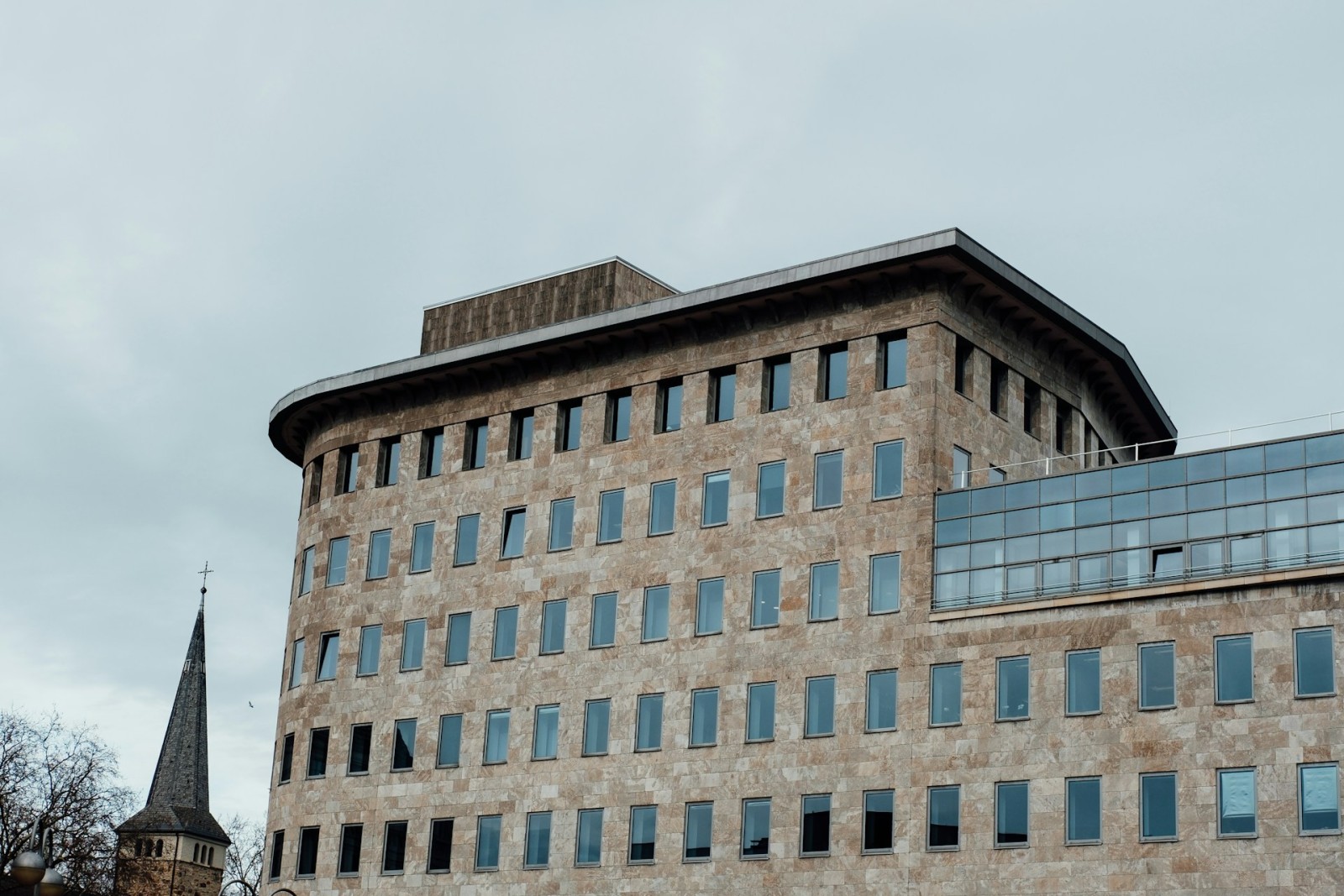
The German Mountain Museum is a symbol of the city
One of the main attractions of Bochum is the Deutsches Bergbau-Museum.
This is one of the most famous places associated with the history of mining. Here you can get acquainted with the development of mining, see mining equipment and learn how the industrial power of the Ruhr region was formed.
For tourists, the museum is especially interesting because it allows you to feel the atmosphere of the era when thousands of Bochum residents worked underground in coal mines.
Cultural life and theatre
Bochum is known for its rich cultural life. The city is considered one of the important theater centers of the Ruhr region.
There are theaters, concert venues and cultural centers, music events and festivals.
Bochum becomes especially attractive in the evening when restaurants, bars and concert venues open. Thanks to the large number of students, the city has a lively and youthful atmosphere.
University atmosphere
The Ruhr-Universität Bochum plays an important role in the modern appearance of the city.
Having a large university makes the city young and international. Here you can meet students and researchers from different countries.
Around the university are developing cafes, modern public spaces and cultural events.
For young tourists, Bochum can become a more affordable and relaxed alternative to the major tourist cities of Germany.
Parks and nature recreation
Despite its industrial past, Bochum is a green city.
There are parks, walking areas and places for a relaxing holiday. One of the popular destinations for walking is the area of Lake Kemnader See, located nearby.
Here you can walk, ride a bicycle and relax by the water.
Such places are especially attractive in summer, when you can combine acquaintance with museums and city life with recreation in nature.
Excellent location for travel around the Ruhr area
One of the main advantages of Bochum is its location.
The city is located almost in the center of the Ruhr region, so it is convenient to travel around western Germany from here.
In a relatively short time you can reach other interesting cities:
Dortmund (Dortmund);
Essen;
Duisburg;
Dusseldorf (Düsseldorf);
Cologne (Köln).
Thanks to the developed railway network, Bochum can become a convenient base for several days of travel around the Ruhr region.
1. Comfortable and more expensive hotels
This option is suitable for tourists who want to get a high level of comfort, convenient location and additional services. Such hotels are especially convenient for business trips, family holidays and travelers who prefer a full-fledged hotel service.
Among the popular options are:
Mercure Hotel Bochum City is a large modern hotel in the central part of the city, convenient for exploring the main areas of Bochum.
Hotel Claudius is a comfortable option in a quiet area, suitable for tourists who prefer quieter accommodation.
Hotel Excelsior GmbH is a high-level hotel that can be suitable for a more comfortable stay.
Welcome Parkhotel Bochum is a good option for tourists who want to combine a comfortable stay with proximity to green areas and attractions.
2. Mid-range hotels
This is the most versatile option for most travelers. Such hotels usually offer comfortable rooms, Wi-Fi, breakfast and good transport accessibility.
Popular options:
Holiday Inn Express Bochum, an IHG Hotel is a modern hotel in a convenient area of the city, suitable for both tourist and business trips.
Four Points Flex by Sheraton Bochum is a comfortable modern option near the center.
Moxy Bochum is a stylish hotel with a modern youth atmosphere.
Hotel Ostmeier is a popular option with a convenient location in the urban part of Bochum.
Such hotels are well suited for traveling for a few days and exploring Bochum and the entire Ruhr region. Among the most popular booking options in the city are Mercure, Moxy, Holiday Inn Express and Best Western.
3. Cheap hotels
For budget-constrained tourists, Bochum has several comfortable hotels that allow you to stay in the city without much expense.
Among the options:
B&B Hotel Bochum-City is a practical option for a short tourist trip.
B&B Hotel Bochum Hbf-Süd is convenient due to its location near the transport infrastructure.
B&B Hotel Bochum Hbf-Nord is another budget option near the city center.
Garner Hotel Bochum by IHG is an affordable option with good transport accessibility.
Inexpensive Bochum hotels are especially convenient for tourists who plan to spend most of the day on excursions or travel to neighboring cities of the Ruhr region.
1. German Mining Museum (Deutsches Bergbau-Museum Bochum)
The German Mining Museum is one of the main attractions of Bochum and one of the most important objects related to the history of the Ruhr region. Here you can get acquainted with the history of mining, see the mining equipment and visit the reconstructed mine.
The opportunity to go down to the demonstration mine and see the conditions in which the miners worked is particularly interesting. The museum is also known for its tall shaft tower with an observation deck overlooking the city and the Ruhr region.
How to get there: From the main train station Bochum Hauptbahnhof it is convenient to take the line U35 in the direction of Herne to Deutsches Bergbau-Museum station. The trip only takes a few minutes.
2. The Bochum Planetarium (Zeiss Planetarium Bochum)
Bochum Planetarium is one of the most interesting places for family holidays, lovers of science and space. It hosts modern multimedia programs dedicated to astronomy, stars and distant galaxies.
The program also includes music shows, events for children, lectures and special cultural events. The planetarium is considered one of the hallmarks of modern Bochum.
How to get there: the planetarium is located near the central part of the city. It can be reached by public transport from the central station, and then walk a short distance on foot.
3. Jahrhunderthalle and Westpark (Jahrhunderthalle und Westpark)
Yarkhunderthalle is one of the best examples of Bochum’s industrial heritage. It was once an industrial building, and today the historic building is used as a venue for concerts, festivals, exhibitions and various cultural events.
Nearby is Westpark, a green area created in a former industrial district. It is pleasant to walk and relax after visiting museums.
The site is particularly good at showing how Bochum transformed its industrial past into a modern cultural space.
How to get there: from the center you can use city public transport or get there by bus and tram. Also in good weather part of the route is convenient to walk.
4. Starlight Express Musical
Starlight Express is one of Bochum’s most famous cultural attractions. The famous musical has an unusual format: actors perform on roller skates and move along a special stage design.
The performance has been attracting spectators from Germany and other countries for many years and is considered one of the symbols of the cultural life of the city. For many tourists, a visit to Starlight Express becomes the main evening entertainment in Bochum.
How to get there: The theatre is located near the central part of Bochum and is well connected to urban public transport. You can get there from Bochum Hauptbahnhof.
5. The Bermuda Triangle (Bermuda3Eck)
Bermuda3Eck is the most famous area of Bochum for evening holidays. There's a lot of concentration here:
restaurants;
café
bars;
pubs;
entertainment venues.
This is a great place to walk after sightseeing. The area is particularly lively in the evening and is popular with students and young residents of the city.
How to get there: The area is close to the central part of the city and is easily accessible on foot from the center and the main station.
6. The Bochum City Theatre (Schauspielhaus Bochum)
The Bochum Theatre is one of the most famous theater centers in Germany. It attracts fans of contemporary drama and cultural events.
A visit to the play can be a good addition to the tourist program, especially for travelers who want to get acquainted with the modern cultural life of the Ruhr region.
How to get there: The theater is located in an urban area with good transport accessibility. It can be reached by public transport from the center.
7. Botanical Garden of the Ruhr University (Botanischer Garten der Ruhr-Universität Bochum)
The botanical garden is a great place for relaxing and walking in nature. There are various plants and thematic garden areas.
Of particular interest is the Qian Yuan Chinese Garden, created in traditional Chinese style. This is an unusual attraction for an industrial city and a good place for photos and relaxation.
How to get there: The Botanical Garden is located near the Ruhr University. It is most convenient to go from the center on the city line U35 in the direction of the university, and then continue on foot or by local transport.
8. The Bochum-Dahlhausen Railway Museum
This is a great place for fans of trains, technology and transport history. The museum is located on the territory of the former railway depot.
Here you can see historical locomotives, wagons and other railway equipment. The collection features numerous historic vehicles, and the museum’s grounds help to feel the atmosphere of the German railway era.
How to get there: The museum is not located in the heart of Bochum, so it is most convenient to take a regional train or city train to Dahlhausen, and then walk or use local transport.
9. The Hanover Mine (Zeche Hannover)
Zeche Hannover is another important monument of industrial history of the Ruhr region. The former mine is now a museum site and allows you to learn more about the life and work of miners.
There are excursions, exhibitions and special events. The place is especially interesting for tourists who want to learn more about Bochum’s industrial past.
How to get there: The mine is farther from the center, so the most convenient option is a city bus or other public transport with a transfer from the central part of Bochum.
10. City Park (Stadtpark Bochum)
The city park is one of the best places for a relaxing holiday within the city. Here you can walk among the greenery, relax after a rich excursion program and see the Bismarck Tower.
The park is especially pleasant in spring and summer.
How to get there: Due to the location near the central areas of the city, the park can be reached by public transport or on foot from some central parts of Bochum.
Carnival (February) – traditional carnival events, costume parties, processions and concerts. The most active part of the carnival season is in February.
Historischer Jahrmarkt - Historical Fair (February-March) - an unusual fair in historical style with attractions and entertainment. Especially interesting for families with children.
FIDENA – International Puppet Theatre Festival (May) is a theater festival with unusual productions, puppet theater, visual performances and modern performances.
Klavier-Festival Ruhr - Piano Music Festival (May-July) - a major music festival of the Ruhr region with performances of famous pianists and a diverse concert program.
The Night of Industrial Culture (June) is one of the most unusual events of the Ruhr region. Former mines, industrial buildings and museums turn into venues for concerts, theater performances, exhibitions and light shows at night.
Bochum Total (July) is the city’s largest music festival. In the city center there are numerous musicians, concerts and various entertainment events. Most of the program is traditionally free.
Bochumer Musiksommer - Musical Summer of Bochum (August) - a series of open-air concerts with the participation of musicians of different directions. You can hear classical, popular, jazz and other music.
Ruhrtriennale (August–September) is a major international art festival. Performances, opera, music, dance and performances take place in unusual former industrial buildings of the Ruhr region.
Zeltfestival Ruhr (August–September) is a large-scale festival near Kemnader See that combines concerts, comedy shows, cabaret, gastronomy and the international market.
Starlight Express (year-round) is a famous rollerblading musical that is one of the main cultural attractions of Bochum. Performances are held regularly throughout the year.
Winter - December - February
Air temperature: during the day about +4 ... +6 ° C, at night about 0 ... +2 ° C.
Winter in Bochum is usually overcast, wet and windy. Snow is possible, but sustained snow cover is rare. January is the coldest month.
Water temperature: about +5 ... +6 °C.
For swimming, this time is not suitable, but in winter you can comfortably visit museums, theaters, planetarium and other closed attractions.
Spring - March-May
Air temperature: from +10 °C in March to +18 °C in May afternoon; at night about +2 ... +9 °C.
In spring it becomes noticeably warmer, the duration of daylight increases, greenery and flowering appear. April is usually one of the relatively dry months, although rainfall is possible at any time.
Water temperature: approximately +8 ... +16 °C.
March is still cool, and May is much more pleasant for walking. May is a good month for a guided tour.
Summer - June - August
Air temperature: during the day about +21 ... +24 ° C, at night +12 ... +15 ° C.
Summer in Bochum is comfortable, without constant intense heat. July is usually the warmest month with an average temperature of about +19 °C, and the average daily maximum is about +23 °C. In the summer, rainfall and thunderstorms are possible.
Water temperature: in the nearby Kemnader See in summer, the water can warm up to about +22 ... +24 ° C, and in some periods even higher.
This is the best time for walking, cycling routes, relaxing by the water, festivals and open-air concerts.
Autumn - September - November
Air temperature: about +19 °C in September, +15 °C in October and +9 ... +10 °C in November afternoon; at night it becomes much cooler.
September often resembles summer, and October gradually brings cool and humid weather. In November, it gets cloudier and colder.
Water temperature: approximately +20 °C in September, about +14 °C in October and +10 °C in November.
The main language of communication in Bochum is German (Deutsch). In touristic places, hotels, restaurants, museums and large shops, it is often possible to explain in English. However, outside the tourist environment, knowing at least a few German phrases will make the trip much easier.
The polite form Sie ("you") is usually used to address strangers. Hotel staff, waiters, vendors and other strangers are best treated this way. The form du ("you") is used between friends, relatives and people who have offered to switch to it.
Traditions and customs
Punctuality. In Germany, the observance of agreements and time is highly valued. If an excursion, meeting or check-in is scheduled, it is advisable to arrive on time. A delay of 10-15 minutes without warning can be perceived negatively.
Welcome. They usually say Guten Tag or Hallo. Handshaking is common in an official setting. Do not be too familiar to address strangers.
Lines. In shops, cash desks, museums and other public places it is customary to observe the queue. Do not try to get ahead of other people.
Silence. Germans take public peace very seriously. This is especially true in residential areas. Loud music, screaming and noisy late-night parties can cause complaints. In apartment buildings, it is especially important to observe Ruhezeit - periods of silence.
Restaurants and cafes. They usually pay the bill before leaving. Tipping is not strictly mandatory, but with good service, it is customary to leave about 5-10% or round the amount. In Germany, the waiter is often told in advance the total amount they want to pay.
Public transportation. In buses, trams and metro, it is advisable not to interfere with other passengers, not to occupy several seats with luggage and give way to people who need it more. The ticket must be valid in accordance with the rules of the particular carrier.
Pedestrians and bicycles. There are many cyclists in Bochum, so you can not mindlessly go on the bike path. When crossing the road should use pedestrian crossings and traffic lights.
Garbage. In Germany, much attention is paid to waste sorting. Hotels and accommodations may have separate containers for paper, glass, packaging and other waste. Garbage on the streets and in parks is not accepted.
Photography. In museums, theaters, and some events, photography may be restricted. Before shooting exhibits or people, it is better to check the rules or ask for permission.
Important laws and regulations
Documents. A foreign tourist must have a valid identity document, and for citizens of countries with a visa regime – a corresponding visa or other document authorizing entry and stay in Germany.
Alcohol. Alcohol use is allowed for adults, but appearing in a public place in a state of severe intoxication, aggressive behavior and disorder can lead to police intervention.
Smoking. Smoking is prohibited in many closed public places and premises. Specially designated places should be used.
Drugs. Despite changes in German cannabis law, this does not mean that tourists are free to use or transport any narcotic substances. It is especially important not to transport drugs across the border.
Photos and videos of people. You can't mindlessly distribute photos or videos of other people. To publish images of specific people on the Internet in Germany may apply the requirements of protection of the right to own image.
Public order. Insults, threats, damage to property, fights, vandalism and disturbance of public order may entail administrative or criminal liability.
Shops. Most stores operate on a fixed schedule, and many regular stores are closed on Sundays. The exceptions are some shops at stations, gas stations and special outlets.
Red light. You should not cross the road at a red traffic light even when there are no cars nearby. This is especially important in Germany.
1. Greetings and polite expressions
Hallo! Hello! Hello! (hallo)
Guten Morgen! - Good morning!
Guten Tag! - Good afternoon! / Hello! (guten tag)
Guten Abend! - Good evening!
Tschüss! - Bye!
Auf Wiedersehen! - Goodbye!
Bitte! - Please! You're welcome!
Danke! - Thank you!
Vielen Dank! - Thank you very much.
Entschuldigung! - Excuse me!
Kein Problem. - No problem.
Gerne. - With pleasure. - Please.
2. Useful phrases for communication
Sprechen Sie Englisch? - Do you speak English?
Sprechen Sie Russisch? - Do you speak Russian?
Ich spreche nur ein bisschen Deutsch. - I speak German only a little.
Ich verstehe nicht. - I don't understand.
Können Sie das bitte wiederholen? Can you say it again, please?
Können Sie langsamer sprechen? Can you speak more slowly?
Was it bedeutet das? - What does that mean?
Wie sagt man das auf Deutsch? - How do you say that in German?
Ich brauche Hilfe. - I need help.
Können Sie mir helfen? - Can you help me?
3. Hotel phrases
Ich habe eine Reservierung. - I have a reservation.
Ich möchte einchecken. - I want to register / settle in.
Auf welchen Namen? - What name?
Hier ist mein Reisepass. - Here's my passport.
Wann ist das Frühstück? - When's breakfast?
Ist das Frühstück inklusive? Is breakfast included?
Wo ist mein Zimmer? - Where's my number?
Gibt es WLAN? - Is there Wi-Fi here?
Wie ist das WLAN-Passwort? What's the Wi-Fi password? (wis das velan pasworth?)
Ich möchte auschecken. - I want to move out.
Mini-dialogue at the hotel
Gast: Guten Abend. Ich habe eine Reservierung (their habe reserve) Good evening. I have a reservation.
Rezeption: Auf welchen Namen? What name?
Gast: Auf den Namen Müller. Named Mueller.
Rezeption: Ihren Reisepass, bitte. Your passport, please.
4. Restaurant and café
Einen Tisch für zwei, bitte. - Table for two, please.
Die Speisekarte, bitte. - Menu, please.
Was empfehlen Sie? - What do you recommend?
Ich möchte das. - I'd like that.
Ich nehme ein Bier. - I'll get a beer.
Ein Wasser, bitte. - Water, please.
Ohne Fleisch, bitte. - No meat, please.
Ohne Alkohol, bitte. - No alcohol, please.
Ich bin allergisch gegen... - I'm allergic to... (their bin allergies gegan...)
Die Rechnung, bitte. - Check, please.
Kann ich mit Karte bezahlen? - Can I pay with a card? (can their mit karte betzalen?)
Zusammen, bitte. - Together, please.
Getrennt, bitte. - Separately, please.
1. Food and drink
Moritz Fiege beer is one of Bochum’s most characteristic local products. This is a brewery with a long history, and its products are well suited as a gastronomic souvenir for adult tourists.
Ruhr sausages – various types of German sausages and meat delicacies can be purchased in butcher shops and supermarkets. It is more convenient to choose products in vacuum packaging if transportation is planned.
Mustard and sauces - German mustard, horseradish, sauces for meat and sausages - an inexpensive and convenient gift option.
German chocolate and candy is a good universal souvenir. You can choose regional or small German stamps instead of standard tourist sets.
Carrots and seasonal pastries are especially interesting during the Christmas season: Lebkuchen, biscuits and other German sweets.
Coffee and tea – in Germany a large selection of quality coffee, which is convenient to bring home.
2. What has to do with Bochum.
The miner’s lamp is one of Bochum’s most thematic souvenirs. It recalls the long history of coal mining in the Ruhr region.
Miner's miniature - a figure of a miner, helmet or other object with mining symbols well reflects the history of the city.
Deutsches Bergbau-Museum Souvenirs – in the store of the German Mining Museum you can search for books, postcards, models of mining equipment, minerals and items with the symbols of the museum.
The symbols of Ruhrgebiet are T-shirts, mugs, magnets and other things with the inscriptions Ruhr, Ruhrpott or images of the industrial heritage of the region.
Starlight Express souvenirs - for fans of the musical you can buy themed mugs, T-shirts, toys and other items with the symbolism of the production.
Postcards with industrial landscapes are a good inexpensive option, especially with images of mines, gasholders, industrial buildings and Ruhr facilities.
3. Useful medical and pharmacy remedies
Germany has a very developed network of pharmacies (Apotheke), but it is important to distinguish between drugs and conventional cosmetic / hygiene products.
Herbal teas are chamomile, mint, melissa, fennel and various German herbal mixtures. It's an easy and inexpensive souvenir.
Salt and bath products - German mineral salts, foot baths and relaxing agents.
Creams and ointments for skin care - you can buy pharmacy cosmetics for hands, feet and dry skin.
Sunscreens – quality German sunscreens can be a practical gift.
Foot care – creams, balms and foot care products are especially convenient to buy in German pharmacies and cosmetics stores.
Thermal and therapeutic cosmetics - various creams, lotions and products based on mineral components.
When buying drugs, it is better to first consult a pharmacist: the name and dosage of the drug in Germany may differ from the usual in Russia or other countries.
1. Documents required
For a trip to Bochum you will need:
A passport valid for the entire period of the trip and meeting the entry requirements.
A visa or entry permit if required by a citizen of your country.
Confirmation of residence - hotel reservation, apartment or invitation.
It is advisable to have a return ticket or confirmation of the further route with you.
Confirmation of funds for the period of travel – in some cases, the border authorities may request it. There is no fixed amount for all cases.
Health insurance is especially important for non-EU tourists.
Documents are best stored on your phone in the form of copies, but the original passport must be carried according to the circumstances of the trip.
2. Health insurance
For tourists it is recommended to issue tourist health insurance for the entire period of stay in Germany. The Federal Office for Foreign Affairs of Germany explicitly recommends having insurance that covers medical care and, preferably, the return of a tourist to their homeland for medical reasons.
It is desirable that the policy covers:
treatment of sudden diseases;
injuries and accidents;
hospitalization;
emergency medical care;
medical transportation;
Return home for medical reasons;
If necessary, emergency dental care.
The European Health Insurance Card (EHIC) can be used by citizens and residents of the relevant European insurance systems, but it does not replace full travel insurance for tourists from third countries.
3. Emergency services phones
Main numbers that should be saved in advance:
112 - a single emergency number Ambulance and fire service. The number is used in case of serious threat to life, fire, severe injury and other emergencies.
110 Police Used in crimes, threats, assault, theft and other situations requiring police.
116,117 Medical care outside of normal physician hours Suitable for urgent but non-life-threatening medical problems. If there is an immediate threat to life, call 112.
Pharmacy - in Germany there is a duty pharmacy service, so if you need drugs at night or on the weekend you can find the nearest on duty pharmacy.
When calling the emergency service, it is advisable to provide the address or exact location, what happened and how many people need help.
4. Mobile communications
There are four mobile network operators in Germany:
Deutsche Telekom (Telekom)
Vodafone
O2 (Telefónica)
1&1
The German Federal Network Agency confirms the presence of these four mobile network operators.
For tourists available:
SIM cards of German operators;
tourist SIM;
eSIM;
roaming your own operator.
In Bochum, as in a large city of the Ruhr region, mobile communication is generally well developed. According to the German regulator, by October 2025, 5G coverage in Germany accounted for about 95% of the country, although the specific quality of communication depends on the operator and location.
If the phone supports eSIM, this can be a convenient option: you don’t need to change the physical SIM card.
5. Safety on the streets
In the center of Bochum and popular tourist areas, it is usually enough to observe the usual security measures.
Particular attention should be paid to:
Bochum Hauptbahnhof station;
public transport;
venues for concerts and festivals;
lively bars and clubs;
large shopping centers;
Evening and night walks.
Phone, wallet and documents should not be left in open pockets. It is advisable to keep the bag in front of you in transport and at the station.
6. Money and bank cards
Bank cards and contactless payment are widely used in Bochum, but a small amount of cash euros is still desirable.
This is especially useful for:
small cafes;
stalls;
markets;
some small shops;
machines and separate old terminals.
You should not carry all the money at the same time. It is better to separate cash and bank cards.
7. Bicycles and transport
Cycling is widely used in the city. When walking, it is important not to walk on the bike path and look closely at road signs.
A valid ticket is required in public transport. Ticket checks are possible and a trip without a valid ticket can result in a fine.
Particular attention should be paid to tickets for regional transport, as the rules of different modes of transport may differ.
8. What to do when losing your passport
If your passport is lost or stolen:
Call the police and get confirmation of the incident.
Contact your country’s consulate or embassy.
Block the bank cards.
Contact the insurance company if necessary.
Use electronic copies of documents to confirm identity.
Therefore, before traveling, it is useful to save copies of your passport, insurance, tickets and reservations in your phone and cloud storage.
9. How long can a tourist stay in Germany?
For citizens of countries that do not require a short-stay visa, the standard Schengen rule is up to 90 days in any 180-day period. This rule applies not only to Germany, but to stay in the entire Schengen area.
That is, you can not spend 90 days in Germany, then just go, for example, to France or the Netherlands and get a new term.
If you need to stay longer than 90 days, you need an appropriate long-term permit/national visa or other legal basis for stay.
For citizens of a particular country, the rules may differ, so it is necessary to check the citizenship of the tourist and the type of his passport before traveling.
Create a query and local guides will offer you the best options

