Independent tourism and recreation in the city of Darmstadt Historical information about the city of Darmstadt...

Twenty carefully designed excursion routes to cities and castles in Germany, both for the most discerning individual tou …
Darmstadt is one of the most interesting historical cities of Hesse. Its development went through several completely different stages: from a small medieval settlement to a princely residence, then the capital of the Grand Duchy of Hesse, an important industrial and cultural center, and in the XX-XXI centuries - one of the leading scientific and technological cities in Germany. A particularly important role in the appearance of the city was played by the Hesse-Darmstadt dynasty, modern artists and scientific institutions.
The oldest settlements and the emergence of the city
The history of the territory of modern Darmstadt is much older than the city itself. The favorable position between the forest territories of Odenwald and the Upper Rhine plain contributed to the settlement of the region in ancient times.
Darmstadt itself was formed from a small Frankish settlement. The first written mention of the settlement refers to the end of the XI century. At that time, it was a small rural settlement, significantly inferior in importance to the larger centers of the region.
The name of the city was gradually fixed for the settlement, which was on important local routes of communication. Due to the location, the territory gradually acquired economic importance.
Medieval Darmstadt
In the thirteenth century, Darmstadt began to gain more political significance. The settlement was associated with the Counts Katzenelnbogen, an influential noble family of the Middle Rhine.
The counts contributed to the development of their possessions and the strengthening of administrative centers. Darmstadt gradually ceased to be an exclusively rural settlement and became an important point in the system of possessions of counts.
After the end of the Katzenelnbogen dynasty in 1479, their possessions passed to Hesse. This was one of the most important turning points in the later history of Darmstadt.
Darmstadt becomes the residence of Hesse
The real change occurred in 1567, when after the division of the possessions of Philip the Magnanimous appeared Landgrave of Hesse-Darmstadt. Its ruler was George I, and Darmstadt became the residence of the new state.
Since that time, the fate of the city was closely connected with the ruling dynasty.
For a small medieval settlement, this meant huge changes. In Darmstadt, development began:
palace architecture;
administrative institutions;
court culture;
education;
crafts;
trade;
urban infrastructure.
The city gradually became a real political center.
Darmstadt residence
In the following centuries Darmstadt developed primarily as a city of court and administration. Palace complexes, gardens and representative public buildings were formed.
Darmstadt Palace (Residenzschloss) was of great importance, around which the political and cultural center of the city was formed.
At the court, music, literature, art and education developed. Due to this, Darmstadt gradually gained a reputation as a cultural center, although it was much smaller than Frankfurt and some other German cities.
XVIII century: development of the city
In the XVIII century Darmstadt continued to strengthen as the capital of a small Hessian state.
Especially noticeably changed the urban appearance. Near the historical core, new streets, palace and administrative buildings, gardens and residential quarters appeared.
At the court, much attention was paid to culture and education. This laid the foundation for the city’s future intellectual reputation.
However, Darmstadt remained a relatively small city and did not yet possess the industrial and scientific significance it later acquired.
XIX century: becoming the capital of the Grand Duchy
The beginning of the nineteenth century was a period of serious political change for Darmstadt.
The Napoleonic Wars completely changed the political map of Germany. As a result of the transformations, the territory of Hesse-Darmstadt increased significantly.
In 1806, ruler Ludwig X received the title of Grand Duke Ludwig I, and the state became the Grand Duchy of Hesse and Prirein. Darmstadt became the capital of a much larger state.
This greatly increased the importance of the city.
Urban restructuring
The increase in administrative importance led to large-scale construction.
Architect Georg Moller has drawn up plans to expand the city. The old medieval core gradually ceased to be the only center of Darmstadt.
New streets and squares were formed, and the most important new center was Luisenplatz.
It was in the XIX century that a significant part of the representative appearance of Darmstadt as the capital of the Grand Duchy was formed.
Railways and industrial development
In the XIX century, the railway became the most important factor of development.
The railway connection connected Darmstadt with other cities of Hesse and the Rhine-Main region. This has greatly accelerated the movement of people, goods and capital.
The city began to develop not only as an administrative and court capital, but also as an industrial and commercial center.
Enterprises, workshops, new residential areas and infrastructure appeared.
The growth of industry was accompanied by an increase in population. Darmstadt gradually became a modern European city.
Science and education
Simultaneously with industrial development, the role of education increased.
A particularly important institution was the Technical Higher School of Darmstadt, founded in the XIX century and subsequently turned into one of the leading technical universities in Germany - the Technical University of Darmstadt.
It was the combination of industry, engineering education and scientific research that later made the city one of the most important scientific and technical centers in Germany.
The end of the XIX - the beginning of the XX century: the era of modernity
One of the most famous periods in the history of Darmstadt is associated with Grand Duke Ernst Ludwig.
He was a man with a keen interest in art and aspired to transform Darmstadt into a modern cultural centre.
In 1899, Ernst Ludwig invited a group of young artists and architects to the city. On the hill of Mathildenhöhe, the famous Darmstadt Colony of Artists was established.
This was an event of international importance.
Matildenhee and the Art Colony
On Matildenhee, artists had the opportunity to experiment with architecture, design, furniture and the organization of living space.
The idea was to create not just individual works of art, but a new holistic environment in which architecture, furniture, household items, decorative arts and landscape form a single whole.
There worked such outstanding masters as:
Joseph Maria Olbrich;
Peter Behrens;
Hans Christiansen;
Paul Burke;
other representatives of European modernity.
Between 1901 and 1914, four international exhibitions were held at Matildenhee. They made Darmstadt one of the most prominent centers of modern architecture and art in Europe.
The Wedding Tower
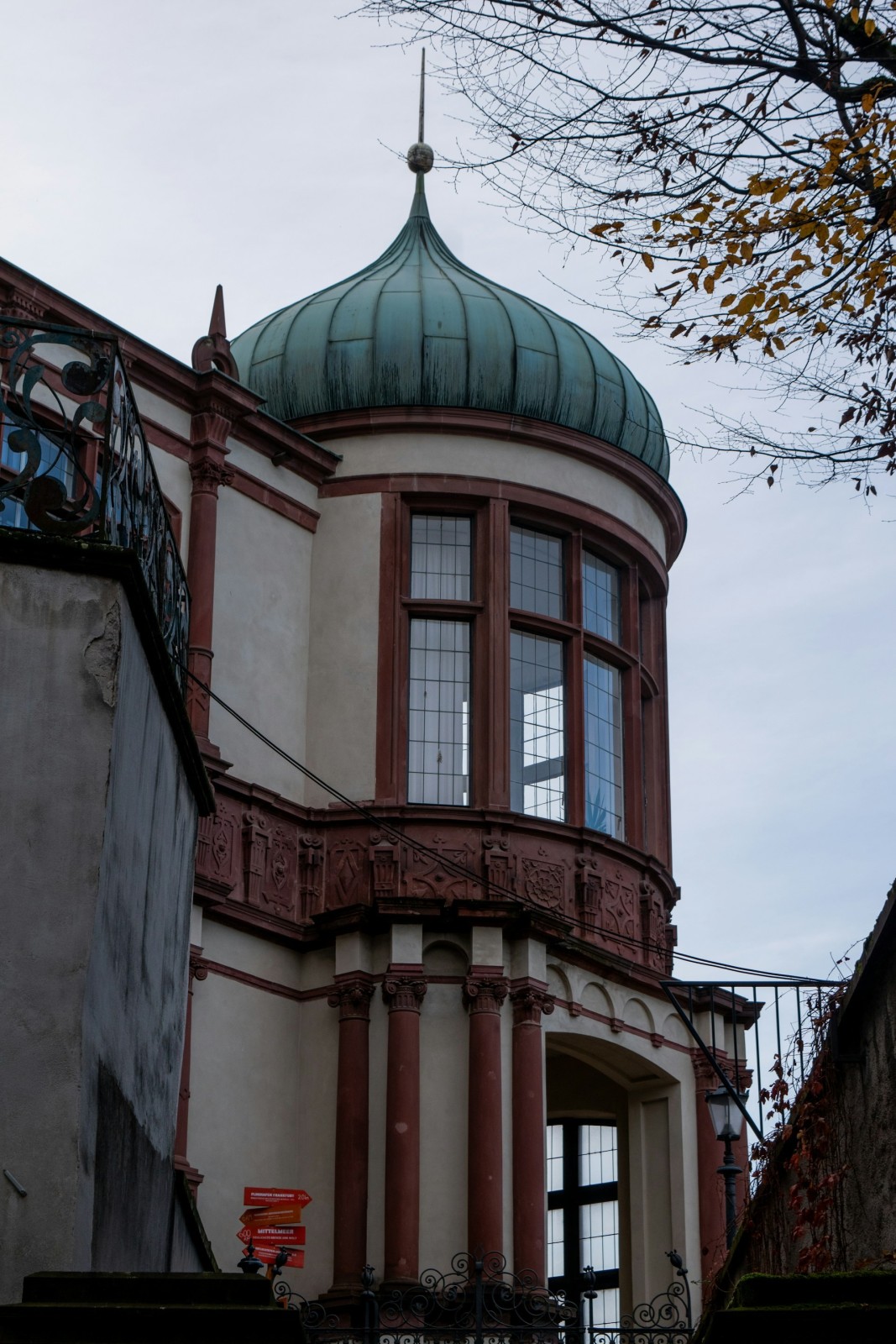
One of the main symbols of this period was the Wedding Tower (Hochzeitsturm), built in 1908 by Joseph Maria Olbrich.
The tower was associated with the marriage of Grand Duke Ernst Ludwig and Eleanor von Solms-Hoensolms-Liech.
Its unusual silhouette quickly became one of the main symbols of Darmstadt and remains so to this day.
The importance of Matildenhee for world architecture
The influence of Darmstadt was much wider than Germany.
The artists and architects of the colony experimented with principles that were later developed in modernism, the Bauhaus and international architecture of the twentieth century.
There was a gradual transition from decorative historicism to simpler geometric shapes, functionality and a new understanding of living space.
That is why Matildenhee is today considered one of the most important monuments of early modernism.
In 2021, Matildenhoe was included in the UNESCO World Heritage List.
First World War
The First World War interrupted the period of rapid development of Darmstadt.
The city lost a large number of inhabitants on the front, and the economic situation deteriorated significantly. After the war, the monarchy collapsed.
In 1918, the Grand Duke was removed from power, and the Grand Duchy as a monarchical form of government ceased to exist.
Darmstadt became the capital of the People’s State of Hesse.
However, the post-war period was difficult. Germany experienced inflation, economic crisis, unemployment and political instability.
Darmstadt during the Nazi period
After the National Socialists came to power in 1933, the city's political and social life was rebuilt in accordance with the Nazi system.
Democratic structures were dismantled and political opponents of the regime were persecuted.
The fate of the Jewish population of Darmstadt was particularly tragic.
People were deprived of rights, property and the opportunity to work and study normally. During the Nazi regime, thousands of Jews were deported.
Today, the crimes of this period are reminiscent of memorial signs, including numerous Stolpersteine – “stumbling stones” installed in front of the former homes of Nazi victims.
World War II and the Night of Fire
The most tragic page in the history of Darmstadt was the Second World War.
The city was repeatedly subjected to air raids. Especially devastating was the raid on the night of September 11-12, 1944, which was called "Brandnacht" - "Night of Fire".
As a result of the bombing and the ensuing firestorm, much of the city was destroyed. The historic centre was particularly badly damaged.
For Darmstadt, this was a disaster, the consequences of which determined the further appearance of the city.
Historic buildings were so badly destroyed that the post-war Darmstadt had to be largely rebuilt.
End of war and reconstruction
American troops entered Darmstadt on March 25, 1945.
After the war, the city faced a huge task: to restore housing, transport, administrative institutions, utilities and the economy.
In the first post-war years, the city was in a difficult situation. There was a shortage of housing, building materials and food.
However, the recovery gradually began.
Post-war Darmstadt
Unlike some German cities, which restored the historical center as close as possible to its pre-war appearance, Darmstadt in many places followed the path of modern reconstruction.
This led to wide streets, new residential neighborhoods and functional architecture.
As a result, modern Darmstadt is a kind of combination:
Preserved historical buildings;
restored monuments;
Modern architecture;
post-war development;
modern scientific and university infrastructure.
At the same time, Matildenhee managed to preserve as a historical ensemble, despite the damage during the war. Its structure was restored and continued to play an important role in the cultural life of the city.
Darmstadt in the second half of the XX century
In the 1950-1970s, the city was actively restored and expanded.
At the same time, the economy changed. Traditional industries have gradually given way to more modern ones.
The development was particularly rapid:
chemical industry;
pharmaceuticals;
electronics;
information technology;
engineering;
scientific research;
university education.
Thanks to this, Darmstadt gradually acquired a completely new image.
If earlier the city was associated primarily with the ducal court, administrative institutions and art of modernity, in the second half of the XX century it became more and more a city of science and technology.
Darmstadt, the City of Science
At the end of the XX century, the scientific specialization of the city became so noticeable that in 1997 Darmstadt was officially named "Wissenschaftsstadt" - "City of Science".
Large research and educational institutions are located here.
The Technical University of Darmstadt is particularly known for its research in the following areas:
engineering;
computer scientists;
artificial intelligence;
physics;
materials science;
Space technologies;
Information security.
The city also has research centers and divisions of large research organizations.
Thus, the modern identity of Darmstadt was formed: historical residence + art center + university city + science and technology center.
Darmstadt today
Today Darmstadt is one of the important cities of the Rhine-Main region and is closely connected with the economic and scientific system of the Frankfurt agglomeration.
The city has preserved an unusual cultural heritage.
The main historical and cultural symbol remains Matildenhoe, included by UNESCO in the World Heritage List in 2021. The ensemble includes the Wedding Tower, an exhibition building, artists’ art workshops and residences, gardens, pavilions and other facilities.
The unique atmosphere of the city
The main feature of Darmstadt is its cultural identity. Unlike many German cities, where the main tourist attractions are medieval buildings, here the architecture of the late XIX – early XX century is of great importance.
The main symbol of the city is Mathildenhöhe, a famous art complex associated with the Darmstadt Colony of Artists. There are art workshops and residential houses, the Exhibition Hall, the Museum of the Colony of Artists, the Russian Chapel and the Wedding Tower. In 2021, Matildenhee received the status of a UNESCO World Heritage Site.
For tourists, this is especially interesting because Matildenhee is perceived not just as a separate attraction, but as a single architectural and artistic ensemble, on which you can walk for several hours.
City for lovers of art and architecture
Darmstadt is particularly attractive for those interested in Art Nouveau, architecture and design.
On Matildenhee you can see unusual buildings, decorative facades, sculptures, mosaics and artistic details. Famous architects and artists worked here, and the complex played an important role in the development of European modernism.
An additional architectural symbol of the city is the Waldspirale, an unusual residential complex designed by Friedensreich Hundertwasser. The building is distinguished by a multicolored facade, an unusual shape and a lot of greenery.
City for History Lovers
Despite modern scientific institutions, Darmstadt has preserved the atmosphere of the former residence of the rulers of Hesse.
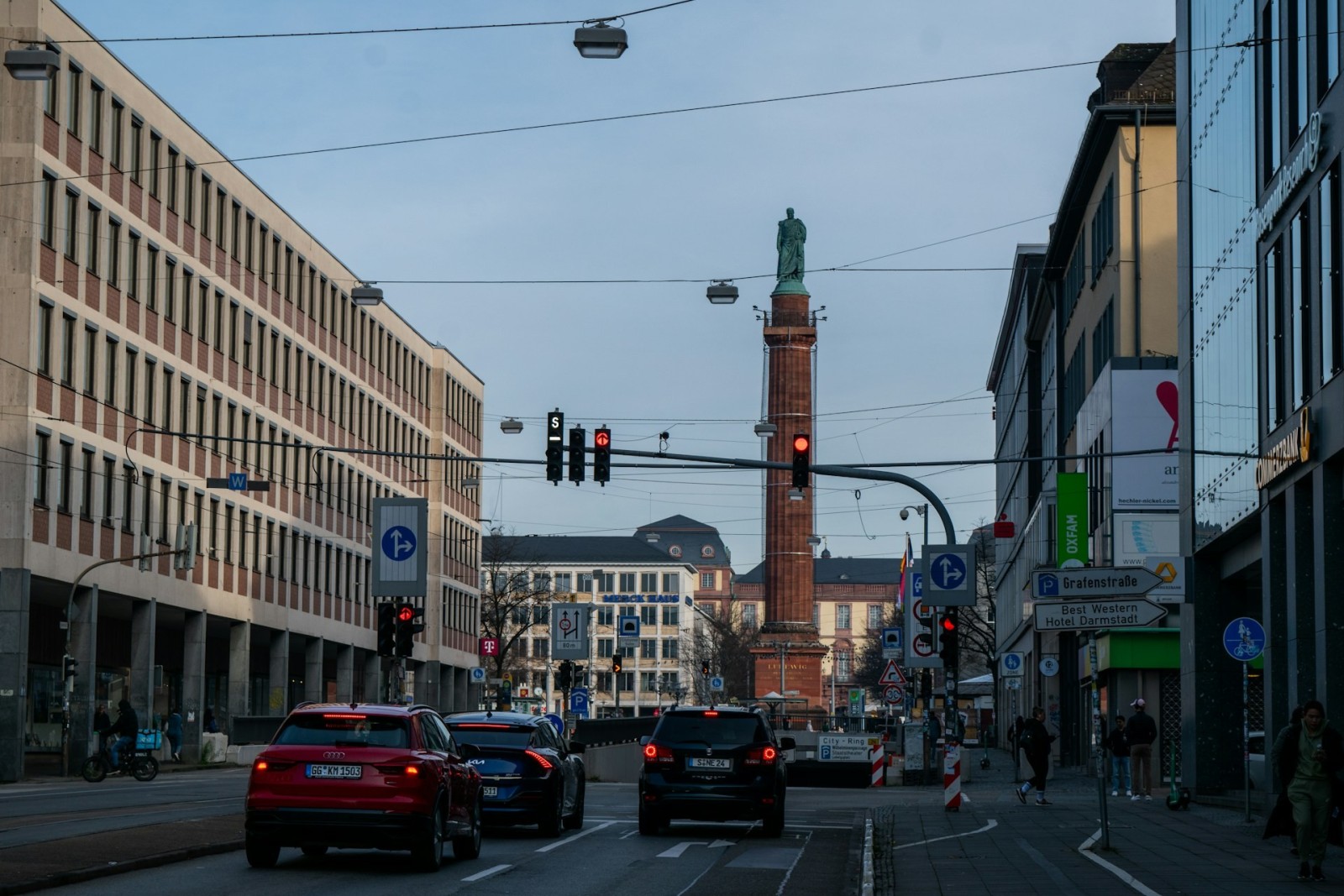
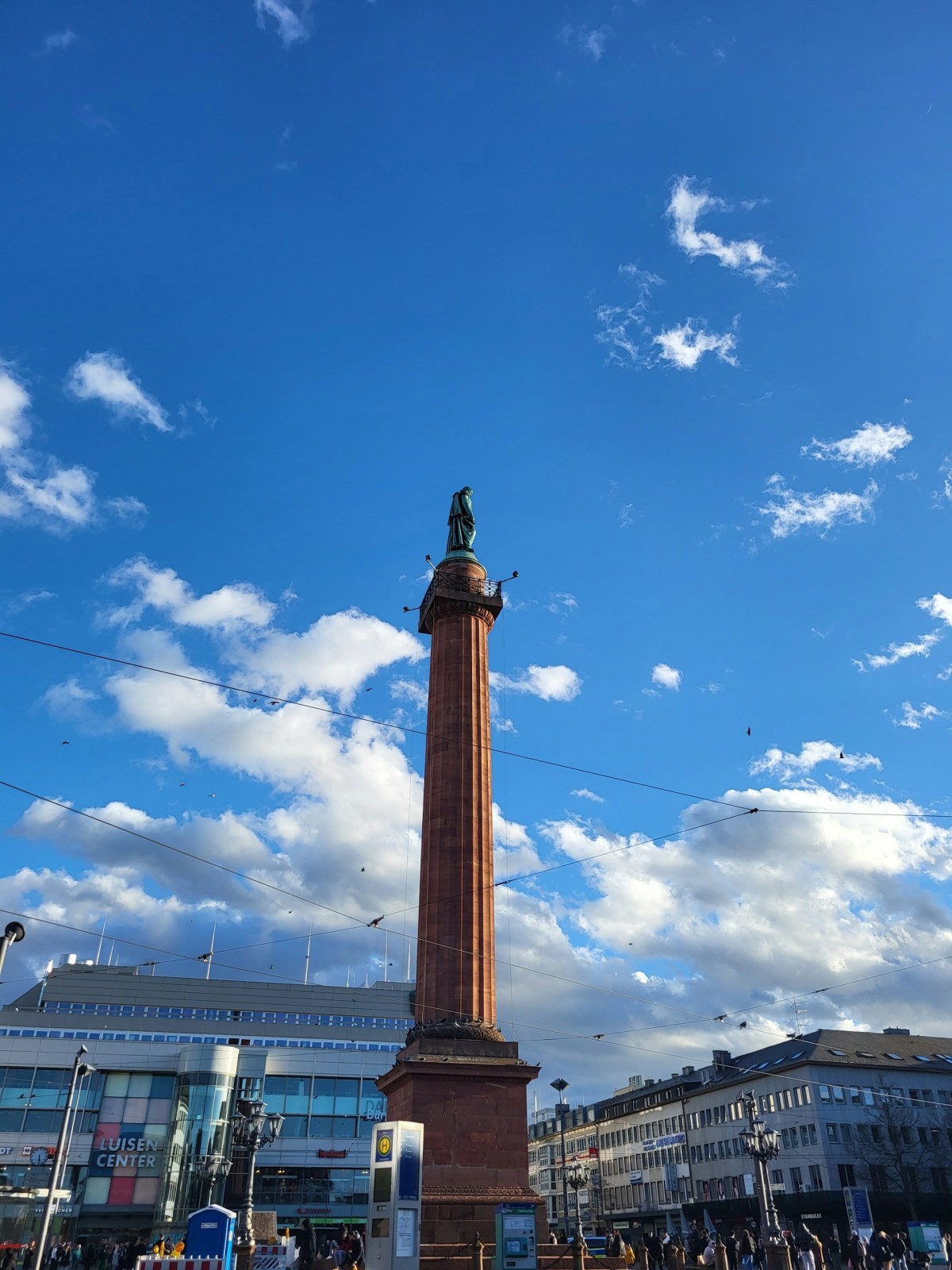
In the center you can get acquainted with the history of the Grand Ducal Court, visit the Darmstadt Palace (Residenzschloss) and the Palace Museum, see historical squares and monuments. Especially interesting is the Luisenplatz with the Ludwig Monument – one of the recognizable symbols of the city.
Therefore, Darmstadt is suitable for travelers who like the combination of palace architecture, historical center and urban culture.
City for museum lovers
Darmstadt has a large number of museums dedicated to completely different topics.
The Hesse Landesmuseum Darmstadt (Hessisches Landesmuseum Darmstadt) is especially interesting, where historical, artistic and natural science collections are presented. There is also the Museum of the Colony of Artists, the Palace Museum, art galleries and specialized cultural institutions.
Thanks to this, even in rainy weather, a tourist can make a full-fledged cultural program.
Darmstadt - City of Science
One of the main differences between Darmstadt and other tourist cities in Germany is its scientific specialization.
In 1997, the city was officially named the “City of Science” (Wissenschaftsstadt). Universities, research institutes and international scientific organizations work here. Of particular interest to tourists is the European Space Flight Control Center (ESOC). Tourist programs of the city provide even special scientific excursions.
1. Hotels 4-5 stars
This is the most comfortable option for tourists who prefer spacious rooms, quality service, restaurants, breakfasts, fitness areas and other additional services.
Maritim Hotel Darmstadt is a large modern hotel, convenient for tourists and business travelers. Suitable for a few days and well suited to those who appreciate the high level of hotel service.
Welcome Hotel Darmstadt City Center is a comfortable hotel in the city center. Convenient for tourists who want to be close to the historic center, museums and major city attractions.
Hotel Jagdschloss Kranichstein is a more unusual accommodation option in a historic atmosphere. The hotel is located in the Kranichstein area, next to the former hunting castle and green areas.
2. Hotels 3 stars
This is one of the most convenient options for an ordinary tourist. As a rule, there is a private bathroom, Wi-Fi, TV, breakfast for an additional fee or included in the price, as well as a standard set of hotel services.
H+ Hotel Darmstadt is a practical option for travelers who want comfortable rooms and good transport links.
IntercityHotel Darmstadt is especially convenient for tourists arriving by train as it is close to the main train station.
Holiday Inn Express Darmstadt is a modern option with relatively simple but comfortable rooms. Good for short trips.
Moxy Darmstadt is a more modern and youthful accommodation option with an unusual design and public areas.
3. Budget hotels
For travelers who want to reduce their living costs, there are quite a few inexpensive hotels in Darmstadt. Popular budget options include Premier Inn Darmstadt City Centre, B&B Hotel Darmstadt, ibis Styles Darmstadt, DORMERO Hotel Darmstadt and Fair n Square Hotel.
Premier Inn Darmstadt City Centre is one of the convenient options for an inexpensive trip with accommodation closer to the central part of the city.
B&B Hotel Darmstadt is a good option for tourists who need a clean room, private bathroom and a place to spend the night without a lot of additional services.
ibis Styles Darmstadt is suitable for short city trips and travelers who prefer famous hotel chains.
DORMERO Hotel Darmstadt is another option for a relatively economical stay.
1. Mathildenhöhe (Mathildenhöhe)
The main attraction of Darmstadt and one of the most important architectural complexes of German modernism. Here in the late XIX - early XX century formed the famous Darmstadt colony of artists. The ensemble includes art houses, workshops, Platana Grove, Exhibition Hall and Wedding Tower. Since 2021, Matildenhee has been included in the UNESCO World Heritage List.
Transport: from Darmstadt Hauptbahnhof by bus F or FM to Lucasweg/Hochzeitsturm, then about 200m on foot. The Darmstadt Ost area can be reached in about 5-10 minutes. From the center of Darmstadt Palace or darmstadtium, you can walk in about 15-20 minutes.
Time to visit: 2-3 hours.
2. The Wedding Tower (Hochzeitsturm)
One of the main symbols of Darmstadt. The tower was created by architect Josef Maria Olbrich and is the central visual accent of Matildenhoe. From the upper observation deck opens a panorama of Darmstadt and its surroundings.
Transport: F/FM bus to Lucasweg/Hochzeitsturm; then a few minutes walk.
Time to visit: 30-60 minutes.
3. Museum of the Darmstadt Colony of Artists (Museum Künstlerkolonie)
The museum is housed in the former Ernst Ludwig studio. The exhibition is dedicated to the artists who worked in Matildenhee from 1899 to 1914, and the history of the development of the artistic colony.
Transport: F/FM bus to Lucasweg/Hochzeitsturm, then about 200m on foot.
Time to visit: 1-1.5 hours.
4. The Russian Chapel (Russische Kapelle)
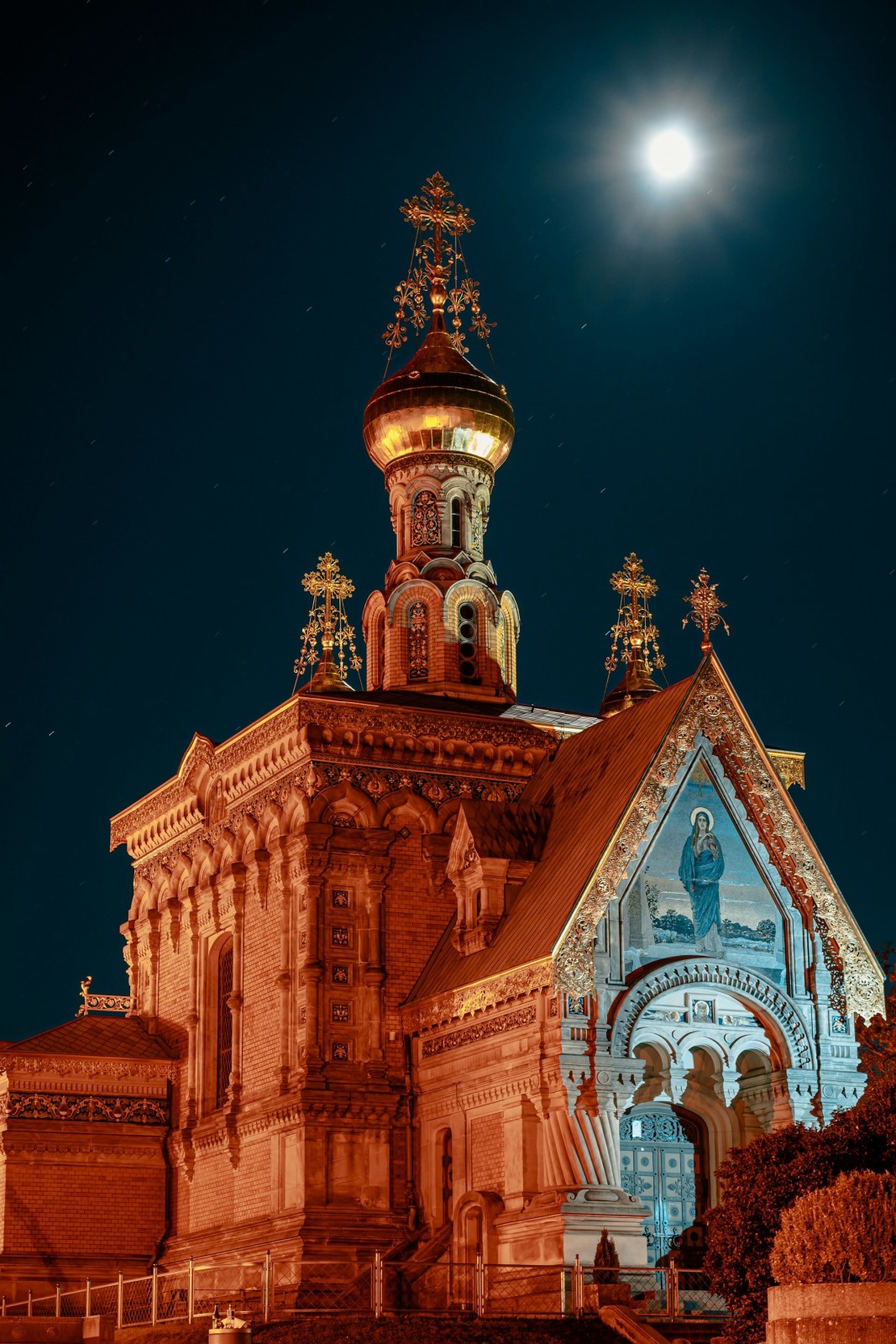
One of the most unusual sights of Darmstadt. The chapel was built at the end of the XIX century on Matildenhee for the last Russian Emperor Nicholas II and his family, who had close family ties with the House of Hesse.
The architecture of the chapel differs sharply from the surrounding modern buildings, so it is especially interesting for tourists interested in Russian-German historical ties.
Transport: F/FM bus to Lucasweg/Hochzeitsturm, then on foot through the territory of Matildenhoe.
Time to visit: 20-40 minutes.
5. The Plantan Grove (Platanenhain)
Historic garden on Matildenhee, decorated with sculptures and reliefs. Together with the surrounding buildings forms a single artistic ensemble.
This is a good place for a quiet walk and photos, especially if the tourist is interested in Art Nouveau architecture.
Transport: F/FM bus to Lucasweg/Hochzeitsturm.
Time to visit: 30-45 minutes.
6. Darmstadt Palace (Residenzschloss)
The former residence of the rulers of Hesse in the heart of the city. The palace is of great historical importance for understanding the development of Darmstadt as the capital of Hesse-Darmstadt and the Grand Duchy.
Nearby are central squares, museums, shops and pedestrian streets.
Transport: from Darmstadt Hauptbahnhof you can take public transport to the center; from the central stops the palace is a short walk. The main station can also be reached on foot in about 20-25 minutes.
Time to visit: 1-2 hours.
7. Louisenplatz (Luisenplatz)
The main central square of Darmstadt and an important transport hub. Here is the famous Ludwigsmonument, a tall column with the figure of Grand Duke Ludwig I.
The square is convenient to use as a starting point for exploring the historical center.
Transport: there are numerous trams and buses from different parts of the city.
Time to visit: 20-30 minutes.
8. Hesse Land Museum (Hessisches Landesmuseum Darmstadt)
One of the largest museums in the city. Its collections combine art, archaeology, cultural history and natural sciences. This is a particularly good option for rainy weather.
Transport: located in the central part of the city, near the palace and Louisenplatz. Most routes in the center allow you to continue the tour on foot.
Time to visit: 2-3 hours.
9. Waldspirale
An unusual residential complex designed by the artist and architect Friedensreich Hundertwasser. The building stands out with a bright facade, uneven lines, towers and a lot of vegetation.
This is one of the best attractions of Darmstadt for tourists interested in modern architecture and unusual design.
Transport: You can take public transport to the northern part of the center, after which you can walk for a few minutes.
Time to visit: 30-45 minutes.
10. Rosenhöhe
Large historical park east of the center. Its main feature is the rose garden, where numerous varieties of roses are presented. There are also historical buildings and mausoleums of the Grand Ducal family.
Rosenhöe is especially good to visit with Matildenhöe: both territories are adjacent and form a single cultural and park route.
Transport: by bus to Rosenhöhe, then on foot. From Matildenhee you can continue the route on foot.
Time to visit: 1-1.5 hours.
11. Herrngarten (Herrngarten)
One of the largest historical parks of Darmstadt, located near the center. Suitable for rest after visiting museums and historical buildings.
The park is especially convenient in that it can be included in an ordinary walk in the center without a separate trip by transport.
Transport: on foot from the central part of the city; city buses and trams are also available to the nearest stops.
Time to visit: 30-60 minutes.
12. The Botanical Garden of Darmstadt (Botanischer Garten Darmstadt)
A good option for tourists who are interested in plants, nature and quiet walks. Various plant collections, greenhouse and open expositions are presented here.
Transport: from the center it is more convenient to use the city bus or tram with a transfer in the eastern part of the city, then walk.
Time to visit: 1-2 hours.
13. Zoological Garden "Vivarium" (Vivarium Darmstadt)
A small zoological complex, interesting primarily for families with children. It can be included in the program along with the Botanical Garden and a walk through the eastern part of the city.
Transport: located in the eastern part of Darmstadt; it is more convenient to get by city bus, then walk.
Time to visit: 1.5-2 hours.
14. Botanical and park route Matildenhee - Rosenhee
For a tourist, this is one of the best options for an independent walk. You can start at Matildenhee, explore the Wedding Tower, art houses and the Platana Grove, then walk through the surroundings towards Rosenhee and complete a walk in the rose garden.
Transport: F/FM bus to Lucasweg/Hochzeitsturm before the start of the route; back you can take public transport from Rosenhöhe.
Time to visit: 3-4 hours.
1. Darmstadt Spring Fair (Darmstädter Frühjahrsmess) – April–May
Traditional city fair with attractions, shopping tents, street food, entertainment for children and concert programs. Suitable for family holidays and acquaintance with the modern festive atmosphere of the city.
2. Schlossgrabenfest - May
One of the main musical events of Darmstadt and the largest music festival of Hesse. Several scenes are set up in the city centre where German and international performers perform. The program features rock, pop, indie, hip-hop, rap, electronic music and other directions. Also there are performances of local musicians, DJ sets and entertainment programs.
3. Easter events - March-April
During Easter, the city hosts thematic events, fairs, concerts, family programs and services. In some areas, small festive events are organized for residents and tourists.
4. Darmstädter Heinerfest (July)
The main city holiday of Darmstadt. For a few days, the city center turns into a large festive venue. Concerts, street performances, attractions, gastronomic events, excursions, children's programs and various cultural events are held.
5. Summer concerts and music festivals - June-August
During this period, a large number of open-air concerts are held in Darmstadt. You can hear rock, jazz, pop, classical and electronic music. Performances are held in city squares, parks, cultural centers and clubs.
6. Cultural events in Mathildenhöhe - during the year, especially May-September
The World Heritage site hosts exhibitions, art projects, lectures, excursions, concerts and special cultural programs. This is a particularly interesting option for tourists interested in architecture, art and modern history.
7. Darmstädter Weinfest (September)
A popular gastronomic holiday dedicated to German wines and regional cuisine. Visitors can taste different varieties of wine, local dishes and get acquainted with the traditions of the wine region of Hesse.
8. Day of Open Monuments (Tag des offenen Denkmals) – September
A pan-German cultural event during which historic buildings and monuments are opened to visitors. For Darmstadt, it is especially interesting due to the architectural heritage of Matildenhee, historical buildings and objects of the Art Nouveau era.
9. Bessunger Kerb (September)
The traditional festival of Bessungen district with music, street events, gastronomy, entertainment and programs for locals and tourists. A good opportunity to see the less official and more local Darmstadt.
10. Carnival and Fastnacht (Fastnacht/Fasching) - February
In February, carnival events, costumed evenings, festive concerts and processions are held. Darmstadt Carnival is not as large-scale as in Cologne or Mainz, but allows you to get acquainted with the traditions of the German carnival.
11. Concerts of classical music - during the year
In Darmstadt, concerts of symphonic, chamber, organ and choral music are regularly held. Concert programs can be found in churches, cultural centers and concert halls of the city.
12. Jazz concerts - throughout the year
Darmstadt has a developed musical and student environment, so jazz bands and individual musicians regularly perform here. Especially many such events are held in clubs and small concert venues.
13. Christmas Market (Darmstädter Weihnachtsmarkt) – November-December
The main winter event of the city. In the center, festive houses are installed, souvenirs, handmade products, sweets and traditional dishes are sold. You can try mulled wine and other hot drinks. A special local tradition is the annual "melted wine princess" (Glühweinprinzessin).
14. Christmas concerts - December
In December, concerts of choirs, orchestras and musical groups, Christmas programs in churches and cultural institutions are held. This is a calm variant of acquaintance with the festive atmosphere of Darmstadt.
1. Winter - December - February
Winter in Darmstadt is relatively mild. During the day, the temperature is most often within +2 ... +7 ° C, at night it can drop to about 0 ... -2 ° C. Snow is possible, but sustained snow cover usually does not last long.
Air temperature:
December: about +1 ... +6 °C
January: about 0...+5 °C
February: around 0...+7 °C
Water temperature: there are no natural large reservoirs for sea recreation in the city. In small lakes and ponds in winter, the water is usually about +2 ... +5 ° C, so swimming is not suitable.
In winter, the city is well suited for museums, architectural excursions and a Christmas atmosphere.
2. Spring - March-May
In spring, the weather becomes much more comfortable. March is still cool, but April is already warm enough for long walks, and May is usually one of the most pleasant months to travel.
Air temperature:
March: About +3... +12 °C
April: around +5... +16 °C
May: About +9... +21 °C
Water temperature: in March about +5 ... +8 ° C, in April +8 ... +12 ° C, in May about +13 ... +17 ° C. For swimming, the water is cold in early spring, and by the end of May it gradually becomes more comfortable.
Spring is especially good for walking around Matildenhee, Rosenhee, Herrngarten and the historic center.
3. Summer - June - August
Summer is the warmest time of the year and one of the best periods for a tourist trip. The average daily temperature is about +23. +26 °C, although during hot periods the temperature can rise significantly higher.
Air temperature:
June: around +13...+24 °C
July: around +15... +26 °C
August: about +14... +26 °C
Water temperature: in local lakes and equipped places for swimming in summer, the water can warm up to about +20 ... + 25 ° C. For example, in the area of Darmstadt, the water temperature in Lake Großer Woog in the warm period can reach about +25 ° C and above.
Summer is especially convenient for sightseeing, walking through parks, touring the surrounding area and visiting city festivals and concerts.
4. Autumn - September - November
The beginning of autumn is usually quite warm. In September, there are still comfortable conditions for walking, and in October it becomes noticeably cooler. November already looks like late autumn.
Air temperature:
September: around +11... +21 °C
October: around +7... +15 °C
November: around +3...+9 °C
Water temperature: in September about +17 +20 °C, in October about +12 ... +16 °C, in November about +7 ... +11 °C.
September is especially good for park walks, architectural excursions and cultural events.
Language of communication
The main language of communication in Darmstadt is German (Deutsch). In hotels, restaurants, museums, shops and tourist areas, staff often speak English, especially young people.
In Hesse you can hear local features of German speech and Hesse dialect. The tourist does not need to know it - standard German is enough.
A useful local greeting is "Gude!" This is a common informal greeting in Hesse, which can be heard in everyday communication.
When addressing strangers, it is better to use the polite Sie form, especially in hotels, shops, restaurants and official institutions.
Main traditions and customs
Punctuality. In Germany, it is customary to arrive on time. If the meeting is scheduled for 15:00, it is advisable to be in place a few minutes before the scheduled time.
Politeness. When entering small shops, cafes or other establishments, it is appropriate to say hello. When contacting an employee, you can use “Guten Tag” or “Hallo”.
Personal space. It is not customary to get too close to a stranger or without having to touch him during a conversation.
Lines. In public places, you should observe the order of the queue and not try to get ahead of other people.
Silence. In residential areas it is necessary to respect the peace of others, especially in the evening and at night. Loud music and noise after a late time can cause discontent of neighbors.
Tips. In restaurants and cafes, tips are usually around 5-10% if the service is enjoyed. They are often added when paying the bill, rather than just leaving a large amount on the table.
Photography. Do not take close-up pictures of people without their consent. In museums and some historic buildings, photography may be restricted.
Public transportation. The ticket must be purchased and, if necessary, composted before the trip. Control can be carried out without warning.
Bicycle lanes. In Darmstadt, as in other German cities, cyclists actively use dedicated lanes. Pedestrians should not walk unnecessarily on a bicycle lane.
Important laws and regulations
Documents. A foreign tourist must have a valid passport and, if citizenship is required, an appropriate visa or residence permit.
Alcohol. Drinking alcohol is permitted by law, subject to age restrictions, but additional prohibitions may apply in some public places.
Smoking. In Germany, smoking is prohibited in many enclosed public spaces. Attention should be paid to special designations and use designated places.
Garbage. In Germany, much attention is paid to waste sorting. In residential areas and public places, separate containers for different types of garbage can be used.
Nature. In parks, forests and natural areas, it is necessary to observe the established rules: do not leave garbage, do not damage plants and do not enter closed areas.
Crossing the road. The road should be crossed at a pedestrian crossing or at a permitting traffic light. Even if there are no cars, switching to a red light is considered a violation of the rules.
Drugs. German legislation in this area has separate rules and restrictions; tourists should not be transported across the border or purchase prohibited substances.
Public behavior. Insults, threats, damage to property, hooliganism and disturbance of public order can result in fines or other legal consequences.
1. Greetings and polite words
Hallo! Transcription: Hallo!
Guten Morgen! - Good morning!Transcription: Guten Morgen!
Guten Tag! - Good afternoon! Transcription: Guten tag!
Guten Abend! - Good evening! Transcription: Guten Abent!
Gute Nacht! - Good night! Transcription: Gute naht!
Gude! Hello! Good afternoon! Transcription: Goude!
This is an informal greeting typical of Hesse. In Darmstadt, he can be heard in everyday communication.
Auf Wiedersehen! - Goodbye! Transcription: Auf vúderzeen!
Tschüss! Transcription: Chuss!
Bitte! - Please! Transcription: Butte!
Danke! Transcription: Danke!
Vielen Dank! Transcription: Fulan Dank!
Entschuldigung! Transcription: Entschüldigung!
2. Useful words in town
Ja - DaTranscription: I
Nein - No Transcription: Nine
Vielleicht - Perhaps Transcription: Filleicht
Gut - Good Transcription: Gut
Hilfe! Transcription: Hulfe!
Achtung! Transcription: Ahtung!
Eingang - Entrance Transcription: Áingang
Ausgang - ExitTranscription: Áusgang
Geöffnet - OpenTranscription: Gaoffnet
Geschlossen - Closed Transcription: Geschlossen
Heute - Today Transcription: Hoite
Morgen - TomorrowTranscription: Morgen
3. How to ask the way
Wo ist das Stadtzentrum? - Where is the city center? Transcription: East das Statcentrum?
Wo ist der Hauptbahnhof? Where is the main railway station? Transcription: East Der Hauptbanhof?
Wo ist die nächste Straßenbahnhaltestelle? - Where's the nearest tram stop? Transcription: In the east di nexte Strásenban-haltestall?
Wo ist die Bushaltestelle? - Where's the bus stop? Transcription: In the East di Büs-Haltestalle?
Wie komme ich zur Mathildenhöhe? How do I get to Matildenhee?Transcription: Vi kome their tsur Matúldenhee?
Ist es weit? - Is that far? Transcription: East S. White?
Kann ich zu Fuß gehen? - Can I walk there? Transcription: Can their zu fus geen?
Wie lange dauert der Weg? - How long does the road take? Transcription: Vi Lange d'auert der veg?
4. Public transport
Eine Fahrkarte, bitte. - One ticket, please. Transcription: Aine Farkarte, butte.
Eine Tageskarte, bitte. - One day ticket, please. Transcription: Áine táges carte, butte.
Wie viel kostet die Fahrkarte? - How much is the ticket? Transcription: Vfil Costet di Farcarte?
Gilt diese Fahrkarte für den ganzen Tag? - Is this ticket valid all day? Transcription: Gilt dúze fárkart für den ganzen tág?
Welche Straßenbahn fährt zur Innenstadt? Which tram goes to the city center? Transcription: Velhae Strasenban fert tsur Inenstat?
Wo muss ich aussteigen? - Where do I need to get out? Transcription: Mouse them?
Muss ich umsteigen? - Do I need to change seats? Transcription: Mus their umstein?
Wann kommt der nächste Bus? - When will the next bus be? Transcription: Van Comt der Nexte Bus?
5. At the hotel.
Ich habe eine Reservierung. - I have a reservation. Transcription: Their habe áine reservúrun.
Ich habe ein Zimmer reserviert. - I've booked a room. Transcription: Their habe ain zummer reservort.
Auf welchen Namen? - What name? Transcription: Auf velchen námen?
Hier ist mein Reisepass. - Here's my passport. Transcription: Hir or Main Raisepas.
Wann gibt es Frühstück? - When's breakfast? Transcription: Van Gybt es Fryshtyuk?
Ist das Frühstück inklusive? - Is breakfast included? Transcription: East das Frýštük Inclusúve?
Wo ist mein Zimmer? - Where's my number? Transcription: East mine commer?
Können Sie mir helfen? - Can you help me? Transcription: Kyonnan zi world Helfen?
Ich brauche ein Taxi. - I need a cab. Transcription: Their bruhe ain taksi.
6. Cafe and restaurant
Einen Tisch für zwei Personen, bitte. - Table for two, please. Transcription: Áinen tish für zwei parzonen, butte.
Die Speisekarte, bitte. - Menu, please. Transcription: Di Spaise Karte, butte.
Was empfehlen Sie? - What do you recommend? Transcription: You're Emphelan Z?
Ich möchte das bestellen. - I'd like to order this. Transcription: Their mehte das bashtellen.
Ohne Fleisch, bitte. - No meat, please. Transcription: One fluish, butte.
Ohne Alkohol, bitte. - No alcohol, please. Transcription: Ohne alcohol, butte.
Die Rechnung, bitte. - Check, please. Transcription: Di Rehnung, butte.
Kann ich mit Karte bezahlen? - Can I pay with a card? Transcription: Can their mit karte betzalen?
7. In the store.
Wie viel kostet das? - How much does it cost? Transcription: Vfil Costet das?
Haben Sie das in einer anderen Größe? - Is it in a different size? Transcription: Haben zi das in áiner ánderen grosse?
Kann ich mit Karte bezahlen? - Can I pay with a card? Transcription: Can their mit karte betzalen?
Ich schaue nur, danke. - I'm just looking, thanks. Transcription: Their shaue noor, danke.
Ich nehme das. - I'll take it. Transcription: Their das.
8. In the museum and on excursions
Wann öffnet das Museum? - When does the museum open? Transcription: Van Yeffnet das muséum?
Wie viel kostet der Eintritt? - How much is the entrance ticket? Transcription: V. Fil Costet d'Eintrit?
Gibt es eine Führung auf Englisch? - You got an English tour? Transcription: Gibt es áine fürung auf Énglish?
Darf man hier fotografieren? - Can I take pictures here? Transcription: Darf man hir photographer?
Wo ist der Eingang? - Where's the entrance? Transcription: East Der Aingang?
1. Regional products and food
Apfelwein - apple wine
One of the characteristic drinks of Hesse. It is made from apples, and is sold both in bottles and in small gift packages. For a trip, it is more convenient to choose a factory-packed option.
Handkäse mit Musik - handkese
Traditional Hessian cheese with marinade made of onions, vinegar and butter. It is a very regional product, but it is not always convenient for long-distance transportation, so it is better to try it directly in Darmstadt.
Frankfurter Grüne Soße - Frankfurt green sauce
The famous Hessian cold sauce mixture based on various herbs. In stores you can find ready-made options or sets of dried herbs, which are much more convenient to bring home.
Pumpernickel and other types of German rye bread
Dense dark bread is good as a gastronomic souvenir. For transportation, it is better to choose a factory vacuum packaging.
Local apiary honey
A good option for a small gastronomic gift. You can choose floral, forest or regional honey in a small jar.
Apple products
In the region, apple products are popular: apple jams, juices, syrups, vinegar, dried apples and sweets. They are good for gifts and are usually more convenient to carry than fresh produce.
Hessishe-Bergstrasse products
In the vicinity of Darmstadt is the wine region of Hessishe-Bergstrasse. As a regional gift, you can choose local grape products, grape juices, jams and other products of local producers.
2. Useful and health-improving remedies
Herbal teas
German pharmacies and shops sell a large selection of herbal teas - chamomile, mint, melissa, fennel and various mixtures. It's an easy and inexpensive gift.
Grass fees
You can buy ready-made German herbal mixtures for evening tea, digestion or general relaxation. It is better to choose ordinary foods, and not drugs with a pronounced therapeutic effect.
Natural cosmetics
A popular option from Germany is hand creams, balms, oils, skin care products and natural soap. They are compact and well suited for gifts.
Herbal balms
In German pharmacies you can find various cosmetic and care balms with mint, arnica, eucalyptus and other plant components. When buying, you should take into account the purpose of the funds and instructions.
Bath salts
Small packages of mineral and herbal salts are a practical souvenir that is easy to transport.
3. Souvenirs linked to Darmstadt
Miniature of the Wedding Tower (Hochzeitsturm)
One of the most recognizable souvenirs of the city. You can find small models of towers made of metal, ceramics or wood.
Souvenirs with the image of Matildenhoe
Postcards, posters, magnets, notebooks and reproductions of Matildenhee architecture are particularly good at conveying the character of Darmstadt.
Art Nouveau Souvenirs
Since Matildenhee is one of the most important centers of German Art Nouveau, objects with ornaments and motifs of Jugendstil are interesting: postcards, posters, jewelry, small interior items.
Copies of works of art
In museum stores you can buy exhibition catalogs, art albums, reproductions and small designer products associated with the Darmstadt colony of artists.
Russian themes
In the souvenir shops and museum collections of Matildenhee, you can find items related to the Russian Chapel and the historical ties of Darmstadt with the Russian imperial family.
1. What documents are required to have
To travel to Darmstadt, you must have:
a valid foreign passport;
a visa if required by a citizen of your country;
ticket or confirmation of further departure;
confirmation of residence – booking of a hotel, apartment or other accommodation;
if necessary – documents confirming the purpose of the trip;
Proof of sufficient funds for travel and return.
To enter Germany, a passport must generally be valid for at least 3 months after the intended departure date and issued no more than 10 years ago. In some cases, the border authorities may request confirmation of the purpose of the trip and the availability of funds for stay and return travel.
The original passport is best stored in a safe place, and a copy or electronic copy of the document is stored separately. Do not carry all the money and documents in one place.
2. Health insurance
Before traveling, it is recommended to obtain travel health insurance valid in Germany and other Schengen countries.
It is desirable that the policy include:
emergency medical care;
hospitalization;
treatment of injuries;
transportation to a medical institution;
medical evacuation;
repatriation to the home country if necessary.
If a Schengen visa is required for travel, health insurance is one of the visa processing requirements; the specific requirements depend on the type of visa.
3. Emergency services phones
112 - Ambulance and Fire Service.
The number is used for life-threatening, serious injury, serious illness, fire and other emergencies. Call is free and available around the clock from mobile and landline.
110, police.
Used in crimes, security threats, assault, theft, or other situations requiring police intervention.
116 117 - on-duty medical service.
Suitable for urgent medical problems that require medical advice but do not pose an immediate threat to life.
115 - Reference service of state institutions.
It can be used to obtain information about German public services and institutions.
4. Mobile communications
The main mobile operators operate in Germany:
Telekom;
Vodafone;
O2 (Telefónica);
1&1.
In Darmstadt, mobile communications and mobile internet in the urban area are generally available well. It is especially convenient for an EU tourist to use his operator’s SIM card in Germany under EU roaming rules.
If a non-EU SIM card is used, it is worth checking the roaming cost before traveling. For a long trip, you can consider a German SIM card or eSIM.
5. City security
In the city center, at the train station and in public transport, it is recommended to monitor your phone, wallet and documents. It is especially worth paying attention to things during transplants and in places of large crowds of people.
Do not leave bags and valuables unattended in a cafe, transport or train station.
When walking through forest areas and parks, it is better to use the designated routes, especially in the dark.
6. Security of documents and money
It is recommended:
Keep the passport separate from bank cards;
have a passport photo on your phone;
Do not carry all cash with you;
use bank cards and contactless payment;
have a reserve bank card;
Do not leave your phone or wallet on the table unattended.
If you lose your passport, you must contact your country’s consulate or embassy in Germany.
7. How many tourists can stay in Germany
For citizens of countries that do not require a visa for a short visit to the Schengen area, the standard rule is up to 90 days in any period of 180 days. These 90 days apply not only to Germany, but to the entire Schengen area.
That is, you can not spend 90 days in Germany, then go, for example, to France or the Netherlands and immediately get another 90 days: Schengen countries are counted together.
For citizens of countries requiring a Schengen visa, the maximum period is determined by the conditions of the visa issued, but the short-term Schengen regime is also based on the 90 days rule within 180 days.
If you plan to stay for more than 90 days, for example for study, work or long-term residence, a corresponding national visa or residence permit is usually required.
Create a query and local guides will offer you the best options

