Independent tourism and recreation in the city of Duisburg Historical information about the city of Duisburg D...
Duisburg is one of the oldest cities in the Lower Rhine and one of the most important industrial centers in Germany. Its history was largely determined by an unusual geographical location: the city arose at the junction of the Rhine and the Ruhr, near important land roads and crossings. Due to this, Duisburg consistently progressed from an ancient settlement and royal residence to a medieval trading city, and then became the largest industrial and port center of the Ruhr region.
1. Ancient settlements and the Roman period
The history of Duisburg begins long before the official appearance of the city. The area near the Rhine and Ruhr was convenient for settlement due to the fertile lands, water and the opportunity to cross the Rhine. There were important trade and transport routes, including the direction of the ancient Hellweg, which connected the western and eastern regions of Germany.
A permanent settlement in the area of modern Duisburg can be traced at least from the I century AD. In the Roman era, there was an important point, allowing you to control the crossing of the Rhine and the mouth of the Ruhr. The Romans used the advantageous position of the territory for military and commercial purposes.
However, Duisburg was not an ordinary Roman fortress city. Its importance was primarily determined by the transport situation. Through this area passed people, goods and military units, linking the territories on both sides of the Rhine.
2. The Franks and the Emergence of the Royal Center
After the weakening of Roman influence in the region in the early fifth century, the Franks settled here. Around 420, a new settlement of the old part of Duisburg took place, and on the site of the modern Burgplatz, the Franks created a royal court.
In the VIII-X centuries, the importance of the settlement increased significantly. The Frankish royal court became an important political center, and in the tenth century was expanded to the royal Palatinate, a residence that monarchs used during their travels to their possessions.
Duisburg’s position allowed the kings to control important river and land routes. Representatives of the nobility, merchants and clergy came to the city. Medieval Duisburg developed from the very beginning not only as a settlement, but also as a place of trade and administration.
3. The Normans and the First Written Mention
In 883 Duisburg was attacked by the Normans. They captured the village and spent the winter there. The events of this period are associated with one of the first reliable written mentions of the city.
For Duisburg, the attack was of great importance: the city was directly on major waterways, so it was both a profitable trading center and an attractive target for military campaigns.
4. The rise of the medieval city
In the XI-XIII centuries, Duisburg gradually turned into a full-fledged medieval city.
Around 1120 the construction of city fortifications began. In the XII century, civil houses appeared around the royal court, crafts and trade developed. In 1145, King Conrad III officially authorized the construction of houses around the Palatinate.
Around the same time, the development of religious institutions began. Monasteries and churches arose, and around 1145 the first German representation of the Order of John appeared in Duisburg.
In the XIII century, the city received its own city administration. In 1274-1275, a system with two mayors was created. This testified to the growth of the independence of urban society and the development of city administration.
5. The change of the Rhine and the decline of trade
Paradoxically, it was the river that ensured the initial prosperity of Duisburg that caused serious economic problems.
After 1200, the Rhine channel gradually shifted west of the city. The old section of the river began to grind and lose importance for navigation. As a result, Duisburg was further away from the main riverbed of the Rhine, and its former advantage as a river trading center began to decrease.
In the following centuries, the city lost much of its former importance in long-distance river traffic. Trade continued, but Duisburg had to look for other sources of economic development.
6. Duisburg and Hansa
Despite the change in the Rhine, Duisburg retained its importance as a trading city. In 1407 he was again admitted to the Hanseatic League. This connected it with a wide trading network of Northern European cities.
Through the city passed grain, wood, metal, fabrics and other goods. Craftsmanship and merchant relations developed.
At this time, the neighboring Ruhrort, a settlement near the Ruhr and the Rhine, gradually became an independent trading and port center, became especially important. In 1371, a customs station was established here, and the first mention of the port of Rurrorta dates back to 1392.
In the future, it will play a huge role in the transformation of Duisburg into the largest port city.
7. Reformation-era Duisburg and Gerhard Mercator
The XVI century became an important cultural period in the history of the city.
In 1552, the outstanding cartographer Gerhard Mercator moved to Duisburg. He lived here for about 40 years until his death in 1594. It was in Duisburg that Mercator created much of his famous cartographic work.
Its activities significantly strengthened the scientific reputation of the city. Duisburg became known not only as a trading center, but also as a place of development of education, cartography and humanities.
In 1566, Johannes Corputius completed a detailed color plan for the city. Thanks to this work, today you can imagine what Duisburg looked like in the XVI century.
8. XVII-XVIII centuries: the beginning of a new economic boom
In the XVII century, the city was under the rule of Brandenburg-Prussia. Gradually developed handicrafts and the first manufactories.
Tobacco production and textiles were of particular importance. In 1763, the first tobacco factory was established in Duisburg. At the same time, navigation along the Ruhr improved: starting around 1770, the river was gradually adapted for transportation.
But the main event was the return of the city to major river trade. At the beginning of the XVIII century began to create modern port facilities in Rurrorta.
9. Founding of the port of Rurrorth
In 1716, the first port basin was built in Ruort. This was the beginning of the future port of Duisburg-Rourt.
Gradually, the port expanded, and its location near the Rhine and Ruhr became more and more profitable.
In the XIX century, huge volumes of coal, iron ore, timber, grain and other goods began to be transported through the port. It was the port that later allowed Duisburg to become one of the main transport hubs of the industrial Ruhr.
10. Napoleonic era
At the beginning of the XIX century, Duisburg experienced political changes associated with the Napoleonic Wars.
In 1806, the city came under French influence and was incorporated into the system of territorial administration created by Napoleon. After the defeat of Napoleon, French rule ended, and in 1815 Duisburg finally became part of Prussia.
Prussian governance was an important stage before future industrialization.
11. The Industrial Revolution
The real change occurred in the XIX century.
In 1824, the large chemical factory Curtius was built, and in 1828 Franz Haniel founded a shipyard in Rourort to build steam ships. In the 1830s, new chemical enterprises appeared.
Particularly important was the restoration of the city’s direct connection with the Rhine. In 1828-1832, new port facilities and the Rhine Canal were built. Then the development of canals connecting the urban waterway system with the Rhine continued.
12. Railroad and the transformation into an industrial center
In 1846, the Cologne-Minden railway reached Duisburg. Railway communication has sharply accelerated the transportation of raw materials and finished products.
The position of the city became extremely favorable: the Rhine, Ruhr, railways and industrial transport routes intersected here.
In 1851, the development of a large iron and steel industry began. In the following decades, metallurgical enterprises, mines, chemical plants and machine-building plants appeared around Duisburg.
13. Population growth and the emergence of industrial Duisburg
The industry required a huge number of workers. People came to the city from other parts of Germany, the Netherlands, Austria, Poland and other regions.
Around the old settlements, working-class neighborhoods, industrial districts and new transportation lines arose. The population grew so fast that Duisburg gradually evolved from a small historic town into a major industrial center.
In 1904, Duisburg officially became a major city. In 1905, it was joined by Rurrorth and Meiderich. Together with them, the famous Rurrort port also passed under the control of Duisburg. This was one of the most important stages in the formation of a modern city.
14. Duisburg – City of Coal, Steel and Ports
At the beginning of the XX century, Duisburg finally acquired the reputation of the industrial city of the Ruhr.
The main industries are:
coal mining and processing;
coke production;
metallurgy;
steel production;
chemical industry;
shipbuilding;
engineering;
port traffic.
The city was at the center of the famous chain “coal – coke – steel”. Coal from the mines of the Ruhr region was delivered to Duisburg, where it was used by metallurgical enterprises, and iron ore and other materials came through the port. Therefore, the combination of the Rhine, railway and industry became the basis of the economic power of the city.
15. The First World War and the Interwar Period
The First World War seriously affected the industrial economy of Duisburg. Industrial enterprises worked primarily for military needs, and after the war the city faced economic and political difficulties.
In the 1920s, the industry gradually recovered, but the situation remained unstable. During the Great Depression, many businesses faced falling production and unemployment.
At the same time, the development of ports and metallurgy continued, which remained the basis of the city's economy.
16. World War II
During World War II, Duisburg’s industrial importance made it an important target of Allied air attacks.
Industrial areas, railway infrastructure, port and residential areas were particularly hard hit. The historic centre also suffered serious damage.
After the end of the war, Duisburg was forced to rebuild much of the city’s infrastructure.
17. Post-war reconstruction and economic miracle
In the 1950s and early 1960s, Duisburg experienced a powerful new industrial upsurge.
Metallurgy and the port were back at full capacity. Thanks to the economic miracle, steel production grew rapidly. According to the city archive, over the decade, the steel industry’s production and turnover have roughly doubled, and urban revenues have grown significantly.
During this period, Duisburg was one of the richest industrial cities in Germany. New roads, bridges, residential areas and public buildings were quickly built.
18. The industrial crisis
However, since the 1970s, the situation began to change.
The European metallurgy has faced international competition, technological change and reduced demand for traditional heavy industry. In Duisburg, individual enterprises were closed or reduced, employment in mines and metallurgy decreased.
The city faced a major challenge: an economy based on coal and steel for decades had to find new directions.
19. Structural restructuring and transformation of industrial territories
Since the end of the XX century, Duisburg began to gradually change its image.
Especially important was the project of the International Construction Exhibition Emscher Park (IBA Emscher Park), which began in 1989. Its mission was to transform former industrial areas, restore nature and create new cultural and public spaces.
One of the most famous results of this process was the Landschaftspark Duisburg-Nord, created on the territory of a former steel company. Old blast furnaces, gas holders and industrial structures received a new cultural and tourist destination.
20. Transforming the Inner Harbour
Another notable example is the Inner Harbour of Duisburg.
Once there were warehouses and enterprises through which huge volumes of grain passed. The area was even called the “bread basket of the Ruhr region”. Over time, traditional port activities declined and the area gradually declined.
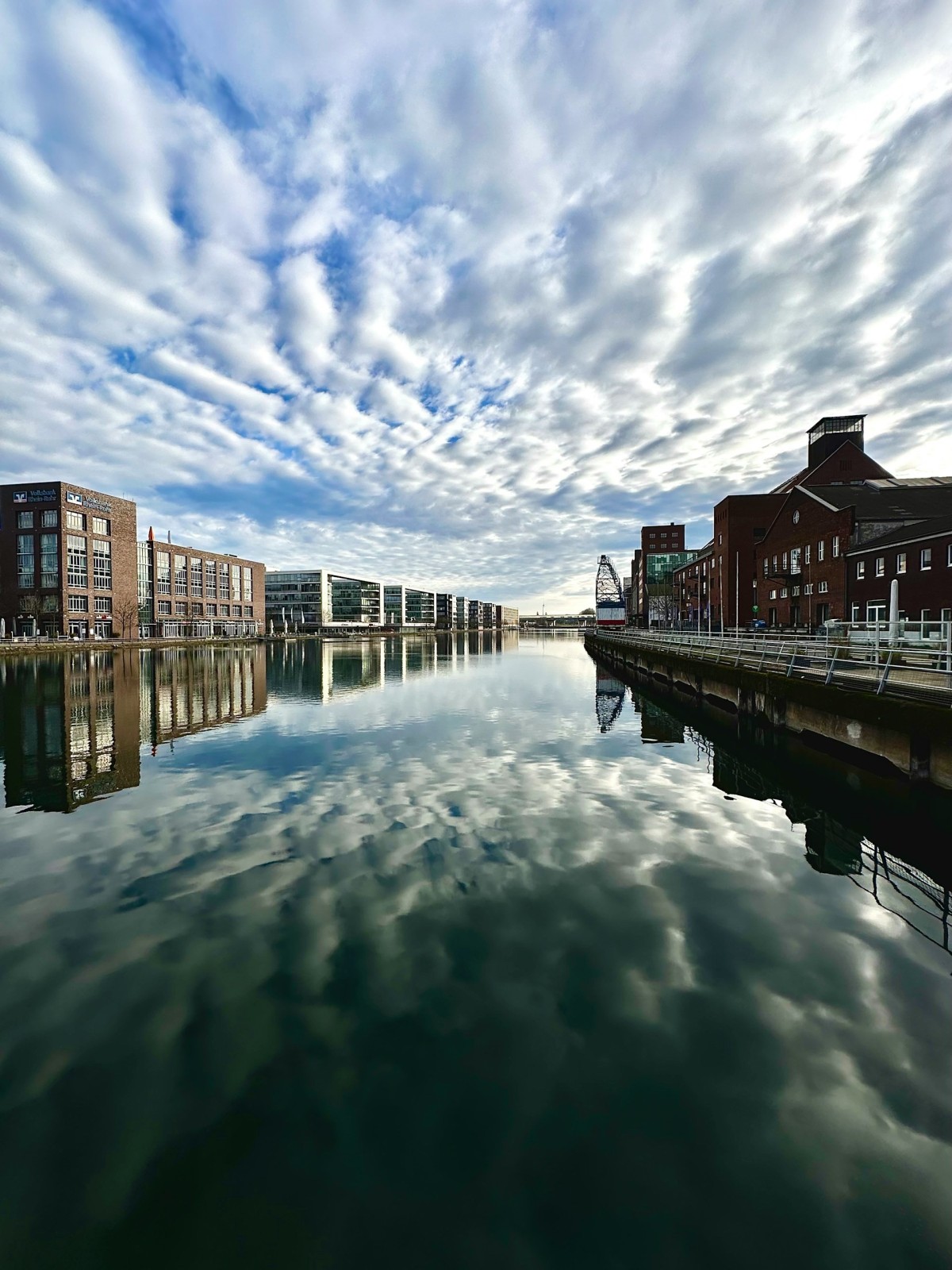
In the late XX - early XXI century old warehouse buildings began to turn into museums, restaurants, offices and cultural spaces. Today, the Inner Harbor is considered one of the most notable examples of the successful transformation of the former industrial area.
21. Duisburg today
Modern Duisburg retains its industrial character, but its economy is no longer limited to coal and steel. Logistics, transport, port activities, industry, trade and services play a huge role.
The port of Duisburg continues to be a key element of the urban economy. Its development began with the first port basin of the Ruort in 1716, and the modern port system is the result of a centuries-old combination of river, rail and industrial transport routes.
Today, the city simultaneously shows several completely different periods of German history: the medieval Duisburg can be seen in the old town area, the Mercator era in monuments and museums, the industrial XX century in former metallurgical enterprises and ports, and the modern stage in the converted industrial quarters and the Inner Harbor.
Duisburg is an unusual city of the Ruhr region, which is especially interesting for those who want to see not a ceremonial Germany, but a combination of industrial heritage, modern culture, port life and nature. The main feature of the city is the opportunity to walk from the medieval center to huge metallurgical complexes, former industrial territories and the largest inland port in the world.
1. Unique industrial atmosphere
The main tourist feature of Duisburg is its industrial heritage. Old metallurgical plants, blast furnaces, industrial structures and port areas are not just preserved as monuments of the past, but have turned into spaces for recreation, sports, culture and walks.
Especially famous is the Landschaftspark Duisburg-Nord. On the territory of the former metallurgical enterprise, blast furnaces and other industrial structures have been preserved. Today, you can walk, climb, dive, attend cultural events and watch the illumination of industrial buildings in the evening.
For tourists, this is one of those attractions that is almost impossible to confuse with traditional European cities.
2. Huge port and walks on the water
Duisburg is known for its Duisburg-Ruhrorter Häfen, the largest inland port in the world. Its size and the number of ships show how important the city has played and continues to play in European trade. Tourists can get acquainted with the port during special walks and excursions.
The opportunity to see the city from the water is especially interesting: instead of the usual inspection of the architecture, the traveler gets an idea of the industrial and commercial life of the Ruhr.
3. Inner Harbour - Modern Duisburg
The inner harbour of Duisburg (Innenhafen) shows a completely different side of the city. Grain was once unloaded here, and today former warehouses and port buildings have turned into restaurants, cafes, offices, museums and modern public spaces. The area has been transformed since the 1990s, including by architect Norman Foster.
It is nice to walk along the water, relax in a cafe, explore modern architecture and visit museums. Due to its proximity to the center, the Inner Harbour is convenient for an independent walk.
4. Unusual architecture and art objects
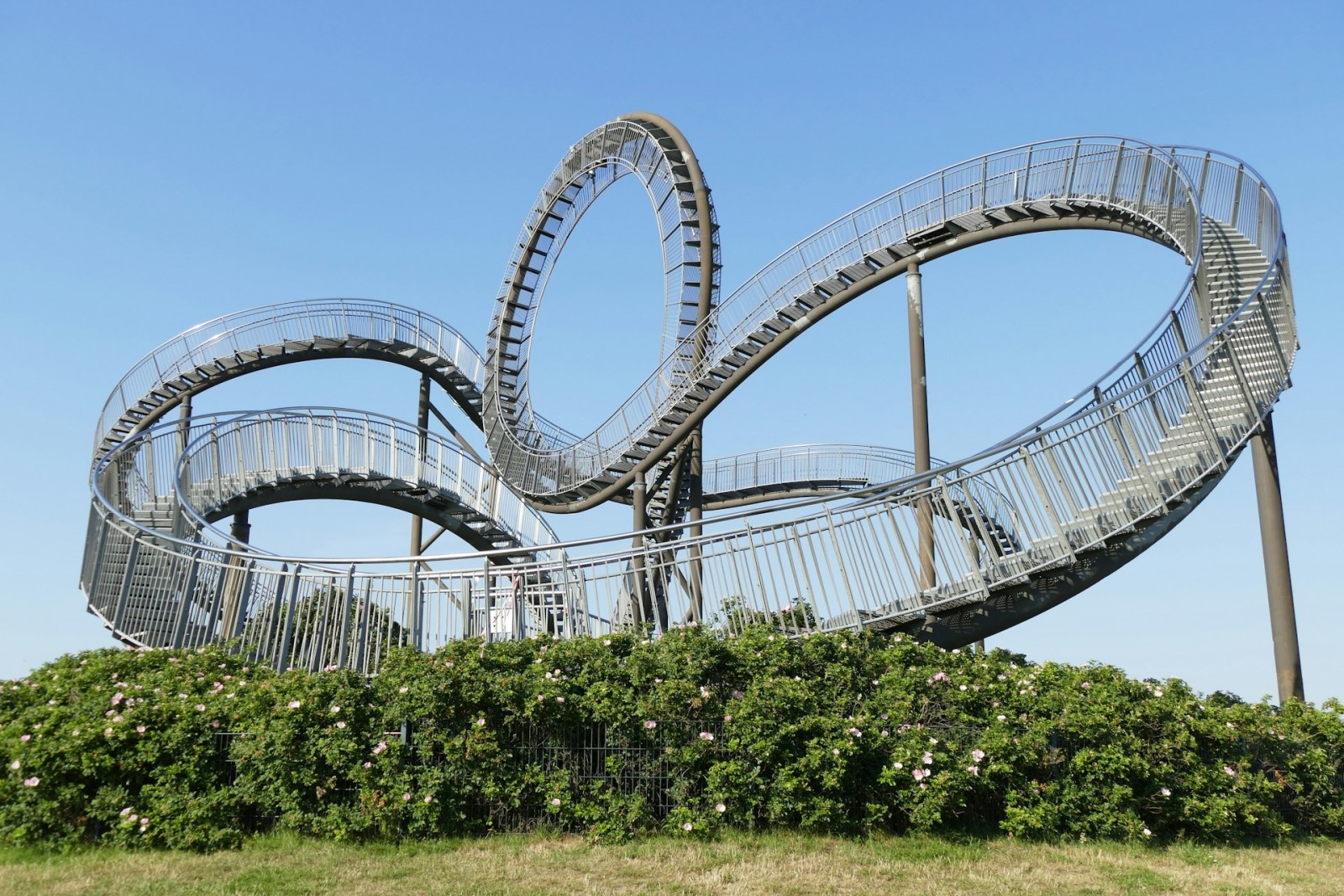
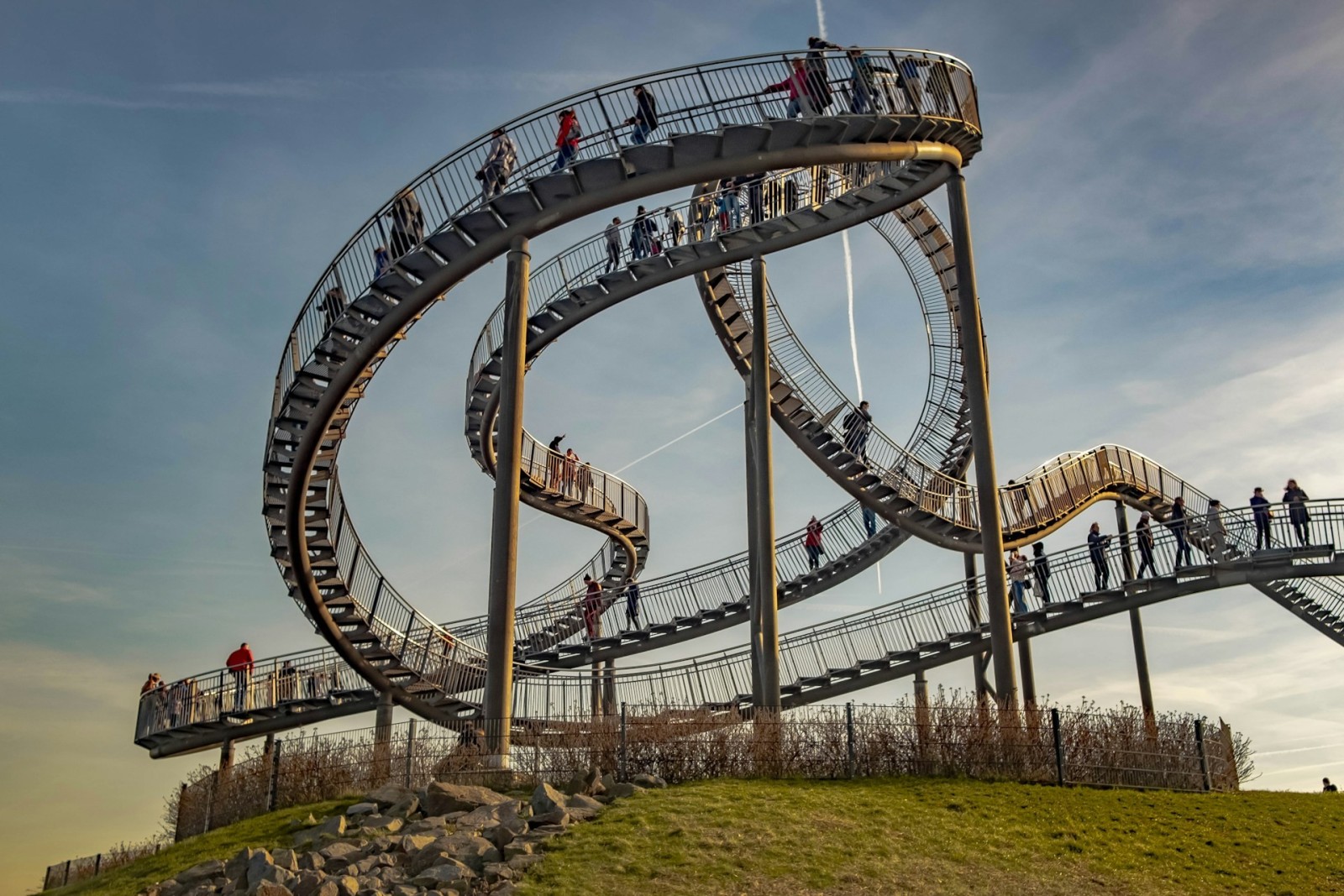
One of the most recognizable modern symbols of the city is Tiger & Turtle – Magic Mountain – a large sculpture in the shape of a roller coaster, which can be walked. It is located on a former industrial dump and combines industrial landscape with modern art.
Duisburg is generally interesting for fans of unusual architecture and urban photography: old industrial buildings coexist with modern buildings, graffiti, sculptures and reconstructed port buildings.
5. Historic Centre and Heritage of Gerhard Mercator
Despite its industrial image, Duisburg has an older history. In the center are preserved historical buildings, churches and places associated with the medieval city.
A special place is occupied by Salvatorkirche near Burgplatz - one of the important historical landmarks of the city.
Duisburg is also closely associated with the figure of the famous cartographer Gerhard Mercator, who lived and worked here in the XVI century. Therefore, the city will be interesting for travelers interested in the history of science, geography and cartography.
6. Museums
The city has several museums that allow you to look at Duisburg from different angles.
Particularly interesting are the Museum of German Inland Navigation (Museum der Deutschen Binnenschifffahrt), dedicated to the history of river transport, and the Museum of Modern Art Küppersmühle in the Inner Harbour. The first shows the importance of rivers and navigation for the development of the city, the second presents modern art in a converted industrial building.
7. Nature and recreation by water
Despite the reputation of an industrial city, Duisburg has a large number of green areas and water bodies. There are more than 20 lakes in and around the city, and the Six Lakes (Sechs-Seen-Platte) form one of the city’s largest recreation areas. Here you can walk, ride a bicycle, relax by the water and engage in water sports.
Another interesting option is Rhein Park, located directly off the Rhine. Here, the industrial landscape is combined with a green area and views of passing ships.
8. Duisburg Zoo
The Zoo Duisburg is suitable for family travel. It is known for its diverse collection of animals and especially for its history of keeping koalas. This allows you to diversify the trip, if after museums and industrial architecture you want a more relaxing holiday.
9. Festivals and cultural life
Duisburg is not exclusively an industrial tourist center. Musical, cultural and city events are regularly held here.
One of the interesting events is the Traumzeit Festival, which takes place on the territory of the Duisburg Nord Landscape Park. The very combination of modern music with huge industrial designs creates an unusual atmosphere. The city also hosts city festivals and events in the Inner Harbour.
10. Cycling tourism
Duisburg is well suited for cycling. Routes along the Rhine and Ruhr pass through the city, and a network of bicycle roads allows you to combine industrial heritage inspection with trips to green areas and waterfronts. Tourist routes allow you to see completely different sides of the city in one trip.
1. High-level hotels
There are several comfortable 4-star hotels in Duisburg. They usually offer spacious rooms, a restaurant, breakfast, Wi-Fi, air conditioning, conference rooms and a convenient location relative to the center and station.
Mercure Hotel Duisburg City is one of the most famous hotels in the city. It is located near the main station and the city center, near the Inner Harbour. The hotel has 162 rooms and several categories of accommodation – Standard, Superior and Privilege.
Wyndham Duisburger Hof is a comfortable hotel in the central part of the city, suitable for both tourist trips and business travel.
Hotel Plaza Duisburg is a modern accommodation option close to the center, with convenient access to shops, restaurants and public transport.
2. Mid-range hotels
The most common option for tourists is three-star and inexpensive four-star hotels. They are suitable for those who need a separate bathroom, breakfast, Wi-Fi and a good location, but do not need additional services of expensive hotels.
The B&B Hotel Duisburg Hbf-Nord is a practical option near the main train station. It is especially convenient for travelers who plan trips to other cities of the Ruhr region.
Hotel Am Stadion is a hotel in the Sports Park area, suitable for relaxing stay and visiting sports facilities.
Hotel Conti Duisburg is a small city hotel near the center, aimed at tourists and business travelers.
3. Budget hotels
For an economical trip, you can choose hotels with small rooms and a limited set of additional services.
ibis budget Duisburg City am Innenhafen is one of the most convenient budget options. The hotel is located about 400 m from the Inner Harbour and about 800 m from the Main Station. Rooms are designed for a maximum of three people, there is free Wi-Fi and parking.
Campanile Duisburg City is an inexpensive option in the central part of the city, convenient for a short stop.
Hotel Goldener Hahn is a small budget hotel in the central area, suitable for travelers who care more about location and price than a large range of services.
4. Hostels
Hostels are especially convenient for young tourists, independent travelers and those who want to reduce their living costs. You can choose multi-bed rooms or, if available, separate rooms.
DJH Youth Hostel Duisburg Landschaftspark is located next to the Duisburg Nord Landscape Park. This is an interesting option for those who come for the sake of the industrial heritage of the city. The cost of living with breakfast starts from about 30 euros per person, although the price depends on the dates and conditions of accommodation.
DJH Youth Hostel Duisburg Sportpark is located in the Sports Park area and is suitable for tourists who prefer active holidays. The cost of accommodation with breakfast starts from about 34 € per person.
Emmas Hostel is a small hostel in the central part of Duisburg, a convenient option for a budget trip.
5. Guest houses and small family hotels
In the city there are small private hotels and guest houses. They usually offer fewer services than larger chain hotels, but can be cozy and cheaper. This option is suitable for a quiet stay for a few days.
For example, Bed and Breakfast 33 offers a small accommodation format designed primarily for tourists who need basic amenities without a large hotel complex.
1. Landschaftspark Duisburg-Nord
The main attraction of Duisburg and one of the most unusual sites of industrial heritage of the Ruhr region. On the territory of the former metallurgical plant, blast furnaces, production buildings, gas holders and other industrial structures have been preserved. Today you can walk, climb, dive, ride a bicycle and attend cultural events. In the evening, part of the complex is spectacularly illuminated.
How to get there: From the Central Station you can take tram 903 to the stop Landschaftspark Nord. Buses 909 and 910 are also suitable. In 2026, the tram stop was modernized and made barrier-free.
2. Inner Harbour (Innenhafen Duisburg)
Duisburg Inner Harbour is a former cargo harbor that has evolved into a modern neighborhood with restaurants, cafes, museums, a walking area and modern architecture. Especially interesting are the buildings of former grain warehouses, a yacht marina and the Five Boats complex. The transformation of the territory began in the 1990s under the plans of architect Norman Foster.
How to get there: the harbor is almost near the central part of the city. From the main station it is convenient to walk or reach several stops by public transport to the Innenhafen district. The area itself is best viewed on foot.
3. Port of Duisburg and Ruhrort (Duisburger Hafen / Ruhrort)
Duisburg port is one of the main symbols of the city and the largest inland port in the world. Here you can see huge cargo terminals, canals, warehouses and ships. You can get acquainted with the port in more detail during a sightseeing tour or excursion on a ship.
How to get there: from the center to the area of Rurrort can be reached by tram and buses. To explore the port, it is better to use an organized tour or walk along the embankments, since the port area is very large.
4. Sculpture "Tiger and Turtle - Magic Mountain"
Tiger & Turtle is a huge metal construction in the shape of roller coasters, installed on a former dump hill. For the most part, the building can be walked. The top offers panoramic views of Duisburg and the industrial landscape of the Ruhr region. At night, the design is illuminated by hundreds of LEDs.
How to get there: Tram 903 runs directly from the main station in the direction of Mannesmann Tor 2 to Tiger & Turtle stop. This is one of the most convenient options for a trip to the attraction.
5. Museum of German River Navigation (Museum der Deutschen Binnenschifffahrt)
The Museum of German River Navigation is dedicated to the history of German river transport. The exhibition presents models of ships, technical items, documents and other materials telling about the development of navigation on the Rhine and other rivers. The museum is especially interesting due to its connection with the history of Duisburg itself as a major port city.
How to get there: The museum is located in the Rurrort area. From the central part of the city can be reached by public transport with a transfer; after leaving at the nearest stop, a short walk will be required.
6. Museum Küppersmühle (MKM Museum Küppersmühle)
The Museum of Modern Art is located in a reconstructed complex of former grain warehouses in the Inner Harbour. The building itself is of interest due to the combination of historical industrial architecture and modern renovation. The collection features works of German post-war and contemporary art.
How to get there: the most convenient way to go to the Innenhafen area, after which you can walk along the harbor. The sight is well combined with a walk along the Inner Harbour.
7. Lehmbruck Museum (Lehmbruck Museum)
The museum is dedicated primarily to the sculpture and work of Wilhelm Lembroke, a native of Duisburg. It features works by German and international sculptors as well as contemporary art.
How to get there: the museum is located in the central part of Duisburg, so it is convenient to get to it from the main station by tram or bus, and part of the way you can walk.
8. Duisburg Zoo (Zoo Duisburg)
Duisburg Zoo is one of the city’s most famous family facilities. The zoo is especially famous for koalas; besides them, there are numerous species of animals, and the territory is suitable for a long walk.
How to get there: The zoo is located on Mülheimer Straße. From the center you can get by tram or bus in the direction of the zoo, and then walk to the entrance.
9. Six Lakes (Sechs-Seen-Platte)
Sechs-Seen-Platte is the largest recreation area in Duisburg, consisting of six lakes surrounded by forest. Here you can walk, ride a bicycle, relax by the water, sailing and other types of outdoor activities.
From the city you can take buses 934 and 941 to Wolfsee or Am See stops. The sight is then inspected on foot.
10. Church of the Saviour (Salvatorkirche)
The Church of the Savior is located in the historical center of Duisburg, next to the Town Hall. It is one of the important monuments of the old city. The place is connected with the history of medieval Duisburg and with the name of the cartographer Gerard Mercator.
How to get there: From the main station area to the historic center you can reach by tram or bus, and then walk a few minutes on foot. A visit to the church is conveniently combined with a walk in the center.
11. Duisburg Theatre and Opera Square (Theater Duisburg / Opernplatz)
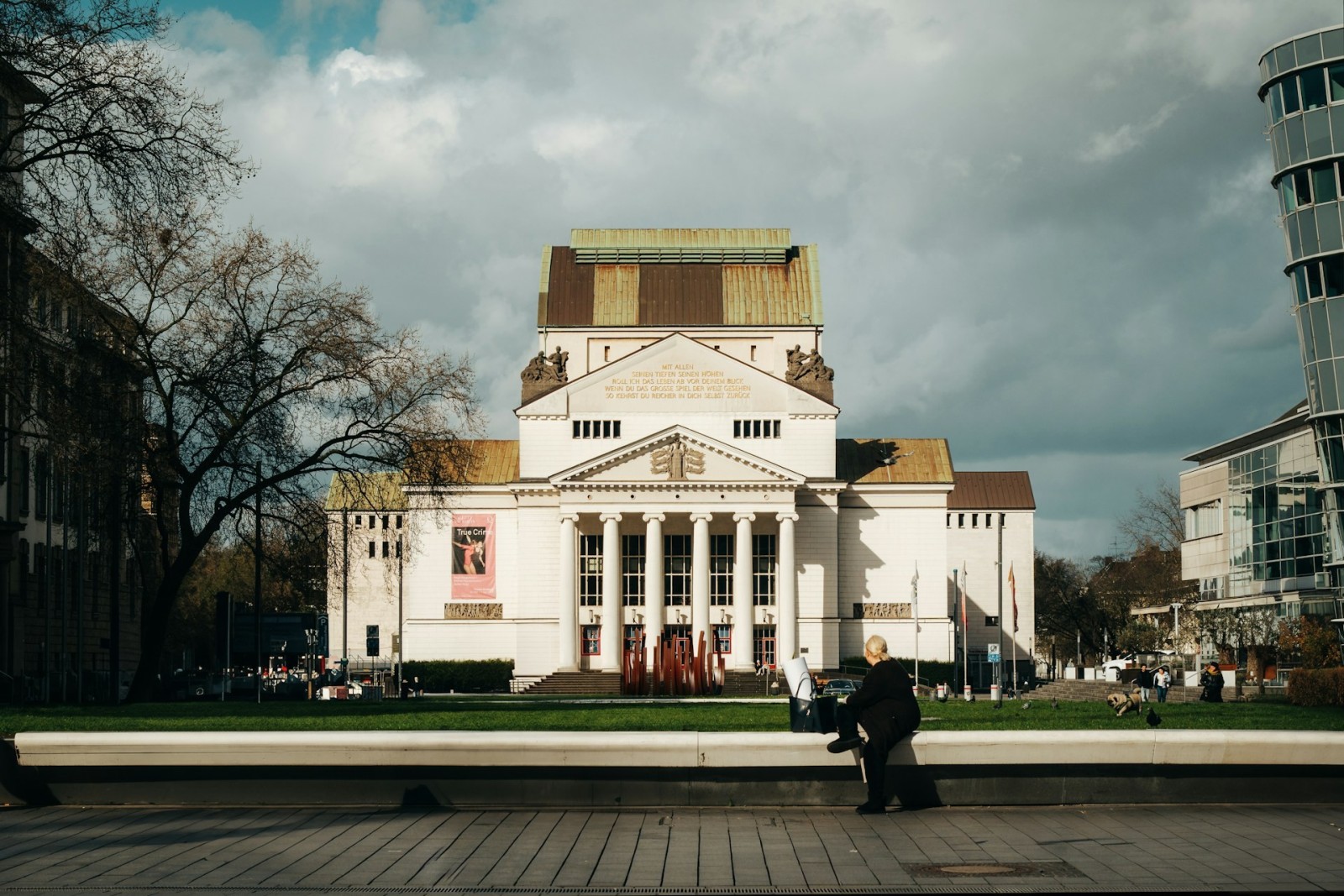
The theatre is located in the city centre and is one of Duisburg’s notable cultural sites. There are theater, opera and other musical productions.
How to get there: The facility is located in the central part of the city and is well connected to the tram and bus network. The main station can be reached in a few stops or walk.
12. Rhine Park (RheinPark)
Rhine Park is a large green area on the banks of the Rhine, suitable for walking, recreation and cycling. From here you can observe the river and passing ships, as well as see the industrial landscape of Duisburg from the other side.
How to get there: you can reach the area by city bus, then walk to the bank of the Rhine. It is especially convenient to include the park in the bike route.
13. Sportpark Duisburg (Sportpark Duisburg)
Large sports and recreational area with water objects, walking areas and a long rowing track. Here you can do running, cycling, rowing and other types of active recreation.
How to get there: there is regular public transport from the center; a walk may be required from stops to individual sports park facilities.
1. Duisburg Dance Festival (TANZtage Duisburg) – February–March
A large dance festival, in which numerous performers participate. The program presents hip-hop, modern dance, ballet, show dancing and other areas. There are various performances and final screenings.
2. Kaas & Kappes Festival – February
German-Dutch Theatre Festival for Children and Youth. Suitable for tourists with children and those interested in modern theater culture.
3. Duisburger Karneval (February)
The city hosts costume events, street celebrations, concerts and carnival processions. The holiday is part of the traditional carnival season of the Rhineland.
4. Street Food Festival – May
On the territory of the Landscape Park Duisburg Nord gather food trucks and trading tents with dishes from different countries. The festival is accompanied by music and entertainment.
5. Jazz concerts "Jazz auf'm Plazz" (May-July)
In the warm season, open concerts of jazz music are held in the central part of Duisburg. Performances create the atmosphere of the city summer holiday.
6. Extraschicht Festival (June)
Great cultural event of the Ruhr region. Former industrial enterprises, mines and other facilities are being transformed into venues for concerts, theater performances, light shows and art projects. In Duisburg, one of the main sites is the Duisburg-Nord Landscape Park.
7. Traumzeit Festival (June)
A major music festival taking place on the territory of the Duisburg-Nord Landscape Park. In the program sound indie, rock, pop, hip-hop, electronic music and other modern trends. Concerts are held among former industrial buildings.
8. Inner Harbour Festival (Innenhafenfest) – June
A big city holiday in the Inner Harbour area. The program usually features music, entertainment, sports competitions, gastronomic venues and water activities.
9. Drachenboot-Fun-Regatta (June)
Bright sports and entertainment event in the Inner Harbour. Teams compete on decorated dragon boats, and around there are musical performances and various entertainments.
10. Beecker Kirmes Fair (July)
One of Duisburg’s biggest folk festivals. For a few days, the Bekk district turns into a large fairground with attractions, concerts, trading tents and festive events. Traditionally, the program ends with a large fireworks display.
11. Duisburg City Holiday (Duisburger Stadtfest) – July
The celebration takes place in the city center. Concert scenes are installed on the streets, gastronomic venues work and entertainment events for adults and children are held.
12. Duisburger Weinfest (July-August)
Summer festival in the city center dedicated to German wines. Visitors can taste a variety of wines, local snacks and listen to music outdoors.
13. Platzhirschfestival (September)
Festival of Modern Urban Culture. The program combines music, literature, art, performances and various cultural projects. Especially interesting for those who want to get acquainted with the modern creative scene of Duisburg.
14. Duisburger Filmwoche (November)
Famous documentary film festival. The event includes film screenings, meetings with directors, discussions and various cultural events.
1. Winter - December, January, February
Winter in Duisburg is relatively mild. During the day, the temperature is usually about 5-6 ° C, at night it can drop to about 0-2 ° C. Snow is possible, but sustained snow cover is rare. In winter it is quite cloudy and humid, so the weather is worse for long walks.
Air temperature: approximately +1 ... +6 °C.
Water temperature: about +4 ... +7 °C. Swimming in open water is not suitable.
Winter is suitable for those who plan to visit museums, exhibitions, theaters, restaurants and Christmas events, rather than spending a lot of time in nature.
2. Spring - March, April, May
It gets noticeably warmer in spring. In March, the daytime temperature is usually about 10 °C, in April - about 14 °C, and in May - about 18 °C. The number of sunny hours is gradually increasing, so the conditions for excursions become much more comfortable.
Air temperature: approximately +10... +18°C.
Water temperature: about +7 ... +15 °C.
April and May are well suited for strolls through the historic center, the Inner Harbour, parks and industrial attractions.
3. Summer - June, July, August
Summer is considered the warmest period. The average daily temperature is about 21-23 ° C, and on some hot days the temperature can rise much higher. July is usually the warmest month. At the same time, summer is not completely dry - rains are possible in June, July, and August.
Air temperature: about +21 ... +23 ° C, on hot days above +30 ° C.
Water temperature: about +17... +21 °C in rivers and lakes depending on the specific reservoir and period.
Summer is especially convenient for walking around the Duisburg Nord Landscape Park, trips to the Rhine, visiting the Six Lakes, cycling routes and participating in city festivals.
4. Autumn - September, October, November
In early autumn, quite warm weather persists: in September afternoon about 19 ° C. In October, the temperature drops to about 14-15 °C, and in November to 9-10 °C. Gradually, cloudiness increases and the duration of daylight is reduced.
Air temperature: approximately +9 ... +19 °C.
Water temperature: about +8 ... +18 °C.
September is especially convenient for excursions and walks, as it retains a comfortable warmth, but there is no ordinary summer heat. October is suitable for cultural and museum tourism.
1. Language of communication
The main language of communication in Duisburg is German (Deutsch). In shops, cafes, hotels, museums and other tourist places, it is often possible to use English, especially with young people and employees of the tourism industry.
In everyday communication, Germans usually value politeness, calm tone and respect for personal space. When addressing strangers, it is customary to use the polite Sie form.
It is useful to start a conversation with the words Guten Tag – “Good day” or Hallo – “Hello”. When contacting employees of shops and establishments, Bitte is appropriate - "please" and Danke - "thank you."
2. Punctuality
Punctuality is considered an important part of German culture. For excursions, meetings, trips and other events, it is advisable to come in advance. Even a few minutes late without warning can be considered rude.
This is especially important for organized excursions and train trips: public transport follows a schedule, and transfers are sometimes designed for only a few minutes.
3. Lines and public spaces
In shops, cash desks, museums and other places it is customary to observe the queue. Do not try to get ahead of other visitors.
In public transport, it is advisable not to talk too loudly, not to disturb other passengers and make room for people who need them. Enter the transport after the passengers have left.
4. Rules of conduct in public places
In Germany, great attention is paid to order and cleanliness. Garbage should be disposed of in containers intended for it, and bottles and banks participating in the collateral value system should be handed over separately.
On the streets and in residential areas, it is advisable to observe silence, especially in the late evening and at night. Loud music, shouting and noisy company near residential buildings can cause discontent of residents.
5. Rules on roads and bicycle lanes
Pedestrians need to pay attention to bicycle paths. In Duisburg, the cycling infrastructure is quite developed, so it is impossible to occupy a dedicated lane for cyclists without the need.
When crossing the road should use pedestrian crossings and traffic lights. Crossing the street at a red light is not recommended even when there are no cars nearby.
There are separate rules of the road for cyclists. Traffic lights, road signs and priority rules must also be observed on a bicycle.
6. Alcohol and smoking
The use of alcohol is allowed subject to age and other restrictions established by law, but it is unacceptable to appear in public places in a state of severe intoxication and disturb order.
Smoking is prohibited in many enclosed public spaces, including public transport and establishments. Specially authorized places should be used for smoking and restrictions should be observed.
7. Photo and video recording
It is usually possible to photograph sights and urban spaces, but when photographing people, their right to privacy must be taken into account. Particular care should be taken to photograph children, private areas and people close-up.
In museums and exhibitions, the rules of shooting may differ: some exhibits are allowed to be photographed only without a flash, and individual works can be completely closed for shooting.
8. Shops and fees
In stores, it is customary to calmly wait for your turn at the checkout. Payment by bank card is widespread, but in smaller establishments it is better to have some cash euros.
When buying goods in Germany, there is an established deposit refund system for certain types of packaging - Pfand. Therefore, you should not throw away some bottles and cans along with ordinary garbage.
9. Environmental regulations
The city must comply with the rules of sorting waste, if they are provided in the place of residence. In natural areas, parks and near lakes, you can not leave garbage, damage plants or make fires in unauthorized places.
When visiting natural areas and parks, you should use the designated paths and follow the special rules of a particular zone.
10. Documents
Foreign tourists must have a valid passport or other document recognized for entry into Germany. For citizens of countries requiring a Schengen visa, it is necessary to issue an appropriate visa in advance.
During the trip, it is advisable to have an identity document with you, or to comply with the requirements of a specific place of residence and regulatory authorities.
11. Basic laws that are important to remember
The tourist must comply with German traffic rules, public order requirements, rules of stay of foreigners, prohibitions on illegal storage and use of certain substances, as well as environmental protection requirements.
Special attention should be paid to the rules in public transport: travel must be paid for or issued with an appropriate ticket. Ticketless travel can lead to a fine.
It is also forbidden to damage city property, monuments, buildings and other objects. There is liability for vandalism and damage.
1. Greetings and polite words
Hallo! - Hello there! Transcription: Hallo
Guten Morgen! - Good morning!Transcription: Guten Morgen
Guten Tag! - Good afternoon! Transcription: Guten tak
Guten Abend! - Good evening! Transcription: Guten ábent
Auf Wiedersehen! - Goodbye! Transcription: auf vúderzaen
Tschüss! - Goodbye!
Bitte. - Please. Transcription: butte
Danke. - Thank you. Transcription: danke
Vielen Dank! - Thank you very much!Transcription: Fullen Dank
Entschuldigung! Transcription: Entschüldigung
Kein Problem. - No problem. Transcription: Kaine problem
2. Phrases for communication
Sprechen Sie Englisch? - Do you speak English? Transcription: Sprehan zi english?
Ich spreche nur ein bisschen Deutsch. - I speak a little German. Transcription: Their Sprehe Nur ain boshen douche
Ich verstehe nicht. - I don't understand. Transcription: their furstée nicht
Können Sie das bitte wiederholen? - Can you repeat it, please? Transcription: kenen zi das butte viderholen?
Sprechen Sie bitte langsamer. - Speak more slowly, please. Transcription: Sprehen zi butte Langzamer
Was it bedeutet das? - What does that mean? Transcription: Are you poor?
Wie sagt man das auf Deutsch? - How do you say that in German? Transcription: Vizakt man das auf deutsch?
3. Orientation in the city
Wo ist das Stadtzentrum? - Where is the city center? Transcription: East das Statcentrum?
Wo ist der Hauptbahnhof? - Where's the main train station? Transcription: East Der Hauptbanhof?
Wo ist die nächste Haltestelle? - Where's the nearest stop? Transcription: East di nexte halteshtalle?
Wie komme ich zum Innenhafen? How do I get to the Inner Harbor? Transcription: Whi kome their tsum Innenhafen?
Wie komme ich zum Landschaftspark Duisburg-Nord? - How to get to the Landscape Park Duisburg-Nord?Transcription: Vi kome their tsum landscape Park Duisburg-Nord?
Ist es weit von hier? - Is that far from here? Transcription: East SS White von Hir?
Kann ich zu Fuß gehen? - Can I walk? Transcription: Can their zu fus geen?
Links oder rechts? - Left or right? Transcription: linx der rechts?
Geradeaus. - Straight. Transcription: geradeaus
4. Public transport
Eine Fahrkarte nach Duisburg, bitte. - One ticket to Duisburg, please. Transcription: áine Farkarte nah Duisburg, butte
Ein Ticket, bitte. - One ticket, please. Transcription: ain touket, butte
Wie viel kostet die Fahrkarte? - How much is the ticket? Transcription: Vifil Costet di Farcarte?
Welche Linie fährt zum Zentrum? - What line goes downtown? Transcription: velhe lúnie fert tsum centrum?
Wo muss ich umsteigen? - Where do I need to move? Transcription: to Moses their umstein?
Ist das der richtige Zug? - Is this the right train? Transcription: ist das der ruhtige zuk?
Wann fährt der nächste Zug? - When does the next train leave? Transcription: van firth der nexte zuc?
Hält die Straßenbahn hier? - Does the tram stop here? Transcription: Helt di Strasenban hir?
5. At the hotel.
Ich habe eine Reservierung. - I have a reservation. Transcription: their habe áine reservirung
Ich möchte einchecken. - I want to register. Transcription: their mehte áinchaken
Wann ist das Frühstück? - When's breakfast? Transcription: Van East das Frystyuk?
Ist das Frühstück im Preis inbegriffen? - Is breakfast included? Transcription: Ist das früstuke them price inbegruffen?
Haben Sie Wlan? - Do you have Wi-Fi? Transcription: haben zi ve-lan?
Wo ist mein Zimmer? - Where's my number? Transcription: East mein zumer?
Können Sie mir helfen? - Can you help me? Transcription: kenen zi world helfen?
6. Cafe and restaurant
Ich möchte einen Tisch für zwei Personen. - I'd like a table for two. Transcription: their mehte áinen tish für zwei parzonen
Die Speisekarte, bitte. - Menu, please. Transcription: di spisekarte, butte
Was empfehlen Sie? - What do you recommend? Transcription: Are you emmphelen zi?
Ich nehme das. - I'll take this. Transcription: their neme das
Ohne Fleisch, bitte. - No meat, please. Transcription: one fluish, butte
Ohne Alkohol, bitte. - No alcohol, please. Transcription: Öne alcohol, butte
Die Rechnung, bitte. - Check, please. Transcription: di rehnung, butte
Kann ich mit Karte bezahlen? - Can I pay with a card? Transcription: Can their mit karte betzalen?
Das war sehr lecker. - It was delicious. Transcription: das var zea lekka
7. In the store.
Wie viel kostet das? - How much does it cost? Transcription: Whifil Costet das?
Haben Sie das in einer anderen Größe? - Is it a different size? Transcription: Haben zi das in áiner ánderen grosse?
Kann ich mit Karte bezahlen? - Can I pay with a card? Transcription: Can their mit karte betzalen?
Ich möchte das kaufen. - I want to buy this. Transcription: Their mehte das Kaufen
Ich schaue nur, danke. - I'm just looking, thanks. Transcription: their shaue noor, danke
Haben Sie eine Tüte? - Do you have a package? Transcription: habeng zi áine tute?
8. In tourist places
Wo ist der Eingang? - Where's the entrance? Transcription: East der áingang?
Wo ist der Ausgang? - Where's the exit? Transcription: East Der Ausgang?
Wie viel kostet der Eintritt? - How much is it? Transcription: W. Fil Costet Der Intrit?
Kann ich hier Fotos machen? - Can I take pictures here? Transcription: Can they chir fotos mahan?
Gibt es eine Führung auf Englisch? - You got an English tour? Transcription: Gybt es áine fürung auf english?
Wie lange dauert die Führung? - How long is the tour? Transcription: vi lange dáuert di Furung?
1. Local food and food
The Rheinischer Sauerbraten is a traditional dish of the region. This is pickled meat that is stewed for a long time and served with sauce, potatoes or dumplings. As a souvenir, it is difficult to bring the finished dish, but in shops you can find sauces and products for its preparation.
Reibekuchen - German potato pancakes, especially popular in the Rhineland. They are usually eaten with applesauce. It is better to try directly in Duisburg at fairs and city holidays.
Potato salad in Rhine is a regional variant of a popular German dish. As a gastronomic gift, you can buy ready-made sauces or locally produced products.
German bread and pastries are a good option for exploring the local cuisine. In Duisburg, you can try various varieties of rye and grain bread, buns, bretzels and regional pastries.
Chocolate and candy are a practical souvenir that is easy to transport. You can choose German chocolate, praline and other sweets in a beautiful package.
2. Drinks.
Rhine beer is one of the traditional options for a gastronomic souvenir. Various varieties of light beer are common in the region, and small breweries can be found in shops.
Regional soft drinks are a good option for those who do not drink alcohol. German supermarkets offer a large selection of lemonades, mineral water and fruit drinks.
3. Useful and health-improving products
Duisburg is not a well-known balneological resort, so you should not look here for specific therapeutic remedies of local origin. However, in German pharmacies and shops you can buy quality products for everyday care and health.
Herbal teas are a popular option for a small gift. You can choose chamomile, mint, melissa, sage and various herbal mixtures.
Cosmetics based on natural components - creams, oils, skin and hair care products.
Bath salts and home care products are an easy and practical gift option.
German pharmacy products - you can buy over-the-counter products and health products, but it is better to choose specific drugs after consulting with a pharmacist and taking into account the rules for their import into your country.
4. Souvenirs with Duisburg symbols
Souvenirs with the image of the Duisburg Nord Landscape Park are one of the most characteristic options. You can find postcards, magnets, small decorative products and other souvenirs with the image of blast furnaces.
Miniatures of industrial facilities are especially interesting small models of blast furnaces and other structures associated with the industrial past of the city.
Souvenirs with the image of Tiger & Turtle - magnets, postcards, keychains and other small objects depicting the famous sculpture.
Souvenirs with the symbols of the port of Duisburg are a good choice for those who want to bring something directly related to the largest attraction of the city.
Postcards and posters with views of the Rhine, the Inner Harbor, the industrial landscape and the historic center.
1. Documents required
To travel to Duisburg, you must have a valid identity document entitling you to enter Germany. For citizens of countries requiring a Schengen visa, a visa must be issued in advance.
For visa-free travel, the document must be valid for at least 3 months after the planned date of departure from Germany and be issued no more than 10 years ago. At the border, you may also be asked to confirm the purpose of the trip, the availability of funds for stay and the possibility of returning.
It is advisable to have a copy of the passport and other important documents separately from the originals.
2. Health insurance
Before the trip, it is recommended to obtain tourist health insurance valid in Germany and other Schengen countries. It is desirable that it cover emergency medical care, hospitalization and medical evacuation or return to the homeland.
To obtain a Schengen visa, health insurance must cover the entire period of stay and have a minimum insurance amount of 30,000 euros.
3. Emergency services phones
In Germany, the following main numbers apply:
112 – ambulance and fire service. The number is used for serious injury, life-threatening, fire and other emergencies. The call is free.
110, police. Used in the event of a crime, a security threat or the need for urgent police intervention.
116117 – medical care outside the usual hours of doctors, when the situation requires medical advice but does not pose an immediate threat to life. For emergencies, call 112.
4. Mobile communications
There are four main mobile networks in Germany:
Telekom, Vodafone, Telefónica Germany (O2) and 1&1. Other operators may provide services through the infrastructure of these networks.
For a tourist, roaming of their operator or tourist SIM/eSIM is usually enough. Before traveling, you should check the cost of mobile Internet and calls in Germany.
In the city, mobile communications and the Internet are generally available well, although signal quality may depend on the location, operator and network load.
5. City security
In the center, at the station, in public transport and during major events, you should carefully monitor your phone, wallet and documents. It is not recommended to leave valuables unattended in cafes, transport or tourist places.
In the evening, it is better to stick to well-lit streets and busy routes. When visiting industrial areas, port areas and former production facilities, you can not enter closed areas and fences.
6. Safety in Landscape Park and Industrial Areas
When visiting the Landschaftspark Duisburg-Nord, restrictions must be observed. The former industrial area has complex structures, stairs, high-rise facilities and technical structures.
You should not independently enter where there is a ban on passage, climb over fences or approach dangerous technical facilities.
7. How many tourists can stay in Germany
For nationals of countries that are allowed short-term visa-free entry, as well as for holders of relevant Schengen visas, the standard rule is no more than 90 days in any period of 180 days throughout the Schengen area, not just in Germany.
This means that travel to other Schengen countries is also counted in these 90 days.
Other grounds are required for longer stays, such as a national visa or residence permit depending on the purpose of the trip.
Create a query and local guides will offer you the best options

