Independent tourism and recreation in the city of Giessen Historical information about the city of Giessen Gie...

Twenty carefully designed excursion routes to cities and castles in Germany, both for the most discerning individual tou …
Giessen is a city in the federal state of Hesse, located in central Germany, about 50 km north of Frankfurt am Main. Its history is closely connected with the development of science, military science and university culture, making it one of the most important academic centers of the country.
Early Middle Ages (before the XIII century)
The first settlements on the territory of modern Giessen appeared in the early Middle Ages. The area was comfortable thanks to:
river Lahn,
fertile lands,
crossing trade routes.
However, as a full-fledged city, Giessen began to form later, when the region came under the influence of the counts of Ziegenhain.
Founding of the city (XIII century)
The official foundation of Giessen dates back to 1230, when it received the status of a city.
During this period:
The first fortified castle is built;
The system of defensive structures is developing;
The city becomes an important administrative center.
Giessen was on the border of interests of various feudal possessions, which made him strategically important.
Later Middle Ages (XIV-XVI centuries)
During this period, Giessen is experiencing:
economic development through crafts and trade;
population growth;
strengthening the city walls.
However, the city often suffered from:
wars between feudal lords;
epidemics;
fires.
Despite the difficulties, Giessen retains its importance as a regional centre.
Founding of the University (1607) – a key stage
One of the most important events in the history of the city was the founding of the University of Giessen (Justus-Liebig-Universität Gießen) in 1607.
Reason for reason:
religious conflicts in the region;
The need to train Protestant priests and officials.
This event completely changed the fate of the city:
Giessen became a university town;
The influx of students and teachers has increased;
Cultural development has increased.
XVII century: Thirty Years' War
During the Thirty Years' War (1618–1648):
The city was repeatedly destroyed;
The population has declined sharply;
The economy was in decline.
But after the war, Giessen gradually recovered, largely thanks to the university.
XVIII-XIX centuries: development of science and modernization
During this period, the city began to develop as a scientific center.
Particularly important changes:
expansion of the university;
development of medicine, chemistry and natural sciences;
urban infrastructure growth.
In the nineteenth century, Giessen became an important center of chemistry and agricultural sciences, thanks to the work of world-class scientists, including Justus von Liebig, after whom the university is named.
Industrial Age (XIX-early XX century)
With the development of industrialization:
Railways are being built;
engineering and chemical industry are developing;
It's a growing city.
Giessen becomes an important transport and industrial hub of central Germany.
XX century: wars and reconstruction
First World War
The city was not frontline, but suffered economically.
The industry worked for military needs.
World War II
Giessen was badly hurt.
In 1944, a large part of the city was destroyed by bombing.
The historical center is almost completely destroyed.
After the war:
large-scale reconstruction begins;
New buildings are being built in a modern style;
Some historical sites are preserved.
Postwar Development (1945–present)
After 1945, Giessen:
becomes an important educational center of Germany;
Actively restore infrastructure;
expanding the university.
Today, the city is known as:
a large university centre;
scientific and medical unit;
A city of students and researchers.
Modern Giessen
Today, Giessen is:
One of the youngest cities in Germany by age (due to students)
Centre for Science and Education;
a city with an active cultural life;
An important transport hub of Hesse.
1. University and scientific atmosphere
The city is known for its university Justus-Liebig-Universität:
one of the oldest in Germany;
strong directions in biology, chemistry and medicine;
scientific museums and exhibitions.
This makes the city a “living intellectual center” rather than just a historical site.
2. Nature and the Lan River
Giessen is located on the Lan River, which provides many opportunities for recreation:
walks along the embankments;
bicycle routes;
small boat trips;
Green parks and recreation areas.
It is especially pleasant to walk in the warm season - the city is very green and calm.
3. Museums and unusual places
There are interesting cultural spots in Giessen:
museum of mathematics and physics;
university museums;
Historical exhibitions of the Hesse region;
Modern art spaces.
The city is more about “intelligence and science” than classical tourist palaces.
4. Botanical garden
One of the oldest botanical gardens in Germany is located here:
rare plants;
greenhouses;
quiet walking areas;
scientific collections.
It is one of the most beautiful and relaxing places in the city.
5. Old Town and Architecture
Although the center was partially destroyed during World War II, it was rebuilt and preserved the atmosphere.
neat German streets;
historic buildings;
small areas;
Cozy cafes.
1. Budgetary options
These are the cheapest places to live.
What is it?
Simple hotels;
hostels;
rooms for several people;
Minimum comfort, but everything you need is available.
Examples:
B&B Hotel Gießen - inexpensive and modern hotel near the center
Jugendherberge Gießen - youth hostel, the most budget option
Akzent Hotel Köhler - a simple hotel with normal conditions
2. Medium level (most popular)
This is the best option for most tourists.
What is it?
comfortable rooms;
a good breakfast;
normal service;
convenient location.
Examples:
Trip Inn City Hotel Giessen - downtown hotel
Residenz Hotel Giessen - comfortable rooms and parking
Best Western Plus Hotel Steinsgarten is one of the best hotels in the city.
3. Comfortable and expensive hotels
These are more expensive and stylish options.
Example:
Heyligenstaedt Hotel - a beautiful hotel with a restaurant and a calm atmosphere
4. Apartments and apartments
You can rent an apartment or a room.
Options:
whole apartment;
room in a common apartment (WG);
studio.
Pros:
You can cook food.
convenient for long stay;
Often cheaper than hotels.
1. The Botanical Garden of Giessen (Botanischer Garten Giessen)
One of the oldest botanical gardens in Germany.
What to see:
greenhouses with tropical plants;
rare species of trees and flowers;
quiet walking paths;
University scientific collections.
How to get there:
10-15 minutes walk from the center;
city buses to stops near the university;
comfortable on a bicycle.
2. University of Giessen (Justus-Liebig-Universität)
One of the oldest universities in Germany.
What's interesting:
historic buildings;
modern buildings;
atmosphere of the student city;
scientific museums and exhibitions.
How to get there:
walk from the center (5-20 minutes depending on the body);
The bus network is well connected to campuses.
Lots of bike lanes.
3. Museum of Mathematics and Physics (Mathematikum)
It is a very unusual museum where you can touch and check everything.
What's inside:
interactive scientific exhibits;
physical experiments;
Promotion of science for adults and children.
How to get there:
5-10 minutes walk from the center;
nearby bus stops;
Easy to get from the main station.
4. The Old Town (Altstadt Giessen)
Although it was partially destroyed during the war, it is now rebuilt.
What is it?
central square;
shops and cafes;
historic buildings;
pedestrian streets.
How to get there:
It is located in the heart of the city;
from the station 10-15 minutes walk;
All buses pass through the center.
5. Lahn River and Embankments
The natural area of the city.
What can be done:
Walking along the water;
bicycle routes;
recreation in parks;
little picnics.
How to get there:
walk from the center (5-20 minutes);
The bicycle is the most convenient option;
bus stops near the waterfront.
6. University museums and cultural centers
There are many small museums in Giessen.
What's interesting:
historical collections;
natural sciences;
temporary exhibitions;
cultural events.
How to get there:
within the centre;
Most are on foot or by bus.
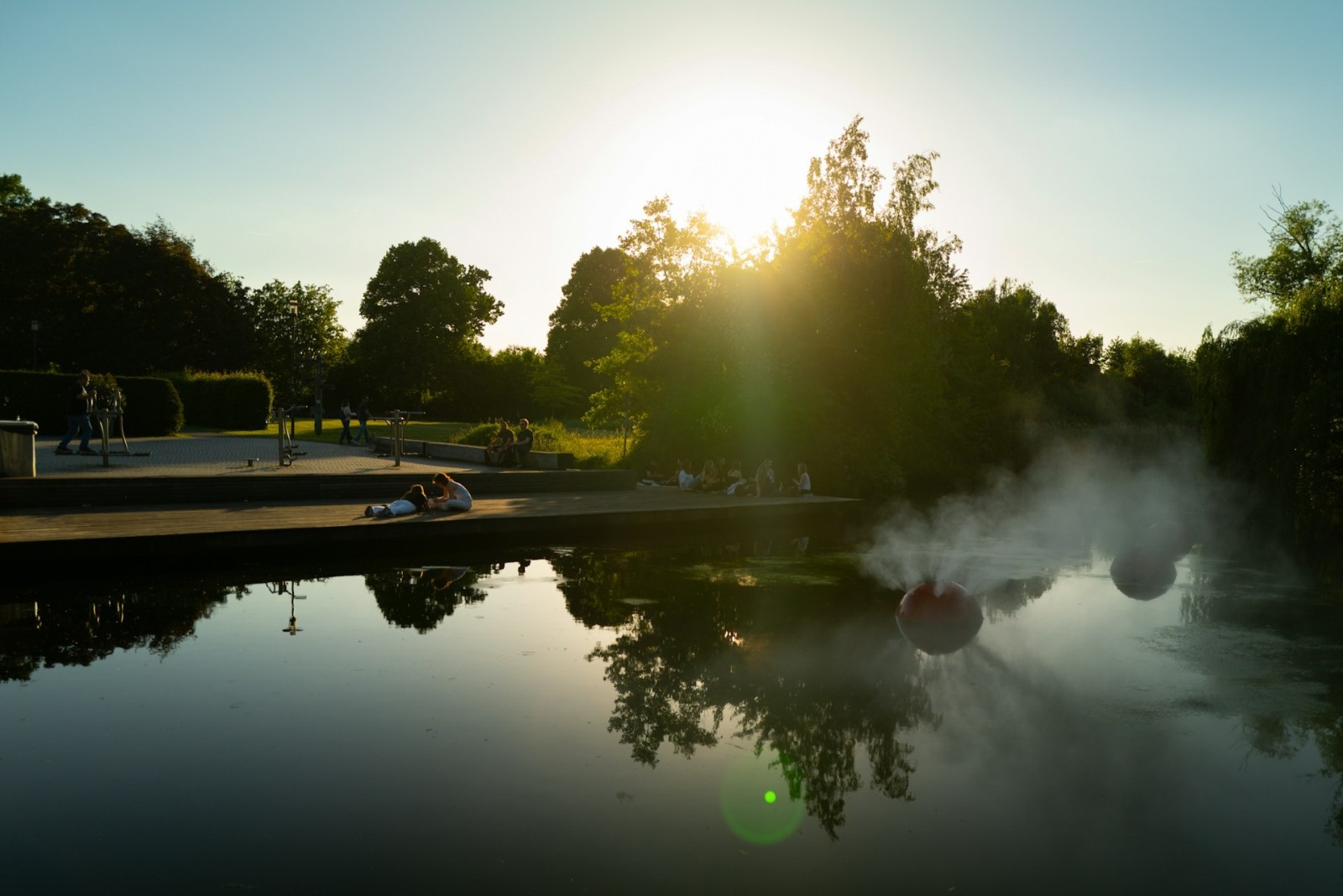
Lachnuferfest takes place in summer and is the city’s main festival. It is a large-scale event on the waterfront of the Lan River with music, concerts, street food, scenes and recreation areas. The festival attracts a large number of visitors and is considered the brightest event of the year.
The City Festival (Stadtfest Gießen) takes place in the city center and turns the streets into a large concert venue. There are musical groups, street cafes and entertainment programs.
The Giessen Autumn Fair (Gießener Herbstmesse) is held in late September and lasts several days. This is a major event with rides, a Ferris wheel, fairground tents and a large selection of food and sweets.
Krämermarkt is a traditional market in the city centre selling clothes, handmade goods, accessories and street food. It takes place several times a year and is more commercial in nature.
The Christmas market (Weihnachtsmarkt Gießen) opens at the end of November and runs until the end of December. The city center is decorated with lights, wooden houses with mulled wine, gifts and sweets are installed, creating a festive atmosphere.
Museum Night (Lange Nacht der Museen) is an evening cultural event, when museums work late, special exhibitions, excursions and interactive programs are held.
Liebigs Suppenfest is a gastronomic festival where you can taste different types of soups and local cuisine. It takes place in a cozy and chamber atmosphere.
University festivals are a series of events throughout the year, including student concerts, scientific exhibitions, lectures and cultural events.
Flohmarkt are flea markets that are regularly held in the city. Here they sell antiques, clothes, books and various household items.
Seasonal street concerts and events near the Lan River, which take place in the warm season and include music, sports and outdoor recreation.
Spring (March-May)
The air temperature is gradually rising. In March it is still cool, and by May it is already comfortable for walks.
Air temperature: from +5 ... +10 °C in March to +15 ... +22 °C in May
Water temperature (Lan River): approximately +6... +14 °C
The weather is changeable: rains and windy days are possible, but there are already many sunny periods. At this time, the city begins to “come to life” – street cafes and parks open.
Summer (June-August)
The warmest and most touristic active season.
Air temperature: +20 ... +28 °C, sometimes up to +30 °C
Water temperature (Lan River): +16 ... +22 °C
In the summer, Giessen hosts major festivals, especially Lachnuferfest. The weather is warm, comfortable for walking, cycling and relaxing by the river. Sometimes there are thunderstorms and short rains.
Autumn (September-November)
Autumn in Giessen is mild and beautiful, especially in September and October.
Air temperature: from +18... +20 °C in September to +5...+10 °C in November
Water temperature: +18... +10 °C
September and early October are still comfortable for walking. Later it becomes cooler, often rains, but the city looks especially atmospheric thanks to the autumn colors.
Winter (December – February)
Winter is mild, without severe frosts, but wet and cool.
Air temperature: from 0 ... + 5 ° C, sometimes up to -5 ° C at night
Water temperature: +3 ... +5 °C
Snow happens, but it usually melts quickly. The main winter event is the Christmas market. The weather is more suitable for museums, cafes and walks in the center than for a long holiday outside.
Language of communication
The main language is German (Deutsch). It is spoken in government offices, transport, shops and everyday life.
In tourist places, cafes and hotels, English is often understood, especially among young people and students. Therefore:
In the city center you can easily communicate in English;
In small shops and markets, you often need at least basic German.
Russian is rarely spoken.
It’s helpful to know a few simple phrases in German, as locals respond positively to attempts to speak their language.
Traditions and norms of behaviour
Punctuality
In Germany, time is very important. Being a few minutes late is considered impolite. This applies to meetings, excursions, transport and reservations.
Polite communication
It is customary to use formal appeals:
Herr (mister)
Frau (mistress)
Even in ordinary situations with strangers, the respectful form of “Sie” (you) is more often used than “du” (you).
Silence and order
Gissen is a quiet city, so it is important to keep quiet:
at night;
in residential areas;
on weekends and holidays.
Loud music, noisy company and disturbing behavior are not welcome.
Cleanliness and sorting
In Germany, the environment is closely monitored:
garbage is sorted (glass, plastic, paper);
garbage can only be thrown into urns;
Parks and waterfronts should not be polluted.
Conduct in public places
Not accepted:
Speak loudly in transport;
occupy a place without necessity;
interfere with other passengers or visitors;
Infringe personal space.
Basic laws and regulations
Transportation
The ticket must be purchased before the trip;
ticketless travel is strictly fined;
Controllers check regularly and without warning.
Pedestrians and roads
to cross the road only at a green light;
Cycling paths are mandatory for cyclists.
You can't walk on bike lanes.
Alcohol and behaviour
Alcohol is allowed, but drinking in public is regulated.
It is forbidden to disturb public order;
There may be fines for aggressive or noisy behavior.
Smoking
Smoking is prohibited:
in transport;
in public buildings;
in most enclosed areas.
Photography
You can shoot streets, architecture and nature, but:
You cannot photograph people without permission in certain situations.
It is forbidden to remove closed university laboratories and office facilities.
Greetings and courtesy
Hallo, hello.
Guten Tag - Good afternoon
Guten Morgen - Good morning
Guten Abend - Good evening
Auf Wiedersehen - Goodbye
Tschüss (chus) - for now
Danke - thank you.
Danke schön (Danke schön) — thank you very much.
Bitte (bitte) - please / nothing
Entschuldigung (Entschuldigung) - sorry
Kein Problem - No problem
Communication and requests
Sprechen Sie Englisch? - Do you speak English?
Ich spreche kein Deutsch. (their crucifixion) - I don't speak German.
Ich verstehe nicht. (their fists) - I don't understand.
Können Sie mir helfen? - Can you help me?
Wo ist...? (in English...?) - Where is...?
Wie viel kostet das? - How much does it cost?
At the hotel.
Ich habe ein Zimmer reserviert. (their hub ain zimmer reserve.) - I have a reservation.
Ich möchte ein Zimmer buchen. (their ain zimmer buchen.) - I want to book a room.
Ist Frühstück inklusive? - Breakfast included?
Wie viel kostet das Zimmer pro Nacht? - How much does a room cost per night?
Wo ist der Aufzug? - Where's the elevator?
Wann ist der Check-out? - When's the departure?
Cafe and restaurant
Ich möchte bestellen. (their fur bestellen.) - I want to order.
Die Speisekarte, bitte. (Spiecarde bitte) - Menu, please.
Was empfehlen Sie? - What do you recommend?
Ich nehme das. (they don't know) - I'll take it.
Ein Wasser, bitte. (ain vasser bitte) - Water, please.
Ein Bier, bitte. (ain bir bitte) - Beer, please.
Die Rechnung, bitte. (di rehnung bitte) - Check, please.
Kann ich mit Karte bezahlen? - Can I pay with a card?
Transport and road
Wo ist der Bahnhof? - Where's the station?
Wo ist die Bushaltestelle? - Where's the bus stop?
Wo ist die Straßenbahn? - Where's the tram?
Eine Fahrkarte, bitte. (Aine Farkarte Bitte) One ticket, please.
Wann fährt der Zug? - When does the train leave?
Von welchem Gleis? - What platform?
Wie komme ich nach Giessen Zentrum? - How do I get to Giessen?
Shopping.
Ich möchte das kaufen. (their fur das kaufen) - I want to buy it.
Haben Sie das in einer anderen Größe? - Is there another size?
Das ist zu teuer. (Plaintiff zu Toyer.) - It's too expensive.
Gibt es Rabatt? - Any discount?
Kann ich bar bezahlen? - Can I use cash?
Emergency situations
Hilfe! (Hilfe!) - Help me!
Rufen Sie die Polizei! - Call the police!
Ich brauche einen Arzt. (their brauche ainen art.) - I need a doctor.
Wo ist das Krankenhaus? - Where's the hospital?
Ich habe meinen Pass verloren. (their hub Mainen pass ferloren.) - I lost my passport.

Food and drinks worth bringing
1. Regional products of Hesse
From this region often bring:
Apple products (Apfelwein - apple wine)
direct-pressed apple juice
jam
honey
2. German chocolate and sweets
Ritter Sport (different tastes)
Milka (regional series)
Haribo (chewing candy, brand from Germany)
Marzipan (especially from Lübeck, but sold nationwide)
3. Baking and snacks.
pretzel
German cookies (especially Christmas Lebkuchen)
salty snacks
4. Drinks.
German beer (different local brands of Hesse)
Non-alcoholic herbal lemonades (Apfelschorle – apple juice with water)
Mineral water from regional sources
Medical and useful remedies (pharmacies in Germany)
Germany has a very strong pharmacy culture (Apotheke), and many products are quality and natural.
Popular stuff:
herbal teas (from cold, sleep, stomach)
ointments with arnica (Arnika - from bruises)
natural drops and cough syrups
German vitamins (Doppelherz, etc.)
cosmetics from pharmacies (Balea, Weleda)
Souvenirs from Giessen and the region
1. University symbols
Giessen is a university city, so it is popular:
T-shirts and mugs with the university logo
notebooks and office
Souvenirs from the Mathematikum Museum
2. Natural and local souvenirs
Lan River motifs
postcard
handicrafts from fairs
3. German Classic Souvenirs
wooden figures (especially Christmas)
candlestick
magnets
Travel documents
To travel to Germany (including Giessen) you usually need:
passport
Visa (if there is no visa-free regime)
Health insurance (required)
confirmation of accommodation (hotel, rent, invitation)
return tickets or itinerary
funds (sometimes checked at the border)
Health insurance
The insurance must:
cover up
operate throughout the Schengen area
have coverage of at least 30,000 euros
include hospitalization and transportation
Emergency services
Uniform emergency number in Germany:
112 Ambulance and Fire Service
110 - police
Calls are free and work without a SIM card.
Mobile and Internet
All major German operators operate in Giessen:
Deutsche Telekom
Vodafone Germany
O2 (Telefónica)
For tourists:
You can buy a SIM card in shops or airports
Tourist tariffs are available with the Internet
The city has a lot of free Wi-Fi (cafe, university, hotels)
City security
Giessen is considered safe, but standard rules are important:
monitor things in transport and at the station
leave bags unattended
follow traffic rules
off-path n
Silence in residential areas at night
Duration of stay in Germany
Depends on nationality:
EU citizens
They can live and live without restrictions.
Registration is required for long-term residence
Tourists from countries outside the EU (for example, on a Schengen visa)
up to 90 days within 180 days
After that, you have to leave the Schengen area.
Create a query and local guides will offer you the best options


