Independent tourism and recreation in the city of Heilbronn Historical information about the city of Heilbronn...
Emergence of the city
The territory of Heilbronn was inhabited in ancient times. Thanks to the fertile lands, vineyards and the Neckar River, permanent settlements arose here early. In the Roman era, there was a military fortification near the modern Böckingen district. The first written mention of Heilbronn dates back to 741, when it was called the villa Helibrunna. The settlement arose around the Frankish royal court and the spring from which the name of the city derives. Already in the VIII century, viticulture developed here.
Medieval city
In the XII century Heilbronn became an important trading point. In 1146 there was already a market, mint, wharf and vineyards. Thanks to Neckar, the city developed trade and river transportation. In 1225 Heilbronn was first mentioned as a fortified city, and in 1281 King Rudolf I granted it official city law. In 1371, the city received a new system of government and in fact became a free imperial city, subordinate directly to the emperor.
Rise and Reformation
In the XIV-XV centuries, Heilbronn experienced an economic boom. Trade, crafts, winemaking and shipping developed. In 1333, the city received the right to change the course of the Neckar and control the river movement, which strengthened its position as a trading center. In the XVI century, the city was involved in the events of the Peasant War. In 1530, the city council adopted the Protestant faith, after which Heilbronn became one of the important Protestant cities in the region. During this period, the construction of the Church of St. Kilian and other significant buildings continued.
The Thirty Years' War and the Eighteenth Century
The seventeenth century brought heavy trials. During the Thirty Years' War, Heilbronn came under the control of various armies several times. In 1633, the Heilbronn Convention was held here, a gathering of Protestant forces allied with Sweden. After the war, the city gradually recovered. The XVIII century was a relatively quiet period: trade, winemaking and crafts developed, and Heilbronn was visited by famous figures of German culture, including Goethe and Schiller.
End of Independence and Industrialization
In 1802, Heilbronn was occupied by the troops of Württemberg, and in 1803 it lost the status of a free imperial city and became part of Württemberg. The nineteenth century was the beginning of rapid industrialization. Engineering, chemical, food and paper industries developed. In 1848, Heilbronn received a railway connection with Stuttgart, which greatly increased its economic importance. By the end of the XIX century, the city became one of the largest industrial centers of Württemberg.
The beginning of the XX century and the Second World War
In the early twentieth century, Heilbronn continued to grow as an industrial, commercial and transportation center. Large enterprises worked in the city, the port on Neckar and the railway infrastructure were developed. During the Nazi period, the Jewish population was persecuted and deported, and industry was transferred to the military. The most tragic date was December 4, 1944, when a massive bombardment almost destroyed the historical center. More than 6,500 people died and much of the city was destroyed.
Post-war reconstruction
After the end of the war, Heilbronn had to be almost rebuilt. The historical center was restored only partially, so the modern city has a post-war architectural appearance. In the 1950s and 1960s, industry again developed rapidly, the population increased, new residential and industrial areas were created. In 1970, Heilbronn became a large city with a population of over 100,000 people.
Modern Heilbronn
Today, Heilbronn remains an important economic center of Baden-Württemberg. Along with industry, trade, logistics, education, technology and services are developing here. An important stage was the Bundesgartenschau 2019, after which new public and residential spaces appeared. In 2020, Heilbronn received the status of a university city. The historical appearance of modern Heilbronn combines preserved medieval monuments, industrial heritage of the XIX century and modern post-war architecture. The main components of the city’s identity remain Neckar, viticulture, trade and industry.
1. Winemaking traditions
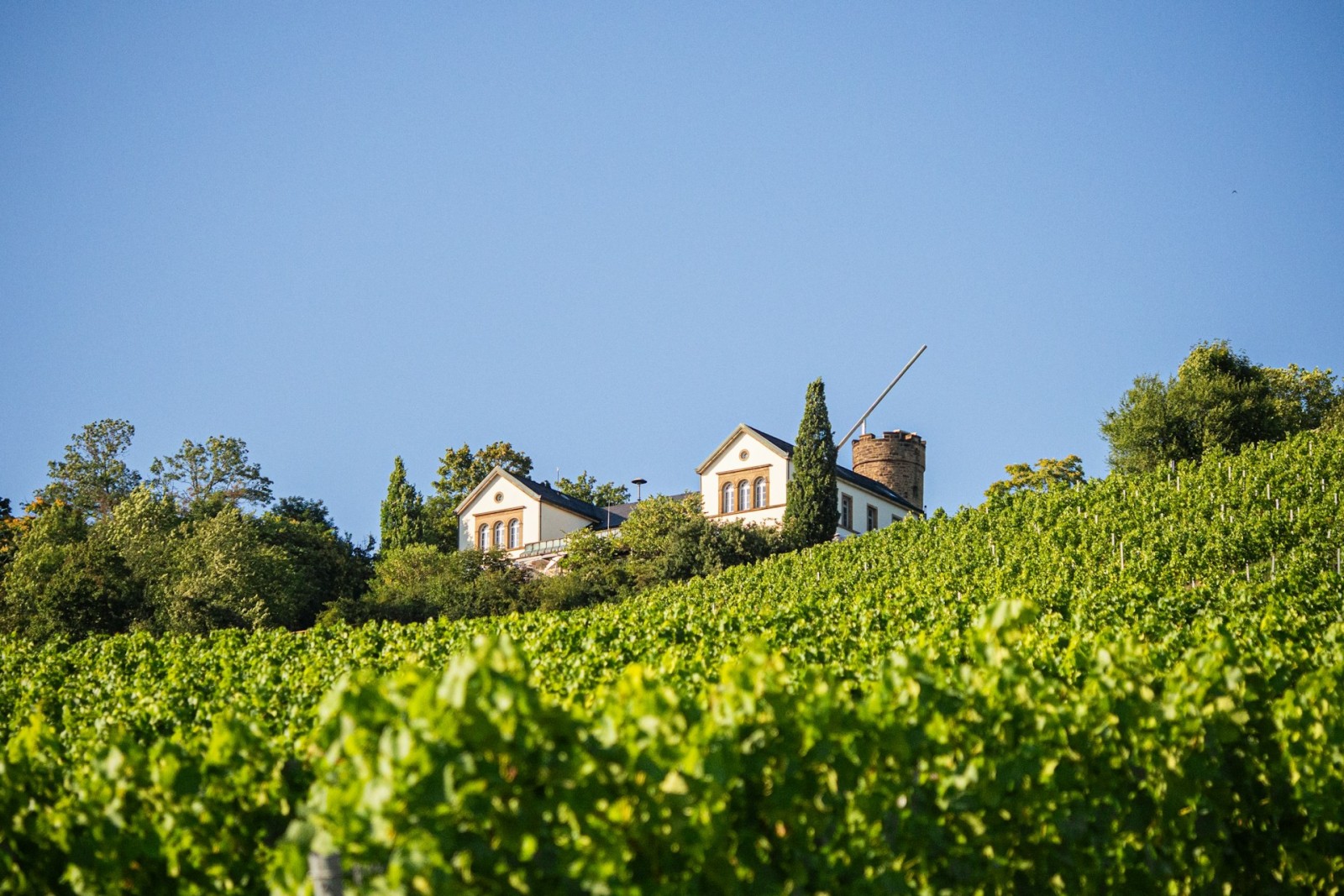
One of the main reasons to visit Heilbronn is to get acquainted with the local wine culture. The city is considered the oldest wine-growing city in Württemberg: the cultivation of grapes here has been documented since 766. In the vicinity of the city there are about 30 wineries, and vineyards occupy more than 500 hectares.
Tourists can go for a walk in the vineyards, visit wineries, taste local wines or take a look at the traditional Besenwirtschaften – seasonal small establishments at wineries, serving local wine and regional dishes.
Especially attractive are walks along wine routes, which offer views of the city and the surrounding hills.
2. Neckar and rest by the water
The Neckar River is another important part of the tourist image of Heilbronn. Along the water are walking areas, restaurants, cafes and places for relaxation. Here you can take a walk, ride a bicycle or go on a river tour.
In the warm season, various options for active recreation on the water are available: canoeing, SUP and excursion trips by ship. Particularly popular is the embankment of Neckarmeile, where cafes, bars and restaurants are concentrated.
Thus, Heilbronn is suitable not only for sightseeing, but also for a leisurely outdoor recreation.
3. Historic centre
Although much of the historic Heilbronn was destroyed during World War II, important historic buildings have been preserved and restored. Among them are the church of St. Kilian, the town hall, Ketchenhaus, the German courtyard and historical towers.
The main square with the town hall and historic buildings is well suited for starting a walk in the center. Here you can see the famous architectural monuments and get acquainted with the history of the city.
4. St. Kilian’s Church and Historic Architecture
Kilianskirche is one of the main architectural symbols of Heilbronn. Its tower and historical elements stand out well among the modern city buildings. The oldest parts of the tower belong to the XIII century.
Nearby are the town hall with the famous astronomical clock and other historical buildings. Due to the compactness of the center, the main attractions are convenient to explore on foot.
5. Modern Science and Experimenta
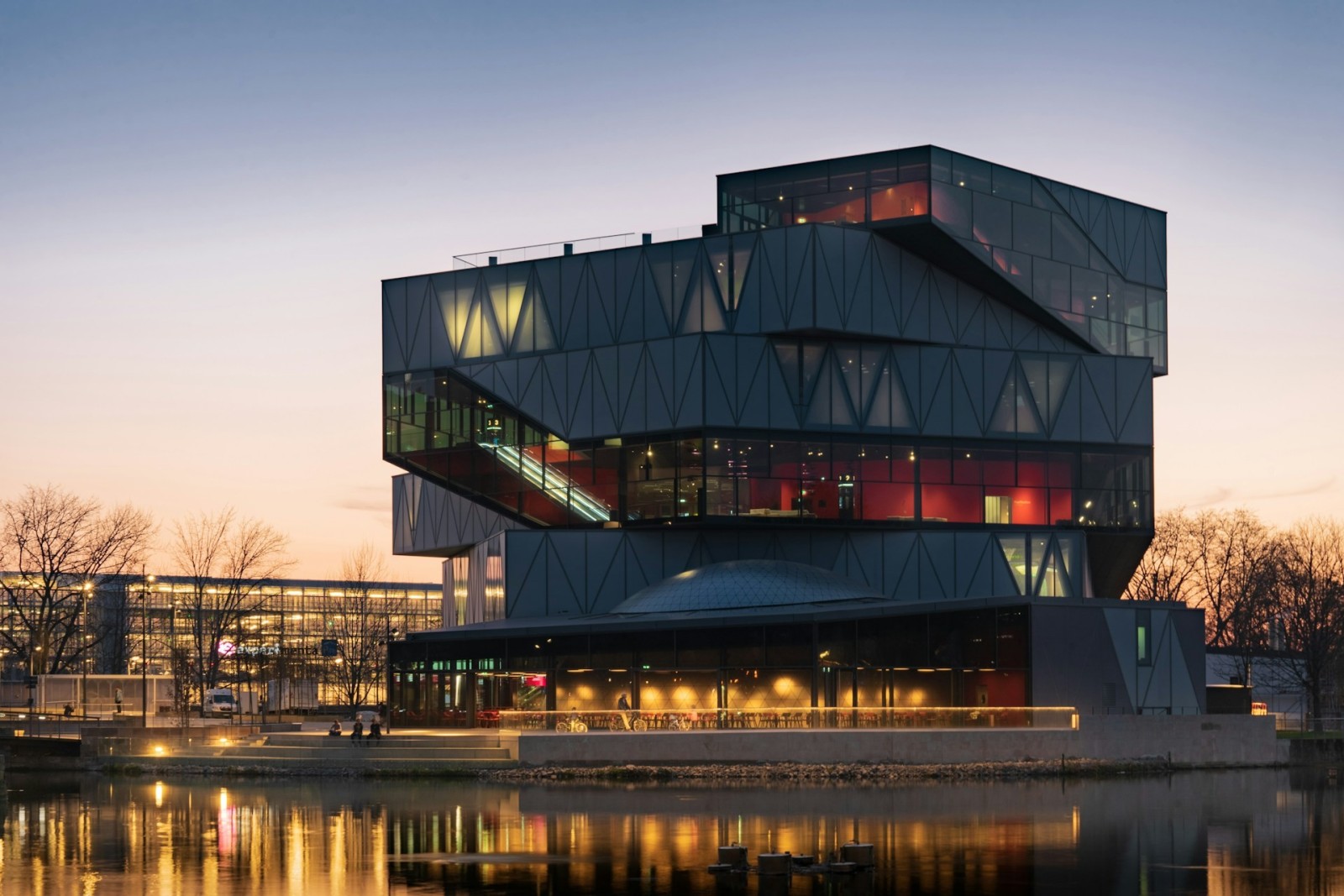
One of the most unusual places in the city is experimenta, a large interactive research center. It is designed not only for children: visitors of different ages can independently conduct experiments, study natural sciences, technology, the human body and the world around them.
The center covers about 25,000 m2 and includes interactive exhibitions, experimental theater and Science Dome with 3D and 360-degree performances.
For families with children, this is one of the most exciting parts of the trip, but there will be plenty to do for adults interested in science and technology.
6. City of the Future and Artificial Intelligence
Modern Heilbronn actively develops scientific and technological direction. The city is forming an innovative environment around artificial intelligence, research, education and entrepreneurship. IPAI – Innovation Park Artificial Intelligence and Bildungscampus Education Campus play an important role in this development.
For tourists, it is interesting as an opportunity to see the other side of the city - not only the traditional winemaking Heilbronn, but also a modern technological center.
7. Vineyards and panoramic views
For walks especially interesting hill Wartberg (Wartberg), whose height is about 308 meters. There is an observation tower and a panoramic wine route among the vineyards. The top offers one of the best views of Heilbronn and the surrounding wine landscape.
This is a good place for those who want to combine a walk, nature and acquaintance with the local wine culture.
8. gastronomy
Heilbronn is suitable for gastronomic tourism. In restaurants you can try dishes of Swabian cuisine, and in seasonal wine establishments - local wines and traditional dishes.
Of particular interest are Besenwirtschaften, where wine is served directly next to its production site. Among the typical dishes you can find maultashen, meat dishes, potato side dishes and fresh bread.
Levels of residence in the city of Heilbronn
1. High-level hotels
In Heilbronn there are several modern high-level hotels with spacious rooms, restaurants, parking and additional services.
Insel-Hotel Heilbronn is one of the famous hotels in the city, located in the central part on the island of Neckara. The hotel has rooms and suites, a restaurant, a terrace by the river and a wellness area with a swimming pool, sauna and steam bath.
Parkhotel Heilbronn is a modern city hotel near the center, suitable for both tourists and business trips.
2. Mid-range hotels
This is the most common option for travelers. They usually offer a separate room with bathroom, Wi-Fi and breakfast, and some have their own parking.
Harbor. Hotel Heilbronn is a modern hotel in the Zukunftspark area, convenient for trips to the center and business travel.
Hotel Newton Heilbronn is a modern city hotel near the city center, suitable for short trips.
Plaza Inn Heilbronn is a large modern hotel with standard and elevated rooms.
3. Budget hotels
For an economical trip, chain hotels with small but functional rooms are suitable.
B&B Hotel Heilbronn is a practical option close to the city centre and train station. Suitable for tourists who are important low cost and convenient location.
Premier Inn Heilbronn City Centre Hotel is a modern budget hotel in central Heilbronn. Convenient for a short stop and self-examination of the city.
4. Guesthouses and small guest houses
Guesthouses are usually cheaper than large hotels and have a more relaxed atmosphere. This is a good option for travelers who do not need a restaurant, a large wellness complex and other additional services.
Heilbronner Pension am schönen Theater is a small boarding house in the theater area, suitable for budget accommodation.
There are also private guest houses (Gästehaus), small family hotels (Gasthof) and privately owned rooms in the city and surrounding areas.
5. Youth hostel
DJH Jugendherberge Heilbronn is one of the most affordable accommodation options. The hostel is located near the center and the main station, has 180 seats in 51 rooms: two-, four- and six-bed rooms. All rooms are equipped with their own shower and toilet. There are family rooms, communal areas, kitchen/cafeteria and the ability to order meals.
It is especially convenient for young tourists, groups, families and those who want to reduce their living costs.
6. Apartments
The apartments are suitable for those who plan to spend a few days or more in Heilbronn. They usually have a kitchen or kitchen area, so you can cook your own food and spend less on restaurants.
Furnished apartments and serviced apartments such as CINARI Suites, TRIAS Apartments and Hotel Newton Heilbronn Apartments are found in the city. They are convenient for long stays, family trips and business travelers.
1. Church of St. Kilian (Kilianskirche)
The main historical temple of Heilbronn and one of the symbols of the city. The western tower with late Gothic elements and the sculpture “Man on the Tower” stands out. The church was badly damaged during World War II, but was restored.
Transport: located in the center, near the Market Square. From the central station you can walk in about 10-15 minutes or drive by public transport to the central stops.
2. Town Hall and Market Square (Rathaus und Marktplatz)
The Town Hall is one of the most recognizable buildings of Heilbronn. The modern building was restored according to the historical model after the destruction of the war. Of particular interest is the astronomical clock on the facade. In the courtyard is the Hall of Memory, dedicated to the destruction of the city in 1944.
Transport: located in the very center, near Kilianskirche. It is most convenient to get on foot from the central station or the nearest public transport stops.
3. Kathchenhaus House
Historic house on the Market Square, associated with the image of Kathen von Heilbronn - the heroine of the play by Heinrich von Kleist. The building is considered one of the symbols of the literary history of the city.
Transport: center of Heilbronn, a few minutes walk from the town hall and Kilianskirche.
4. Museum in Deutschhof (Museum im Deutschhof)
Museum complex in the historic quarter of Deutschof. There are exhibits related to the history, culture and development of Heilbronn, as well as archaeological and artistic materials.
Transport: located in the historical center, so it is most convenient to come on foot from the Market Square.
5. House of History (Haus der Stadtgeschichte)
The museum tells about the history of Heilbronn from the Middle Ages to the present. Special attention is paid to the development of the city, its trade, industry and destruction during the Second World War.
Transport: located in the central part of the city, close to the main historical sights.
6. Goetzen Tower (Götzenturm)
A medieval defensive tower on the banks of the Neckar. It is part of the preserved fortifications of the old Heilbronn and recalls the military past of the city.
Transport: You can walk from the Market Square in about 10 minutes. The tower is located next to the Neckar embankment.
7. Bolwerksturm Tower (Bollwerksturm)
Another surviving part of the medieval city fortifications. The tower is particularly interesting because it allows you to imagine what the Heilbronn defensive system looked like in the past.
Transport: located in the central part of the city, it can be easily reached on foot from the historical center.
8. Market Tower (Hafenmarktturm)
High historic tower in the center of Heilbronn. It is a notable landmark and one of the surviving vertical dominants of the old city.
Transport: located in the central part, a few minutes walk from the Market Square.
1. Heilbronner Pferdemarkt (February)
Traditional city market and fair, which combines trade, entertainment and various activities for residents and visitors of the city.
2. Heilbronner Maifest (May-April)
A big spring holiday with rides, gastronomy, music and fair events. It takes place on the territory of Teresienwiese and is considered one of the most notable folk festivals of the city.
3. Italian Market (Italienischer Markt) – May
A few days dedicated to Italian cuisine and culture. On the streets and squares of the city there are gastronomic stands, musical performances and a cultural program.
4. Heilbronner Trollinger Marathon (May)
A major sporting event associated with the wine tradition of the region. The route passes through Heilbronn and the surrounding vineyards, so the competition allows you to see the urban and rural landscapes at the same time.
5. Contemporary Dance Festival: Tanz! Heilbronn (June)
International Festival of Contemporary Dance with performances of professional groups, productions and various cultural events. It usually takes a few days.
6. Heilbronner Lichterfest (June)
A holiday on the banks of the Neckar with an evening atmosphere, light effects, music and gastronomic program. This is one of the city’s most notable summer events.
7. Classic open air (Klassik Open Air) – July
Summer classical music concerts in the open air. Suitable for those who want to combine a visit to Heilbronn with a cultural program.
8. Heilbronner Volksfest (July)
One of the largest annual celebrations of the city. There are attractions, gastronomic pavilions and entertainment venues on the Teresienwiese Square, concerts and performances are held.
9. Heilbronner Kinderfest (July)
Family event with games, entertainment, sports activities and a program for children.
10. Street Art Festival Cultural Saturday (KulturSamstag) – July
In the central districts of the city there are performances of street artists, musicians and other representatives of modern art.
11. Culture by the River (Kultur am Fluss)
Summer cultural series on the banks of the Neckar with concerts and other musical events. The program can involve performers of different genres - from jazz and soul to modern music.
12. International Hochsprung-Meeting Festival (August)
A sports competition with the participation of athletes, which attracts spectators not only from Heilbronn, but also from other regions.
13. Heilbronner Wine Village (September)
The main wine event of the city and one of the largest wine festivals of Baden-Württemberg. Wine pavilions are installed on the Market Square, tastings, gastronomic events, excursions and concerts are held. The festival usually lasts about ten days.
14. Heilbronner Weinlesefest (September)
The holiday is dedicated to the beginning of the grape harvest. It takes place in the Wartberg area and is associated with the main local tradition - winemaking.
1. Winter - December - February
Winter in Heilbronn is comparatively mild. During the day, the temperature usually keeps about +4 ... +6 ° C, at night it can drop to -1 ... -2 ° C. Rain, fog and individual snowfalls are possible.
The water temperature in Neckar during this period is usually in the range of +2 ... +5 ° C, so it is not suitable for swimming.
2. Spring - March-May
It gets noticeably warmer in spring. In March in the afternoon about +10 ° C, in April about +15 ° C, and in May already about +19 ° C. At night, the temperature gradually rises from +1 ... +5 ° C in March-April to about +10 ° C in May.
Water in local water bodies gradually warms up: about +5 ... +9 ° C in March, +9 ... +14 ° C in April and to +14 ... +18 ° C in May.
May is suitable for strolling through the centre, vineyards and park areas, although the weather can change quickly.
3. Summer - June - August
Summer is considered the warmest time of the year. The average maximum temperature is about +23 °C in June, +24 ... +25 °C in July and +24 °C in August. At night, usually around +13... +15°C.
Water in Neckar and small bodies of water in hot periods can warm up to about +18. +22 °C, however, the temperature is highly dependent on the specific reservoir and weather.
Summer is especially convenient for walking, cycling, visiting vineyards, parks and outdoor activities.
4. Autumn - September - November
In September it is still quite warm: in the afternoon about +20 ° C, in October about +15 ° C, and in November about +9 ° C. At night, the temperature gradually decreases to +3 ... +7 ° C.
The water cools down gradually after summer: about +17...+19 °C in September, +12...+15 °C in October and +7...+10 °C in November.
September is especially pleasant for walking around the vineyards and getting acquainted with the wine culture of the region.
1. Language of communication
The main language is German (Deutsch). In hotels, tourist places and large establishments often use English. When addressing strangers, it is customary to use the polite Sie form.
2. Punctuality and communication
In Germany, punctuality is appreciated, so it is better to arrive on time for meetings, excursions and check-in. Guten Tag is used when greeting, Auf Wiedersehen is used when saying goodbye.
3. Lines and personal space
It is necessary to respect the queue and personal space. In public transport, it is not customary to talk loudly and occupy several places with luggage.
4. Wine traditions
Heilbronn is known for viticulture and local wines. In the city popular Besenwirtschaften - seasonal establishments at wineries. During wine holidays, it is important to observe moderation and order.
5. Shops
Most shops are closed on Sundays and holidays. Purchases and products are best purchased in advance.
6. Transport and roads
Travel must be paid in accordance with the rules of the carrier. Pedestrians must observe traffic lights and cross the road in permitted places. Bicycle lanes are designed for cyclists.
7. Silence and smoking
In residential areas should not make noise late in the evening and at night. Smoking in closed public places is limited, so it is better to use specially designated places.
8. Alcohol
Alcohol is allowed, but you can not disturb public order or drive after drinking alcohol. At wine festivals, moderation is recommended.
9. Photos and garbage
When shooting people must respect their privacy, and in museums to follow the rules of photography. Garbage must be sorted, and bottles and cans of Pfand can be taken back to stores.
10. Restaurants and public spaces
In cafes and restaurants, it is customary to calmly wait for service. For good service usually leave about 5-10% tip. In churches, museums and memorials, silence and respectful behavior should be observed.
1. Basic words
Hallo - hello - Hallo
Guten Morgen - Good Morning - Guten Morgen
Guten Tag - Good afternoon - Guten Tag
Guten Abend - Good evening - Guten Abent
Auf Wiedersehen - goodbye - auf wúderzaen
Bitte - please - butte
Danke - thank you - danke
Entschuldigung - sorry - Entschuldigung
Ja - yes - I
Nein - no - nain
Vielleicht - possibly - Philleicht
Gut - good - gut
- Hilfe! - Help! - Hulfe!
Vorsicht! - Careful! - Forzicht!
2. If you don't understand German well
Sprechen Sie Englisch? - Do you speak English?
Sprechen Sie Russisch? - Do you speak Russian?
Ich spreche nicht gut Deutsch. - I don't speak German well. - their spree hut douche
Ich verstehe nicht. - I don't understand. - Their furste nichte
Bitte langsamer. - Please slow down. - Butte Langzamar
Können Sie das wiederholen? Can you repeat that?
Können Sie mir helfen? Can you help me?
Was it bedeutet das? What does that mean?
3. At the hotel.
Ich habe eine Reservierung. - I have a reservation. - their habe áine reservúrung
Ich möchte einchecken. - I want to move in. - Their mehte áinchaken
Wo ist mein Zimmer? - Where's my number?
Wann ist das Frühstück? - When's breakfast?
Is WLAN Kostenlos? - Is Wi-Fi free? - East Valan Costenlos?
Können Sie mir ein Taxi rufen? Can you call me a taxi?
Ich möchte auschecken. - I want to move out. - Their mechte auschaken.
4. Cafe and restaurant
Einen Tisch für zwei, bitte. - Table for two, please. - Weinen tish für zwei, butte
Die Speisekarte, bitte. - Menu, please. - Spisekarte, butte
Was empfehlen Sie? - What do you recommend? - What do you recommend?
Ich möchte das. - I want this. - Their mehote das
Ein Wasser, bitte. - Water, please. - ain vasser, butte
Die Rechnung, bitte. - Check, please. - Di Rehnung, butte
Kann ich mit Karte bezahlen? - Can I pay with a card? - Can their mit karte betzalen?
For Heilbronn, it is useful to know the word Besen - this is the name of traditional seasonal establishments at wineries, where local wine and simple regional dishes are served.
Ein Glas Wein, bitte. - A glass of wine, please. - Ainglas Vine, butte
Welchen Wein empfehlen Sie? What kind of wine do you recommend?
Was wast typisch für Heilbronn? - What is typical of Heilbronn?
5. In the store.
Was kostet das? - How much does it cost?
Ich möchte das kaufen. - I want to buy this. - Their mehte das kaufen
Haben Sie das in einer anderen Größe? - Is it in a different size?
Kann ich mit Karte bezahlen? - Can I pay with a card? - Can their mit karte betzalen?
Ich schaue nur. - I'm just looking. - Their shaue noor.
1. Local wine
The main gastronomic souvenir of Heilbronn is the wine of local wineries. Especially characteristic are red varieties, including Trollinger, Lemberger and Schwarzriesling, as well as white wines and sparkling drinks.
A bottle of local wine can be bought directly from winemakers or in city wine shops. This is one of the most characteristic gifts from Heilbronn.
2. Swabian cuisine
In traditional Besenwirtschaften wine establishments, it is worth trying Maultaschen - large Swabian dough products with filling, which are often served with potato salad.
Also popular are Kesselfleisch, a meat dish, and fresh Besenbrot, a bread traditionally served in wineries.
3. Grape and gastronomic products
A good option for a gift can be the products of local wineries and the region: grape juice, jams, sweets, mustard, sauces and other products based on local raw materials.
A convenient option is a small gastronomic set with a bottle of wine and regional products.
4. Chocolate with Catchen symbolism
Kathchen von Heilbronn is a literary symbol of the city associated with a play by Heinrich von Kleist. As a small gift, you can bring a Käthchen-Schokotaler chocolate coin with the image of Katchen.
5. Catchen Souvenirs
With the image of Katchen, various city souvenirs are produced: figurines, postcards, coloring books, pencils and other small gifts. Such a souvenir conveys local symbols, not just German themes.
6. Souvenirs with Heilbronn views
You can choose mugs, T-shirts, bags, postcards and other products with images of Kilianskirche, town hall, Nekkar and city symbols. Such goods are sold, in particular, in the official tourist store of the city.
1. Documents. The tourist must have a valid passport. For visa-free entry, the document must be issued no more than 10 years ago and valid for at least three months after the planned departure from Germany. If necessary, they may be asked to confirm the purpose of the trip, the availability of housing, funds for stay and a return ticket.
2. Visa and length of stay. For citizens of countries that are allowed visa-free entry, the standard period of stay in Germany and other Schengen countries is up to 90 days in any period of 180 days. For citizens of countries with a visa regime, a Schengen visa is required; its duration is determined by the visa itself.
3. Health insurance. Before the trip, it is recommended to obtain tourist medical insurance covering treatment and, preferably, medical transportation or return to the homeland.
4. Emergency services. In Germany, there are basic numbers:
5. Mobile phone. There are four mobile networks in Germany: Telekom, Vodafone, Telefónica (o2) and 1&1. In addition to large operators, there are many virtual operators that use their networks. In cities and suburbs, mobile is usually available, but quality depends on the location and operator.
6. Everyday security. Heilbronn is generally suitable for independent tourist trips. At the same time, standard precautions remain relevant: do not leave things unattended, monitor your wallet and phone in transport and crowded places, store copies of documents separately from the originals.
7. Papers and money. Passports, bank cards and large amounts of cash are best kept in a safe place. It is useful to have passport photos, insurance and important bookings on your phone, but it does not replace the original documents.
8. Emergency situations. In case of serious danger, call 112 or 110 immediately. In Heilbronn, special emergency centers are also provided in case of large-scale interruptions of communication or power supply.
9. General rules. During the holidays, you should observe German traffic rules, public transport requirements, local rules of behavior, do not violate the prohibitions on smoking and drinking alcohol in certain public places and be attentive to bicycle paths.
10. Duration of stay. For an ordinary tourist trip of a citizen of a country with a visa-free regime, the maximum period is 90 days within 180 days, and the total period of stay in the whole of Schengen, not only in Germany, is considered. For a longer stay, an appropriate type of permit or national visa is required.
Create a query and local guides will offer you the best options

