Independent tourism and recreation in the city of Marburg Historical information about the city of Marburg 1....

Twenty carefully designed excursion routes to cities and castles in Germany, both for the most discerning individual tou …
1. Early Settlements and the Emergence of Marburg
The territory of modern Marburg was inhabited long before the medieval city. The advantageous position in the Lan Valley provided convenient communication routes between different areas of Central Germany. Especially important was the elevation above the river, which later formed the castle and the upper part of the city.
The first elements of the future Marburg Castle, according to modern research, can relate to the IX-X centuries. It was originally a fortified settlement that controlled the valley and important roads. Gradually, a trade and craft settlement arose around the fortification.
In written sources, the name of Marburg appears in the XII century. In 1138-1139, the fortress "Marcburg" was first mentioned, which was in the possession of the landgraves of Thuringia. Already around 1140, its own coins were minted here - the so-called Marburg pfennigs. This indicates that the settlement by this time acquired significant economic importance.
In 1222, Marburg was first officially referred to as a city. By this time, there were already commercial areas, fortifications, craft workshops and an urban community.
2. St. Elizabeth and turning Marburg into a pilgrimage center
A real turning point in the history of Marburg occurred in the XIII century thanks to Elizabeth of Thuring.
Elizabeth was the daughter of King Andrew II of Hungary. She married Landgrave Ludwig IV of Thuring, but after his death in 1227 moved to Marburg. In 1228 she chose the city as her widow’s residence.
Elizabeth dedicated herself to helping the poor and sick. In Marburg, she founded a hospital where she personally cared for those in need. She died very young - in 1231, when she was only 24 years old. Four years later, in 1235, Elizabeth was canonized by the Catholic Church.
After her death, Marburg became one of the most important pilgrimage centers in Central Europe. Over her grave began the construction of the grandiose Church of St. Elizabeth.
Construction began in 1235 and was completed mostly by 1283. The temple became one of the earliest and most significant monuments of German Gothic.
Pilgrims came to Marburg from all over Europe. They stayed in the city, bought goods, used the services of local artisans and taverns. Thanks to this religious cult, Marburg quickly grew economically and gained international fame.
3. Emergence of Hesse
The history of Marburg is closely connected with the emergence of Hesse himself.
After the death of Elizabeth, her daughter Sophia of Brabant began to fight for the inheritance of her son Henry. In 1248, in Marburg, she proclaimed her son’s rights to the Hessian inheritance.
These events became one of the most important stages in the formation of the future state of Hesse. Therefore, Marburg is important not only as an ancient city, but also as one of the places associated with the formation of the territorial history of Hesse.
In the XIII century, Marburg gradually turned into the residence of rulers. Around 1260, a major expansion of the fortifications, city walls and castle complex began.
New quarters, craft areas and shopping areas appeared in the city. Marburg acquired a characteristic medieval appearance, which has largely survived to the present day.
4. Marburg as the residence of the Landgraves
From 1248 to 1604, although with some interruptions, Marburg was one of the residences of Hesse Landgraves.
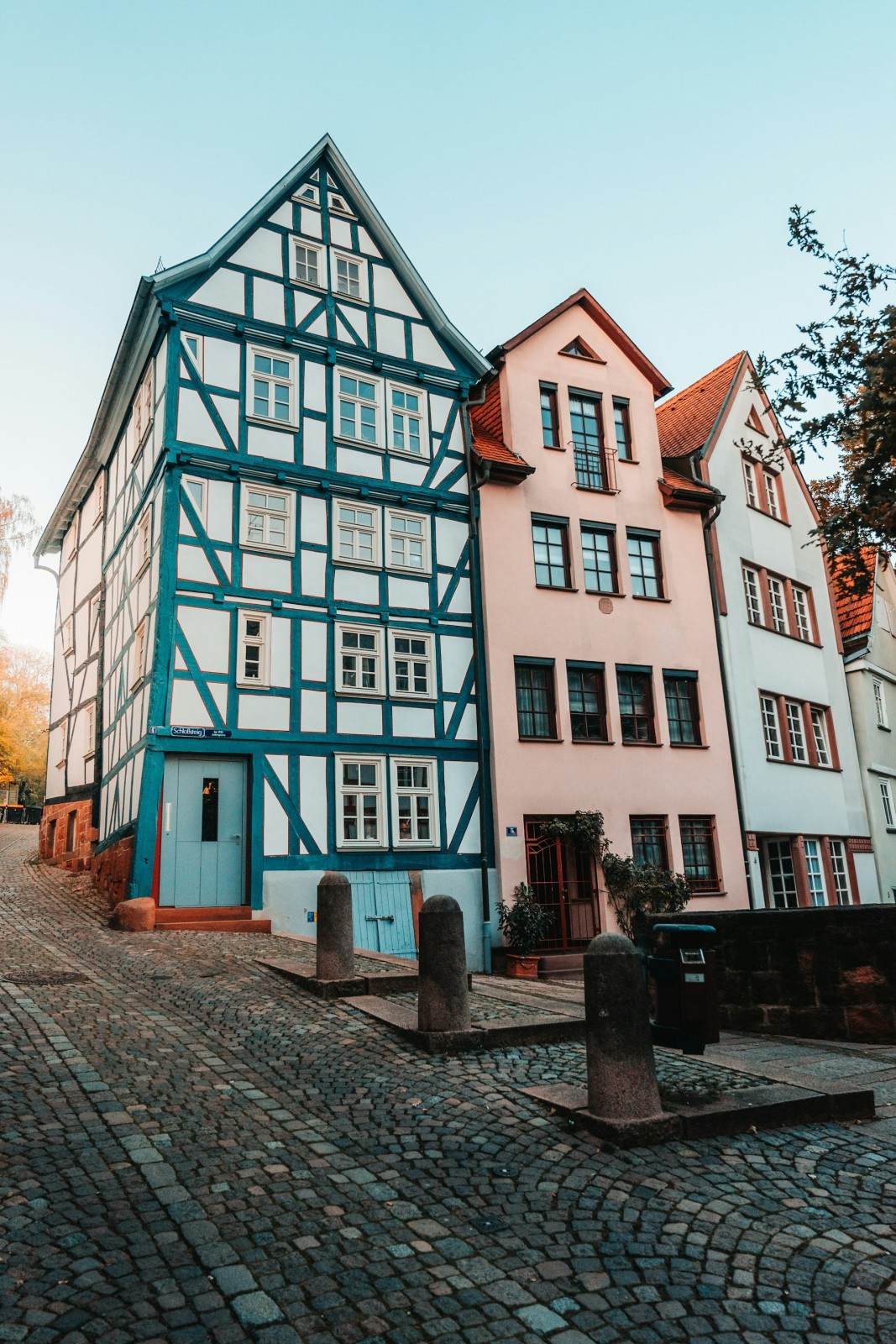
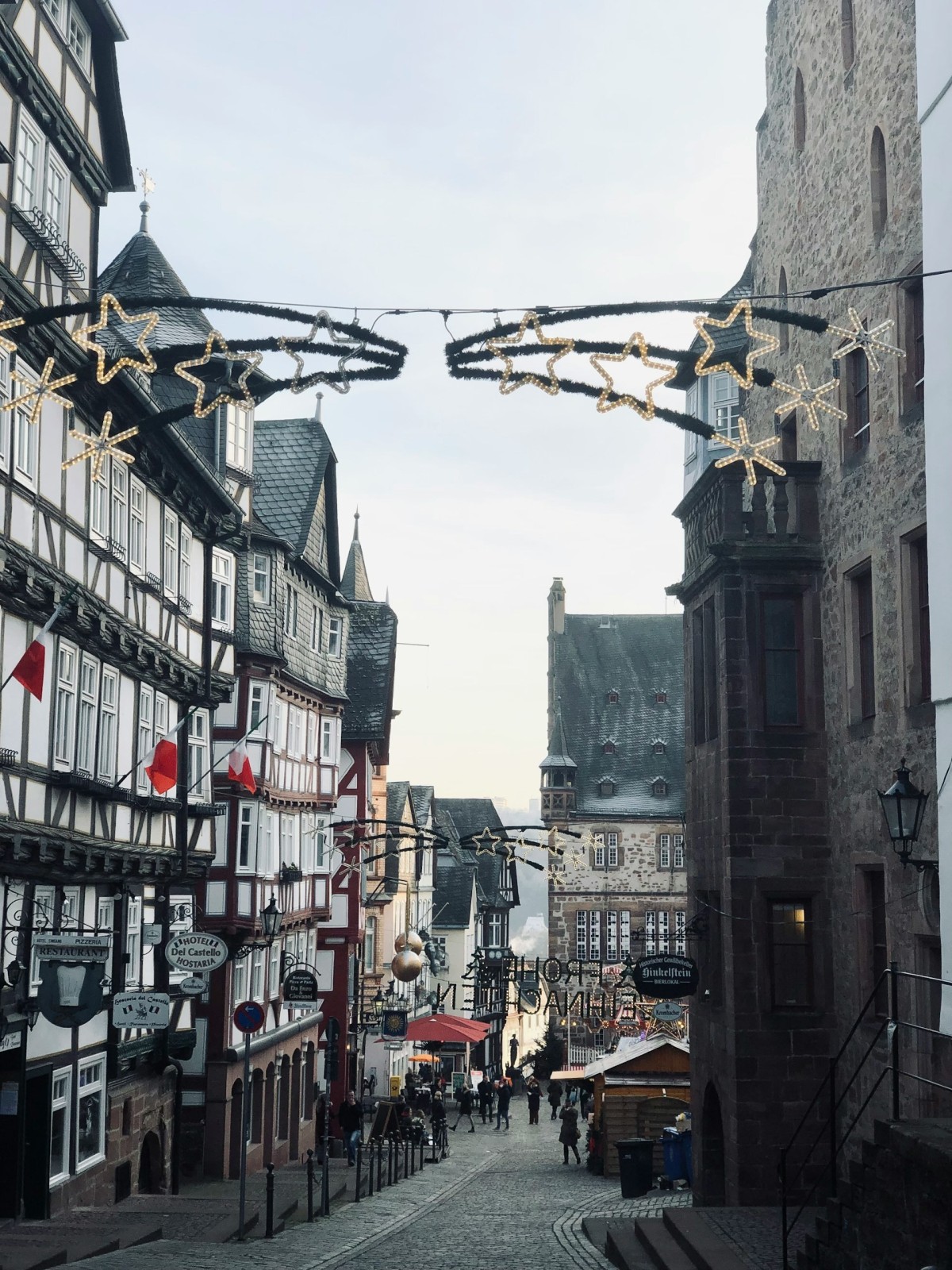
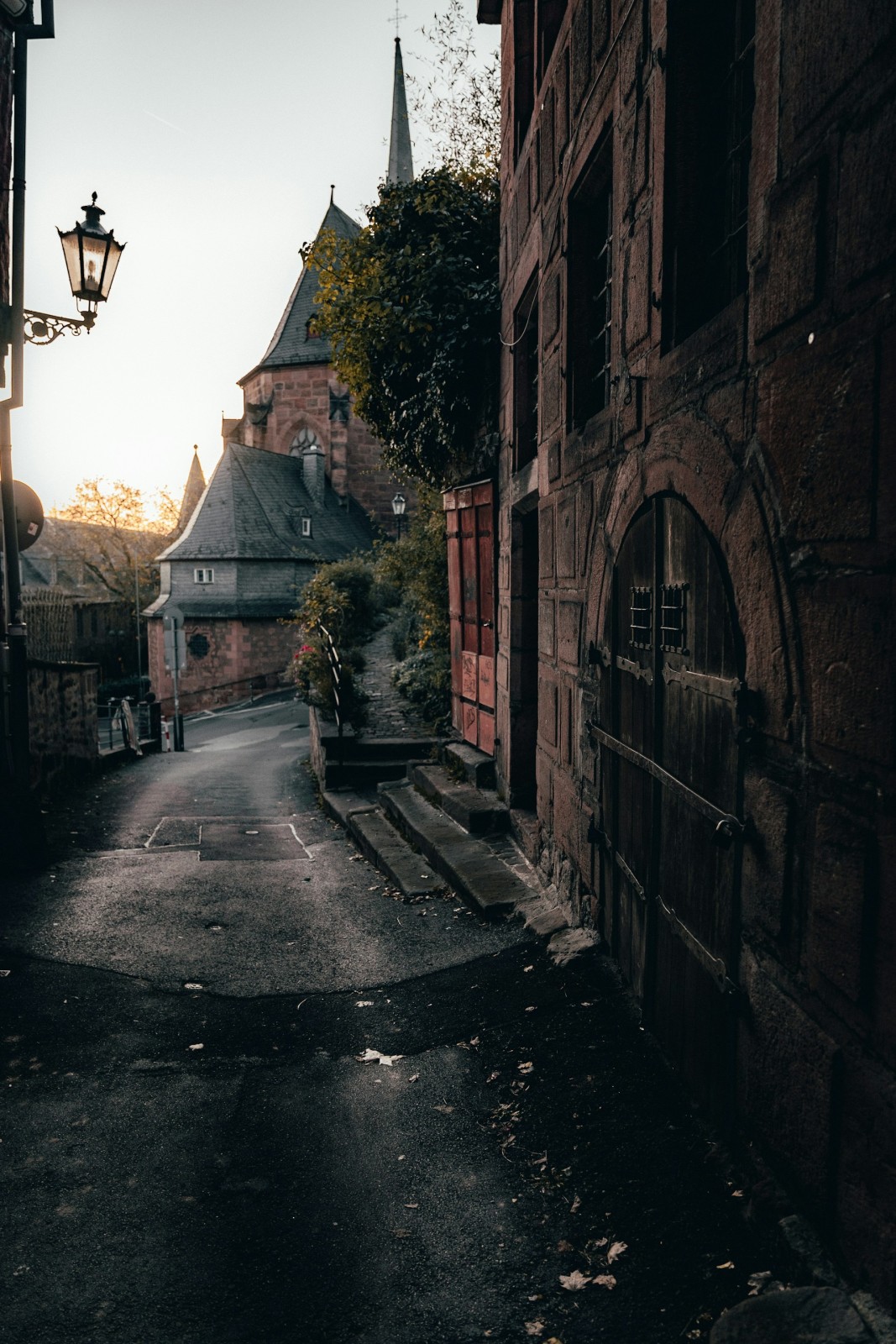
On the hill developed a castle, and below it - dense urban development. This location explains the famous modern look of Marburg: narrow streets, steep stairs, half-timbered houses and a castle towering over the old city.
In 1330, a large hall of the Marburg Castle, the famous Fürstenzaal, was built. It is considered one of the largest secular Gothic halls in Germany.
The city continued to develop, but the Middle Ages brought serious disasters.
In 1319, most of Marburg was destroyed by a fire. In the middle of the XIV century, the city suffered from a plague epidemic. Despite these disasters, Marburg gradually recovered.
5. The Reformation and the Marburg Religious Dispute
One of the most important events of the XVI century was the Reformation.
Hesse Landgrave Philip the Magnanimous supported the Protestant movement. In Marburg, the Reformation changed not only the religious life but also the economy of the city.
The tradition of pilgrimage to the tomb of St. Elizabeth was especially badly damaged. After the transition of the territory to Protestantism, the flow of Catholic pilgrims decreased significantly.
Almost immediately, however, the city gained a new historical advantage.
In 1527, Philip founded the University of Marburg. It was the first Protestant university that still exists today. Initially, it had 11 professors and about 90 students, and the faculties included theology, law, medicine and philosophy.
The university gradually became the main factor in the development of Marburg. If earlier the wealth of the city largely depended on pilgrims and the position of the residence, now education, science and student life became increasingly important.
In 1529, the famous Marburg religious interview took place at the Marburg Castle. Martin Luther and Ulrich Zwingli, as well as other leading figures of the Reformation, met here.
Their meeting was supposed to help unite the various trends of Protestantism, but on a number of important theological issues failed to agree. Nevertheless, the event entered the history of the European Reformation.
6. The decline of the city in the XVII century
After the death of Philip in 1567, his estate was divided among his four sons. Hesse broke up into several territories.
As a result, Marburg found himself in a difficult political situation. In 1604, the city finally passed to the Hesse-Kassel line and ceased to be an independent Landgrave residence.
This was the beginning of a long period of relative decline.
During the Thirty Years’ War of 1618–1648, Marburg became involved in military events. In 1647 the city was besieged and plundered by the imperial troops.
The war has caused severe damage to the entire region. The population declined, the economy declined, and Marburg’s former political importance declined.
However, the university continued to exist and gradually became the main source of fame of the city.
7. Marburg and the Enlightenment
In the eighteenth century, the university again began to play a prominent role in the intellectual life of Germany.
Famous scientists and philosophers were associated with Marburg. One of the most unusual teachers was Denis Papin, a French physicist and mathematician who worked in Marburg in the late seventeenth century. Here he was engaged in the development of a steam engine.
Later, Marburg became the center of philosophical and scientific life.
The city was taught by philosopher Christian Wolf, one of the most influential German thinkers of the Enlightenment. His activities contributed to the growth of the authority of the university and attracted students from different regions to Marburg.
8. Marburg and romance
A particularly interesting period came in the early nineteenth century.
In 1802-1803, the brothers Jacob and Wilhelm Grimm were in Marburg, as well as other representatives of the German romantic movement - Clemens Brentano, Bettina von Arnim and Friedrich Karl von Savigny.
It was Marburg who had a great influence on the intellectual atmosphere of the Brothers Grimm.
The city, with its medieval streets, castle, legends and traditions, was well suited to the Romantic interest in the German Middle Ages, folk culture and folklore.
Therefore, the modern tourist image of Marburg - the city of fairy tales, ancient half-timbered houses and medieval alleys - is largely associated with this era.
9. Marburg during the Napoleonic Wars
At the beginning of the XIX century, Marburg became involved in large-scale political changes in Europe.
In 1807-1813, the city was part of the Kingdom of Westphalia created by Napoleon, ruled by his brother Jerome Bonaparte.
The changes also affected religious institutions. In 1809, the Teutonic Order was abolished and its possessions secularized.
After the fall of Napoleon, the political situation changed again. In 1815, Marburg became part of the restored Electorate of Hesse-Cassel.
10. The railway and the transformation of Marburg into a modern city
The real change occurred in the XIX century.
In 1850, Marburg received a railway connection to Kassel, and in 1852 the line was extended towards Frankfurt. This dramatically improved the city’s transport accessibility.
Marburg is now connected to the largest cities in the region, which has contributed to the development of trade, education and the urban economy.
Especially strong growth began after 1866, when Prussia annexed the Electorate of Hesse.
Marburg became part of Prussia and received a new administrative and educational status. The university began to develop rapidly, and the population of the city increased significantly.
If in 1866 about 7.7 thousand people lived in Marburg, then in the following decades the population grew sharply. At the same time, the number of students and teachers increased.
11. The flowering of the university in the XIX-early XX century
The second half of the XIX century was one of the most successful periods in the history of Marburg.
In 1872 the construction of a new university complex began. In 1891 the famous Old University Aula was completed.
Marburg gradually became a university city.
He was associated with such outstanding scientists as:
chemist Robert Bunsen;
medical officer Emil von Behring;
geophysicist Alfred Wegener;
philosophers and historians;
scholars and philologists.
Especially famous was Emil von Behring, who worked in Marburg. In 1901 he received the first Nobel Prize in Physiology or Medicine for his research into serum therapy, particularly the treatment of diphtheria.
In 1904, Behring-Werke was founded in Marburg to manufacture serums and vaccines. This was an important stage in the formation of the pharmaceutical specialization of the city.
12. Scientific Marburg
At the beginning of the XX century, Marburg became known not only for medicine.
Alfred Wegener, the future author of the theory of continental drift, worked here. In Marburg he developed his scientific ideas from 1909-1919.
The city also attracted foreign students and scholars.
Marburg is associated with names:
Mikhail Lomonosov, who studied here in 1736-1739;
Boris Pasternak, who studied in Marburg in 1912-1914;
Spanish philosopher José Ortega y Gasset
Many German philosophers, historians, theologians and physicians.
Thus, by the XX century, Marburg was finally established as a city of universities, science and intellectual life.
13. Marburg during the Nazi period
In 1933, after the National Socialists came to power, the life of the city and the university changed dramatically.
University autonomy was abolished, and teachers and students were subjected to political and racial persecution. Jewish scholars and students were excluded from work and training. Some scientific papers and dissertations of Jewish researchers were declared invalid.
Anti-Semitic persecution increased in the city.
A particularly tragic event was 1938, when the Marburg synagogue was destroyed by the local Nazis. In 1942, the remaining Jewish residents of Marburg were deported to extermination camps.
Today, this part of the history of the city is an important part of the local culture of memory.
14. World War II
Unlike many major German cities, Marburg escaped widespread destruction during World War II.
On March 28, 1945, the city was handed over to American troops without a fight. Thanks to this, a significant part of the historical center has been preserved.
That is why today Marburg is a rare example of a German city, where you can see a large number of medieval buildings and streets, preserved in historical form.
After the war, a large number of refugees and displaced persons came to the city. The population increased rapidly.
The university resumed its work in September 1945.
15. Marburg after 1945
In the first post-war decades, the city gradually recovered and expanded.
The main directions of development were:
university;
medicine;
pharmaceuticals;
scientific research;
education;
public institutions.
Pharmaceutical and medical enterprises acquired special importance, which continued the tradition formed thanks to Emil von Behring.
At the same time, the number of students increased.
Marburg gradually turned into a typical university city, where a significant part of the population consisted of students, teachers, researchers and employees of medical institutions.
16. Preservation of the Old Town
In the second half of the XX century, Marburg faced the problem of preserving historical buildings.
Old half-timbered houses required renovation, and medieval streets did not meet the needs of modern transport.
A particularly important stage was the systematic reconstruction of the historical center, which began in the 1970s. The city sought to preserve the medieval structure while adapting it to modern life.
Thanks to this, Marburg today looks unusually whole: an almost continuous historical Upper part of the city with a castle, churches, stairs and half-timbered houses rises above modern areas.
17. Marburg in the XXI century
In the XXI century, Marburg finally formed the image of the city, in which several historical epochs exist simultaneously.
On the one hand, it is the medieval city of St. Elizabeth with a castle and a Gothic church.
On the other hand, there is a university center that has existed since 1527.
In addition, Marburg retained his scientific and medical specialization, which was especially strengthened with the development of the pharmaceutical industry.
Today, the historical center remains one of the main tourist attractions of the city. It has preserved old half-timbered houses, medieval streets, stairs, squares and historical buildings.
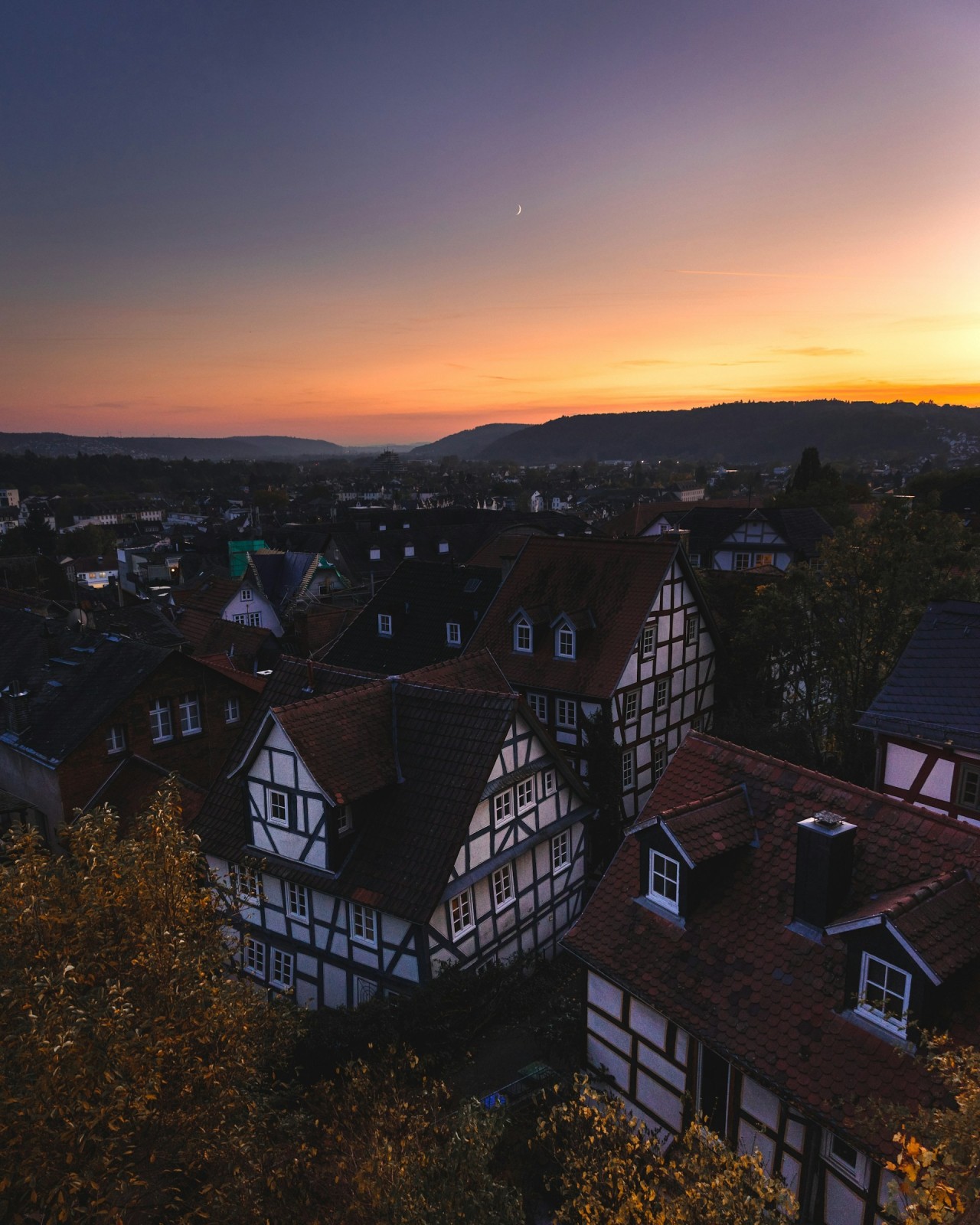
1. Medieval atmosphere
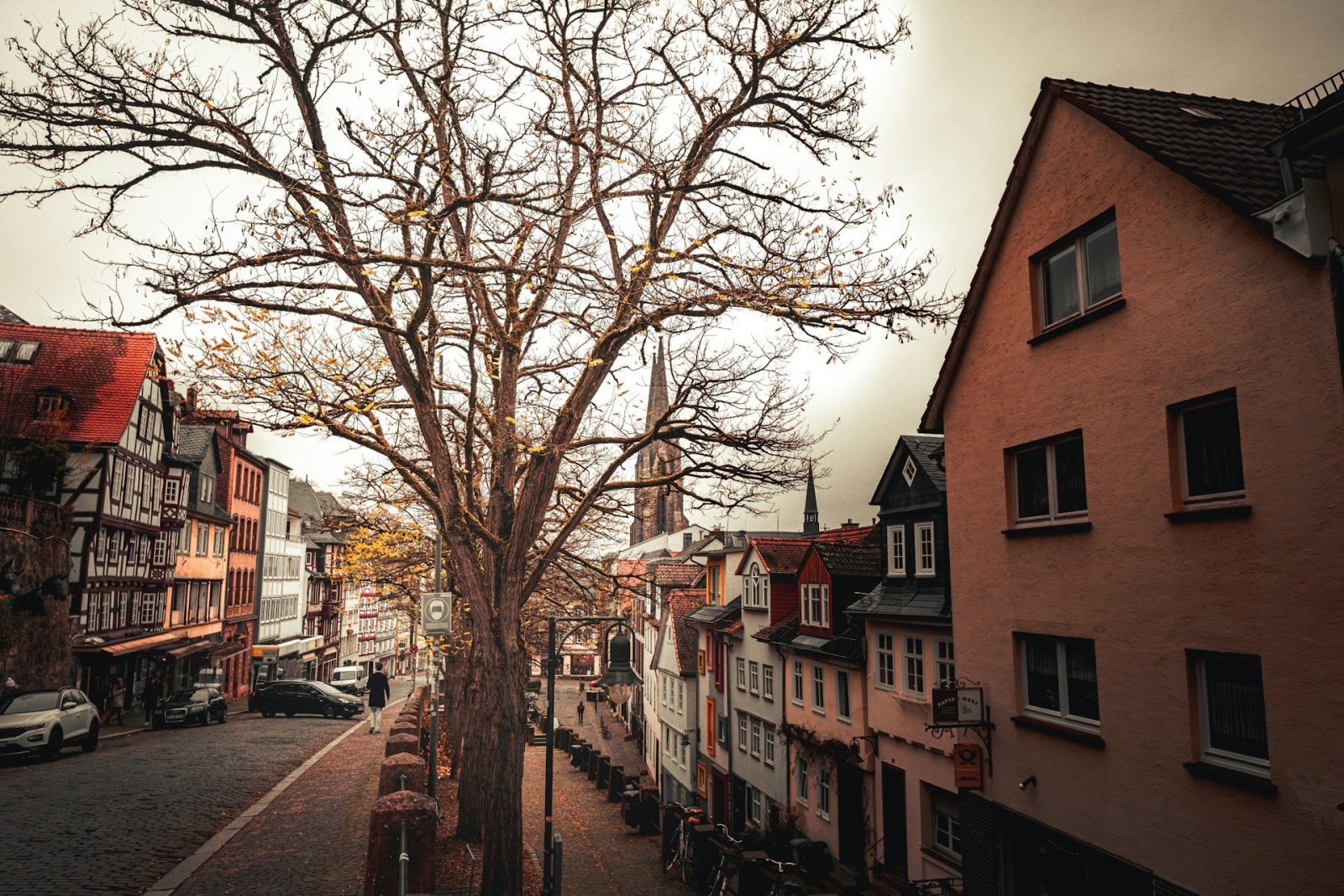
The main advantage of Marburg is its historical appearance. The Upper Town, or Oberstadt, rises up the slope from the Lan Valley to the Marburg Castle. Between them are narrow winding streets, stone stairs, small squares and numerous half-timbered houses.
A walk along Marburg resembles a time travel: in one route you can see medieval buildings, Gothic churches, an ancient market, university buildings and modern cafes.
The historic center is especially beautiful in the evening when the streets and buildings are illuminated. Due to the preservation of old buildings, Marburg is often perceived as a fabulous German city.
2. Marburg Castle
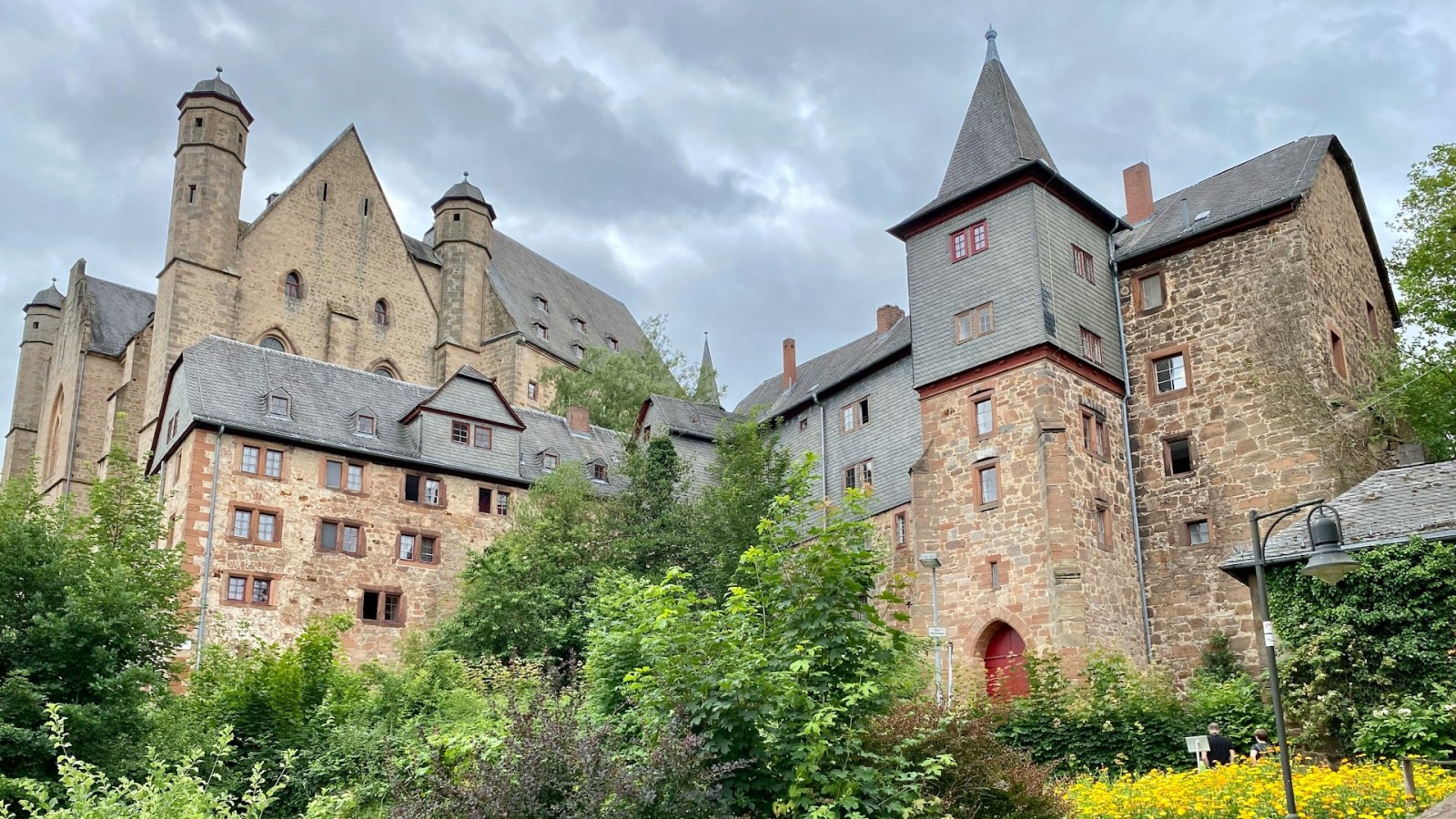
The main attraction of the city is the Marburg Castle (Landgrafenschloss), towering over the old town.
The castle is interesting not only for its architecture, but also for the history of Hesse Landgraves. It is located on a hill, so from its territory there are panoramic views of Marburg, the Lan Valley and the surrounding hills.
For a tourist, this is one of the best places in the city to get acquainted with the history of Marburg and take photos at the same time.
3. St. Elizabeth Church
A special place in the tourist image of the city is occupied by the Church of St. Elizabeth (Elisabethkirche).
It is with Elizabeth of Thuring that one of the most famous pages of the history of Marburg is connected. After her death, the city became a major pilgrimage center, and the Gothic church built over her grave became an important religious monument.
For tourists, this is a particularly interesting place due to the combination of religious history, Gothic architecture and connection with the European history of the XIII century.
4. City of the Brothers Grimm
Marburg will be interesting for fans of German literature and fairy tales.
At the beginning of the XIX century, Jacob and Wilhelm Grimm lived here. The medieval atmosphere of the city, ancient houses, legends and folk traditions influenced the brothers’ interest in German folklore.
Today, a special Grimm-Dich-Pfad is associated with this story - a route around the city dedicated to the fabulous heritage. It passes through the historic center, the old streets and rises to the Upper Town.
Therefore, Marburg is especially popular with travelers who love fairy tales, ancient legends, mystical atmosphere and literary routes.
5. University atmosphere
Marburg is not just a historical city, but a real university center.
Philipp University of Marburg was founded in 1527 and is one of the oldest Protestant universities in Europe. Today, university buildings are scattered throughout the city, and students have a noticeable impact on its daily life.
Thanks to this, Marburg combines old and young. Near medieval buildings are modern university buildings, bookstores, coffee shops, bars and inexpensive restaurants.
For the tourist, this means that the city does not look exclusively museum or “canned”: life is constantly boiling here.
6. Panoramic views
Marburg is built on hills, so there are many observation points.
Especially beautiful views open from the territory of the castle and the upper districts of the city. From the height you can see the red tiled roofs of the old city, church towers, Lan Valley and the surrounding green hills.
For photography enthusiasts, Marburg is especially interesting because almost every walk up the hill offers a new perspective.
The official tourist portal of the city separately highlights panoramic routes that allow you to see the castle, the Church of St. Elizabeth and the historical center from different sides.
7. Walking along the Lan River
Marburg is interesting not only for architecture.
The Lahn River passes through the city, along which you can walk, relax in nature, ride a bicycle and watch the historical part of the city from a different angle.
The Lan Valley is particularly attractive during the warm season, when the historic center contrasts with the green shores and surrounding hills.
Therefore, Marburg is suitable not only for a sightseeing trip, but also for a relaxing holiday in nature.
8. Combination of history and nature
One of the advantages of Marburg is the proximity of natural landscapes to the historical center.
The city is located in a valley and is surrounded by hills and green areas. In the vicinity, routes of different duration are laid - from short walks to long hikes. The tourist portal indicates routes with a length of about 4 to 100 km.
This makes Marburg a good destination for travelers who want to combine:
excursions;
walks;
photograph;
cycling trips;
hikes;
rest by the water.
9. The atmosphere of a small European city
Marburg is especially appealing to those who prefer small historical cities to megacities.
Here you can safely walk around the center, go to small cafes and shops, view the architecture and not spend much time moving between the main attractions.
The city is quite lively thanks to the university. The official tourist portal emphasizes the combination of medieval atmosphere and modern university rhythm.
10. City for a Romantic Journey
Marburg is well suited for a romantic trip.
Narrow streets, old houses, stairs, small squares, a castle on a hill and evening views create a special atmosphere.
It is especially pleasant to take a walk from the Church of St. Elizabeth through the old town to the Marburg Castle. The ascent itself is part of the impression: between the lower and upper parts of the city there is about 100 meters of elevation difference.
1. High-level hotels – 4-5 stars
In Marburg, the choice of real five-star hotels is limited, so the most common high-level option is good 4-star hotels.
They usually offer spacious rooms, their own bathroom, Wi-Fi, breakfast, restaurant or bar, parking, sometimes fitness area and additional services.
Popular options:
Hotel Rosenpark is one of the most famous high-level options in the city. Located near the main station and suitable for tourists, business trips and long stays.
Welcome Hotel Marburg is a comfortable hotel near the historic center. Convenient to explore the city on foot.
Hotel im Kornspeicher is an unusual accommodation option in a converted historic building.
This level is better to choose travelers for whom comfort, a spacious room, a good breakfast and additional services are important.
2. Mid-range hotels - 3 stars
This is one of the most convenient options for an ordinary tourist. Such hotels usually have a separate bathroom, Wi-Fi, TV, breakfast and basic amenities.
Good options:
Marburger Hof is a famous city hotel near the center.
Stadthotel Marburg is a small hotel in the Bahnhofstraße area, convenient for travelers coming by train.
Hotel Tusculum is a relatively simple option with a good location.
Hotel Restaurant Cala Luna is a hotel with a restaurant located a little further from the historical center.
Three-star hotels are especially suitable for a trip for 1-3 days, when the main time is planned to be spent outside the hotel.
3. Budget hotels
For an economical trip to Marburg, you can choose small hotels without a lot of additional services.
This is usually a compact room, private bathroom, Wi-Fi and the ability to order breakfast separately.
Options include Hotel Tusculum, B&B HOTEL Marburg and small private hotels near the station and the southern part of the city. Modern budget proposals are presented in the city quite well.
The advantage of this option is the ability to save on accommodation without giving up a separate room.
4. Hostels
Hostels are one of the most profitable options for students, young travelers and tourists who travel alone.
In Marburg, you can see:
Hostel-Marburg-One is located next to the main train station; there are both shared rooms and private rooms.
Jugendherberge Marburg is a youth hostel suitable for budget accommodation.
Hostel-Marburg-One is especially convenient for tourists with a small budget: its location near the station allows you to quickly reach other areas of the city and continue the journey by train.
1. Marburg Castle (Landgrafenschloss)
The main symbol of the city is the medieval castle towering over Marburg. It is associated with the history of Hesse Landgraves and the formation of the city itself. Especially interesting are the historical halls, courtyards and panoramic views of Marburg and the Lan Valley.
Transport: From the main station it is convenient to get by bus in the direction of the center, then continue on foot. From Oberstadt to the castle you can climb the historic streets and stairs. You can also use Oberstadt elevators to the upper part of the city.
Time to visit: 1.5-2.5 hours.
2. Church of St. Elizabeth (Elisabethkirche)
One of the main monuments of Marburg and an outstanding example of early Gothic in Germany. The church is built over the tomb of St. Elizabeth of Thuring, thanks to which Marburg became a major center of pilgrimage in the Middle Ages.
The church is located in the lower part of the city and is a good starting point for a walk to the old town and the castle.
Transport: From the main railway station you can walk in about 5-10 minutes. From here it is convenient to start the route through the old town towards Oberstadt.
Time to visit: 30-60 minutes.
3. Old Town and Oberstadt (Oberstadt)
This is the most atmospheric part of Marburg. There are narrow medieval streets, half-timbered houses, small squares, old stairs, cafes and shops.
It is Oberstadt who creates the same “fabulous” image of Marburg. The tourist portal of the city separately notes the well-preserved medieval ensemble and numerous half-timbered buildings.
Transport: It is best to explore on foot. From the Church of St. Elizabeth you can gradually rise through the historic streets. To reduce the lift, you can use Oberstadt elevators.
Time to visit: 1.5-3 hours.
4. Market Square and Marktplatz (Marktplatz)
The central square of historic Marburg is surrounded by ancient buildings and is one of the busiest places in the city.
It is convenient to make a stop while walking around Oberstadt, sit in a cafe and continue the route to the castle.
Transport: The square is located in the pedestrian part of the historical center. From the main station you can walk in about 15-20 minutes or take the city bus to the central part of the city.
Time to visit: 20-40 minutes.
5. Old Town Hall (Rathaus)
The historic town hall is located directly on Marktplatz and is one of the most notable buildings of the old town. Its architecture fits well into the surrounding medieval buildings.
Transportation: Walk from Marktplatz; separately go to the town hall is not required.
Time to visit: 15-30 minutes.
6. University of Marburg (Philipps-Universität Marburg)
The University of Marburg was founded in 1527 and is one of the oldest Protestant universities in Europe. University life is an important part of the modern atmosphere of the city.
Historical and university buildings are located in different areas, so the university is better perceived not as one attraction, but as part of a walk around Marburg.
Transport: The central university buildings can be reached by city bus or on foot from the train station. From the historical center, part of the university buildings is within walking distance.
Time to visit: 30-60 minutes to get acquainted with the central part.
7. Old University Auditorium (Aula)
Historical Aula is one of the most interesting objects of the University of Marburg. It is connected with the long history of the university and is especially interesting for travelers interested in architecture, history of education and German culture.
Transport: By foot from Oberstadt or from central university buildings; you can also take the city bus to stops in the center.
Time to visit: 30-45 minutes.
8. Museum of Marburg (Museum für Kunst und Kulturgeschichte)
The museum is dedicated to the history, art and culture of the region. It is especially useful for those who want to learn more about the history of Marburg and Hesse after a walk around the old town.
Transport: The museum can be reached by city bus and then walk a short distance. You can also walk from the center.
Time to visit: 1-2 hours.
9. The Grimm Brothers Museum and the Grimm-Dich-Pfad Route
Marburg is closely associated with Jacob and Wilhelm Grimm. The brothers lived here at the beginning of the XIX century, and the urban medieval atmosphere influenced their interest in German traditions and folklore.
For tourists, the thematic route Grimm-Dich-Pfad, passing through the historical center, is interesting. This is a good option for those traveling with children or interested in fairy tales and German literature.
Transport: The main part of the route passes on foot in the center.
Time to visit: 1-2 hours.
10. St. Mary's Church (Marienkirche)
The old church is located in the upper part of the historic city. It is interesting primarily for its architecture and location among the medieval streets.
Transport: Only on foot along Oberstadt; the visit is conveniently combined with Marktplatz, the town hall and the ascent to the castle.
Time to visit: 20-40 minutes.
11. Oberstadt Elevator (Oberstadtaufzüge)
This is not so much a landmark as a very useful element of the city infrastructure for tourists. Marburg is located on a hill, so climbing to the historic top can be quite tiring.
Elevators can significantly reduce the lift and are especially useful for elderly travelers, tourists with children and people with limited mobility. The tourist portal of the city notes that they allow you to overcome about half of the height difference between the lower and upper parts of the city.
Transport: It is used directly inside the historical center.
Time: Just a few minutes up.
12. Lahn River and Embankments
The Lan River passes through the lower part of Marburg and creates a completely different image of the city. Here you can safely walk, bike and relax after a tour of the hilly old town.
Transport: The embankments are easily accessible on foot from the station and the central part of the city.
Time to walk: 30 minutes - 2 hours.
13. Weidenhausen District (Weidenhausen)
The ancient area on the other side of the Lan is known for half-timbered buildings and a calmer atmosphere. It complements the visit to Oberstadt: here you can see Marburg from a different angle.
Transport: From the center you can cross the bridge over Lan; the area is well suited for walking.
Time to visit: 30-60 minutes.
14. Kaiser-Wilhelm Tower (Kaiser-Wilhelm-Turm)
The tower is located on the opposite side of the valley and is one of the panoramic points of Marburg. From it you can see the city, the castle and the surrounding landscape.
Transport: From the center it is necessary to get by public transport or on foot with the subsequent rise; for a tourist trip it is more convenient to allocate a separate route for the tower.
Visit time: 1-2 hours with the road.
15. Schlossbahn - tourist train in the city
For those who do not want to overcome numerous climbs on their own, there is a tourist train Marburger Schlossbahn. It passes through the historical part of the city and Weidenhausen, allowing you to see half-timbered houses and the castle without a long walk.
Transport: Departure is carried out as part of the tourist route; the schedule depends on the period.
Time: About 1 hour for a guided tour.
Carnival events and Fasching (February)
In Marburg there is a traditional carnival season with costumed events, performances of dance groups, children’s carnival and various festive programs. Carnival events last several weeks and end in the period before Ash Wednesday.
Marburger Frühling – Marburg Spring (April)
Spring city holiday with a fair atmosphere, shopping tents, local products, small concerts, street performances and entertainment for families with children.
Maieinsingen and the Great May Party (April–May)
The traditional celebration of May. Musical program and festive events are held in the historic center, including Marktplatz.
Kirschblütenfest – Cherry Blossom Festival (April–May)
Spring event related to the flowering of cherry trees. Usually accompanied by walks, cultural activities and outdoor activities.
Marburger Jazzsommer – Marburg Jazz Summer (July–August)
A series of jazz concerts, which is especially interesting for lovers of live music. In the summer, the city also hosts many other concerts and musical events.
3 Tage Marburg (3TM) – Three Days of Marburg (July)
One of the largest city events in Marburg and one of the main events of the tourist calendar. Within three days, the historic center turns into a large venue with concerts and entertainment. The program features rock, pop, jazz, classical and world music, sports events, a fair and family programs. The culmination is the events at the castle and festive fireworks. It is held on the second weekend of July.
Schlossparkbühne open concerts and events (May-August)
On the stage in the park near the Marburg Castle there are concerts, theater productions, opera performances, open-air film screenings and various festival programs. The summer venue can accommodate up to 1,300 spectators.
Erdbeerfest - Strawberry Festival (June)
Summer gastronomic event dedicated to strawberries and regional products. Suitable for a family trip and acquaintance with local cuisine and farm products.
Concerts by Marburger Schlosskonzerte (during the year, especially in spring and summer)
A series of classical music concerts, some of which are held in the historic premises of the Marburg Castle. This is a particularly interesting option for those who want to combine familiarity with the architecture of the city and classical music. Chamber and anniversary concerts are regularly held in the city.
Heimat Shoppen – Days of Local Trade and City Events (September)
In September, there are special days dedicated to local shops, the city center and regional business. The event is accompanied by an additional cultural program.
Weinboulevard - Wine Boulevard (September)
Gastronomic event with wine tastings and the opportunity to get acquainted with German regional wine traditions. It usually takes place in the central part of the city.
Elisabethmarkt - Elizabethan Market (October)
One of the main autumn holidays of Marburg. In the city center, shopping arcades with regional and creative goods appear, a family program, cultural events and street performances take place.
Marburg by Night – Marburg by Night (November)
A festival of light, during which the city is transformed thanks to the festive illumination of buildings and streets. It is traditionally held on the Friday before the first Advent and at the same time opens the Christmas season in the city.
Weihnachtsstadt Marburg – Christmas Marburg (November–December)
The historic center has Christmas markets, festive scenery, concerts, cultural programs and events for children. The Christmas program usually lasts until the end of December.
During the Advent and Christmas period, choral, organ, chamber and symphonic concerts are held. Many of them take place in historic churches and other buildings of the city.
Winter - December, January, February
Winter in Marburg is relatively mild compared to many regions of Europe.
December: during the day about 5-6 ° C, at night about 0-1 ° C. Possible rain, wet snow and slight frost.
January: The coldest month is about 4-5 °C during the day and about 0 °C at night. Sometimes the temperature drops below zero, snow is possible.
February: gets a little warmer – about 6-7 °C during the day and 0 °C at night.
In winter, the daylight hours are short, so for long walks in the historical center this is not the most comfortable period. But the city looks especially atmospheric during Christmas events.
Spring - March, April, May
Spring is considered to be one of the most pleasant times to explore Marburg.
March: about 11°C during the day and 2°C at night. Nature gradually comes to life, but the weather is still cool and changeable.
April: about 16–17 °C during the day and 3–6 °C at night. There are more sunny days, it becomes comfortable to walk around the Old Town and along Lan.
May: about 20 °C during the day and 7-10 °C at night. This is already a full-fledged tourist season: green parks, blooming streets and a comfortable temperature for walking.
Summer - June, July, August
Summer is the warmest time of the year and one of the best times to travel.
June: about 24°C during the day and 11–13°C at night.
July: The warmest month is about 25–26 °C during the day and 12–15 °C at night. In some periods, the temperature can rise significantly above 30 ° C.
August: about 25–26 °C during the day and 13–15 °C at night.
In summer, it is especially convenient to combine sightseeing with walks along the Lan River, trips to the surrounding area and hiking routes. Summer is not completely dry: rain and thunderstorms are possible even in the warmest months.
Autumn - September, October, November
September: one of the most comfortable months - about 21 °C during the day and 8-11 °C at night. Frequently pleasant summer weather remains.
October: The temperature drops to 15 °C during the day and 6-7 °C at night. Autumn coolness begins, but the weather is still suitable for excursions.
November: about 9 °C during the day and 2-3 °C at night. Days become shorter, humidity increases and coolness is more often felt.
Language of communication
The main language of communication in Marburg is German (Deutsch). The city uses standard German, so knowledge of literary German will be enough for everyday communication. The official German tourist portal notes that standard German is understood throughout the country, and a significant part of the population also speaks English.
In Marburg, thanks to the university and a large number of foreign students, English is widely used - especially in hotels, tourist places, restaurants, museums and among young people. However, in small shops, cafes, markets and when communicating with older residents, it is better to have several German phrases.
Basic traditions and rules of conduct
1. Be punctual.
In Germany, we respect the time of others. If you have signed up for a tour, meeting or check-in at a hotel, it is advisable to arrive on time. A few minutes late is usually not a disaster, but a significant delay is best warned.
2. Keep quiet.
Germans are quite attentive to public and domestic peace. Do not talk loudly at night near a hotel or residential buildings, turn on loud music and make noise in the entrances.
It is especially important to observe silence on Sundays and holidays. In residential areas, periods of Ruhezeit – rest time – should be respected.
3. Follow the rules of the road
Pedestrians need to use crossings and traffic lights. Even if the road seems empty, it is not worth crossing it at a red light.
On bicycle paths, you can not walk or stop without having to. In Marburg, cycling is especially noticeable due to the university and student environment.
4. Follow the rules of public transport
The ticket must be purchased and used in accordance with the rules of the particular transport. Ticketless travel can result in a significant fine.
In buses and trains, it is customary to give way to the elderly, pregnant women and passengers with limited mobility.
5. Don't throw trash.
Germany pays great attention to waste sorting. In Marburg, separate containers are used for different types of garbage, and the glass is collected separately. You should not automatically throw everything in one container.
On the streets, in parks and near the Lan River, it is necessary to use urns and not leave garbage after a picnic.
6. Follow the rules of church attendance
When visiting Elisabethkirche, Marienkirche and other temples, you should be calm. It is advisable not to speak loudly, turn off the sound of the phone and follow the rules set directly in the temple.
During worship, one should not walk around the temple unnecessarily or photograph people without their permission.
7. Respect personal space
Germans usually prefer a certain distance during a conversation. It is not accepted without the need to touch strangers, hug them or get too close.
When dating, a handshake is a normal greeting option, although in an everyday tourist situation, a verbal greeting is enough.
8. Follow the rules of photography
Do not take close-up photos of strangers without their consent. Particular care should be taken when photographing children.
In museums, churches and some historic buildings, photography may be restricted. Before shooting, you should look at the appropriate signs.
9. Restaurants and cafes
Service in Germany is usually quite formal and calm. Don’t expect the waiter to come to the table all the time – it doesn’t necessarily mean poor service.
Tipping is not strictly mandatory, but with good service usually leaves about 5-10% or just rounds the amount. For example, when you score 28 euros, you can say “30, bitte” – “30, please”.
10. Don’t expect shops to be open on Sundays. n
In Germany, most shops are closed on Sundays. Exceptions are possible for shops at stations, gas stations, some bakeries and individual outlets.
Therefore, products and necessary purchases are better done in advance.
Alcohol and smoking
Alcohol is part of everyday culture in Germany, but that doesn’t mean it’s acceptable to drink it anywhere. Local restrictions should be respected and public order should not be disturbed.
Smoking is prohibited in many closed public places. Restaurants, public transport, museums and other institutions should pay attention to special signs.
Important: Even if the use of alcohol in a particular place is not prohibited, you can not be intoxicated in such a way as to interfere with others or disturb public order.
Attitude to nature
When walking around Marburg, you must adhere to the designated routes and not damage the plants. In forests and natural areas, you can not leave garbage and make fires in places where it is prohibited.
Greetings and courtesy
Hallo! - Hello!
Guten Morgen! - Good morning!
Guten Tag! - Good afternoon!
Guten Abend! - Good evening!
Gute Nacht! - Good night!
Tschüss! - Goodbye!
Auf Wiedersehen! - Goodbye!
Bitte! - You're welcome.
Danke! - Thank you!
Vielen Dank! - Thank you very much! - Filen Dank
Entschuldigung! - Excuse me!
Kein Problem. - No problem. - Kine problem.
Ja. Yes. -I
Nein. Nope. - nain
Vielleicht. - Maybe. - Filaycht
Phrases for communication
Sprechen Sie Englisch? - Do you speak English?
Sprechen Sie Russisch? - Do you speak Russian?
Ich spreche nur ein bisschen Deutsch. - I speak a little German. Their Sprehe Noor Ain Bishan Deutsch
Ich verstehe nicht. - I don't understand. - Their furste nichte
Können Sie das bitte wiederholen? - Can you say that again?
Bitte sprechen Sie langsamer. - Please speak more slowly. - Bitte Sprehen zi Langzamer
Können Sie mir helfen? Can you help me?
Was it bedeutet das? - What does that mean?
Wie sagt man das auf Deutsch? - How do you say that in German?
At the hotel.
Ich habe eine Reservierung. - I have a reservation. - their habe reserve.
Ich habe ein Zimmer reserviert. - I booked a room. - their habe ain zimmer reserve
Auf welchen Namen? - What name?
My name is my name, my name is mine.
Wann ist der Check-in? - When is the settlement?
Wann ist der Check-out? - When's the eviction?
Ist das Frühstück inklusive? Is breakfast included?
Wo ist mein Zimmer? - Where's my number?
Gibt es WLAN? - Is there Wi-Fi here?
Wie lautet das WLAN-Passwort? - What's the Wi-Fi password?
Cafe and restaurant
Einen Tisch für zwei Personen, bitte. - Table for two, please. - Weinen tish fua zwei parzonen, bitte
Haben Sie eine Speisekarte? - Do you have a menu?
Die Speisekarte, bitte. - Menu, please. - Spisekarte, bitte.
Was empfehlen Sie? - What do you recommend? - What do you recommend?
Was wast das? - What is this?
Ich nehme das. - I'll take this. - Their neme das.
Ich möchte ... - I wish ... - their mechte ...
Ohne Fleisch, bitte. - No meat, please. - Onne fluish, bitte
Ohne Zucker, bitte. - No sugar, please. - Onne tsukka, bitte
Die Rechnung, bitte. - Check, please. - Di Rehnung, Bitte
Kann ich mit Karte bezahlen? - Can I pay with a card? - Can their mit karte bezalen?
Das war sehr lecker. - It was delicious. - das vaa zea lekka
In the store.
Wie viel kostet das? - How much does it cost?
Wie viel kostet das zusammen? - How much does it cost? - How much does it cost?
Ich möchte das kaufen. - I want to buy this. - Their mehte das kaufen.
Haben Sie das in einer anderen Größe? Do you have it in a different size?
Haben Sie das in einer anderen Farbe? Do you have it in a different color?
Kann ich mit Karte bezahlen? - Can I pay with a card? - Can their mit karte bezalen?
Ich schaue nur, danke. - I'm just looking, thanks. - their shaue noor, danke
1. Regional honey
One of the most successful edible gifts is local honey. Numerous beekeepers work in the Marburg-Bidenkopf area, and regional authorities separately note the sale of honey directly from apiaries and through farm shops.
It is better to choose a jar indicating a specific apiary or production area. Such a gift is convenient because it is well stored and easily transported.
What to buy: flower, forest or seasonal honey.
2. Regional jams and jam
In Marburg you can find homemade and craft jams, jams and fruit products from local raw materials. They are also represented in the assortment of the regional tourist store.
Especially interesting options from apples, berries and seasonal fruits.
3. Chocolate and praline
A good option for a small gift is Marburg or regional chocolate, praline and candy. The Marburg Tourist Service directly includes praline and chocolate in its regional product range.
This is one of the most convenient souvenirs: light weight, beautiful packaging and does not require special conditions of transportation, except protection from the heat.
4. Regional paste and flour
As an unusual gastronomic gift, you can buy locally produced pasta or flour from a regional mill. Such products are included in the range of "Echt regional", and flour is made from local grain.
This is a good option for those who prefer practical souvenirs that will actually be used at home.
5. Locally produced oils
In the vicinity of Marburg, various vegetable and edible oils are produced. The regional assortment of the tourist center includes oils from Munchhausen.
A small bottle of quality butter can be a more original gift than regular chocolate.
6. Potato snacks and vegetable products
An interesting option is potato chips and other snacks from regional raw materials, as well as canned and pickled organic vegetables. Such products are produced in the Dagobertshausen area and are part of the regional line of products in Marburg.
They are especially convenient for the road as they do not require a refrigerator.
7. Hessian apple cider - Apfelwein
If you want to bring a traditional product of Hesse, you should pay attention to Apfelwein, which is also called Ebbelwoi, Äppelwoi or Ebbelwei. It is one of the most characteristic drinks of the region.
However, when flying, you need to take into account the rules of transportation of liquids and luggage.
8. Handkäse and other Hessian cheeses
Handkäse is a traditional small Hesse cheese. Especially well-known variant Handkäse mit Musik, which is served with marinade, onions and spices.
For long-term transportation, this is not the most convenient souvenir, so it is better to try it directly in Marburg, and take home only a product with a suitable packaging and shelf life.
9. Ahle Wurscht
Another famous Hessian specialty is Ahle Wurscht, a traditional aged sausage. It is similar to salami, but has its own way of production and a characteristic spicy taste.
For a traveler, this is an interesting gastronomic souvenir, especially if you want to bring something from Hesse.
10. Kochkäse
Kochkäse is a traditional Hesse cheese that is usually eaten with bread and various additives. It refers to the characteristic regional products of the land of Hesse.
Like other dairy products, it is best to buy it near the end of the trip and transport it in compliance with storage conditions.
11. Wood products
If you need not a product, but a durable souvenir, pay attention to handmade wood products. The regional store of Marburg offers similar products of local production.
Small objects for the house are especially well suited: kitchen utensils, decorative products and small figurines.
12. Featherware
In the regional store there are handmade felt products, including warm felt slippers. This is an unusual souvenir, which is also a practical gift.
13. Marburg-Kolter
One of the most characteristic souvenirs of Marburg is the Marburg-Kolter, a traditional urban textile product / plaid with Marburg symbols. The tourist center separately marks it among regional goods.
This is a good option if you want to bring home something that will remind you of Marburg, not just Germany.
14. Marburg Christmas decorations
If the trip falls at the end of the year, you can buy Christmas decorations with the symbols of Marburg. Particularly interesting products depicting the historical center, castle or other urban motifs.
This souvenir is best suited for a winter trip.
15. Magnets, postcards and calendars
A more traditional option is postcards, magnets, calendars and art prints with views of Marburg. The tourist center lists them among the main souvenirs of the city.
It is better to choose postcards and prints with the image of Landgrafenschloss, Elisabethkirche, Oberstadt or old half-timbered streets.
16. University souvenirs
As Marburg is one of the most famous university cities in Germany, Philipps-Universität Marburg clothing and accessories are an interesting souvenir. University goods are sold in the tourist center.
This is a particularly good option for those who are interested in university history, science, or want to bring an unusual souvenir.
17. Natural cosmetics
In the area of Marburg-Bidenkopf there are also natural cosmetics and locally produced goods. In the official regional catalog, Naturkosmetik is listed among the local products.
You can pay attention to soap, creams, balms and other products based on plant components.
At the same time, it is important to distinguish ordinary natural cosmetics from medicines: local products should not be considered as medicinal products without medical indications.
Safety of holidays in Marburg
Marburg is considered a calm and safe city for tourists. The main risks for the traveler are not associated with serious crime, but with ordinary urban situations: thefts in crowded places, loss of documents, minor traffic accidents and injuries on the steep streets and stairs of the Old City.
What documents are needed
To travel to Marburg, you must have a valid passport or other document entitling you to enter Germany.
If the tourist is an EU/EEA citizen, a valid passport or national ID card is usually sufficient to travel.
For citizens of countries requiring a Schengen visa, you must have:
foreign passport;
a valid Schengen visa, if required;
confirmation of the purpose of the trip;
hotel reservation or confirmation of residence;
ticket or route confirmation;
Confirmation of a sufficient amount of money;
health insurance.
For visa-free entry, Germany specifies that the travel document must be valid for at least 3 months after the intended departure date and issued no more than 10 years ago. Border guards can also ask for confirmation of the purpose of the trip and the availability of funds for stay and return.
Original documents are best stored in a safe place, and on the phone have photos or scans of passports, visas, insurance and bookings.
Health insurance
For a tourist trip, it is recommended to obtain medical insurance.
To apply for a Schengen visa, health insurance must be valid throughout the Schengen area and cover the entire period of travel. The minimum insurance amount for a Schengen visa is 30,000 euros.
Even if a tourist does not require a visa, insurance is still very desirable: treatment in Germany can be expensive.
It is better to choose a policy that includes:
emergency medical care;
hospitalization;
treatment for injuries;
transportation to a medical institution;
medical evacuation or return home if necessary;
Accident assistance.
If the traveler takes permanent medicines, it is advisable to check the rules for their transportation to Germany in advance and have the drugs in their original packaging.
Emergency services phones
112 – a single emergency number
112 calls for ambulances and firefighters. The room works around the clock and free of charge from mobile and landline.
110 - police
It is used to call the police in an emergency. The call is free.
116,117 - Medical care outside the normal working hours of physicians
This number is suitable for urgent but not life-threatening medical situations where a regular doctor is not available.
If there is an immediate threat to life, call 112.
What to do when losing your passport
If a passport is stolen or lost, you must contact the police and obtain confirmation of the incident.
After that, you should contact the diplomatic mission of your country in Germany to prepare the document necessary for returning home.
Therefore, it is recommended to have an electronic copy of the passport and other important documents in advance.
Security in the Old Town
The main feature of Marburg for a tourist is the hilly terrain. From the Lana district to the castle you have to climb about 100 meters, and the historical part of the city includes a large number of stairs and steep streets.
It is therefore necessary to:
use comfortable shoes;
Carefully walk on wet pavers;
especially carefully descend the stairs in the evening;
Do not try to walk down steep streets in the dark.
Elevators Oberstadtaufzüge make it much easier to climb between the lower part of the city and Oberstadt.
Theft and personal effects
In Marburg, the probability of serious problems is relatively low, but the usual precautions must be followed.
Do not leave unattended:
passport;
purse;
telephone;
bank cards;
camera;
Luggage.
On trains, buses, train stations and during city events, it is better to keep the bag closed and not leave the phone on the table unattended.
Do not carry all the money and bank cards in one place.
Bank cards and money
The euro is widely used in Marburg. Bank cards are accepted in many hotels, restaurants and shops, but a small amount of cash is still desirable.
This is especially true for small cafes, markets, kiosks and some small establishments.
When withdrawing money from an ATM, carefully check the commission and conversion rate.
Mobile communications
The main mobile operators operate in Germany:
Telekom is one of the largest operators in Germany.
Vodafone is a large mobile operator with a wide network.
O2 (Telefónica) is another major operator in Germany.
In addition, there are a large number of virtual operators using the networks of these companies.
If a tourist has a SIM card of another EU country, in most cases the Roam Like at Home principle applies: mobile communication and the Internet are used according to the terms of the home tariff, taking into account the rules of the specific operator.
Before traveling, you should check with your operator:
Is roaming enabled?
How much mobile internet is available in Germany
cost of calls;
There are limitations on the amount of data.
How many tourists can stay in Germany
For citizens of countries that are allowed visa-free entry into the Schengen area, the standard short-term stay rule is no more than 90 days in any period of 180 days.
It is important that these 90 days are counted throughout the Schengen area, not separately for Germany. For example, if a tourist spent 20 days in France, 10 days in Italy and then came to Marburg, these 30 days are already included in the total limit.
For citizens of countries requiring a Schengen visa, short-term travel is also usually limited to 90 days within 180 days, but the conditions of a particular visa must be met.
If you plan to stay longer than 90 days – for example, study, work, long-term residence or some type of family reunification – other rules already apply and a national visa or residence permit may be required.
Create a query and local guides will offer you the best options


