Independent tourism and recreation in the city of Mönchengladbach Historical information about the city of Mön...
Mönchengladbach (Mönchengladbach) is a large city of North Rhine - Westphalia, whose history was formed thanks to the monastery, trade, textile industry and the unification of several independent cities. Modern Mönchengladbach was finally formed only in 1975.
1. The first settlements and the Roman period
The territory of the modern city was inhabited in ancient times. Archaeological finds indicate the presence of Romans here. Particularly important was the area of modern Mülfort, through which the Roman road ran and where a settlement existed.
In the early Middle Ages, Frankish settlements appeared here, and the main center gradually became the hill, where Gladbach later appeared.
2. Foundation of the monastery
The most important event was the founding of the Benedictine Abbey in 974 by the Cologne Archbishop Hero and the monk Sandrad.
The monastery became the center of religious, economic and cultural life. Crafts, trade and settlement developed around it.
It was the monastery history that was reflected in the modern name of the city - Mönchengladbach, that is, Gladbach, associated with monks.
3. Medieval Gladbach and Reidt
In the Middle Ages, Gladbach developed around the abbey and the market. Gradually, craft workshops and shopping areas appeared. In the XIV century, the city received its own legal privileges.
Rheydt developed separately. Its history was associated with local noble families and Schloss Rheydt Castle. Therefore, until the XX century, Gladbach and Reidt remained independent cities with their own history.
4. The French Era and Prussia
In 1794, the territory was occupied by French troops. The old feudal order was gradually abolished, and in 1802 the Gladbach Abbey ceased to exist.
After the fall of Napoleon in 1815, the territory became part of Prussia. A new stage of administrative and economic development has begun.
5. The Industrial Revolution
The main turning point of the XIX century was the textile industry. In Gladbach and Reidt spinning, weaving and other enterprises were opened.
The construction of railways played a huge role. The first railway lines appeared in the 1850s, linking the city with Krefeld, Düsseldorf and other industrial centers.
Workers came to the city en masse, factories, residential areas, schools and public buildings were built.
6. "Rhine Manchester"
In the second half of the XIX century Mönchengladbach became one of the largest textile centers in Germany. Thanks to numerous factories, it became known as Rheinisches Manchester.
In addition to textiles, mechanical engineering, metalworking and the electrical industry developed.
The city grew rapidly, and in the late XIX - early XX century there were modern roads, railway stations, hospitals, schools and cultural institutions.
7. First and Second World Wars
The First World War disrupted the development of industry. After the war, the region was for some time under allied, including Belgian, occupation.
During the period of National Socialism, the city became part of the military economy. During World War II, Mönchengladbach and Reidt were subjected to air raids that destroyed industrial plants, residential buildings and infrastructure.
8. Post-war reconstruction
After 1945 the city was rebuilt. The textile industry has once again become an important part of the economy, but has gradually started to face international competition.
In the second half of the twentieth century, many traditional factories closed or reduced production. The city gradually moved from a textile economy to mechanical engineering, trade, logistics and services.
9. Mönchengladbach and Reidt
The most important event of modern history was January 1, 1975. In the course of the administrative reform, Mönchengladbach, Reidt and Vicrates were merged, as well as several neighboring territories.
Thus appeared the modern city of Mönchengladbach. Therefore, today it consists of districts that have their own historical centers and traditions.
10. Mönchengladbach today
In the twenty-first century, the city is gradually rethinking its industrial past. Former factory grounds are being transformed into cultural, commercial and public spaces, and historic buildings are being restored.
Today, Mönchengladbach combines the abbey’s medieval heritage, Reidt Castle, nineteenth-century industrial architecture, green spaces and modern urban infrastructure.
1. Historic centre
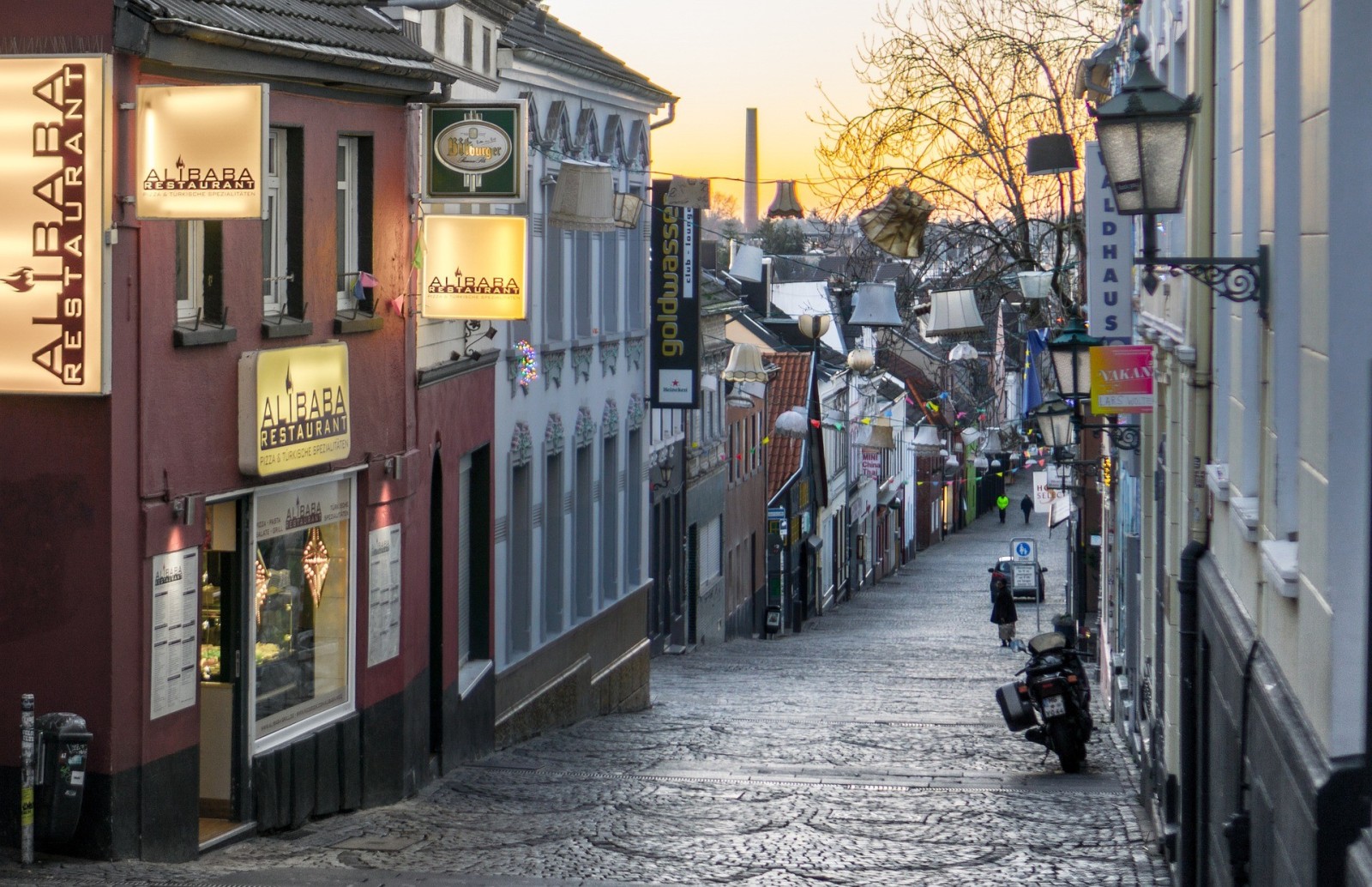
One of the main symbols of the city is the Münster St. Vitus - a majestic temple, the history of which is associated with the Benedictine abbey founded here in the X century. The cathedral towers over the city and is clearly visible from different areas.
Nearby are old streets, squares and historic buildings. It is nice to walk here, getting acquainted with the architecture and atmosphere of old Mönchengladbach.
2. Rydt Castle
The main historical attraction of another large area of the city is Schloss Rheydt Castle. It is one of the best preserved Renaissance castles in the region.
The castle is surrounded by a park and is of interest not only as an architectural monument, but also as a museum space. A visit to Rydt allows you to see another side of the history of the city - the aristocratic and palace, which existed in parallel with the monastery Gladbach.
3. Green City
Mönchengladbach has a large number of parks and green areas. One of the most pleasant places to walk is Bunter Garten.
Here you can relax from the bustle of the city, walk along the alleys and see a variety of plants. Thanks to the green areas, the city is suitable for travelers who prefer to combine sightseeing with a leisurely rest in nature.
4. Industrial heritage
In the XIX-XX centuries, Mönchengladbach was one of the largest textile centers in Germany and received the nickname “Rhine Manchester”.
Traces of this era are preserved in industrial architecture and former factory areas. Particularly interesting is the Monforts Quartier, associated with the history of mechanical engineering and textile production.
For tourists, this is an opportunity to see the unusual side of Germany - not only castles and cathedrals, but also old factory complexes that tell about the industrial development of the country.
5. Museums and culture
The city offers several museums and cultural venues. Of particular interest is the museum in Reidt Castle, where you can get acquainted with the history of the region, art and life of past eras.
Mönchengladbach also regularly hosts exhibitions, concerts, city holidays and cultural events, so the program of the trip can be interesting at any time of the year.
6. Football as part of urban culture
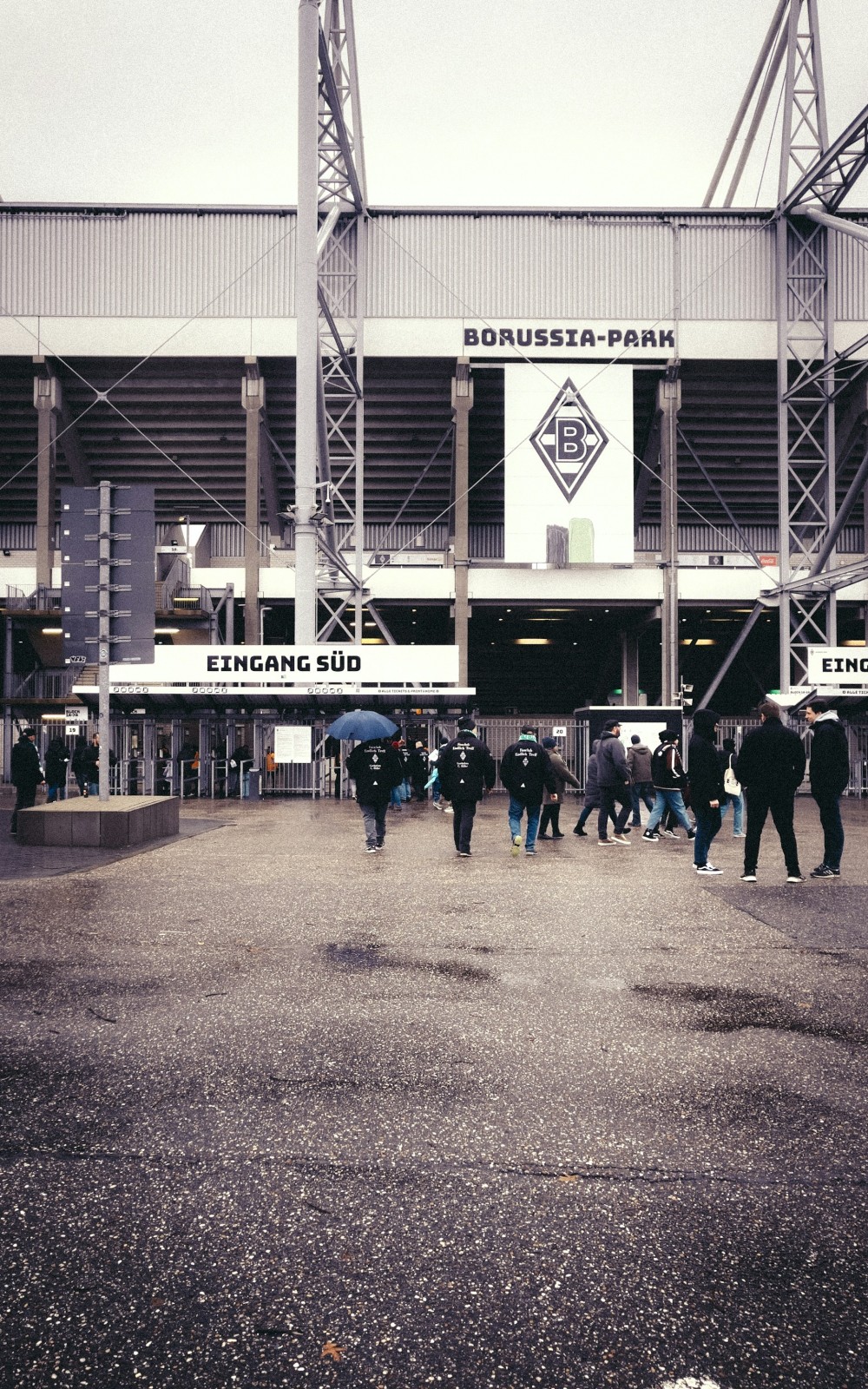
For sports fans, an important attraction is the Borussia-Park stadium - the home arena of the Borussia Mönchengladbach football club.
Even if the tourist is not a football fan, visiting a stadium or a football match allows you to get a better feel of the modern atmosphere of the city and the local sports traditions.
1. High-level hotels
H4 Hotel Mönchengladbach im Borussia-Park is one of the most interesting options for tourists. The hotel is located right next to the Borussia-Park stadium, so it is especially convenient for football fans and visitors to major events. There are modern rooms, a restaurant, a fitness room, Wi-Fi and parking. The center can be reached by bus or car.
Rosenmeer is a modern design hotel with a restaurant and bar. Located about 2 km from the historic center and the main station. Suitable for both a tourist trip and a business trip.
Mercure Parkhotel Mönchengladbach is a classic city hotel of good quality, located near the central part of the city and the green area. Suitable for travelers who are interested in comfort and convenient location.
2. Mid-range hotels
The Leonardo Hotel Mönchengladbach is one of the most famous options in the city. Located near the center, near Munster and Bunter Garten. The hotel has 128 rooms, there is a restaurant, bar, Wi-Fi, parking, fitness and round-the-clock reception.
Holiday Inn - the niu, Stream Mönchengladbach by IHG is a modern city hotel with a rather youthful atmosphere. A good option for independent travelers and tourists who are interested in a modern interior and location in the city.
WOS Hotel – ehemals Hotel Select is a compact city hotel near the central part. Suitable for short trips and tourists who do not need numerous additional services.
3. Cheap hotels
McDreams Hotel Mönchengladbach is one of the options for an economical stay. Suitable primarily for tourists who plan to spend most of their time outside the hotel.
B&B Hotel Mönchengladbach is a practical budget option with basic amenities. Good for a short stop for 1-2 nights.
Hotel Elisenhof Mönchengladbach is a small hotel in the southern part of the city. It can be convenient for motorists and travelers who do not need to live directly in the center.
Hotel Freiraum is another relatively affordable accommodation option with a basic set of services.
T3 Hotel Cityloft is an option of medium and economical segment, convenient for short stays.
4. Hostels and youth options
DJH Jugendherberge Mönchengladbach-Hardter Wald is a youth hostel in Hardter Wald. This is a good option for travelers who want to save money and do not need a separate full hotel room.
Kolping Gästehaus Mönchengladbach is a guest house that can be suitable for an inexpensive stay.
MG-Quartier: Mönchengladbach Quartier, Zimmer, Apartment - accommodation with rooms and apartments, suitable for independent travelers.
5. Apartments
Limehome Mönchengladbach Fliethstraße is a modern accommodation option in the format of apartments. It is especially convenient for those who prefer more independence and want to have a space similar to a small apartment.
Appartment am Nordpark is a separate accommodation option in the format of apartments near Nordpark and the Borussia-Park district.
Also in the city there are furnished apartments that can be rented for a few days or weeks. This option is especially convenient for families and tourists planning a long stay.
1. Münster St. Vitus (Münster St. Vitus)
The Basilica of Saint Vitus is the main historical and architectural symbol of Mönchengladbach. The temple is connected with the ancient Benedictine abbey, founded here in the X century. Especially impressive are the massive Romanesque architecture, high towers and the location on a hill above the old part of the city.
Nearby are the Abtaiberg Museum, the Old Market and the historical part of the city, so a visit to the basilica is convenient to combine with a walk in the center.
Transport accessibility: it is best to get to the central part of Mönchengladbach by bus or StadtBahn and then continue on foot. From the central station to the area of the cathedral can also be reached on foot.
2. Museum Abteiberg (Museum Abteiberg)
Museum Abteiberg is one of the most famous art museums in the city. It is especially interesting for lovers of modern art and unusual architecture.
The museum is located directly near the historic center, so it is convenient to combine it with a visit to St. Vitus Munster and the Old Market. The city also lists the Museum Abteiberg as the main tourist attractions of Mönchengladbach.
Transport accessibility: it is most convenient to go to the central part of the city, then walk for a few minutes.
3. Old Market and Altstadt (Alter Markt)
The Old Market (Alter Markt) is the historical heart of the old part of Mönchengladbach. There are cafes, restaurants, bars and old buildings.
It is especially interesting to visit the area in the evening, when there are restaurants and bars. The old town is also known for its artistically decorated house facades and street art.
Transport accessibility: This is one of the most tourist-friendly areas – after arriving in the central part of the city, most of the facilities can be viewed on foot.
4. Schloss Rheydt Castle
Reidt Castle is one of the main attractions of the whole Mönchengladbach. It is a beautifully preserved Renaissance castle on the water, surrounded by green territory.
The castle has a historical museum with collections dedicated to art, culture and history of the XVI-XVII centuries. The territory is suitable not only for an excursion, but also for a quiet walk.
Transport accessibility: Schloss Rheydt stop is located near the castle, where bus 016 goes. From the main station Mönchengladbach distance is about 3.5 km; you can get with a transfer via Dohlerstraße. Mönchengladbach-Reidt station is also about 3.5 km away and you can take bus 016.
By car: near the castle there is a parking lot, so the attraction is convenient for car travel.
5. Bunter Garten (Bunter Garten)
Rebellion Garten is a large city park and botanical garden with an area of about 16 hectares. There are various collections of plants, stone, medicinal and herbal gardens, as well as a garden of aromas and touch.
This is a great place to relax after seeing the city sights. In 2026, there was also a digital walk for about 90 minutes with 18 themed stops.
Transport accessibility: the park has several entrances - from Bettrather Straße, Beethovenstraße, Lettow-Vorbeck-Straße and Porzeltstraße. Therefore, it is convenient to drive to different parts of the park.
6. Schloss Wickrath - Vikrat Castle
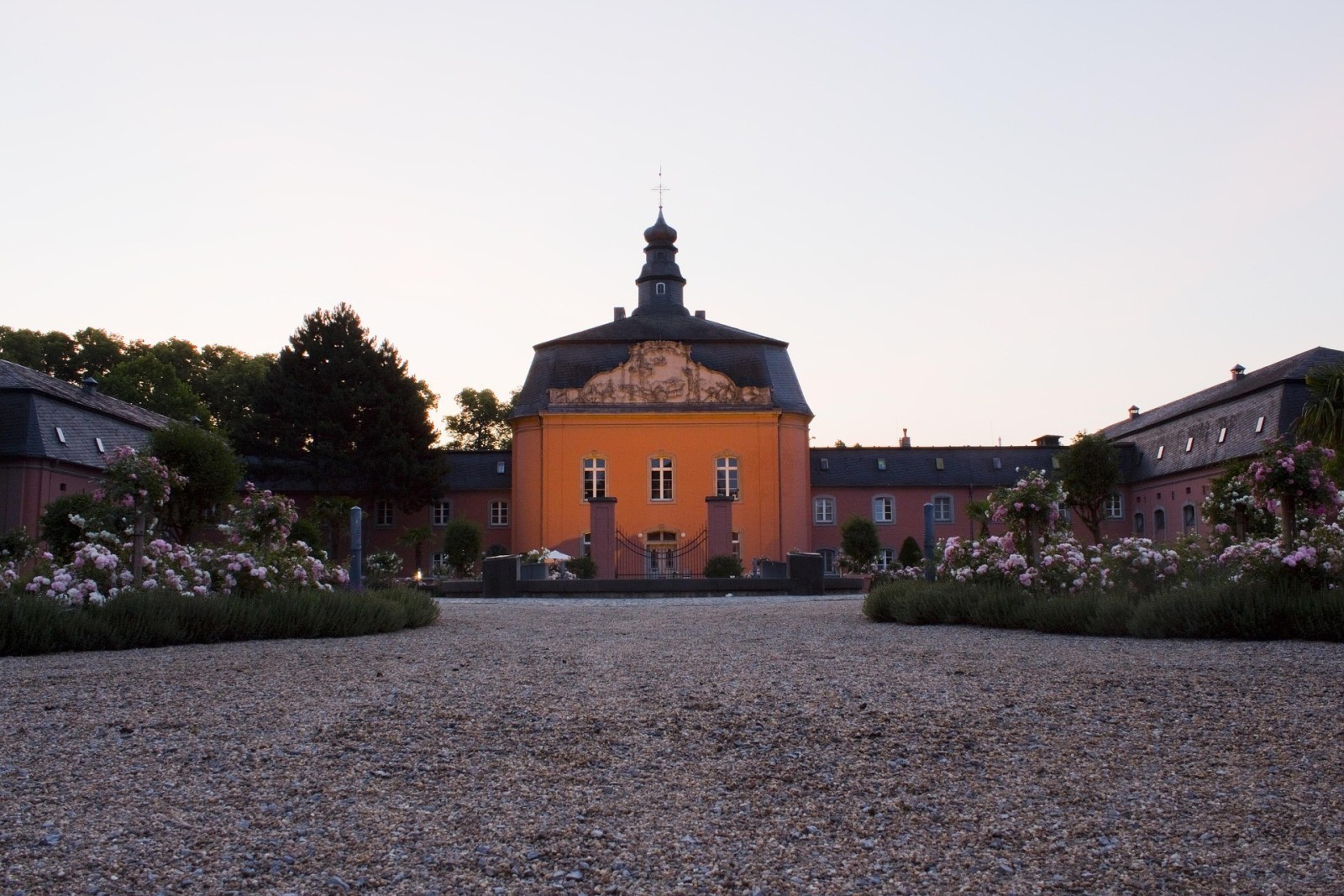
Schloss Wickrath is located in the southern part of the city and differs from Rydt with its palace and park composition.
The main interest is not only the historic building itself, but also the surrounding park with ponds and walking paths. This is a good place for a quiet walk and photography.
Transport accessibility: Vicrates can be reached by regional train or bus and then continue on foot. The area is also convenient for road travel.
7. Nordpark and the surroundings of Borussia-Park
Nordpark is a large green area in the west of the city, next to the football stadium. Here you can combine a walk in the park with a visit to Borussia-Park.
Transport accessibility: There are buses to the area. For Borussia-Park, the city indicates the Nordpark Busbahnhof stop, which is served by lines 008, 014 and 017. Outside football matches, bus 017 runs between Am Borussiapark and Nordpark Busbahnhof stops with an interval of about 20 minutes.
8. Borussia-Park
Borussia Park is the home stadium of the football club Borussia Mönchengladbach. For football fans, this is one of the main modern attractions of the city.
Even outside the game day here you can get on a tour of the stadium and see the interior of the arena. During the matches, the stadium receives more than 50 thousand spectators.
Buses 008, 014 and 017 reach Nordpark Busbahnhof. On the days of home matches, special shuttles are organized from the central districts and both main stations.
9 FohlenWelt - Borussia Museum
FohlenWelt is a football museum dedicated to the history of Borussia Mönchengladbach. He is especially interesting to fans of German football and the history of the club.
The museum is conveniently combined with a visit to Borussia-Park, as both objects are located in the same area.
Transport accessibility: buses to Nordpark/Borussia-Park, then a short walk.
10. TextilTechnikum
TextilTechnikum is one of the most interesting attractions for those who want to learn the industrial history of the city.
Here you can get acquainted with the history of textile production, which once made Mönchengladbach a famous industrial center and earned it the nickname “Rhine Manchester”. The city officially recommends TextilTechnikum as a place to explore Mönchengladbach’s industrial past.
Transport accessibility: it is more convenient to use the city bus; the exact route is better to choose from a specific place of residence, since the object is not in the immediate historical center.
1. Mönchengladbach Carnival (Mönchengladbacher Karneval) – February is one of the brightest periods of the year. There are costumed evenings, festive concerts, street events and carnival processions. The main events fall on the last days of the carnival season, especially on Rosenmontag - Pink Monday.
2. KiliFee Children's Music Festival (Kinderliederfestival KiliFee) - March-October Festival of children's music with concerts and performances of artists. It is especially suitable for families with children.
3. Culture at the Rydt Market (Kultur auf dem Wochenmarkt) – April–October The square and the market grounds in Rydt host musical performances, cultural programs and small concerts. This is a great opportunity to get acquainted with the local city life.
4. Wein- und Kulturgarten Rheydt - May-September Summer program with music, cultural events and the opportunity to spend time outdoors. Especially pleasant in warm weather.
5. Berggartenfest is a July city holiday with music, dance and performances on multiple stages. It is suitable for those who want to see the modern entertainment culture of the city.
6. Literary Summer (Literarischer Sommer) - July-September German-Dutch literary festival. The program includes meetings with writers, readings, literary walks and various cultural events.
7. Summer Music at SommerMusik Schloss Rheydt is one of the most interesting music festivals in the city. Concerts take place on the grounds of the historic Rydt Castle, so the event combines the music, architecture and atmosphere of the ancient park.
8. Summer concerts in Rydt - August - September During this period, performances of local and invited musicians are held. You can hear jazz, pop, folk, indie and music of other directions.
9. City Festival of Rifle Brotherhoods (Stadtschützenfest) - September Traditional holiday of Mönchengladbach rifle associations. There are parades, festive processions, performances of brass bands and mass city events. This is one of the most traditional events of the city.
10. St. Martin’s Day is a traditional German holiday, especially popular with children. In different parts of the city there are processions with homemade lanterns, songs and festive events.
1. Winter - December - February
Winter is relatively mild but often overcast, wet and windy.
December: during the day about +5-6 ° C, at night about +1-2 ° C.
January: during the day about +5 ° C, at night about +1 ° C.
February: during the day about +6-7 ° C, at night about +1 ° C.
Snow is possible, but sustained snow cover is uncharacteristic for the city. Rain and cloudiness are more common than severe frosts.
Water temperature: natural water bodies in winter are cold - about 4-10 ° C, so swimming is practically not suitable.
2. Spring - March-May
Spring is gradually becoming more sunny and comfortable for excursions.
March: about +10 °C during the day and +2-3 °C at night.
April: about +14-15 °C during the day and +5-6 °C at night.
May: about +18 °C during the day and +9 °C at night.
April is usually one of the drier months, although changeable weather is possible throughout the season.
Water temperature: approximately 12–17 °C in March–April and about 17 °C in May; for most tourists it is still cool for swimming.
3. Summer - June - August
Summer is the most comfortable time to explore the city. The average daily temperature is about 21–23 °C, and the night temperature is 12–15 °C.
June: about +21 °C in the afternoon.
July: about +23 °C during the day is the warmest month.
August: about +23 °C in the afternoon.
In some periods, the temperature can rise significantly above +30 ° C, but the typical summer weather is much milder. Short-term downpours and thunderstorms are possible in summer.
Water temperature: in local water bodies in June-August can reach about 20-22 ° C, so the most suitable for swimming is the middle and end of summer.
4. Autumn - September - November
The beginning of autumn is usually quite pleasant, but then the temperature drops rapidly.
September: about +19 °C during the day and +12 °C at night.
October: about +15 °C during the day and +9 °C at night.
November: about +10 °C during the day and +5 °C at night.
September is especially good for walks, parks and excursions, and in October-November it becomes cooler and the number of cloudy days increases.
Water temperature: in September about 16-21 ° C, in October about 12-16 ° C, and in November the water is already cold - about 5-12 ° C.
1. Language of communication
The main language of communication in Mönchengladbach is German (Deutsch). In touristic places, hotels, restaurants, train stations and large shops, employees often speak English, so it is quite convenient to travel with basic English.
Mönchengladbach is located in North Rhine-Westphalia, so you can hear the features of the local Lower Rhine dialect (Niederrheinisch) in everyday speech. However, tourists do not need to know the dialect - standard German is used everywhere.
When addressing strangers, it is advisable to use polite Sie (“Zie”), especially with employees of hotels, shops, restaurants and official institutions. Calling du ("du") is usually used between friends, acquaintances, and people who have themselves suggested switching to informal communication.
2. Punctuality
In Germany, punctuality is very important. If you book a tour, a table in a restaurant or an appointment, it is advisable to arrive on time.
For business and organized events, even 10-15 minutes late without warning can be perceived negatively.
If a delay is inevitable, it is better to report it in advance.
3. Greetings and communication
When meeting, it is usually enough to say:
Guten Tag! - "Good day!"
Guten Morgen! - "Good morning!"
Guten Abend! - "Good evening!"
Danke! - Thank you!
Bitte! - "Please!"
In a formal setting, a handshake is common. In everyday communication, you should not approach a stranger too close or go to “you” without permission.
4. Lines and public spaces
In shops, cash desks, museums and other institutions, it is customary to observe the queue. Do not try to move forward or take a place at once by several people.
In public transport, it is advisable to first allow passengers to get off and only then get on the bus or train.
It is also customary to give way to the elderly, people with disabilities and passengers with young children.
5. Silence and respect for others
In Germany, they take silence very seriously. This is especially true in residential areas.
It is not recommended to talk loudly, turn on music or arrange noisy events late in the evening and at night.
On Sunday, many types of noisy work are limited by the rules of silence. It is enough for a tourist to observe a simple principle: do not create a lot of noise and respect the peace of the locals.
6. Behaviour in restaurants and cafes
Before visiting the restaurant, it is advisable to check whether a reservation is required.
In Germany tipping is not always mandatory, but with good service usually leaves about 5-10% or just round the bill.
When paying the waiter, you can immediately call the total amount taking into account tips.
For example, if the bill is 27 euros and you want to leave a 3 euro tip, you can say:
Dreißig, bitte. - Thirty, please.
7. Shops and fees
In Germany, payment by bank cards and contactless methods is common, but in small establishments there may still be a preference for cash.
In supermarkets, bottles and some cans may have a collateral value - Pfand. Empty containers can be returned through special machines and get a deposit back.
Do not leave the shopping cart anywhere - after use it is returned to the intended place.
8. Rules of conduct on a bicycle
Mönchengladbach, like many German cities, has a developed cycling infrastructure.
If a tourist uses a bicycle, it is necessary to observe road signs, traffic lights and traffic rules. Bicycle lanes are primarily for cyclists, so pedestrians should not occupy them unnecessarily.
It is especially important to pay attention to cyclists when crossing roads and cycling paths.
9. Public transport
A bus or train ticket is required before the start of the trip if a particular mode of transport requires advance purchase or composting.
Do not expect that there will be no checks. Checks on German public transport are carried out regularly, and ticketless travel can result in a fine.
At stops and stations, you should carefully monitor the route number and direction of movement.
10. Alcohol and smoking
Alcohol is treated fairly calmly in Germany, but this does not mean that it can be consumed anywhere.
You can not be in a state of heavy intoxication in public places in such a way as to create danger or interfere with others.
Smoking is prohibited in many enclosed public spaces and modes of transport. It is also necessary to pay attention to special signs and designated places for smoking.
11. Photo and videotape
In public places, photographing attractions is usually allowed, but caution should be exercised when photographing people.
Do not take close-up photos of strangers without their consent, especially if the photo is supposed to be published on the Internet.
When visiting museums, churches and exhibitions, you should pay attention to the rules of a particular institution - photographing individual exhibits may be prohibited.
12. Rules of Conduct in Churches
When visiting St. Vitus Munster and other churches, it is advisable to remain calm.
Speak quietly, do not interfere with services and, if possible, turn off the phone.
During the service, tourists should not walk around the temple, take pictures of parishioners or talk.
13. Garbage and cleanliness
In Germany, much attention is paid to waste sorting. In public places, garbage should be thrown into containers intended for it.
Bottles, packaging or food waste should not be left on streets or parks.
For some violations of waste management rules, fines may be provided.
1. Greetings and courtesy
Hallo! Transcription: Hallo
Guten Morgen! - Good morning!Transcription: Guten Morgen
Guten Tag! - Good afternoon! / Hello!Transcription: Guten tak
Guten Abend! - Good evening! Transcription: Guten ábent
Gute Nacht! - Good night! Transcription: gute naht
Auf Wiedersehen! - Goodbye! Transcription: auf vúderzaen
Tschüss! - Goodbye!
Bitte! - Please! You're welcome! Transcription: butte
Danke! - Thank you!
Vielen Dank! - Thank you very much!Transcription: Fulen Dank
Entschuldigung! Transcription: Entschüldigung
Kein Problem! - No problem! Transcription: Kaine problem
2. If you speak German poorly
Sprechen Sie Englisch? - Do you speak English? Transcription: Sprehan zi english?
Sprechen Sie Russisch? - Do you speak Russian? Transcription: Sprehan zi Rusish?
Ich spreche nur ein bisschen Deutsch. - I speak a little German. Transcription: Their Sprehe Nur ain búshen Deutsch
Ich spreche kein Deutsch. - I don't speak German. Transcription: Their Spreche Kain Deutsch
Ich verstehe nicht. - I don't understand. Transcription: their fairstee nicht
Können Sie das bitte wiederholen? - Could you say it again? Transcription: kenen zi das butte viderholen?
Bitte sprechen Sie langsamer. - Please speak more slowly. Transcription: Butte Sprehen zi Langzamer
Können Sie mir helfen? - Can you help me? Transcription: kenen zi world helfen?
3. Orientation in the city
Wo ist das Stadtzentrum? - Where is the city center? Transcription: East das Stadtzentrum?
Wo ist der Bahnhof? - Where's the station? Transcription: East Dea Banhof?
Wo ist die Bushaltestelle? - Where's the bus stop? Transcription: East di boshaltestelle?
Wie komme ich zum Stadtzentrum? How do I get to the city center? Transcription: do you want them tsum?
Wie komme ich zum Schloss Rheydt? - How do I get to Raidt Castle? - Transcription: We've got their tsum shlos Reidt?
Wo ist der Eingang? - Where's the entrance? Transcription: East Dea Aingang?
Wo ist der Ausgang? - Where's the exit? Transcription: East Dea Ausgang?
Ist es weit? - Is that far? Transcription: East SS White?
Kann man zu Fuß gehen? - Can I walk? Transcription: kan mantsu fus geen?
Wie lange dauert es? - How long will it take? Transcription: Vi lange d'auert s?
4. Station and public transport
Wo kann ich ein Ticket kaufen? - Where can I buy a ticket? Transcription: in kan their ain touket kaufen?
Ein Ticket nach Mönchengladbach, bitte. - One ticket to Mönchengladbach, please. Transcription: ain tuket nah Mönchengladbach, butte
Eine Fahrkarte, bitte. - One ticket, please. Transcription: áine Farkarte, butte
Wann fährt der nächste Zug? - When does the next train leave? Transcription: van firth dea nehste zuc?
Wann fährt der nächste Bus? - When does the next bus leave? Transcription: van firth dea nehste boos?
Welcher Bus fährt zum Zentrum? - Which bus goes downtown? Transcription: velhar bous färt tsum centrum?
Muss ich umsteigen? - Do I need to change seats? Transcription: Mus their umstein?
Wo muss ich umsteigen? - Where do I need to move? Transcription: to Moses their umstein?
Isst dieser Zug richtig? - Is this the right train? Transcription: East dozer zuk ruhtyh?
Isst dieser Bus richtig? - Is this the right bus? Transcription: East Dúzer Bus Rúchtih?
5. At the hotel.
Ich habe eine Reservierung. - I have a reservation. Transcription: their habe áine reservúrung
Ich möchte einchecken. - I'd like to register. Transcription: their mehte áincheken
Auf welchen Namen? - What name? Transcription: auf velhen namen?
Wie viel kostet ein Zimmer pro Nacht? - How much does a room cost per night? Transcription: Whifil Costet Ain Zumma about naht?
Ist das Frühstück inklusive? - Breakfast included? Transcription: East das Frystyuk Inclusive?
Wann gibt es Frühstück? - When's breakfast? Transcription: Van Gybt es Fryshtyuk?
Wo ist mein Zimmer? - Where's my number? Transcription: East mein tsumma?
Ich brauche WLAN. - I need Wi-Fi. Transcription: their brauhe ve-lan
Können Sie mir ein Taxi rufen? - Can you call me a cab? Transcription: kenen zi mir ain taksi rufeng?
6. Restaurant and café
Einen Tisch für zwei Personen, bitte. - Table for two, please. Transcription: áinen tish fua zwei parzonen, butte
Die Speisekarte, bitte. - Menu, please. Transcription: di Spaizekarte, butte
Was empfehlen Sie? - What do you recommend? Transcription: Are you Emphelan Z?
Ich möchte das bestellen. - I'd like to order this. Transcription: their mehte das bashtellen
Was wast das? - What is it? Transcription: Are you East Das?
Ist das vegetarisch? - Is it vegetarian? Transcription: East das vegetarish?
Die Rechnung, bitte. - Check, please. Transcription: di rehnung, butte
Kann ich mit Karte bezahlen? - Can I pay with a card? Transcription: Can their mit karte betzalen?
Kann ich bar bezahlen? - Can I pay in cash? Transcription: Can their baa betzalen?
Das war sehr lecker! - It was delicious! Transcription: das vaa zea lekka
1. Altbier is a traditional German beer, especially characteristic of the Rhineland. You can buy bottles or small gift sets.
2. Mustard with Altbier is an unusual regional product that works well with meat, sausages and cheeses. This is one of the most original gastronomic gifts.
3. Local honey is a compact and useful gift that is easy to transport.
4. In the Lower Rhine produce various jams, jams and fruit smears. A good option for a gift to the family.
5. You can buy mixtures of seasonings for meat, grill and traditional German dishes.
6. In the region there are fruit and herbal liqueurs of small producers. When buying alcohol, it is necessary to take into account the rules of its transportation.
7. German cookies, chocolate, seasonal sweets and traditional pastries are suitable as an inexpensive gift.
8. Mönchengladbach is historically known for the textile industry. Therefore, scarves, fabrics and small textiles are particularly well associated with the history of the city.
9. Magnets, postcards, mugs, keychains and other objects with the image of Munster St. Vitus, the coat of arms or city attractions.
10. For football fans, scarves, T-shirts, caps, mugs and other goods with the symbols of the local club are interesting.
11. Postcards, books, images and small memorabilia associated with Rydt Castle are suitable for history lovers.
1. Documents required
To travel to Mönchengladbach, you must have:
a passport or other valid document for crossing the border;
visa, if required for the citizenship of the tourist;
Confirmation of residence – reservation of a hotel or other place of accommodation;
it is desirable to have a return ticket or confirmation of the further route;
A bank card and/or a sufficient amount of money to travel.
For visa-free entry, the document must be valid for at least 3 months after the intended date of departure from Germany and issued no more than 10 years ago. Upon entry, you may be asked to confirm the purpose of the trip and the availability of sufficient funds.
Since April 10, 2026, the European Entry/Exit System (EES) has been fully operational: document data and biometric data are recorded at the entrance of the relevant foreign travelers.
2. Health insurance
It is recommended that the traveler obtain medical insurance for travel abroad before the start of the trip.
It is desirable that the policy covers:
treatment for sudden illness;
injuries and accidents;
hospitalization;
emergency dental care;
medical transportation;
Return to the home country for medical reasons.
For Schengen visas, health insurance is a requirement; for visa-free travelers, Germany also recommends having health insurance, including repatriation coverage.
3. Emergency services phones
112 - a single emergency number Ambulance, fire service and rescuers. Works around the clock and for free.
110 Police Used in crimes, security threats, robbery, assault and other situations requiring police intervention.
116,117 - On-duty medical service For urgent medical problems that do not pose an immediate threat to life and arise outside the usual hours of doctors.
If there is an immediate threat to life, call 112 immediately.
4. Mobile communications
There are four main mobile networks in Germany:
Telekom Deutschland is one of the largest networks in the country.
Vodafone is a large operator with wide coverage.
Telefónica Germany (o2) is a major mobile operator.
1&1 is the fourth German mobile network to develop its own infrastructure.
In addition to the operators themselves, there are a large number of virtual operators using the infrastructure of these networks.
In Mönchengladbach, in normal urban areas, mobile communications and mobile internet are readily available. Before travelling, it is convenient to check whether your fare supports EU roaming as conditions may differ for some fares.
5. How long can you stay in Germany?
Free movement rules apply to EU/EEA and Swiss citizens, so the usual 90-day travel limit for 180 days does not apply.
For third-country nationals who are allowed short-term visa-free entry, the standard rule is up to 90 days in any period of 180 days. This restriction applies to the entire Schengen area, not just Germany.
If a tourist stays in Germany for 30 days, then moves to France, the Netherlands or another Schengen country, these days continue to be counted in the total limit of 90/180.
For citizens of countries requiring a Schengen visa, the duration of stay is also determined by the conditions of the visa issued.
Residence for more than 90 days usually requires the appropriate national German permit or long-term visa depending on the purpose of the trip – work, study, family reunification, etc.
Create a query and local guides will offer you the best options

