Independent tourism and recreation in the city of Osnabrück Historical information about the city of Osnabrück...
Foundation of the city
The history of Osnabrück begins at the end of the VIII century. Around 780, Charlemagne founded an episcopal center here during the Christianization of the Saxon lands. Due to its location at the intersection of trade routes, the settlement developed rapidly.
Medieval city
In the XI-XII centuries, Osnabrück became an important religious, commercial and craft center. In 1002 he received market, monetary and customs rights, and in the twelfth century - important city privileges. Urban self-government was gradually strengthened.
Trade and urban development
In the Middle Ages, Osnabrück engaged in trade with other cities in northern Germany and was associated with the Hanseatic League. In 1306, the Old and New Towns were united by a common system of fortifications, and later a single city administration was formed.
Reformation and Religious Conflicts
In the sixteenth century, Osnabrück was caught between Catholic and Protestant traditions. The Reformation was introduced in 1543, but religious opposition continued. In the XVI-XVII centuries, the city also experienced epidemics, fires and mass trials of those accused of witchcraft.
The Thirty Years' War and the Peace of Westphalia
The war of 1618–1648 brought destruction, disease, and economic decline to Osnabrück. But it was this period that made the city famous: since 1643, negotiations were held here to end the war.
XVIII - early XIX century
Osnabrück remained the center of the principality-bishopric until the beginning of the XIX century. In 1802, the independent state was liquidated, and the city came under the rule of Hanover.
nineteenth century and industry
In the nineteenth century, rapid industrial development began. Metallurgy, engineering and trade grew, and the construction of railways turned Osnabrück into an important transport hub in northwestern Germany.
XX century
After the First World War, the city experienced economic and political difficulties. Under the Nazi regime, political opponents and the Jewish population were persecuted. During World War II, Osnabrück was heavily bombed due to industry and railway infrastructure.
Post-war reconstruction
After 1945, the city was restored, developed industry, transport and residential areas. The historic center was also reconstructed, thanks to which today medieval buildings, a cathedral and the famous town hall are preserved here.
Modern Osnabrück.
Today Osnabrück is a major cultural, educational and economic center of Lower Saxony. The city combines medieval heritage, industrial history and modern urban life. Its main historical feature is its connection with the Peace of Westphalia and the European idea of peaceful settlement of conflicts.
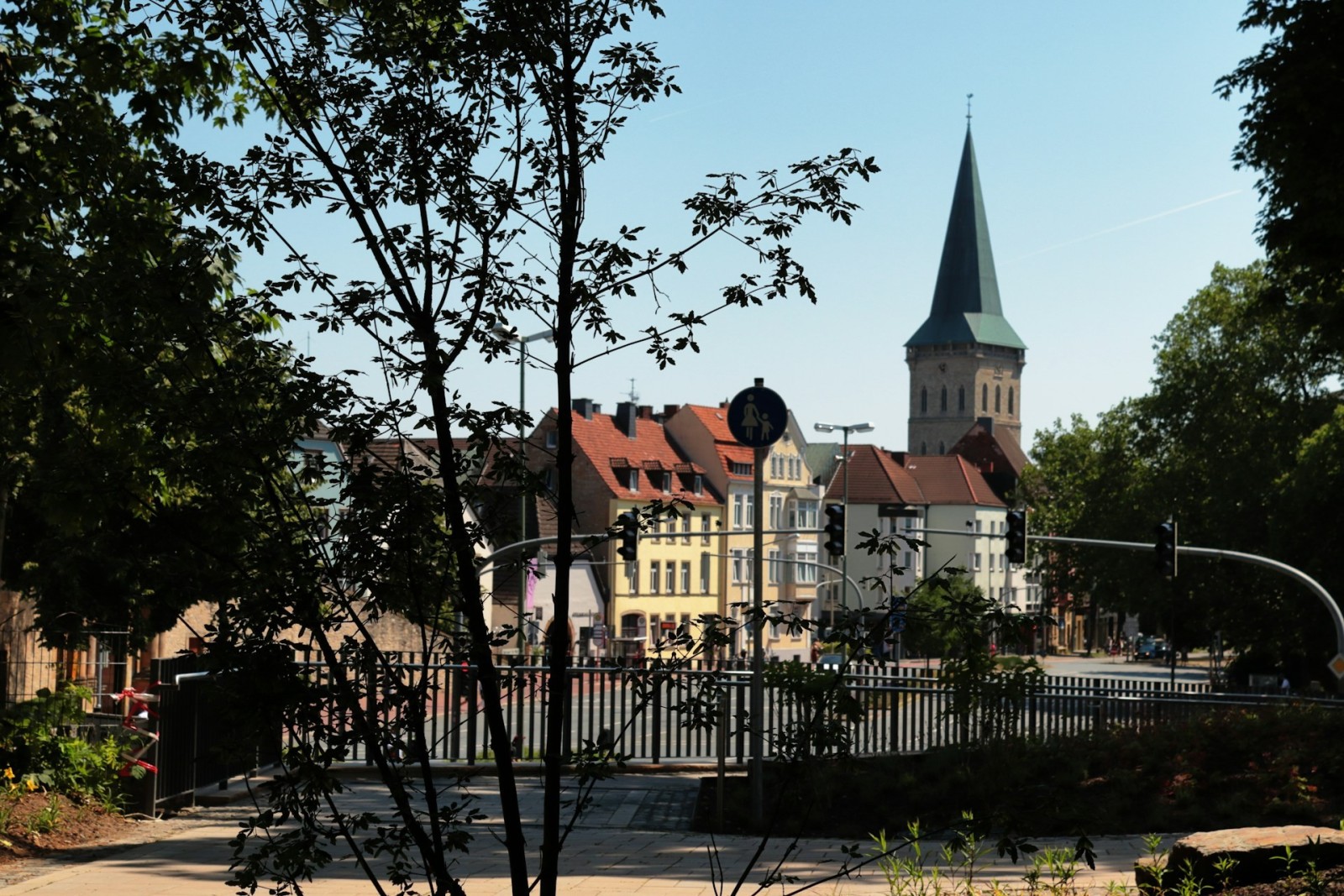
The historic center is one of the main reasons to visit Osnabrück. Here preserved medieval buildings, ancient squares, half-timbered houses and city streets. Particularly interesting are the Peace Town Hall, St. Peter’s Cathedral and the historic Market Square.
The Peace Town Hall is an important historical monument associated with the negotiations that ended the Thirty Years War. Inside you can learn about the history of the Peace of Westphalia and diplomacy of the XVII century.
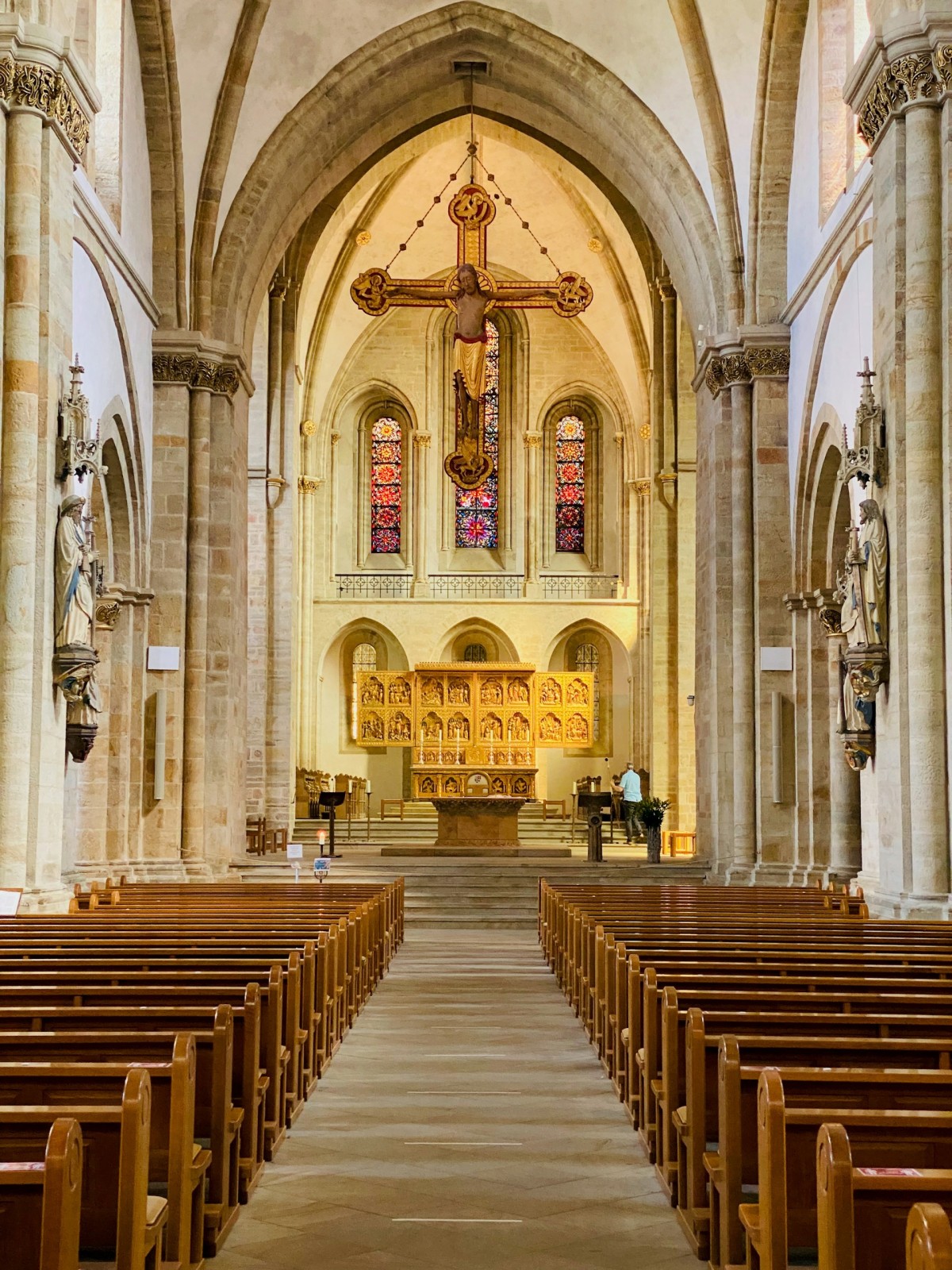
St. Peter's Cathedral is one of the main symbols of the city. Its history dates back many centuries, and the architecture combines elements of different historical periods.
Museums and Culture – Osnabrück has museums dedicated to the city’s history, art and culture. A special place is occupied by the museum of Felix Nussbaum, dedicated to the famous artist of the XX century, who was born in Osnabrück.
Nature and walks - the city is surrounded by green areas, and nearby begin the hills and forests of the Teutoburg forest. This makes Osnabrück a convenient place for hiking and cycling routes.
City for family holidays - there is a zoo, parks, walking areas and places for rest with children. One of the most popular natural attractions is Osnabrück Zoo.
Gastronomy – travelers can get acquainted with the traditional cuisine of Lower Saxony, taste meat dishes, sausages, bread, pastries and regional beers.
Festivals and city events – throughout the year there are musical, cultural and historical events, fairs and Christmas events. Thanks to this, the city is interesting not only for lovers of architecture, but also for those who want to get acquainted with modern life in Germany.
Convenient location – Osnabrück is located between the major cities of northwestern Germany and has good rail and road connections. It is convenient to include in the route of Lower Saxony and neighboring North Rhine-Westphalia.
The atmosphere of the city - Osnabrück is quite compact for independent acquaintance. The main historical sites are located close to each other, so a significant part of the center can be viewed on foot. The city is suitable for a short trip for 1-2 days, and thanks to the natural surroundings - and for a longer holiday.
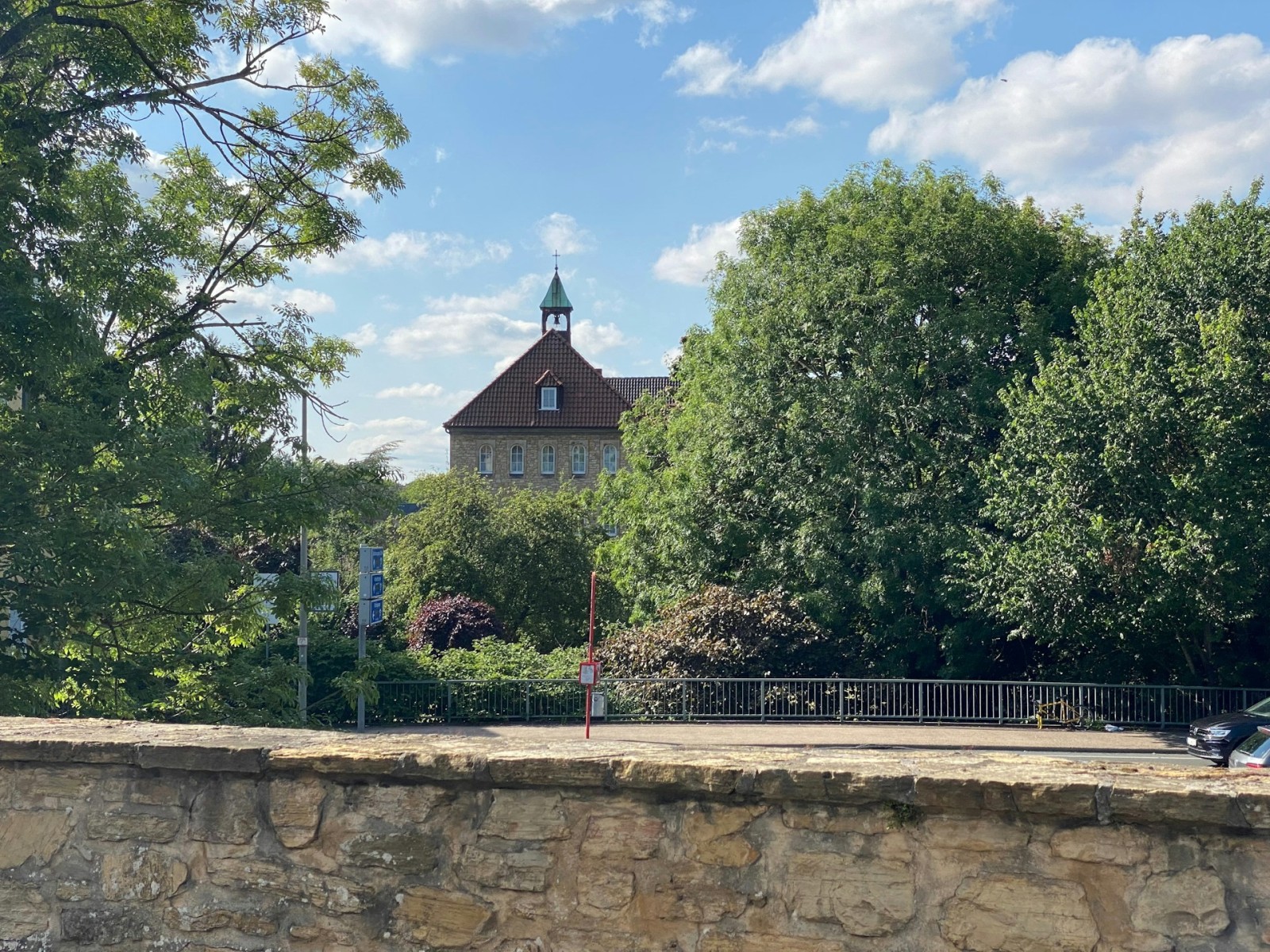
1. High-level hotels
For a comfortable stay suitable Hotel Remarque, Hotel Walhalla and Holiday Inn Osnabruck. These are options with a good range of services, spacious rooms and a convenient location relative to the center.
2. Mid-range hotels
Good choices for most tourists are Best Western Hotel Hohenzollern, Garner Hotel Osnabrück by IHG, Hotel Westermann and Hotel Sieme. They are suitable for both a short trip and a few days stay.
3. Budget hotels
B&B Hotel Osnabrück and ibis budget Osnabrueck City. The latter is near the main train station, which is especially convenient for travelers arriving by train.
4. Aparthotels and apartments
For independent travelers, families and those who plan to stay for a few days, the apartment is convenient. Among the options are Bergmann Boardinghouse Osnabrück and Adelhoff. This format usually gives more space and allows you to cook your own food. The city also features Limehome and other apartment complexes.
5. Hostels and inexpensive options
The most affordable format of accommodation is hostels and youth hotels. DJH Jugendherberge Osnabrück is suitable for young travelers, students and tourists who need to save money. There is also a Yellow House hostel in the city.
6. Guesthouses and small family hotels
In Osnabrück there are small private hotels and guest houses, which can be more convenient than large hotels for a quiet stay. These options include Hotel Appart, Hotel Huxmühle, Hotel Neustadt and Hotel Haus Rahenkamp.
The Peace of Westphalia (Rathaus des Westfälischen Friedens) is the main historical symbol of Osnabrück. It was here that negotiations related to the Peace of Westphalia of 1648 took place. The Town Hall is located directly at the Market Square, so it is convenient to combine it with a walk around the Old Town. Transport: from the railway station you can take a city bus to the central stops, after which you can walk. From the central part of the city - a few minutes walk.
Market Square (Markt) is the historic heart of the city, surrounded by ancient buildings. Here are the City Hall of Peace, the Church of St. Mary and the characteristic medieval facades. Transport: the square is located in the pedestrian part of the center; it is most convenient to get on foot from the central stops or the train station.
St. Peter Cathedral (Dom St. Peter) is one of the main religious and architectural monuments of Osnabrück. The cathedral is located next to the historic center and is well suited for inclusion in the walking route around the city. Transport: walk from the Market Square - a few minutes; you can also take the city bus to the center.
The Old Town (Altstadt) is an area with historic houses, narrow streets, cafes, restaurants and small shops. It extends from the Hegertor Gate through the Market Square towards Hazestrasse. Transportation: It is best to explore on foot. There are numerous city buses to the area.
Heger Tor is one of the most recognizable monuments of Osnabrück and a kind of entrance to the historical part of the city. From here it is convenient to start a walk in the Old Town. Transport: Available on foot from the center; nearby are city bus routes.
Felix Nussbaum House and MQ4 Museum Quarter (Felix-Nussbaum-Haus/Museumsquartier) is a museum complex dedicated to the art and history of the city. Felix Nussbaum House was designed by architect Daniel Libeskind. Transport: From the centre you can walk; city buses are also available. The attraction is conveniently combined with a visit to the Old Town.
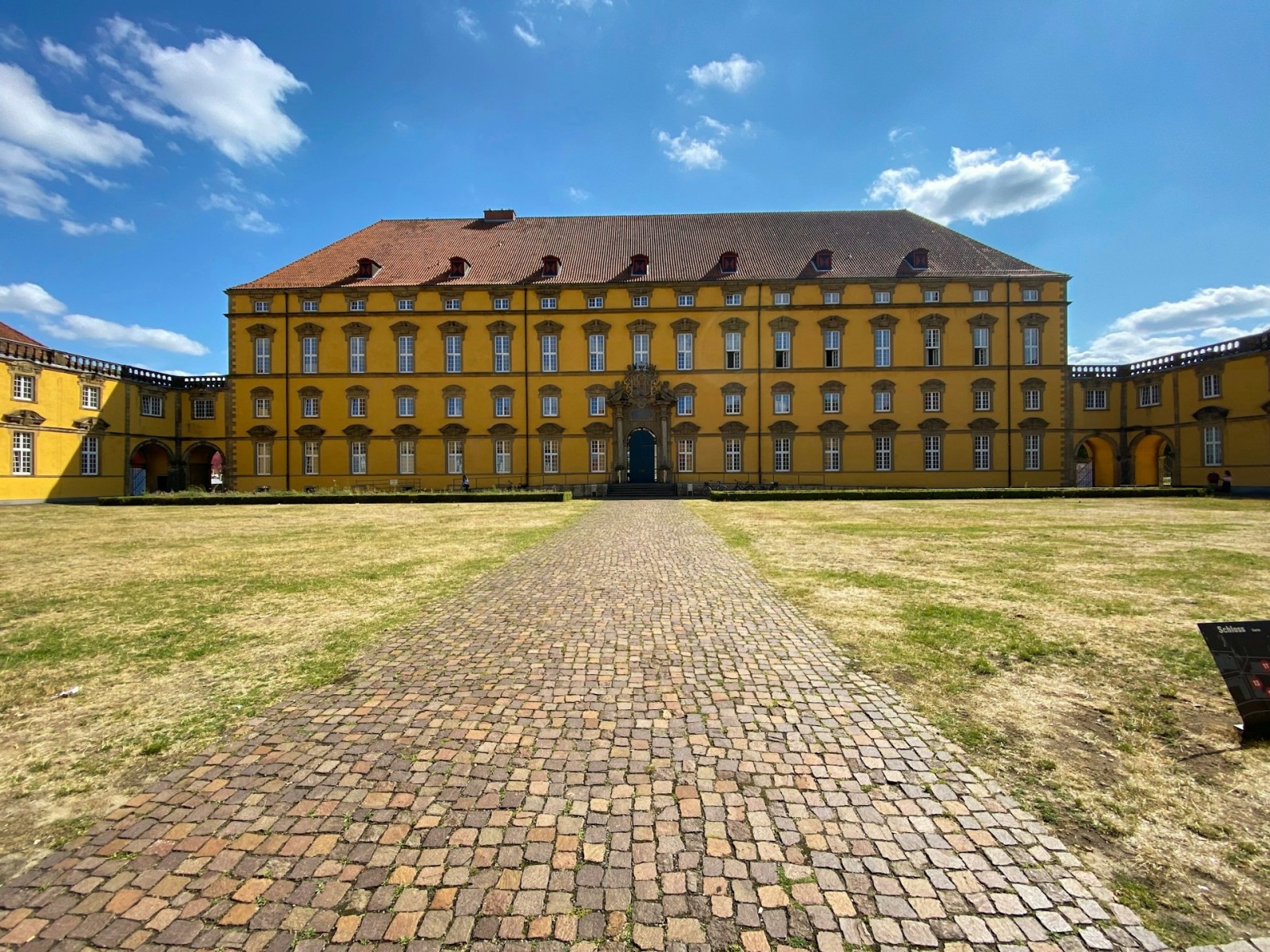
Osnabrück Castle (Schloss Osnabrück) is the former residence of the Osnabrück prince-bishops, located near the historical center. Today, the complex is primarily associated with the university life of the city. Transport: easy to reach on foot from the city center or by bus.
The Botanical Garden of the University of Osnabrück is a green area with a variety of plants, suitable for a relaxing walk. The garden is located in the Westerberg district, a little away from the historic center. Transport: It is most convenient to get by city bus, bicycle or car; from the center the trip takes longer than to the main attractions of the Old Town.
The Osnabrück Zoo (Zoo Osnabrück) is a large natural attraction of the city, located among the forest. It is especially suitable for family holidays. Transport: From Neumarkt, the M5 bus runs directly towards the zoo; it can also be reached by bus from the main station or Neumarkt with exit at the Paradiesweg stop. From her entrance about 8 minutes walk.
The Schölerberg Museum is a natural science museum with exhibits on nature, the environment, space and the development of the Earth. There is a zoo and a planetarium nearby, so these facilities are convenient to visit together. Transport: city buses, car and bicycle; the museum is located south of the historic center.
Pisberg and the Museum of Industrial Culture (Museum Industriekultur) are a place to explore Osnabrück’s industrial past in coal mining. The area has historical mine structures, walking routes and observation decks. Transport: it is better to get by bus or car; for active tourists, the area is also suitable for cycling routes.
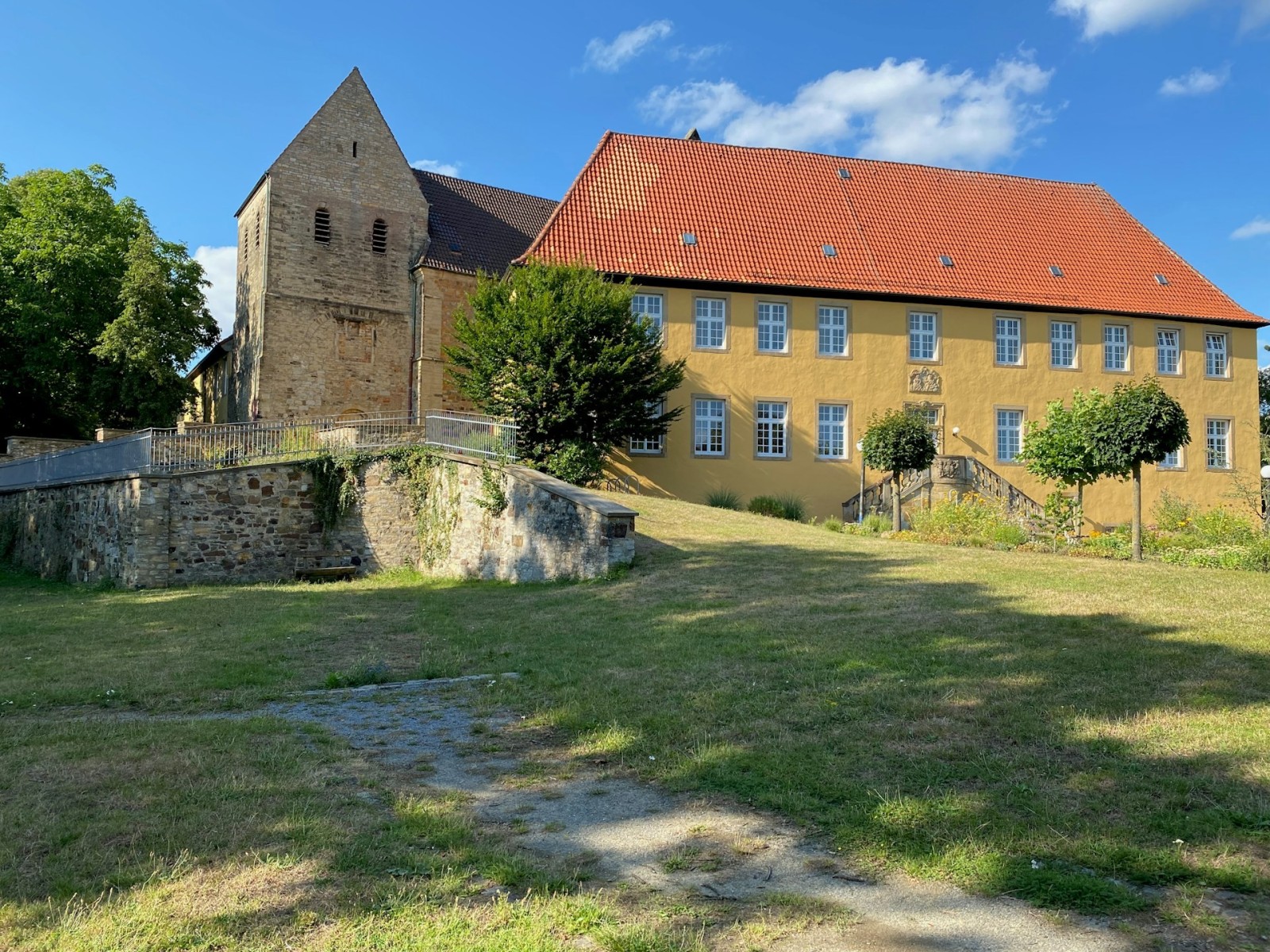
Ossensamstag Carnival (February-March) The main event is the big carnival parade on Saturday in front of Rosenmontag. Through the streets are festive columns, participants in costumes and decorated platforms, street playgrounds and musical performances.
Spring Fair (Frühjahrsjahrmarkt) - March-April. Traditional folk holiday with attractions, fairgrounds, entertainment and festive atmosphere.
European Media Art Festival (April) A major cultural event dedicated to contemporary media art, experimental cinema, digital installations and performances.
Festival of pubs and live music "Altstadt Live" (Altstadt Live) - April. The historic center is turning into a large music venue, where local performers and guest musicians perform.
Pop Festival "Popsalon" (Popsalon) - April. Musical event with performances of modern performers at different city venues. Suitable primarily for fans of indie, pop and alternative music.
May Week (Maiwoche) is May. One of the most famous events of Osnabrück and the largest city holidays in northwest Germany. Within about ten days, the city center turns into a huge venue with concerts, street performances, gastronomic areas and entertainment. Every year the event begins on the second Friday of May.
Morgenland Festival Osnabrück – end of May – June An international music festival that introduces the audience to the music of the Near and Middle East, as well as modern trends in world music. The program includes concerts, art projects and cultural events.
Africa Festival (Afrika-Festival) - June, held periodically. Dedicated to African music, culture, dance, cuisine and contemporary art.
Long Night ateliers (Lange Nacht der Ateliers) – June Artists and creative workshops of the city open their spaces for visitors, allowing to get acquainted with modern art directly in the places of its creation.
Culture Nights (Kulturnächte) is summer. A series of cultural events with concerts, theater productions, exhibitions and performances at various venues of the city.
Summer concerts and Open-Air events – June-August In the warm season, a large number of open-air concerts are held in Osnabrück. The music program includes rock, pop, jazz, electronic and classical music.
Folk, shooting and local holidays - summer. In different areas of Osnabrück, traditional Volks-, Schützen- und Heimatfeste with music, fair entertainment, processions and local gastronomic traditions are held.
Night Flea Market (Nachtflohmarkt) – spring and autumn. In the evening and at night in the area of the cathedral and the town hall there are shopping arcades with antiques, vintage things, collectibles and various souvenirs.
Wood horse riding (Steckenpferdreiten) - Oct. One of the most unusual local holidays associated with the history of the Peace of Westphalia. Children drive through the city center on toy horses, and the event commemorates the conclusion of peace in 1648.
Autumn Fair (Herbstjahrmarkt) - October-November. A major fair with rides, entertainment, food and celebrations.
Historic Christmas Fair (Historischer Weihnachtsmarkt) – late November – December It is held in the historic center near the Town Hall and the cathedral. Here are installed festive pavilions, sell souvenirs, craftsmen, sweets and traditional Christmas treats.
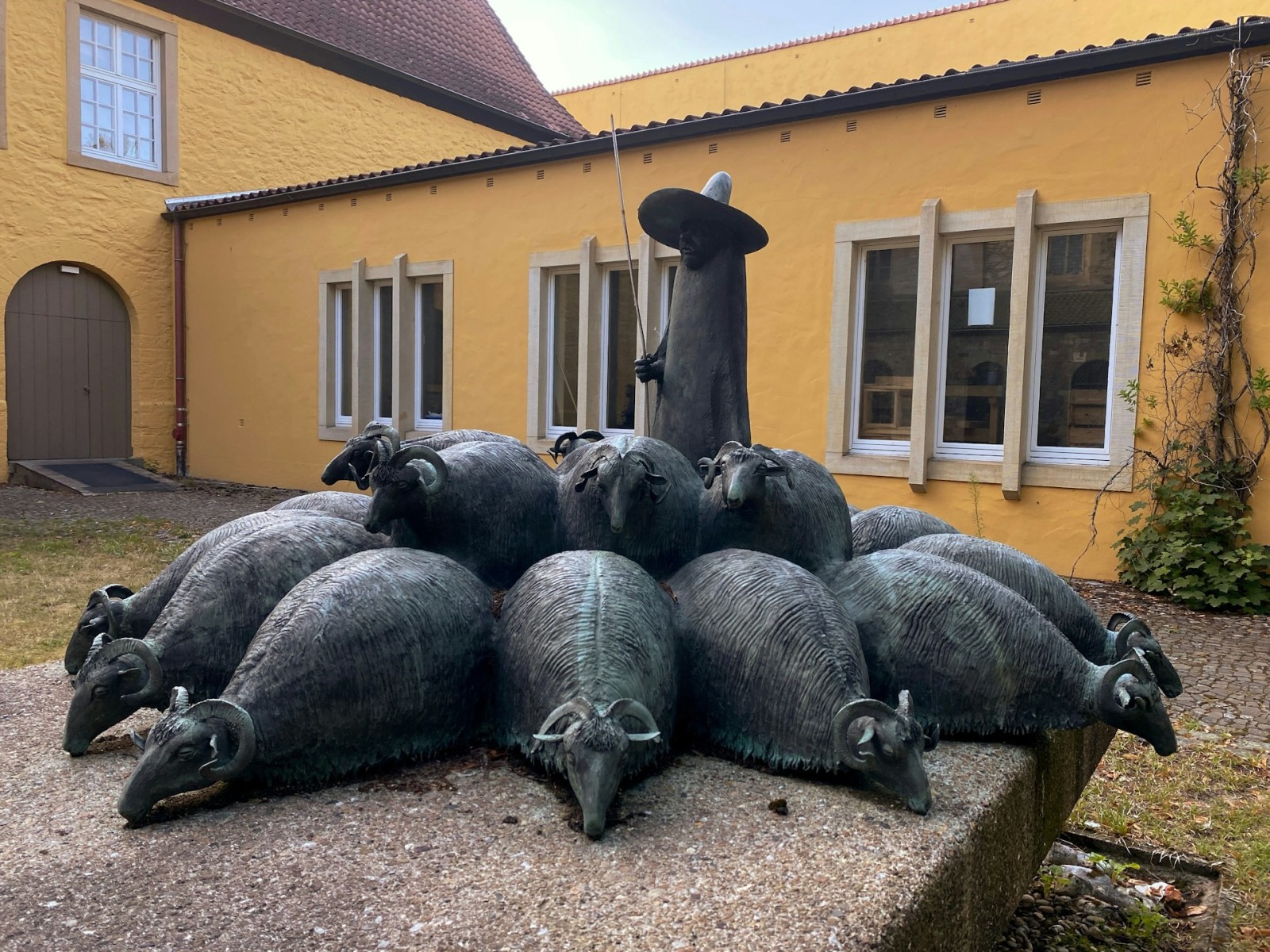
Winter
During the day, usually about 3-6 ° C, at night about 0-2 ° C. Snow falls periodically, but stable snow cover is not always. Water in local lakes and reservoirs is usually about 2-6 ° C, so this time is not suitable for swimming.
spring
In March in the afternoon about 8-10 ° C, in April 13-16 ° C, in May 17-20 ° C. At night, the temperature gradually rises from about 2-4 °C in March to 8-10 °C in May. Water in lakes and other open bodies of water warms up from about 5-8 °C in March to 14-17 °C in May. Spring is suitable for walks, excursions and acquaintance with the historical center.
Summer.
The daily temperature is usually 21-25 ° C, in the warmest periods, values above 30 ° C are possible. At night, most often 12-15 ° C. Water in local reservoirs in warm periods can warm up to about 19-22 ° C. Summer is considered the most comfortable time for walking, cycling, visiting parks and city festivals.
autumn
In September afternoon, usually 18-21 ° C, in October 13-16 ° C, in November 8-10 ° C. At night, the temperature drops from about 10-12 °C in September to 3-5 °C in November. The water after summer remains relatively warm in September – around 16-19 °C, but then cools rapidly. Autumn is well suited for cultural and sightseeing recreation.
Language of communication
The main language in Osnabrück is German. In hotels, restaurants, museums and tourist destinations, many employees can communicate in English. For independent travel, it is advisable to know a few basic German phrases.
Greetings and addresses
When meeting and in an official setting, it is customary to greet the words Guten Tag (“Good day”) or Guten Morgen (“Good morning”). Strangers are usually approached on Sie until the interlocutor himself offers to switch to the informal du. In small shops and establishments, greeting at the entrance is considered a good tone.
Punctuality
In Germany, we appreciate the observance of time agreements. For excursions, business meetings, excursion events and pre-booked services, it is better to arrive on time or a little in advance.
Lines and public space
You should observe the order, do not interfere with other visitors and do not occupy the passages. In public transport, it is advisable to let passengers get off first and then come in. On buses and trains it is recommended to talk quietly.
Silence.
Do not talk loudly in yards, residential areas and near houses in the late evening. In Germany, great importance is attached to the observance of Ruhezeit - a time of rest. This is especially important in residential areas and hotels.
Traffic rules
Pedestrians should cross the road at the designated crossings and take into account traffic light signals. There are a lot of cyclists in Osnabrück, so you need to be careful about the bike lanes and not walk on them unnecessarily.
Bicycles
Bicycles are an important mode of transport. Cyclists should give way where signs and markings require it, and pedestrians should not occupy specially designated cycle lanes.
Alcohol and smoking
Smoking is prohibited in many enclosed public places, as well as where the relevant ban is established. Alcohol can only be consumed subject to local rules and restrictions of a particular establishment or public area. You cannot drive after drinking alcohol.
Garbage and cleanliness
Waste sorting is common in Germany. Garbage must be disposed of in containers intended for it. Packages and other waste should not be left on the streets, in parks and forests.
Visiting churches and religious places
Silence should be observed in churches and churches. It is best not to talk or take pictures of people without permission. If there are restrictions on photography, they must be respected.
Photography
Architecture and public spaces can usually be photographed, but it is advisable to obtain consent when shooting people. In museums and exhibition halls, you need to pay attention to the rules of a particular exhibition.
Tipping
In restaurants and cafes tips are not mandatory, but with good service, you can leave about 5-10% of the amount. When paying, the waiter is often simply called the desired total amount.
Rules in shops and restaurants
In small shops it is customary to say hello to the seller. In restaurants, you should not expect the waiter to bring the bill immediately after the meal is over - it is usually necessary to ask.
Documents
During the trip, you should carry a valid identity document, and if necessary, a visa or other document confirming the right to stay in Germany. It is better to keep the original documents in a safe place, and have a copy or electronic copy separately.
General rules of conduct
Tourists should respect local residents, historical buildings and public areas, follow the instructions of museums, transport and other institutions. Penalties or other penalties may apply for violation of German laws.
1. Greetings and polite words
Hallo! - Hello!
Guten Morgen! - Good morning!
Guten Tag! - Good afternoon!
Guten Abend! - Good evening! - Guten Abent
Auf Wiedersehen! - Goodbye! - Auf Viderzeen
Tschüss! - Goodbye!
Bitte. - Please. - Bitte
Danke. - Thank you. - danke
Vielen Dank! - Thank you very much! - Filen Dunk
Entschuldigung! - Excuse me!
Kein Problem. - No problem. - The problem.
2. Phrases for communication
Sprechen Sie Englisch? - Do you speak English?
Ich spreche nur ein bisschen Deutsch. - I speak a little German. - Their shprahe noor ain bischen deutsch
Ich verstehe nicht. - I don't understand. - Their furstae nichte
Können Sie das bitte wiederholen? - Can you say that again?
Sprechen Sie bitte langsamer. - Speak more slowly, please. - Shprahan zi bitte Langzamer
Was it bedeutet das? - What does that mean?
Können Sie mir helfen? - Can you help me?
3. How to ask the way
Wo ist das Stadtzentrum? - Where is the city center? - East Das State Center
Wo ist der Bahnhof? - Where is the station? - East Der Banhof?
Wo ist die Bushaltestelle? - Where is the bus stop? - In the East di Buschaltestall?
Wie komme ich zum Rathaus? - How do you get to the town hall?
Ist es weit? - Is that far?
Kann ich zu Fuß gehen? - Can you walk there? - Can you walk there?
Links. - Left. - linx
Rechts. - To the right. - Rachts.
Geradeaus. - Straight. - Garadeaus.
Hier. - Here. - chir
Dort. There. - dot
4. Transportation.
Eine Fahrkarte nach Osnabrück, bitte. - Ticket to Osnabrück, please. - Aine Farkarte nah Osnabrück, bitte
Wie viel kostet die Fahrkarte? - How much is the ticket? - How much is the ticket?
Wann fährt der nächste Bus? - When does the next bus leave?
Wann fährt der nächste Zug? - When does the next train leave?
Wo muss ich aussteigen? - Where should I go? - Where should I go?
Isst dieser Bus richtig? Is this the bus that fits?
Ich möchte zum Bahnhof. - I want to get to the station. - Their mehte tsum Banhof
5. At the hotel.
Ich habe eine Reservierung. - I have a reservation. - their habe aine reservirung
Ich möchte einchecken. - I want to move in. - Their mehte ainchaken
Um wie viel Uhr ist das Frühstück? - What time is breakfast? - Mind wi fil ur est das fruit?
Wo ist mein Zimmer? - Where's my number?
Gibt es WLAN? - Do you have Wi-Fi? - Yes.
Können Sie mir ein Taxi rufen? - Can you call me a taxi?
Ich möchte auschecken. - I want to move out. - Their furs are auschaken
6. Cafe and restaurant
Einen Tisch für zwei Personen, bitte. - Table for two, please. - Ainen Tisch Für Zwei Parzonen, Bitte
Die Speisekarte, bitte. - Menu, please. - Spisecarte, bitte
Was empfehlen Sie? - What do you recommend? - What do you recommend?
Ich möchte das bestellen. - I want to order this. - Their mehote das beshtellen
Ohne Fleisch, bitte. - No meat, please. - One flush, bitte
Ohne Alkohol, bitte. - No alcohol, please. - One alcohol, bitte
Die Rechnung, bitte. - Check, please. - Di rehnung, bitte
Kann ich mit Karte bezahlen? - Can I pay with a card? - Can their mit carte bezaalen?
Regional sausages and meat delicacies - in Osnabrück and the surrounding area you can try traditional German sausages, smoked meats and meat products. To travel home, it is better to choose products in factory vacuum packaging and take into account the rules of importation into the destination country.
Westphalian Pumpernickel is a dense dark rye bread characteristic of the neighboring region of Westphalia. It is well preserved and can become an unusual gastronomic souvenir.
Regional honey – local honey can be purchased at markets and farmers’ fairs. A good option for a small edible gift.
Apple and fruit products – the region produces various jams, jams, syrups and other products from local fruits. They are convenient for transportation and are suitable as a gift.
Herbal teas and fees – you can pay attention to German herbal tea mixtures, especially with chamomile, mint, melissa and other traditional plants. They are more related to gastronomic and wellness products, rather than medicines.
Natural cosmetics – German creams, soaps, balms and skin care products are popular with tourists. It is better to choose products with a clear composition and without medical promises.
Herbal balms and care products - in German pharmacies and health stores you can find various remedies based on plant components. At the same time, it is worth distinguishing cosmetics and ordinary wellness products from drugs: the latter should not be bought without understanding their purpose.
Souvenirs with the image of the City Hall of Peace are one of the most characteristic options from Osnabrück. You can find postcards, magnets, mugs, key chains and small decorative items depicting the town hall and the historical center.
Souvenirs on the theme of the Peace of Westphalia – an interesting gift will be small items dedicated to the history of the peace negotiations of 1648: books, postcards, decorative items and reproductions of historical images.
The symbolism of Osnabrück - T-shirts, mugs, bags, badges and other things with the name of the city or its coat of arms will suit as an inexpensive memorable gift.
Products of local craftsmen - in urban markets and cultural events you can find ceramics, jewelry, textiles, wooden products and handmade items.
German chocolate and sweets are a convenient option for gifts. Chocolate, marzipan, biscuits, waffles and seasonal sweets can be chosen, especially if the trip is during the Christmas period.
German tea and coffee are a good option for those who prefer practical souvenirs. In specialty stores you can find interesting regional or unusual mixtures.
Books about Osnabrück - guidebooks, historical books and illustrated publications about the city are suitable for those interested in its architecture, history and the Peace of Westphalia.
What is especially worth bringing - for a practical gift, local honey, tea, sweets and natural cosmetics are suitable; for a gastronomic souvenir - regional bread and packaged delicacies; for a memorable gift - a souvenir with the Town Hall of the World or the symbols of Osnabrück.
Osnabrück is suitable for an independent tourist holiday. When traveling, it is important to follow the usual safety rules, have the necessary documents and medical insurance.
Documents
To travel, you need a valid foreign passport or other document recognized for entry into Germany. For citizens of countries that require a visa, it is necessary to issue a visa in advance. For visa-free entry, the document must meet the requirements of Germany; in particular, it must be valid for at least three months after the planned departure from Germany and issued no more than ten years ago. They may also be asked to confirm the purpose of the trip, the availability of accommodation and return funds.
Health insurance
The traveler is advised to take out insurance for the entire period of travel. For the Schengen visa, health insurance is mandatory: it must be valid throughout the Schengen area and cover the entire period of the trip, with a minimum amount of coverage of 30,000 euros. Even with a visa-free trip, it is advisable to have a policy that includes emergency medical care and, if possible, medical evacuation or return to the homeland.
Emergency services
112 – ambulance and fire service;
110: police;
116 117 - medical care in situations that require urgent medical advice, but do not pose a threat to life.
Number 112 works around the clock and free of charge from mobile and landline phones.
Mobile communications
There are four main mobile network operators in Germany: Telekom, Vodafone, Telefónica (O2) and 1&1. According to the Federal Network Agency, all four networks operate in the country, with other tariff brands able to use the infrastructure of one of these operators. For a tourist, roaming your SIM card or tourist eSIM is usually enough. Before traveling, you should check the cost of mobile Internet in Germany.
Security of documents and money
Passport and a large amount of cash is better not to wear unnecessarily. It is advisable to store valuables in a hotel safe or in an inner pocket. When traveling at the station, on public transport and during mass events, you should carefully monitor your phone and wallet.
Moving around the city
In the historical center, you need to pay attention to bicycle paths and urban transport. When crossing the road, you should use the indicated crossings and observe traffic light signals.
If your passport is lost
If you lose your passport, you should contact the police to confirm the incident, and then contact the diplomatic mission of your country in Germany to resolve the issue of return documents.
How long can you stay in Germany?
For third-country nationals using a visa-free regime or a short-stay Schengen visa, the standard limit is up to 90 days in any 180-day period. These 90 days are counted throughout the Schengen area, not just in Germany. If you need to stay in Germany longer than 90 days, you usually need a national visa or other appropriate type of residence permit.
Citizens of the EU, EEA and Switzerland
The EU/EEA and Swiss nationals have different residence rules, so the 90/180 day limit as applied to short-term trips by third-country nationals does not apply.
Create a query and local guides will offer you the best options

