Independent tourism and recreation in the city of Wuppertal Historical information about the city of Wuppertal...
The history of Wuppertal is unusual in that the city itself is relatively young, but its individual districts have a centuries-old history. Modern Wuppertal appeared only in 1929 as a result of the merger of several independent cities and settlements, primarily Barmen and Elberfeld. Before that, it was they who for centuries determined the development of the Wupper River Valley.
1. The first settlements and the Middle Ages
The territory of modern Wuppertal is located in the valley of the Wupper River, surrounded by the hills of Bergish land. In the early Middle Ages there were small rural settlements, farms and church communities. Gradually, a network of settlements was formed, from which later Barmen, Elberfeld, Cronenberg, Ronsdorf and Fowinkel grew.
One of the oldest historical centers is the Bartender. The settlement of the Barmen-Gemarque district dates back to about VIII-IX centuries. Elberfeld also developed as an important point in the Wupper Valley. Its position on trade routes contributed to the growth of crafts and trade.
In the Middle Ages, the territory was in the sphere of influence of the counts of Berg. The development of settlements was primarily associated with the river: water was used for household needs, mills and the first handicraft industries.
2. The emergence of the craft economy
Of particular importance for the future of Wuppertal was the processing of textiles and metal. Already from about the XV century in the Wupper Valley there were enterprises associated with bleaching fabrics. In 1527, Barmen and Elberfeld were granted the privilege of processing and finishing linen yarn.
Gradually, there were industries that used the energy of the river. Water wheels set in motion the machinery needed to process fabrics, metal and other materials.
By the XVIII century, large textile manufactories began to appear here. Around 1750, textile production became one of the foundations of the local economy. Thanks to this, the settlements in the Wupper Valley became noticeably richer and denser populated.
3. XVIII century: the growth of Barmen and Elberfeld
In the eighteenth century, Barmen and Elberfeld gradually became important centers of trade and production. Weavers, dyers, fabric bleachers, blacksmiths and other artisans worked here.
The development of industry contributed to the emergence of wealthy merchant families. They invested in factories, warehouses, residential buildings and public buildings.
Elberfeld grew especially fast. Through trade and textile production, it gradually acquired the features of a major urban center. The bartender developed in a similar way, but maintained his own economic and social life.
It was during this period that the specifics of the future of Wuppertal were formed: the city developed not around one historical center, but along a valley and river, from several independent settlements.
4. Beginning of the Industrial Revolution
In the late XVIII - early XIX century, the local economy began to move from handicraft to factory production. Mechanized enterprises appeared in the Wupper Valley, and fabric production became much larger.
Of great importance were mechanical machines, steam engines and new technologies for processing metal and textiles. In the XIX century, the Wuppertal Valley became one of the most developed industrial regions of Germany.
Barmen and Elberfeld grew especially fast. Workers from other regions came to them, new quarters, factories, warehouses and shopping streets appeared.
The growth of industry also had a downside. Rapid urbanization has led to overcrowding in working areas, harsh working conditions, and air and water pollution. It was the social problems of the industrial city that later became an important part of Wuppertal's history.
5. XIX century: becoming a major industrial center
In the nineteenth century, Barmen and Elberfeld experienced an industrial explosion. Textiles remained the main direction, but gradually the chemical industry, mechanical engineering, metalworking and equipment production developed.
An important event was the construction of railways. Elberfeld and Barmen received a railway connection, which significantly accelerated the transportation of raw materials and finished products.
The railway connected the industrial cities of the valley with the Ruhr region, the Rhine and other shopping centers. This made local businesses more competitive and strengthened the role of Barmen and Elberfeld in the Prussian economy.
During this period, large factory complexes, apartment houses, villas of entrepreneurs, public buildings, theaters and churches appeared. The architectural appearance of modern Wuppertal was largely formed in the second half of the XIX - early XX century.
6. Social Change and the Labour Movement
The rapid growth of industry created a large working class. Thousands of people worked in factories and lived in densely populated areas near factories.
The living conditions of workers were markedly different from those of wealthy entrepreneurs. For workers, multi-storey houses were built with small apartments and cramped courtyards. One of the typical examples was the Nordstadt district, where in the late XIX - early XX century, affordable housing for textile workers was actively built.
At the same time, wealthy industrialists built spacious villas. Especially famous was the area of Brill, where representatives of wealthy families built large houses with gardens and parks.
Thus, a strong social and architectural contrast arose in the city: luxury villas of the industrial elite appeared near the factories and working quarters.
7. Friedrich Engels and Wuppertal
The name of Friedrich Engels is closely connected with the history of Wuppertal. He was born in 1820 in Barmen in the family of a wealthy industrialist.
From childhood Engels observed the life of the industrial city and its working population. Later, while working in Manchester and studying the condition of the workers, he wrote a work on the condition of the working class in England. His early experience of living in the industrial Wupper Valley also influenced his views.
Today, the historical building of Engels House is connected with the history of Engels, which is part of the complex of the historical center of the city. Together with the Museum of Early Industrialization, it helps to tell about the economic and social development of Wuppertal.
8. The appearance of the famous suspension railway
By the end of the XIX century, the transport system of Barmen and Elberfeld was already under serious strain. The city developed along a narrow valley, so it was difficult to expand land roads.
In the 1880s, the idea arose to create an unusual above-ground transport system. Engineer Eugen Langen developed the project of the suspended railway. In 1887, a commission was set up in Elberfeld to study the project, and soon a similar commission appeared in Barmen. Then the work on the project was combined.
Construction proved to be a complex engineering project. The railway line was supposed to run over the Wupper River and the streets without taking up any extra space on the ground.
The official opening of the Wuppertal Suspension Railway took place in 1901. It connected the eastern and western parts of the valley and became not only the most important form of urban transport, but also a symbol of technological progress.
9. Early twentieth century
By the early twentieth century, Barmen and Elberfeld were major industrial cities. Numerous textile, chemical and machine-building enterprises worked here.
Industrial development was accompanied by the construction of large public buildings. There were theaters, museums, schools, railway stations, administrative buildings and representative villas.
In 1900, Elberfeld opened a new representative town hall building on Neumarkt. Barmen also decided to build a large town hall. Its foundation was laid in 1908, and after the unification of the cities, the Barmen Town Hall became the main building of the city administration.
10. First World War
The First World War changed the lives of Barmen and Elberfeld. Industry was reoriented to military needs, there were problems with food and raw materials.
After the war, the region faced economic difficulties and political instability. In the early 1920s, the Ruhr area was occupied by French and Belgian troops, and the Wupper Valley was near a zone of tension.
The industrial nature of the region made it particularly sensitive to post-war economic crises.
11. The creation of Wuppertal in 1929
Modern Wuppertal emerged as a result of administrative reform. On August 1, 1929, the independent cities of Barmen and Elberfeld were merged, as well as Cronenberg, Ronsdorf and Fowinkel. The Beienburg district also became part of the new urban area.
The town was originally called Barmen Elberfeld. In 1930 it was named Wuppertal after the Wupper River.
The merger was not just an administrative decision. Prior to that, different cities had their own authorities, traditions and interests. Therefore, the new urban community has long maintained a strong independent identity of individual districts.
And today in Wuppertal it is clearly visible that the city consists of historically different parts - Barmen, Elberfeld, Cronenberg, Ronsdorf, Fovinkel and other areas.
12. Wuppertal during the Nazi period
After the creation of a single city, political life changed rapidly. The National Socialists gained representation in the city council in the late 1920s, and after Hitler came to power in 1933, they established control over the city administration and public organizations.
There was resistance to the Nazi regime in Wuppertal. One of the most famous events was the Barmen Declaration of 1934, associated with the protest of part of Protestant theologians against the subordination of the Church to Nazi ideology.
It was here that Kemna camp was established in 1933 and existed until 1934. It contained political opponents of the regime and other people persecuted by the Nazis.
The history of this period remains an important part of the historical memory of the city.
13. World War II and the destruction of the city
During the Second World War, Wuppertal's industry was active in the war effort. The city was the target of air attacks.
The bombing of 1943 was particularly severe. Much of the historic building was destroyed or seriously damaged. The Barmen and Elberfeld centres were hardest hit. Houses, businesses, public buildings and historic neighborhoods were destroyed.
The devastation has led to the fact that modern Wuppertal is a kind of combination of preserved historical buildings, post-war architecture and restored neighborhoods.
14. Post-war reconstruction
After the end of the war, the city faced the need to rebuild a significant part of the infrastructure.
The industry gradually resumed operations. The chemical industry, textiles, engineering and the production of various industrial goods continued to play an important role.
Recovery has been gradual. Some of the historic buildings were preserved and restored, others were replaced by modern buildings.
The suspension railway has also gradually returned to full operation. Already by Easter 1946, she again carried out a full route.
15. Economic development in the second half of the twentieth century
In the postwar decades, Wuppertal remained an important industrial center of North Rhine-Westphalia. Large companies and enterprises related to chemistry, textiles, equipment and consumer goods were developed here.
The city is not only known for its traditional industry. Developments and enterprises related to chemical materials, medical products and new technologies have appeared in and around Wuppertal.
At the same time, the structure of the economy gradually changed. Traditional textile industries declined, and the importance of education, science, services and modern manufacturing increased.
16. Establishing a university
An important stage in modern history was the development of higher education.
In 1972, the Gesamthochschule Wuppertal was established in Wuppertal. Later it received the status of a university, and since 2003 it has been officially called Bergische Universität Wuppertal.
The emergence of the university significantly changed the city. Wuppertal became not only an industrial but also a university center. The city has formed a significant student environment, strengthened scientific and cultural ties.
17. Administrative expansion in 1975
The boundaries of modern Wuppertal were finally formed during the administrative reform of North Rhine-Westphalia.
In 1975, the territories of Dönberg, Dornap and Schöller were annexed to the city. This further increased the territory of Wuppertal and strengthened its position as one of the largest cities of the Bergish land.
18. Wuppertal in the late XX - early XXI century
In the last decades of the twentieth century, the city was gradually rethinking its industrial history. Old factory buildings and working quarters have become part of the cultural heritage.
Special attention was paid to the preservation of historical architecture. Today, there are about 4,500 architectural monuments in Wuppertal. Among them are industrial buildings, villas of entrepreneurs, workhouses, churches and structures of the Gründerzeit era.
At the same time, the city developed a cultural sphere. The theater, museums, historical centers, the university and various cultural venues play an important role.
19. Wuppertal today
Modern Wuppertal is the result of connecting several cities with different history. Its main historical centers remain Barmen and Elberfeld, but each district has retained its own architectural and cultural character.
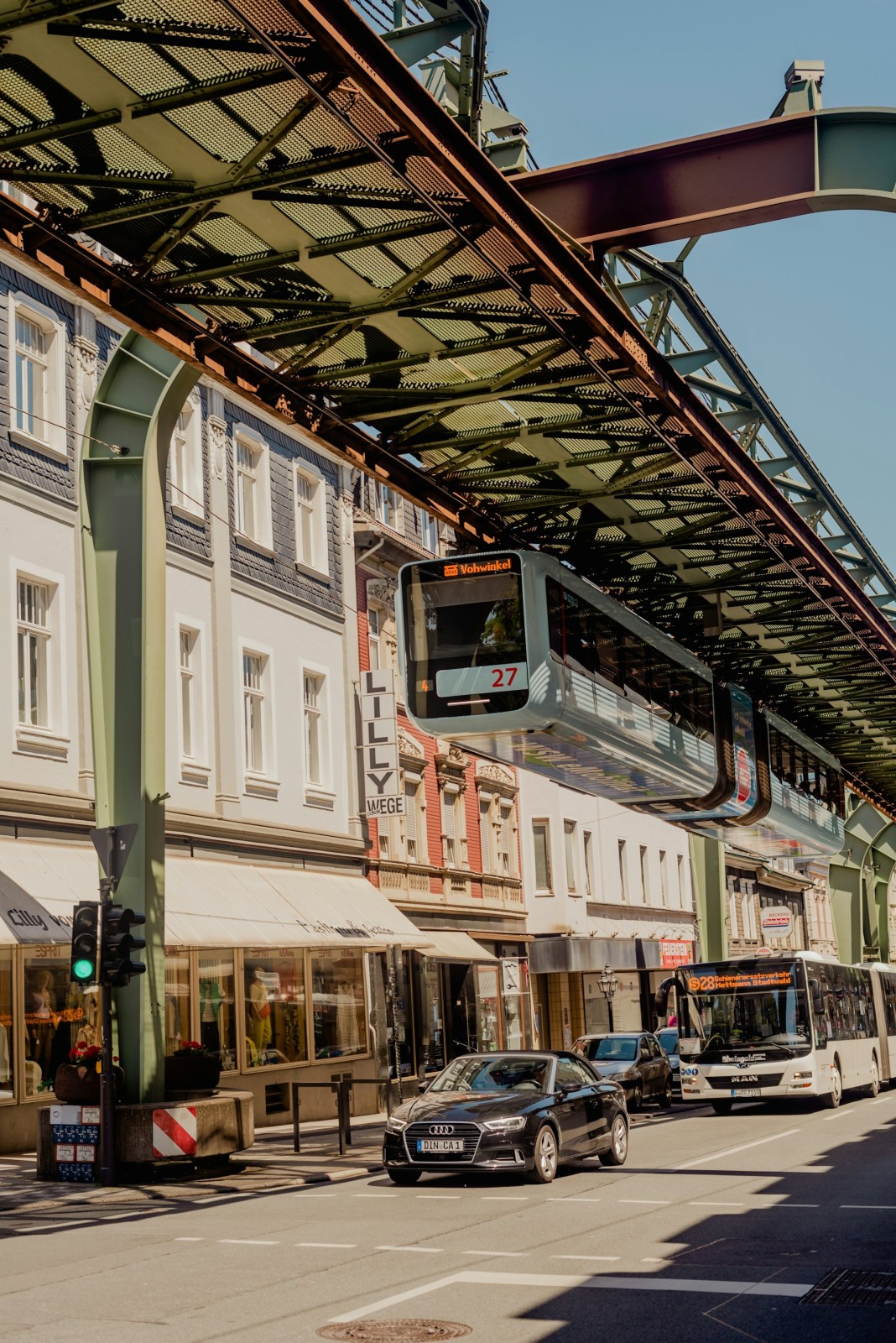
The main symbol of the city is the suspended railway. Its 13 km long line runs mainly over Wupper and connects the eastern and western parts of the city. Currently, it has 20 stations and is both a daily transport and one of the main attractions of Wuppertal.
The history of the city is well traced in its architecture, from old houses and industrial structures to luxury villas of entrepreneurs and post-war development. Therefore, Wuppertal is interesting not so much one historical center, but the opportunity to see how the industrial city, society and urban lifestyle changed over several centuries.
1. The famous suspension railway
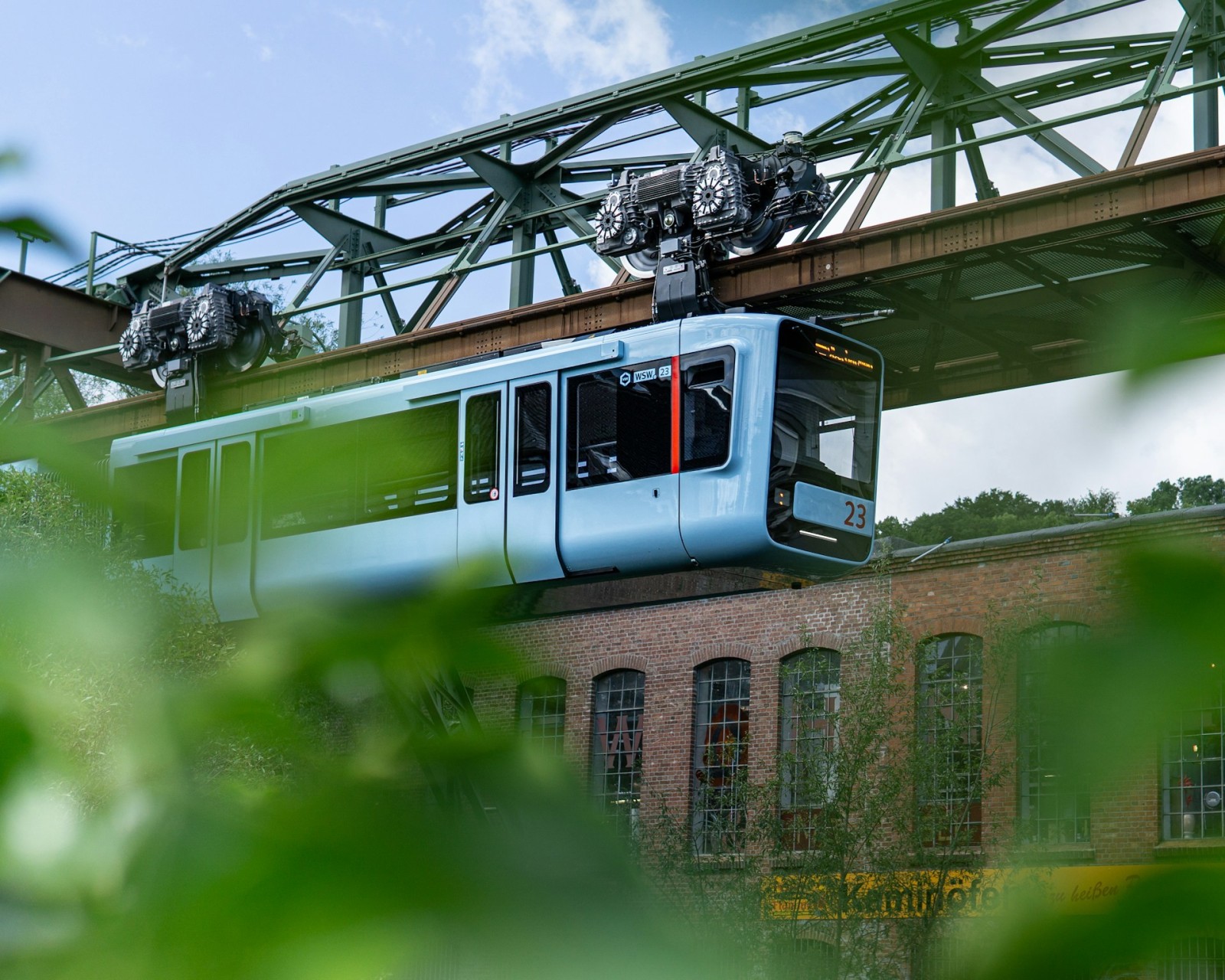
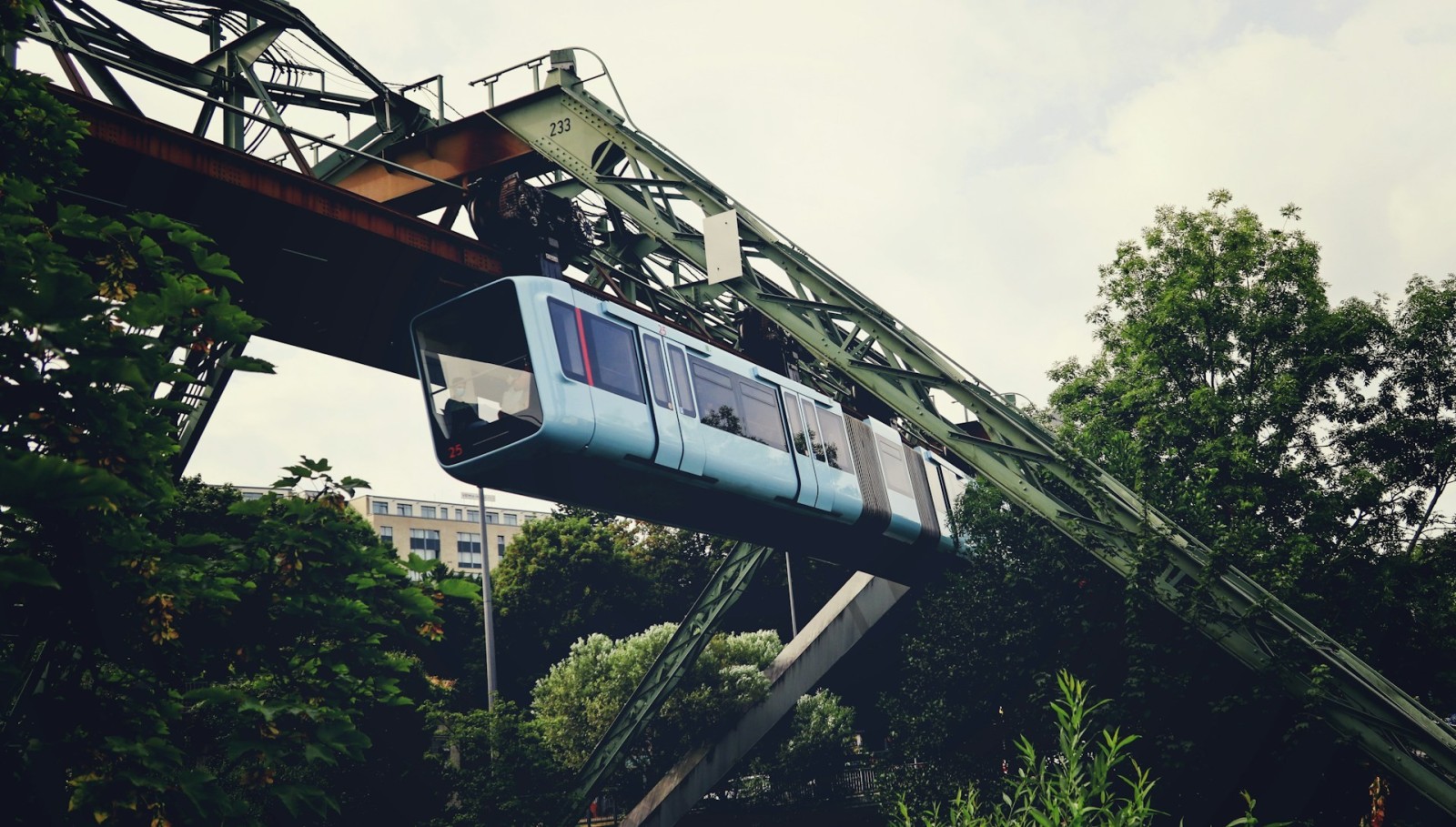
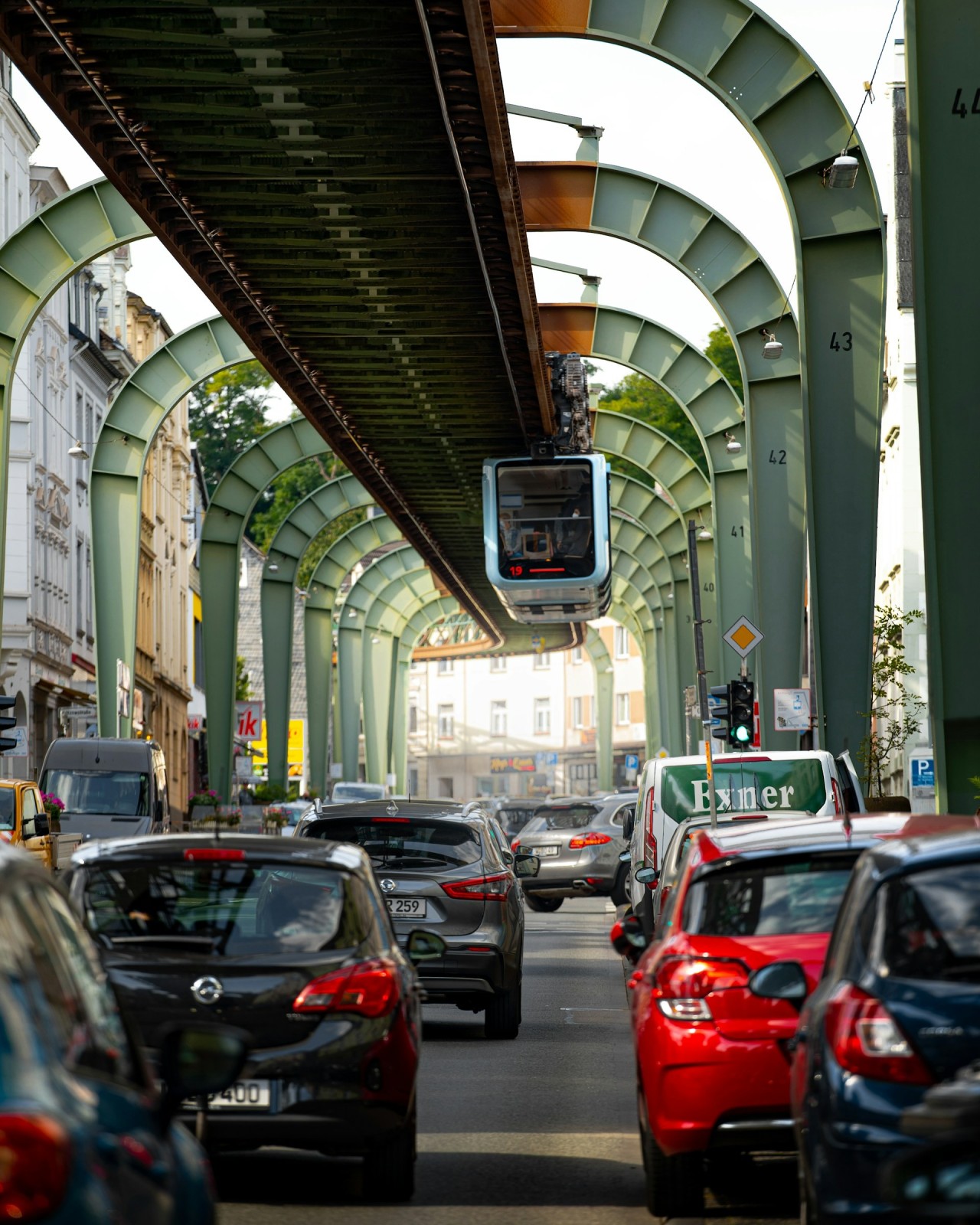
The main reason to come to Wuppertal is the Wuppertal Suspension Railway (Schwebebahn). It has been in operation since 1901 and runs approximately 13.3 km through the Wupper Valley, connecting the eastern and western parts of the city. The train moves mainly over the river, and in some areas - over the streets.
For a tourist, this is both an unusual attraction and a convenient way to get acquainted with the city. The trip allows you to see Wuppertal from above and quickly reach different areas and interesting places. The full route between the end stations takes about 30 minutes.
The railway is connected with the famous story of the elephant Tuffi, who in 1950 jumped out of the car into the Wupper River. This episode has become one of the most famous urban stories and is used today in the tourist symbolism of Wuppertal.
2. Unusual urban architecture
Wuppertal is interesting for lovers of architecture. The city has preserved a large number of buildings of the era of industrial uplift of the XIX - early XX century. Especially noticeable are the houses of the period of Grundership and Art Nouveau, ornate facades, former factory buildings, villas of entrepreneurs and working quarters.
Briller Viertel is especially interesting - an area with numerous representative villas of industrialists. Its architecture allows you to imagine how wealthy the owners of local businesses were during the industrial heyday.
At the same time, you can see a much simpler development of former working areas nearby. This neighborhood shows the social structure of nineteenth-century industrial Wuppertal.
3. Industrial heritage
Wuppertal is especially interesting for travelers who want to see not only palaces and ancient squares, but also the history of industrial Germany.
The city grew thanks to the textile industry, mechanical engineering, chemical production and trade. Therefore, there are preserved factory buildings, industrial structures and other evidence of the early industrialization era.
Industrial history is associated with places dedicated to Friedrich Engels, who was born in Barmen. The history of his family, local industry and the lives of workers helps to better understand how the city developed in the XIX century.
4. Friedrich Engels and the Historical Wuppertal
Wuppertal can attract tourists interested in the history of Germany and Europe, thanks to the city's connection with Friedrich Engels.
In Bartender preserved Engels House (Engels-Haus), the house of the Engels family. It is part of a museum complex dedicated to the history of industrialization and the life of Engels himself.
For the traveler, this is an opportunity to look at the industrial age not only through the architecture of factories, but also through the history of entrepreneurs, workers and social changes of the nineteenth century.
5. Museums and cultural life
Wuppertal’s cultural appeal is much broader than its industrial heritage. The city has art and historical museums, theaters and exhibition venues.
A special place is occupied by the Von der Heydt-Museum with a collection of European art. The Tanztheater Wuppertal Pina Bausch also plays an important role, thanks to which the city gained international fame in the field of modern dance.
Therefore, Wuppertal is interesting not only for history lovers, but also for those who prefer art, theater, modern culture and unusual cultural events.
6. City among the green hills
Despite its industrial past, Wuppertal is remarkably green. The city is located in a valley surrounded by hills, forests and meadows, and large parks are directly within the city limits.
One of the most famous vacation spots is Hardt, with a botanical garden and Elisenturm. There are also large green spaces in Barmen and other areas of the city.
For the tourist, this is especially convenient: after museums, walks through the streets and trips to Schwebebahn, you can quickly switch to a quiet walk among the trees and gardens.
7. Wuppertal Zoo
The Wuppertal Green Zoo (Grüner Zoo Wuppertal) is located in the picturesque hilly part of the city and is considered one of the most famous zoos in Germany.
Its feature is a large amount of greenery and natural landscape. Therefore, a visit to the zoo is more like a walk through a large park complex than a simple inspection of individual enclosures. The zoo contains more than 3,500 animals of about 340 species.
This is a particularly attractive option for families with children, but it is also interesting for adult travelers.
8. Walking and cycling routes
Wuppertal is not only suitable for traditional urban tourism. Through the city there are routes for walking and cycling.
Nordbahntrasse is a former railway line converted into a walking and cycling route. It passes through different parts of the city and allows you to see Wuppertal from unusual angles.
There are other routes, including Sambatrasse, and around the city begin forest and hilly areas of Bergish land.
9. Louisenvirtel District
To get acquainted with the modern atmosphere of the city, you should visit Luisenviertel. This is one of the busiest city quarters with restaurants, cafes, small shops and places for evening rest.
Here Wuppertal no longer looks like an industrial city of the past, but as a modern cultural center with an active urban life.
10. Panoramic views
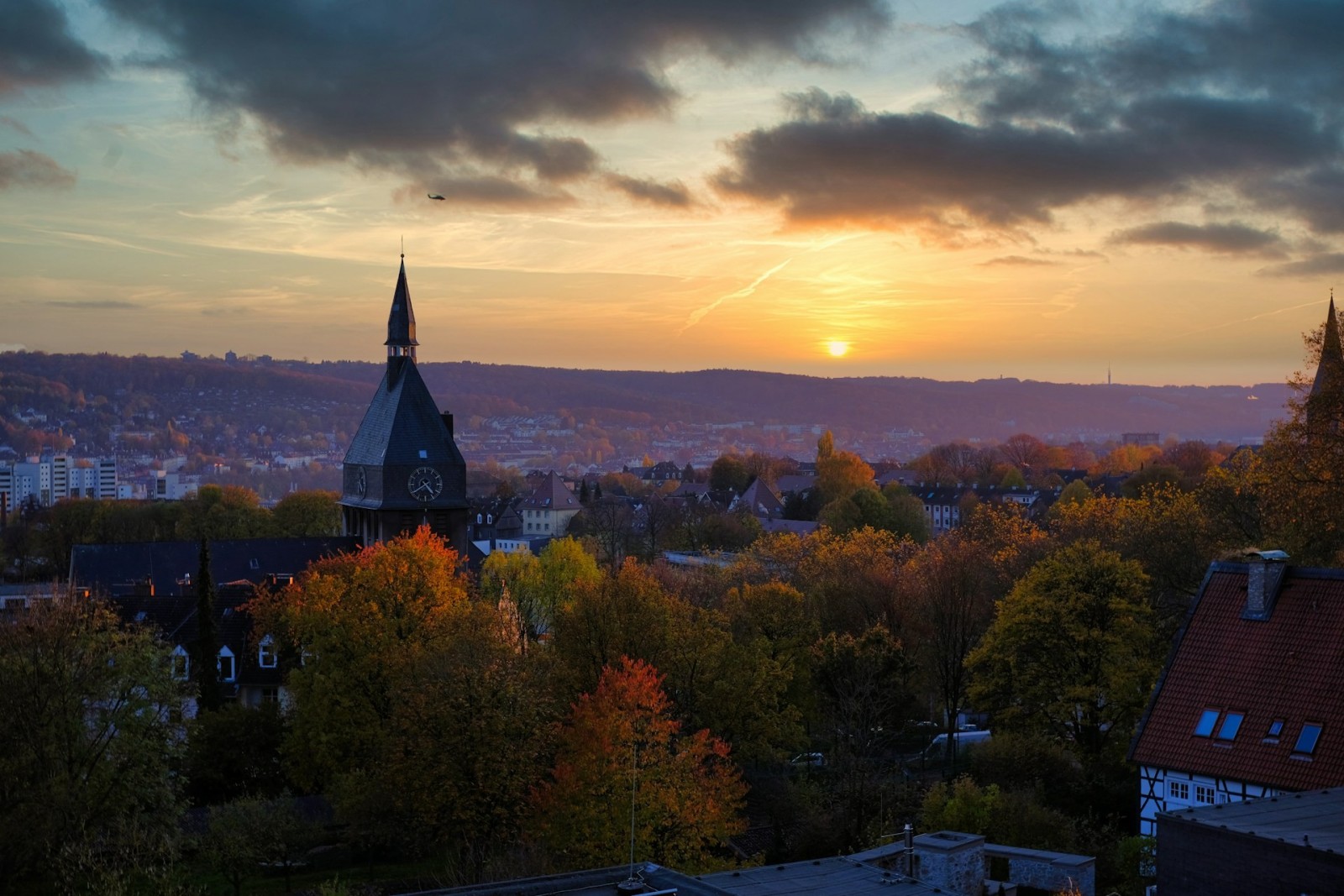
Due to its location in a narrow valley, Wuppertal has an unusual relief. The difference in altitude between areas creates many observation points.
From the upper parts of the city you can see the long Wupper Valley, dense urban development, industrial quarters and green hills around. For photographers, this is especially interesting: the city looks completely different from the river level, from the window of Schwebebahn and from the surrounding hills.
11. Combination of city and nature
The main feature of Wuppertal is the ability to combine several types of rest in one trip.
In the morning you can take a ride on Schwebebahn, then visit the museum or historical district, then go to a cafe or restaurant, and in the evening walk in the park. Outside the central regions, the forests and hilly landscapes of the Bergish land begin.
This combination makes the city convenient for travelers who want a varied program without constant moving between cities.
12. Shopping and gastronomy
In the central areas of Wuppertal there are pedestrian areas, shopping centers, small shops, cafes and restaurants. Especially interesting are the small independent establishments and gastronomic places of Louisenvirtel.
In the local cuisine you can get acquainted with the traditions of the Bergish land, and in the cafe you can try regional pastries and dishes characteristic of the western part of North Rhine - Westphalia.
1. High-level hotels
This category includes modern four-star hotels and small hotels with an increased level of comfort, good location, spacious rooms, breakfasts and additional services.
Vienna House Easy by Wyndham Wuppertal is a modern four-star hotel in the central part of the city, next to the historic town hall and Schwebebahn station. Suitable for tourists who are interested in comfort and convenient location for exploring the city. Vienna House Easy Wuppertal
Postboutique Hotel Wuppertal is a stylish city hotel in the Elberfeld area, close to central attractions and transport hubs. A good option for independent travelers who prefer a modern interior and location in the center. Postboutique Hotel Wuppertal
Park Villa is a more intimate accommodation option in a historic villa. Suitable for those who prefer a calm atmosphere and an individual format of living.
2. Mid-range hotels
This is the most common option for a tourist trip. Usually there is a separate bathroom, Wi-Fi, breakfast for an additional fee or included in the price, as well as a convenient location relative to the center and transport.
Holiday Inn Express Wuppertal – Hauptbahnhof is a practical option near the main station. Especially convenient for tourists arriving by train and planning trips to other cities of North Rhine - Westphalia. Holiday Inn Express Wuppertal - Hauptbahnhof by IHG
Spark by Hilton Wuppertal City Centre is a city hotel next to the station and central Elberfeld. Suitable for both short tourist trips and business travel. Spark by Hilton Wuppertal City Centre
Arcade Hotel is a small city hotel in the center of Elberfeld, convenient for walking through the central streets, visiting museums and trips to Schwebebahn. Arcade Hotel
Hotel Schwaferts is a small hotel in Sonnborn, near transport links and one of the suspended railway stations. Hotel Schwaferts
3. Budget hotels
For economical travel in Wuppertal there are chain hotels with a basic set of services. They are suitable primarily for overnight stays, when most of the day is spent on excursions.
McDreams Hotel Wuppertal-City is one of the most affordable options. The hotel operates in a format with independent online accommodation, provides Wi-Fi and parking. McDreams Hotel Wuppertal-City
B&B HOTEL Wuppertal City-Süd is a practical budget option with Wi-Fi, air conditioning and the ability to accommodate with pets. The chain also offers other options in the city, including B&B HOTEL Wuppertal-City and B&B HOTEL Wuppertal-Oberbarmen. B&B HOTEL Wuppertal City-Süd
B&B HOTEL Wuppertal-Oberbarmen is an option for those who do not need to live in the center and it is more important to reduce the cost of living.
4. Hostels
Hostels are suitable for young travelers, single tourists and those who want to minimize costs.
DJH Youth Hostel Wuppertal is a youth hostel in the Bartender area. Here you can choose a more economical format of accommodation than in a regular hotel. DJH Youth Hostel Wuppertal
Multiple rooms are usually available in hostels, and in some cases, separate rooms. It is also a good way to meet other travelers.
5. Apartments
The apartments are especially comfortable when staying from a few days to a week or longer. In them, you can cook your own food, use the kitchen and feel more independent of the hotel schedule.
In Wuppertal there are different options for urban apartments:
Wuppertal Appartements is an apartment in Wellendahl-Katernberg. Wuppertal Appartements
Appartements am Kleeblatt is an accommodation option in the Elberfeld area, convenient for a longer stay. Appartements am Kleeblatt
Stay with Graf Apartments an der Universität is an apartment near the university part of the city, suitable for those who plan to stay for a few days. Stay with Graf Apartments an der Universität
E&K Apartments In der City is an option for those who want to live directly in an urban environment and use the infrastructure of central areas. E&K Apartments in der City
1. Wuppertal Suspension Railway (Schwebebahn)
The main attraction and symbol of the city is the famous suspended railway. It has been in operation since 1901, runs approximately 13.3 km through the Wupper Valley and has 20 stations. Most of the route runs directly over the river, and in the western section the line runs over the streets.
For tourists, this is not only a landmark, but also one of the most convenient ways to travel between the main areas of the city. The journey from Vohwinkel to Oberbarmen takes about 30 minutes.
Transport: Schwebebahn stations are located along the main city axis; especially convenient stops are Hauptbahnhof, Kluse, Landgericht, Zoo/Stadion and Vohwinkel. From the main station you can quickly get to the central part of the city.
2. Schwebodrom.
Schwebodrom is a museum and interactive center dedicated to the history of the suspended railway. Here you can find out how this unusual transport was created, how the city changed and what role Schwebebahn played in the development of Wuppertal.
This is a good addition to a trip on the railway itself: first you can get acquainted with the history and then drive along the route.
Transport: located in the central part of the Barmen, near Werth Street and Schwebebahn station. It is convenient to get to it by suspended railway and buses.
3. Von der Heydt Museum (Von der Heydt-Museum)
Von der Heydt-Museum is one of the main art museums in the city. The collection covers European art of different periods, especially painting of the XIX-XX centuries.
The museum is located in the heart of Elberfeld, so it is convenient to combine it with a walk through the central streets, shopping, cafes and a trip to Schwebebahn. The city tourist service refers it to the main cultural attractions of Wuppertal.
Transport: Wuppertal Hauptbahnhof can be reached on foot; central bus routes and Schwebebahn are also convenient.
4. Engels House and Museum of Early Industrialization
Museum für Frühindustrialisierung / Engels-Haus is one of the most important historical complexes of the city. He is associated with Friedrich Engels, who was born in Barmen, and talks about the industrial development of the Wupper Valley.
The exhibitions help to show how local factories arose, how entrepreneurs and workers lived and why Wuppertal became one of the most important industrial centers in Germany.
Transport: The complex is located in Barmen, near the Schwebebahn line. The most convenient way to get to the station Adlerbrücke or neighboring stops, and then walk.
5. Briller Viertel (Briller Viertel)
Briller-Firtel is one of the most interesting historical areas of Wuppertal. There are many luxurious villas of industrialists of the late XIX - early XX century.
A walk through the area allows you to see another side of the industrial history of the city: near the factories and working quarters, wealthy entrepreneurs built large houses with decorative facades, towers, bay windows and gardens.
Transport: it is most convenient to get from the central part of Elberfeld by bus, and then continue walking. It is better to explore the area on foot.
6. Louisenviertel
Louisenvirtel is one of the most pleasant areas for walking and evening rest. Here are restaurants, cafes, small shops, bars and historical urban development.
This place should be included in the itinerary after visiting museums or the center: here you can make a stop for lunch or dinner and get acquainted with the modern urban atmosphere of Wuppertal. The city's tourist service also singles out Louisenvirtel as one of the city's characteristic neighborhoods.
Transport: the area is located near the centre of Elberfeld; Hauptbahnhof can be reached on foot or by public transport.
7. The Green Zoo of Wuppertal
Der Grüne Zoo Wuppertal is a large zoo located in the green and hilly part of the city. It contains more than 3,500 animals of about 340 species.
The main feature of the zoo is the natural landscape. It is well suited for family holidays and takes several hours, so it is better to allocate it as a separate part of the tourist program.
Transport: The most convenient way is to take Schwebebahn to Zoo/Stadion station, then walk to the entrance.
8. Botanical Garden and Hardt
The Botanical Garden is located on the territory of Hardt, one of the largest green areas of the city. Here you can combine a walk in the park with plant inspection and panoramic views of the valley.
Nearby is the Elysenturm, a historic tower that is one of Hardt’s recognizable objects.
Transport: from the center of Elberfeld can be reached by bus, and then continue on foot. Some parts of the park are also easily accessible from Schwebebahn stations.
9. Waldfrieden Sculptural Park (Skulpturenpark Waldfrieden)
Skulpturenpark Waldfrieden is an unusual open-air museum located in a forested area. Here modern sculptures are placed directly among the trees and on walking routes.
This place is especially suitable for those who want to combine art and nature. The park is very different from the classical city museums.
Transportation: located in the Bartender area. From the central areas it is more convenient to use the bus, and then walk part of the route on foot.
10. Northern Railway (Nordbahntrasse)
Nordbahntrasse is a former railway line turned into a long walking and cycling route. It passes through different areas of Wuppertal, includes tunnels, viaducts and areas with panoramic views.
The route is especially interesting because it allows you to see the city not from ordinary tourist streets, but from the former railway infrastructure. The total length of the route is about 23 km.
Transport: You can reach different areas by bus or Schwebebahn, and then continue the route on foot or by bicycle. For a full walk it is better to allocate a few hours.
Wuppertaler Karneval (February) The city hosts carnival processions, costumed events, concerts and street celebrations. Especially busy is the festive week before the beginning of Lent.
Easter and spring events - March-April. During this period, small city holidays, fairs, exhibitions, family programs and cultural events are held.
The Luisenfest Festival is spring or early summer. The festival takes place in the Louisenvirtel area and combines street performances, music, gastronomy, shopping tents and entertainment. This is one of the characteristic district events of Wuppertal.
The Olbergfest festival is usually in spring or summer. It is a district festival of the Olberg quarter with music, street trade, gastronomy and a program for residents and guests of the city.
Barmen Live Festival – Spring/Summer Musical city festival of the Barmen district with concerts and performances. It is one of the traditional major district events of Wuppertal.
The Elberfelder Cocktail is a summer cocktail. City event related to music, gastronomy and evening entertainment in the central part of Elberfeld.
Wuppertal 24h live (usually September). Within 24 hours, numerous events, excursions, concerts, presentations and special programs take place throughout the city. Unusual places open that at normal times may not be available to visitors. As part of the last event, the city offered about 100 events per day.
Festival of Cultures and city international holidays - summer-early autumn. Activities dedicated to the multinational culture of Wuppertal are held in different areas: music, dance, national cuisine, crafts and programs for families.
Festivals of contemporary art and culture are held throughout the year, especially in spring and summer. The city regularly hosts exhibitions, art projects, performances, lectures and cultural programs. Their schedule changes annually, so it is better to check specific dates in the city calendar.
Contemporary Dance Festival and Tanztheater Wuppertal Pina Bausch program - during the theatrical season. Wuppertal has an international reputation thanks to the Pina Bausch Dance Theatre. Performances and special programs take place throughout the year.
1. Winter - December, January, February
In winter, the city is cool, but severe frosts are infrequent. The average temperature is about +2 ... +3 ° C, during the day usually +4 ... +5 ° C, at night about 0 ... -1 ° C. December and January are among the wettest months.
Walking will require warm waterproof clothing and shoes. In winter, it is convenient to combine tours of museums, trips to Schwebebahn, visits to theaters and concerts.
The water temperature in the open waters of the region during this period is usually in the range of +3 ... +7 ° C, so bathing is possible only for trained people. In urban pools, the water is much warmer - about +28 ° C.
2. Spring - March, April, May
In spring, the temperature gradually rises: in March, the average is about +5 ° C, in April about +9 ° C, and in May already about +13 ° C. In the afternoon in May, the temperature usually reaches +17 ° C.
March is still quite cool, so for long walks it is better to choose April and May. In May, it becomes noticeably more comfortable to visit parks, the zoo, historical areas and walks along the Nordbahntrasse.
Water in natural reservoirs warms up gradually in spring: about +6 ... +10 °C in March, +9 ... +14 °C in April and +13 ... +17 °C in May. These are indicative values for the open water bodies of the region, not the water temperature in the Wupper River itself.
3. Summer - June, July, August
Summer is the most comfortable time for an active acquaintance with Wuppertal. The average temperature is about +16 °C in June, +18 °C in July and +17.5 °C in August. During the day, usually about +20 ... +22 ° C, although in some periods the temperature can be much higher.
In summer, you can fully use the opportunities of the city: ride on Schwebebahn, visit the zoo, walk in parks, explore Nordbahntrasse, attend outdoor concerts and festivals.
In the natural reservoirs of the region, the water in the summer usually warms up to about +17. +21 °C, and in especially warm periods can reach about +20 ... +23 °C. For swimming, it is better to focus on a specific pond and current measurements.
4. Autumn - September, October, November
In September, the weather is still quite comfortable: the average temperature is about +14 ° C, in the afternoon about +18 ° C. In October, the average temperature drops to about +10 °C, and in November to +6 °C.
September is good for walking and excursions. October gets cooler and the likelihood of rain increases, and November is already more suitable for museums, theaters, exhibitions and other indoor activities.
The temperature of water in open water in September can be about +15. +19 °C, in October - about +11 ... +15 °C, and in November it drops to about +7 ... +11 °C. The actual values depend on the particular lake or reservoir.
1. Language of communication
The official and primary language of Wuppertal is German. In touristic places, hotels, large shops and restaurants, it is often possible to explain in English, especially with young employees. The Russian language is found among local residents and representatives of the Russian-speaking community, but you should not rely on it in everyday communication.
The city has historically felt the influence of the Berg and Rhine cultural region, so in colloquial speech you can hear local features of German pronunciation and dialect expressions. The tourist needs a standard German language.
When addressing strangers, it is better to use the polite forms Guten Tag - "Good afternoon" and Auf Wiedersehen - "Goodbye." In shops and restaurants, greeting before a request is considered a good tone.
2. Politeness and everyday traditions
Germans usually value punctuality, calm behavior and respect for personal space. If a meeting or excursion is scheduled for a certain time, it is advisable to arrive in advance or warn about being late.
In queues, it is customary to wait for your turn and not try to go ahead. In public transport, it is advisable not to occupy seats intended for the elderly, people with disabilities and passengers with young children.
In restaurants and cafes, staff are usually welcomed first, and tips are left after service if the service is liked. In Germany tipping is not mandatory, but is common.
3. Silence and respect for neighbors
In Wuppertal, as in other cities in Germany, much attention is paid to the observance of silence. The city has a night rest period from 22:00 to 06:00, when actions that can significantly disrupt the night silence are prohibited.
Therefore, in a hotel, apartment or rented accommodation, you should not listen to music loudly, arrange noisy parties or talk in high colors at night. Individual homes may have additional internal regulations.
4. Sundays and holidays
In Germany, Sunday is traditionally considered a day of rest. Many shops are closed on this day, with the exception of some permitted shopping Sundays and some shops at stations, gas stations and other special places.
Wuppertal also has local rules governing events, establishments and public order. The city publishes its own existing regulations relating to transport, trade, environment, public order and other areas.
5. Public transport
Buses, trains and city railways must have a valid ticket. Ticketless travel can lead to a fine. It is better to purchase a ticket before the start of the trip and check the rules of its use in advance.
In Germany, public transport is a normal part of daily life, so passengers usually keep order when boarding, do not lock doors and try not to create noise.
6. Rules of conduct on the streets
Do not cross the road at a red light even when there are no cars nearby. Cycling lanes should not be unnecessarily occupied, as cyclists use them as a full part of the transport infrastructure.
Garbage is discarded only in containers intended for this purpose. The city has local rules governing the cleanliness of streets, public order, markets and other issues of urban life.
7. Behavior in museums, churches and historical sites
In museums, it is necessary to follow the rules of a particular institution: somewhere photography is allowed, and somewhere shooting individual exhibits is prohibited. Do not touch works of art and historical objects.
In churches and memorial sites, it is recommended to speak quietly, not to disturb visitors, and observe restrictions on photographing during worship services.
8. Cafes, restaurants and alcohol
Restaurants and bars should follow the established rules of the institution. Alcohol is only permitted under German law and the rules of a particular establishment. Do not appear in public places in a very drunken state or disturb the peace of others.
In Wuppertal, there are separate rules for catering establishments and time limits for some activities. For example, the usual period of restriction of the work of establishments is set from 05:00 to 06:00, and for summer open terraces there are separate rules.
9. Smoking
Smoking should be restricted to places where it is permitted. Public premises have appropriate prohibitions and restrictions, and specific rules may depend on the type of establishment.
10. Photographing people
When shooting strangers close-up, it’s best to ask permission first. This is especially important when photographing children, private events and people who clearly do not want to be shot.
11. Attitude to local traditions
Wuppertal is distinguished by a mixture of industrial heritage, Berg culture and modern urban life. During district festivals, carnivals, concerts and city festivals, you can see a more informal atmosphere. At the same time, the basic rules remain unchanged: respect for others, observance of order and careful attitude to the urban environment.
1. Basic German words
Hello, Hallo. Transcription: Hallo.
Guten Morgen - good morning. Transcription: Guten Morgen.
Guten Tag - good afternoon. Transcription: Guten so.
Guten Abend - good evening. Transcription: Guten Abent.
Auf Wiedersehen - goodbye. Transcription: Auf Viderzeen.
Danke, thank you. Transcription: danke.
Bitte - please/nothing. Transcription: bitte.
Entschuldigung -- sorry. Transcription: Entschuldigung.
Ja - yes. Transcription: me.
Nein, no. Transcription: nain.
Vielleicht, perhaps. Transcription: Fileicht.
Natürlich, of course. Transcription: still life.
Gut's good. Transcription: gut.
Hilfe, help. Transcription: Hilfae.
Toilette is a toilet. Transcription: toilette.
2. Phrases that will be useful to tourists
Sprechen Sie Englisch? - Do you speak English? Transcription: Shprahan zi English?
Sprechen Sie Russisch? - Do you speak Russian? Transcription: Shprahan zi Russish?
Ich spreche nur ein bisschen Deutsch. - I speak a little German. Transcription: their shprahe noor ain bishan deutsch.
Ich verstehe nicht. - I don't understand. Transcription: their fairstae nicht.
Können Sie das bitte wiederholen? - Could you say it again? Transcription: kenen zi das bitte viderholen?
Sprechen Sie bitte langsamer. - Speak more slowly, please. Transcription: Shprahan zi bitte langzamer.
Wie viel kostet das? - How much does it cost? Transcription: Whifil Costa das?
Wo ist die Toilette? - Where's the toilet? Transcription: East di toilette?
Wo ist der Bahnhof? - Where's the station? Transcription: East Der Banhof?
Wie komme ich ins Zentrum? - How do you get to the center? Transcription: Vi come their centrum?
3. Words for travel by transport
Bahnhof is the station. Transcription: Banhof.
Haltestelle, stop. Transcription: Hallestella.
Bus is a bus. Transcription: bead.
Zug - train. Transcription: Zug.
Ticket / Fahrkarte - ticket. Transcription: Ticket/farkarte.
Einfach, one way. Transcription: Einfah.
Hin und zurück - there and back. Transcription: Chin und tsuryuk.
Gleis is the platform/path. Transcription: Glace.
Abfahrt - departure. Transcription: Upfart.
Ankunft - arrival. Transcription: encuncture.
Schwebebahn is a Wuppertal monorail suspension railway. Transcription: Schwebaban.
Wo ist die Schwebebahn? - Where is Schwebeban? Transcription: East di Schwebaban?
Fährt dieser Zug nach Wuppertal? - Is this train going to Wuppertal? Transcription: Firth deser tsug nah Wuppertal?
4. Hotel phrases
Ich habe eine Reservierung. - I have a reservation. Transcription: their habe aine reservirung.
Ich möchte einchecken. - I want to move in. Transcription: their mehte Aincheken.
Wann ist das Frühstück? - When's breakfast? Transcription: van est das frustyuk?
Wo ist mein Zimmer? - Where's my number? Transcription: East Main Zimmer?
Können Sie mir helfen? - Can you help me? Transcription: kenen zi world helfeng?
Gibt es WLAN? - Is there Wi-Fi? Transcription: dying es velan?
Ich brauche ein Taxi. - I need a cab. Transcription: their brauche ain taxi.
5. Phrases in cafes and restaurants
Einen Tisch für zwei, bitte. - Table for two, please. Transcription: ainen tish für zwei, bitte.
Die Speisekarte, bitte. - Menu, please. Transcription: di Spisekarte, bitte.
Was empfehlen Sie? - What do you recommend? Transcription: Are you emphalen zi?
Ich möchte das bestellen. - I'd like to order this. Transcription: their mehte das bashtellan.
Ohne Fleisch, bitte. - No meat, please. Transcription: one fluish, bitte.
Ohne Alkohol, bitte. - No alcohol, please. Transcription: one alkogol, bitte.
Die Rechnung, bitte. - Check, please. Transcription: di rehnung, bitte.
Kann ich mit Karte bezahlen? - Can I pay with a card? Transcription: Can their mit carte bezaalen?
1. Berg coffee table - Bergische Kaffeetafel
This is one of the most characteristic gastronomic traditions of the Bergishes Land region. This is not one dish, but a whole meal with coffee, bread and pastries, various sweet and hearty additives. It is worth trying it in Wuppertal or the surrounding area, and at home you can buy some regional products for making a similar breakfast.
2. Berg waffles
Waffles are a popular regional delicacy. They are served with powdered sugar, cream, cherry and other additives. As an edible gift, you can choose dry waffle products or mixtures for baking.
3. Regional bread and pastries
In the bakeries of Wuppertal, you can buy various varieties of German rye and grain bread, buns and traditional pastries. A good option for a gift are products with a long shelf life.
4. Coffee and tea
Coffee occupies an important place in the Bergische Kaffeetafel tradition, so quality German coffee can be a practical gastronomic gift. You can also buy herbal and fruit tea mixtures, especially if you want to bring something light and convenient for transportation.
5. Local Products and Talwaren
An interesting category of gifts is Talwaren, that is, products that were designed, invented or produced in Wuppertal. In the city tourist shop there are various products of this category.
This is a good option for those who want to bring not just an ordinary German souvenir, but a thing with a direct connection to the city.
6. Herbal teas and natural cosmetics
In pharmacies, natural goods stores and specialized shops, you can find herbal teas, herbal skin care products, creams, soaps and other German cosmetics.
Such products are convenient as a small gift, but should not be considered as a substitute for medicines. When buying medicines or drugs with a therapeutic purpose, it is better to check their composition and rules of import into the country of residence in advance.
7. Souvenirs from Wuppertal Schwebeban
The most recognizable souvenir of the city is the Schwebebahn suspended railway. Her image is found on mugs, kitchen boards, key fobs, puzzles, train models, stationery and other goods.
Especially interesting model Shvebeban - a small layout can be put at home on the shelf as a memory of the journey.
1. Documents
To travel, you must have a valid foreign passport or other document entitling you to enter Germany. For citizens of countries that do not require a visa, the German Foreign Ministry specifies that the passport must be issued no more than 10 years ago and remain valid for at least another 3 months after the planned date of departure from Germany. Depending on nationality, a visa may also be required.
When passing the border control may be asked to confirm the purpose of the trip, the presence of a place of residence, sufficient funds and the ability to pay for the return journey. Therefore, it is advisable to have a hotel reservation, return ticket and proof of financial means.
2. Health insurance
Before the trip, it is recommended to obtain tourist medical insurance. It is desirable that it cover treatment abroad, emergency medical care, hospitalization and, if necessary, medical transportation or return to the homeland.
Even when travelling for only a few days, insurance is useful as medical costs in Germany can be significant.
3. Emergency phones
When calling, it is advisable to name the address or describe the scene as accurately as possible. In an emergency, you can contact the police, rescue service or station staff.
4. Mobile communications
There are four main mobile networks in Germany:
TelekomVodafoneTelefónica Germany (o2)1&1
Germany’s Federal Network Agency lists these four networks as active mobile networks. Other operators and virtual brands can use the infrastructure of one of them.
For the average tourist, it is most convenient to use the roaming of your operator or purchase a German SIM / eSIM. Before traveling, you should check the cost of mobile Internet and calls in Germany.
5. City security
Wuppertal is generally suitable for an ordinary independent tourist holiday. At the same time, as in any large city, you should be attentive to personal belongings in places of large crowds, at the railway station, in public transport and during city events.
Do not leave your phone, wallet or documents unattended. Passports and large amounts of cash are best kept separate from everyday items.
6. Public transport
Special attention should be paid to public transport tickets. Before travelling, make sure that the ticket is valid for the respective route and area. In Wuppertal, tourists actively use buses, trains and the famous Schwebebahn suspension railway.
At stops and stations, you should observe the usual precautions: monitor luggage, do not leave things unattended and check the direction of movement in advance.
7. Bicycles and roads
In Germany, traffic rules must be followed closely. Pedestrians should not unnecessarily walk on bicycle paths, and when crossing the road you need to pay attention to traffic signals and approaching transport.
In Wuppertal, due to the hilly terrain, some streets have quite steep ascents and descents, so when walking, you should count your strength and be especially attentive on the roads.
8. Storage of documents
During the trip, it is advisable to have a copy of the passport, visa or residence permit separately from the original. Electronic copies can be stored in secure cloud storage or on your phone.
The original passport should not be left in the luggage or in the car. If the document is lost or stolen, you should contact the police and contact the diplomatic mission of your country.
9. How long can you stay in Germany?
For citizens of countries that are allowed short-term visa-free entry into the Schengen area, the standard rule is up to 90 days in any 180-day period. This rule applies not only to Germany, but to the Schengen area as a whole: days spent in other Schengen countries are also counted.
If the tourist has a Schengen visa, the period of stay is determined by the conditions of the issued visa. For EU/EEA citizens, other free movement rules apply.
For a stay of more than 90 days, an appropriate basis is usually required, such as a long-term visa or a residence permit.
Create a query and local guides will offer you the best options

