Independent tourism and recreation in the city of Kanyakumari Historical information about the city of Kanyaku...
1. Ancient period
The history of Kanyakumari dates back about 4,000 years. On the territory of the region, Neolithic stone tools dating from about 1500-1000 BC, as well as ceramics of the megalithic and early historical period, were found. Due to its location at the southern tip of India, the area has been associated with maritime trade since antiquity.
2. Kanyakumari in the ancient era
In ancient times, the area was known as Komari. It was mentioned by ancient authors, including Eratosthenes, and later Ptolemy. The territory was under the influence of the Panda Kingdom and was connected with the maritime trade routes of South India.
At the same time, the religious significance of Kanyakumari was formed. The area is associated with the worship of the goddess Kumari, and the temple of Kanyakumari Amman became the main spiritual center of the settlement.
3. Pandya and Chola
In the first centuries AD, the Nanjilad region was located between the possessions of Cher and Pandyev. From the IV to the IX centuries, the influence of the Panda dynasty increased here.
In X-XI centuries the territory was controlled by Choly. Nanjilad was included in the administrative system of the Chola state, which developed agriculture, irrigation, trade and temple culture.
4. Venad and the Medieval Period
After the weakening of Cholov, the region gradually came under the rule of Venad, the state that later became the basis of Travancore.
In the XII-XV centuries, agriculture, temple centers and sea trade were preserved here. The territory remained an important border zone between various South Indian states.
5. Vijayanagar and Nayaki
In the XVI century, the region was in the sphere of influence of the Vijayanagara Empire, and then the Madurayan Nayaks. At the same time, the European presence on the southern coast of India increased.
Portuguese missionaries and traders were active in the region. In Western geographical tradition, the southern tip of India was called Cape Comorin.
6. Travancore and Martanda Varma
In the XVIII century Kanyakumari finally became connected with the state of Travancore. Especially important was the period of Martanda Varma’s reign in 1729-1758, when Travancore greatly expanded its territories and strengthened the state system.
Near Kanyakumari was Padmanabhapuram, the former capital of Travancore. The region developed through agriculture, trade and handicrafts, and the religious importance of Kanyakumari continued to grow.
7. XIX century and British influence
In the XIX century Travancore retained the status of a principality under British supreme influence. Roads, education, trade and the administrative system developed.
Kanyakumari remained an important place of Hindu pilgrimage and gradually gained fame outside of South India.
8. Swami Vivekananda
A special place in the history of the city is occupied by the stay of Swami Vivekananda. In December 1892, he arrived in Kanyakumari and spent several days meditating on a sacred rock off the coast. Later, the Vivekananda Memorial appeared on this place, which became one of the main symbols of the city.
9. Independence of India and the struggle for the status of the region
In 1947, Travancore became part of independent India, and in 1949, together with Cochin, formed the state of Travancore-Cochin.
In the postwar years, there was a movement to join the Tamil-speaking areas of South Travancore to the state of Madras. One of the main leaders of the movement was A. Nesamuni. There were demonstrations, strikes and political demonstrations in the region.
10. Education of Kanyakumari County
As a result of the reorganization of the Indian states on the language principle in 1956, four southern taluks of Travancore - Tovalai, Agastiswaram, Kalkulam and Vilavancod - were transferred to the state of Madras.
On November 1, 1956, Kanyakumari County was formed, the administrative center of which was Nagerkoil. Since then, the territory became part of the current state of Tamil Nadu.
11. Kanyakumari in the second half of the twentieth century
After joining Tamil Nadu, Kanyakumari gradually became a famous religious and tourist center.
An important event was the creation of the Vivekananda Memorial, associated with his stay here in 1892. Later, a monumental statue of the Tamil poet Tiruvalluvar appeared nearby, making the Kanyakumari sea panorama one of the most recognizable species of South India.
In 1948, the remains of Mahatma Gandhi were scattered here; later a memorial was built on this site.
12. 2004 tsunami
On December 26, 2004, the Kanyakumari coast was hit by a devastating tsunami in the Indian Ocean. Coastal settlements suffered serious damage, people were killed and injured. After the disaster, extensive restoration work was carried out.
13. Kanyakumari today
Today Kanyakumari is a famous tourist and pilgrimage center on the southernmost tip of the Indian Peninsula. The city attracts the temple of the goddess Kumari, the Vivekananda Memorial, the statue of Tiruvalluvar, seascapes and the opportunity to watch the dawn and sunset over the sea.
The history of Kanyakumari was formed under the influence of the ancient Tamil kingdoms, Cholov, Pandyev, Venad, Travancore, Europeans and modern India. Therefore, today the combination of ancient religious culture, Tamil heritage and the history of the former Travancore is especially noticeable.
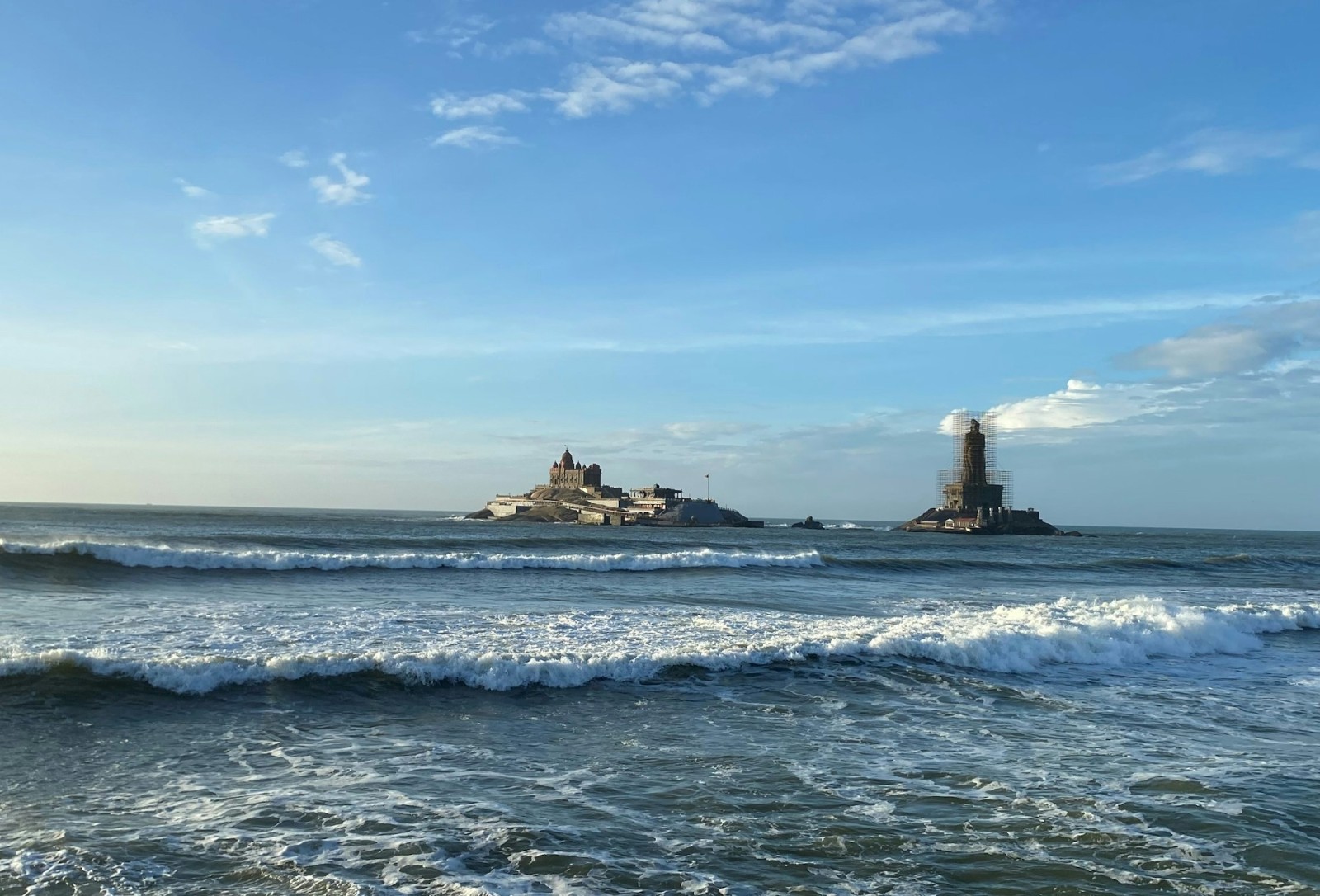
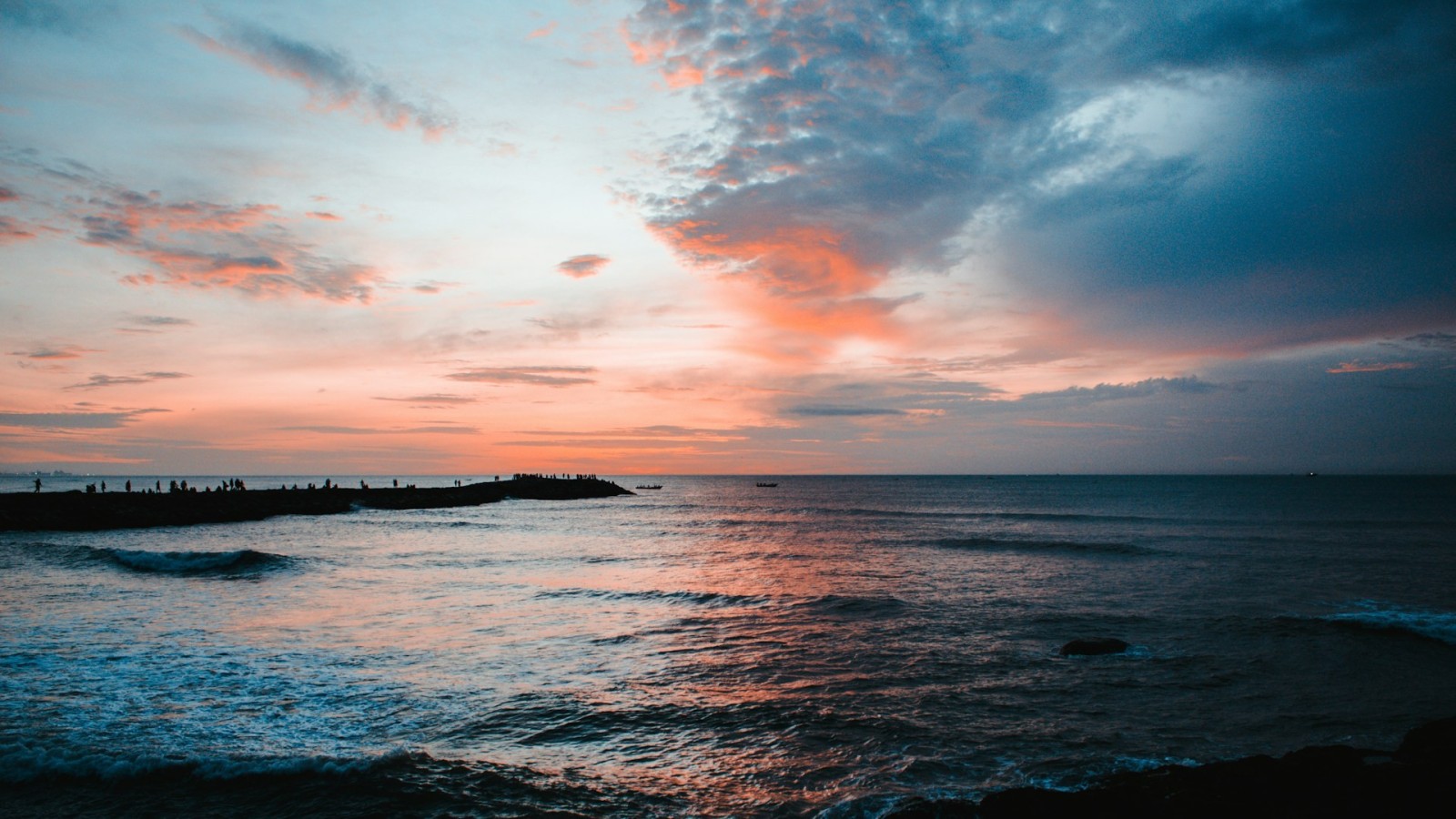
Kanyakumari attracts travelers primarily for its unique geographical location. The city is located at the southernmost tip of mainland India and is surrounded by the sea on three sides. One of the main impressions is watching the dawn and sunset over the water. On the full moon, you can also see the moon and the setting sun on about the same horizon, making the coast especially popular with tourists and photographers.
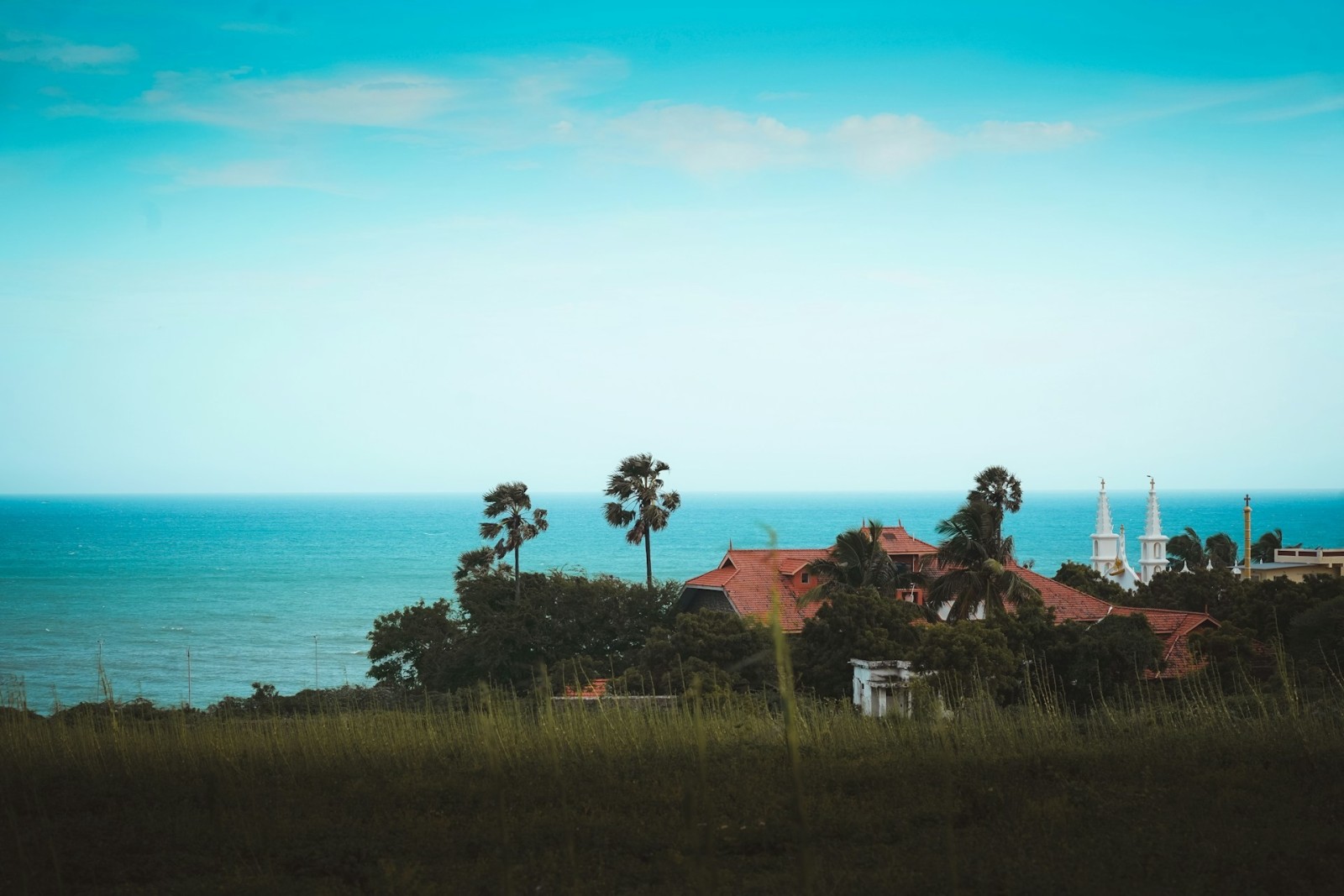
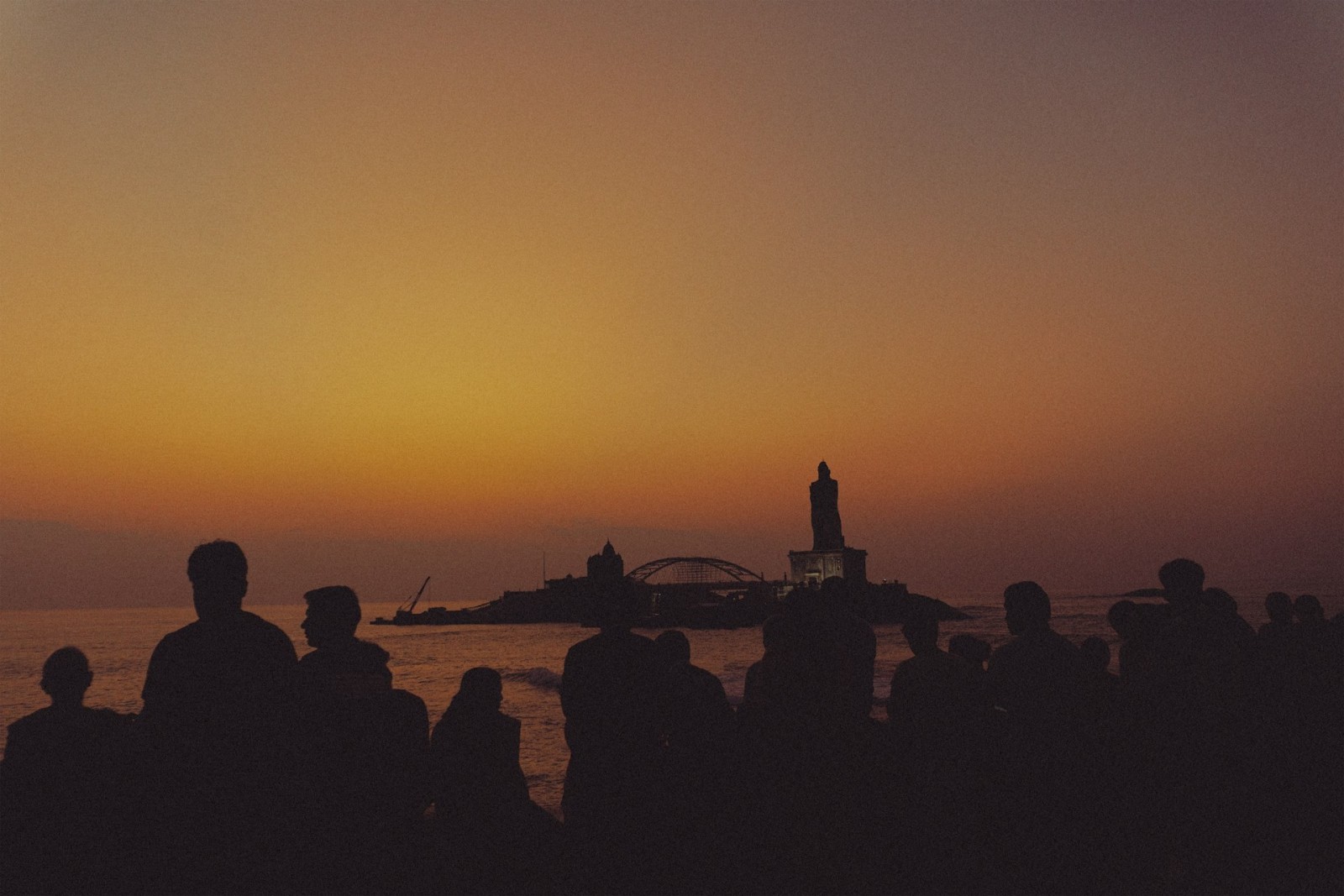
The main symbol of the city is the Vivekananda Rock Memorial, located on a rocky island in the sea. They go to him by ferry, and from the rock itself there is a wide view of the coast and the surrounding waters. Nearby is the famous 133-foot tall statue of the poet and philosopher Thiruvalluvar Statue, which has become one of Kanyakumari’s most recognizable monuments.
For religious travelers, the most important place is the Kumari Amman Temple, dedicated to the goddess Kanyakumari. Its location by the sea creates a special atmosphere, and a visit to the temple allows you to get acquainted with the Hindu traditions of South India.
The city is interesting and historical sights. In the vicinity you can visit the Vattakottai Fort, the Padmanabhapuram Palace, the Jain rock monuments of Chitharal (Chitharal Jain Monuments), the Mahatma Gandhi memorial and the Kamarajar memorial. These places allow you to see different periods of the history of the region - from ancient religious traditions to the era of the Principality of Travancore and modern India.
Kanyakumari is suitable for those who prefer a relaxing holiday. Here you can walk along the coast, watch the sea, visit small temples and local markets, taste South Indian cuisine and get acquainted with the traditions of Tamil Nadu. In the vicinity there are beaches, green areas, waterfalls and natural attractions, so a trip to the city is convenient to combine with a trip to the southern part of the state.
Kanyakumari is especially attractive for travelers who are interested in spiritual places, Indian culture, history, photography and unusual natural landscapes. At the same time, the city is relatively compact, and the main attractions can be seen in a few days. Kanyakumari is easily accessible by train or road, and the nearest major airport is Kerala’s Trivandrum International Airport.
1. Mid-range hotels
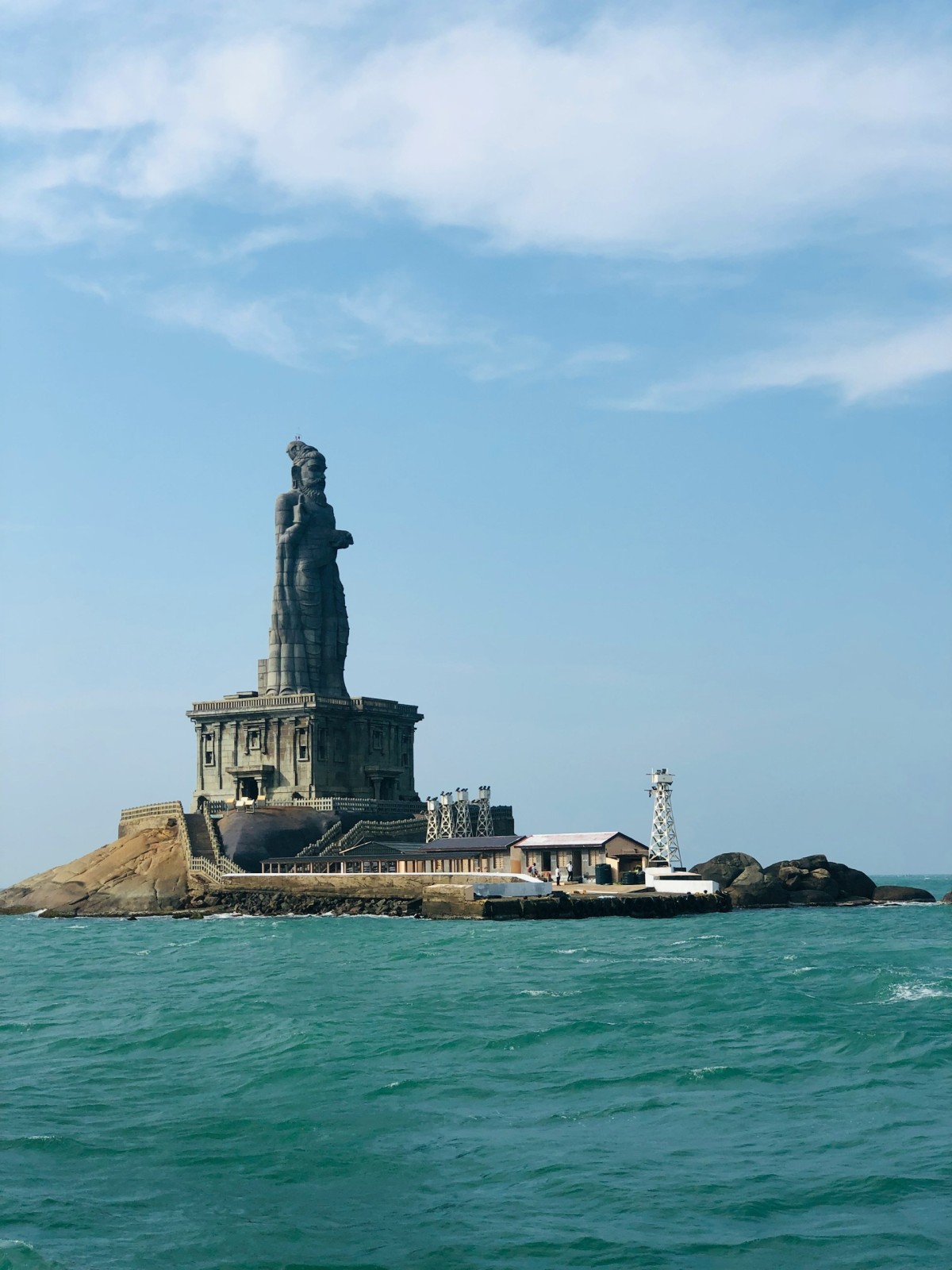
Kanyakumari is dominated by small mid-level urban hotels, many of which are located near the coast, the Kumari Amman Temple and major tourist sites. They usually have air conditioning, Wi-Fi, private bathroom, restaurant or cafe, and some rooms have sea views.
Popular options include The Gopinivas Grand, The Seashore Hotel, Hotel Ocean Heritage, Hotel Sea View and Hotel Temple Citi. The Gopinivas Grand is located in the central part of the city and is aimed at family tourists; the hotel has rooms of different categories, a restaurant and additional services.
2. High-comfort hotels and resorts
For a more relaxing holiday, you can choose resort complexes and hotels with an expanded range of services. They are suitable for travelers who want more space, swimming pool, restaurant, recreation area or spa services.
Notable options include ANNAI RESORTS & SPA, Sandy Resort, Ramraj Resort and Farmdean Holiday Home. Such options are especially convenient for family holidays and travelers who prefer not only to explore the sights, but also to spend time on the territory of the hotel.
3. Budget hotels and tourist hotels
Economical accommodation in Kanyakumari is represented by numerous small hotels and tourist houses. This is a good option for those who come for one or two days and spend most of their time on excursions.
The budget segment includes Hotel Ganesh Lodge, Hotel Melody Park, Triveni Tourist Home, Hotel Tri Sea and Hotel Temple Citi. Such hotels usually offer simple rooms with the necessary minimum of amenities.
4. Guest houses and small family options
In the city and its surroundings there are guest houses, small private hotels and apartments. They are suitable for independent travelers and families who are more important than the price and home atmosphere than a large number of hotel services.
This format is especially convenient for a long trip to the south of India, when Kanyakumari becomes one of the stops of the route.
5. Resort villas and country accommodation
In the vicinity of Kanyakumari, you can stay in small villas, cottages and country resort facilities. They allow you to live away from the busiest central part of the city and are more suitable for those who expect a relaxing holiday by the sea.
For example, Sunshine Villas and some other resorts are located outside the central tourist area. This option is more convenient if you have your own or rented transport.
1. The Vivekananda Rock Memorial
The main attraction of Kanyakumari is a memorial complex on a rocky island in the sea dedicated to Swami Vivekananda. He was here in December 1892 during meditation. The complex consists of several halls and is considered one of the main symbols of the city.
The memorial can only be reached by water. Tourist ferries depart from Kanyakumari pier. The pier from the city center can be reached on foot or by auto-rickshaw or taxi. The official tourist website specifies the possibility of online booking a boat trip.
2. Statue of Tiruvalluvar (Thiruvalluvar Statue)
A huge stone statue of the famous Tamil poet and philosopher Tiruvalluvar is located next to the Vivekananda memorial. Its total height, together with the pedestal, is 133 feet, according to the number of chapters of the work "Tirukkural".
The statue is located on an islet, so it is also accessible by tourist ferry. The visit can be combined with a trip to the Vivekananda memorial.
3. The Glass Bridge (Glass Bridge)
The modern landmark of Kanyakumari is a glass bridge connecting the Vivekananda memorial area and the statue of Tiruvalluvar. It allows you to see the sea under your feet and at the same time serves as a convenient transition between the two main tourist sites.
You can get to the bridge as part of a sea tour to the island attractions. Its visit is conveniently combined with the Vivekananda memorial and the statue of Tiruvalluvar.
4. Kumari Amman Temple (Kumari Amman Temple)
One of the most important religious monuments of the city is the ancient temple of the goddess Kumari Amman. It is located just off the coast and is associated with the legends of the goddess Kanyakumari.
The temple is located in the central part of the city, so it is easy to reach on foot from the waterfront area and most central hotels. You can also use an auto-rickshaw or taxi.
5. Triveni Sangamam and the meeting place of the seas
This is a stretch of coast that is considered the meeting place of the Arabian Sea, the Bay of Bengal and the Indian Ocean. It is one of the most famous places to watch the dawn.
Located in the center of Kanyakumari, near the temple and the pier. You can get there by auto-rickshaw or taxi, but from the central part of the city most tourist places are accessible on foot. The official tourist site also highlights this place among the main attractions of the area.
6. Mahatma Gandhi Memorial (Gandhi Mandapam)
The memorial was built in memory of Mahatma Gandhi and is associated with the history of his ashes in Kanyakumari. The building is located near the sea and belongs to the most notable historical sites of the city.
From Kanyakumari railway station to the memorial about 1 km, so the path can be overcome on foot or by auto-rickshaw. You can also get from other parts of the city by taxi.
7. Fort Wattakottai (Vattakottai Fort)
The round coastal fort of the XVIII century is located about a few kilometers from the center of Kanyakumari. It is interesting for a combination of military architecture, seascapes and green surroundings. Nearby is the coast, so a trip here is convenient to combine with a walk by the sea.
From Kanyakumari you can get here by bus, auto-rickshaw or taxi. The official tourist portal indicates several bus routes from Kanyakumari to Wattakottai.
8. Padmanabhapuram Palace (Padmanabhapuram Palace)
One of the most interesting excursions outside the city is the palace of the former rulers of Travancore. The complex is known for wooden architecture, carved details, ancient halls and traditional interior decoration.
The palace is located about 15 km from Nagerkoil and much further from Kanyakumari itself, so it is most convenient to go by taxi or bus. From Kanyakumari, buses go here through Suchindram, Nagerkoil and Tukkalay.
9. The Suchindram Thanumalayan Temple
The Thanumalayan Temple in Suchindrama is a major religious and architectural monument near Kanyakumari. It is known for its high gopuram tower, stone sculptures and musical columns.
Kanyakumari can be reached by bus via Nagerkoil or by taxi. This is a convenient stop when traveling from Kanyakumari towards Nagerkoil.
10. The Jain Monuments of Chitaral (Chitharal Jain Monuments)
In the vicinity are carved in the rock ancient Jain images and the temple complex of Chitarala. The place combines historical value with beautiful views of the hilly terrain.
From Kanyakumari, the trip takes longer than to city attractions, so it is better to use a car or taxi to visit. Public transport is possible, but less convenient for a tourist trip.
1. Pongal - January
The main harvest festival in Tamil Nadu is usually celebrated in mid-January. Kanyakumari hosts traditional festive events, decoration of houses, cultural performances and folk festivals. For tourists, this is a good opportunity to get acquainted with Tamil customs and national cuisine.
2. Suchindram Temple Festival (December-January)
A major temple festival takes place at the Thanumalayan temple in Suchindrama near Kanyakumari. Celebrations are accompanied by religious ceremonies, processions and traditional music. The holiday attracts a large number of pilgrims and visitors.
3. Kumari Thiruvizha (April-May)
A large cultural festival dedicated to the art and musical traditions of Tamil Nadu. On the stage performers of classical and folk dances, concerts of traditional music and theatrical performances. Popular art forms include Bharatanatyam, Kathakali, Kargattam, folk dances and musical performances with Nadaswaram and Tavil.
4. Chithra Pournami (April-May)
The full moon festival is particularly interesting in Kanyakumari due to the location of the city at the southern tip of India. At this time, people come here to observe the unusual combination of sunset and moonrise over the sea. The holiday is accompanied by religious rites and a large number of visitors.
5. Kumari Amman Temple Festival (May)
One of the main temple festivals of the city takes place for about ten days. The program includes religious ceremonies and processions with the festive image of the goddess Kumari. This is a particularly interesting time to explore the religious traditions of southern India.
6. Vaikasi Visakam (May-June)
Traditional ten-day religious holiday, which is celebrated in the temples of the area. Holidays are accompanied by rituals, processions and cultural events.
7. Masi Magam (February-March)
A religious holiday that falls on the month of Masi according to the Tamil calendar. The Kanyakumari area hosts temple ceremonies and festive events related to Hindu traditions.
8. Mandaikadu Kodai Festival (February-March)
Ten-day temple festival in Mandaikadu. Religious ceremonies and processions take place every day, and on the most significant days a large number of pilgrims gather. Additional bus flights are organized for their transportation.
9. Navratri (Navaratri) - September-October
A nine-day festival dedicated to the goddess Durga and other manifestations of the feminine divine principle. In the Kumari Amman temple, special ceremonies are held, and the festival of Vijayadashi ends. In the city you can see festive decorations, religious processions and cultural performances.
10. Cape Festival (Cape Festival) - October
One of the most interesting festivals for tourists is Kanyakumari. It usually lasts about three days and is dedicated to the cultural heritage of the city. The program includes music, dance and traditional performances. The events take place against the background of the main natural feature of Kanyakumari - the meeting place of the three seas.
11. Saint Francis Xavier Festival (November-December)
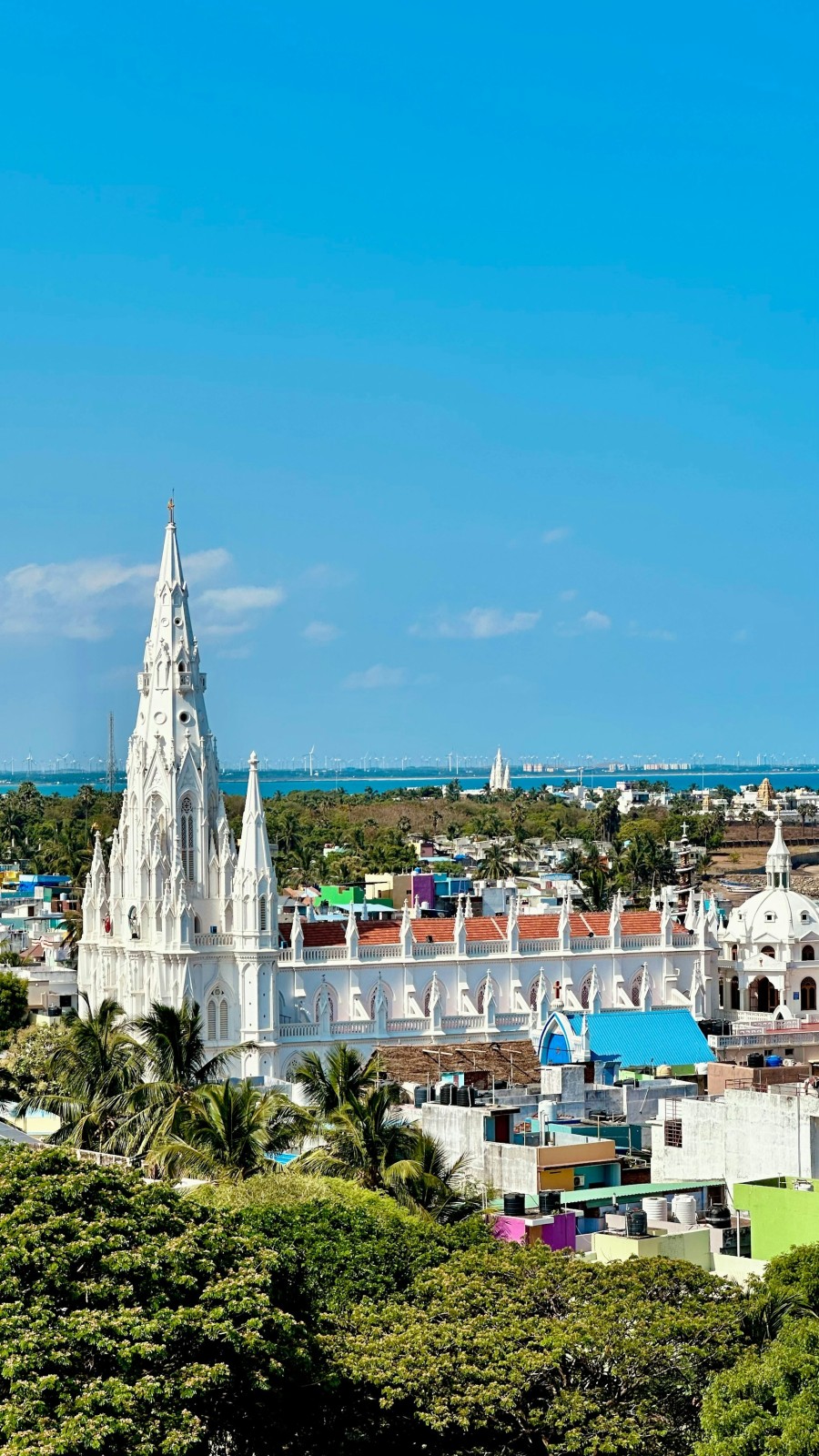
The ten-day annual celebration takes place at St. Francis Xavier Cathedral in Cottar, Nagerkoil district. It has a Christian character and is accompanied by divine services, processions and festive events.
12. Margazhi Festival (December)
The month of Marghazi is one of the most significant periods of the Tamil religious and musical calendar. The temples host services, music programs and traditional cultural performances.
1. Winter - December, January and February
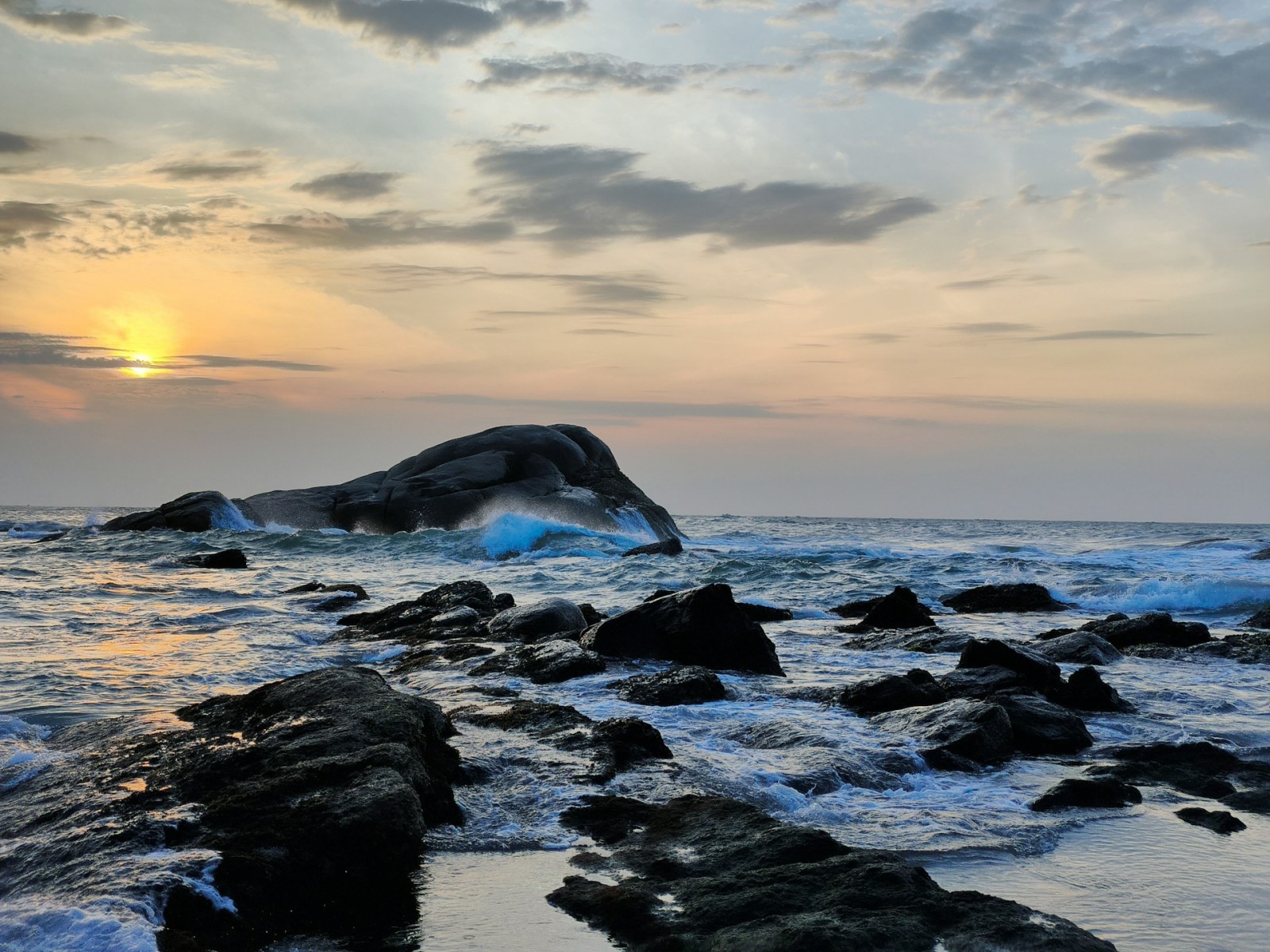
In winter, Kanyakumari is warm and relatively dry. During the day, the air temperature is usually about 29-31 ° C, at night - about 23-25 ° C. The temperature of the sea water is about 27-28 ° C, so swimming is comfortable.
January and February are considered one of the most comfortable months to travel: rainfall is low, humidity is lower, and the weather is well suited for walking, excursions and relaxing on the coast.
2. Spring - March, April and May
It gets hotter in spring. In March, the daily temperature is about 31-32 ° C, in April and May it can reach 32 ° C and higher. At night, it is usually around 25–27 °C.
The sea remains very warm - about 28-30 °C. In April and May, humidity increases, so long excursions in the middle of the day can be tiring.
At the same time, spring is interesting with festive events, including temple festivals, and in April-May you can catch the period of Chitra Purnima and see unusual views of the sun and the moon over the sea.
3. Summer - June, July and August
In summer, the air temperature decreases slightly compared to April-May and is usually about 29-31 ° C during the day and 24-26 ° C at night. The water temperature remains at about 28-29 ° C.
During this period, the likelihood of rain and cloudiness increases, but Kanyakumari does not experience such a sharp cold snap as many European resorts. The morning and evening hours are suitable for the trip, when the heat is felt weaker.
4. Autumn - September, October and November
In September, the weather is still warm: about 30 ° C during the day and 25-26 ° C at night, the sea temperature is about 28-29 ° C.
In October and especially November, rainfall increases. November is one of the rainiest months of the year, so trips can be accompanied by cloudy weather and showers.
At the same time, the temperature remains high - about 30 ° C during the day, and the sea maintains a comfortable temperature.
1. Language of communication
The primary language of Kanyakumari is Tamil ( ). It is used by locals, signage and most religious and cultural events. In the tourism sector, English is widely used, so in hotels, tourist places, restaurants and when communicating with drivers, you can usually explain yourself in English.
Hindi can also be found in the tourist environment, but you should not count on it everywhere. A few simple words in Tamil are well received: for example, Vanakkam means “hello” and Nandri means “thank you.”
2. Dress
In ordinary tourist areas, there is no strict dress code, but when visiting temples, you should dress with restraint. It is advisable to cover shoulders and knees, avoid too open clothes.
In religious places, it is especially important to comply with local requirements: some temples may have additional rules for visitors. Shoes are usually taken off before entering. The Ministry of Tourism of India also recommends that appropriate clothing and shoes be taken off before visiting certain religious sites.
3. Behavior in temples
Kanyakumari temples are active religious sites, so behave respectfully there. Do not talk loudly, interfere with praying, touch shrines or enter the fence.
Photography inside temples is allowed only where permitted. If there is a ban on shooting, it must be respected.
4. Communication with locals
In Tamil Nadu, politeness and a calm manner of communication are valued. When dating, you can use the traditional greeting “vanakkam”. It is not recommended to raise your voice, defiantly argue or show irritation due to the peculiarities of local service.
It is advisable to show additional respect when addressing the elderly.
5. Religious traditions
Kanyakumari is an important Hindu pilgrimage center, so religious traditions are noticeable in everyday life. During temple festivals, the streets can be filled with pilgrims, processions, and trade tents.
Tourists should be calm about religious ceremonies and do not interfere with the participants of the ceremonies. During the big holidays, it is also best to consider the large number of people and possible traffic restrictions in advance.
6. Food and daily habits
In traditional South Indian cuisine, rice, coconut, spices, lentils and vegetables are widely used. In many establishments, it is customary to eat with your hands, especially traditional dishes, but the tourist can use cutlery.
If you do not eat spicy dishes, it is better to tell the waiter in advance. Vegetarian cuisine is very common in the region.
7. Alcohol
The rules for the sale and consumption of alcohol in India vary by state. Alcohol cannot be consumed in public places. In Kanyakumari, it should only be consumed where permitted, such as in licensed establishments or according to hotel regulations.
8. Smoking and electronic cigarettes
Smoking is banned in many public places in India and is only allowed in designated areas. E-cigarettes and related products are banned in India and should not be imported into the country.
9. Photography
Ordinary tourist sites and cityscapes can be photographed, but in temples you need to pay attention to special prohibitions. Caution is also needed near security and public infrastructure facilities: the use of cameras and binoculars in such locations may raise questions.
10. Behaviour on beaches and by the sea
Local restrictions should be observed on the coast and do not enter the water in dangerous conditions. Don’t be alone on the beach after dark. If there are warnings from rescuers or local authorities, they must be respected.
11. Public conduct
Kanyakumari is a fairly conservative religious region. Tourists should avoid excessively demonstrative behavior in public places, especially near temples and during religious ceremonies.
12. Laws
When traveling, it is necessary to comply with the laws of India. Drugs are particularly heavily regulated: illegal possession and use can lead to serious criminal consequences. Also, you can not violate the rules of stay of foreigners, engage in prohibited photography or transport prohibited items.
At mass events, religious holidays and demonstrations, police and local authorities should comply. In India, large crowds are sometimes accompanied by traffic restrictions or other safety measures.
1. Greetings and polite words
Vanakkam - hello, hello. Pronunciation: vanakkam.
Nandri, thank you. Pronunciation: nandri.
Paravaillai - you're welcome, it's okay. Pronunciation: paravillai.
Dayavuseithu – please be kind. Pronunciation: daivuseidu.
Mannikavum: Sorry, sorry. Pronunciation: Mannicavum.
Aam, yes. Pronunciation: aam.
Eli (Illai) - No. Pronunciation: Illai.
Sari -- okay, okay. Pronunciation: sari.
Nalla irrukking? (Nalla irukkeenga?) - how are you? Pronunciation: nalla irukkenga?
Nandru irukken - I'm doing well. Pronunciation: Nandru Irukken.
2. The most useful words
Thanni is water. Pronunciation: tanny.
Saapadu - food, eating. Pronunciation: saapada.
Thani is a separate, separate thing. Pronunciation: tani.
Kaasu is money. Pronunciation: kaasu.
Vilai (Vilai) - price, cost. Pronunciation: wilai.
Kattayam - definitely, exactly. Pronunciation: Kattayam.
Wendum - need, want. Pronunciation: Wendum.
Wendaam - don't need to, don't want to. Pronunciation: Vendaam.
Ang? - Where? Pronunciation: enga?
Evvalavu? how much? Pronunciation: euvalava?
Eppo? When? Pronunciation: Eppo?
Anna? - What? Pronunciation: Enna?
3. At the hotel.
Ennaku Orru Rum Wendum. (Enakku oru room vendum.) - I need one room. Pronunciation: Ennaku or Rum Wendum.
Irrukka Reserve? (Reservation irukka?) - Any reservations? Pronunciation: reserve irrukka?
Inga Wi-Fi Irrukka? (Inga Wi-Fi irukka?) - Is there Wi-Fi? Pronunciation: Inga Wi-Fi irrukka?
Tunney Kideikuma? (Thanni kidaikkuma?) - Can I get water? Pronunciation: Tanny Kideikuma?
Evalava Kaasu? (Evvalavu kaasu?) - How much is it? Pronunciation: euvalava kaasu?
4. Restaurant and café
Sapada Kideikuma? (Saapadu kidaikkuma?) - Can I order food? Pronunciation: Saapadu Kideikuma?
Enna coming? (Idhu enna?) - What is it? Pronunciation: I'm coming enna?
Karram Vendaam. (Kaaram vendaam.) - Not sharp, please. Pronunciation: karam wendam.
Tanni Kodunga. (Thanni kodunga.) - Give me some water, please. Pronunciation: Tanny Kodunga.
Kanakku codunga. (Kanakku kodunga) - Bring the bill, please. Pronunciation: Kanakku Kodunga.
I'm going rumba poured irrukku! (Idhu romba nalla irukku!) - It's very tasty / very good! Pronunciation: I'm going romba nalla irukku.
5. Transportation
Bus enga irukku? - Where's the bus? Pronunciation: bass enga Irukku?
Railway station enge? (Railway station enga?) - Where's the train station? Pronunciation: Railway Station Eng?
Ennakku Kanyakumari is a big fan. (Enakku Kanniyakumari poganum.) - I have to go to Kanyakumari. Pronunciation: Ennaku Kanyakumari poganum.
Enge Poga Wendum? (Enga poga vendum?) - Where should I go? Pronunciation: enga poga wendum?
Going euvalav? (Idhu evvalavu?) - How much does it cost? Pronunciation: I'm going evvalava?
Konjam Cammi Paniunga. (Konjam kammi pannunga) - Make it a little cheaper, please. Pronunciation: kongjam kammi pannunga.
6. In the temple.
Kovil Enge? (Kovil enga?) - Where's the temple? Pronunciation: kovil enga?
Sappatu Edukkalaama? (Sappadu edukkalaama?) - Can I take pictures? Pronunciation: Sappadu edukkalaama?
Ulle Pogalama? (Ulle pogalama?) - Can I come in? Pronunciation: ulle pogalama?
Seruppu enge vekanum? (Seruppu enga vekkanum?) - Where do I put my shoes? Pronunciation: Seruppu enga vekkanum?
When visiting temples, it is especially useful to ask permission to take photographs and follow the instructions of the ministers.
1. Seafood
Kanyakumari is a large fishing area, so seafood occupies an important place in the local cuisine. It is worth trying fish curry meen kuzhambu, crab in spicy nandu masala sauce, as well as fresh fish, shrimp and other seafood.
2. Tapioca and fish
One of the characteristic combinations of southern India is boiled or cooked with tapioca spices with a fish dish. This is a simple, hearty and quite unusual for a European tourist local food.
3. Dosa, Apam and Other Foods of South India
When traveling, you should try dosa, wada, apam, kutta and other dishes of Tamil cuisine. In Kanyakumari are also popular sweet avial, banana pancakes and fruit drink paazha sharbat.
4. Coconut products
Coconut is widely grown in the Kanyakumari area and is used in local cuisine. From the trip you can bring coconut oil, dried coconut and products based on it. The area is also known for a large number of coconut plantations.
5. Spices
A good practical souvenir is local spices: black pepper, cloves, nutmeg, tamarind and spice mixtures. Various spicy crops are grown in the area, and official tourist materials separately mark local spices as a suitable gift.
It is better to buy spices in a factory or well-packed package with an indication of the composition and shelf life.
6. Tea and coffee
In the northern part of the district, tea and coffee are grown, so you can buy local tea or coffee when traveling around the neighborhood. This is a convenient edible souvenir that is easy to transport and store.
7. Honey
Local honey also refers to products that can be purchased in the region. When buying for transportation home, it is better to choose a factory-packed product with a label. The district uses a quality certification system for a range of agricultural commodities, including honey and spices.
8. Ayurvedic and herbal remedies
In southern India, traditional Ayurvedic oils, herbal mixtures, soaps and cosmetics based on coconut, herbs and plant extracts are widespread. They can be considered as traditional cosmetic and health products, and not as a substitute for drugs.
If you buy funds with therapeutic promises, it is advisable to choose factory packaging with composition, shelf life and instructions.
9. Seashell products
One of the most characteristic souvenirs of Kanyakumari is small products made of seashells: decorative figures, keychains, jewelry, frames and various marine compositions. Such products are easy to transport and they remind you of a trip to the southern coast of India.
When buying, you should choose products from legal materials and avoid souvenirs from rare or protected marine animals.
1. Documents
To enter India, a foreign tourist needs a valid foreign passport and an Indian visa or a suitable electronic visa. For e-Visa, the passport must have a validity period of at least 6 months at the time of application and at least two blank pages. When traveling, it is also recommended to have copies of your passport, visa, air tickets and accommodation booking separately from the originals.
When applying for an e-visa, you should keep the ETA confirmation and have it when traveling. The Indian authorities also require the completion of electronic entry forms in the prescribed cases.
2. Insurance
For travel, it is advisable to obtain medical insurance valid throughout India. It is desirable that it includes hospital treatment, emergency care, transportation to a medical facility and medical evacuation if necessary.
It is especially important to check the policy restrictions for outdoor activities, motorcycle rides, water activities and other potentially risky activities. Travel guidelines for India also advise having insurance covering treatment and possible medical evacuation.
3. Emergency services phones
The main emergency number in India is 112. Through it you can call the police, fire service or ambulance. The number works as a single emergency response system.
For tourists, it is enough to remember:
112 - a single number of emergency services; 108 - ambulance in a number of regions; 101 - fire service; 100 - police.
The priority number for an emergency is 112.
4. Medical security
In Kanyakumari, it is worth paying special attention to drinking water and food hygiene. Tourists are advised to consume bottled water with intact packaging, be careful about street food and wash fruit well.
Due to the hot climate, it is necessary to use sunscreen, drink enough water and avoid prolonged exposure to direct sun in the middle of the day.
Before traveling, you should also check the current recommendations for vaccinations and diseases common in India.
5. Road safety
When traveling on Kanyakumari, you need to take into account heavy traffic and local traffic characteristics. When traveling by auto-rickshaw or taxi, it is better to use official or proven services.
If a tourist rents a motorcycle or scooter, it is necessary to have the appropriate documents and use a protective helmet. At night on unfamiliar roads it is better not to make long trips.
6. Coastal security
The sea around Kanyakumari can be turbulent. Swimming should be done only in permitted places and take into account the warnings of rescuers and local authorities.
Do not go far into the water at strong waves, especially near the rocky coast. During bad weather, sea excursions and trips to island attractions may be limited.
7. Personal items
In tourist areas, it is recommended to monitor your phone, wallet, passport and bank cards. Do not carry all the money and documents at the same time.
It is better to keep the original passport in a safe place, and during excursions have the necessary copy and documents that are required for a particular trip.
8. Mobile communications
In India, there are major operators Airtel, Jio, Vodafone Idea (Vi) and BSNL. For the tourist, the most practical option is usually a local SIM card or eSIM if the device supports it.
When buying an Indian SIM card, you will need to pass the subscriber identification procedure. For example, Airtel specifies a passport and documents confirming identity and address among the documents for registration of the connection.
For a trip to Kanyakumari, it is desirable to have a mobile Internet: it is useful for navigation, calling transport, contacting the hotel and using emergency services.
9. Alcohol and drugs
Illicit narcotic substances are illegal in India and liability for their possession and transportation can be serious.
Alcohol is regulated by state and local laws. It should be used only where it is allowed. In public places it is better not to drink alcohol.
10. Religious places
When visiting temples, it is necessary to observe local rules: remove shoes where it is required, dress modestly enough and do not take pictures of prohibited areas.
You should be especially respectful during religious ceremonies and public holidays. Tourists should not interfere with pilgrims or try to enter closed rooms for visitors.
11. Money and bank cards
Indian rupees are used in the city. Cards are accepted by many hotels, restaurants and large stores, but small outlets, markets, autorickshaws and some local establishments are more convenient to pay in cash.
It is better to have a small amount of cash and not display large amounts of money in public places.
12. How long can you stay in India without leaving?
The duration of stay is determined by a specific visa.
According to the current rules of the Indian e-Visa, a 30-day tourist visa allows you to stay in the country for up to 30 days. Annual and five-year e-Tourist Visas allow multiple entries, but the total stay on them should not exceed 180 days during a calendar year.
That is, for an ordinary tourist there is no general rule “you can stay in India for 90 days without leaving”. It is necessary to check the terms and conditions of the issued visa. The e-Visa is also non-renewable and is not convertible to another type of visa.
Create a query and local guides will offer you the best options

