Independent tourism and recreation in the city of Galway Historical information about the city of Galway 1. Em...
1. Emergence of the city
The territory of modern Galway was inhabited in ancient times by Celtic tribes who were engaged in fishing, agriculture and trade. The first written records of the settlement date back to 1124, when King of Connacht Thordelbach Ua Konhobayr built a fortification at the mouth of the Corrib River. It was called Bun Gaillimhe. Due to its location on the Atlantic Ocean, the settlement gradually became an important trading point.
2. The Norman Conquest and Development of the City
In the XIII century, Galway came under the control of Anglo-Norman feudal lords. In 1232, Richard de Burgo founded a stone fortress around which a fortified city formed. Gradually, city walls, towers, gates, churches and commercial squares appeared. By the XV century, Galway had become one of the most important settlements in western Ireland.
3. The Rise of Trade and Fourteen Tribes
In the XV-XVII centuries Galway experienced a period of economic prosperity. The city actively traded with Spain, Portugal and France, exporting wool, leather, fish and agricultural goods. Power was in the hands of fourteen powerful merchant families known as the Tribes of Galway. They controlled the trade, administration and construction of the city. In 1484, Galway received a royal charter, enshrining his rights to independent city government.
4. Architecture and cultural development
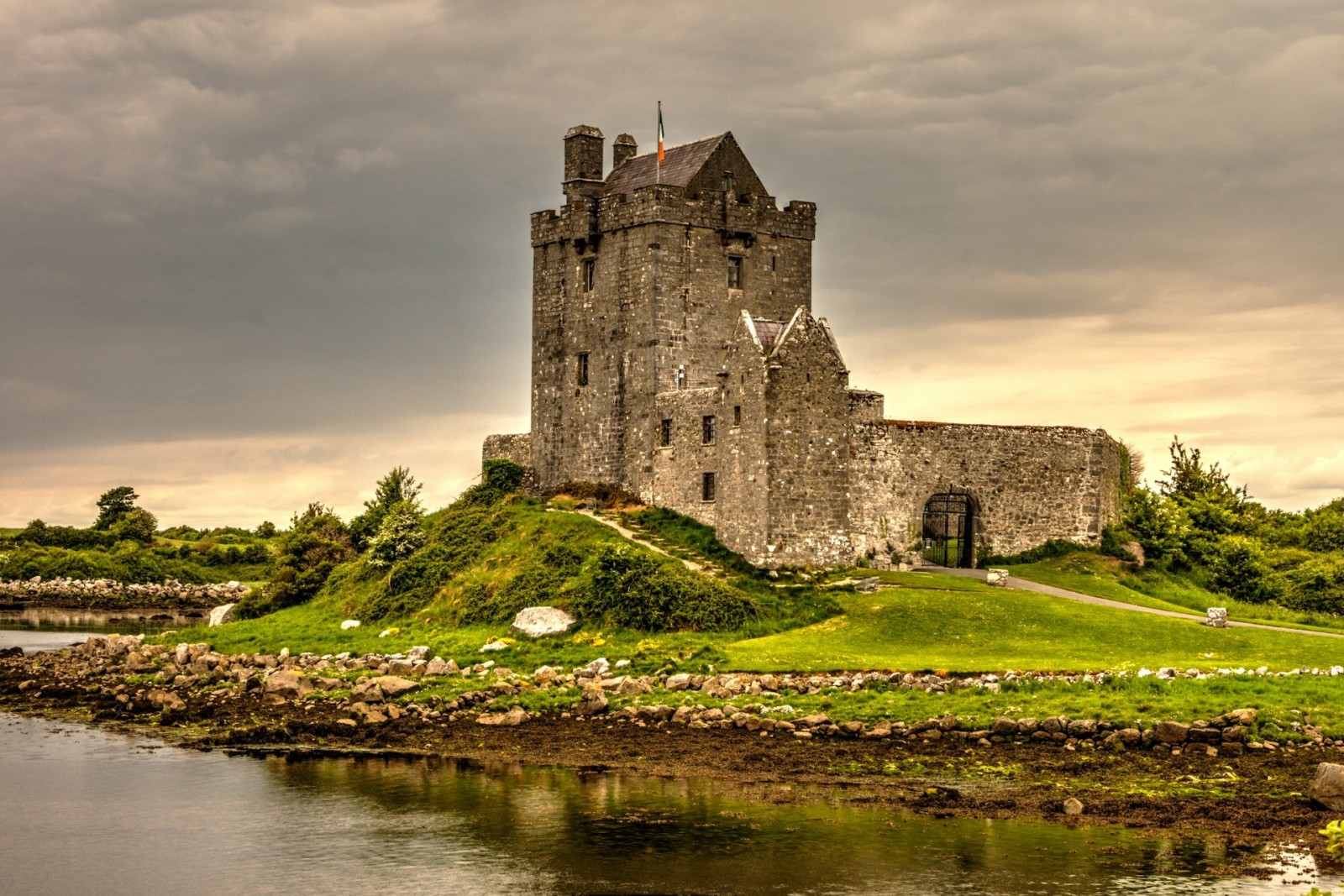
Trade wealth contributed to the construction of stone mansions, churches and fortifications. Among the surviving monuments of this period are the Church of St. Nicholas, Lynches Castle and the Spanish Arch, built in the XVI century to protect the port area. Education, crafts, religious life and musical traditions developed.
5. War and economic decline
In the seventeenth century, Galway became involved in military conflicts between Irish Catholics and English troops. In 1652, the city surrendered to the army of Oliver Cromwell. Many Catholic merchant families lost property and influence. In 1691, the city again suffered during the war of supporters of James II and William III. Trade weakened and Galway's economic importance gradually declined.
6. XVIII-XIX centuries and the Great Famine
In the XVIII century, Galway developed slowly, retaining the importance of a regional trading and fishing center. Ancient fortifications were gradually destroyed, part of the walls were dismantled to expand the streets. The Great Irish Famine of 1845-1852 caused mass mortality, poverty and emigration. In the second half of the XIX century, the development of railways and port infrastructure improved transport links.
7. XX century and modern development
At the beginning of the twentieth century, Galway residents participated in the Irish independence movement. After the formation of the Irish Free State in 1922, the city gradually began to recover. Great attention was paid to the preservation of the Irish language and national traditions. The National University of Ireland in Galway was founded in 1970 to promote education and science.
8. Modern Galway.
Today Galway is one of the main cultural and tourist centers of Ireland. The city is known for medieval architecture, traditional music, theaters, festivals and university life. In 2020, it became the European Capital of Culture. Galway’s historical heritage is preserved in ancient streets, churches, castles and port facilities, which combines centuries-old history with modern cultural life.
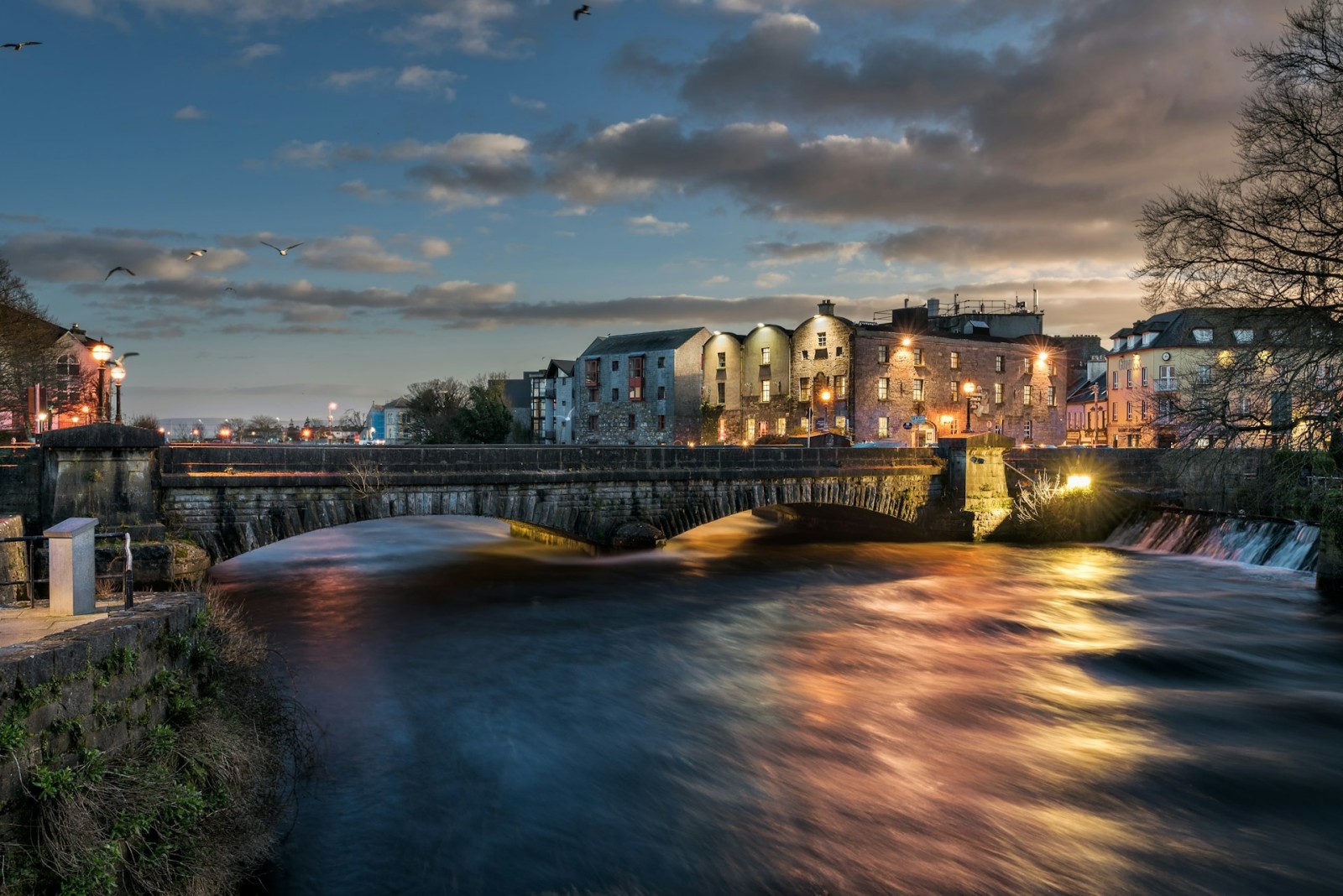
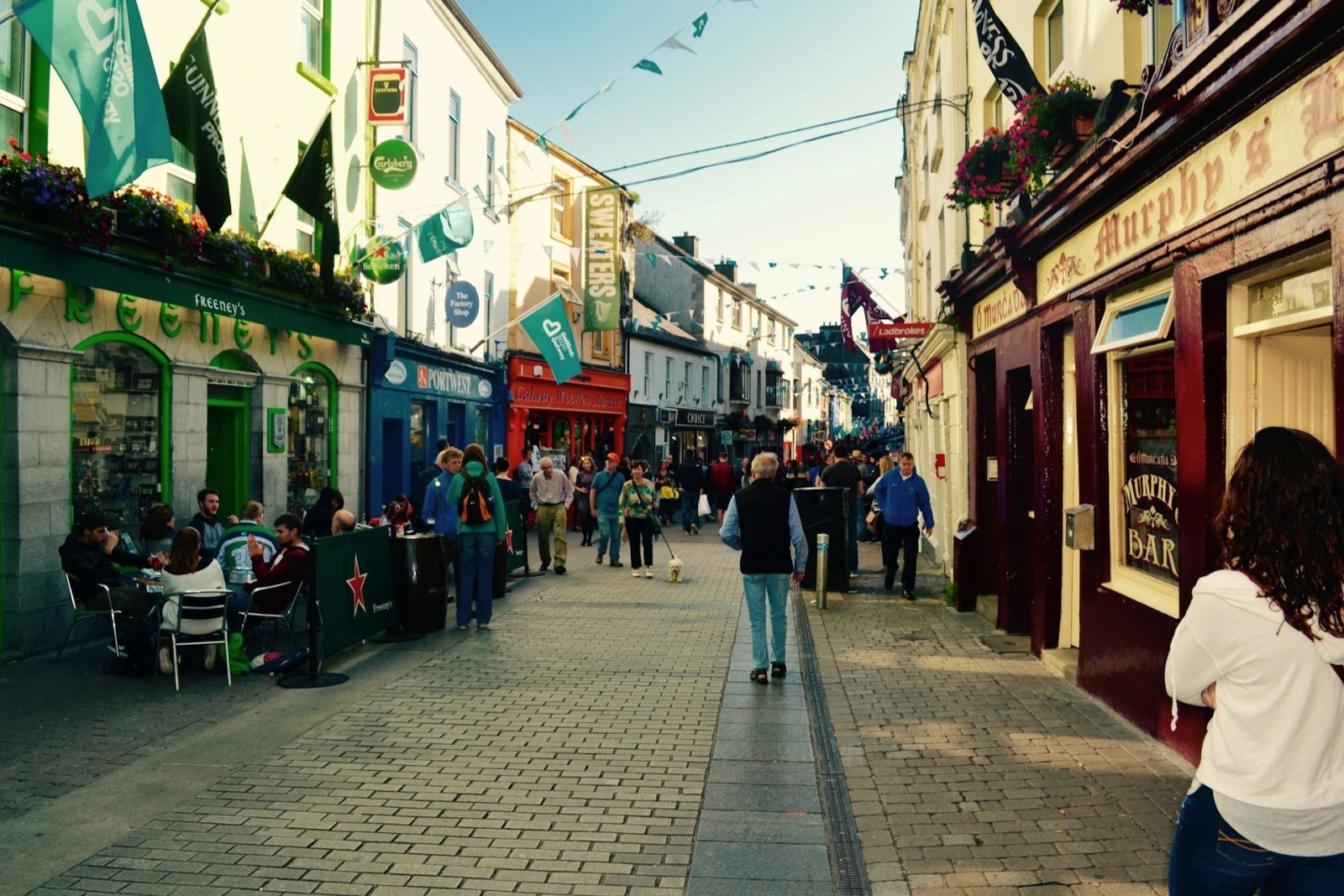
1. Historical atmosphere. The central part of the city has preserved narrow medieval streets, ancient stone buildings, churches and merchant mansions. Walking through Quay Street and Shop Street allows you to get acquainted with the historical look of Galway, visit small shops, cafes and traditional Irish pubs.
2. Cultural life. Galway is considered one of the main cultural centers of the country. It regularly hosts musical concerts, theater performances, art exhibitions and festivals. Especially popular are street musicians performing traditional Irish music.
3. Natural attractions. The city attracts lovers of seascapes and walks in the fresh air. Along the coast is the Salthill promenade with beaches and panoramic views of the Atlantic Ocean. From Galway, it is convenient to go to the famous Moher Rocks, Connemara National Park and the Aran Islands.
4. National cuisine. In local restaurants, you can try fresh seafood, oysters, mussels, salmon, traditional Irish stew, soda bread and dishes from local products. Galway is especially known for oyster traditions and gastronomic festivals.
5. Festivals and entertainment. Among the most famous events are the Galway International Arts Festival, the International Oyster Festival and the Galway Film Festival. They attract artists, musicians, filmmakers and tourists from different countries.
6. Sea rest and excursions. Ferries depart from the city port to the Aran Islands, famous for stone fences, ancient fortresses and traditional way of life. Sea trips, fishing, cycling and hiking routes along the coast are popular.
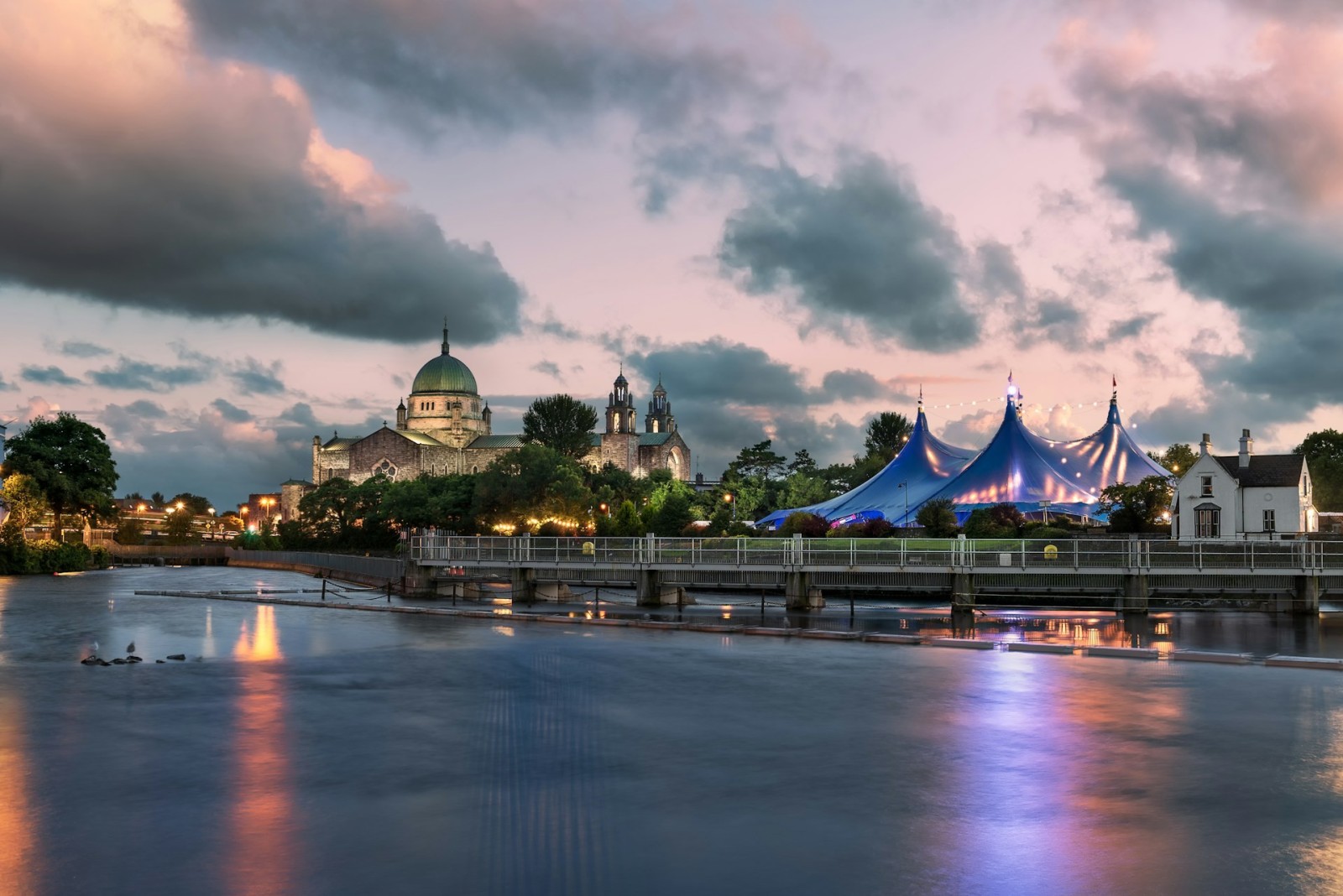
1. Five-star hotels and premium accommodation
Designed for tourists who prefer a high level of comfort, quality service, restaurants, spa centers and additional services.
The g Hotel & Spa is a five-star design hotel with original interiors, spa complex, restaurant and comfortable rooms.
Glenlo Abbey Hotel is a luxurious country hotel in a historic estate with well-groomed grounds, a restaurant and picturesque views.
The Hardiman is a historic four-star Victorian hotel in Air Square, offering elegant rooms and a convenient location.
2. Four-star hotels of medium and high level
Suitable for families, couples and independent travelers. Usually offer spacious rooms, restaurants, breakfasts, parking and additional amenities.
The Galmont Hotel & Spa is a hotel near Loch Atalia Lake with a spa, swimming pool, restaurant and fitness room.
Galway Bay Hotel is a hotel on Salthill Promenade with bay views, family rooms and wellness services.
The Connacht Hotel is a large family hotel with a swimming pool, restaurant, sports facilities and accommodation options for families with children.
Harbour Hotel is a modern hotel close to the port and central streets of the city.
3. Three-star hotels and boutique hotels
This is a good option for tourists who are interested in a convenient location, comfortable rooms and a reasonable cost of living.
Eyre Square Hotel is a downtown hotel close to shops, restaurants and transport stops.
Skeffington Arms Hotel is a small hotel in Air Square with a restaurant and bar where music events are held.
The Western Hotel is a hotel in the central part of the city with traditional interiors and convenient access to attractions.
Nox Hotel Galway is a modern hotel with a restaurant, bar and free parking.
1. Air Square (Eyre Square)
The main city square is surrounded by shops, cafes and historic buildings. There are monuments, fountains and green recreation areas. The square is a popular venue for meetings and events.
Transport: located near the train and bus stations. It is most convenient to walk.
2. The Spanish Arch (Spanish Arch)
Historical building of the XVI century, which is part of ancient city fortifications. It is located near the Corrib River and reminds of Galway’s trade relations with Spain and other European countries.
Transport: A few minutes walk from Air Square.
3. St. Nicholas' Collegiate Church (St. Nicholas' Collegiate Church)
Medieval church of the XIV century, known for Gothic architecture, ancient tombstones and historical interior. It is considered one of the most important religious monuments of the city.
Transport: located in the historic center, about 5-10 minutes walk from Air Square.
4. Lynch's Castle (Lynch's Castle)
An ancient stone mansion of the XV-XVI centuries, which belonged to the influential merchant family Lynches. It is distinguished by decorative stone carvings and medieval architectural elements.
Transport: Located on Shop Street, accessible on foot from downtown.
5. Galway City Museum (Galway City Museum)
The museum is dedicated to the history of the city, maritime trade, archaeology, traditions and the struggle of Ireland for independence. The expositions present ancient objects, photographs and historical documents.
Transport: Located next to the Spanish Arch, about 10-15 minutes walk from Air Square.
6. Galway Cathedral (Galway Cathedral)
A large architectural monument of the XX century with a massive dome, mosaics, stained glass windows and a spacious interior. It is of interest to lovers of architecture and religious art.
Transport: Located on the west bank of the Corrib River, about a 10-minute walk from the central square.
7. University of Galway (University of Galway)
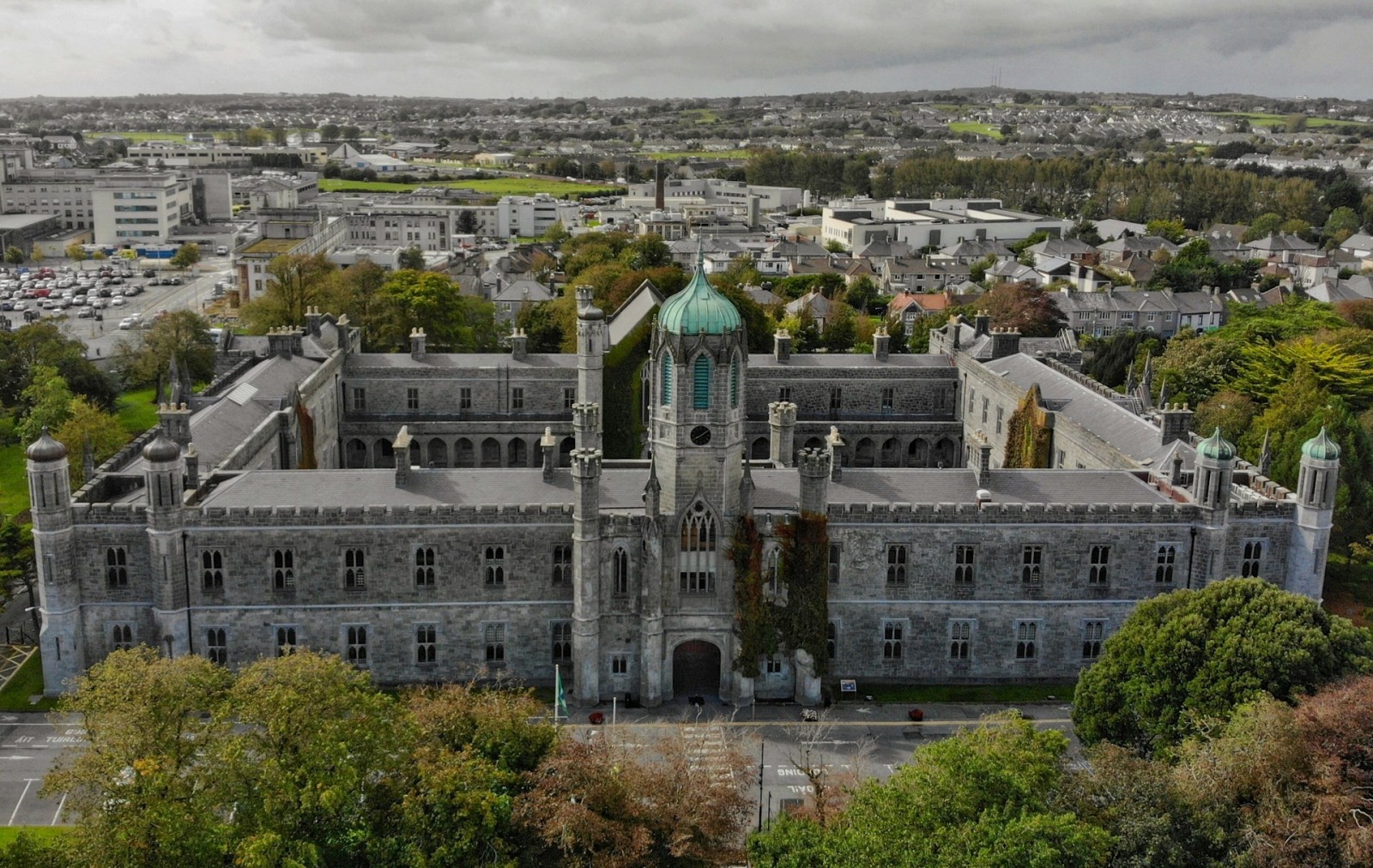
Founded in 1845. Particularly noteworthy is the historic Quadrangle building in the neo-Gothic style. The campus is surrounded by green areas and is located near the Corrib River.
Transport: about 15-20 minutes walk from the center. You can also use the city bus.
8. Hall of the Red Earl (Hall of the Red Earl)
Archaeological monument of the XIII century, which is the remains of a medieval administrative and residential complex. Here are preserved the foundations of ancient buildings and archaeological finds.
Transport: located on Druid Lane Street, in the historic center, accessible on foot.
9. Salthill Promenade (Salthill Promenade)
Popular coastal walking area with a length of about two kilometers. From here there are beautiful views of Galway Bay and the Atlantic Ocean. Here you can walk, relax on the beaches and play sports.
Transport: approximately 3 km from the center. You can get there by bus, taxi, bicycle or on foot in 35-45 minutes.
10. Long Walk (The Long Walk)
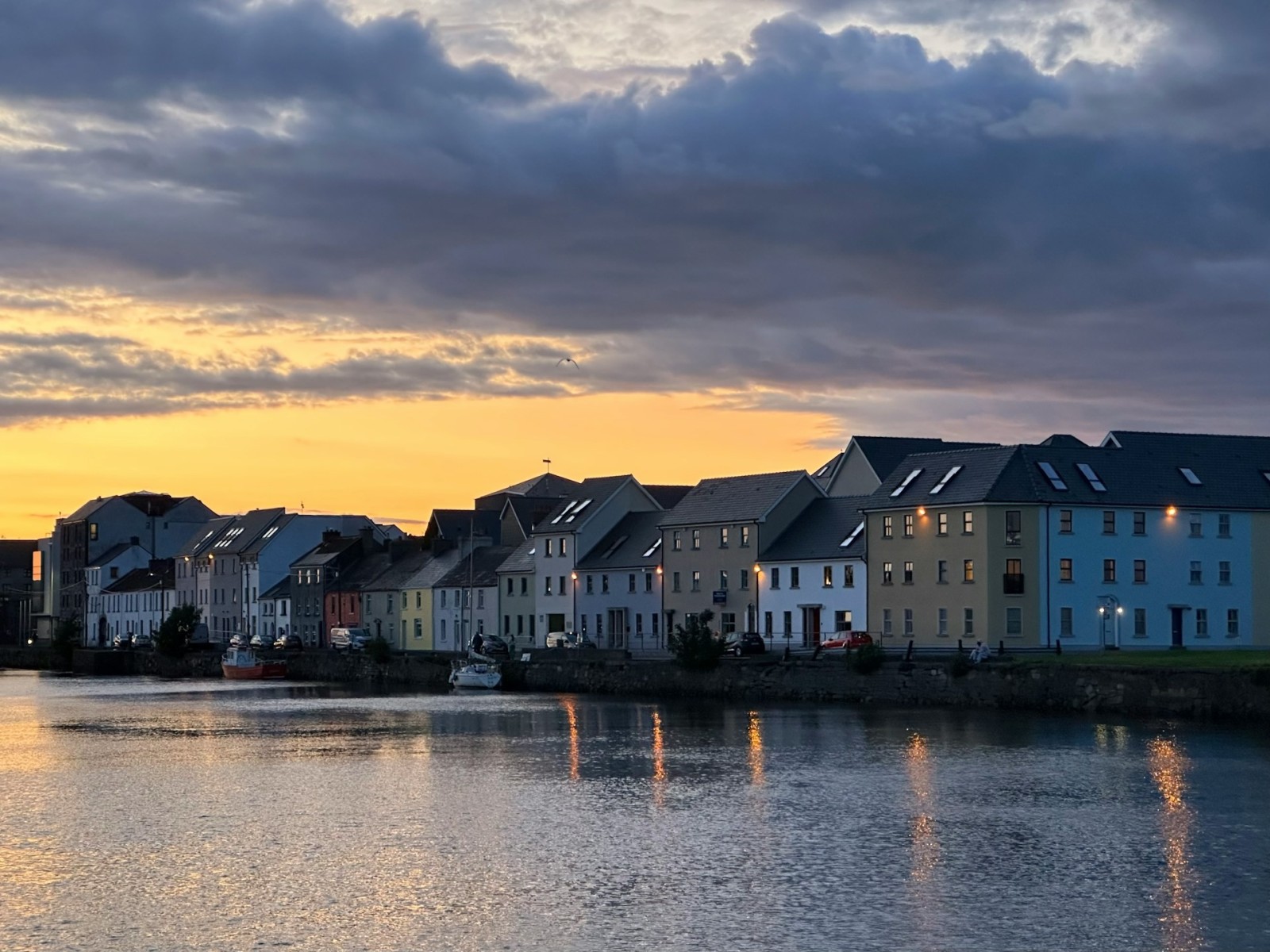
Picturesque promenade with rows of colorful houses along the water. This is one of the most recognizable places in Galway, popular among tourists and photographers.
Transport: located next to the Spanish Arch, accessible on foot in a few minutes.
11. The Claddagh District (The Claddagh)
A historic fishing area known for maritime traditions and the origins of the famous Irish Claddag ring. Here you can see the harbor, boats and beautiful views of the bay.
Transport: located near the Spanish Arch, about 10-15 minutes walk.
12. Blackrock Tower (Blackrock Diving Tower)
Famous area for swimming and diving on the coast of Salthill. The tower became one of the symbols of the sea holiday in Galway.
Transport: Located at the end of Salthill Embankment. You can get there by bus or on foot along the coast.
1. St. Patrick’s Day (St. Patrick’s Day) is March.
The main national holiday of Ireland. Galway hosts festive processions, concerts, performances of street artists, dances and events in traditional pubs. The streets are decorated with green symbols, and residents and tourists participate in folk festivals.
2. Cúirt International Festival of Literature – April
A major literary event bringing together Irish and foreign writers, poets and publishers. Creative meetings, readings, discussions, book presentations and literary evenings are held.
3. Galway Early Music Festival – May
Dedicated to medieval, Renaissance and Baroque music. The program includes concerts of ancient music, performances of ensembles, musical master classes and cultural events in historical buildings.
4. Traditional Irish Music Festival (The Galway Sessions)
A celebration of national musical culture with live performances of performers, traditional Irish tunes, dances and musical evenings in city pubs and concert venues.
5. Galway Film Fleadh (July)
It is one of the most famous Irish film festivals, presenting national and international films. Film screenings, meetings with directors, discussions, premieres and professional events for representatives of the film industry are organized.
6. Galway International Arts Festival – July
One of the largest cultural events of the city. The program includes theatrical productions, concerts, dance performances, art exhibitions, street performances and large-scale creative shows. Special attention is drawn to the performances of artists in open areas.
7. Galway Races Summer Festival - late July - early August
A major sports and social event dedicated to horse racing. Ballybrit racecourse hosts competitions accompanied by musical entertainment, festive events and elegance contests. Ladies Day is especially popular.
8. Galway International Oyster & Seafood Festival (September)
One of the most famous gastronomic holidays in Ireland. Visitors get acquainted with local seafood, taste fresh oysters, participate in tastings and watch the oyster opening championships. Concerts, culinary events and festive festivities are held.
9. Baboró International Arts Festival for Children – October
Cultural festival for children and families. Includes theatre productions, dance performances, circus performances, music programs, art workshops and interactive events.
10. Galway Comedy Festival - Oct.
Dedicated to humor and entertainment. In the city theaters, clubs and concert venues perform Irish and foreign comedians. Stand-up shows, humorous performances and thematic evenings are held.
1. Winter (December-February). The average daily air temperature is +7 ... +9 ° C, at night usually +3 ... +5 ° C. The temperature of sea water is about +8 ... +9 ° C. The period is characterized by high humidity, winds and frequent rains. Snow rarely falls. For walks and excursions you need a warm jacket, waterproof shoes and protection from the wind.
2. Spring (March-May). The air gradually warms up from +9...+11 °C in March to +14...+16 °C in May. At night, the temperature is about +4 ... +8 ° C. Sea water warms up from +8 ... +9 °C in March to +11 ... +14 °C in May. In May, there are more sunny days, and rainfall is usually less than in winter. This is a good time to explore the city and travel around.
3. Summer (June-August). The warmest period of the year. During the day, the air temperature is usually +16 ... +19 ° C, at night - +10 ... +13 ° C. Sea water warms up to about 14 ... + 17 ° C, sometimes slightly higher. In summer there is a long daylight, festivals, concerts and city holidays. However, even in July and August, rain, wind and a sharp cold snap are possible.
4. Autumn (September-November). In September, the air warms up to about +16 ... + 17 ° C, in October - to +12 ... + 14 ° C, in November - to +9 ... + 11 ° C. At night, the temperature gradually decreases to +5 ... + 11 ° C. Sea water cools from +15...+16 °C in September to +10...+11 °C in November. In autumn, it becomes more rainy and windy days, but September is still suitable for excursions and walks along the coast.
1. The main language of communication. In Galway, the official languages of Ireland are English and Irish (Gaelic). In everyday life, people speak English with a distinctive Irish accent. Irish is particularly prominent in cultural life, education and street names. In the western part of Galway County, there are areas of Galtacht, where Gaelic is widely used in everyday communication.
2. Communicate with locals. The Irish are usually friendly, friendly and willing to help tourists. When dating, it is customary to greet, smile and maintain a relaxed conversation. Hello – Hello, How are you? "How are you?" "Thank you." Politeness and a calm tone of communication are considered important.
3. Musical and cultural traditions. Galway is known for traditional Irish music, dancing and street performances. Pubs often host Traditional Irish Music Sessions. Visitors should respect musicians, not interrupt performances and ask permission before photographing artists.
4. The tradition of hospitality. Pubs are an important part of the public life of the city. Here they communicate, listen to music and get acquainted with the local culture. It is not necessary to order alcohol: you can choose a soft drink or food. When visiting establishments, it is customary to observe the queue at the counter and not interfere with other visitors.
5. Religious and social customs. Ireland has a Christian cultural heritage, but modern society is secular. When visiting churches and other religious sites, it is necessary to observe silence, respect the services held and not take photographs where it is prohibited.
6. Behavior in public places. Do not talk loudly at night near residential buildings, leave garbage, spoil property or disturb others. There are many pedestrian streets in downtown Galway, so it is important to consider cyclists and traffic.
7. Laws and alcohol. The minimum age to buy and drink alcohol in Ireland is 18. The institutions may ask for a document confirming the age. Driving in a state of alcoholic or narcotic intoxication is prohibited. Smoking is prohibited inside most enclosed public spaces, including pubs, restaurants and public transport.
8. Traffic rules. There's left-hand traffic in Ireland. The driver and passengers must use seat belts and children must use appropriate restraints. When crossing the road, you need to look first to the right, then to the left. When riding a bicycle, it is recommended to use a helmet and light elements in the dark.
9. Rules of visiting natural territories. When traveling to the coast, Aran Islands and Connemara National Park, it is forbidden to leave garbage, damage plants and disturb animals. On coastal routes, warning signs should be observed: strong waves, wind and slippery stones can be dangerous.
10. Documents and public order. Tourists should carry a passport or other identity document and comply with the terms of the visa or entry permit. You cannot be in private territory without permission, disturb public order or ignore the demands of the police. There are fines and other penalties for serious violations.
1. Greetings and polite expressions
Hello, hello.
Hi (Hi) Hi.
Good morning - Good morning.
Good afternoon, good afternoon.
Good evening - Good evening.
Good-bye, good-bye.
See you later, see you later.
Please, please.
Thank you, thank you.
Thank you very much, thank you very much.
You're welcome, you're welcome.
Excuse me, I'm sorry.
Sorry, I'm sorry.
Yes/No (Yes/No) - yes/no.
How are you? How are you?
I'm fine, thank you - okay, thank you.
2. Local expressions in Irish
Dia dhuit - hello.
Dia is Muire duit (Dia Is Mvira Gvit) is the answer to greetings.
Slán (Slaan) - goodbye.
Sláinte (Slaanche) - for health!
Go raibh maith agat - thank you.
Le do thoil, please.
Fáilte (Falte) - welcome.
Éire (Ayre) - Ireland.
Gaeilge is an Irish language.
Craic - fun, pleasant communication.
Céad míle fáilte (Keed Miila Faalte) is a warm welcome.
Slán abhaile (Slaan avali) is a happy journey home.
A particularly interesting local word is Craic. It means fun, good company, interesting communication and entertainment. “What’s the craic?” can be translated as “How are you?” or “What’s new?”
3. Local spoken expressions
Grand - fine, fine, all right.
What's the craic? What's new, how's it going?
No bother, no problem, no problem.
Sound is a great, good, nice person.
That's gas is very funny, it's funny.
Cheers - thank you, sometimes goodbye.
Your man is that man, that guy.
Your one is that woman, that girl.
Yoke is a thing, a thing, an object.
I'm after... (Aime afte) - I just did something (Irish colloquial construction).
1. Unique local products and dishes
Irish oysters, a famous delicacy of Galway Bay, are served fresh with lemon.
Seafood Chowder is a thick soup of fish, mussels, shrimp and cream.
Smoked salmon is a traditional Irish product that can be purchased in packaging.
Soda Bread is a traditional pastry with a characteristic taste.
Irish cheeses are farm varieties of cow and goat milk.
Seaweed – used to make soups, salads and snacks.
Irish butter has a rich taste.
Irish chocolate and cookies are popular sweet gifts.
2. Medicinal and natural remedies
Cosmetics with seaweed - creams, masks, soap and lotions.
Natural handmade soap - with vegetable oils and herbs.
Herbal teas - with mint, chamomile and heather.
Creams with oats - means for the care of dry skin.
Balms with beeswax - to protect and moisturize the skin.
Sea salt – for cooking and cosmetic procedures.
3. Traditional Souvenirs and Products of Local Masters
The Claddagh Ring is Galway’s main symbol for love, friendship and loyalty.
Aran Sweater - traditional wool clothing with relief patterns.
Wool scarves and blankets are practical gifts made of Irish wool.
Celtic jewelry - pendants, bracelets and earrings with traditional ornaments.
Handmade ceramics - mugs, plates and decorative products.
Products made of swamp oak are unusual jewelry and souvenirs from ancient wood.
Paintings and postcards depicting Galway Bay and Irish landscapes.
1. Required documents for travel
A trip to Galway will require:
Foreign passport – must be valid during the trip. It is advisable to have a free page for border service marks.
Citizens of countries for which a visa regime is provided must apply for a short-stay tourist visa in advance.
There and back tickets – it is advisable to have a confirmation of the return flight.
Hotel reservation - confirmation of the place of residence for the period of travel.
Health insurance is recommended for the entire duration of the trip.
Confirmation of financial means – bank statement, cash or bank cards.
Copies of documents – it is desirable to keep electronic and paper copies of passport, visa, insurance and tickets separately from the originals.
The border service may ask for confirmation of the purpose of the trip, the route, the availability of housing and sufficient funds.
2. Health insurance and medical care
For tourists, it is recommended to obtain medical insurance, which covers:
Emergency medical care and hospitalization.
Treatment of injuries and acute diseases.
Medical transportation and evacuation if necessary.
Dental care for acute pain.
Accidents during excursions and outdoor activities.
Cancellation of travel and loss of baggage if such risks are included in the policy.
It is especially important to check the coverage of walks along the rocky coast, hiking routes and sea excursions.
There are medical facilities, pharmacies and emergency departments in Galway. In case of serious health problems, you should contact the emergency service.
3. Emergency services phones
In Ireland, both numbers are used to call emergency services.
112 is the single European emergency number.
999 – Call the police, ambulance and fire service.
Garda is the National Police of Ireland.
Ambulance Service is an ambulance service.
Fire Service is the fire service.
When calling, you must inform the location, the nature of the incident, the number of victims and the contact phone number. Call is free.
4. Mobile operators and communications
In Ireland, there are several mobile operators that provide tourists with communication, mobile Internet and SIM-cards:
Vodafone Ireland – broad coverage, 4G and 5G mobile internet.
Three Ireland is a popular operator with phone and internet rates.
Eir is a major national mobile operator.
Tesco Mobile - budget rates for calls and the Internet.
48 – low-cost plans with mobile Internet.
Lycamobile is convenient for international calls.
Tourists can use a local SIM card or eSIM. Before traveling, it is worth checking the international roaming conditions of your operator.
5. Basic safety rules
Keep an eye on bags, phones, wallets and documents in tourist spots, cafes and public transport.
Do not leave valuables in the car in plain sight.
In the evening, avoid poorly lit and deserted streets.
Be careful near the ocean, do not come close to the edge of the rocks and do not go to dangerous coastal areas.
Take into account strong wind, rain and sudden changes in weather.
When traveling by car, remember that in Ireland left-hand traffic.
Do not leave drinks unattended in bars and establishments.
Keep money and bank cards separately, use ATMs in safe places.
Special attention should be paid to walks along the Atlantic coast: waves, slippery stones and strong winds can be dangerous.
6. How many tourists can stay in Ireland without leaving the country?
The length of stay depends on the traveler’s citizenship and visa status.
Up to 90 days is the maximum period of regular tourist stay under a short-term permit.
Visa-free tourists must also meet the deadline set by the immigration officer upon entry.
Citizens of countries with a visa regime must obtain a Short Stay C visa in advance. It allows you to make a tourist trip for up to 90 days.
Extension of stay is possible only in certain exceptional circumstances, for example in case of unforeseen changes in the situation after arrival. There is no automatic renewal.
Create a query and local guides will offer you the best options

Install the app «PersonalGuide»
www.personalguide.ru
