Independent travel and view of the city of La Coruña! History of La Coruña Ancient settlements La Coruña is lo...
Ancient settlements
La Coruña is located in northwestern Spain in the autonomous community of Galicia, on the Atlantic Ocean. The history of the city dates back more than two thousand years and is closely connected with navigation, trade and military events.
Long before the appearance of the city on this territory lived Celtic tribes of the Gallecs (Gallaeci), from which the name of Galicia. They built fortified settlements - castro, the remains of which are still found in the vicinity of the city.
Thanks to the convenient bay, the area became an important point for sea trade in prehistoric times.
Roman era
In the II-I centuries BC, the northwest of the Iberian Peninsula was conquered by Rome.
The Romans quickly appreciated the strategic importance of the harbor and established a commercial and military port called Brigantium.
It was during this period that the famous lighthouse Tower of Hercules was built.
The Tower of Hercules is considered the oldest operating lighthouse in the world. It was built in the II century AD under the emperor Trajan and served as a landmark for ships entering the Atlantic harbor.
According to ancient legends, the hero Hercules defeated the giant Gerion and founded the city on the site of his victory. This legend still occupies an important place in the local culture.
During the Roman Empire, the port was actively used for trading in metals, salt, wine and other goods.
Early Middle Ages
After the fall of the Western Roman Empire in the fifth century, the region experienced a difficult period.
On the territory of Galicia consistently ruled:
Sueve.
Visigoths;
local lords.
Unlike southern Spain, the northwest of the country has not been subjected to long-term Arab domination. The Christian culture has been preserved continuously.
In the VIII-IX centuries, Galicia became one of the most important centers of Christianity after the discovery of the relics of the Apostle James in the city of Santiago de Compostela.
La Coruña began to play an important role as a port on the path of pilgrims and traders.
Foundation of the medieval city
In 1208, King Alfonso IX of Leon granted the settlement city status and trade privileges.
This event is considered the beginning of the modern history of La Coruña.
The city developed rapidly due to:
maritime trade;
fishing;
navigation;
relations with England, France and the Nordic countries.
In the XIII-XV centuries, fortress walls, defensive structures and new port facilities were built.
The Age of Great Geographical Discoveries
In the XV-XVI centuries, Spain became one of the largest world powers.
The port of La Coruña became an important point for maritime expeditions and trade with the New World.
Ships departed from the city:
America;
to the Canary Islands;
Africa;
Northern European ports.
At this time, the city expanded significantly and strengthened its economic position.
English attack of 1589
One of the most famous events in the history of the city was the English expedition of 1589.
After the defeat of the Invincible Armada, the English fleet under Sir Francis Drake attempted to capture La Coruña.
The city was under siege.
The symbol of resistance was María Pita.
According to legend, during the assault she killed the English standard-bearer and inspired the inhabitants to further defend the city.
As a result, the British forces were forced to retreat.
Today, the main square of the city is named after Maria Pita.
XVII-XVIII centuries
In the following centuries, La Coruña continued to be one of the most important ports in Spain.
There was an active trade through the city:
wine;
fish;
textiles;
colonial goods.
In the eighteenth century, the Spanish crown actively invested in the development of the port and the strengthening of defensive structures.
The city became a major administrative center of Galicia.
Napoleonic Wars
At the beginning of the XIX century, Spain was involved in wars with Napoleon.
In 1809, a battle took place near La Coruña between British and French troops.
The British Army, commanded by General Sir John Moore, covered the evacuation of their troops through the city's port.
Although the British were able to evacuate, General Moore died in battle and was buried in La Coruña.
His tomb is still a historical landmark.
XIX century - industrial growth
In the second half of the XIX century, the city experienced a period of rapid development.
There are:
new shipyards;
rail communication;
factories;
modern port facilities.
It was then that La Coruña received a characteristic architectural appearance with glazed balconies, thanks to which the city became known as the “Crystal City” (Ciudad de Cristal).
XX century
In the XX century, La Coruña became one of the largest cities in northern Spain.
There's been a lot of development here:
fishing;
shipbuilding;
the banking sector;
trade;
education.
During the Spanish Civil War, the city was controlled by Franco’s nationalists.
After the war, a period of industrialization and population growth began.
In the second half of the XX century, La Coruña became the modern economic center of Galicia.
It was here that Inditex, the owner of the famous Zara brand, was founded.
Modern La Coruña
Today, La Coruña is one of the most important cities in Galicia and northern Spain.
The town is famous:
Tower of Hercules, included in the UNESCO World Heritage List;
the largest port in the region;
beautiful embankment with a length of more than 13 kilometers;
historical center;
universities;
cultural festivals.
La Coruña remains an important center of trade, tourism and maritime transport on the Atlantic coast of Spain.
Atlantic coast
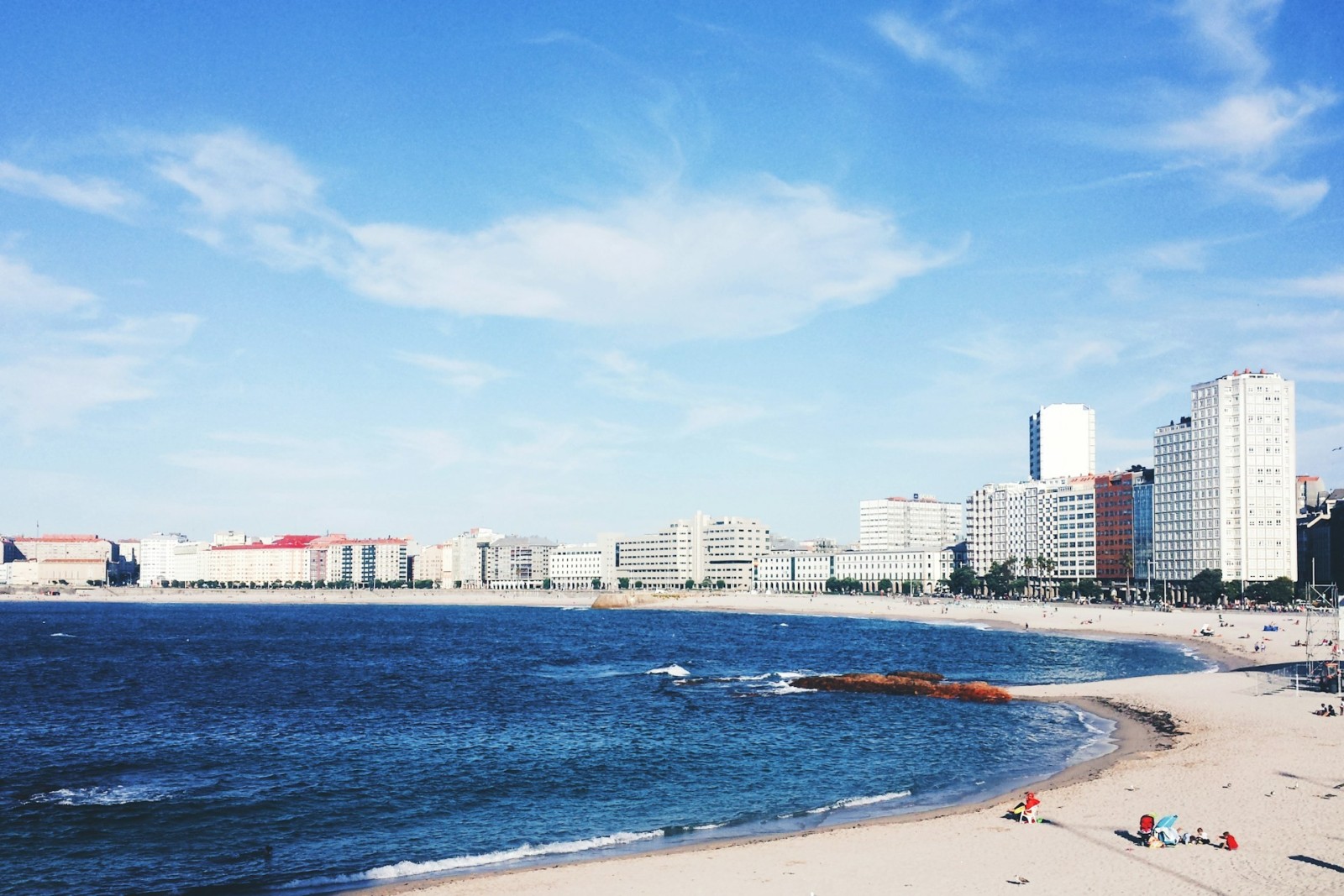
The city is located on a picturesque peninsula surrounded by the Atlantic Ocean. There are beautiful embankments, observation platforms and spacious sandy beaches.
Especially popular:
Riazor beach (Riazor)
Orsan beach (Orzán);
Matadero beach.
Even an ordinary walk along the ocean becomes one of the most vivid impressions of visiting the city.
Tower of Hercules
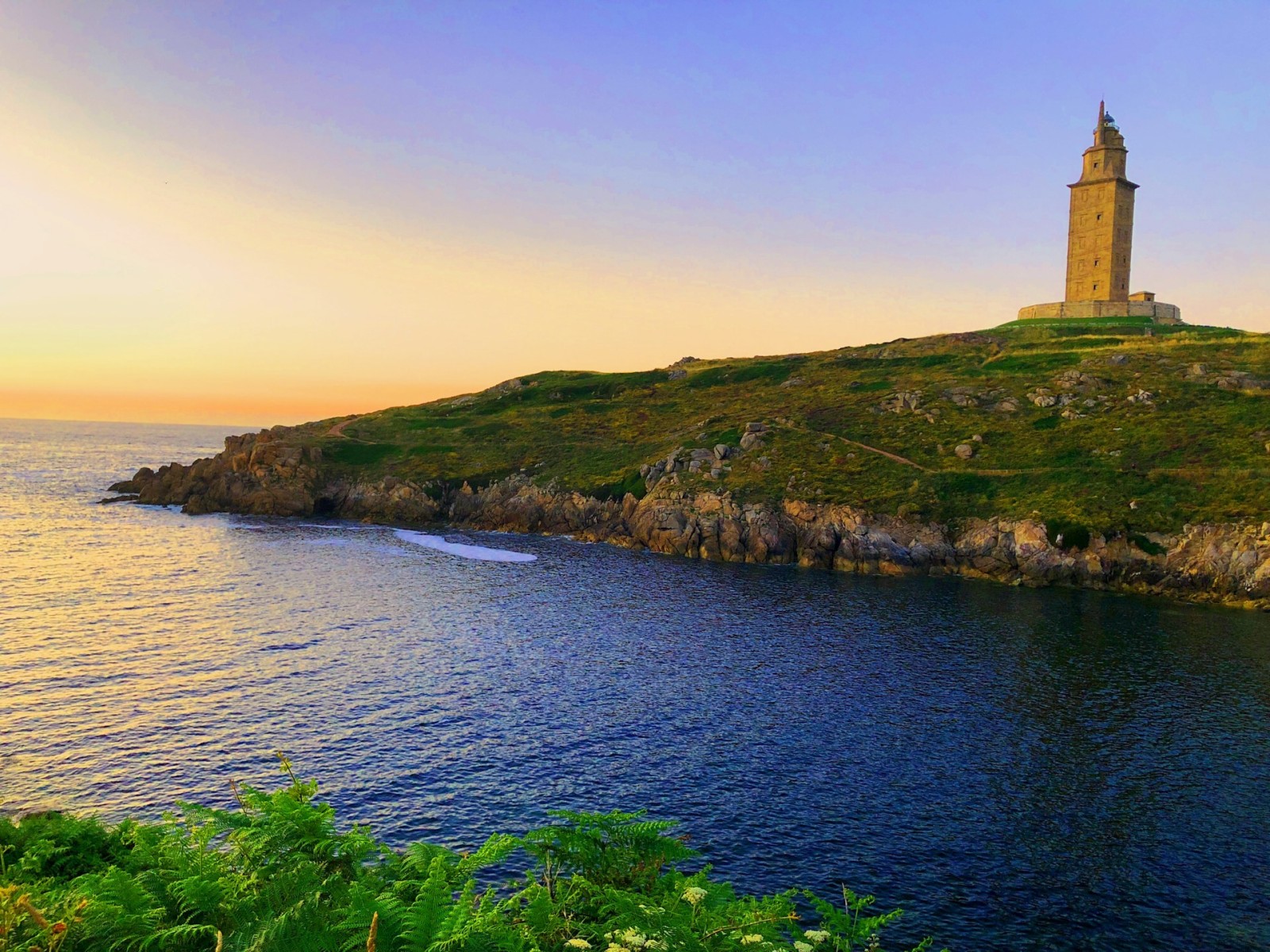
Its main symbol is the Tower of Hercules.
This is the only Roman lighthouse in the world, which continues to work for its intended purpose for almost two thousand years. The tower is included in the UNESCO World Heritage List and is considered one of the most famous sights of Spain.
From the site near the lighthouse there are magnificent views of the ocean and the coast of Galicia.
Historic centre
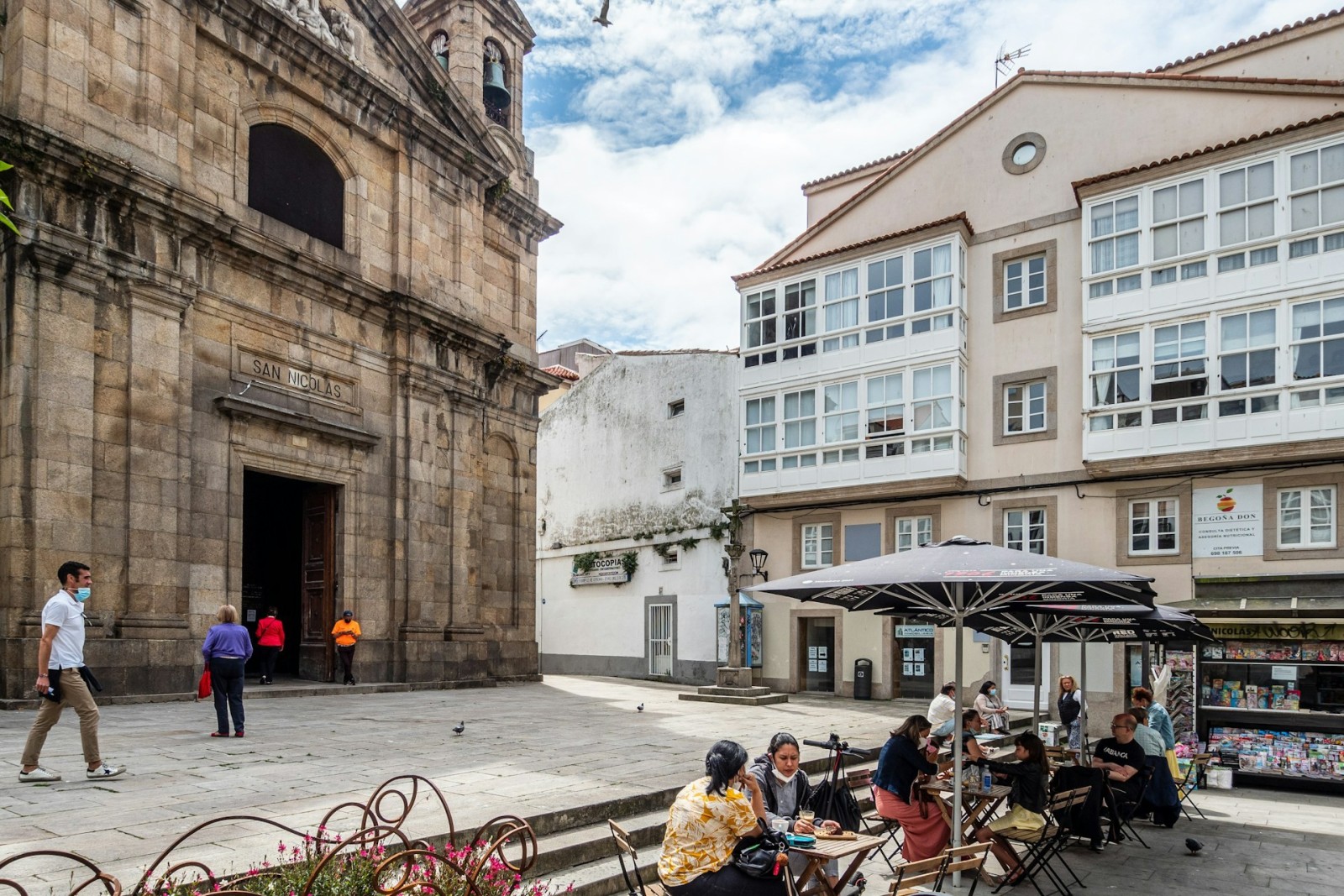
The old town has preserved the atmosphere of medieval Spain.
During the walk you can see:
old squares;
narrow stone streets;
historical churches;
city gates;
buildings of XVIII-XIX centuries.
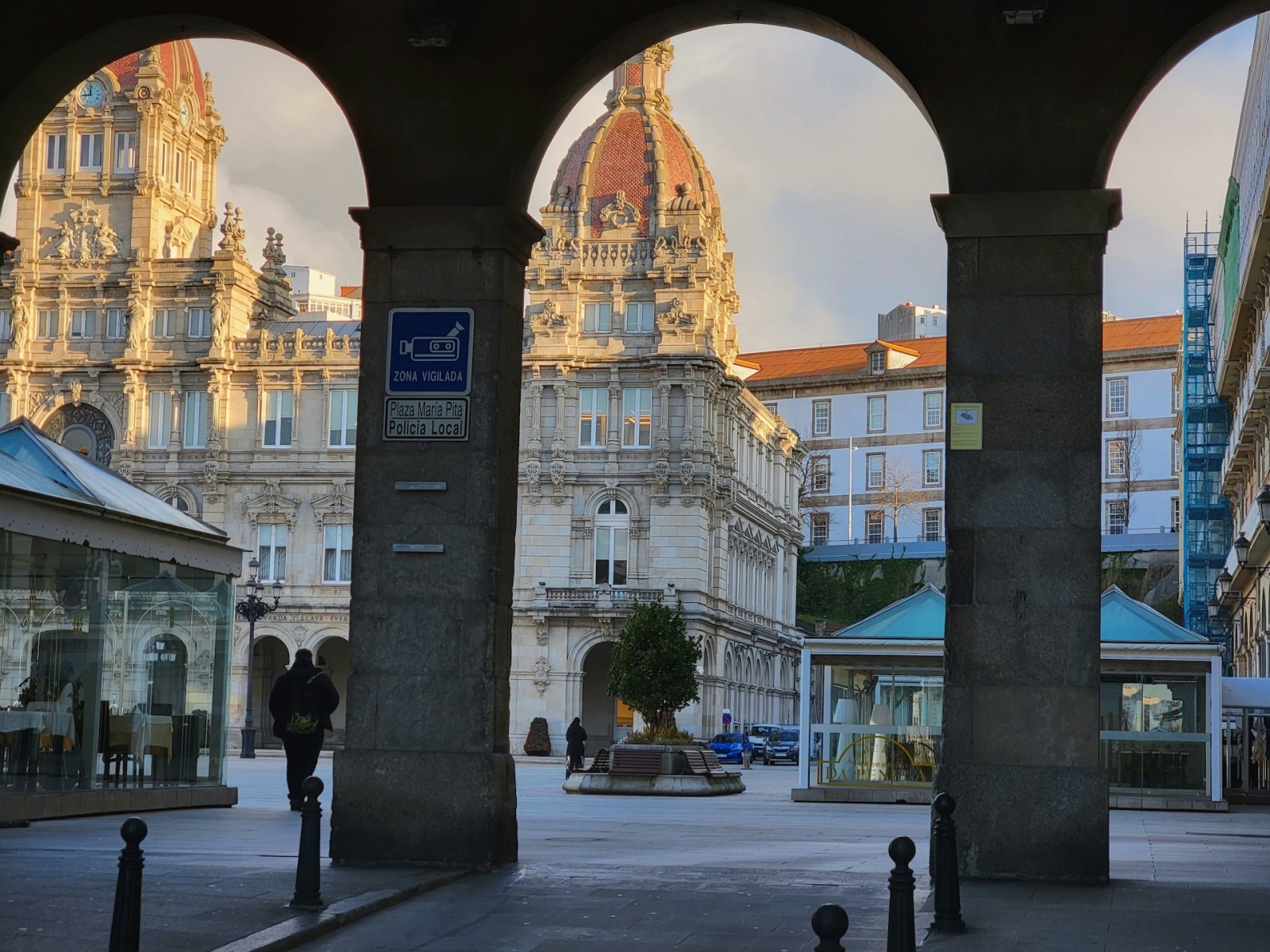
Particularly popular is Maria Pita Square, named after the heroine who defended the city from an English attack.
"Crystal City"
La Coruña is known for its glazed balconies that adorn the facades of houses along the harbor.
Thanks to these unusual facades, the city received the unofficial name “Crystal City” (Ciudad de Cristal). Such architecture is almost not found in other regions of Spain.
Marine atmosphere
La Coruña has been an important port for centuries.
Today, tourists are attracted by:
yacht harbours;
fishing port;
walking along the ocean;
seafood restaurants;
cruise ships that regularly enter the city port.
Galician cuisine
The north of Spain is famous for one of the best cuisines of the country.
In La Coruña, you should definitely try:
octopus in Galician (Pulpo a la Gallega)
scallops;
mussels;
shrimp and langoustines;
local cheeses;
Tarta de Santiago is a Galician cake.
Many restaurants specialize in fresh seafood delivered directly from the ocean.
Museums and cultural sites
The city offers many interesting museums:
Museo Arqueológico e Histórico Castillo de San Antón
Museo Nacional de Ciencia y Tecnología
House-Museum of Picasso, where the artist lived in his childhood;
Aquarium Finisterrae (Aquarium Finisterrae)
These places make the city interesting not only for history lovers, but also for families with children.
Nature and walking
La Coruña is considered one of the greenest cities in Galicia.
Popular:
Monte de San Pedro Park;
ocean observation decks;
walking areas along the coast;
botanical gardens.
From many points, beautiful panoramas of the Atlantic Ocean open.
Hotels 5★ Hotels
Hotels in this category offer a high level of service, restaurants, fitness rooms, spa areas and beautiful ocean views.
Popular options:
Hotel NH Collection A Coruña Finisterre is one of the most prestigious hotels in the city near the historic center.
DoubleTree by Hilton A Coruna is a modern five-star hotel near the old town.
Meliá Maria Pita is a famous waterfront hotel with ocean views.
Average cost: from 180 to 450 euros per night.
Hotels 4★
The most popular option among tourists due to a good combination of price and quality.
Popular options:
Hotel Riazor - near the beach of the same name.
Eurostars Atlántico – near the port and city centre.
Hesperia A Coruña Centro is a convenient location in the center.
Attica 21 Coruña is a modern business hotel.
Hotel Zenit Coruña.
Average cost: from 100 to 220 euros per night.
Hotels 3★ Hotels
Suitable for comfortable rest without unnecessary costs.
Popular options:
Hotel Avenida.
Eurostars Blue Coruña.
Exe Coruña.
ibis Styles a Coruna.
Carrís.
Average cost: from 70 to 140 euros per night.
Boutique hotels
For lovers of a cozy atmosphere and individual design.
Popular options:
Hotel Alda Galería.
Ola Barrera is a stylish tourist apartment in the historic center of the city.
Average cost: from 80 to 180 euros per night.
1. Tower of Hercules (Torre de Hércules)
The main symbol of the city and the oldest operating lighthouse in the world.
The lighthouse was built by the Romans in the II century and is included in the UNESCO World Heritage List.
What to see:
lighthouse itself;
museum complex;
sculpture park;
Viewpoints overlooking the Atlantic Ocean.
Transport accessibility:
city bus;
tourist bus;
taxi;
About 30 minutes walk from the historic center.
2. Place Maria Pita (Praza de María Pita)
The main square of the city, named after the national heroine of Galicia.
Here are located:
City Hall;
historic buildings;
restaurants and cafes;
Monument to Maria Pita.
Transport accessibility:
It is located in the city centre;
You can walk from almost any part of the historic area.
There are major bus routes nearby.
3. The Old Town (Cidade Vella)
The historical part of La Coruña with narrow stone streets and ancient buildings.
Here you can see:
ancient city walls;
old mansions;
cozy squares;
traditional Galician restaurants.
Transport accessibility:
on foot from Maria Pita Square;
Bus stops are located around the perimeter of the area.
4. Castle of San Anton (Castelo de San Antón)
The fortress of the XVI century was built to protect the harbor from pirates and foreign fleets.
Today there is an archaeological museum.
Transport accessibility:
located near the port;
Easy to walk from the center;
There are bus stops nearby.
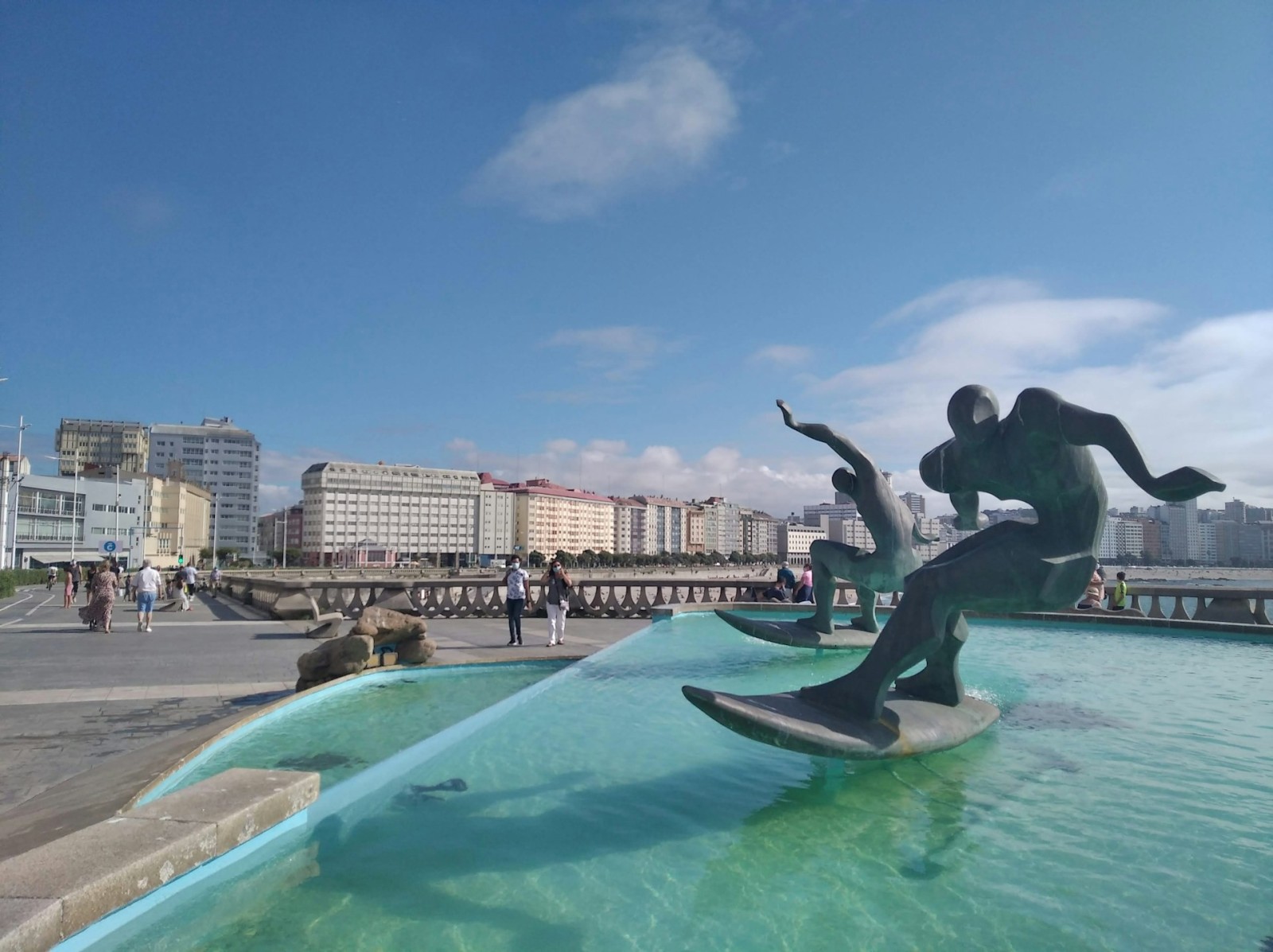
5. Promenade de la Coruña (Paseo Marítimo)
One of the longest city promenades in Europe.
The length is more than 13 kilometers.
During the walk you can see:
ocean species;
lighthouses;
modern sculptures;
beaches;
observation decks.
Transport accessibility:
passes through a large part of the city;
Buses and bicycles run along it.
6. Riazor Beach (Praia de Riazor)
One of the most famous beaches of Galicia.
Suitable for:
bathing;
walks;
surfing;
holiday with children.
Transport accessibility:
located near the city center;
can be reached on foot;
There are bus routes and parking lots nearby.
7. Orsan Beach (Praia do Orzán)
It is located near Riasor Beach.
Known:
good conditions for surfing;
beautiful sunsets;
a walking area along the ocean.
Transport accessibility:
city centre;
bus routes;
walking distance.
8. Monte de San Pedro (Monte de San Pedro)
One of the best observation decks in the city.
On the territory are:
old coastal fortifications;
gardens;
café
Panoramic platforms.
From the top there are magnificent views of the city and the ocean.
Transport accessibility:
city bus;
taxi;
Special panoramic lift funicular.
9. Aquarium Finisterrae (Aquarium Finisterrae)
One of the best aquariums in northern Spain.
Especially interesting:
collection of marine animals of the Atlantic;
large aquariums;
Children's areas.
Transport accessibility:
located near the Tower of Hercules;
bus;
taxi;
Walk along the waterfront.
10. Picasso House Museum (Casa Museo Picasso)
The museum is dedicated to the childhood of the famous artist Pablo Picasso, who lived in La Coruña for some time.
Transport accessibility:
city centre;
easy to reach on foot;
There are bus stops nearby.
11. National Museum of Science and Technology (MUNCYT)
Modern interactive museum.
Expositions are devoted to:
science;
aviation;
technique;
Space.
Especially popular among families with children.
Transport accessibility:
city bus;
taxi;
comfortable access by car.
12. Port and harbor of La Coruña
One of the largest ports in northern Spain.
Here you can see:
cruise ships;
yachts;
fishing vessels;
historic port facilities.
Transport accessibility:
It is located in the city centre;
easily accessible on foot.
1. Entroido Carnival (Entroido)
When: Feb.
The city's main winter festival.
During the carnival, there are:
costumed processions;
musical performances;
Mask and costume competitions;
festivities;
The traditional sardine funeral ceremony.
Carnival is considered one of the most famous in Galicia.
2. Easter week (Semana Santa)
When: March to April
One of the most important religious holidays in Spain.
In the city are held:
solemn processions;
church services;
concerts of sacred music;
religious fraternity marches.
3. May Cultural Festivals
When: May
During the month:
Theatrical performances;
exhibitions;
gastronomic fairs;
music concerts;
Urban cultural activities.
4. Night of St. Juan (San Xoán)
When: June 23-24
The most famous festival of La Coruña and one of the largest holidays in Galicia.
Tens of thousands of people gather on the beaches of Riasor and Orsan.
Main events:
huge fires on the beaches;
concerts;
fireworks;
frying sardines and traditional dishes;
festivities till morning.
The holiday has the status of an international tourist event.
5. Manicómicos Street Art Festival
When: July
Guests are waiting:
circus performances;
performances of clowns;
street theaters;
family shows;
musical numbers.
6. Feasts of Maria Pita (Fiestas de María Pita)
When: July - August
The main city festival of the year.
The holiday is dedicated to the heroine of the city of Maria Pita.
In the program:
concerts of famous Spanish artists;
fairs;
exhibitions;
Theatrical performances;
festivities;
children's activities;
Gastronomy festivals.
Most of the events take place in Maria Pita Square.
7. Noroeste Estrella Galicia Festival
When: August
One of the largest music festivals in northern Spain.
Features of the festival:
dozens of open-air concerts;
performances by Spanish and international artists;
ocean scenes;
Free activities.
8. Los40 Summer Live
When: August
A big summer concert of popular Spanish music.
On the stage are famous performers of modern pop music.
9. Battle of the Sea (Batalla Naval)
When: August 14
One of the most spectacular events of the city.
The programme includes:
pyrotechnic show;
festive concerts;
waterfront performances;
massive fireworks display over the ocean.
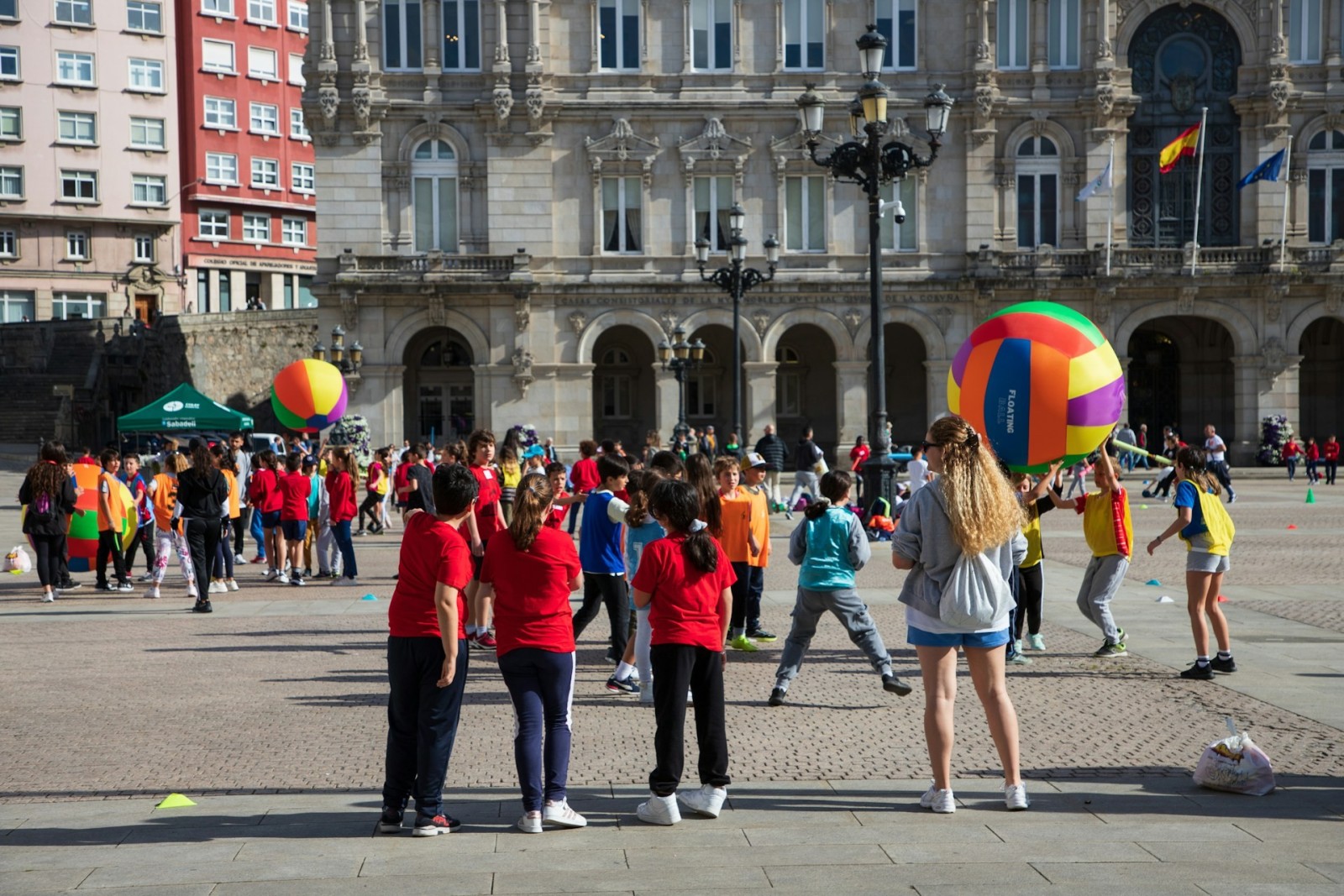
Spring (March-May)
Spring is considered one of the best periods for exploring the city and sights.
march
air temperature: +11... +17 °C
water temperature: +13 °C
April
air temperature: +12... +18 °C
Water temperature: +13... +14 °C
May
air temperature: +14... +21 °C
water temperature: +14... +15 °C
In spring, more sunny days become, parks and gardens begin to bloom, and there are few more tourists.
Summer (June-August)
Summer in La Coruña is much cooler than in the south of Spain.
June
air temperature: +18... +23 °C
Water temperature: +16... +17 °C
July
air temperature: +20... +25 °C
Water temperature: +18... +19 °C
Augustus
air temperature: +21... +26 °C
Water temperature: +19... +20 °C
In summer, the most stable weather is established. Heat above 30 ° C is rare, so walks around the city remain comfortable even in high season.
Autumn (September-November)
Autumn is warm at the beginning of the season and rainier closer to winter.
September
air temperature: +19... +24 °C
water temperature: +19 °C
October.
air temperature: +16... +21 °C
Water temperature: +17... +18 °C
November
air temperature: +12... +18 °C
Water temperature: +15... +16 °C
September is considered one of the most pleasant months to travel due to warm weather and fewer tourists.
Winter (December – February)
Winter is mild and humid.
December
air temperature: +10... +15 °C
water temperature: +14... +15 °C
January
air temperature: +9... +14 °C
Water temperature: +13... +14 °C
February
air temperature: +10... +15 °C
water temperature: +13 °C
Snow in the city is extremely rare. The main feature of winter is frequent rains and strong ocean winds.
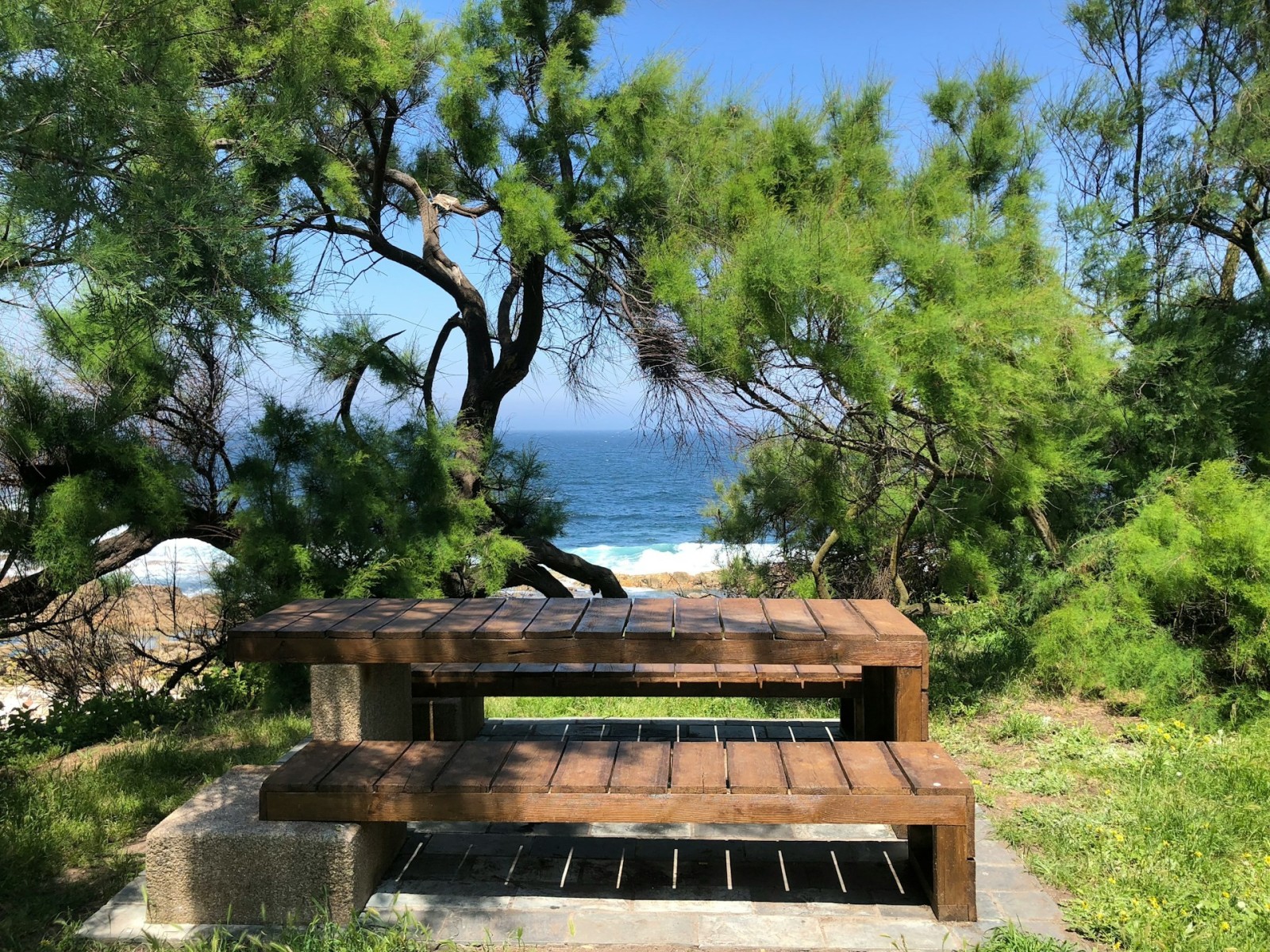
La Coruña is located in the autonomous community of Galicia, so not only Spanish is used here, but also Galician. Residents of the region are proud of their culture and history, so respect for local traditions is always welcome.
Language of communication
Two languages are officially used in La Coruña:
Spanish (Español)
It is the main language of communication in hotels, restaurants, shops, museums and government agencies. Most residents speak Spanish fluently.
Galician (Galego)
The Galician language is very common in everyday life. Many road signs, signs, street names and official documents can be written in Galician.
Some words in Galician:
Bo día (Bo dia) - Good morning.
Boas Tardes - Good afternoon.
Grazas - Thank you.
Ola (Ola) - Hello.
Ata logo - Goodbye.
In tourist areas, many hotel and restaurant staff understand English, but knowing a few Spanish phrases will be a great advantage.
Traditions and customs
Respect for local culture
Galicians are considered calm, friendly and reserved people. They value respectful communication and interest in the local culture.
When dating, a handshake is usually used, and light kisses on both cheeks are common between friends and relatives.
Late schedule
As in many parts of Spain, life begins later than in many parts of Europe.
Usually:
breakfast - 7:00-10:00;
lunch - 13:30-16:00;
dinner - 20:30-23:00.
Many restaurants open for dinner only after 20:00.
Attitudes to food
Eating in Spain is an important part of communication.
It is not customary to hurry at the table. Lunch or dinner can last for several hours with family or friends.
Tipping
Tipping is not mandatory, but is welcome.
Usually left:
5-10% in restaurants;
several euros for taxi drivers;
A small amount of hotel staff.
Holidays and festivals
Residents of La Coruña actively participate in city holidays.
Especially important:
Night of St. Juan (June).
Feasts of Mary Pita (July-August).
Entroido Carnival (February).
Easter week (March-April).
During festivals, many residents wear traditional costumes and participate in folk festivals.
What not to do
No noise at night
In residential areas it is necessary to observe silence, especially after 22:00-23:00.
Don't litter.
There are fines for pollution of streets, parks and beaches.
Do not smoke in prohibited places
Smoking is prohibited in many public places, institutions and some beach areas.
Do not enter private territory
Private property in Spain is strictly protected by law.
Basic laws that are important for tourists to know
Documents
It is recommended to always carry an identity document or a copy thereof.
Alcohol
Alcohol consumption is allowed only in specially designated places.
Many cities in Spain have restrictions on drinking alcohol on the streets.
Beaches.
On the beaches, it is necessary to comply with the requirements of rescuers and pay attention to signal flags.
The red flag means a complete ban on swimming.
Road traffic
Pedestrians are obliged to cross the road at pedestrian crossings and observe traffic lights.
Fines may be imposed for traffic violations.
Drones
The use of drones near airports, military installations and some historical monuments may be restricted or prohibited.
Greetings
Hola (Ola) - Hello, hello.
Buenos días - Good morning.
Buenas tardes - Good afternoon.
Buenas noches - Good evening, good night.
Adiós (Adios) - Goodbye.
Hasta Luego - See you later.
Nos vemos - See you later.
Polite words
Por favor - Please.
Muchas gracias - Thank you very much.
De nada - You're welcome.
Perdón (Perdon) - Excuse me.
Lo siento (Lo Ciento) - Sorry, I'm sorry.
Disculpe - Excuse me, please.
Useful questions
¿Habla inglés? (Abla Ingles) - Do you speak English?
¿Habla ruso? (Abla Ruso) - Do you speak Russian?
¿Puede ayudarme? (Puede ayudarme?) - Can you help me?
¿Dónde está...? (Donde Esta?) - Where is...?
¿Cuánto cuesta? (Quanto Cuesta?) - How much is it?
¿Qué recomienda? (What recommendation?) - What do you recommend?
At the hotel.
Tengo una reserva. (Tengo Una Reserva) - I have a reservation.
Donde está mi habitación? (Donde Esta Mi Abitacion?) - Where's my number?
Necesito ayuda. - I need help.
¿Hay Wi-Fi gratuito? (Whi-fi gratuito?) - Is there free Wi-Fi?
¿A qué hora es el desayuno? (And ke ora es el desaiuno?) - What time is breakfast?
At the restaurant.
Una mesa para dos, por favor. (Una Mesa par dos, por favor) - Table for two, please.
La carta, por favor. (La Carte, por favor) - Menu, please.
Quiero pedir esto. (Kiero pedir esto) - I want to order this.
¿Qué plato es típico de Galicia? (What plateau es typico de Galicia?) Which dish is traditional for Galicia?
La cuenta, por favor. (La Cuenta, por favor) - Bill, please.
In the store.
¿Cuánto cuesta esto? (Cuanto Cuesta Esto?) - How much does it cost?
Es muy caro. - It's very expensive.
¿Aceptan tarjeta? (Aseptan Tarheta?) - Do you accept bank cards?
Solo estoy mirando. (Solo Estoy Mirando) - I'm just looking.
Transportation
¿Dónde está la parada de autobús? (Donde Esta la Parade de Autobus?) - Where's the bus stop?
¿Dónde está la estación? (Donde Esta la Estaion?) - Where's the station?
Un billete, por favor. (Un Biyete, por favor) - One ticket, please.
¿A qué hora sale el autobús? (And ke ora sale el autobus?) - What time does the bus leave?
On the beach.
¿Se puede nadar aquí? (See puede nadar aki?) - Can I swim here?
¿Hay socorrista? (Ai socorrista?) - Is there a lifeguard here?
¿Dónde están los baños? (Donde Estan Los Baños?) - Where's the toilet?
El agua está fría. (El Agua Esta Fria) - The water is cold.
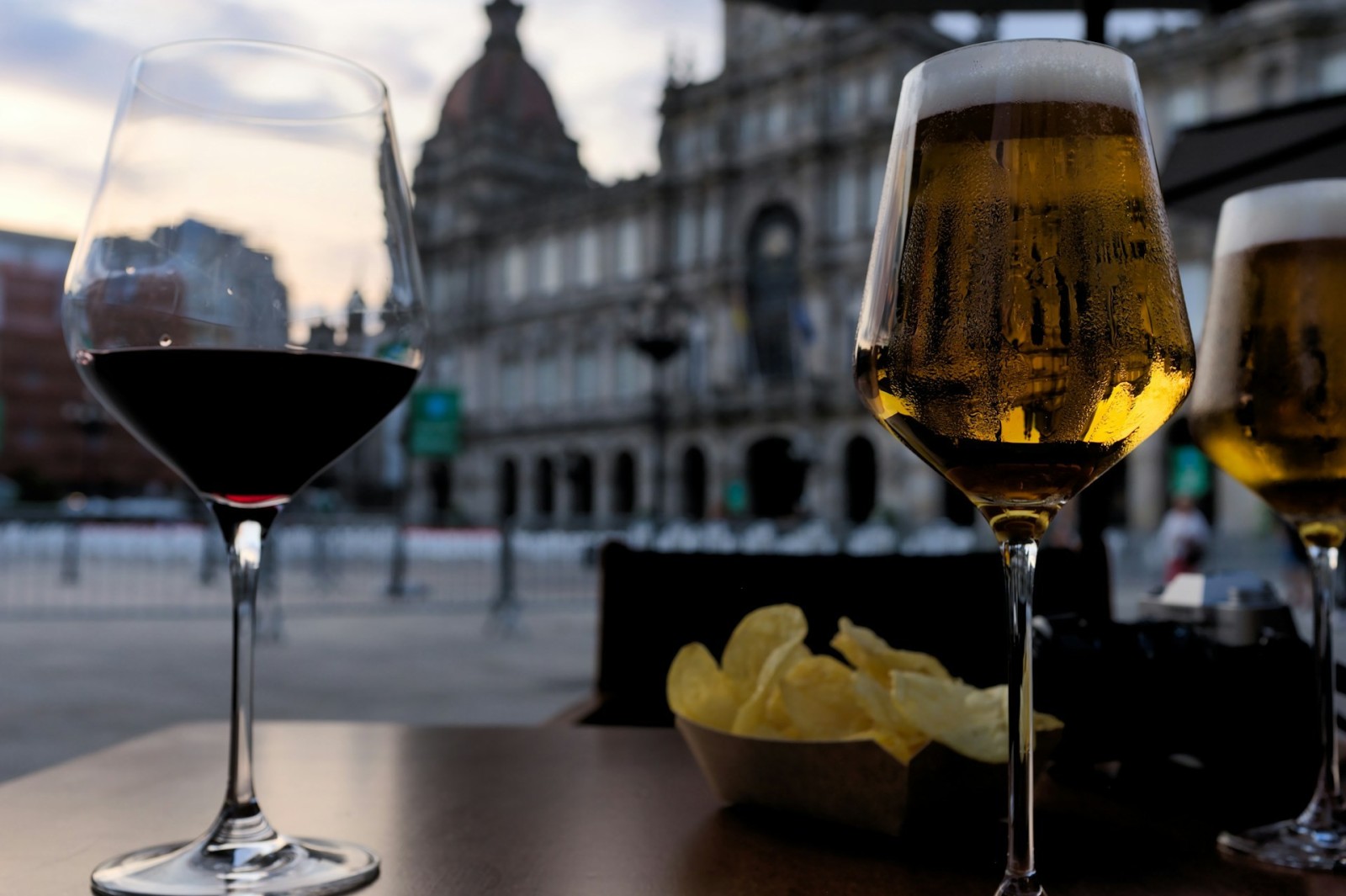
What to try with food
1. Galician octopus (Pulpo a la Gallega)
Galicia's main dish.
The octopus is boiled and served with olive oil, sea salt and paprika. Vacuum packaging with the finished product can be purchased in gastronomic stores.
2. Galician Pie Santiago (Tarta de Santiago)
The famous almond cake with the cross of St. James on the surface.
It is considered one of the most popular gastronomic souvenirs of the region.
3. Galician cheeses
Especially popular:
Tetilla;
Arzúa-Ulloa;
San Simón da Costa.
Many of them are of protected geographical origin.
4. Canned seafood
Galicia is considered one of the world centers of production of canned fish.
Particularly appreciated:
mussels;
sardines;
tuna;
squid;
An octopus.
High quality canned food is often bought as a gift.
5. Galician honey
It is produced in the mountainous regions of the region and has a rich taste.
6. Padron peppers (Pimientos de Padrón)
Small green peppers that are considered one of the symbols of Galician cuisine.
Stores often sell dried or canned options.
Drinks.
1. Liquor Orujo (Orujo)
A traditional Galician strong drink.
Popular varieties:
classic;
coffee
Herbal.
2. White wine of Albarinho (Albariño)
One of the best white wines in Spain.
Manufactured in Galicia and perfectly combined with seafood.
3. Galician cider
Less well known than Asturian, but also popular in northern Spain.
Useful and medicinal products
1. Natural cosmetics from seaweed
Galicia is known for using oceanic algae in cosmetology.
Popular:
creams;
masks;
skin care products.
2. Cosmetics with thermal water
It is sold in pharmacies and specialized stores.
It is used to care for sensitive skin.
3. Olive oil-based products
It can be purchased:
creams;
soap
shampoos;
Balms.
4. Natural honey and beekeeping products
Often bought to strengthen immunity and as a useful gift.
Souvenirs
1. Symbols of the pilgrimage of St. James
Since Galicia is the end point of the famous Camino de Santiago path, souvenirs with the image are popular:
scallop shells;
the cross of St. James;
pilgrimage routes.
2. Galician pottery
Local craftsmen produce:
Plates;
cups;
decorative products;
Painted tile.
3. Wood products
Wood crafts are common in the region.
Popular:
boxes;
figurines;
kitchen supplies.
4. Sea souvenirs
La Coruña is a major port city, so there are often sold:
ship models;
lighthouses;
products with marine themes;
seashell jewelry.
5. Souvenirs from the Tower of Hercules
Its main symbol is the Tower of Hercules.
In almost all souvenir shops you can find:
magnets;
cups;
keychains;
postcards;
miniature copies of the lighthouse.
6. Galician bagpipes (Gaita)
National musical instrument of Galicia.
You can buy both souvenir miniatures and real tools.
La Coruña is one of the safest cities in Galicia and northern Spain. The city has a calm atmosphere, developed tourist infrastructure and a low level of crime. Tourists can comfortably walk around the historic center, promenades and beaches both day and evening. However, in crowded places, railway stations and tourist areas, it is recommended to monitor personal belongings and documents.
Documents required
For a trip to La Coruña it is recommended to have:
A foreign passport.
Schengen visa (if required for citizens of your country).
Health insurance.
Confirmation of hotel or other accommodation booking.
Return ticket.
Documents confirming the availability of funds for the period of the trip.
Copies of passport, visa and insurance policy.
Copies of documents should be stored separately from the originals or in electronic form.
Health insurance
To travel to Spain, it is recommended to obtain tourist health insurance with coverage of at least 30,000 euros.
It is desirable that the insurance includes:
emergency medical care;
hospitalization;
outpatient care;
transportation to the home country;
Accident insurance;
compensation for loss of luggage;
assistance in cancellation or delay of the flight.
Emergency services
Basic emergency number:
112 is a single number for calling an ambulance, police and fire service.
Additional numbers:
091 National Police.
092 - Municipal Police.
061 - Emergency medical care.
080 Fire Service (in some regions)
Calls to 112 are free and available around the clock.
Medical assistance
The city has modern public and private medical institutions, as well as round-the-clock pharmacies.
Pharmacies are marked with Farmacia and a green cross. If necessary, the staff of pharmacies can help choose over-the-counter drugs or prompt the nearest medical institution.
Mobile and Internet
All the largest mobile operators in Spain operate in La Coruña:
Movistar;
Vodafone España;
Orange España;
Yoigo?
Digi.
Tourists can purchase a local SIM card or use an eSIM. Free Wi-Fi is available in most hotels, restaurants, cafes, shopping centers and some public places.
Safety on the beaches
Rescue services work on the city beaches in the summer season.
Pay attention to the signal flags:
Green - swimming is allowed;
Yellow - swim carefully;
Red - swimming is forbidden.
The Atlantic Ocean can be colder and undulating than the Mediterranean Sea, so it’s important to follow rescue orders.
Financial security
Visa and Mastercard cards are accepted almost everywhere. However, a small amount of cash euros may be needed in markets, small cafes and gift shops.
It is recommended:
use ATMs at banks;
Don’t keep all your money in one place.
Use safes in hotels.
Term of stay of tourists
Spain is part of the Schengen area.
For most tourists, there is a rule:
up to 90 days stay within 180 days.
For a longer stay in the country will require a national visa, study visa, work permit or residence permit.
Create a query and local guides will offer you the best options