Independent tourism and recreation in Vorkuta Historical information about the city of Vorkuta Vorkuta is one...
Vorkuta is one of the most unusual cities in Russia. It is located in the extreme northeast of the Komi Republic, beyond the Arctic Circle, in the Bolshe-Earth tundra. The history of the city is almost entirely connected with the discovery of coal deposits, the development of the Far North, the construction of mines and a railway, as well as with the tragic history of the Gulag. Modern Vorkuta has grown literally in the tundra in just a few decades.
First information about the territory
Long before the appearance of the city, the territory of modern Vorkuta was part of a huge northern space, where the indigenous peoples of the North and nomadic reindeer herders lived. The name of the city comes from the river Vorkuta. According to one common version, it is associated with the Nenets word, meaning “bear place” or “place where there are many bears”.
There was no permanent large settlement here for a long time. The main obstacle to development was the harsh climate, remoteness from the central regions of the country, lack of roads and difficult natural conditions.
Opening of coal deposits
The history of modern Vorkuta begins in 1930, when geologist Georgy Alexandrovich Chernov during an expedition discovered powerful layers of high-quality coal in the upper reaches of the Vorkuta River. Of particular value was coking coal, suitable for the metallurgical industry.
The discovery of the field was of great importance. The Soviet state sought to establish a new coal base in the northeast of the European part of the country and gain access to fuel reserves that could be used by industry and rail transport.
Already in 1931, the industrial development of the field and the construction of the first facilities began. There was a small working village Rudnik, which later became one of the areas of modern Vorkuta.
The first mines and the appearance of the village
In 1932, construction of the first mines began. In 1934, mine No. 1/2 produced the first industrial coal, and on September 1, 1934, the first echelon of coal was sent from Vorkuta. This date is considered important in the history of industrial development of the Pechora coal basin.
However, coal production was not enough – it had to be delivered to the consumer. In the absence of a railway, transportation was extremely difficult. Coal was first transported along the Vorkuta River, then along Usa and Pechora, after which it was sent further by water transport.
The transport problem was one of the main reasons for the construction of the railway.
Vorkuta and the Gulag system
One of the most tragic pages in the history of the city was the use of forced labor of prisoners. The development of Vorkuta took place during the existence of the Soviet camp system.
In the 1930s, prisoners of the Ukhto-Pechora camp were sent here, and since 1938 Vorkuta has become the center of the Vorkuta Correctional Labor Camp - Vorkutlag. The prisoners worked in mines, road construction, industrial plants, residential buildings and other infrastructure.
Working and living conditions were extremely difficult: the harsh climate, lack of food, heavy physical labor, accidents and high mortality made Vorkutlag one of the most famous camp complexes of the Gulag.
In 1948, the River Camp (Rechlag) was allocated from Vorkutlag, a special camp for political prisoners.
Therefore, the history of Vorkuta today is considered not only as the history of the development of the coal resources of the North, but also as part of the history of the Soviet repressive system.
Construction of the railway
Of great importance for the development of Vorkuta was the construction of the North Pechora railway. In 1941, traffic on the railway line was opened, linking Vorkuta with the central regions of the country.
The railroad completely changed the city. Now coal could be shipped much faster and in large quantities.
It became especially important during the Great Patriotic War. Vorkuta has become one of the important suppliers of fuel for the industry. During the war, about 6.5 million tons of coal were sent from here.
Obtaining city status
As the mines developed, the population increased rapidly. There were houses, schools, hospitals, shops, clubs and other infrastructure.
On November 26, 1943, the working village of Vorkuta received the status of a city. This date is considered the birthday of Vorkuta as a city.
By the time Vorkuta received city status, it already had several mines, developed industrial infrastructure and railway communication.
Post-war development
After the end of the war, the development of Vorkuta continued at an accelerated pace. New mines, residential areas, schools, hospitals, shops, cultural institutions and enterprises were built in the city.
In the 1940s, the number of active mines increased rapidly. By 1945, about ten coal mines were operating in the area of modern Vorkuta.
The city gradually became a major industrial center of the Far North.
At the same time, a significant part of the work on the construction and mining of coal continued to be carried out by prisoners. After the death of Joseph Stalin and the subsequent reorganization of the camp system, the role of forced labor gradually declined.
The Vorkuta Uprising of 1953
One of the most famous events in the history of the city was the Vorkuta Uprising of 1953. It happened in Rechlag after Stalin's death.
The prisoners protested against the harsh conditions of detention, the arbitrariness of the administration and demanded a review of their cases. The uprising was suppressed, people died.
Today, this event is an important part of the historical memory of Vorkuta and the entire history of the Soviet Gulag.
The rise of Vorkuta
In the 1950s-1980s, the city experienced a period of most active development.
Vorkuta has become a major industrial center focused primarily on coal mining. Numerous enterprises, shops, schools, hospitals, cultural institutions, sports facilities and residential neighborhoods appeared here.
The peculiarity of Vorkuta was that the city was actually built as a large industrial center in extreme natural conditions.
In the late 1970s – early 1980s, the population reached about 100,000 people, and the maximum number was recorded approximately in the early 1990s – about 117,000 inhabitants.
Architecture of Soviet Vorkuta
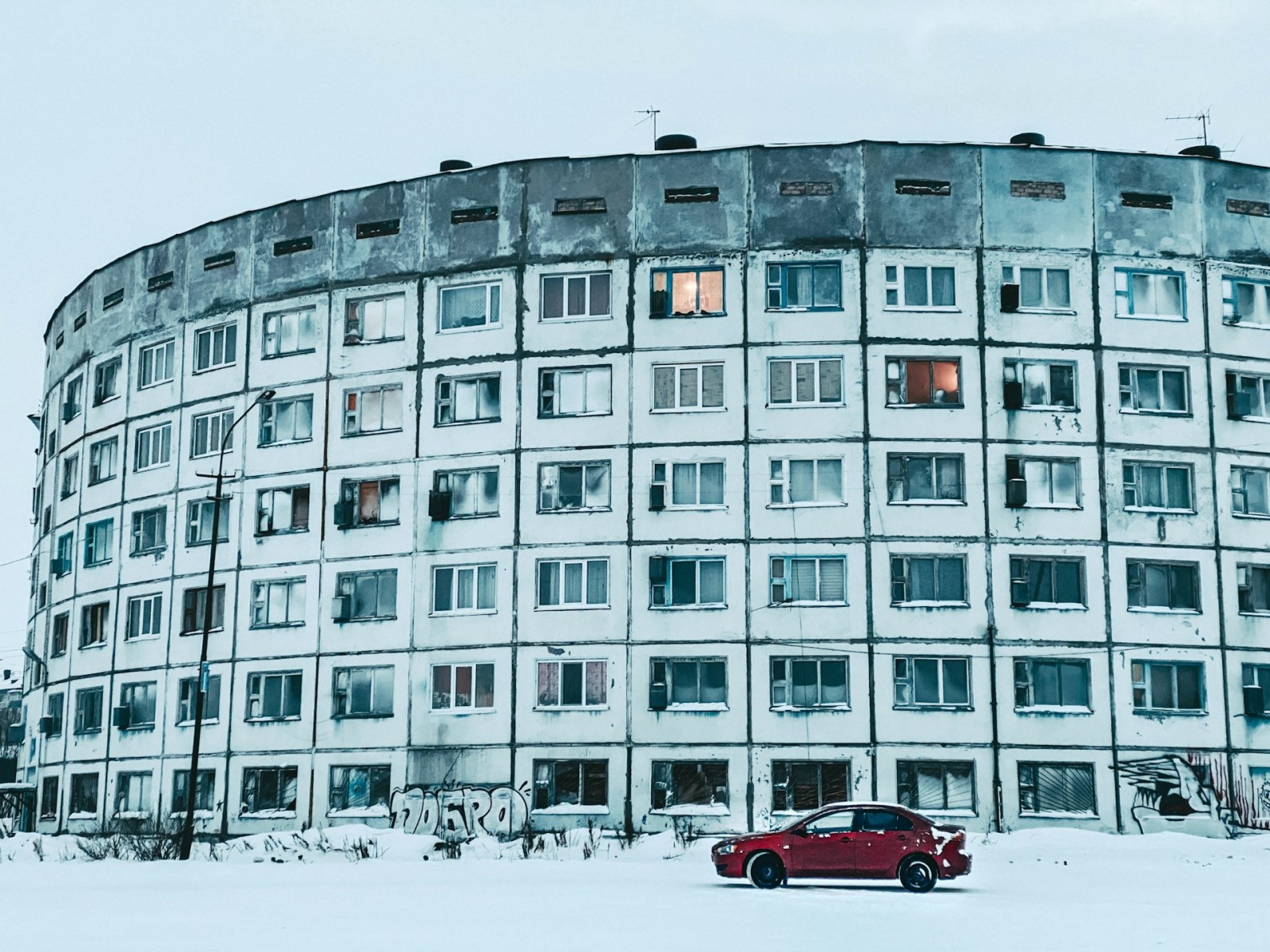
During the period of active construction, the characteristic architectural appearance of the city was formed. In Vorkuta, wide streets, brick and panel residential buildings, public buildings, squares and large administrative structures appeared.
The peculiarity is that many buildings were designed taking into account the harsh Arctic climate and permafrost.
Separate buildings and urban ensembles are of interest to tourists today as a kind of example of Soviet northern architecture.
The coal industry crisis
After the collapse of the Soviet Union, Vorkuta faced serious economic problems.
Demand for coal decreased, some mines became unprofitable, business closures and job cuts began. The population of the city began to decrease rapidly. Many residents moved to the more southern regions of Russia.
For a city whose economy has depended almost entirely on coal for decades, this has been a major challenge.
In the following years, some mines and villages around Vorkuta were closed. Some small settlements, previously associated with coal mining, gradually emptied.
Vorkuta
Today, Vorkuta remains one of the northernmost cities in Russia and continues to maintain its industrial specialization. Historically, the coal industry remains the basis of the economy. The history of Vorkutaugol shows the continuous development of production from the first mines of the 1930s to the modern period.
The city is gradually changing its perception. If before Vorkuta was primarily the coal capital of the Pechora basin, today its historical heritage, unusual northern architecture, tundra landscapes and the opportunity to see a real polar city are becoming increasingly important.
Vorkuta as a historical and tourist destination
For the traveler, Vorkuta is of interest primarily for its unusual history. Here you can see the city, which appeared due to the industrial development of the Far North, get acquainted with the history of mines and railways, learn about Vorkutlag and Rechlag, as well as see the preserved elements of Soviet urban development.
A special atmosphere is created by the surrounding tundra, the polar climate and the long polar night, and in summer - the opportunity to see white nights and almost continuous daylight.
1. Arctic atmosphere
For the traveler Vorkuta - the opportunity to be in the city for the first time beyond the Arctic Circle. Here you can see tundra landscapes, permafrost, polar night and unusual natural phenomena of northern latitudes.
The surroundings of the city are especially interesting in summer, when the tundra is covered with vegetation, and the long daylight allows you to make long walks and trips.
2. Industrial tourism
Vorkuta is almost completely formed thanks to the coal industry, so its history is literally present in the urban space.
Of interest are mines, industrial facilities, former mining villages and the so-called Vorkuta ring, linking the city with areas of former coal mining. Some old villages are now partially or completely abandoned, which makes the area especially interesting for fans of industrial history and unusual photography.
3. Architecture of the Soviet Arctic
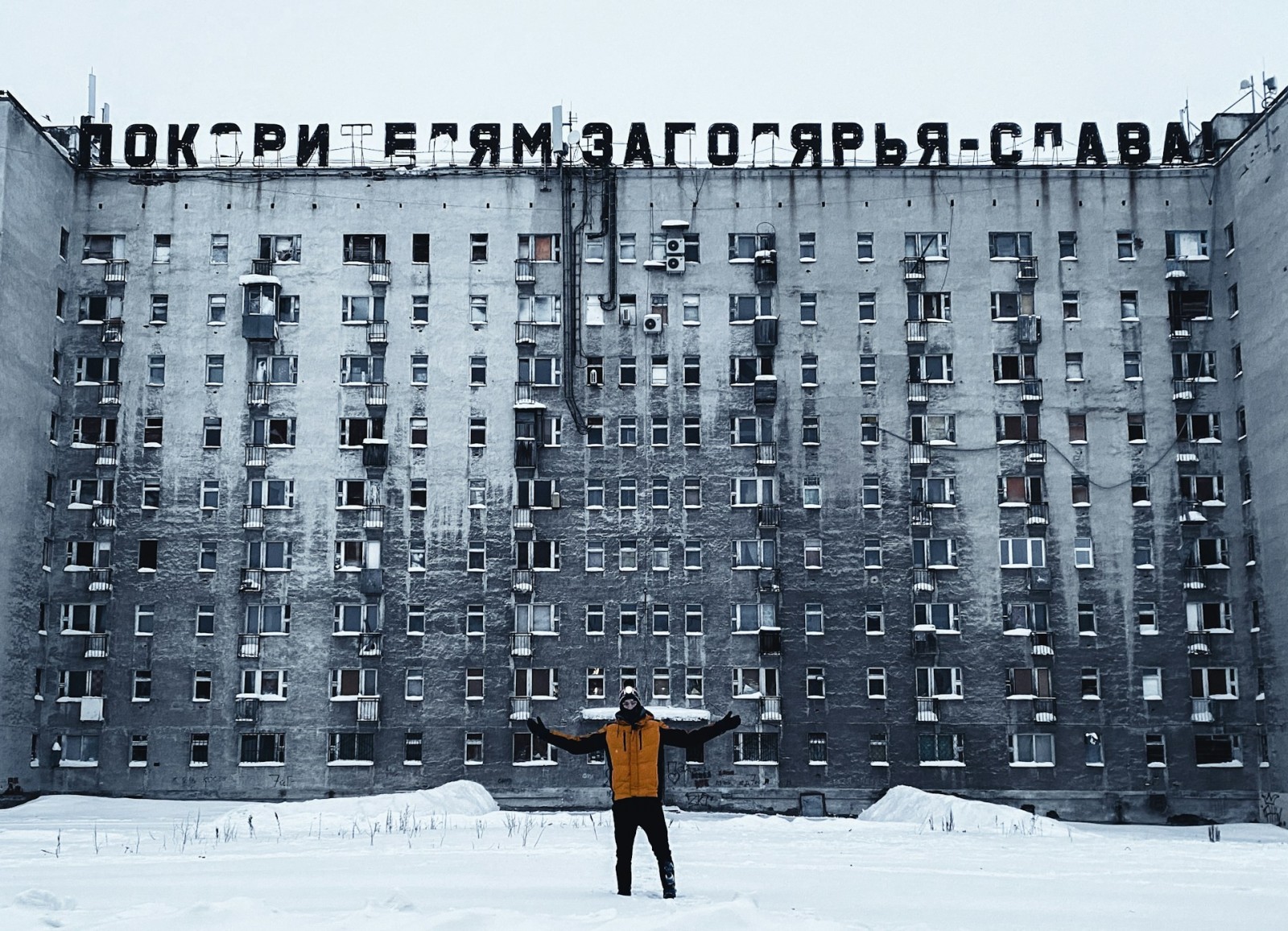
One of the main features of Vorkuta is its architecture. The city was actively rebuilt in the 1950s-1960s, so characteristic buildings of the Soviet period have been preserved here.
Especially interesting are Lenin Street, the central square, the Palace of Culture of Mineworkers and Builders, the Drama Theatre and other buildings of the historical center. Architecture was created taking into account the harsh climate and permafrost.
For lovers of architecture, Vorkuta is a kind of museum of Soviet urban planning in the open air.
4. History of the Gulag
Vorkuta is one of the most important places in Russia associated with the history of the Soviet camp system. The development of the coal industry in the 1930s and 1950s included the use of prison labor.
This topic is presented in detail in the Vorkuta Museum and Exhibition Center, where you can learn about the development of the North, the development of the coal industry, the construction of the city and the complex history of the camp system.
This direction is especially interesting for travelers who are fond of the history of the XX century, documentary tourism and the history of the USSR.
5. Abandoned mining villages
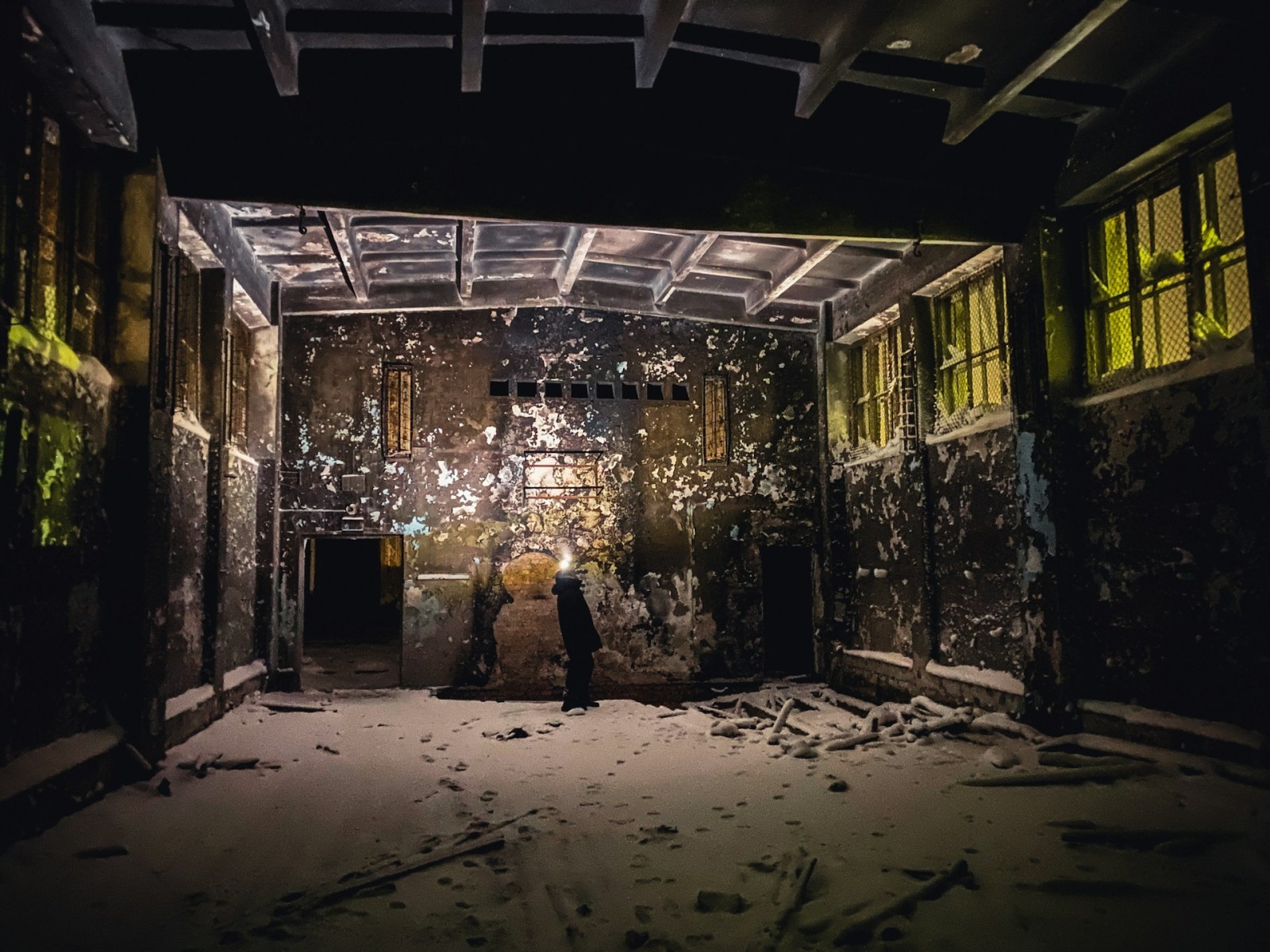
One of the most unusual reasons to come to Vorkuta is the opportunity to see the former mining villages, which gradually became empty after the decline of the coal industry.
Empty buildings, old schools, industrial structures and remnants of residential areas allow us to see how extensive the development of this region was once.
At the same time, it is not safe to visit abandoned buildings on your own: structures can be emergency, so organized excursions with local guides are preferable for a tourist.
6. Northern nature
Outside the city begins a huge tundra, almost unlike the usual European landscapes.
For travelers available:
Hiking trails on the tundra.
Trips to natural attractions.
Fishing.
Northern river rafting.
Hiking in the Polar Urals.
Photographic expeditions.
Winter Arctic routes.
The tourist portal of the Republic of Komi separately highlights the areas of Seida and Sobi, as well as water tourism on the Kara River and routes to natural sites of the Polar Urals.
7. Museums and cultural life
Despite its remoteness, Vorkuta has its own cultural environment. Tourists should visit the museum and exhibition center, drama theater and puppet theater.
The history of the Vorkuta Theatre is especially interesting: museum collections tell about the theatrical life of the city already in the 1940-1950s.
You can also just walk around the central part of the city to see the characteristic buildings and feel the atmosphere of the old mining Arctic.
8. Unusual gastronomic atmosphere
Vorkuta is not famous for a large number of unique dishes, but for tourists, northern cuisine and products of the Komi Republic and the Arctic are of interest.
In the city you can get acquainted with dishes from fish, venison and other products of the northern regions. A separate local attraction is the confectionery "Lakomka", which has preserved the Soviet atmosphere and is known for its desserts.
Vorkuta does not belong to major tourist centers, so the choice of accommodation here is noticeably less than in popular cities of Russia. At the same time, a tourist can choose a hotel, mini-hotel, apartment or hostel. The most convenient option for the first acquaintance with the city is accommodation in the central part, from where it is easier to get to the main attractions and transport facilities.
1. Mid-range hotels
This is the main option of living in Vorkuta. Usually, separate rooms are offered with a bathroom, Wi-Fi, TV, heating and a basic set of services.
Popular options:
Hotel "Vorkuta" is one of the most famous accommodation options, located on the Central Square. Suitable for tourists who are important to be in the central part of the city.
Hotel "Gornyak" is a hotel on Mira Street, near the central part of Vorkuta. It is suitable for both tourists and those who come to the city for work.
Hotel "North" is a medium-level option on Avtozavodskaya Street. Suitable for short trips and business trips.
Hotel "Megapolis" is another accommodation option in the city, which receives good ratings from guests.
1. Lenin Central Street
Lenin Street is the main historical street of Vorkuta. The characteristic post-war development of the 1950s-1960s has been preserved here: buildings with columns, towers, decorative elements and wide street prospects. Together with Moscow Street, it forms the most expressive architectural ensemble of the city.
Transport accessibility: located in the central part of the city. Most of the street is convenient to explore on foot; some areas can be reached by city bus or taxi.
2. Peace Square and the Palace of Culture of Miners
Peace Square is one of the main architectural centers of Vorkuta. Here is the monumental Palace of Mineworkers’ Culture, built in the Soviet period. The building is distinguished by large columns and the characteristic architecture of Stalinist classicism.
Transport accessibility: located in the central part of the city, easily accessible on foot from Lenin Street. You can also take a city bus or taxi.
3. Vorkuta Museum and Exhibition Center
The museum is one of the best places to explore the history of the city. The expositions are devoted to the nature of the Arctic, the development of the North, the coal industry, the history of Vorkutlag, the culture of indigenous peoples and the development of the city. The collection contains archaeological, ethnographic and historical materials.
Address: 58 Lenin Street.
Transport accessibility: located directly on the main street of the city. From the central areas can be reached on foot or by public transport.
4. Vorkuta City Exhibition Hall
The exhibition hall is located at 58 Lenin Street and is part of the museum complex. Art, historical and photographic exhibitions are regularly held here.
Transport accessibility: central part of Vorkuta; it is convenient to combine a visit with a walk along Lenin Street and a tour of historical architecture.
5. Victory Monument
The monument is located on Victory Square, at the intersection of Lenin, Varandeyskaya, Komarov and Pirogov streets. The monument is dedicated to the military and labor exploits of the inhabitants of the country during the Great Patriotic War. The composition is made in the form of three gun trunks, entwined with branches, with figures of storks at the top.
Transport accessibility: located in the central part of the city. The square can be reached by bus or taxi, and from the central streets - on foot.
6. Victory Boulevard
Victory Boulevard is an unusual example of greening a city in the Arctic. Its creation began in 1945-1946, when the city park began to form on the site of the tundra swamp.
Transport accessibility: located in the city and accessible on foot, by bus or taxi. It is best to visit in the warm season.
7. Monument to Vladimir Lenin
The monument to Lenin was erected in 1959 and is one of the surviving monuments of the Soviet period. It is located in the central part of the city.
Transport accessibility: easy to reach by public transport; it is also possible to include the monument in the walking route along the central streets.
8. Monument to Alexander Chernov
The monument to geologist Alexander Chernov, one of the key researchers of the Pechora coal basin, is directly related to the history of Vorkuta and the development of coal deposits.
Transport accessibility: it is located in urban areas, you can get there by bus or taxi, after which you can continue to explore the center on foot.
9. Stele of mining glory
The stele is dedicated to the people who developed the coal industry of Vorkuta. It is of interest primarily for tourists interested in the history of the city and industrial heritage.
Transport accessibility: located in the city; most convenient to get by public transport or taxi.
10. Vorkuta ring and former mining villages
One of the most unusual tourist destinations is a trip to the areas around Vorkuta, where mines and working villages were located. Some of them gradually emptied after the closure of enterprises. It is here that the history of the coal city and the scale of industrial development of the Arctic are particularly well felt.
Transport accessibility: it is not recommended to inspect remote areas on your own. It is better to use an organized tour or car with a local driver/guide. Some places may lack normal roads, communications and infrastructure.
1. Winter (December–February) – New Year and Christmas events, concerts, theater performances, ski races and winter sports competitions.
2. Spring (March-May) – Maslenitsa, concerts, exhibitions, theatrical productions and festive events for Victory Day.
3. Summer (June-August) – Russia Day, Youth Day, city concerts, sports festivals and the Arctic Marathon.
4. Autumn (September–November) is a theatrical season, exhibitions, concerts and sports competitions. A special event is the "Feast of the North" with reindeer sled racing, usually held in November.
Vorkuta has a subarctic climate: winter is very cold and long, summer is short and cool. The average temperature in January is about -19...-22 °C, and in July - about +13 °C.
1. Winter - December, January, February
The air temperature is usually -15... -25 °C, severe frosts below -30 °C are possible. The wind greatly increases the feeling of cold. The water in rivers and lakes is covered with ice.
Winter is suitable for exploring the real atmosphere of the Arctic, winter walks and northern landscapes.
2. Spring - March, April, May
In March, about -10...-18 ° C, in April -5...-10 ° C, and in May the temperature gradually approaches 0 ... + 3 ° C. Spring comes late, snow can last a long time.
The water bodies remain cold and most of spring is covered with ice.
3. Summer - June, July, August
June: about +8 ... +13 °C. July: the warmest month is about +13 °C. +19°C in the afternoon. August: about +10... +15°C.
The water temperature in natural reservoirs remains low, so a beach holiday for Vorkuta is not typical. In summer, excursions, trips to the tundra, photography and natural routes are best suited.
4. Autumn - September, October, November
September: about +5 ... +9 °C. October: about -1 ... -5 °C. November: about -9 ... -13 °C.
Since September, the cold is rapidly increasing, snow and frost appear.
Language of communication
Russian is the main language of communication in the city. It is used in hotels, shops, cafes, museums and public transport.
Languages of the indigenous peoples of the North - Komi and Nenets cultural traditions are preserved in the region, but the Russian language is enough for a tourist for everyday communication.
English is not widely spoken, so it is advisable to have an online or offline translator on your phone.
Traditions and customs
Respect for the locals – it is customary to greet politely, thank and observe a calm style of communication.
Respect for the culture of the North – when attending events dedicated to the culture of the Komi, Nenets and other peoples of the North, one should respect national clothes, music, rituals and traditions.
Attitude to nature - you can not leave garbage in the tundra, damage plants, pollute water bodies and make fires in forbidden places.
Photography – when shooting locals, especially participants in national events, it is advisable to ask permission in advance.
Visiting abandoned sites – self-entering abandoned mines, buildings and industrial structures is not recommended due to the risk of collapse and other hazards.
Basic laws and regulations
You must have an identity document with you.
It is forbidden to drink alcohol in public places, unless a special territory is provided for this.
Smoking is allowed only in places where it is not prohibited by law.
In natural areas, it is necessary to comply with the established rules of visiting and fire safety requirements.
When visiting industrial facilities, it is necessary to comply with labor protection requirements and not enter closed areas.
When traveling on the tundra, it is important to take into account the weather conditions and not to move far from settlements without preparation.
1. Northern products
From Vorkuta you can bring:
venison and venison products - dried or smoked meat, sausages and other products, if they are sold in compliance with veterinary requirements;
Northern fish - smoked, dried or canned;
tundra berries - cloudberries, lingonberries, cranberries, blueberries;
jam and jams from northern berries;
herbal teas and fees;
ivan-tea and other products of local plant raw materials.
2. Useful and health-improving remedies
As natural gifts can be purchased:
herbal teas;
dried northern berries;
berry fruit and syrups;
natural honey;
cosmetics based on plant and coniferous components;
Balms and plant collections.
Such products are better perceived as food and cosmetics, and not as medicines.
3. Souvenirs of the North
Especially interesting products related to the culture of the Nenets and Komi:
small products of fur and leather;
decorative dolls in national clothes;
jewelry;
wood products;
traditional ornaments and souvenirs with northern symbols;
handicrafts.
This is one of the most original gift options from Vorkuta.
Vorkuta is generally suitable for independent travel, however, due to the harsh climate, remoteness from other cities and a large number of tundra territories, the tourist should pay special attention to the preparation of the trip.
Documents
Citizens of Russia – passport of the Russian Federation or other identity document. A passport will be required to stay in the hotel.
Foreign tourists - a foreign passport, visa, if necessary, and documents confirming the legality of stay in Russia.
With a long stay, foreigners must comply with the rules of migration registration. When staying in a hotel, registration is usually made by the host party.
Insurance
It is advisable for foreign tourists to have medical insurance valid in Russia.
For trips to the tundra, hiking and outdoor activities, it is advisable to choose a policy that covers accidents, evacuation and active recreation.
Before traveling to remote areas, it is worth clarifying whether transportation from hard-to-reach areas is included in insurance.
Emergency services phones
112 is a single emergency number.
101 - Fire and Rescue Service.
102, police.
103 - Emergency medical care.
104 - Emergency Gas Service.
Number 112 is especially convenient for tourists: the operator can send a call to the necessary emergency service.
Mobile communications
In Russia, the main operators are MTS, MegaFon, Beeline and T2. These operators operate in the Komi Republic, but outside Vorkuta coverage can deteriorate significantly.
In Vorkuta itself, mobile communication is usually available, but when traveling to the tundra, former mining villages and remote areas, there may be sites without a stable signal.
It is recommended that:
download offline maps;
fully charge the phone;
Take the power bank.
inform relatives of the intended route;
Do not go to the remote tundra alone.
Safety in the tundra
This is one of the most important moments for a traveler.
Do not go far from the city without preparation.
Before traveling, you need to check the weather forecast - in the Arctic it can change quickly.
Even in summer, warm and waterproof clothes are needed.
For trips to remote areas, it is better to use the services of a local guide or an organized excursion.
Do not go inside abandoned mines, houses and industrial structures - collapses and other dangers are possible.
Safety in winter
In winter, the main danger is low temperature, wind, blizzards and poor visibility. With a long stay on the street, it is necessary to have suitable winter clothing, shoes, gloves and face protection.
At extremely low temperatures, long walks outside the village without escort are extremely undesirable.
How many tourists can stay in Russia without leaving
There is no single time limit for all tourists. The length of stay depends on citizenship, visa availability and the reason for entry into Russia.
For citizens of countries with a visa-free regime, the period of stay established for the relevant citizenship is valid. For visa tourists, the period is determined by the conditions of the visa.
Therefore, it is better not to specify a universal "90 days" for all foreigners in the article - the rules may differ depending on citizenship and the reason for stay.
Create a query and local guides will offer you the best options
