Independent travel and view of the city of Pamukkale! History of Pamukkale Pamukkale (Turkish Pamukkale, which...
Pamukkale (Turkish Pamukkale, which means “Cotton Castle”) is a natural and historical wonder located in the southwestern part of Turkey, in the province of Denizli. This place is known primarily for its fabulous white terraces of travertine - mineralized limestone formed as a result of thousands of years of calcium deposition from hot thermal springs.
But Pamukkale is not just a natural object: next to it are the ruins of the ancient city of Hierapolis, one of the most important centers of antiquity in Asia Minor. Together they are included in the UNESCO World Heritage List (since 1988).
Natural origin
The history of Pamukkale begins not with people, but with geological processes.
The area is located in the zone of tectonic faults at the junction of the Anatolia plate and the Aegean plate.
Under the ground are geothermal springs, heated to a temperature of about 35-100 ° C.
Water saturated with calcium carbonate flows to the surface and, cooling, leaves white deposits - travertine.
These deposits over thousands of years have formed cascades of terraces, pools and dams that resemble snow-white steps or frozen waterfalls.
These sources have been used by humans since prehistoric times, long before written sources.
Ancient Hierapolis
Ground
The city of Hierapolis was founded around the end of the III century BC by King Eumenes II of Pergamon.
The name "Hierapolis" (Greek: -εράπολις) means "Sacred City" - possibly because of the sanctuary dedicated to the goddess Cybele.
Religious significance
Hierapolis quickly became a religious and healing center: it was believed that the local hot springs have healing power.
They worshipped Pluto, the god of the underworld. This is due to one of the most mysterious places of antiquity – Plutonium, a cave from which poisonous carbon dioxide evaporation came out. The priests, protected ritually or simply knowing where to stand, demonstrated their “divine” power by leaving the cave unharmed.
Roman and Byzantine periods
After 133 BC. The kingdom of Pergamon became part of the Roman Empire, Hierapolis turned into a classical Roman resort.
Roman period (I-III centuries AD)
The city received magnificent baths, theaters, temples and streets.
Baths and sanatoriums appeared, where patients flocked from all over Asia Minor.
The population reached up to 100,000 people.
There is a monumental theater (12,000 spectators), Roman baths, fountains and necropolis, one of the largest in Asia Minor.
Byzantine period (IV-VII centuries)
The city became the episcopal center.
Here, according to legend, the Apostle Philip, one of the twelve disciples of Christ, died and was buried. On the site of his death was built the Basilica of St. Philip.
The city continued to exist, but gradually fell into decline after earthquakes, especially severe - in 60 AD and later in the VII century.
The Middle Ages and Decline
After the Arab raids and destruction of the Byzantine era, Hierapolis was almost empty.By the XI-XII centuries, with the arrival of the Seljuks, the region revived again, but the ancient city was not restored. Settlements moved to the valley, where today is the modern city of Pamukkale.
Modern Pamukkale
In the XX century, Pamukkale became a popular tourist destination.
Until the 1990s, hotels and roads operated on the terraces, which severely damaged the natural landscape.
After inclusion in the UNESCO list (1988), restoration and protection began: hotels were demolished and terraces closed to cars.
Today, tourists are only allowed to swim in some specially designated pools to preserve travertine.
Archaeology and research
Since the middle of the XX century, archaeologists from Italy, Germany and Turkey have been systematically excavating:
The Roman theater was cleaned and partially restored.
Plutoea has been studied - it is confirmed that carbon dioxide is really released from the earth's interior.
The mausoleum of the Apostle Philip was opened and studied.
Baths, streets, agora, basilica and necropolis with more than 1,200 sarcophagi have been excavated.
Pamukkale today
It is one of the most visited places in Turkey (more than 2 million tourists per year).
It is known as the “White Miracle of Turkey”.
The temperature of the water in the springs is about 36 ° C, it contains calcium, magnesium and bicarbonates, which makes it useful for the skin and joints.
Nearby is the famous "Cleopatra Pool" - an ancient thermal pool with ancient columns on the bottom, in which you can swim.

Pamukkale – The White Miracle of Turkey
Imagine a place where nature created cascades of snow-white terraces, like frozen waterfalls, and above them tower the ruins of an ancient city, keeping the secrets of millennia. Welcome to Pamukkale, a unique corner of Turkey where history, health and incredible photogenic landscapes meet.
The magic of white terraces
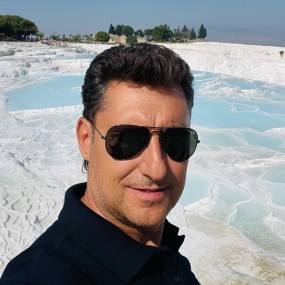
The main attraction is the travertine terraces formed by hot mineral springs. The water, rich in calcium, creates fantastic pools on the hillsides that shine in the sun and change color from turquoise to snow white.
You can walk barefoot on the terraces and feel the cool mineralized sand.
Some pools are specially open for swimming - swimming in them is like a spa treatment right in the heart of nature.
Ancient city of Hierapolis
At the top of the hill above the terraces are the ruins of Hierapolis, an ancient resort town of the Roman era.
Take a stroll through a nearly 2,000-year-old Roman theater and imagine how thousands of spectators gathered here.
Explore Plutoea, a mysterious cave with mysterious gases where ancient priests performed rituals.
Visit the basilica of the Apostle Philip and experience the spirit of history and spirituality.
Therapeutic and healing properties
Pamukkale water is known for its medicinal properties: it is rich in calcium and minerals, improves the condition of the skin and joints. Therefore, here you can combine tourism with health and spa treatments.
The perfect place for photos
The landscapes of Pamukkale look like they came from a postcard or a movie:
White terraces reflect the blue sky, creating the effect of mirror pools.
The ruins of Hierapolis against the background of the hills add to the historical charm.
Especially beautiful at sunset - the sun paints the terraces in pink and gold shades.
Entertainment and routes
Walking and trekking: itineraries on the terraces and surrounding hills.
Swimming in thermal pools: relaxation and healing at the same time.
Guided tours: exploring the history of Hierapolis, the legends of Plutoea and the Apostle Philip.
Photo tours and picnics: breathtaking views and unique shots for social networks.

When planning a trip to Pamukkale, it is important to choose a place of residence that will make your stay as comfortable and unforgettable as possible. This picturesque city offers a wide range of options – from luxury five-star hotels with thermal pools and spa treatments to cozy budget hotels and guest houses where you can feel the real atmosphere of Turkish hospitality.
Luxury hotels (5 stars)
These hotels offer a high level of comfort, spa treatments, thermal pools and first-class service.
Richmond Pamukkale Thermal is located 2 km from Pamukkale Terraces. The hotel offers spa treatments, indoor and outdoor pools, as well as restaurants with Turkish and international cuisine.
Spa Hotel Colossae Thermal offers indoor and outdoor thermal water pools, spa treatments and restaurants. The hotel is 10 km from Pamukkale.
Hierapark Thermal & Spa Hotel is located 5 km from Pamukkale. The hotel offers indoor and outdoor pools, spa treatments and restaurants.
Average price segment (3-4 stars)
These hotels offer comfortable accommodation with convenient location and good amenities.
Venus Suite Hotel is located in the center of Pamukkale, 1 km from the terraces. The hotel offers an outdoor pool, restaurant and free Wi-Fi.
Akapella Hotel is located 1.5 km from the terraces. The hotel offers a restaurant, free Wi-Fi and comfortable rooms.
Apollon Garden Pamukkale is located 1.5 km from the terraces. The hotel offers an outdoor pool, restaurant and free Wi-Fi.
Budget options (1–2 stars)
These options offer economical accommodation with basic amenities.
Hotel Sahin is located 500 m from the terraces. The hotel offers free Wi-Fi and simple rooms.
Melrose House Hotel is 1 km from the terraces. The hotel offers free Wi-Fi and simple rooms.
Çavdar Thermal Hotel is located 5 km from Pamukkale. The hotel offers indoor and outdoor pools with thermal water.
Alternative accommodation options
Guesthouses and hostels
Offer economical accommodation with general amenities. Examples: Artemis Yoruk Hotel, Paradise Hotel, Sunrise Aya Hotel.
Apartments and apartments
Ideal for those who prefer to cook for themselves. Pamukkale Whiteheaven Suite Hotel, The Cotton House
Eco-hotels and boutique hotels
They offer a unique living experience with an emphasis on sustainability and local culture. Bellamaritimo Hotel, The Cotton House

Pamukkale is not only a natural wonder with snow-white terraces, but also a rich historical center with ancient ruins that carry tourists back thousands of years. Here each step combines unique landscapes, thermal waters and architectural monuments of antiquity.
1. Pamukkale Travertine Terraces
Description: The main natural attraction is the cascades of snow-white travertine formed by hot mineral springs. The water cools, leaving calcium sediment, creating the effect of “frozen waterfalls”.
What to do: Walk barefoot on the terraces, take pictures, swim in specially designated pools.
Transport accessibility:
Walking from the center of Pamukkale - 15-25 minutes.
By taxi or bus - 5-10 minutes.
2. Ancient City of Hierapolis (Hierapolis)
Description: An ancient city founded in the III century BC, which was known as a Roman resort and center of religious cults. Preserved theater, baths, streets with columns and necropolis.
What to do: Walk through the ruins, visit the theater, explore the basilica of the Apostle Philip.
Transport accessibility:
On the territory of Pamukkale, near the terraces. Walking from the terraces - 5-10 minutes.
From the Pamukkale parking lot is a short walk along the hiking trails.
3. Theatre of Hierapolis
Description: Roman amphitheater for 12,000 spectators, well preserved. There were performances and gladiatorial fights.
What to do: Examine the architecture, arrange photo shoots with views of the hills.
Transport accessibility:
It is located within the archaeological complex of Hierapolis. Walk 5 minutes from the entrance.
4. Plutonium (Plutonium)
Description: A cave believed to be the entrance to the underworld. Carbon dioxide is released here, creating a dangerous but mystical atmosphere.
What to do: Guided tours, photos, study of mythology.
Transport accessibility:
Walking inside the complex of Hierapolis - about 5-7 minutes from the theater.
5. Cleopatra Pool (Cleopatra Pool)
Description: Artificial thermal pool with ancient columns at the bottom. According to legend, Cleopatra herself bathed here.
What to do: Swimming in warm mineralized water, swimming among ancient ruins.
Transport accessibility:
Walking from the terraces of Pamukkale - about 15 minutes.
You can take a taxi in 5 minutes.
6. Mausoleum of the Apostle Philip
Description: The Byzantine basilica, built on the site of the death of the Apostle Philip, is an important place for pilgrims.
What to do: Visiting the church, guided tour, spiritual insight and photography.
Transport accessibility:
In Hierapolis, on foot 10-15 minutes from the entrance.
7. Hierapolis Museum
Description: A small museum with archaeological exhibits: sarcophagi, statues, Roman ceramics and inscriptions.
What to do: Study of the history of the city, exhibits and cultural heritage.
Transport accessibility:
On the territory of the archaeological complex. Walk 2-5 minutes from the entrance.
Transport accessibility and logistics
From the town of Denizli:
Bus or minivan to Pamukkale - about 1.5 hours.
A taxi from Denizli is about 90-120 liras (~5-7 €).
Inside Pamukkale:
The main attractions are within walking distance from each other (5-25 minutes).
Electric cars and tourist shuttles are available for elderly tourists.
Parking near the complex allows you to drive by car and then walk along the trails.
Public transport:
Shuttles and minibuses run from the city center to the terraces and pools of Cleopatra every 20-30 minutes.

Pamukkale is a place that fascinates all year round, but planning a trip in the right season will allow you to feel all its magic. At different times of the year, different facets are revealed here: in spring the hills are covered with greenery and flowers, in summer the terraces sparkle in the sun, and in autumn ideal conditions are created for quiet walks and photo shoots.
1. Pamukkale Culture and Arts Festival
When: usually in May.
Which includes: art exhibitions, concerts of Turkish and international music, master classes in folk crafts.
Feature: the holiday combines modern art with the history and culture of the region.
2. Denizli International Music Festival (Denizli International Music Festival)
When: summer (July-August).
Which includes: classical music, jazz, traditional Turkish melodies.
Where: Concerts are held in open areas near Pamukkale or in Denizli (about 20 km).
3. Traditional Turkish holidays
Ramadan and Ramadan Bayram: mass celebrations with night bazaars and festival dinners.
Kurban Bayram: cultural events, local fairs and solemn services in mosques.
National holiday 30 August (Victory Day): parades and concerts in Denizli, which can be combined with a trip to Pamukkale.
4. Summer open concerts and shows on the terraces
During the high season, hotels and tour companies organize evening outdoor concerts, including traditional Turkish music, DJ sets and light shows against a backdrop of white terraces.

Pamukkale is located in southwestern Turkey and has a Mediterranean climate with continental features. This means a warm, dry summer and a mild, humid winter.
Spring (March-May)
Air temperature: +18... +25° C.
Water temperature in thermal pools: +32... +36°C
Seasonal features:
The hills grow green and plants bloom, creating picturesque landscapes.
The mild weather is ideal for hiking on the terraces and exploring Hierapolis.
Recommendation: A great time for combined rest - walks, excursions and swimming in thermal pools.
Summer (June-August)
Air temperature: +30 ... +35 ° C, sometimes up to +38 oh C.
Water temperature: +36... +40°C
Seasonal features:
Peak tourist season, terraces and pools are crowded.
Ideal for lovers of sunbathing and evening swimming.
Recommendation: Suitable for outdoor activities and spa treatments, but you need to take into account the heat in the daytime.
Autumn (September – October)
Air temperature: +22... +28°C
Water temperature: +34... +37° C.
Seasonal features:
Fewer tourists, mild and comfortable weather.
The golden and orange shades of the hills create beautiful landscapes.
Recommendation: The best time for relaxing, photo shoots and excursion walks.
Winter (November – February)
Air temperature: +10 ... +15 ° C, sometimes lower
Water temperature: +30... +34°C
Seasonal features:
Few tourists, quiet and quiet.
It is sometimes cool for swimming outdoors, but thermal pools remain warm.
Recommendation: Suitable for a relaxing recreation, exploring history and nature without crowds of tourists.

A trip to Pamukkale is not only enjoying natural wonders and historical monuments, but also immersing yourself in the atmosphere of Turkish culture. In order for your holiday to be comfortable and safe, it is important to know the local language, respect the traditions and observe the laws of the country.
Language of communication
Official language: Turkish.
English: widely spoken in tourist areas, hotels, excursions and souvenir shops.
Other languages: German, Russian or French are sometimes found in major tourist hotels.
Tip: It is useful to learn a few basic words in Turkish - "hello" (merhaba), "thank you" (teşekkür ederim), "how much is it?" (kaç lira?). This encourages respect and facilitates communication with locals.
Traditions and customs
Greetings and courtesy:
Turks greet each other with a handshake or a slight bow of the head.
Respect for elders is an important part of culture.
Clothes:
There are no strict restrictions in tourist places, but when visiting mosques and religious sites, you must:
Women should cover their shoulders, knees and hair (head scarf).
Men wear long pants and a T-shirt with sleeves.
Public behaviour:
Loud shouting and conflict situations in public are undesirable.
Do not touch food, money or objects without permission.
Photography:
It is usually allowed to photograph terraces and ruins.
In mosques or religious ceremonies, permission is required.
Laws and regulations
Documents and visas:
Most tourists require a visa (electronic or paper), the passport must be valid for at least 6 months.
Alcohol:
Available in restaurants, bars and hotels, but prohibited in public places other than those designated.
Smoking:
Smoking is prohibited in closed public places, restaurants, museums and buses.
Road rules:
Right-hand traffic.
The use of seat belts is mandatory.
Behavior on Pamukkale's terraces:
To preserve white travertine, it is forbidden to wear shoes.
Swimming is allowed only in special swimming pools.
Environmental regulations:
Do not leave garbage on the territory of terraces and archaeological complexes.
Do not break stones or minerals from travertine terraces.

Greetings and general phrases
Merhaba (Merhaba) - Hello, hello.
Günaydın (Gunaydın) - Good morning
İyi akşamlar (yi akshamlar) - Good evening
Hoşça kal (hoshcha kal) - Goodbye (says the remainder)
Güle güle - Goodbye (says the departing)
Teşekkür ederim (Tashekkür ederim) - Thank you
Bir şey değil (Bir Shei Deil) - Please / Nothing
Lütfen (Lutfen) - Please (politely)
Özür dilerim (ozur dilerim) - Excuse me
Evet (evet) - Yes
Hayır (Khayır) - No
In shops and restaurants
Ne kadar? - How much is it?
Bu ne? - What is it?
Menü lütfen (Lutfen menu, please)
Hesap lütfen (Hesap Lutfen) - Account, please
Su (su) - Water
Kahve (cafe) - Coffee
Çay (tea) - Tea
Yemek (Yemek) - Food / dish
Tatlı (Tatlas) - dessert/sweet
Çok güzel (chok gezel) - Very tasty / Very beautiful
Travel and transport
Nerede? Where?
Tuvalet nerede? - Where's the toilet?
Lütfen buraya gidin (Lutfen brown gidin) - Please come here
Yardım edebilir misiniz? - Can you help?
Otobüs (Otobus) - Bus
Taksi - Taxi
Havalimanı (Havalimans) - Airport
Bilet (ticket) - Ticket
Saat kaç? - What time is it?
Hotels and hotels
Rezervasyon (Reservación) - Reservation
Oda (ode) - Number
Kaç kişi? - How many people?
Anahtar lütfen (anatar lutfen) - Key, please
Wi-Fi şifresi – Wi-Fi password
Sabah / akşam kahvaltısı (Sabah / Aksham Kafwaltysy) - Breakfast / Dinner
Important phrases for security
Polis (police) - Police
Yardım! (yard!) - Help!
Kayboldum - I'm lost
Acil! (Agil!) - Urgent / Emergency

Unique and healthy food
Turkish sweets
Lucum (Turkish Delight) - soft jelly candies with nuts, pistachios or rose water. Great souvenir and gift.
Baklava is a layered dough with nuts and syrup. Very sweet, but worth a try at the local cafes.
Honey and jams
The region produces natural mountain honey, rich in minerals.
Jams of figs, quince and pomegranate are delicious and useful.
Local herbal teas
Teas from kava, sage, mint and thyme help with fatigue and strengthen immunity.
You can buy them in bags or in souvenir shops.
Yogurt and dairy products
Turkish yogurt is especially thick and useful for digestion.
It is often sold with honey and nuts.
Medicines and spa products
Pamukkale Mineral Water
Known for its medicinal properties: improves the condition of the skin, joints and digestive system.
You can buy bottled water as a souvenir or for health.
Cosmetics and spa products with thermal water
Creams, soaps and lotions with Pamukkale minerals.
Good for the skin and a nice souvenir for friends and family.
Mud masks and therapeutic clays
Clay from thermal springs is used for spa treatments and skin care.
It can be purchased in small packages for home use.
Souvenirs and gifts
Textiles and cotton products
Pamukkale means “Cotton Castle”, so the local cotton and its products are especially popular.
Towels, scarves, scarves, tablecloths.
Nuts and dried fruit
Pistachios, almonds, figs, raisins are popular Turkish delicacies.
Convenient to bring as an edible souvenir.
Ceramics and handicrafts
Hand painting and traditional patterns.
Small decorative plates, cups and jugs.
Magnets and miniatures of Pamukkale terraces
Light and compact souvenirs for tourists.
Figures, postcards, keychains with the symbols of the city.
Safety of rest
Pamukkale is a quiet tourist city with developed infrastructure. Key safety recommendations:
Personal items:
Keep an eye out for bags and valuables in places with large crowds of tourists.
In hotels, use a safe for documents and cash.
Pedestrian routes and terraces:
Follow the rules of visiting travertine terraces: walk only on marked paths and not in shoes.
Keep an eye out for children - terraces are slippery and hot water pools can be dangerous.
Transport:
Use licensed taxis or official shuttles.
When renting a car, follow local traffic rules.
Documents required
Passport:
Valid for at least 6 months from the date of entry.
Visa:
For citizens of most countries, you need an electronic visa (e-Visa), which is issued online in advance.
Some nationalities can stay up to 90 days without a visa.
Insurance:
Health insurance is required to cover emergency care, hospitalization and transportation.
It is advisable to have insurance in case of cancellation of the trip and loss of luggage.
Emergency phones
Police: 155
Ambulance: 112
Fire service: 110
Tourist Police: 0242 310 00 70 (Denizli, nearest centre to Pamukkale)
Mobile and Internet
Network connection:
Turkish SIM cards are sold at airports, shops and kiosks.
Popular operators: Turkcell, Vodafone, Türk Telekom.
Internet:
Almost all hotels and cafes offer free Wi-Fi.
Mobile Internet is convenient for navigation and communication.
Term of stay of tourists
Visa-free: Citizens of most countries can stay in Turkey for up to 90 days within 180 days.
Visa: An e-Visa specifies a specific length of stay, usually up to 90 days.
If the period of stay is exceeded, fines and administrative measures are provided.
Create a query and local guides will offer you the best options