Independent tourism and recreation in Bradford-upon-Avon Historical information about the city of Bradford-on-...
Bradford-on-Avon is a small historic town in Wiltshire, southwest England, located on the Avon River between Bath and Trowbridge. Today it is best known for its well-preserved old buildings, medieval buildings, former textile factories, stone bridges and picturesque location on the slopes of the valley. The history of the city has more than two thousand years.
Ancient history
The first settlements on the territory of modern Bradford-on-Avon appeared in the Iron Age, more than two thousand years ago. On the hill above the river there was a fortified settlement, protected by natural steep slopes. Archaeological finds also indicate an earlier development of the territory.
During the period of Roman rule, the area received a new development. Nearby there was a large Roman villa, which was the center of a significant agricultural estate. The Roman presence left archaeological traces, although the modern appearance of the city mostly formed later.
Anglo-Saxon period
The name of the city is associated with its location at a convenient ford across the Avon River. The English word Bradford comes from words meaning roughly “broad ford.” It was the crossing of the river for centuries determined the importance of the settlement.
One of the first written references refers to the VII century. In 652, according to the Anglo-Saxon Chronicle, there was a battle associated with the struggle between the Anglo-Saxon kingdoms. Museum sources point to 659 as another traditional date for the battle of the ford.
Around 700, Saint Aldhelm established a small religious community associated with the Christianization of the Western Saxons. From this period, one of the main historical values of the city is preserved - the Church of St. Lawrence, which dates back to about the VIII century. It is considered one of the most unusual surviving Anglo-Saxon church buildings in England.
Medieval Bradford
In 1001, King Æthelred II transferred the Bradford estate to Shaftesbury Abbey in Dorset. For several centuries, the territory was under the control of this large convent. The properties of the abbey included not only the city, but also extensive agricultural land.
By the time the Book of the Last Judgment was compiled in 1086, Bradford was already a large agricultural and commercial settlement. The estate was considered very valuable: it had a significant amount of arable land, and its annual value was high by the standards of the time.
In the Middle Ages, the city gradually turned into an important local shopping center. In 1295, Bradford gained representation in the English Parliament, sending two representatives.
The emergence of the textile industry
The real economic flourishing of Bradford-on-Avon is associated with the production of wool and wool fabrics. The favorable location by the river allowed the use of water for the work of mills, and the surrounding areas of the Cotswolds provided raw materials - sheep wool.
For about six centuries, wool and fabric production remained the backbone of the local economy. Initially, the fabric was produced by small workshops and in the homes of residents. Later large enterprises and factories appeared.
Especially noticeable production grew in the XVII-XVIII centuries. On the slopes around the city, rows of small houses of weavers appeared, and wealthy textile owners built larger stone houses. It was this combination of modest working cottages and luxury houses of wealthy industrialists that formed the characteristic architectural appearance of the city.
Medieval barn
One of the most important evidence of the medieval past of the city is the Grand Barn of Barton Farm (Tithe Barn). The modern building was built around the 1330s and belonged to the Shaftesbury Abbey agricultural estate.
The barn was used in connection with the storage of agricultural products and tithe duties. Its dimensions are impressive: the building is about 51 meters long and 10 meters wide. The surviving wooden roof structure is an outstanding example of medieval architecture.
After the dissolution of the monasteries during the reign of Henry VIII, Shaftesbury Abbey was closed in 1539, and the properties of Bradford changed hands. The barn itself continued to be used as part of the agricultural complex.
XVI-XVI centuries
After the Reformation, the city continued to develop as a trading and textile center. Old religious possessions gradually passed to secular owners.
In the seventeenth century, the production of wool fabrics became even more important. Numerous workshops, warehouses and houses of merchants appeared in the city. The richness of textile entrepreneurs was reflected in the architecture – many stone houses, which today are perceived as historical landmarks, were built during this period.
XVIII century and the Industrial Revolution
The eighteenth century was a turning point. Traditional home production gradually gave way to mechanized. Instead of small workshops, large wool factories began to appear, located directly by the river.
Avon water was used as an energy source for industrial machinery, and later enterprises began to use steam engines. As a result, production has become much larger.
It was during this period that the city’s characteristic textile factories and rows of weavers’ houses appeared, which today are an important part of the historical heritage of Bradford-on-Avon.
Kenneth Channel - Avon
The construction of the Kennet and Avon Canal was of great importance for the economic development of the city. He connected the Kenneth and Avon river basins and created an additional transport route for transporting raw materials and finished products.
The canal ran alongside Barton Farm and textile businesses. Water transport has made it easier to transport goods to other parts of the country.
XIX century: the rise and decline of the textile industry
In the first half of the XIX century, Bradford-on-Avon remained an important center for the production of woollen fabrics. However, the Industrial Revolution gradually changed the economic map of Britain.
Large factories in the north of England, especially in Yorkshire and Lancashire, benefited from scale of production, new technologies and transport links. Gradually, the Bradford-on-Avon textile industry began to lose its former importance.
As a result, some factories closed or changed their purpose. The last local enterprises of the wool industry ceased to work at the beginning of the XX century; local sources point to 1905 as the date of closure of the last factory of this profile.
Transition to rubber production
The decline of the textile industry did not mean a final economic crisis for the city. Since 1848, the production of rubber products began to develop here.
The rubber industry became an important new branch of the Bradford-on-Avon economy and existed much longer than the textile industry. Enterprises associated with the production of rubber worked in the city until 1994.
Thus, several industrial eras have been preserved in the architecture of the city: medieval agricultural buildings, weavers' houses, large wool factories and later industrial structures.
XX century
In the twentieth century, Bradford-on-Avon gradually ceased to be a predominantly industrial city. The closure of textile factories and later rubber plants changed the structure of the local economy.
At the same time, the city avoided the large-scale restructuring characteristic of many industrial centers. Much of the historic stone building has survived, so Bradford-on-Avon was able to gradually transform from an industrial settlement into a historic and touristic city.
Of particular importance is the preservation of old buildings. For example, when in 1914 the medieval Great Barn was no longer needed for the farm and threatened its destruction, it was handed over to the historical society for preservation. Subsequently, the building went through several stages of restoration.
Bradford-on-Avon tonight
Today Bradford-on-Avon is a small town with a population of about 10 thousand people, famous for its historical architecture, tourist routes and picturesque location by the river.
The main wealth of the city is not a separate attraction, but a combination of different historical epochs. Here you can see the Anglo-Saxon church, the medieval bridge, the ancient Beginage, the medieval barn, the houses of weavers of the XVII century, Georgian buildings, former textile factories and the canal of the XVIII century.
Especially attractive are the ancient bridge over Avon, narrow streets, stone houses on the slopes of the valley, former factory buildings and walks along the Kenneth-Avon canal.
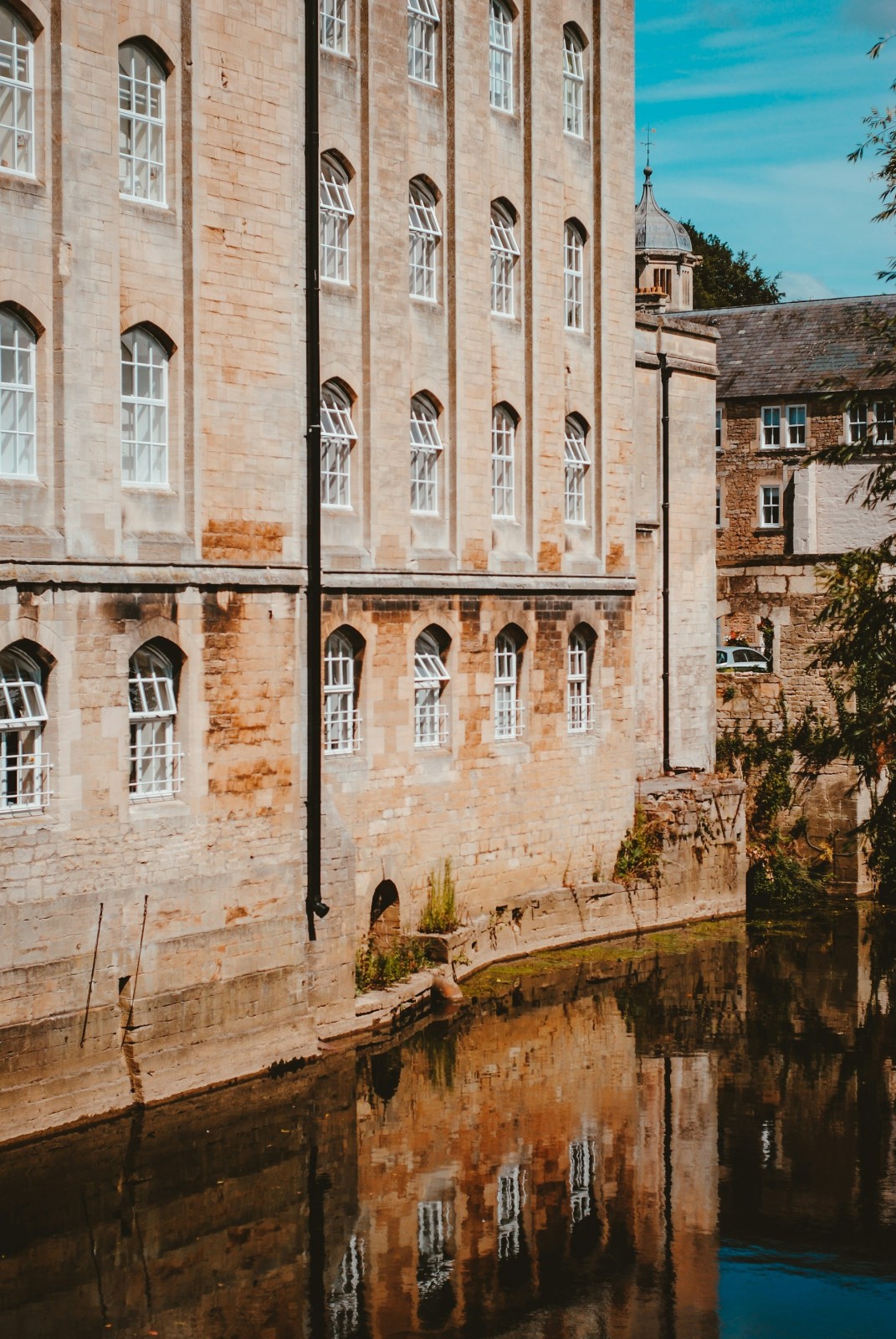
Today, former industrial buildings have received a new life: they house shops, restaurants, hotels, living quarters and other modern facilities. Thanks to this, the city retained its historical character, but at the same time adapted to modern life.
1. A unique historical atmosphere. Walking through the city is like traveling through old England: narrow streets, stone houses, small alleys and buildings, many of which are associated with the history of the wool industry. The old buildings look especially beautiful on the slopes above the river.
2. Rich industrial heritage. For about 600 years, the city was associated with the production of wool and fabrics. The old factories and rows of weavers’ houses have survived and today are an important part of the urban landscape. Later, the rubber industry developed here.
3. The medieval Great Barn. One of the most impressive buildings of the city is Tithe Barn, a huge medieval barn of the XIV century. It is one of the most significant surviving medieval barns in England.
4. Anglo-Saxon St. Lawrence Church.
The small Church of St Laurence is considered one of the most unusual Anglo-Saxon church buildings in England. Its origin is attributed to about the VIII century.
5. The picturesque Avon River. The river passes directly through the city and creates great opportunities for quiet walks. Especially pleasant routes along the embankment and through the historical center.
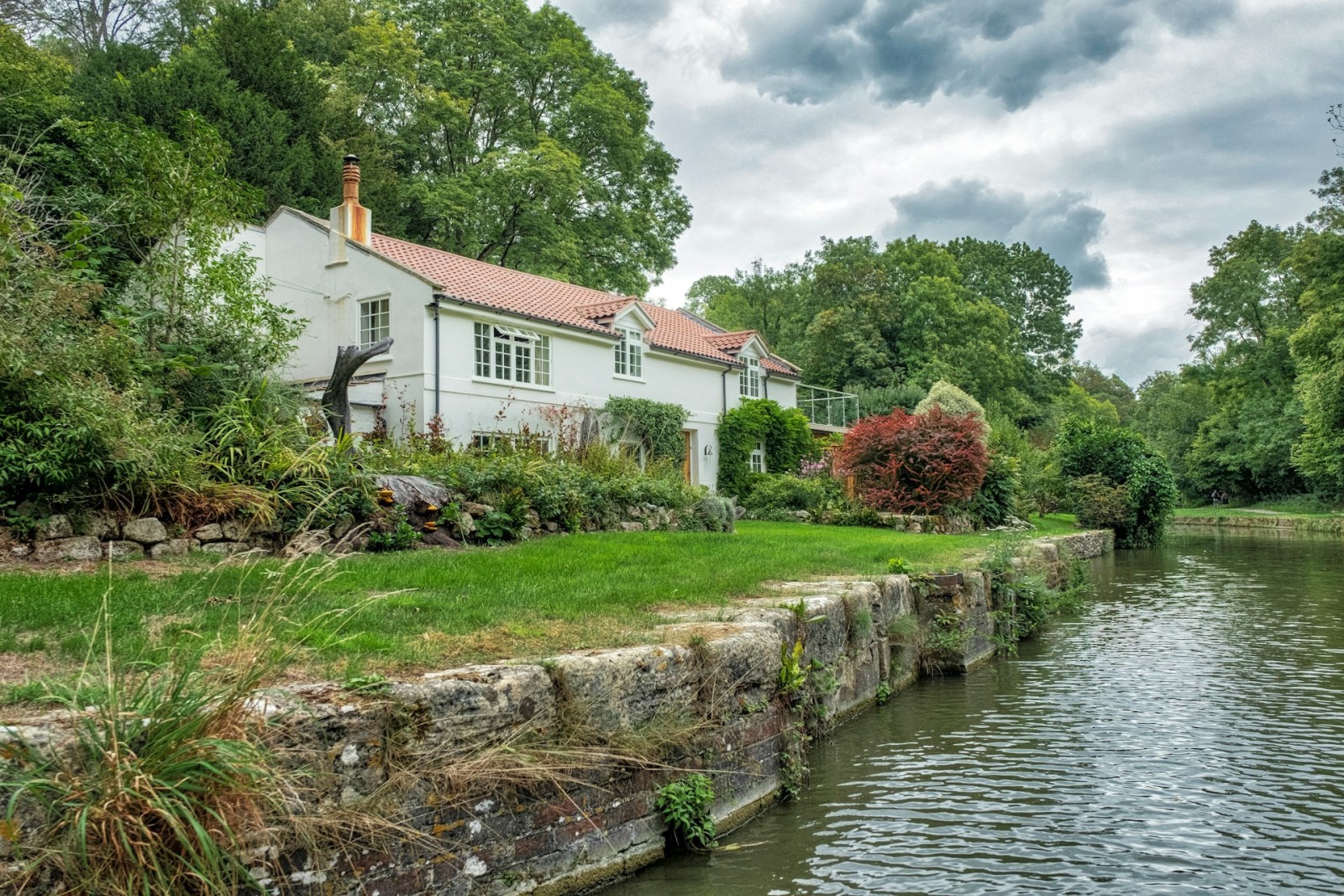
6. Kenneth Channel - Avon. The channel allows you to see the other side of the city – quiet, green and more rural. It is nice to walk, ride a bike and watch the boats.
7. The old city bridge. The medieval bridge over Avon is one of the recognizable symbols of the city. Its individual parts belong to the XIII century. In the center of the bridge is an unusual former chapel, later used as a room for the detention of lawbreakers.
1. Premium and historic hotels
Woolley Grange is a country historic hotel in an old building. Suitable for family and relaxing holidays, especially if you want to combine living in an English country house with trips to Wiltshire.
Widbrook Grange is a historic country hotel with spacious grounds, a restaurant and additional amenities. This is one of the most famous accommodation options in the Bradford-on-Avon area.
The Hall Estate - accommodation in a historic mansion. Option for tourists who want an unusual atmosphere and accommodation in an ancient English house. The object is particularly well appreciated by travelers.
2. Mid-range hotels
Timbrell's Yard is a popular option in the historic part of the city. It combines accommodation with a pub and restaurant, so it is suitable for tourists who want to live directly in the atmosphere of the old English city. Among the B&B region, this is one of the most popular options.
Lee Park Country House Hotel & Wineyard, Sinacher Collective is a country hotel near Bradford-on-Avon. Suitable for travelers by car, who are interested in parking, calm territory and country atmosphere.
Beaches Farmhouse Country Cottages & Rooms is a farmer's accommodation option with rooms and cottages. A good choice for families, motorists and those who prefer living outside of dense urban areas.
3. Small hotels and B&B
The Bed & Breakfast format is particularly common in Bradford-on-Avon. Usually, the tourist receives a separate room, and breakfast is included in the price or offered additionally. This option allows you to feel the atmosphere of a small English city and communicate with local owners.
Popular options:
Widbrook Barns is a cozy B&B in a country setting; one of the most highly regarded accommodation options in the area.
Cherry Tree is a small B&B in the Winsley area near Bradford-on-Avon.
April Cottage is an option of home living in a calm countryside.
The Westwoods is a small B&B in the Upper Westwood area, suitable for a relaxing holiday.
Teasle Cottage is a compact accommodation option in traditional English style.
4. Guesthouses and inexpensive options
For tourists looking to cut costs, it is most interesting to look for B&Bs, small guesthouses and rooms in private homes. In Bradford-on-Avon, there are quite a lot of such options compared to large hotels.
The Tithe Cottage is a small guest house in the city suitable for individual travelers and couples.
The George at Woolley is a traditional English pub with accommodation in the Woolley area.
The Barge Inn is an accommodation pub located in the Frome Road area; combines accommodation with a restaurant and a traditional English pub atmosphere.
5. Cottages and independent living
Cumberwell Country Cottages are country cottages on the farm. Especially convenient for families, companies and travelers with a car.
Bradford Views Apartment is an apartment in the historic part of the city. This option is convenient for tourists who need a kitchen and more independence.
The Hall Estate also offers a self-hosted accommodation format.
Apartments and cottages are especially advantageous when staying from a few days to a week, as they allow you to cook your own food and not depend on restaurants.
1. The Great Barn of Barton Farm (Tithe Barn)
One of the main monuments of the city is a huge medieval barn of the XIV century with a length of about 51 meters. It is considered one of the largest and best preserved medieval barns in England. Of particular interest is the massive wooden roof structure.
Transport: near the center, the Avon River and the Kenneth-Avon Canal. You can walk from the train station. It can also be reached by car or bicycle.
2. The Anglo-Saxon Church of St. Laurence
One of the most unusual historical churches of the city and a rare preserved monument of Anglo-Saxon architecture. Its history is connected with the early medieval period of Bradford-on-Avon.
Transport: located on Church Street in the historic center. The city bridge and other central attractions can be easily reached on foot.
3. City Bridge and Prison Chapel (Town Bridge and Lock-up)
The historic bridge over the Avon River is one of the main symbols of Bradford-on-Avon. Some parts of the bridge belong to the XIII century. It has a small structure, which was originally associated with the chapel, and later used as a place of temporary detention of violators of order.
Transportation: located directly in the city center. It is most convenient to get on foot and combine a visit to the bridge with a walk through the ancient streets and the embankment.
4. Bradford on Avon Museum (Bradford on Avon Museum)
A small historical museum dedicated to the past of the city. The expositions tell about the local industry, textile production, architecture and life of residents.
Transport: located in the central part of the city, near the Town Bridge. The museum is convenient to walk from the railway station and other attractions.
5. Barton Farm Country Park (Barton Farm Country Park)
The historical area around Tithe Barn, where the old outbuildings are preserved. Today, some of the buildings are used for shops, cafes, galleries and workshops. You can also walk along the river and canal.
Transport: Close to Tithe Barn, so the easiest way to get there is on foot. Parking spaces are provided for travel by car.
6. River Avon
The Avon River runs directly through the city and is one of its main natural attractions. Especially picturesque areas near the old bridge, where the river is surrounded by historic stone buildings.
Transportation: No transportation required. The promenade is best explored on foot, combining a walk with a visit to Town Bridge, Barton Farm and the old center.
7. Kenneth-Avon Canal (Kennet and Avon Canal)
The canal runs close to the historic center and recalls the city’s industrial past. In the XIX century, it was used for the transportation of goods, and today it has become a popular place for walking, cycling and watching pleasure boats.
Transport: From the train station to the canal can be reached in about 10 minutes. There is a comfortable walking path along the canal.
8. Bradford-on-Avon Wharf (Bradford-on-Avon Wharf)
Historic pier on the Kenneth Canal - Avon. In the XIX century it was one of the busiest piers of the canal. Today, historical elements of water infrastructure are preserved here, and the territory itself is suitable for a quiet walk.
Transport: It is convenient to walk from the railway station or along the canal. You can also come by car.
9. The Bradford-on-Avon Lock Gateway
The historic gateway on the Kenneth-Avon Canal. This is an interesting place to observe the operation of the lock system and boats passing through the channel.
Transport: located near the pier and accessible on foot along the canal. It is most convenient to include it in the walking route along the embankment.
10. Weavers' homes and former textile factories
The historical development of the city is associated with six centuries of wool and fabric production. On the slopes there are rows of small houses of weavers, and near the river there are large former factory buildings. They largely formed the modern architectural appearance of the city.
Transportation: located mainly in the central part of the city. It is best to see them on foot while walking through the old streets.
11. Holy Trinity Church (Holy Trinity Church)
Historical church, associated with the development of the city since the Middle Ages. It is located in the old part of Bradford-on-Avon and fits well into the overall architectural ensemble of the historic center.
Transport: within walking distance of Town Bridge and other central attractions.
12. Pedestrian Packhorse Bridge (Packhorse Bridge)
An ancient bridge linked to historic routes between Barton Farm and the surrounding area. It allows you to see the less ceremonial, but very characteristic side of the medieval city.
Transport: Available on foot between the historic centre and Barton Farm. It is also suitable for cycling.
13. The Westwood Manor Manor
Historic country house in the village of Westwood near Bradford-on-Avon. It is of interest for lovers of English estates, ancient interiors and country architecture.
Transportation: located outside the central part of the city. It is most convenient to travel by car or bicycle.
14. The Avoncliff Aqueduct
The picturesque aqueduct of the Kenneth-Avon Canal, located in the vicinity of the city. The canal runs through a stone structure above the valley and the railway line. This is a particularly interesting place to walk and take pictures.
Transport: It is more convenient to travel by car or bicycle. You can also follow the route along the canal.
15. Farleigh Hungerford Castle (Farleigh Hungerford Castle)
Medieval ruins of a castle in the vicinity of Bradford-on-Avon. Parts of the fortifications, living quarters and chapels have been preserved. This is a good addition to the tour for those interested in the medieval history of England.
Transport: located outside the city, so it is most convenient to get by car. From Tithe Barn to the castle, you can continue your tour of the surrounding area.
Spring music concerts and festivals (March-May) - seasonal concerts, performances of local musicians and chamber music events begin in the city. Holy Trinity Church regularly hosts Café Concerts with classical music.
Bradford on Avon Live Music Festival (May) is one of the most interesting music festivals in the city. It usually takes place in late May and combines several days of live music: rock, indie, pop, jazz and blues. Concerts are held at different venues in the city.
Summer concerts and musical events (June-August) – in summer the number of events increases markedly. Open-air concerts, musical evenings, theatre performances, family programs and dance events are held.
Summer festivals and street festivals (July-August) – events with live music, dancing, food and entertainment appear in the city. For example, in the summer of 2026, Carnivalism held a three-day musical weekend with dance music.
Fairs of local manufacturers and artisans (during the year, especially in spring-autumn) – markets with local products, pastries, household blanks, handicrafts and works by local craftsmen are regularly held. The weekly city market takes place on Thursdays.
Bradford on Avon Flower & Produce Show (September) is a traditional exhibition of flowers, garden products and local crops. This is a typical event for the English province with competitions and exhibitions. In 2026, it is scheduled for early September.
Creative Makers Market (September) is a fair for local artists, designers and artisans. Here you can buy handmade products and souvenirs.
Car Park Fiesta (September) is a modern city festival with live music, dance, creative workshops, local food and drinks. The event is aimed at residents and tourists and takes place in the format of a large free holiday.
Autumn concerts and cultural events (September–November) – after the end of the summer season, concerts, art exhibitions, literary events and small public festivals continue. The city also hosts regular musical performances at the Wiltshire Music Centre.
Christmas events and fairs (December) - before Christmas there are festive markets, local craftsmen's sales, concerts, family events and other events related to the Christmas season.
New Year's events (December-January) - in late December and early January, celebratory concerts, meetings and small social events are held.
Morris dance and traditional English performances (spring-autumn) - in the vicinity of the city you can find traditional dance groups performing Morris dancing - one of the characteristic types of English folk dance. In Bradford-on-Avon, training and performances of such groups are regularly held.
spring
In March, the air temperature is usually +9 ... +12 ° C during the day and +2 ... +5 ° C at night. In April it becomes warmer - about +12 ... +15 °C during the day and +4 ... +7 °C at night. In May, the daily temperature often reaches +16. +19 °C, at night about +7... +10°C.
The Avon River and other bodies of water remain cold - about +8 ... +14 °C. Spring is not suitable for swimming.
Spring is good for walking around the historic center, exploring ancient architecture and traveling around the surrounding area. In April and May, nature becomes especially green and blooming.
Summer.
June usually brings +19...+21 °C during the day and +10...+13 °C at night. In July and August, the average daily temperature is about +20 ... +23 ° C, and at night +12 ... +14 ° C. Sometimes there are hotter days with temperatures above +25 ° C.
The water in the Avon River warms up to about 15 in the summer. +19 °C, however, for an ordinary beach holiday, local water bodies are not the main destination.
Summer is the most comfortable period for walking, cycling routes, excursions and visiting festivals. It is worth having a lightweight waterproof jacket and umbrella.
autumn
In September, there is still relatively warm weather - about +18. +20 °C during the day and +10 ... +12 °C at night. In October, the temperature drops to +14 ... +16 °C during the day and +7 ... +10 °C at night, and in November it is about +10 ... +12 °C during the day and +4 ... +7 °C at night.
The water temperature gradually drops from about +16. +18 °C in September to +10 ... +12 °C in November.
September is a good month to travel: tourists are usually less than in summer, but the weather is still quite comfortable. October is suitable for quiet walks and cultural tourism.
Winter
Winter in Bradford-on-Avon is milder than in many regions of continental Europe. In December, the temperature is usually +8 ... +10 °C during the day and +3 ... +5 °C at night. In January and February - about +7 ... +9 °C during the day and +2 ... +4 °C at night.
The water temperature in the river is approximately within +5 ... +9 ° C. Swimming is not recommended.
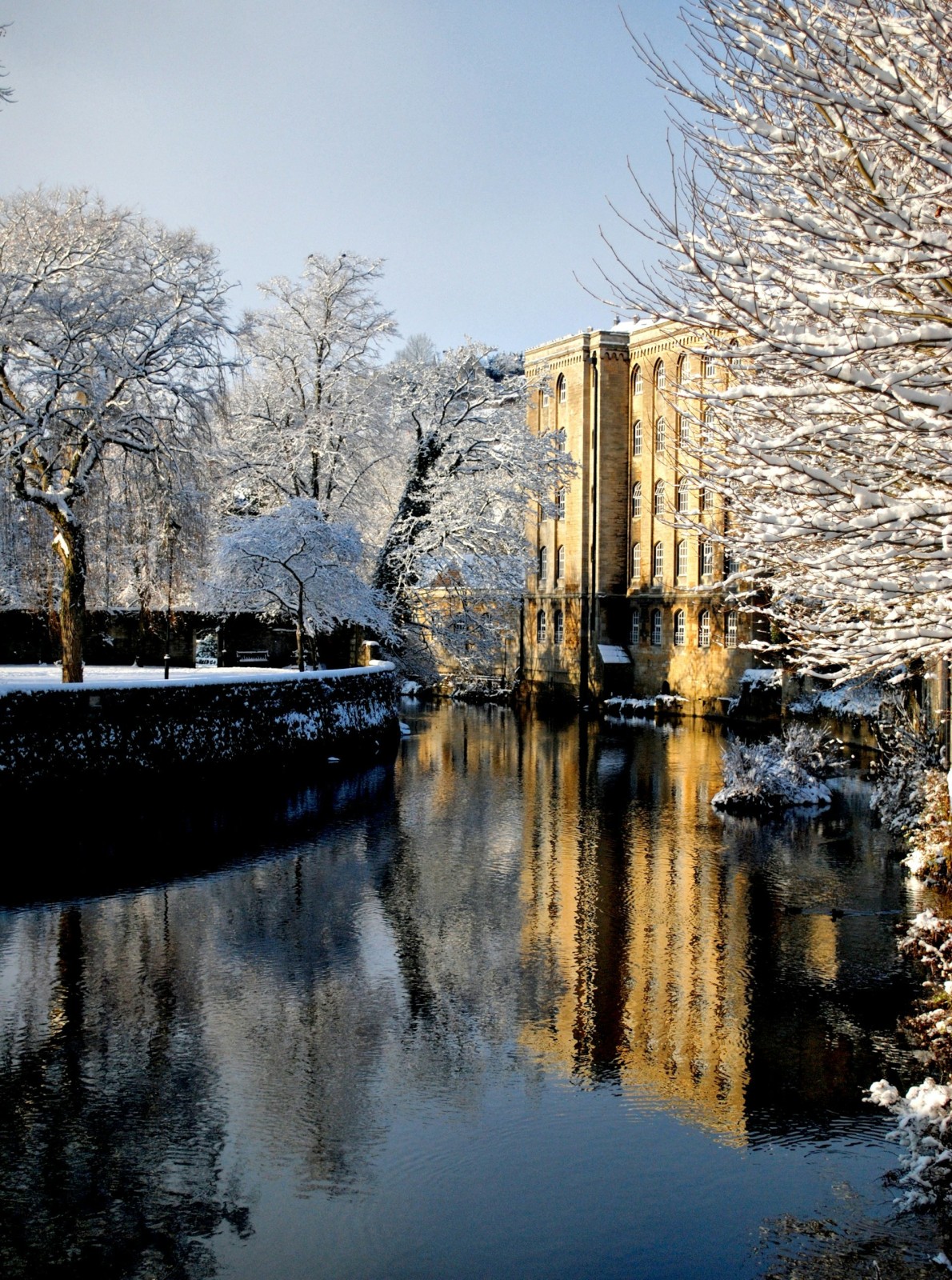
In winter, there are often cloudy and rainy days. Snow is possible, but sustained snow cover is uncharacteristic for the city. But December is interesting for Christmas events and festive atmosphere.
Language of communication
The main language of communication in Bradford-on-Avon is English. Locals speak British English. In touristic places, hotels, cafes, restaurants, shops and the train station, you can usually explain yourself in English.
For a tourist, it is desirable to know at least basic English phrases: greeting, request for help, questions about the road, payment, transport and ordering food. In a small town, locals are usually friendly to tourists, so if you have difficulty, you can ask to speak more slowly.
Traditions and customs
Politeness is an important part of British culture. When referring to strangers, it is customary to use "please" and "thank you."
Lines - in the UK it is customary to observe the queue. Do not walk ahead of other people in shops, cafes, stops or other public places.
Personal space – Britons usually prefer to keep a certain distance when talking. Don’t get too close to a stranger.
Greetings – at the first meeting, a smile, greeting and a handshake are usually enough. Hugs and kisses are appropriate mainly between well-known people.
Punctuality – being late for excursions, meetings, events or pre-booked services is considered impolite.
Tipping – in restaurants, the tip is usually about 10-12.5% if the service fee is not already included in the bill. In cafes and pubs tips are not always mandatory.
The pub is an important part of British culture. When ordering drinks, they often independently approach the bar counter and make an order. It is not customary to try to serve yourself without permission.
Silence and respect for others – in residential areas, small hotels and public transport, loud talk and music should be avoided.
Photography – Before taking pictures of people, it is advisable to ask permission. In museums and historical buildings, it is necessary to observe the established shooting rules.
Nature - during walks around the city you can not leave garbage, damage plants or enter a private territory. On rural routes, the marked paths should be followed.
Basic rules and laws
Documents – A foreign tourist must have a valid overseas passport and an appropriate permit to enter the UK if it is required for the traveler’s citizenship.
Visa and Electronic Permit – Requirements depend on citizenship. Before traveling, you need to check the current entry rules for your passport.
Alcohol – alcohol can be consumed only in permitted places and in compliance with age restrictions. Appearance in a public place in a state of severe intoxication can lead to problems with the police.
Smoking – Smoking is prohibited in many enclosed public spaces, including restaurants, cafes, shops and public transport. Some restrictions apply to the use of electronic cigarettes.
Possession, use and distribution of prohibited drugs is a criminal offence.
Public order - you cannot threaten people, engage in fights, damage property or intentionally disrupt public order.
Road traffic - in the UK there is left-hand traffic. When crossing the road, you need to carefully look at the sides, especially at intersections unusual for the tourist.
Road safety – cross the road at pedestrian crossings, if they are located nearby. On small rural roads, you need to be especially careful because of the lack of sidewalks.
Public transport – it is necessary to pay for travel and comply with the rules of the carrier. Tickets and travel documents should be kept until the end of the trip.
Natural areas and historical sites - you can not damage ancient buildings, monuments, fences and other objects of cultural heritage.
1. Greetings and courtesy
Hello! - Hello there! Transcription: Hallow
Hi! Transcription: Hi.
Good morning! Transcription: Good Morning
Good afternoon! - Good afternoon! Transcription: gude afternun
Good evening! - Good evening! Transcription: gude ivning
Goodbye! - Goodbye! Transcription: goodbye
Please. - Please. Transcription: Plize
Thank you. - Thank you. Transcription: Senk Yu
You're welcome. - You're welcome. / Please. Transcription: Ye Welkeham
Excuse me. - Excuse me. / Excuse me. Transcription: Ixcuse Mi
Sorry. - Excuse me. / Excuse me. Transcription: kori
No problem. - No problem. Transcription: know próblam
2. If you need help
Can you help me? - Can you help me? Transcription: Ken yu Help mi?
Could you help me, please? - Could you help me? Transcription: What do you mean?
I don't speak English very well. - I don't speak English very well. Transcription: I dont speak English vary Wel
Do you speak Russian? - Do you speak Russian? Transcription: Do you u speak rushen?
Could you speak more slowly, please? - Could you speak more slowly? Transcription: Where did you listen, Plize?
Could you repeat that, please? - Could you say it again? Transcription: what?
I don't understand. - I don't understand. Transcription: I Dont Anderstend
Could you write it down, please? - Could you write this down? Transcription: Where do you right and down, please?
3. How to ask the way
Where is the railway station? - Where's the train station? Transcription: Wheh-whew, Railway Station?
Where is the bus stop? - Where's the bus stop? Transcription: eh ze bass stop?
How do I get to the town center? - How do you get to the city center? Transcription: How do do I get thou ze town sente?
Is it far from here? - Is that far from here? Transcription: from it headlights from chia?
Is it within walking distance? - Can I walk there? Transcription: It's Weasin Dynasty?
How long does it take? - How long does it take? Transcription: How long daz it take?
Which way is the canal? - Which way is the channel? Transcription: Uich Wei of Ze Canal?
Which way is the Tithe Barn? Which way is Tithe Barn? Transcription: Uich wei from ze taize ban?
Could you show me on the map? - Can you show it on the map? Transcription: Where does he go?
4. At the hotel.
I have a reservation. - I have a reservation. Transcription: I've got a heavy view.
I have a booking under the name... Reservations are made in the name... Transcription: ai hev e buking ánde ze name ...
I'd like to check in. - I'd like to register. Transcription: Iike that check in
What time is check-in? - What time is the check-in? Transcription: What time is the check-in?
What time is check-out? - What time is the eviction? Transcription: What time is the checkout?
Is breakfast included? - Breakfast included? Transcription: from Breckfest Includid?
Could I have the Wi-Fi password? - Can I have a Wi-Fi password? Transcription: Where did I go?
There is a problem with my room. - My room has a problem. Transcription: Zea from Problam Weez May Rum
5. Cafe and restaurant
A table for two, please. - Table for two, please. Transcription: e Table for Too, Pliz
Could I see the menu, please? - Can I have the menu, please? Transcription: What do you mean?
What do you recommend? - What do you recommend? Transcription: What do you do?
I'd like this, please. - I'd like this, please. Transcription: Idea Like Zis, Plize
Can I have some water, please? - Can I have some water, please? Transcription: Ken I Heve Samote, Plize?
Does this contain meat? - Is there meat in here? Transcription: Dazzis container mit?
I'm allergic to... - I am allergic to...Transcription: Aime Eleurgic Tu...
Could we have the bill, please? - Can I have the bill, please? Transcription: Where's the heavy hit?
Can I pay by card? - Can I pay with a card? Transcription: Ken Ai Pei Buy Card?
6. In the store.
How much is this? - How much does it cost? Transcription: How much mach from Zis?
Do you accept cards? - Do you take cards? Transcription: Do I have an exept card?
I'm just looking, thank you. - I'm just looking, thanks. Transcription: Aime Just Lukeng, Senk Yu
Do you have a smaller size? - Is there a smaller size? Transcription: Do you have a heavy eye?
Do you have this in another color? - Is it in a different color? Transcription: du yu hev zis in enáze kale?
Can I pay by contactless? - Can I pay contactlessly? Transcription: Ken Ai Pei Bye Contactles?
Could I have a bag, please? - Can I have a bag, please? Transcription: Qud ai hev a bag, pliz?
Food and local products
English cheese - in the vicinity of Wiltshire and neighboring counties produce various farm cheeses. A good option for a gastronomic souvenir.
Cheddar is one of the most famous British cheeses. It is better to choose farm or mature options.
English pies and pastries – in local bakeries you can try traditional meat pies, pies with vegetables, buns and other British pastries.
Pasty is a hearty pastry with meat or vegetable filling, convenient for snacking during a walk.
Fudge is a traditional English sweet based on sugar, butter and milk. Sold with various additives: chocolate, nuts, caramel.
Shortbread cookies are crumbly cream cookies that are well suited as a small gift.
Local apiary honey is a natural product that can be found in farmers’ markets and small local shops.
Homemade jams and marmalades - fruit and berry blanks are a good edible souvenir.
English tea – although tea is not a local product of Bradford-on-Avon, good British tea is convenient to bring as a classic souvenir.
Apple products – apple orchards are common in rural Wiltshire, so you can find local apple drinks and products based on them.
Medical and health-improving products
Here it is worth focusing not so much on “medical” drugs as on traditional natural products and means for everyday care.
Herbal teas are chamomile, mint, ginger and various English herbal mixtures.
Natural honey can be used as a food product and a traditional home remedy for colds, but it does not replace medications.
Natural soap - products with herbs, honey, lavender and other plant components.
Creams and balms based on plant components are sold in specialized stores and small manufacturers.
Lavender products - sachets, oils, soaps and cosmetics. Lavender is particularly popular in rural England and the nearby Cotswolds region.
When buying medicines and dietary supplements, it is better to give preference to official pharmacies and not to perceive natural remedies as a substitute for medical treatment.
Souvenirs
Products made of wool and textiles are one of the most thematic souvenirs. The history of Bradford-on-Avon for centuries was associated with the production of wool fabrics.
Wool scarves and blankets are a practical souvenir, especially characteristic of the English province.
Handmade ceramics - cups, plates, small decorative products.
Products of local artisans - jewelry, wooden products, postcards, decorative objects and small works of art.
Souvenirs with the image of Town Bridge - postcards, magnets, small paintings and photographs with an ancient bridge over Avon.
Tithe Barn souvenirs are postcards, books and decorative items with one of the main historical symbols of the city.
Souvenirs with the theme of the Kenneth-Avon Canal - maps, postcards, images of boats and ancient canals.
Books about the history of the city are a good option for those interested in medieval architecture, the textile industry and the history of Wiltshire.
Ancient maps and reproductions are particularly interesting images of Bradford-on-Avon, the Avon River and the historic center.
Handmade Christmas decorations are especially good to buy during pre-Christmas fairs.
Documents
A foreign passport is the main document for entry. To travel to the UK, a passport or other valid travel document must be valid for the entire period of stay.
Visa or Entry Permit – Requirements depend on citizenship. Before traveling, you need to check them through the official service of the UK government.
For Russian citizens, the UK requires a visa to enter for tourism purposes; Russian citizens are in the categories that require a British visa.
Proof of residence – it is desirable to have a reservation of a hotel, apartment or other place of residence.
Confirmation of return itinerary – it is advisable to have a return ticket or documents confirming plans to leave the UK.
Confirmation of funds – if necessary, the tourist must be able to show that he has sufficient funds for the trip and does not plan to violate the conditions of stay.
Copies of documents – it is recommended to keep electronic copies of passport, visa, insurance and tickets separately from the originals.
Health insurance
Travel health insurance is highly recommended. It is especially important because of the possible costs of private medical care, treatment, transportation and return to the homeland.
It is desirable that the policy include:
emergency medical care;
hospitalization;
treatment of injuries;
transportation to a medical institution;
medical evacuation if necessary;
repatriation;
baggage insurance;
cancellation or interruption of travel.
Do not expect that the tourist will automatically receive free treatment in the UK. In case of emergency assistance is provided, but the terms of payment for medical services depend on the specific situation and the status of the tourist.
Emergency services phones
999 is a single UK emergency number: Police, Ambulance and Fire Service.
112 is also a single emergency number in the UK.
101 Police in situations that do not require immediate emergency intervention. For example, to report a non-emergency incident.
111 - NHS medical care and advice when a situation requires urgent medical attention but is not an immediate life-threatening emergency.
If there is an immediate life-threatening, serious injury, fire or crime occurring at the moment, call 999 or 112.
Mobile communications
There are four main mobile networks in the UK:
EE
O2
Vodafone
Three.
It is these four operators that are the country’s main mobile networks; many virtual operators use their infrastructure.
In Bradford-on-Avon, it is usually most convenient for a tourist to use their operator’s roaming, travel SIM card or eSIM. Before traveling, it is advisable to check the cost of roaming and the availability of 4G/5G.
When travelling outside the city and into the countryside, coverage may be less stable. The quality of the signal is affected by the terrain, buildings, trees and the load of base stations.
Safety on the streets
Do not leave your phone, wallet and documents unattended in cafes, pubs and public transport.
Don’t carry all your money and bank cards in one place.
It is better to keep the passport in a safe place, and take it with you only when it is really necessary.
In the evening, stick to illuminated streets and central areas.
In crowded places, watch your bag and backpack.
When walking along the Avon River and the Kenneth-Avon Canal, be careful near the water and do not get too close to the edge.
On the roads, remember left-hand traffic. Before crossing the road, look carefully in both directions.
When cycling or walking outside the city, consider the rapidly changing weather.
How many tourists can stay in the UK without leaving?
For an ordinary tourist trip on a Standard Visitor visa, the permitted stay is usually up to 6 months per visit. This does not mean that the tourist automatically receives the right to stay in the country for six months: the final decision is related to the conditions of a particular visa and the rules of entry.
It is also important to understand that the UK is not part of the Schengen area. The 90-day 180-day rule for short-term travel to Schengen does not apply to the UK.
If we are talking about a citizen of Russia, for a tourist trip, you must obtain an appropriate British visa in advance.
Create a query and local guides will offer you the best options
