Independent tourism and recreation in the city of Otsu Historical information about the city of Otsu Otsu is a...
Otsu is a city on the southwestern shore of Lake Biwa, Japan’s largest lake. Its history dates back more than 1,300 years. Due to its location between Lake Biwa and Kyoto, Otsu has been an important transportation, commercial, religious and military center for centuries.
Ancient history
People lived on the territory of modern Otsu in prehistoric times. Lake Biwa provided the inhabitants with fish and shellfish, and the surrounding mountains with forest resources. In the Yayoi period, rice farming spread here, and in the Kofun period, settlements of local nobility and burial mounds appeared.
Otsu becomes capital
The most important moment in the city’s early history came in 667, when Emperor Tenji moved the capital from Asuki to Otsu. Here was built Otsu-no-Miya - the imperial residence and administrative center of the state.
However, the capital did not last long. After the death of Tenji in 672, the Jinxing War for the throne began. Otsu’s supporters were defeated, the capital was destroyed, and the political center moved again.
Despite this, Otsu did not disappear. Its advantageous position ensured further development of the city.
Kyoto Port and Religious Center
After the founding of the new capital Heian-kyo (modern Kyoto) in 794, Otsu became the most important port of the capital. Through Lake Biwa and the Seta River, goods from the eastern and northern regions of Japan came here, and then went to Kyoto.
At the same time, Mount Hiei acquired a huge role. Here arose the monastery of Enryaku-ji, founded by the monk Saicho. It became one of the most important Buddhist centers in Japan.
Another major temple was Mii-dera (Onjo-ji). Between Enryaku-ji and Mii-dera there was a long political and religious rivalry, sometimes turning into armed clashes.
In Otsu is also Isshiyama-ji, with whom tradition connects the writer Murasaki Shikiba and the creation of the "Tale of Genji".
The samurai age
In the Middle Ages, Otsu was of great strategic importance. He controlled the routes between Kyoto, Lake Biwa and the eastern regions of Japan.
In the XVI century, the city was at the center of the struggle for the unification of the country. In 1571, Oda Nobunaga destroyed much of Enryaku-ji in an effort to eliminate the political and military power of the monastery.
Later, Toyotomi Hideyoshi built Otsu Castle, which allowed control of the port and transport on Lake Biwa.
In 1600, during the fighting that led to the Battle of Sekigahara, Otsu Castle was sieged. After the victory of Tokugawa Ieyasu, the country entered the era of the shogunate.
Edo era
During the Tokugawa period, Otsu experienced a new heyday.
The city was at the intersection of several important routes. The Tokaido road connecting Edo and Kyoto passed through it, and Lake Biwa provided convenient water transport.
Otsu became a major trading city. Through its port were transported rice, wood, fish, fabrics and other goods. There were many hotels and trading houses.
The Seta no Karahashi bridge over the Seta River was important. It controlled the route between Lake Biwa and Kyoto and became a strategic point during wars.
In this era, the cultural life of the city developed. Otsu was associated with the poet Matsuo Basho, the Eight Kinds of Omi tradition and the famous Otsu-Matsuri festival.
New time.
After the Meiji Restoration in 1868, the old shogunate system disappeared. In 1872, the territory was incorporated into Shiga Prefecture, and in 1898 Otsu officially received city status.
The development of railways gradually reduced the importance of the old water transport, but at the same time connected Otsu with Kyoto and other major cities. The city began to turn into a modern administrative and residential center.
In the twentieth century, Otsu expanded significantly to include neighboring historical settlements, including Sakamoto, Zeze, Seta, Isshiyama and Katata.
Otsu today
Today, Otsu is the administrative center of Shiga Prefecture and a city with a population of about 340,000 people. At the same time, it has preserved a huge historical heritage.
Here you can see:
the ruins of the ancient capital Otsu-no-Miya;
Enryaku-ji on Mount Hiei;
Mii-dera?
Isshiyama-ji;
historical areas of old Tokaido;
Seta no Karahashi bridge;
places associated with castles of the Sengoku era;
traditional festival of Otsu-Matsuri.
In 2003, Otsu received the status of “ancient capital” (ней).
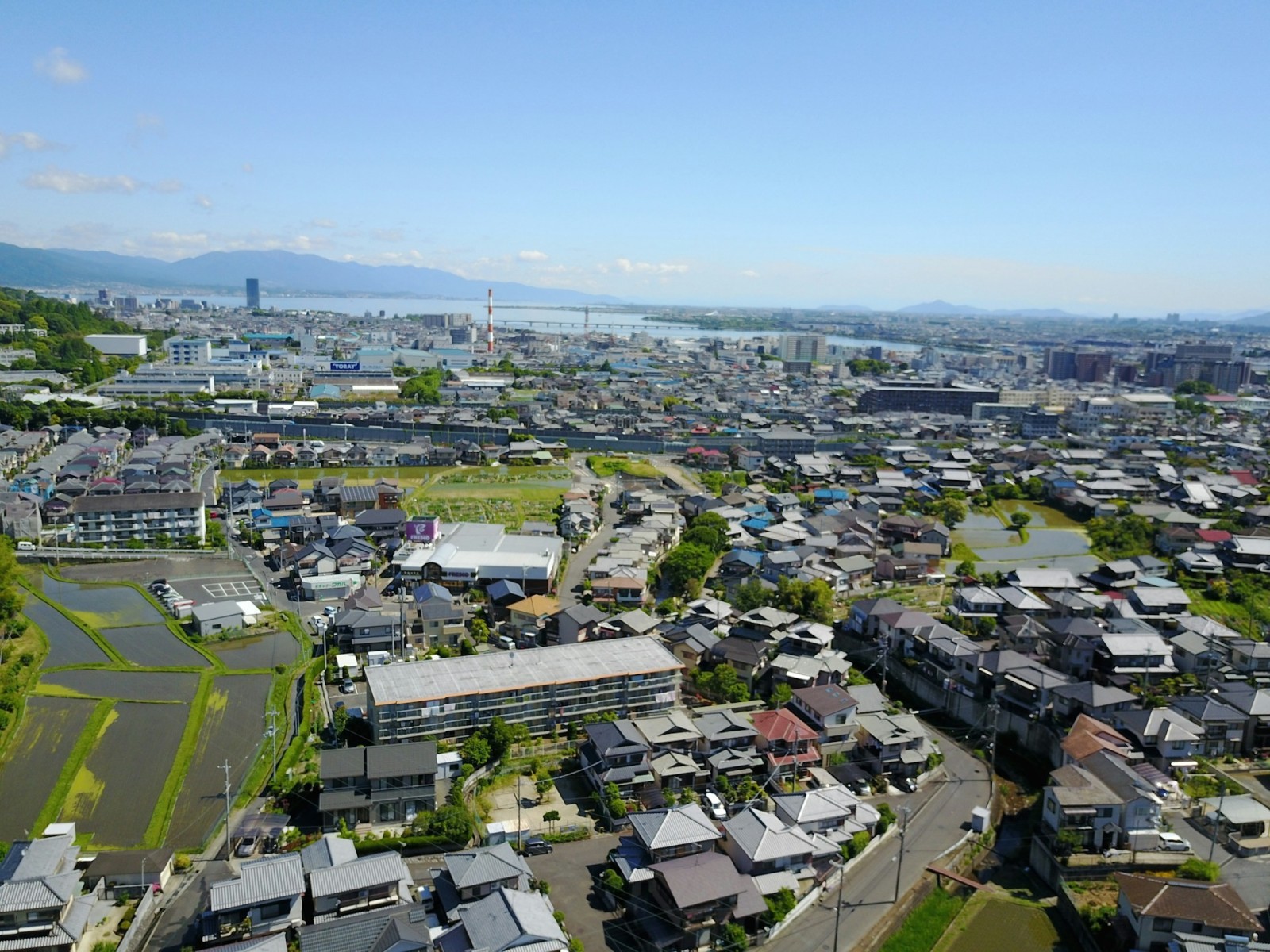
Otsu is a picturesque historic city on the shores of Lake Biwa, Japan’s largest lake, located just a short drive from Kyoto. It is a place where ancient history, Buddhist temples, mountain scenery and peaceful life by the water come together in one city.
The main charm of Otsu is its unusual location. On one side the city is surrounded by mountains, on the other there is a wide panorama of Lake Biva. Here you can enjoy nature, walk along the embankments, take boat trips and admire the sunsets above the water.
Otsu is especially interesting for lovers of Japanese history. It was here in the VII century was one of the ancient capitals of Japan - Otsu-no-Miya. Numerous monuments of different eras have been preserved in the city and its surroundings: from the ruins of the ancient imperial capital to medieval temples and old shopping streets.
One of the main places to visit is Enryaku-ji on the sacred Mount Hiei. A huge temple complex surrounded by forests, for centuries was one of the most important spiritual centers of Japan. From here there are magnificent views of Lake Biwa and the surrounding mountains.
No less interesting is Mii-dera, one of the famous Buddhist temples of Otsu, as well as Isshiyama-ji, associated with the writer Murasaki Shikibu and the creation of the "Tale of Genji" - one of the greatest works of Japanese literature.
Fans of traditional Japan should go to the historical district of Seta and see the famous bridge Seta-no Karahashi. This bridge has been of great strategic importance for centuries and today remains one of the symbols of Otsu.
The city is also interesting for its traditional culture. During Otsu Matsuri, richly decorated festive wagons pass through the streets, preserving the atmosphere of old Japan. Numerous local temples and sanctuaries allow you to see a more serene and everyday side of Japanese culture away from crowded tourist centers.
Otsu is especially attractive for those who have already visited Kyoto and want to see another Japan – quieter, more natural and less crowded with tourists. Here you can combine acquaintance with ancient history, visiting temples, walking along the lake, natural routes and gastronomic impressions.
At the same time, the proximity to Kyoto makes Otsu a convenient destination even for a short trip. In one day you can see historical temples, climb Mount Hiei, walk by Lake Biwa and get acquainted with the city, which for more than a thousand years remained an important part of the history of Japan.
Premium hotels
Lake Biwa Otsu Prince Hotel
One of the most famous Otsu hotels, located directly by Lake Biwa. Many rooms offer panoramic views of the lake. The hotel has restaurants, a swimming pool and other leisure opportunities.
Suitable: for families, couples and tourists who want to combine sightseeing with a comfortable holiday by the lake.
Biwako Hotel
Comfortable hotel near Lake Biva, combining a modern level of service with the opportunity to enjoy natural scenery. A good option for those who want to stay in the central part of Otsu and at the same time have access to walks by the water.
Suitable: for medium and high budget tourists, couples and families.
Traditional Japanese ryokans
Especially interesting is the area of Ogoto-Onsen, located on the shore of Lake Biwa. There are traditional Japanese hotels with hot springs.
Yumotokan
Traditional ryokan with onsen, Japanese rooms with tatami and the opportunity to get acquainted with the traditional culture of hospitality.
Suitable: for tourists who want to get a Japanese experience, and not just stay in a regular hotel.
Biwako Ryokusuitei
Ryokan with an atmosphere of quiet country rest. Traditional rooms, hot springs and views of Lake Biwa are available to guests.
Suitable: for romantic trips, family holidays and travelers interested in Japanese traditions.
Dantoukan Kikunoya
A small traditional ryokan in Ogoto Onsen. The main attraction is the combination of the Japanese atmosphere, hot springs and recreation by the lake.
Budget and inexpensive hotels
Tōyoko INN Kyōto Biwako Ōtsu
A practical business hotel for travelers who primarily need a clean room, basic amenities and convenient accommodation without additional resort services.
Suitable: for independent travelers, short trips and tourists who spend most of their time outside the hotel.
Calendar Hotel
An unusual accommodation option combining hotel and capsule formats. Suitable for those who want to reduce living costs and prefer to spend time in the city rather than in a hotel.
Suitable: for solo travelers, young tourists and short stops.
Traditional houses and guest houses
Inase Otsu Machiya
Accommodation in a traditional Japanese machiya home. This option allows you to feel the atmosphere of the old Otsu and differs from standard modern hotels.
Suitable: for travelers who are interested in the architecture and everyday culture of traditional Japan.
Cafe and Guesthouse An
A small guest house with a more homely and informal atmosphere. This is a good option for independent travelers who are interested in communication and a more affordable cost of living.
Hostels and guesthouses
J-Hoppers Lake Biwa Guesthouse
A popular format of budget accommodation with shared spaces. Suitable for travelers who want to meet other tourists and independently organize their trip.
Suitable: for solo tourists, young travelers and long trips to Japan.
Lake Biwa
The main natural attraction of Otsu is Lake Biwa. The coastline of the city is suitable for walking, cycling and relaxing by the water. Of particular interest are cruises on the lake and on the Seta River.
From the Hama-Otsu area, pleasure boats depart, including the Michigan cruise route. In the southern part of the city you can take a walk along the Seta River.
Transport accessibility: The central promenade is close to Biwako-Hamaotsu station. It can be reached from Kyoto via the Keihan Line in about 25 minutes. From the station it is convenient to continue the route on foot or by local transport.
Enryaku-ji on Mount Hiei
One of the most important historical sights of Otsu is the Enryaku-ji Buddhist complex on Mount Hiei. The temple was founded by the monk Saicho and became one of the main centers of Tendai Buddhism in Japan.
The complex is located among the mountain forests, so a trip here combines acquaintance with history and nature. From the mountain there are panoramic views of Lake Biwa. Enryaku-ji is included in the UNESCO World Heritage Site “Historical Monuments of Ancient Kyoto”.
Transport accessibility: The attraction is located in the mountains, so walking from the center of Otsu is not a practical option. The Keihan railway is usually used to reach the Sakamoto area, after which it continues by mountain transport. For tourists, bus routes and a cable car are also convenient, depending on the chosen entrance to the complex.
Mii-dera (Onjo-ji)
Mii-dera is one of the largest historical temples of Otsu. It is particularly interesting for its architecture, ancient cultural values and the famous bell associated with the legend of the warrior monk Benkai.
The temple is conveniently combined with a walk through the historic center of the city and along the canal of Lake Biva.
Transport accessibility: The area can be reached by the Keihan Line. From Mii-dera station to the temple is a short walk. Hama Otsu can also be reached on foot in about 20 minutes.
Omi Jingu Temple
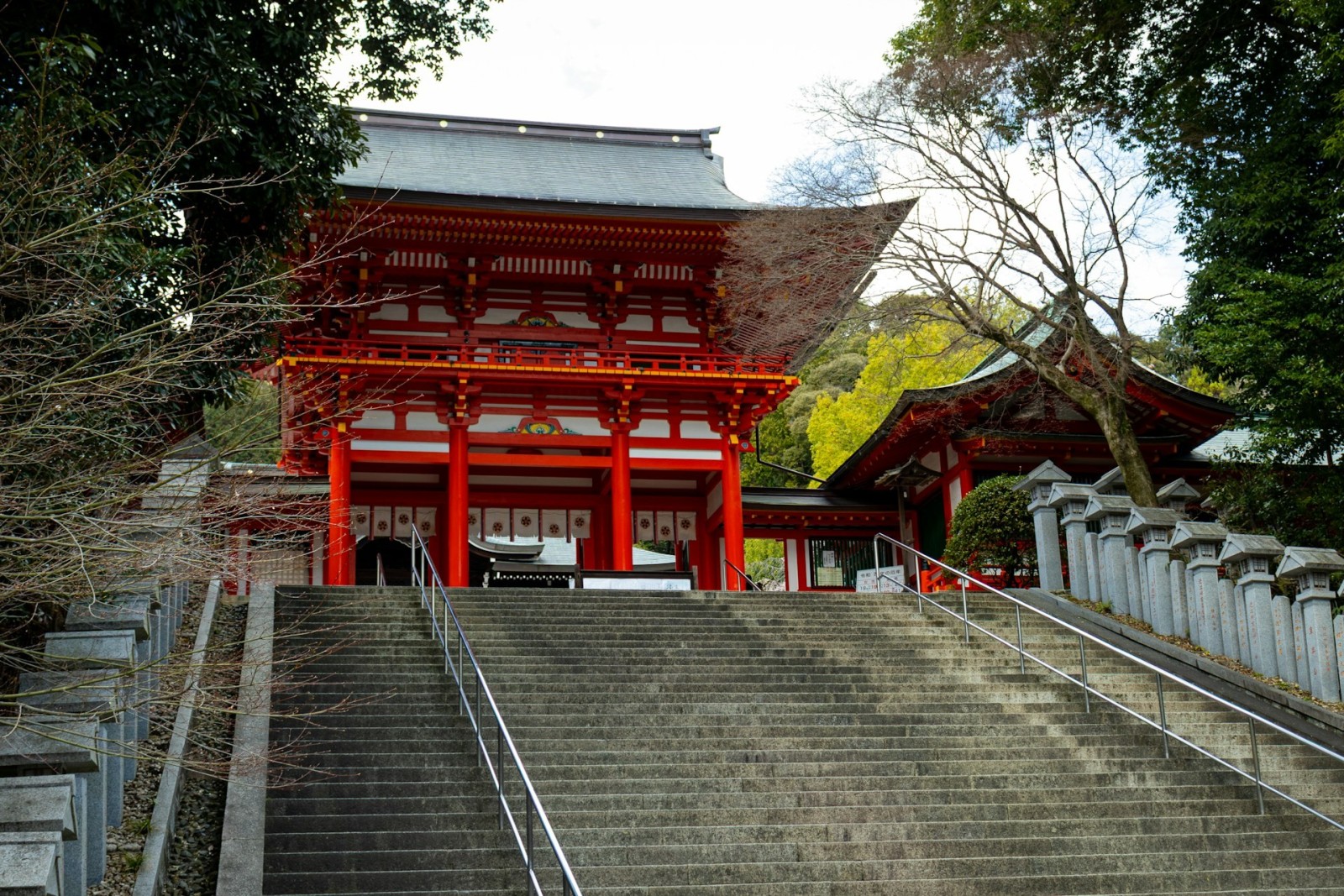
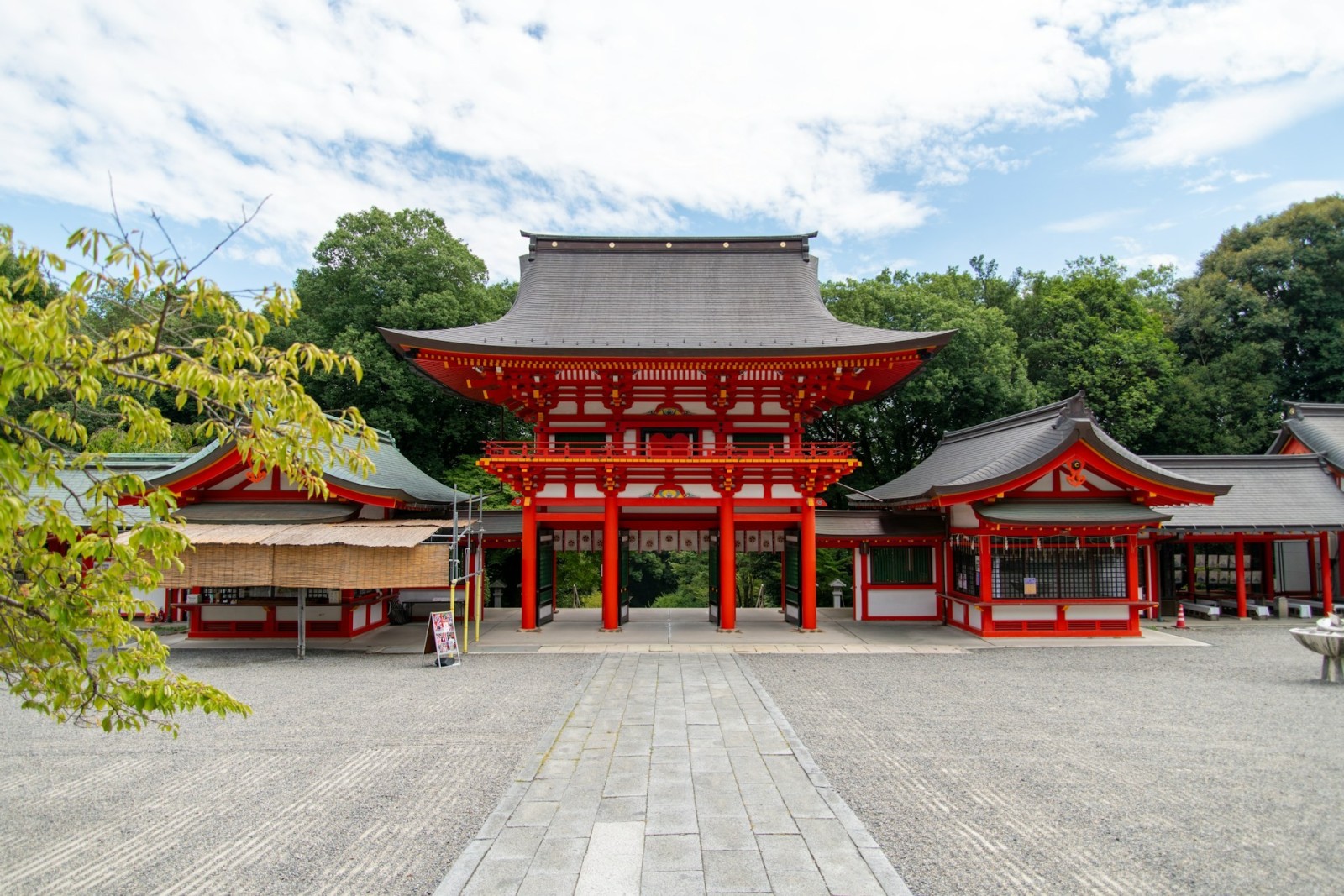
Omi-jingu is dedicated to Emperor Tenji, under whom Otsu became the capital of Japan in the VII century. The sanctuary is surrounded by forest and is distinguished by bright architecture with red gates.
Omi-jingu is especially known for its association with karuta, a traditional Japanese card game based on classical poetry. National karuta competitions are held here. It also houses a clock museum dedicated to the tradition of time measurement in Japan.
Transport accessibility: Keihan Omi-Jingu-mae Station is about 10 minutes walk away. JR Otsu-Kyo Station is about 20 minutes on foot.
Ruins of Otsu-no-Miya
This place is especially interesting for those who want to see the origins of the history of the city. It was here that the capital was located, which the emperor Tenji moved to Otsu in 667.
Today, there are no buildings from the palace, but archaeological finds allow you to imagine the location of the ancient capital. The ruins are located in the Otsu-Kyo area and are well combined with visits to Omi-jingu and Mii-der.
Transport accessibility: the sights of the central historical area can be combined into one walking tour. It is especially convenient to start the route from Otsu-Kyo or Biwako-Hamaotsu station.
Isshiyama-ji
Isshiyama-ji is one of the most famous temples of the southern part of Otsu. It is located on a picturesque cliff next to the Seta River and is famous for its gardens, seasonal flowers and unusual natural landscape.
The temple is especially famous for its connection with Murasaki Shikibu, the author of The Tale of Genji. According to tradition, it was here that the writer was inspired to create the work.
Transport accessibility: Keihan Ishiyama-dera Station is about 10 minutes walk away. From JR Ishiyama Station, you can continue by bus.
Set River
The Seta River is the only river flowing from Lake Biwa. The southern part of Otsu is especially attractive for walking along the water.
Here you can combine a visit to Isshiyama-ji with a walk along the river, a cycling route or a seasonal cruise. The tourist route in Seta and Issiam usually takes about 4-5 hours.
The area is well connected to JR Ishiyama and Seta stations. For walks along the river, it is also convenient to use a bicycle.
Seta no Karahashi Bridge
Seta no Karahashi is one of the most famous historical bridges in Japan. Its location was of great strategic importance: an important route passed through it between Lake Biwa and Kyoto.
Today, the bridge is interesting primarily as a historical object and a picturesque place to walk. It is especially beautiful in the evening when you can see one of the traditional landscapes of Omi.
Transport accessibility: from Keihan Karahashi-mae station to the bridge about 5 minutes walk. It is also convenient to visit along with Isshiyama-ji and other attractions of Seta district.
Yamasai - Hiyoshi Taishai Festival
One of the most important traditional festivals of Otsu, taking place in the temple Hiyoshi Taisha in Sakamoto district. The festival has a centuries-old history and is accompanied by solemn processions, rituals and processions of sacred stretchers. A particularly impressive part of the holiday is the descent of mykoshi from the mountain to Lake Biwa. It is one of the most important religious events in the region.
Sakura-mairi in Isshiyama-ji
The spring program at the famous Issiama-ji temple is dedicated to cherry blossoms. On the territory of the temple you can see different varieties of cherry, as well as visit special cultural events. The historical atmosphere of the temple and its connection with Murasaki Shikibu make the holiday especially attractive for tourists interested in Japanese literature and culture.
Spring illumination of Lake Biwa and the Biwa Canal
Evening lighting along the Biwa Canal turns the Mii-dera area into one of the most picturesque evening areas of Otsu. Hundreds of flowering trees light up after dark, creating a mix of historic architecture, water and cherry blossoms. During the same period, the evening illumination of the territory of Mii-dera takes place.
Otsu Summer Night Festivals
In the summer, the city hosts a series of evening events Natsu no Yomoude. The program includes evening visits to temples and sanctuaries, illumination of historical sites, summer fairs, traditional dances and activities on the shore of the lake. Among the sites are Omi-jingu, Mii-dera, Saikyo-ji and other historical sites.
Fireworks at Lake Biwa
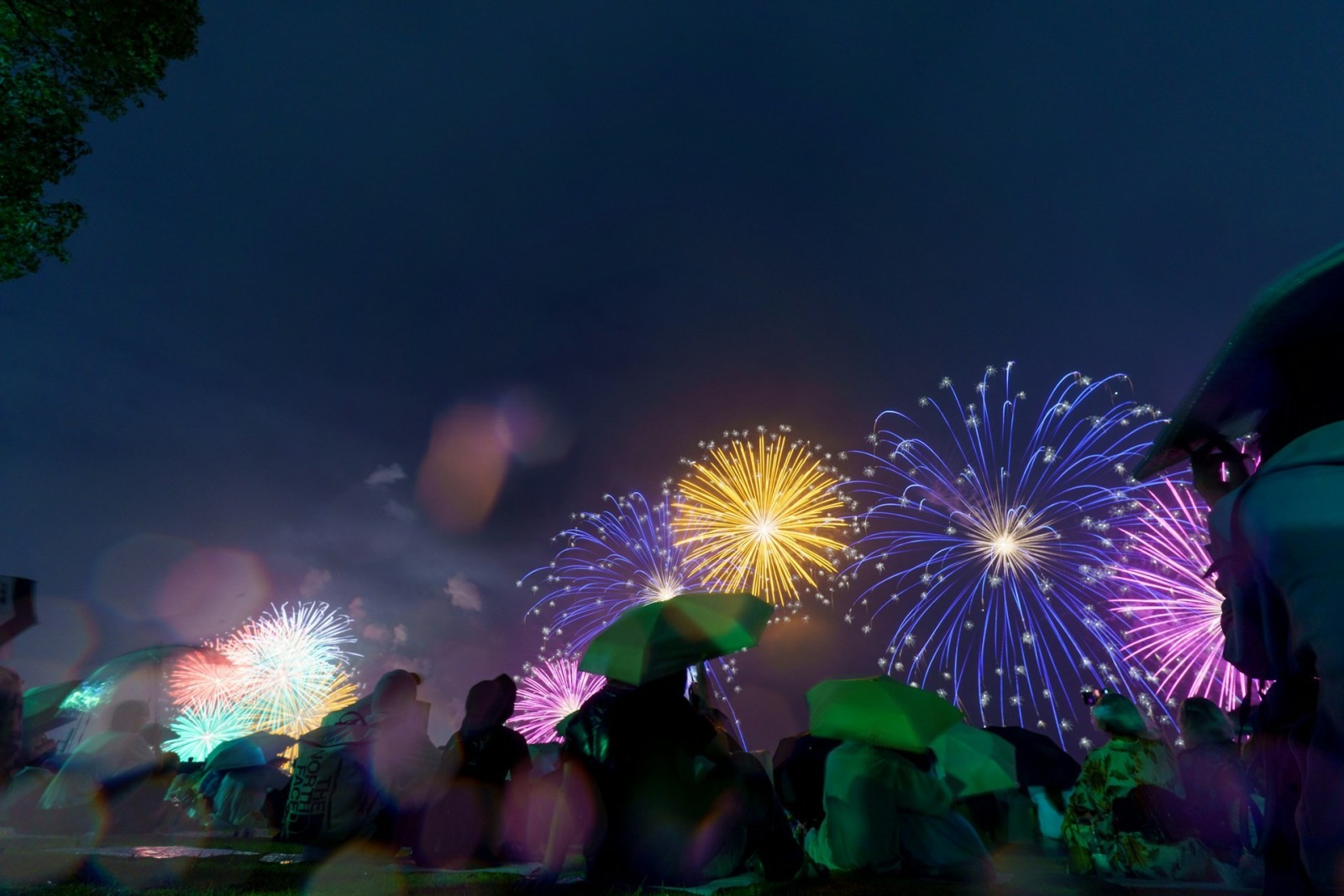
Summer fireworks over Lake Biwa are one of Otsu’s most spectacular events. The lights are reflected in the water and the surrounding mountains create a natural backdrop for the performance. The largest programs are accompanied by music and gather a large number of spectators on the Otsu embankments.
Michigan Night Cruise
Evening cruises on the Michigan tourist ship allow you to see Otsu and Lake Biwa from the water. It’s not a traditional holiday, but one of the city’s most popular seasonal activities. Especially attractive are evening flights during sunset and after dark.
Autumn Moon Festival in Isshiyama-ji
The evening festival at Issiama-ji Temple is dedicated to the full moon. The territory of the temple opens after dark and is illuminated, creating a special atmosphere. The event is connected with the literary history of the temple and Murasaki Shikibu, who, according to tradition, was here during the work on the Tale of Genji.
Otsu-Matsuri
The main traditional festival of the city and one of the most famous events of Shiga Prefecture. 13 ornate hikiyama wagons pass through Otsu’s historic streets, each featuring unique mechanical performances. In the evening on the eve of the main procession, the carts are illuminated with lanterns, and the city is filled with traditional music.
The festival has the status of an important intangible cultural heritage of Japan and is included in the list of intangible cultural heritage of UNESCO.
Biwako Oktoberfest
A modern festival on the shores of Lake Biwa, combining gastronomy, music and entertainment. The venues feature German beer, craft drinks from local producers and various dishes. Thanks to its location by the lake, the event combines the festival atmosphere with panoramic views of Bivu.
OTSU UNAGI & SAKE FES
Gastronomic festival dedicated to two characteristic products of the region - eel and Japanese sake. Local restaurants and beverage manufacturers gather at one site. Visitors can try a variety of eel dishes, local sake and craft beer. For tourists, this is a good way to get acquainted with the gastronomic culture of Otsu and Shiga Prefecture.
March-May
Air temperature: from about 3–13 °C in March to 13–22 °C in May.
March is still quite cool, especially in the morning and evening, but in April the temperature becomes comfortable for long walks. It is already warm in May, but usually there is no strong summer heat.
The water temperature in Lake Biwa is approximately 10–17 °C.
In March, the water remains cold, and by May it gradually warms up. Spring is not very good for swimming, but it is a great time for walking along the lake, visiting temples and natural routes. Historical data on the surface temperature of the lake show about 6–9 °C in March and about 15–18 °C in May, although modern long-term estimates give slightly higher values.
The main advantage of this period is sakura and spring festivals.
June to August
Air temperature: approximately 25-31 ° C during the day.
June becomes hot and humid, and July and August are the warmest months of the year. In August, the average daily high is around 31°C, and temperatures sometimes rise significantly higher.
Water temperature in Lake Biwa: approximately 21-28 °C.
The water warms up especially well in July and August. The average surface temperature of the lake in August is about 27-28 ° C, so this is the most suitable period for water entertainment and recreation by the lake.
In summer, Otsu hosts fireworks, night festivals, evening lighting of temples and cruises on the lake.
At the same time, June and July are characterized by high humidity and high rainfall. July is one of the rainiest months of the year.
September - November
Temperature: approximately 19–27 °C in September, 13–21 °C in October and 7–16 °C in November.
In September it is still quite warm, but gradually becomes more comfortable. October is especially pleasant for excursions: during the day it is usually around 20 °C, and November brings cool weather and autumn foliage.
Water temperature: approximately 27 °C in September, 23 °C in October and 19 °C in November.
After a hot summer, the lake retains heat for a long time. In September and early October, the water remains quite warm, but for most tourists, the main advantage of the season is not water entertainment, but walks and sightseeing.
Autumn is especially interesting due to Otsu-Matsuri, temple festivals, autumn foliage and cultural events.
December to February
Air temperature: from about 0-10 ° C.
Winter in Otsu is cool. The average daily temperature is around 7 °C in January, and at night the temperature can drop below zero.
Water temperature: approximately 10–14 °C.
The lake is cold in winter, so swimming is not considered as a tourist attraction. The surface temperature of the water reaches minimum values around February.
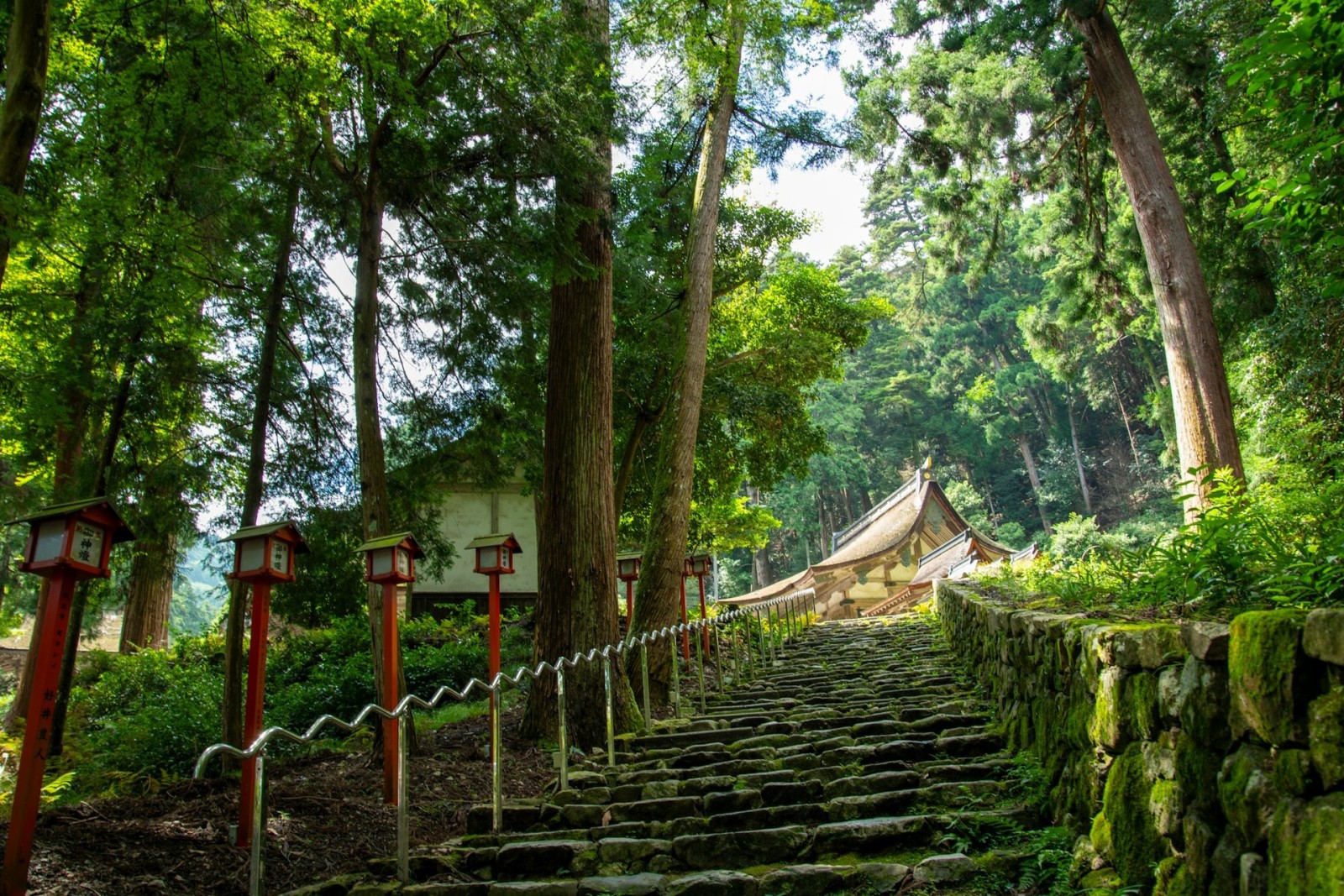
Otsu is located in Shiga Prefecture, so the basic rules of communication and behavior here correspond to the national Japanese traditions. At the same time, Otsu is less touristic than Kyoto, and in small shops, cafes, family restaurants and remote areas, English can be used in limited ways. The official language of Japan is Japanese. In hotels, train stations, tourist places and major transport hubs, you can usually use English. If there are difficulties, it is convenient to use an interpreter on the phone.
Language of communication
The main language is Japanese. A tourist does not need to know Japanese, but a few simple expressions will make communication much easier and are usually perceived very positively.
In small Otsu establishments, it is advisable to be able to show the name of the place or address on the phone. English inscriptions are found on transport and in tourist places, but in small local establishments they may be less.
Communication with locals
In Japanese culture, respect for others and the desire not to cause inconvenience to others is of great importance. In everyday communication, it is not customary to speak too loudly or actively demonstrate emotions.
When greeting, it is easy enough to bow. Hugs, kisses and other manifestations of intimacy in public are much less common than in many European countries.
It is useful to observe the principle of omoiyari - attentive attitude to others. For example, do not block the passage, do not occupy extra space and take into account the comfort of other people.
Conduct in public transport
On trains and buses it is advisable to talk quietly. The phone should be switched to silent mode and, if possible, do not talk on it.
When boarding, you must first allow passengers to leave, and then enter the car. On platforms should take place in the queue according to special designations.
Priority seats are designed primarily for the elderly, pregnant women, people with disabilities and passengers with young children.
A large backpack in crowded transport is better to remove and keep in front of you or place it so that it does not interfere with other passengers.
Lines.
In Japan, it is customary to strictly observe the order. This applies to railway platforms, buses, ticket offices, restaurants and other public places.
If there are special designations on the floor, you need to get up in the specified place and not try to go ahead of the queue.
Shoes.
In traditional Japanese places, shoes should be removed. This may apply to private homes, ryokans, some restaurants, temples and other buildings.
In ryokans, there is usually a special area at the entrance, where shoes are left before switching to tatami. It is important not to wear street shoes on tatami.
Temples and sanctuaries
Otsu is known for a large number of Buddhist temples and Shinto shrines, so tourists should be especially careful about the rules of behavior on their territory.
Do not talk loudly, touch religious objects without permission, or go where visitors are prohibited.
Before taking pictures, you need to pay attention to the signs. Photography is prohibited in some areas.
When visiting the sanctuary, you can use the traditional ritual of washing hands at a special source. In temples and sanctuaries, it is better to behave calmly and respectfully, since for local residents these are not just tourist attractions, but active religious places.
Onsen and public baths
When visiting onsen, special rules must be observed.
Before entering the communal bath you need to wash thoroughly in the shower area. The bath itself is entered without a bathing suit, unless the rules of a particular institution provide otherwise.
The towel should not be immersed in water. It is usually left on the side or placed on the head.
Before visiting a particular onsen, it is advisable to check its rules, as the requirements may differ. Some establishments also have restrictions related to tattoos.
Food and drink
In Japan, it is not customary to eat and drink while walking down the street. Exceptions can be specially organized festivals, markets and places where food is provided.
On public transport, it is also advisable not to eat or drink, especially on regular city trains. In high-speed and intercity trains, the situation is more free.
In restaurants it is not customary to leave a tip. The usual gratitude to the waiter is expressed in the words arigato gozaimasu.
When using sticks, you should not stick them vertically into rice, transfer food directly to another person or use them as a toy. In more traditional restaurants, these rules are especially important.
Cleanliness and garbage
In Japan, great attention is paid to the cleanliness of public spaces. The urn on the streets can be a little, so the tourist should be ready for some time to carry garbage.
Garbage should be disposed of in appropriate containers and, if possible, divided into categories. You can not leave garbage near temples, on the shore of Lake Biwa, in parks or on the streets.
It is especially important to preserve the cleanliness of the natural areas around Lake Biwa and not go to areas with vegetation if it can damage the environment.
Smoking
Smoking should be done only in designated areas. Smoking while walking down the street can be banned by local regulations, and there are penalties for violating in some places.
This is especially important to observe in central areas, near train stations, temples and tourist attractions.
Photography
Photography is allowed in most tourist places, but special signs should be noted.
Do not take close-up pictures of people without their consent. Particular care should be taken about private areas, temple ceremonies and places where "No Photography" is indicated.
On busy tourist streets, it is also important not to obstruct other people for the sake of photography.
Alcohol
Drinking alcohol in public places in Japan is generally not prohibited, but it is necessary to observe order and local rules. During festivals and events, there may be specially organized food and drink areas near the lake.
Do not leave behind bottles, cans or other packaging.
Punctuality
Time accuracy is highly valued in Japan. This is especially important when using trains, buses, excursion programs, cruises on Lake Biwa and when visiting ryokans.
If a tourist is late for a booked service or excursion, it is advisable to warn the organizers in advance.
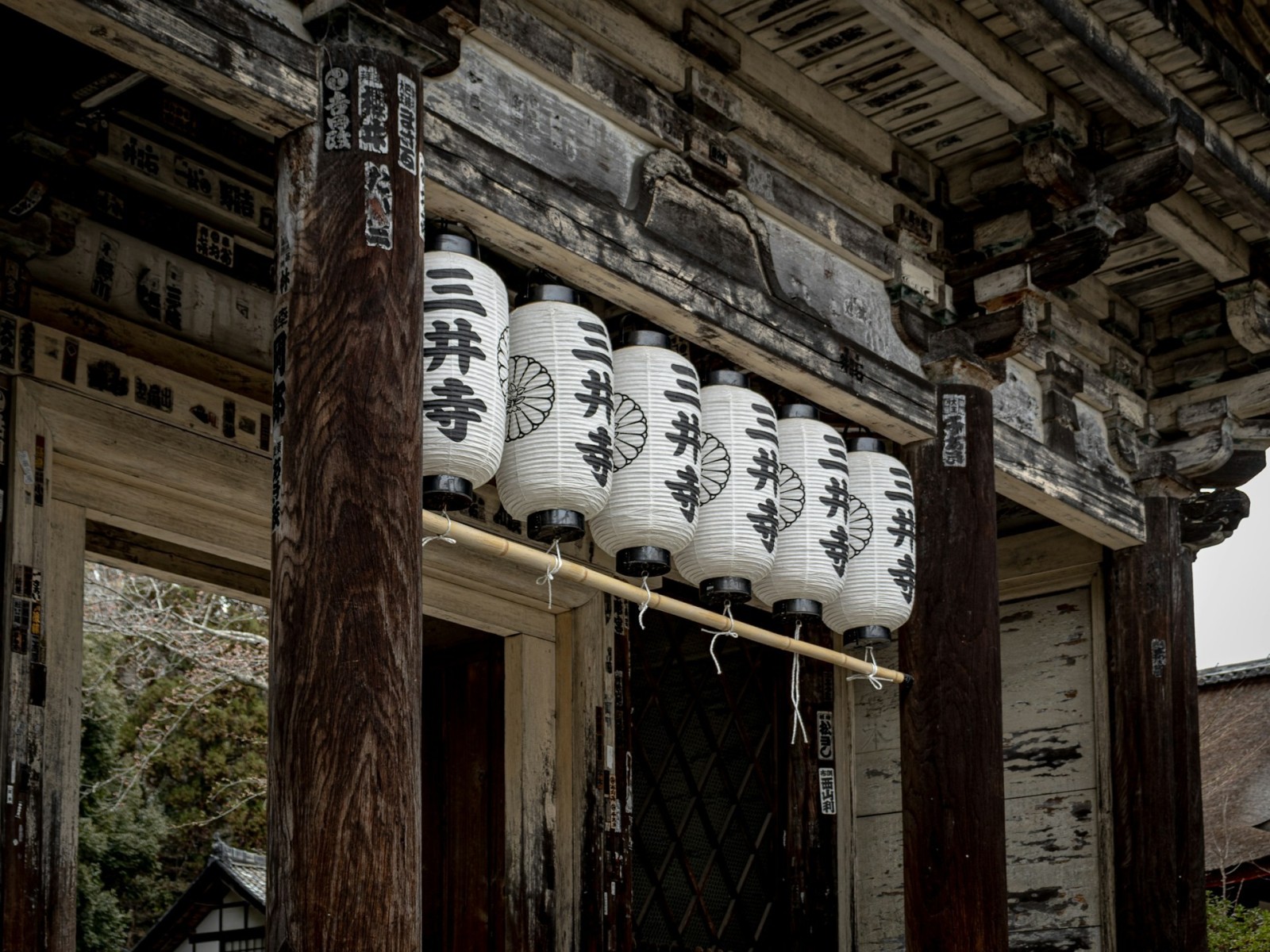
Greetings and polite expressions
ыйのыйKon-ni-ti-vaHello/good day
Don't worry. Good morning.
йのйのйKon-Ban-VaGood evening
I'm sorry. a-ri-ha-to: go-dza-i-mas
See you later.
Soo-mi-ma-san Sorry/sorry/allowed
Please, please, please.
Hayda.
Enet.
大 Dai-Jia:Bu-de-sho All right/no need/all right
If you don't speak Japanese
I don't understand Japanese.
Are you speaking English?
の の の 大 Mo: Ichi-do o-ne-gai-si-mas, please repeat.
Please speak more slowly.
I don't understand.
I'm sorry. I'm sorry.
Can I use an interpreter?
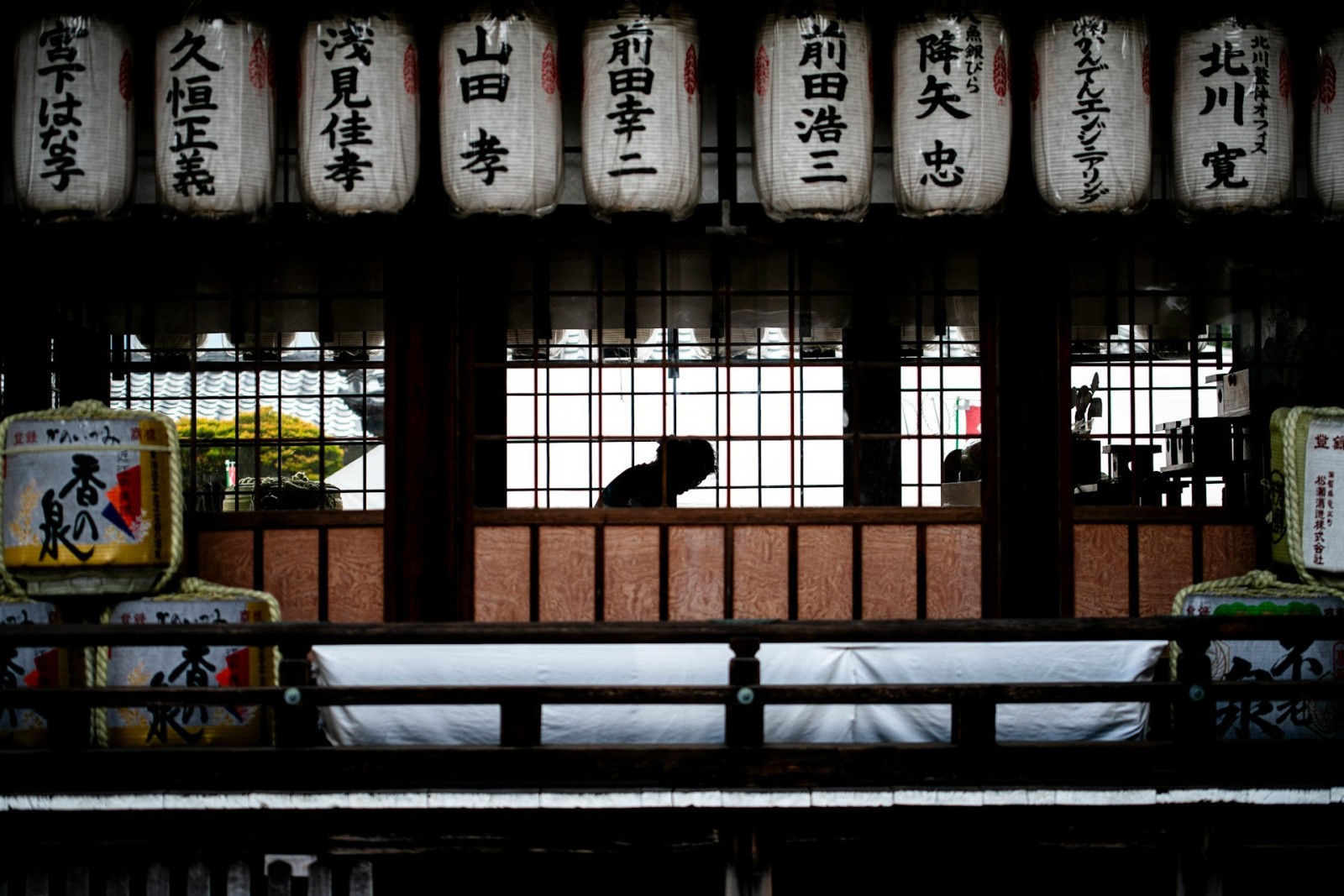
Food and food
omima
One of the most characteristic products of the region is rice from Sigi. The area around Lake Biwa is known for growing rice, and local rice can be bought in specialty stores and grocery stores. This is a practical souvenir that is well suited for exploring the local cuisine.
Omi beef (Omi beef)
This is the famous Japanese beef from Shiga Prefecture. It belongs to the most famous regional vagyu varieties. In Otsu, you can try it in restaurants or buy some products from it in specialized stores. Fresh beef is not suitable for transportation home, but you can choose products in vacuum packaging if they meet the customs regulations of the destination country.
Funa-zushi
A traditional dish of the region around Lake Biwa made from funa fish using fermentation. This is one of the most unusual gastronomic souvenirs of Sigi. The taste and smell are quite specific, so this product is more suitable for those who want to try traditional local cuisine.
Lake fish and its products
In Otsu you can find various products from the fish of Lake Biwa: dried fish, pickled products, fish snacks and canned food. Unlike fresh fish, these products are much more convenient to transport.
Local sake
Shiga is known for its sakewarnas, and the quality of the local sake is associated with the water and rice of the region. In Otsu you can buy a bottle of sake as a souvenir. During transportation, the customs regulations of the destination country and alcohol restrictions must be taken into account.
Biwako-bai
The region produces various sweets and confectionery products with local ingredients. Among the popular options you can find cookies, rice sweets, wagashi and products with a taste of green tea.
Tsukigemono and local pickles
Japanese pickled vegetables are a good option for a small gastronomic gift. The Shiga region has its own varieties of traditional pickles.
Tea
Shiga Prefecture has its own tea traditions. Local green tea can be purchased in the form of leaf tea, bags or small gift sets.
This is one of the most convenient souvenirs: it is light, stored for a long time and does not take up much space in luggage.
Traditional sweets
In Otsu shops you can find wagashi - traditional Japanese sweets. Particularly interesting products related to temples and historical areas of the city.
A good option for a gift is a small box of seasonal sweets with a Japanese packaging design.
What documents are required
A valid foreign passport is required to travel to Japan.
It is also recommended to bring with you:
It is better not to leave your passport in your luggage. JNTO also recommends that you make copies of your passport and have contacts with your country’s embassy. In case of loss of passport or theft of documents, it may be necessary to contact the police to obtain a corresponding statement.
Visa and duration of stay
Here, the length of stay depends on the nationality of the traveler, so for tourist material it is important not to specify one term for all countries.
For citizens of Germany with an ordinary German passport, there is a visa-free regime for short-term tourist trips: up to 90 days with the granting of Temporary Visitor status. Germany is included in the list of countries whose citizens are exempt from visas for short-term entry into Japan.
That is, a tourist with a German passport can stay in Japan for up to 90 days without leaving the country, if the conditions for visa-free entry are met.
For citizens of other countries, the period may differ: for some countries, a 90-day regime is also valid, for others, a shorter period is set or a visa is required in advance.
90 days is not an automatic extension of a tourist stay. If a longer trip is planned, it is necessary to check the visa requirements and the possibility of extending the status of stay in advance.
Travel insurance
Travel health insurance for a trip to Japan is highly desirable before departure.
It should cover at least:
It is especially important to check how the insurance company pays for the treatment. Some policies work on the principle of cashless, when the insurance directly pays the costs to the medical institution, while others require first to pay for treatment and then receive compensation.
It is also necessary to check whether the insurance covers planned activities: for example, water sports, mountain routes, cycling and other active entertainment.
JNTO separately recommends that you carry an insurance company phone number.
Emergency services phones
In Japan, there are simple and memorable numbers.
110 - police
Used in a crime, security threat, theft, assault or other situation requiring urgent police assistance.
119 Fire and Ambulance Service
This number calls firefighters and ambulances.
118 - Coast Guard
The number is used for emergencies at sea and water. For trips to Otsu, it may be relevant due to the location of the city on Lake Biwa, although 119 and 110 are used for routine medical or police care, respectively.
JNTO Tourist Line
Japan Visitor Hotline: 050-3816-2787
From abroad: +81-50-3816-2787
The line operates 24 hours a day, 365 days a year. Here you can get tourist information and assistance in emergency situations, diseases, accidents and natural disasters.
English, Chinese and Korean languages are supported.
If you have lost your passport or items
If you lose your passport, wallet or other important things, you should contact the nearest koban, a small police station that is common in Japanese cities.
If a passport is stolen or lost, a police report is recommended. It may be necessary to draw up a new document or apply to the insurance company.
You should also contact your country’s embassy or consulate in Japan.
Mobile communications
There are four main mobile operators in Japan:
NTT DOCOMO is one of the largest operators in the country with a well-developed network.
KDDI (au) is a major Japanese mobile operator.
SoftBank is a large operator with a developed 4G and 5G network.
Rakuten Mobile is Japan's youngest major operator.
Create a query and local guides will offer you the best options
