Independent tourism and recreation in the city of El Salvador Historical information about the city of El Salv...
Historical information about the city of El Salvador
Salvador is one of the oldest European cities in America and one of the most important historical centers of Brazil. It is the capital of the state of Bahia, located on the shores of the huge Bay of All Saints (Baía de Todos-os-Santos). The city was founded by the Portuguese in 1549 and became the first capital of Portuguese America and colonial Brazil. It remained the capital until 1763, when the administrative center was moved to Rio de Janeiro.
The history of Salvador is particularly interesting because it is closely intertwined with the Portuguese colonial culture, African heritage and indigenous cultures of Brazil. It was this mix that later formed Bahia’s unique culture – music, dance, religious traditions, cuisine, capoeira and a special urban atmosphere.
Precolonial history
Long before the advent of the Portuguese, the territory of modern Salvador was inhabited by the indigenous peoples of Brazil. Various groups lived on the coast of Bahia, including representatives of the Tupi peoples.
For them, All Saints Bay was an exceptionally convenient place: there were fresh water, fish, fertile lands and natural coves protected from ocean waves.
The history of Salvador began long before the founding of the European city.
The geographical position of El Salvador was of great importance. All Saints Bay is one of Brazil’s largest coves and cuts deep into the coast. From here, it was convenient to control the sea lanes along the Brazilian coast and organize communication between Portugal, Africa and other parts of the Portuguese colonial system.
The emergence of the Portuguese
After the Portuguese colonization of Brazil in the sixteenth century, the Portuguese crown began to look for ways to more effectively manage the vast territory.
The first attempts to create a European settlement in the area of the future Salvador were made before the official foundation of the city. However, relations with indigenous peoples were difficult, and early settlements were not sustainable.
The Portuguese came to the conclusion that Brazil needed a single administrative center.
In 1549, King João III of Portugal appointed Tomé de Sousa as the first Governor-General of Brazil and commissioned him to establish a city that was to become the center of colonial administration.
On March 29, 1549, Tome di Sousa arrived in the area of All Saints Bay with a large expedition. With him came soldiers, artisans, officials, priests and other settlers. Thus arose San Salvador da Bahia di Todos aus Santos, that is, the city of the Holy Savior in the Bay of All Saints.
Why was the city founded here?
The location was not chosen by chance.
Salvador was located on a hill directly above the bay. This gave the city several advantages.
First, defense. High plateau allowed to control approaches from the sea.
Second, the port. At the bottom there was a convenient coastal area where it was possible to organize berths, warehouses and shopping areas.
Third, the message. Through the bay, goods could be shipped to other parts of Brazil and overseas.
Fourth, water and natural resources. The surrounding area provided the necessary conditions for permanent settlement.
Thus, one of the main features of Salvador was formed - the division into Cidade Alta (Upper Town) and Cidade Baixa (Lower Town). The upper part was on the plateau, and the lower part developed around the port and the trading area. The difference between them reaches about 85 meters.
Salvador is the first capital of Brazil
Since its founding in 1549, Salvador has been the capital of a Portuguese colony.
This set it apart from many other colonial settlements: the city was created not just as a trading post or village, but as the administrative, military and religious center of all Portuguese Brazil.
It housed representatives of the crown, officials, military, clergy and traders.
The city grew rapidly.
According to the Brazilian Institute for the Protection of Historic Heritage IPHAN, during the colonial period Salvador became one of the most important political, economic and cultural centers of Portuguese America, and its port connected Brazil with Africa and Asia.
Sugar and economic recovery
One of the main factors of Salvador’s wealth was the sugar industry.
In the XVI-XVII centuries, sugar cane plantations and sugar factories were actively developed around Salvador, especially in the Reconcavo Baiano region.
Sugar production became one of the foundations of the colonial economy.
Through the port of Salvador, sugar was shipped to Europe, and the city received goods from Portugal, Africa and other territories.
Sugar made the city extremely wealthy and contributed to the construction of churches, monasteries, administrative buildings and luxury houses. The economic growth of the XVII century was one of the reasons for the formation of the famous architecture of the historical center.
The Tragic Side of History: The Slave Trade
The history of Salvador is impossible without mentioning the transatlantic slave trade.
For work on plantations, farms, construction and other spheres, the Portuguese colonizers massively used enslaved Africans.
Since the sixteenth century, Salvador has become one of the main centers of the slave trade in the New World; the organization points to the existence of a slave market here since 1558.
There was a huge flow of people forcibly taken out of Africa through Salvador.
This is why modern Bahia culture has such a strong African influence.
This manifests itself in:
music;
dance;
kitchen;
religious practices;
capoeira
language;
holidays;
traditional costumes;
folk art.
At the same time, it is important to understand that African heritage arose not only as a result of colonial policies, but also due to the preservation and transformation of African cultures by the descendants of the enslaved people themselves.
Formation of Afro-Brazilian Culture
Salvador gradually became one of the most important places of formation of Afro-Brazilian culture.
People from various regions of West and Central Africa brought with them their own languages, musical traditions, beliefs, culinary recipes and social customs.
In Brazil, these traditions interacted with Portuguese culture and indigenous heritage.
One result of this process was Candomblé, an Afro-Brazilian religious tradition particularly closely associated with Bahia.
Another famous cultural phenomenon was Capoeira, a combination of martial arts, movement, music and dance.
Salvador today is considered one of the main centers of Afro-Brazilian culture in the world. The G20 national resource also highlights African heritage, candomblé and capoeira as the most important components of the city’s cultural identity.
XVII century - the heyday of Salvador
In the XVII century, Salvador experienced a real architectural and economic flourishing.
The richness of sugar plantations allowed local elites and religious orders to build large-scale buildings.
It is during this period that many buildings appear or are actively rebuilt, which today are the main attractions of the city:
churches;
monasteries;
palaces;
administrative buildings;
city squares;
Wealthy houses.
In architecture, the influence of Baroque is gradually increasing.
Especially famous is the complex of the church and monastery of St. Francis – one of the most impressive examples of Brazilian Baroque.
According to IPHAN, the middle of the XVII century was the beginning of the so-called monumental phase of Bahia architecture associated with the transition from Renaissance forms to Baroque.
Dutch invasion
In the seventeenth century, Salvador was directly involved in the struggle of European powers for control of Brazil.
In 1624, Dutch troops captured Salvador.
This was due to the Dutch struggle with Spain and Portugal for control of trade and sugar. At that time, Portugal was in dynastic union with Spain, so the Portuguese possessions became the object of attacks by the Dutch.
The Dutch briefly took control of the city, but the following year a combined Portuguese-Spanish force recaptured Salvador.
These events demonstrated the city’s great strategic importance: control of Salvador meant control of one of the most important ports and centers of Brazil’s sugar economy.
XVIII century - the city continues to grow richer
In the eighteenth century, Salvador remained a major political and economic center.
The city actively traded with Portugal, Africa and other parts of the colonial world.
Gradually, however, Brazil’s economic center began to shift south.
Especially important was the development of gold mining in Minas Gerais.
The emergence of new economic centers changed the balance of power within the colony.
As a result, the Portuguese crown decided to move the capital.
1763 - End of the Capital Period
In 1763, the capital of Brazil was moved from Salvador to Rio de Janeiro.
It was a turning point in the history of the city.
The reason was primarily economic and strategic: Rio de Janeiro was much closer to the gold mining areas and southeastern territories, which were becoming increasingly important to the colonial economy.
Salvador has lost its capital status, but it has not ceased to be an important city.
It has retained great importance as:
port
mall
center of the sugar economy;
religious center;
Bahia Cultural Center.
UNESCO lists Salvador as its capital from 1549 to 1763.
Salvador and Brazilian Independence
Brazil’s independence in El Salvador was different from that in the central part of the country.
After Brazil declared independence from Portugal in 1822, the struggle in Bahia continued.
Portuguese troops maintained positions in the region, and Brazilian forces and local populations continued to fight for control of Bahia.
On July 2, 1823, Portuguese troops were finally driven out of Bahia.
Therefore, July 2 is one of the most important dates in the history of Salvador and the entire state of Bahia. Brazilian state historical sources emphasize that the struggle for independence in Bahia continued after independence in 1822 and ended on July 2, 1823.
Today, this date is widely celebrated as Bahia Independence Day.
XIX century - modernization of the city
After independence, Salvador remained the most important city in northeastern Brazil.
Gradually its urban appearance changed.
Developed:
port
trade;
transport;
industry;
education;
public infrastructure.
However, the old colonial center continued to maintain the traditional structure with the Upper and Lower Towns.
The huge elevation difference between them always created a problem for transport.
One of the most famous solutions was the Lacerda Elevator.
Initially, the lifting structure appeared in the XIX century, and later it was significantly modernized. It became one of the symbols of Salvador and connected the Upper and Lower city. Today, a trip on it allows you to literally move between two historically different levels of the city in a few minutes.
Late XIX - early XX century
After the abolition of slavery in Brazil in 1888 and the transition of the country to a republican system in 1889, the social structure of Salvador began to gradually change.
However, the effects of colonialism and slavery continued to have a huge impact on society.
Most of the city's population was of African descent, and it was in this environment that Afro-Brazilian cultural traditions continued to develop.
Music, religion, cuisine and folk festivals became an important part of urban identity.
In the twentieth century, Salvador gradually became one of the main cultural centers of Brazil.
XX century - from the old port city to the tourist center
In the first half of the twentieth century, Salvador remained an important regional center of trade and industry.
But gradually the city began to acquire another important function - tourist.
The reasons were obvious:
colonial architecture;
ocean beaches;
All Saints' Bay;
Afro-Brazilian culture;
music;
Carnival traditions;
kitchen;
religious holidays;
historic buildings.
Of particular importance was the old city center.
Pelurinho and Historic Centre
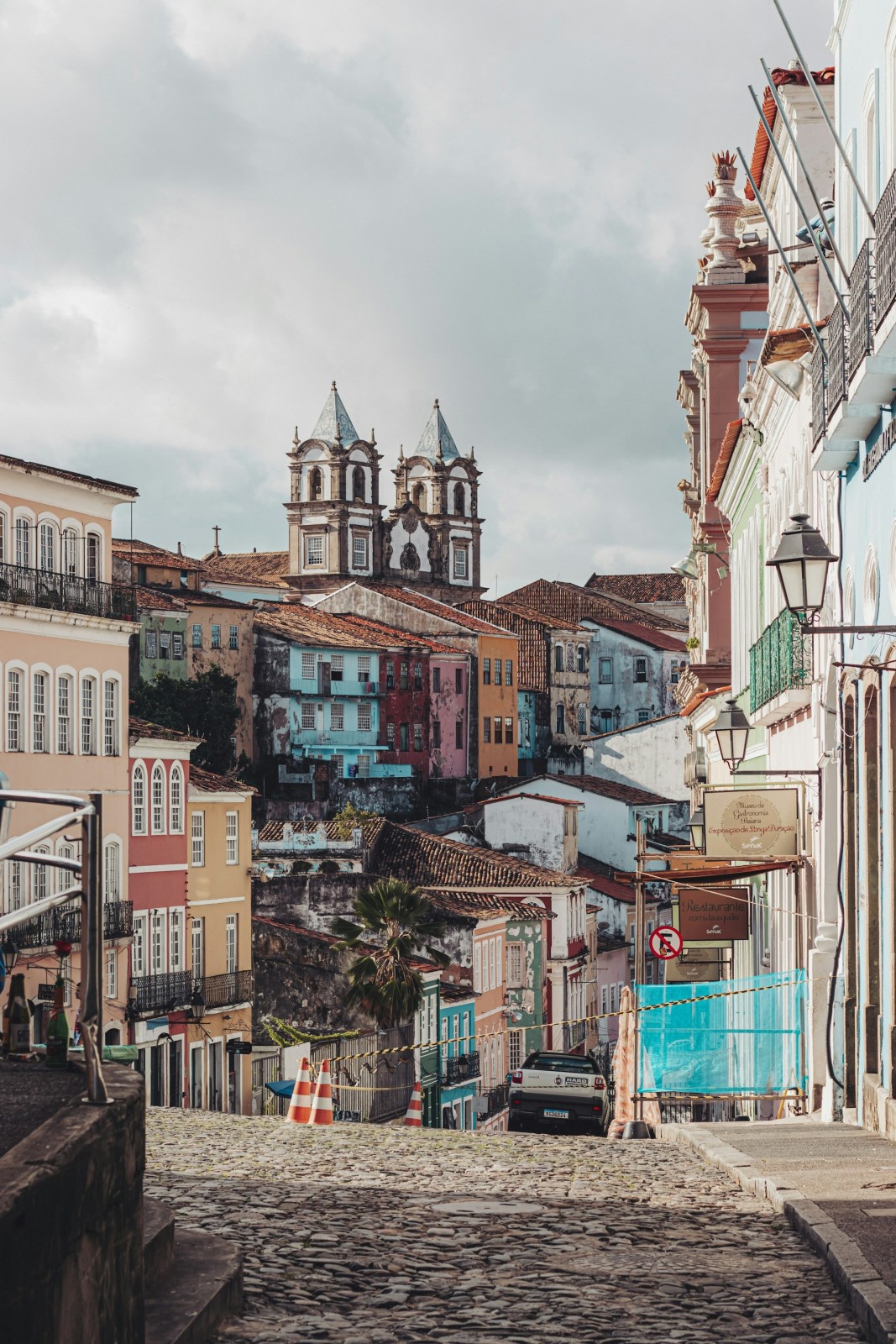
Today, the name Pelourinho is associated primarily with the colorful colonial streets of Salvador.
It is one of the most famous parts of the historical center.
It's preserved here.
brightly colored colonial houses;
churches;
monasteries;
squares;
narrow cobbled streets;
administrative buildings;
historic mansions.
UNESCO considers the historic center of Salvador an outstanding example of a colonial city, which has preserved the layout and architectural environment of the XVI-XIX centuries.
Especially characteristic are the buildings of the XVII and XVIII centuries, including the cathedral, the church and monastery of San Francisco, the church of San Domingo, the Carmelite complexes and other monuments.
Protection of historical heritage
In the twentieth century, it became obvious that the old Salvador in need of a large-scale restoration.
The historic center of the city was recognized as the national cultural heritage of Brazil in 1984.
In 1985, the historic center of Salvador was included in the UNESCO World Heritage List.
This was an important step in the preservation of the city.
Today, the historical center is perceived not just as a set of separate old buildings, but as a single historical urban ensemble.
UNESCO emphasizes the preservation of colonial planning, architecture and characteristic brightly painted houses.
Salvador in modern Brazil
Today, Salvador is the capital of the state of Bahia and one of the most important cities in northeastern Brazil.
The modern economy no longer depends on a single source of income.
A significant role is played by:
tourism;
trade;
services;
port activities;
industry;
education;
culture;
technology.
At the same time, the historical heritage remains one of the main features of the city. El Salvador is a city with a diversified economy, an important port and a strong tourist and cultural significance.
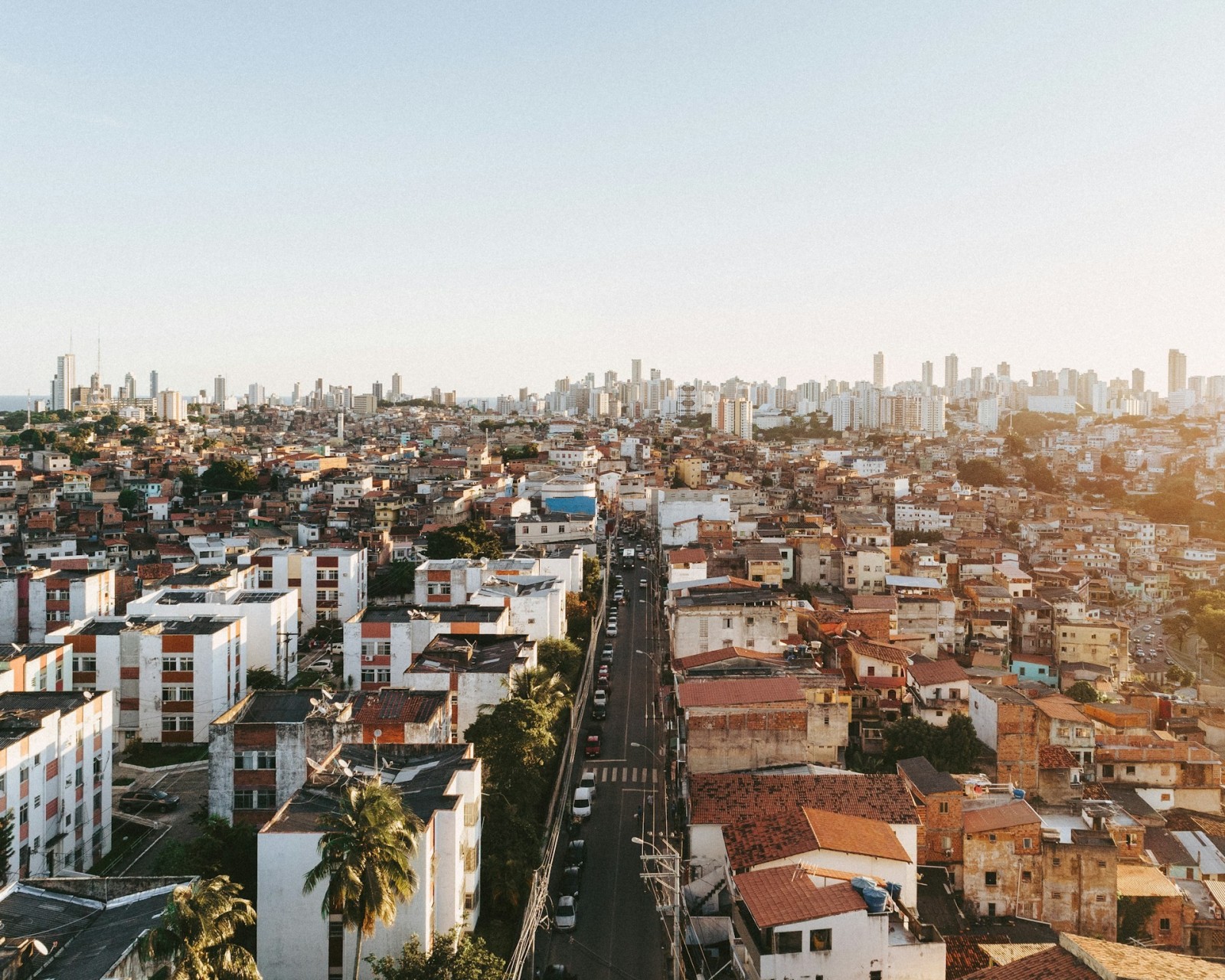
Historic Salvador
The main reason to come to the city is the opportunity to literally immerse yourself in the history of Brazil.
The historic center of Salvador preserved the structure of the colonial city of the XVI-XIX centuries. Here are Pelurinho, Terreiro de Jesus and Prasa da Se, numerous churches, monasteries, palaces and ancient residential buildings. UNESCO especially notes the preserved urban layout of the XVI century and a large number of monuments of the XVII-XVIII centuries.
One of the most attractive places is Largo do Pelourinho.
There are famous colorful colonial houses, cobbled streets, small squares, restaurants, art workshops, museums and cultural centers.
For the tourist, Pelurinho is especially interesting in the evening, when historical architecture is combined with music, street performances and restaurants.
Architecture and churches
Salvador is especially popular with those interested in architecture.
In the historic center you can see a large number of Portuguese colonial buildings and Baroque churches. UNESCO calls the historic center one of the most significant surviving ensembles of colonial architecture in America.
Especially interesting:
The Cathedral of Salvador (Catedral Basílica de Salvador) is one of the main religious monuments of the historic center.
The Church and Monastery of San Francisco (Igreja e Convento de São Francisco) is a famous Baroque complex with extremely rich interior decoration.
The Church of Nossa Senhora dos Pretos is an important monument of Afro-Brazilian history and culture.
The Church of Nossa Señora do Bonfim (Igreja do Nosso Senhor do Bonfim) is one of Bahia’s most famous religious sites.
Upper and Lower Town
Salvador is unusual for its geography.
The city is historically divided into Cidade Alta – Upper Town and Cidade Baixa – Lower Town. Between them is a steep slope, so the vertical separation has become one of the characteristics of Salvador.
The connection between the two parts of the city is particularly spectacularly demonstrated by the Lacerda Lift.
The Lacerda lift is one of the main symbols of Salvador.
A trip on it allows you to quickly get from the Upper Town to the Lower, and from the site nearby opens a beautiful panorama of All Saints Bay. The Bahia Tourist Service also lists Lacerda as one of the city’s main symbols.
All Saints' Bay
Salvador is located on the shore of the huge Bay of All Saints (Baía de Todos-os-Santos).
It creates a very special atmosphere of the city: the sea is constantly present in the cityscape, and wide panoramas of water open from the hills.
The views are particularly beautiful:
from the Upper City;
from Lift Lacerd;
from the Ribeira area;
(c) Ponta do Umaita;
from the Montserrat area;
From the coastal fortresses.
Ponta do Humaitá is one of the interesting places for panoramic views and walks by the water.
Beach holiday
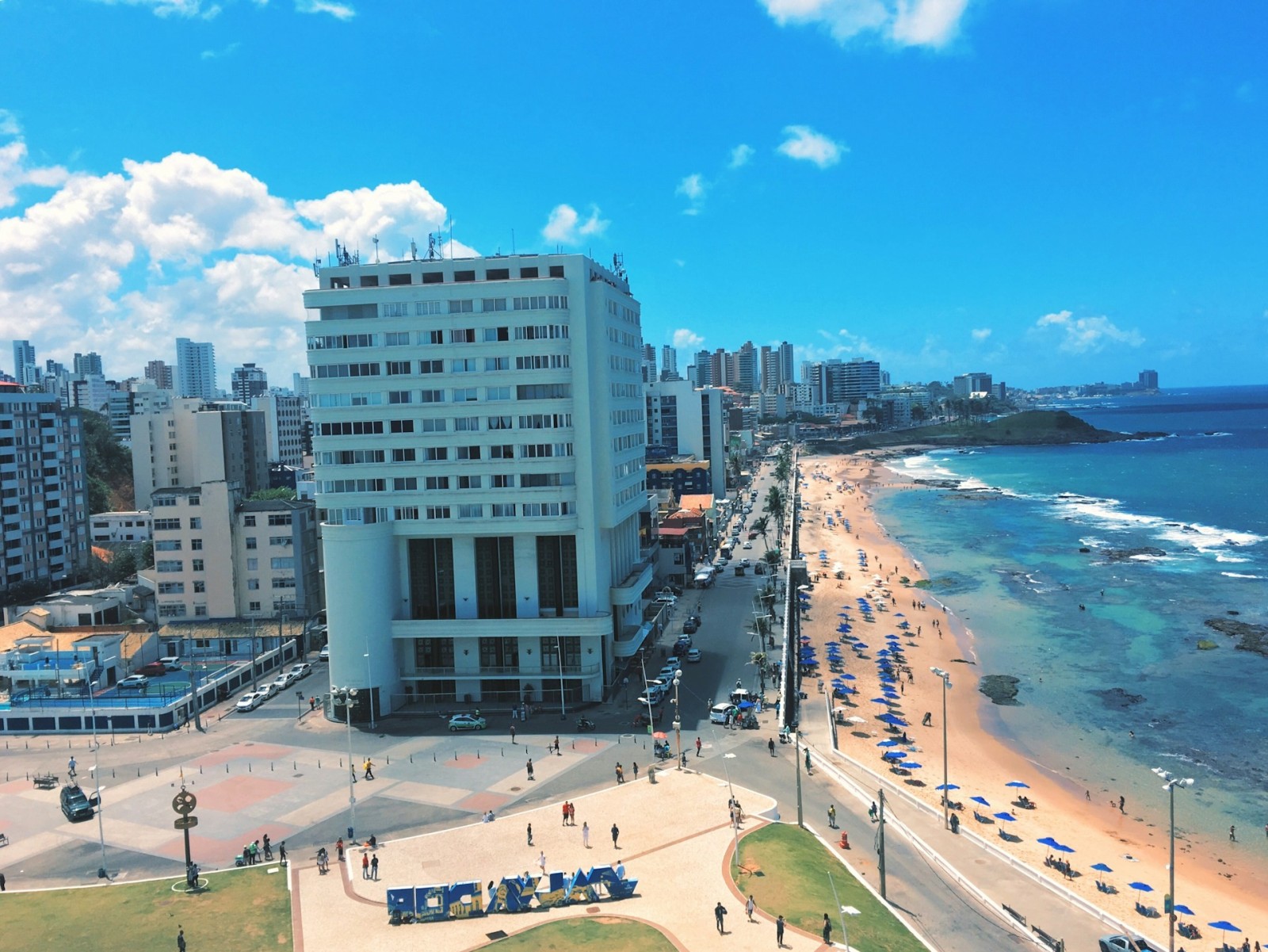
Despite its great historical value, Salvador is quite capable of competing with Brazilian resorts as a beach destination.
The city has a large length of the sea coast, and among the famous beaches stand out:
Porto da Barra is one of the most popular beaches in the city, known for its relatively calm waters.
Farol da Barra is a beach near the famous lighthouse and fortress.
Itapua is an area associated with Brazilian music and poetry.
Piatã is a long beach area.
Stella Maris is a popular beach area.
The official tourist service of Bahia notes that the coast of Salvador has more than 50 kilometers of beaches.
Therefore, the city is especially convenient for combined recreation: you do not need to choose between excursions and the sea.
Afro-Brazilian culture
This is perhaps the most unique side of Salvador.
The city’s history is closely linked to the African diaspora, and today, Afro-Brazilian culture is a crucial part of Bahia’s identity.
It manifests itself in:
music;
dance;
religion;
kitchen;
clothing;
crafts;
capoeira
holidays;
Carnival traditions.
To get acquainted with this side of the city you can visit special cultural spaces and museums. Casa do Benin is dedicated to the cultural ties between Bahia and Benin.
The city tourist resource also highlights Afrotourism as a separate travel destination in El Salvador.
Music and dance
Salvador is one of the best cities in Brazil for those who love live music.
Here you can find:
Samba;
Afro-Brazilian musical traditions;
capoeira
percussion collectives;
performances of street musicians;
concerts;
dance events.
Music here is not perceived solely as concert art - it is part of urban life.
That is why El Salvador is especially interesting for young travelers and those who want to feel the emotional side of Brazil, and not just see the sights.
carnival
When it comes to carnival, Salvador becomes a different city.
The carnival here is famous for huge street processions and trio elétrico - music platforms that move through the streets along with crowds of participants.
It is not a classic Rio de Janeiro carnival with a major focus on samba school competition.
In Salvador, a tourist can actually participate in a street party.
The city is especially attractive for travelers who like:
major festivals;
music;
dancing;
nightlife;
mass festivals;
A vibrant street culture.
The Brazilian Ministry of Tourism also lists the Yemanji Carnival and Festival as major cultural events that attract visitors to Salvador.
gastronomy
Salvador is a paradise for those who love unusual cuisine.
Baijan cuisine is influenced by African, Portuguese and indigenous traditions. It is characterized by bright tastes, spices, seafood and palm oil - azeite de dendê.
You should definitely try:
Acarajé is a deep-fried mass of black peas with filling.
Vatapá is a thick dish with seafood, nuts, bread or flour and spices.
Moqueca baiana is a fish or seafood stewed with coconut milk, palm oil and spices.
Caruru is a dish with okra, nuts and spices.
Abará is an acarage-like bean meal, but steamed in a banana leaf.
For a gastronomic trip, Salvador is interesting because food here is part of the city's history, not just a tourist service.
Markets and purchases
You can go to Mercado Modelo to experience the local culture.
It's for sale here.
handicrafts;
jewelry;
textiles;
objects of decorative art;
souvenirs;
wood products;
regional goods.
The Bahia Tourist Service separately recommends the Mercado Modelo as a place to buy local handicrafts and gifts.
Panoramic views
Salvador is very photogenic due to its combination of ocean, colonial architecture, hills and colorful buildings.
Particularly attractive species:
All Saints' Bay;
To the Lower City;
from the Upper City;
from Lift Lacerd;
(c) Ponta do Umaita;
from the Barra area;
From the quays.
Ponta do Humaitá is especially interesting for those who love beautiful sunsets and panoramic photography.
Literary and artistic Salvador
Salvador is closely associated with Brazilian literature, primarily with the work of Jorge Amado.
The writer made Bahia and Salvador the setting of many of his works and detailed the locals, streets, traditions and social life of the city.
Literature lovers should visit the Foundation Casa de Jorge Amado in Pelurinho.
This is an especially interesting place for those who want to see the city not only through the eyes of a tourist, but also through the works of one of the most famous Brazilian writers.
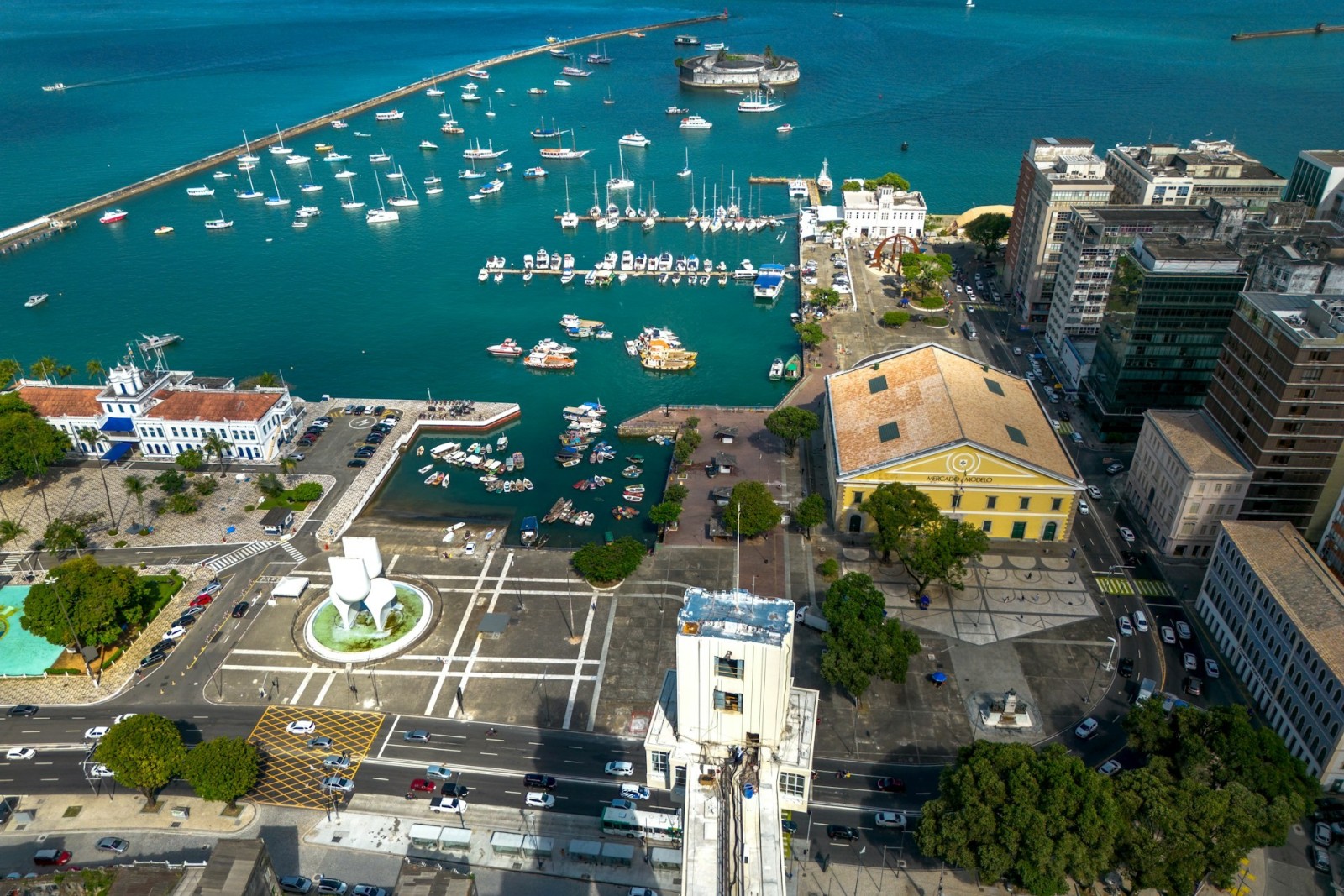
1. Five-star hotels and premium accommodation
These are options for travelers who are interested in a high level of comfort, quality service, swimming pools, restaurants, modern rooms and a prestigious location.
Hotel Fasano Salvador is a luxury hotel in the central part of the city. Suitable for discerning tourists, romantic travel and those who want to combine modern comfort with proximity to the historic center.
The Fera Palace Hotel is an elegant historic hotel in downtown Salvador. It is especially interesting for those who want to live in the atmosphere of the old city.
Hotel Villa Bahia is an atmospheric boutique hotel in the historic center. A good choice for tourists who are most interested in colonial architecture, cultural atmosphere and proximity to Pelurinho.
Casa do Amarelindo is a small premium boutique hotel in Pelurinho. Suitable for romantic holidays and travelers who prefer chamber hotels to large chain hotels.
2. Four-star hotels
For most travelers, this is one of the best options in terms of price, comfort and location.
Monte Pascoal Praia Hotel Salvador is a hotel in Barra, suitable for combining beach holidays and excursions.
Hotel Vila Galé Salvador is a large hotel in the Ondine area. A good option for family holidays and tourists who need a swimming pool and a full-fledged hotel infrastructure.
Grande Hotel da Barra is an option in Barra, convenient for those who want to be close to the beaches and main tourist routes.
Mercure Salvador Rio Vermelho is a good option for living in Rio Vermelho, especially if you are interested in restaurants, bars and evening life.
3. Three-star and inexpensive hotels
Such accommodation is suitable for independent travelers who need primarily a clean separate room, air conditioning, bathroom and basic service.
The Hotel is an affordable urban option in Barra.
Hit Hotel is a simple hotel in the tourist part of Barra, convenient for a beach holiday.
Rede Andrade Barra is a budget option in the Barra area for those who want to reduce their living costs.
4. Pousada - Brazilian guest mini-hotels
Pousada is a small accommodation format typical of Brazil, often reminiscent of a guest house or a family mini-hotel.
In Salvador, the pousada is particularly interesting in historic areas, where some buildings are part of the city’s historic atmosphere.
Pousada da Mangueira is an option close to the historic center, suitable for travelers who prefer small atmospheric hotels.
Pousada Colonial Chile is located in the central historical part of the city.
Pousada Estrela do Mar is a small option in Barra, convenient for a beach holiday.
Casa Petunia Pousada e Boutique is a chamber version in Barra, combining the pousada format with the atmosphere of a small boutique hotel.
5. Boutique hotels
Boutique hotels are particularly well suited to Salvador. Some of them are located in historic buildings and allow you to perceive the accommodation as part of the tour.
Bahiacafé Hotel is a small boutique hotel near the historic center.
Hotel Villa Bahia is one of the most interesting options for living in a historical atmosphere.
Casa do Amarelindo is an option for those who want to stay in Pelurinho and live among colonial architecture.
6. Hostels
Hostels are the most attractive option for young travelers, solo tourists and people on a budget.
You can choose:
bed in the common room;
a small private room;
A separate room with its own bathroom.
In the historic center you can see Origem Bahia, as well as other small hostels Pelurinho.
The main advantage of the hostel is the ability to significantly reduce costs and meet other travelers.
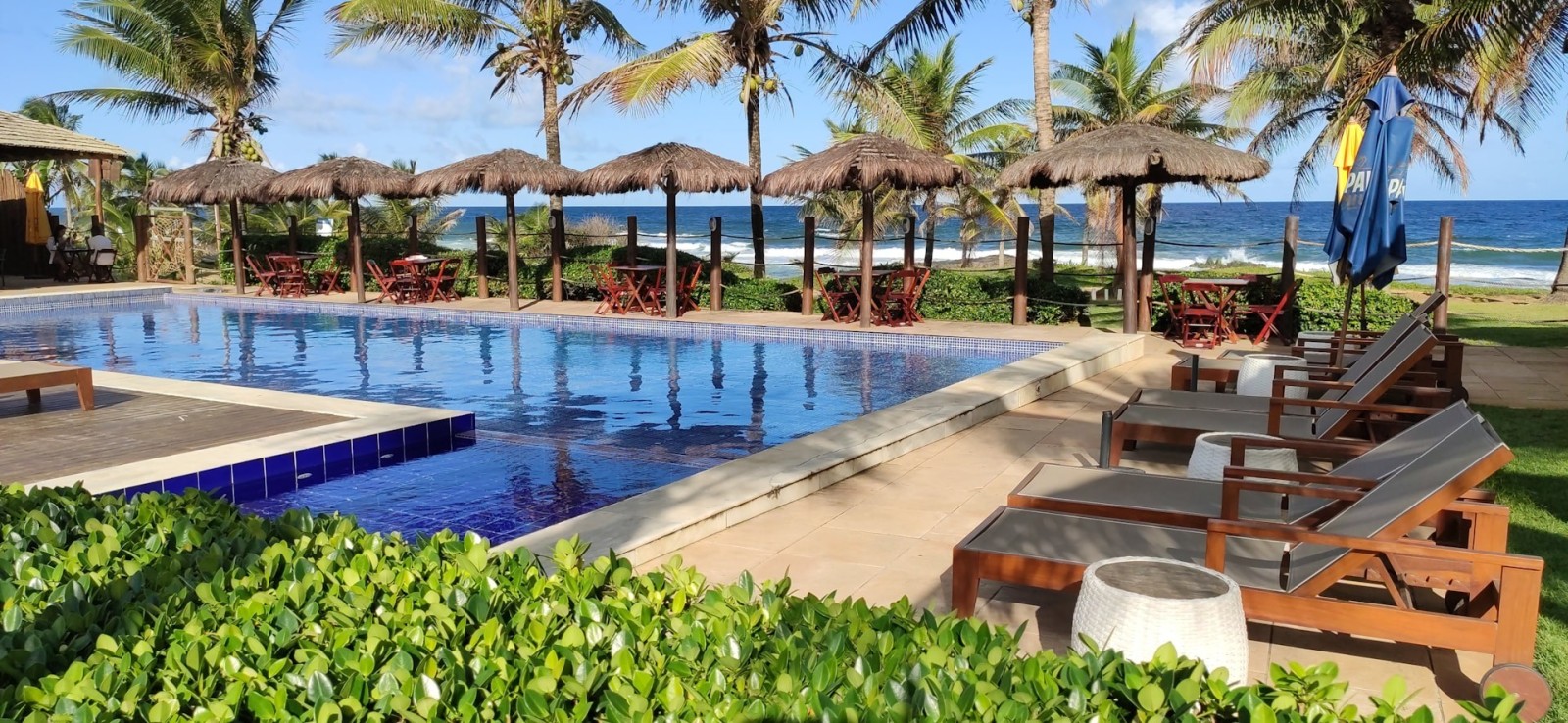
1. Pelourinho (Pelourinho)
Pelurinho is the historic heart of Salvador and one of the main attractions of all of Bahia. Here are preserved colorful colonial houses, cobbled streets, squares, churches, museums, cultural centers, restaurants and craft shops. The Historic Center of Salvador is a UNESCO World Heritage Site.
Transport accessibility: it is best to explore Pelurinho on foot. From Place Ce, Lacerda Elevator and Terreiro de Jesus, you can go to most of the sites of the historic center without transport. From other parts of the city it is more convenient to get by bus, taxi or car.
Time to visit: at least 3-4 hours, but for a full acquaintance it is better to allocate a whole day.
2. St. Francis Church and Monastery (Igreja e Convento de São Francisco)
One of the most impressive monuments of Salvador and an outstanding example of Brazilian Baroque. Especially famous is the luxurious interior with gilded wood carvings and numerous decorative details. The complex is considered one of the most important historical monuments of the city.
Transport accessibility: located in Pelurinho, so it is most convenient to get on foot. Terreiro di Jesus can be reached in a few minutes.
Time to visit: 30-60 minutes.
3. Church of Nossa Senhora do Rosario dos Pretos (Igreja de Nossa Senhora do Rosário dos Pretos)
One of the most important churches in Salvador in terms of Afro-Brazilian history. It is associated with the history of the African population of Brazil and the traditions of Catholicism, formed under strong African influence.
Transport accessibility: located directly in Pelurinho. It is best to walk while walking through the historic center.
Time to visit: about 30-45 minutes.
4. Square of Terreiro de Jesus
One of the main historical squares of Salvador. Several important architectural monuments are concentrated around it, so it is convenient to use it as one of the central points of the Pelurinho tour.
Transport accessibility: on foot from Place Ce, Pelurinho and St. Francis Church. A car is hardly needed here.
Visit time: 20-40 minutes, or the area can be included in the general walking route.
5. Cathedral of Salvador (Catedral Basílica de Salvador)
One of the main religious monuments of the historical center. The cathedral is an important example of colonial architecture and is part of Salvador’s historic ensemble.
Transport accessibility: located in the Upper Town, near Terreiro di Jesus. It is most convenient to walk.
Time to visit: about 30-45 minutes.
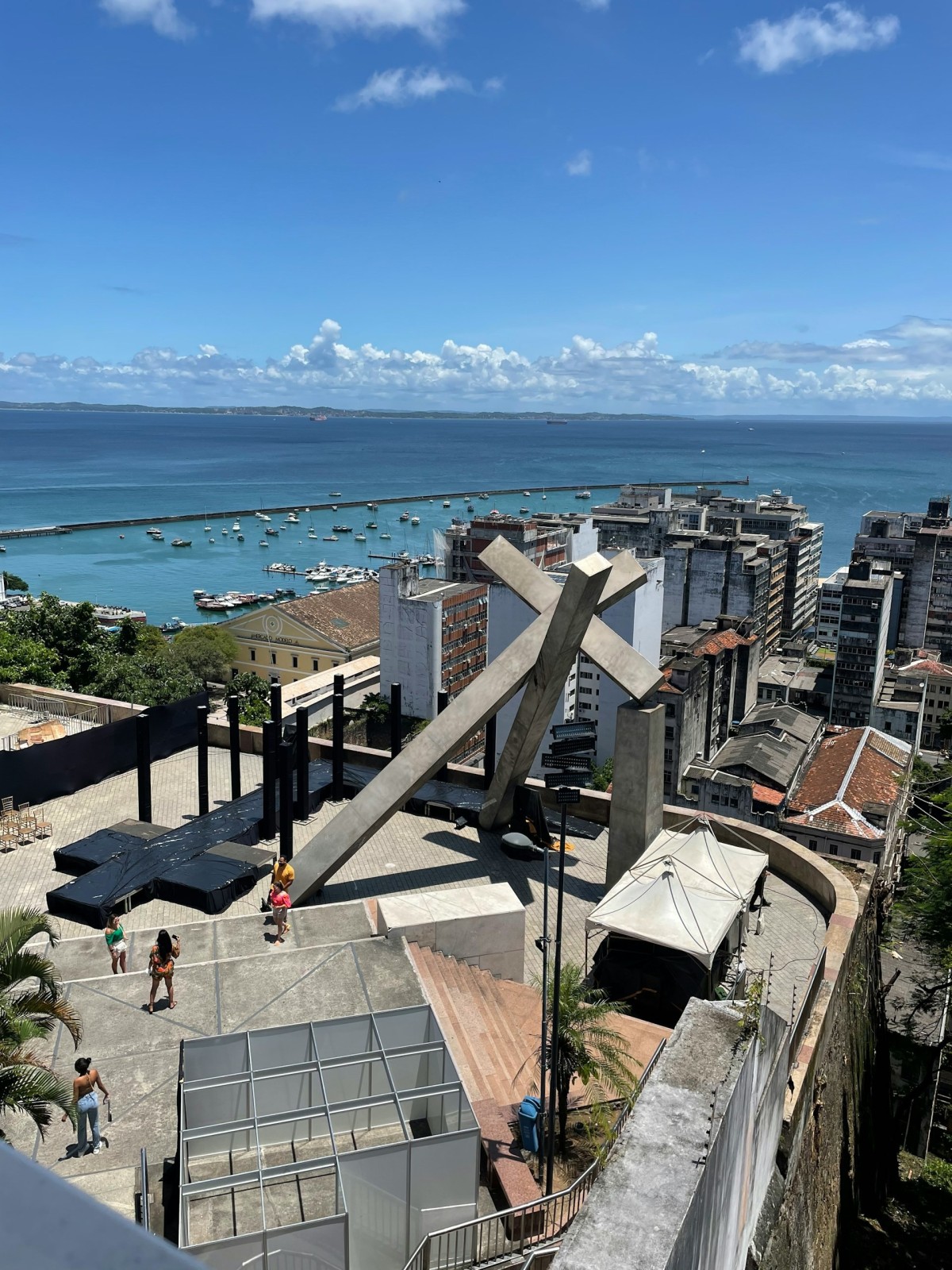
6. Place Ce and Cruz Qaeda (Praça da Sé and Cruz Caída)
Se Square is located on the border of the main tourist routes of the historical center. From here you can see the Lower City and All Saints Bay.
The Cruz Qaeda Monument is located on an observation deck and is dedicated to the vanished old Xie Church.
Transport accessibility: on foot from Pelurinho, Terreiro di Jesus and Lift Lacerda.
Time to visit: 20-40 minutes.
7. The Lacerda Lift (Elevador Lacerda)
One of the main symbols of Salvador. The lift connects the Upper Town and the Lower Town, so it is both a landmark and an important form of urban transport. From the upper part, a panorama of the Bay of All Saints and the Lower City opens.
Transport accessibility: very high. It is convenient to use during the tour: after visiting Pelurinho, you can go down to the Lower Town and continue the route.
Time to visit: 15-30 minutes without taking into account possible waiting.
8. Mercado Modelo Market (Mercado Modelo)
One of the most famous markets in Salvador. It sells traditional Bahia products, jewelry, crafts, textiles, wood products and other souvenirs. The market is located in the Lower Town directly by All Saints Bay.
Transport accessibility: very convenient. From the Upper Town you can go down on the Lacerda Elevator, after which the market is almost nearby. You can also come by bus or taxi.
Time to visit: 1-2 hours.
9. Fort Santo Antonio da Barra and the lighthouse of Farol da Barra (Forte de Santo Antônio da Barra and Farol da Barra)
One of the most recognizable symbols of Salvador. The lighthouse is located on the territory of a historical fortress in the Barra area. The Bahia Maritime Museum operates in the complex.
The place is especially popular due to the combination of historical fortress, ocean and beautiful views. In the evening they come here to watch the sunset.
Transport accessibility: from the historical center it is more convenient to go by bus, taxi or car. On foot from Pelurinho the distance is too long for an ordinary excursion.
Time to visit: 1.5-2 hours.
10. The beach of Farol da Barra (Praia do Farol da Barra)
The beach is directly near the lighthouse and the fortress. It is convenient to combine with a visit to Farol da Barra and a walk along the promenade.
Transport accessibility: bus, taxi or car. After arriving in the Barra area, most of the sites can be viewed on foot.
Time to visit: from 1 hour to half of the day.
11. The beach of Porto da Barra (Praia do Porto da Barra)
One of the most famous beaches in Salvador. It is especially popular due to its convenient location and relatively calm water. Bahia’s tourist materials distinguish it from the city’s main beaches.
Transport accessibility: by bus, taxi or car. From Farol da Barra you can walk along the coast.
Time to visit: from a few hours to a whole beach day.
12. Morro do Cristo (Morro do Cristo)
A small hill with a statue of Christ and a panoramic view of the coast of Salvador. This is a particularly pleasant place to photograph and watch the sunset.
Transport accessibility: you can reach Barra by bus, taxi or car and then walk part of the way.
Time to visit: 30-60 minutes.
13. Igreja do Nosso Senhor do Bonfim
One of the most famous churches in Brazil and the most important religious symbol of Salvador. It is associated with the tradition of Bonfim ribbons and the famous festival of Lavage do Bonfim.
The church is located on the Sacred Hill and is an important pilgrimage site.
Transport accessibility: It is far from Pelurinho. It is most convenient to get by bus, taxi or car. For a tourist trip, a taxi is especially convenient, since you can immediately continue the route through the Lower City.
Time to visit: about 1 hour.
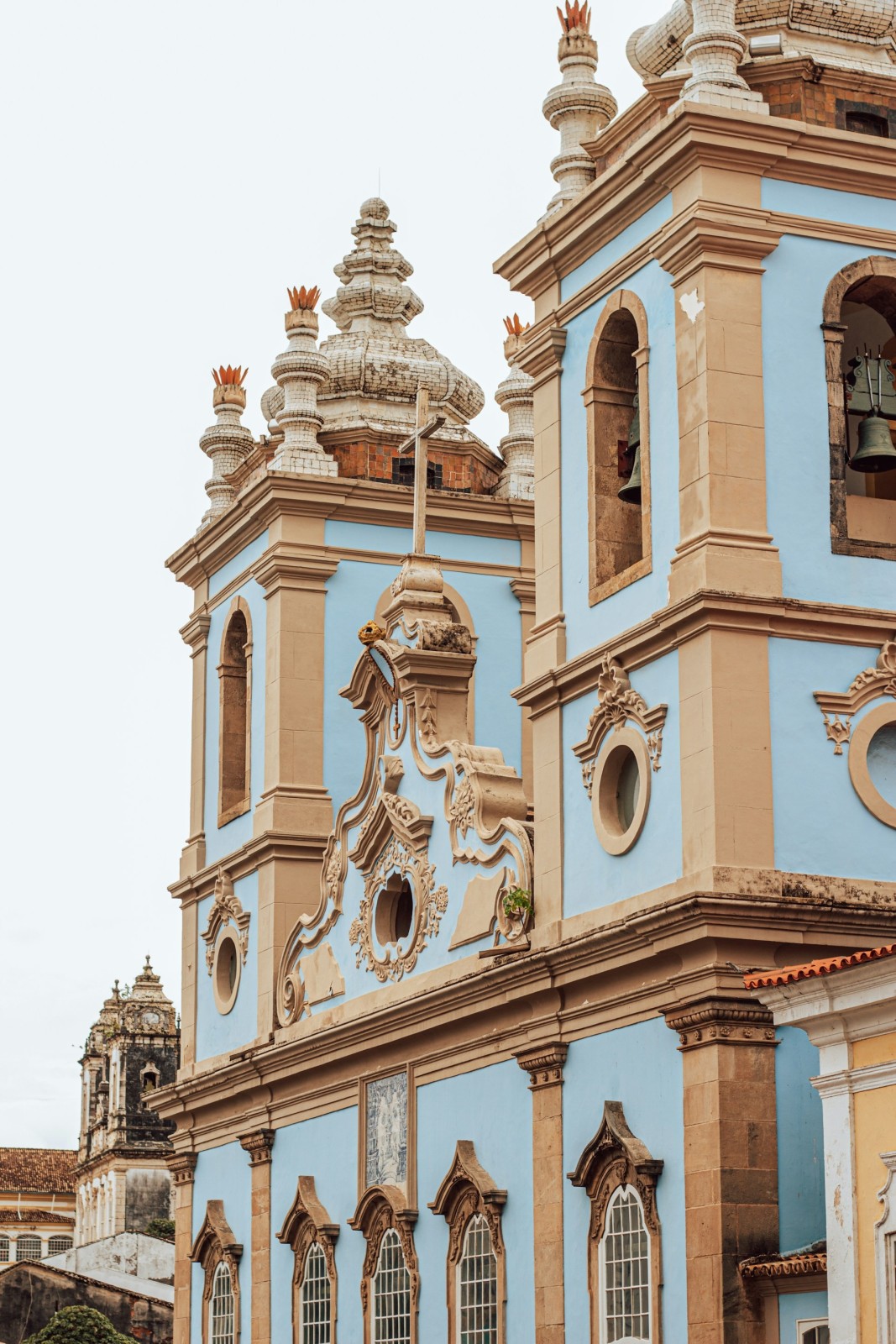
1. Lavagem do Bonfim (January)
One of the most famous traditional holidays in Salvador. It is held in honor of Lord Bonfim and combines Catholic traditions with Afro-Brazilian religious customs.
The main event is a large procession, whose participants walk several kilometers from the Komerciu district to the Bonfim Church. Women in traditional white robes carry vessels of scented water and symbolically wash the steps of the church.
The holiday is accompanied by music, dances, drums, processions and folk festivals. For tourists, this is one of the best opportunities to see the traditional culture of Bahia outside the museum expositions.
Best time: January, usually the second Thursday of January.
2. Festa de Iemanjá – February 2
One of the most unusual festivals of Salvador, dedicated to Iemanjá, an important deity of the sea in Afro-Brazilian religious traditions.
The main events are held in the area of Rio Vermelho, where thousands of people come from early morning. Participants bring flowers and other symbolic gifts, which are then sent out to sea.
Around the religious part, a large city festival is formed with music, dances, concerts and street events.
It is especially interesting for those who want to get acquainted with the culture of Candomblé and the Afro-Brazilian heritage of Salvador.
3. Carnival of Salvador (February or early March)
The main and largest event of the city. Unlike the famous carnival of Rio de Janeiro, the Salvadoran carnival is held mainly not in special stands, but directly on the streets.
The main feature is the trio-electrico (trio elétrico) - huge truck scenes with musicians and artists who move through the streets of the city.
Particularly well-known routes:
Barra (Circuito Dodô) runs along the ocean.
Campo Grandi (Circuito Osmar) – historical route
Batatinha (Circuito Batatinha) is a route in the area of the historical center.
At the carnival are famous Brazilian performers, musical groups and Afro-Brazilian bands.
Olodum, Ilê Aiyê and other well-known cultural groups of Salvador play an important role.
For tourists: this is the best period to get acquainted with the modern musical culture of the city, but at the same time the most crowded and noisy period of the year.
4. Fuzuê - February
A big pre-carnival celebration, which is held just before the main Carnival.
Through the streets there are musical and cultural groups, brass bands, folklore groups and traditional festive associations.
Unlike the main carnival processions, Fuzuê places greater emphasis on traditional culture and small collective performances.
For the tourist: a good option for those who want to feel the carnival atmosphere, but prefer a more chamber event.
5. Furdunço (February)
Another major pre-carnival event. It takes place on the eve of the Carnival and turns the streets of Salvador into a huge music scene.
Music platforms and bands move along the streets, performers of various genres - from traditional Brazilian music to modern popular music.
The main advantage: you can get carnival impressions before the main mass processions.
6. Founding Day of Salvador (29 March)
On March 29, the city celebrates the anniversary of its foundation in 1549.
In honor of this date, concerts, cultural events, exhibitions, performances, sports events and various city programs are organized.
Festive events are held not only in the historical center, but also in other areas of the city.
For a tourist: a good option for exploring the city in a festive atmosphere, but without the huge number of people characteristic of Carnival.
7. Festa Juninas (Festas Juninas) - June
June is one of the most exciting months to experience the traditional culture of northeastern Brazil.
In Salvador, there are numerous festivals dedicated to St. Anthony, St. John and St. Peter.
The city is decorated with flags and garlands, stage and dance floors are organized.
The main elements of the holiday:
music forró;
folk dances;
fires;
traditional dishes;
street concerts;
holiday costumes;
folk games.
June is a great time to explore the more traditional and less touristy side of Bahia culture.
8. São João (June 24)
The main holiday of the June season.
Large-scale concerts and folk festivals are held in Salvador and the surrounding area. Especially popular are performances by performers of forró, sertanejo and other Brazilian musical trends.
The holiday is accompanied by traditional dances, street decoration, bonfires and plenty of local food.
The best time to travel is around June 20-24.
9. Independence Day of Bahia (July 2)
A very important holiday for the people of Bahia.
It is dedicated to the final victory of Brazilian forces over the Portuguese in the struggle for Bahia's independence in 1823.
In Salvador, solemn processions, historical events, concerts and city ceremonies are held.
The holiday is especially interesting for travelers who want to better understand the history of the region.
10. Day of Awareness of Black Culture (November 20)
This day is very important for Salvador. The city is one of the most important centers of Afro-Brazilian culture in the country.
In November, there are:
concerts;
lectures;
exhibitions;
cultural processions;
performances of Afro-Brazilian collectives;
events in Pelurinho.
Especially interesting are the programs devoted to the history of African heritage, candomblé, music, dance and the fight against racial discrimination.
Summer - December, January, February
December: air about 25–27 °C, sea about 27–28 °C. Precipitation is relatively small - about 51 mm on average. This is one of the sunniest and driest months of the year.
January: air about 26–28 °C, water about 27–28 °C. Hot, humid and comfortable for a beach holiday. Precipitation is more than in December, but the month as a whole remains quite favorable.
February: air about 26–28 °C, water about 27–28 °C. One of the hottest months. It is especially interesting for the carnival season.
Features: Summer is a great time for beaches, city walks and festivals. The main drawback is high humidity and increased tourist demand during the Carnival.
Autumn - March, April, May
March: air about 26–28 °C, water about 27–28 °C. This is the warmest month on average - about 26.8 °C. Precipitation is increasing.
April: air about 25–27 °C, water about 26–27 °C. The temperature remains very comfortable, but a noticeably wetter period begins.
May: air about 25–27 °C, water about 26 °C. This is one of the rainiest months of the year with an average of about 189 mm of rainfall.
Features: March is still well suited for beach holidays and excursions. April and May are less reliable for those who expect a sunny beach holiday.
Winter - June, July, August
In Salvador, the winter is very mild: the cold weather is not familiar to Europe.
June: air about 24–26 °C, water about 25–26 °C. It rains a lot, about 158 mm on average.
July: air about 23–25 °C, water about 24–25 °C. One of the coolest months, but for a European tourist, the temperature is still warm.
August: air about 23–25 °C, water about 24–25 °C. This is the coolest month of the year: the average temperature is about 24 °C. At the same time, the amount of precipitation is already significantly reduced compared to May-June.
Features: June and July are suitable for cultural trips and holidays, especially for traditional Festas Juninas, but the likelihood of rain is higher. August is much more pleasant for excursions and walks.
Spring - September, October, November
September: air about 24-25 °C, water about 24-25 °C. Precipitation is already less.
October: air about 24–26 °C, water about 25–26 °C. It rains a little – about 71 mm, so the month is good for traveling.
November: air about 25–27 °C, water about 26–27 °C. Warmer, sunnier and drier than in the winter months.
September-November is one of the most successful periods for combining beach holidays, excursions and cultural programs.
Language of communication
The official and primary language of Salvador is Portuguese. It is in Portuguese that a tourist will have to communicate in hotels, shops, restaurants, transport, government agencies and most tourist facilities.
Salvador uses Brazilian Portuguese, which differs from European Portuguese in pronunciation, vocabulary and some expressions.
In tourist areas – Pelurinho, Barra, Rio Vermelho, major hotels and popular attractions – some employees can speak English. However, it is not necessary to rely on free English throughout the city. Spanish is sometimes understood due to the similarity with Portuguese, but it is better to address Brazilians in Portuguese.
To travel, it is advisable to know at least a few simple phrases: greeting, gratitude, request for help, a question about the price, road and bill in the restaurant.
Traditions and characteristics of behavior
1. Greetings
When dating, they usually say Olá or Bom dia / Boa tarde / Boa noite.
In an informal setting, handshakes are common, and between well-known people - hugs and kisses on the cheek. It is better to first focus on the behavior of the interlocutor.
Brazilians in general are quite open and emotional people, so a smile, goodwill and calm communication are perceived positively.
2. Addressing people
Politeness is important. When referring to a stranger, you can use senhor - "master" or senhora - "mistress".
With the staff of the hotel, restaurant or store it is better to talk calmly and respectfully, even if there is a problem.
3. Communication
In Brazil, conversation is often accompanied by active gestures and emotional facial expressions. A closer distance is more natural than in many European countries.
Do not perceive emotionality or active gestures as aggression.
4. Attitude to religion
Salvador is distinguished by an unusual combination of Catholicism and Afro-Brazilian religious traditions, primarily Candomblé.
Respect religious ceremonies, altars, symbols and ritual participants. Photographs should not be taken without permission during a religious ceremony.
This is especially important during the holidays of Jemanji, Bonfim, Santa Barbara and other traditional events.
5. Clothes in churches
When visiting churches, it is advisable to choose sufficiently closed clothes. Beachwear, very short short shorts or an open top may not be appropriate.
After the beach, it is better to change clothes before visiting a church or museum.
6. Afro-Brazilian culture
Salvador is one of the main centers of Afro-Brazilian culture in Brazil. In the city you can find capoeira, samba, candomblé, traditional musical groups and numerous cultural events.
This culture should be treated as a living tradition, not as entertainment or an exotic show.
Do not ridicule religious rites, clothing, symbols or traditional practices.
7. capoeira
Capoeira is an important part of Bahia’s culture. If you are watching a game on the street or in a tourist area, you should not interfere with the performance without an invitation.
Photographing participants is best after making sure they don’t mind.
8. Photographing people
It is always advisable to ask permission before taking a close-up picture of a person.
Particular care should be taken when photographing:
religious ceremonies;
children;
street performers;
Candomblee participants;
People in traditional clothes.
9. Punctuality
In informal communication, Brazilians may be more relaxed than in some European countries.
However, it is better to arrive on time for excursions, transfer, plane, bus, train or check-in to the hotel.
10. Tipping
Restaurants often add a service charge of around 10%. Before paying, you should look at the bill to see if service is included.
Additional tips over and above the service included are usually left at the discretion of the customer.
11. Food
In Salvador, the cuisine of Bahia is very important. It is worth trying acarajé, moqueca, vatapá, caruru and other local dishes.
Acarage is traditionally sold by women in characteristic white clothing - baianas. They and their cultural traditions should be respected.
If you are not used to spicy food, it is better to check the level of acuity in advance.
Important rules and laws
1. Documents
The foreigner must have a valid passport and comply with the conditions of entry and stay in Brazil.
When traveling around the city, it is not recommended to constantly carry the original passport with you if it is not necessary. It is better to have a safe copy of the document and keep the original in the hotel safe.
2. Visa regulations
The conditions of entry depend on the nationality of the traveler. Before traveling, you need to check the current requirements of Brazil for your passport.
It is also important to observe the permitted period of stay and not exceed it.
3. Prohibited substances
Brazilian law strictly regulates drug trafficking. Do not transport, buy or store prohibited substances even in small quantities.
Do not accept packages or baggage from strangers.
4. Alcohol
Alcohol is allowed to adults, but the use of alcohol should not lead to disturbance of public order.
Driving is a strict approach to drinking alcohol: do not drive after drinking alcohol.
5. Smoking
Smoking is restricted in enclosed public spaces and other places where the relevant ban applies. The established signs and rules of a particular institution should be observed.
6. Photography of military and protected objects
Do not photograph objects connected with military, police or critical infrastructure without permission.
If there is a sign that prohibits photography, it must be observed.
7. Beaches and natural areas
You can not leave garbage on beaches and natural areas. In some places there are special rules for swimming and behavior.
If there are warning flags on the beach, be sure to pay attention to the state of the sea. On some parts of the coast, strong waves and currents can occur.
8. Road traffic
In Brazil, traffic is on the right side of the road.
Pedestrians need to use the crossings and observe traffic lights. When renting a car, you should have the documents necessary to drive a vehicle in Brazil.
9. Scooters and bicycles
Use them only where permitted and comply with local traffic rules. Do not drive in busy pedestrian areas.
Security rules that are particularly important in El Salvador
Salvador is a major tourist city, so routine precautions are especially important.
1. Don't show expensive things
Do not openly wear expensive watches, large jewelry, professional photographic equipment or hold a smartphone in your hand near the roadway.
2. Do not carry large amounts of cash with you.
It is better to have a small amount of cash and keep the bulk of the funds separately.
3. Watch your phone.
Especially carefully you should use a smartphone on the streets, in places of large crowds of people and near roads.
4. Do not walk in unfamiliar areas at night.
It is safer for the tourist to stick to well-known tourist areas and use an official taxi or a proven travel app.
5. In Carnival, be especially careful.
During the Carnival there are huge crowds of people on the streets. During this period, it is especially important to monitor the phone, documents, wallet and bag.
6. Don't get into conflict.
If there is a dispute or conflict, it is better to calmly leave and seek help from the police or administration of the place.
1. The most necessary words
Olá - hello / hello Transcription: ola
Oi - hello Transcription: oh
Bom dia - good morning / good day Transcription: Bon jia
Boa tarde - good afternoon / good evening Transcription: boa tarji
Boa noite - good evening / good night Transcription: boa noite
Tchau - while Transcription: Chow
Até logo - until soon
Por favor - please Transcription: Pore Favor
Obrigado - thank you if a man says Transcription: Obrigade
Obrigada - thank you if a woman says Transcription: Obrigada
De nada - not for what Transcription: ji nada
Desculpe - sorry Transcription: Giskulpi
Com licença - allow / excuse me, you can pass Transcription: Con Fox
Sim - daTranscription: Sin
Não - no Transcription: naцияu
Talvez - possibly Transcription: Talveis
- You all right? How are you? Transcription: Tudu Bane?
Tudo bem - All is well Transcription: Theredu Bane
2. If you do not understand Portuguese
Nao entendo. - I don't understand. Transcription: nay entendu
Não entendo português. - I don't understand Portuguese. Transcription: Entendu Portugal
Fala inglês? - Do you speak English? Transcription: Fala Inglace?
Fala espanhol? - Do you speak Spanish? Transcription: Fala Spaniol?
Pode falar mais devagar? - Can you speak more slowly? Transcription: Poji falar mais jevagar?
Pode repetir? - Can you say it again? Transcription: podji rehearsal?
Pode escrever? - Can you write? Transcription: Poji sparker?
Como se diz isso em português? - How do you say that in Portuguese? Transcription: Who do you want?
Estou usando o tradutor. - I use an interpreter. Transcription: Ishtou uzandu traduto
3. Familiarity
Como você se chama? - What's your name? Transcription: Whom vose shi shama?
Eu me chamo... - My name is... Transcription: Ew mi shamu...
Qual é o seu nome? - What's your name? Transcription: How do you do that?
Meu nome é... - My name is... Transcription: Meow nomi.
Prazer em conhecer você. - Nice to meet you. Transcription: Praser En Conieser Vosé
De onde você é? Where are you from? Transcription: G'onji vose?
Sou da Rússia. - I'm from Russia. Transcription: Sou da Hussia
Estou viajando pelo Brasil. - I'm traveling in Brazil. Transcription: Istou Viajandu pel Brasiou
4. Hotel
Tenho uma reserva. - I have a reservation. Transcription: Shadow of Uma Hezerva
Tenho uma reserva em meu nome. - I have a reservation in my name. Transcription: the shadow of the head of state
Quero fazer o check-in. - I want to register. Transcription: Keru phaser at Chekin
Quero fazer o check-out. - I want to move out. Transcription: Keru phaser at checkout
Qual é o número do meu quarto? - What's my room number? Transcription: How do you do numeru du meu cuartu?
Onde fica o meu quarto? - Where's my number? Transcription: Ongji fika at meu cuartu?
O café da manhã está incluído? - Breakfast included? Transcription: Cafe da mania ista incluidu?
A que horas é o café da manhã? - What time is breakfast? Transcription: What's the story?
Tem Wi-Fi? Transcription: Tain Wi-Fi?
Qual é a senha do Wi-Fi? - What's the Wi-Fi password? Transcription: How do you feel?
Preciso de ajuda. - I need help. Transcription: Presisu Ji Ajuda
O ar-condicionado não funciona. - The air conditioner's not working. Transcription: at the art condycionade na funxion
Nao tem água quente. - No hot water. Transcription: Tain Agua Kenti
5. Airport
Onde fica a saída? - Where's the exit? Transcription: Ongji fika a Saida?
Onde fica a esteira de bagagem? - Where's the baggage? Transcription: Ongji fika a Ishteira ji Bagazein?
Onde está a imigração? - Where's passport control? Transcription: Ongji, and the immigrant?
Onde posso pegar um táxi? - Where can I get a taxi? Transcription: Ongji posue pegar un taxi?
Onde fica o metrô? - Where's the subway? Transcription: Ongji fika at meth?
Perdi minha bagagem. - I lost my luggage. Transcription: Perji Minha Bagajein
Minha bagagem não chegou. - My luggage didn't arrive. Transcription: Miña Bagazein nahu Shew
6. Taxis and travel
Quero ir para este endereço. - I want to go to this address. Transcription: Keru Ir Para Esti Enderes
Pode me levar para este hotel? - Can you take me to this hotel? Transcription: "Podji mi levar para esti oteou"?
Quanto custa até o centro? - How much does it cost to the center? Transcription: Quantu kushta ate at the centru?
Quanto tempo demora? - How long will it take? Transcription: Quantu tempu demora?
Pare aqui, por favor. - Stop here, please. Transcription: pari aki, por favor
Pode parar aqui? - Can you stay here? Transcription: Poji parar aki?
Estou indo para Pelourinho. - I'm going to Pelurinho. Transcription by Para Pelurinho
Estou indo para a Barra. - I'm going to Barra. Transcription: Ishtou indu para a Barra
7. How to ask the way
Onde fica...? - Where it is. .?Transcription: Ongji fika...?
Como chego a...? - How to get to...?Transcription: who is the neck?
É longe? - Is that far? Transcription: A lounge?
É perto? - Is it close? Transcription: eh?
Posso ir a pé? - Can I walk? Transcription: Posu il à pe?
Vire à direita. - Turn right. Transcription: believe a Jirayta
Vire à esquerda. - Turn left. Transcription: believe a spark
Siga em frente. - Go straight. Transcription: Siga en frenty
Onde fica o ponto de ônibus? - Where's the bus stop? Transcription: Ongji fika at pontou ji onibus?
8. Restaurant and café
Uma mesa para uma pessoa, por favor. - One table, please. Transcription: uma mesa uma pesoa, pore favor
Uma mesa para duas pessoas, por favor. - Table for two, please. Transcription: Uma mesa para duas pesoas, pore favor
O cardápio, por favor. - Menu, please. Transcription: Cardapio, por favor
O que você recomenda? - What do you recommend? Transcription: Do you have a recommendation?
Quero experimentar a comida típica. - I want to try local food. Transcription: Keru Experimentar and Team Tipic
O que é isso? - What is it? Transcription: ki-i-su?
É picante? - Is it spicy? Transcription: Peacanti?
Sem pimenta, por favor. - No pepper, please. Transcription: sein pimenta, pore favor
Quero água sem gás. - I want water without gas. Transcription: Keru Agua Sein Gus
Quero água com gás. - I want sparkling water. Transcription: Kerou Agua Con Gas
Uma cerveja, por favor. - One beer, please. Transcription: mind of service, pore favor
A conta, por favor. - Check, please. Transcription: a conta, por favor
Está incluída a taxa de serviço? - Is the service charge on? Transcription: Ista incluid and taksa ji service?
Food and food
1. Bahia cocoa and chocolate
Bahia is one of Brazil’s important cocoa growing regions. In Salvador, you can find locally produced chocolate, cocoa beans, cocoa powder and various cocoa products.
It is better to choose packaged factory products with an indication of the composition and shelf life - they are more convenient to transport and store.
2. Coffee.
Brazilian coffee is one of the most universal souvenirs. You can buy coffee from different regions of the country, including Bahia.
For a gift, it is especially convenient to take small packs of 250-500 g.
3. Coconut sweets
Cocada is a traditional Bai coconut sweet. There are options with sugar, condensed milk, nuts and other additives.
It is one of the most famous souvenirs of Salvador.
4. kashasa
Cachaça is a traditional Brazilian strong alcoholic drink made of sugar cane.
In Bahia you can find interesting local options, but when buying and transporting it is necessary to take into account the customs regulations of the destination country and the rules of the airline.
5. Spices and seasonings
Bai cuisine has a rich taste. As a souvenir, you can buy dry mixtures of spices, peppers, seasonings for fish and seafood.
It is especially interesting to try the seasonings used to make moqueca, vatapá and other dishes of Bahia cuisine.
For transportation, it is better to choose dry factory-packed mixtures.
6. Dendé powder
Azeite de dendê is a palm oil extremely characteristic of the cuisine of Bahia.
It is used in acarage, mokeka, vatapa and other local dishes.
For tourists, this is an interesting gastronomic souvenir, but liquid in a glass bottle is not always convenient to carry in luggage.
7. Acarage and other dishes - try it on the spot
Acarajé is better seen as a gastronomic experience, not a souvenir.
This is one of the most famous dishes of Bahia - deep-fried dough made of black peas with various fillings.
Also worth a try:
Moqueca is a fish or seafood prepared with coconut milk and spices.
Vatapá is a thick dish with coconut, nuts and spices.
Caruru is a traditional dish with bamia.
Medical and health-improving products
Here it is worth separating traditional natural products and real medicines.
1. Coconut oil
Coconut oil can be found in natural products and cosmetics stores. It is used in skin and hair care.
For the traveler it is more convenient to choose a small sealed packaging.
2. Natural cosmetics
In Brazil, cosmetics with:
Coconut?
cocoa;
asai;
marakuya;
Aloe;
oils of various plants;
Brazilian plant extracts.
Especially interesting are local creams, soaps, shampoos and hair care products.
3. Handmade soap
In Salvador, you can find aromatic soap with coconut, vegetable oils, herbs and fruit extracts.
This is a good inexpensive gift that is easy to transport.
4. Herbal teas
You can find various Brazilian herbal mixtures and teas.
At the same time, it is worth buying only factory-packed products with a clear composition. Do not purchase unknown mixtures from random sellers, especially if it is intended to be used for medicinal purposes.
5. Natural oils
In specialized stores, various vegetable oils and cosmetics based on them are sold.
Interesting products with:
coconut oil;
cocoa butter;
oils of Brazilian plants;
tropical fruit extracts.
It is important to remember that such products are not automatically medicines, even if the seller calls them curative.
Souvenirs
1. Wood products
In Salvador, you can find carvings, decorative products and small handmade items.
Particularly interesting products reflecting the Afro-Brazilian culture and traditions of Bahia.
When buying wood products, it is better to make sure that the material is allowed for export and does not belong to protected species.
2. Figures and figurines
Small figures are popular:
musicians;
dancers;
Capoeirists.
traditional characters of Bahia;
Afro-Brazilian cultural images.
This is a good option for a small gift.
3. Products with symbols of Salvador
You can buy souvenirs with images:
Pelurinho;
Lacerd's lift.
Barra lighthouse;
churches of the historical center;
ocean;
Traditional Baian women.
It can be magnets, postcards, key chains, small paintings and decorative products.
4. Clothing with Bahia symbols
Popular T-shirts, shirts, bags and hats with the inscriptions Bahia, Salvador, Pelourinho.
You can also find clothes in the style of local musical and cultural groups.
5. Jewelry
In tourist areas, bracelets, necklaces, earrings and other handmade jewelry are sold.
Particularly characteristic are products with:
wooden beads;
seashells;
colored stones;
metallic elements;
traditional Brazilian motifs.
When buying products with natural materials, you must take into account the rules of export from Brazil and import into your country.
6. Bracelets Senhor do Bonfim
One of Bahia’s most recognizable souvenirs is the small colored ribbons fitas do Senhor do Bonfim.
They are associated with the tradition of the Bonfim Church and have long become a kind of symbol of Salvador.
This is a very light, inexpensive and almost universal souvenir.
7. Capoeira products
You can buy small souvenirs dedicated to capoeira:
figurines;
T-shirts;
musical instruments;
decorative berimbau;
paintings;
Keychains.
8. berimbau
Berimbau is a traditional musical instrument closely related to capoeira.
It is one of the most authentic souvenirs of Salvador. Small decorative options are much more convenient to carry than a full-size tool.
Before buying a wooden tool, it is worth clarifying the possibility of its removal and the rules for carrying luggage.
Safety of rest and availability of travel documents in El Salvador
Salvador is a major tourist city in Brazil and one of the main cultural centers of the country. When traveling here, the main attention should be paid to the safety of the phone, documents and money, especially in crowded places and during the Carnival. At the same time, tourist areas are well adapted for travelers, and the main emergency services are available on pan-Brazilian numbers.
What documents do tourists need?
Travel to El Salvador requires:
a valid foreign passport;
air tickets or confirmation of the further route - it is desirable to have with you;
confirmation of accommodation booking;
Health insurance is highly recommended;
documents confirming the availability of travel funds, it is desirable to have in electronic form;
a copy of the passport and an electronic copy of the main documents.
Appropriate driving documents will be required to rent a car.
Important for Russian citizens
As of 2026, Russian citizens do not need a visa for a tourist or business trip to Brazil. Permitted stay – up to 90 days in any 180-day period. This rule is confirmed by the Brazilian Embassy in Russia.
If the trip does not involve tourism or an ordinary business trip – for example, work, long-term study or internship – other grounds for entry and a corresponding visa may be required.
Can I stay longer than 90 days?
For Russian citizens, the visa-free period is 90 days within 180 days. The Brazilian Embassy also specifies the possibility of extending the stay for another 90 days in accordance with the law. This does not mean the automatic right to stay for another 90 days: an extension must be issued in Brazil through the Federal Police before the expiration of the authorized period.
Therefore, it is safer for the average tourist to plan a trip based on the 90/180 rule, unless an appropriate extension is issued in advance.
Health insurance
For a tourist trip, I recommend taking out a travel policy with medical coverage, even if it is not a prerequisite for your specific category of entry.
It is advisable that the insurance cover:
outpatient treatment;
hospitalization;
emergency medical care;
call an ambulance;
transportation to a medical institution;
emergency dental care;
accidents;
costs of medical evacuation if necessary;
complications of chronic diseases, if it is important for a particular traveler.
Before traveling, save your insurance policy number and assistant phone number on your phone and separately on paper.
In Brazil, foreigners can also apply for emergency medical care in the state SUS system. Brazil’s Ministry of Health says emergency care for tourists is free.
Emergency services phones
The main numbers that should be saved in advance:
190 – Police (Polícia Militar) Used in crime, security threat, robbery and other situations requiring immediate police intervention. 190 is a national police emergency number.
192 – SAMU ambulance for serious illnesses, injuries, accidents, loss of consciousness, breathing problems and other emergency conditions. The service works around the clock, the call is free.
193 – Fire and Rescue Service (Corpo de Bombeiros) Fire, rescue operations, certain types of accidents and emergencies.
191 – Federal Highway Police (Polícia Rodoviária Federal), primarily for emergencies on federal highways.
194 – Federal Police (Polícia Federal) may be required in matters relating to federal police and immigration matters.
199 - Civil defense (Defesa Civil) Used in natural and other dangerous situations.
The most important three numbers
It is better to write them on the phone before departure.
Safety on the streets
The main practical recommendation for a tourist in Salvador is not to show expensive things.
Don't worry.
Always hold an expensive smartphone in your hand on the street;
carry large amounts of cash;
display expensive watches and jewelry;
Leave your phone or wallet in plain sight;
leave the bag unattended;
counting money on the street.
Be especially careful in crowds, train stations, near tourist attractions and during the Carnival.
Where to walk a tourist
Salvador’s most popular tourist areas include Pelurinho, Barra, Rio Vermelho and other central tourist areas.
However, even in popular areas, you should not automatically consider any street safe.
It's better at night.
use an official taxi or a proven car ordering service;
Do not go far from tourist areas without need;
Do not explore unfamiliar areas on foot.
Check the route in advance;
Do not display your phone while waiting for transport.
Safety during Carnival
During the Carnival, the situation is somewhat different due to the sheer number of people.
The main risks for tourists:
pickpocketing;
loss of telephone;
loss of documents;
Accidental separation from friends;
excessive use of alcohol;
A crush in the busiest places.
It is better to bring a minimum of things.
The best option is a small closing belt, a bag over the shoulder or other means that is difficult to open discreetly.
A passport should not be worn unnecessarily if it can be safely stored in a hotel.
Money and bank cards
Brazil uses the Brazilian Real (BRL).
It is desirable to have:
bank card;
a small supply of cash;
a backup card stored separately;
A small amount of cash for small purchases.
Don’t keep all your money and cards in one wallet.
Before the trip, it is advisable to notify the bank about the foreign trip and check the possibility of using the card in Brazil.
Mobile communications
There are large mobile operators in Brazil. Among the main ones:
Vivo, Claro, TIM
Other operators and virtual mobile services are also on the market. ANATEL publishes information about mobile operators and coverage; the actual signal quality depends on the area, buildings and location.
For tourists, three options are most convenient:
1. Roaming of the Russian operator is convenient if the trip is short, but the cost of mobile Internet must be checked in advance.
2. Brazilian SIM card - may be more profitable on a long trip.
3. eSIM is a convenient option if the smartphone supports eSIM.
To navigate around El Salvador, it is advisable to have mobile Internet at all times, as it is useful for maps, translators, ordering transport and communication with the hotel.
What to do when stealing your phone
If the phone is stolen:
Block SIM/eSIM immediately.
Block banking applications and cards.
Use the device search function.
Change passwords from important accounts.
Contact the police and receive confirmation of the application.
Contact the insurance company if the theft is covered.
It is very useful to record the IMEI phone before the trip and save it separately.
Safety on the beach
On the beaches, you should pay attention to warning flags and instructions of rescuers.
Do not swim far from the shore, especially if you are not familiar with the local sea conditions.
It is also not recommended to leave your phone, wallet and documents unattended on the beach.
Sun and heat
Even if temperatures seem comfortable, solar radiation in El Salvador can be strong.
It is desirable to use:
sunscreen;
headdress;
sunglasses;
sufficient amount of water;
light clothes.
Be especially careful during long walks in the historic center and during the Carnival.
Documents are best stored in two versions
Before the trip, do:
Paper copy of the passport.
Passport photo on the phone.
Backup of documents in a secure cloud storage.
Separately write:
passport number;
insurance number;
telephone of the insurance company;
hotel contacts;
bank numbers;
emergency phones.
How long can a tourist stay in Brazil?
If we are talking about a Russian citizen with a Russian passport, then for 2026:
No visa – up to 90 days in any period of 180 days.
For the average tourist, this means that you can’t just spend 90 days in Brazil, travel for a few days to a neighboring country and expect a new entry will automatically give another 90 days. The set period of 90 days within 180 days is taken into account.
If you need a longer stay, you should specify in advance the possibility of an official extension in the Federal Police of Brazil.
Create a query and local guides will offer you the best options

