Independent tourism and recreation in the city of Coquimbo Historical information about the city of Coquimbo T...
The oldest population of the territory
The history of Coquimbo began long before the Spanish. The coast of the bay and surrounding areas were used by indigenous peoples, primarily marine communities known as chango, as well as Diagit. For them, the coast was a source of fish, shellfish and other marine resources.
The location of the bay was exceptionally convenient: it provided a natural shelter from waves and winds and therefore since ancient times it has been important as a parking place for small ships and boats. Archaeological finds in the region indicate a long settlement of the territory long before the colonial era.
The area was later influenced by the Inca Empire. The southern boundary of Inca influence was much north of the central part of modern Chile, but the valleys of the Coquimbo region were part of a system associated with the Inca political and economic organization.
The arrival of the Spaniards
The first Spanish expeditions reached this part of Chile in the XVI century.
Of particular importance was the founding of La Serena, a city that was to become an important Spanish center in northern Chile. La Serena required a convenient port, and Coquimbo Bay proved to be an almost ideal place for sea transportation.
Pedro de Valdivia’s expedition passed through the area during the Spanish advance to the south. In his reports, he noted favorable coastal conditions. At the founding of La Serena, the Spaniards also viewed Coquimbo as a natural port for the new settlement.
Thus, initially Coquimbo developed not as an independent city, but primarily as a port of La Serena.
Coquimbo in the colonial era
In colonial times, the bay was used for loading and unloading goods. There was no major urban center in the modern sense, but the port gradually acquired economic importance.
Through it passed goods necessary for the settlements of the northern part of Chile, as well as products coming from the inner valleys.
The main advantage of Coquimbo was the bay itself. It allowed ships to shelter from adverse weather, which was of great importance in the era of sailing fleet. The good natural conditions of the harbor became the foundation for the future development of the city.
The coast also attracted foreign seafarers and pirates. Historical sources mention, for example, the landings of English buccaneers Bartholomew Sharp in 1680 and Edward Davis in 1686.
Coquimbo in the early nineteenth century
At the beginning of the XIX century, Coquimbo was still a small port settlement.
In the 1820s, it was a rather modest place, where the main role was played by port employees, traders, fishermen and people associated with sea transportation.
One of the major problems was the supply of fresh water. In the early period, water for residents had to be delivered from the Penuelas area. This limited the possibility of rapid settlement growth.
However, the situation gradually began to change due to the development of the mining industry.
Copper industry is the main engine of development
In the XIX century, the northern part of Chile experienced a real mining boom.
In the region, copper was mined primarily, and Coquimbo was in an exceptionally advantageous position: ore was mined in the interior, and the port allowed it to be exported to international markets.
In the middle of the XIX century, copper smelting enterprises appeared around the city. One of the most important industrial centers was the Guayacán region.
The development of metallurgy and trade led to the creation of new jobs, an increase in population and the construction of port infrastructure.
The railway and the transformation of Coquimbo into a major port
The real turning point was the construction of the railway.
On December 28, 1862, a railway connection connected the port with La Serena and the areas associated with mining and metallurgy. This greatly accelerated the transportation of ore and goods.
The railroad changed the economy of the city.
Previously, cargo had to be transported much more difficult and slower. Copper and other goods could now flow quickly from the hinterland directly to the port.
Coquimbo began to transform from a small settlement into a large industrial and commercial center.
Formation of an independent city
In 1850, plans were approved for the development of a new port villa.
The next important step was September 24, 1864, when the Port of Coquimbo Department was established. This was an important step in the separation of Coquimbo from administrative dependence on La Serena.
In the 1860s, infrastructure construction continued, water supply improved, port facilities and industry developed.
In 1867, the municipal organization of Coquimbo was established.
On September 4, 1879, Coquimbo officially became a city during the presidency of Anibal Pinto. This date can be considered one of the main official milestones in the history of the city.
The Port's Golden Age
The second half of the XIX century was the period of the greatest economic growth of the old Coquimbo.
The port was actively involved in the international copper trade. Foreign entrepreneurs, engineers, merchants and workers came to the city.
The presence of:
British;
Americans;
Frenchmen;
other European merchants.
Foreigners brought new architectural styles, technologies, commercial traditions and lifestyles to the city.
It was during this period that the peculiar cosmopolitan character of Coquimbo was formed.
Emergence of the English Quarter
One of the most interesting legacy of industrial Coquimbo was the English Quarter (Barrio Inglés).
It was formed in the area of the historical port center during the economic boom of the XIX - early XX century.
Foreign traders, sailors, entrepreneurs and representatives of the port industry settled and worked here.
For the construction was used characteristic wooden architecture associated with the traditions of the so-called “sea carpenters”.
Today, the area is perceived as one of the most characteristic historical corners of Coquimbo: the old buildings remind of the time when the city was an important international port.
Urban life in the late nineteenth century
The development of industry contributed to rapid population growth.
In the city appeared:
new residential areas;
commercial enterprises;
hotels;
restaurants;
warehouses;
schools;
churches;
port facilities;
industrial facilities.
In 1895, cars of the Coquimbo city railway began to operate, which connected the central part of the city with Guayacan. This type of transport lasted until 1929.
Thus, Coquimbo gradually acquired the features of a modern industrial city.
The Decline of the Copper Age
Coquimbo’s economic success depended on global trade and the state of the mining industry.
The situation has changed over time.
The city's economy was affected by:
depletion of individual deposits;
changes in the global copper market;
development of other areas of Chile;
strengthening the role of the northern regions of the country;
increasing importance of nitrate extraction.
Particularly noticeable difficulties occurred in the first decades of the XX century.
The economic crisis of the 1930s was another major blow to the old port economy.
Earthquake and tsunami of 1922
One of the most tragic pages in the history of Coquimbo was the tsunami of 1922.
A strong earthquake occurred in the Atacama area and caused a powerful wave that reached the coast.
Coquimbo was particularly vulnerable due to its location around the bay.
Sea water has penetrated far into the city. Historical accounts indicate that the water reached areas of Aldunate and Baquedano streets, and in some places the railway line. Hundreds of people died.
This event had a huge impact on the further attitude of the city to natural threats.
Coquimbo and the Political History of Chile
The city was also associated with important political events of the XX century.
In 1931, Coquimbo became one of the sites associated with the so-called Fleet Mutiny, a major naval engagement of Chile.
The rebel squadron was in the port of Coquimbo, and later the ships were attacked by aircraft. The events were part of Chile's severe political crisis of the early 1930s.
XX century: from industrial port to tourist city
During the twentieth century, the importance of the traditional mining and port economy gradually changed.
Coquimbo continued to be an important port, but the city increasingly attached its future not only to industry, but also to:
fishing;
trade;
services;
maritime activities;
tourism;
beach holiday.
Gradually, the neighborhood with La Serena became increasingly important.
The two cities actually began to form a single urban agglomeration of La Serena - Coquimbo.
Modern Coquimbo
Today, Coquimbo is simultaneously:
a port city that retains industrial and commercial importance;
sea resort, attractive due to the coast and beaches;
historical city, where traces of the industrial era of the XIX century are preserved;
tourist center associated with sea walks, beaches and historical areas;
part of the large urban agglomeration of La Serena - Coquimbo.
The modern appearance of the city is formed by several historical epochs: the ancient settlement of the coast, Spanish colonization, the copper boom of the XIX century, international port trade, industrial development of the XX century and modern tourist development of the coast.
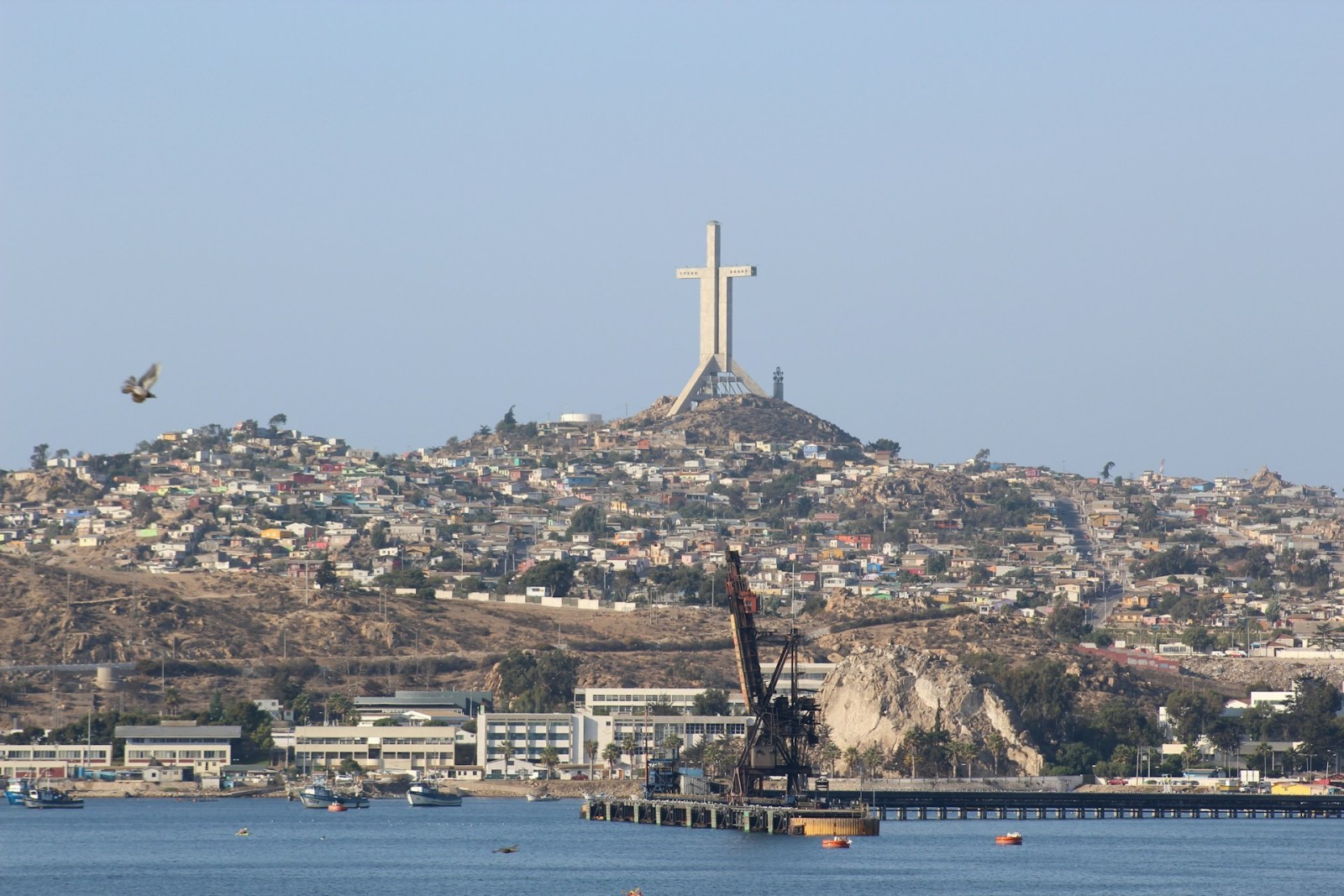
The main advantage of the city is the opportunity to combine several completely different types of recreation in one trip.
Here you can go to the beach in the morning, walk around the historic port area in the afternoon, taste fresh seafood in the evening, and the next day go to the Elki Valley or to one of the astronomical observatories.
Coquimbo is especially well suited for travelers who want not just a beach holiday, but acquaintance with the real port city of Chile.
Ocean and beach holidays
The coast is one of the main reasons to visit Coquimbo.
Along Coquimbo and neighboring La Serena stretches a large coastal area with beaches, walking routes, restaurants and bicycle paths. Between cities you can move by car, local transport or bicycle.
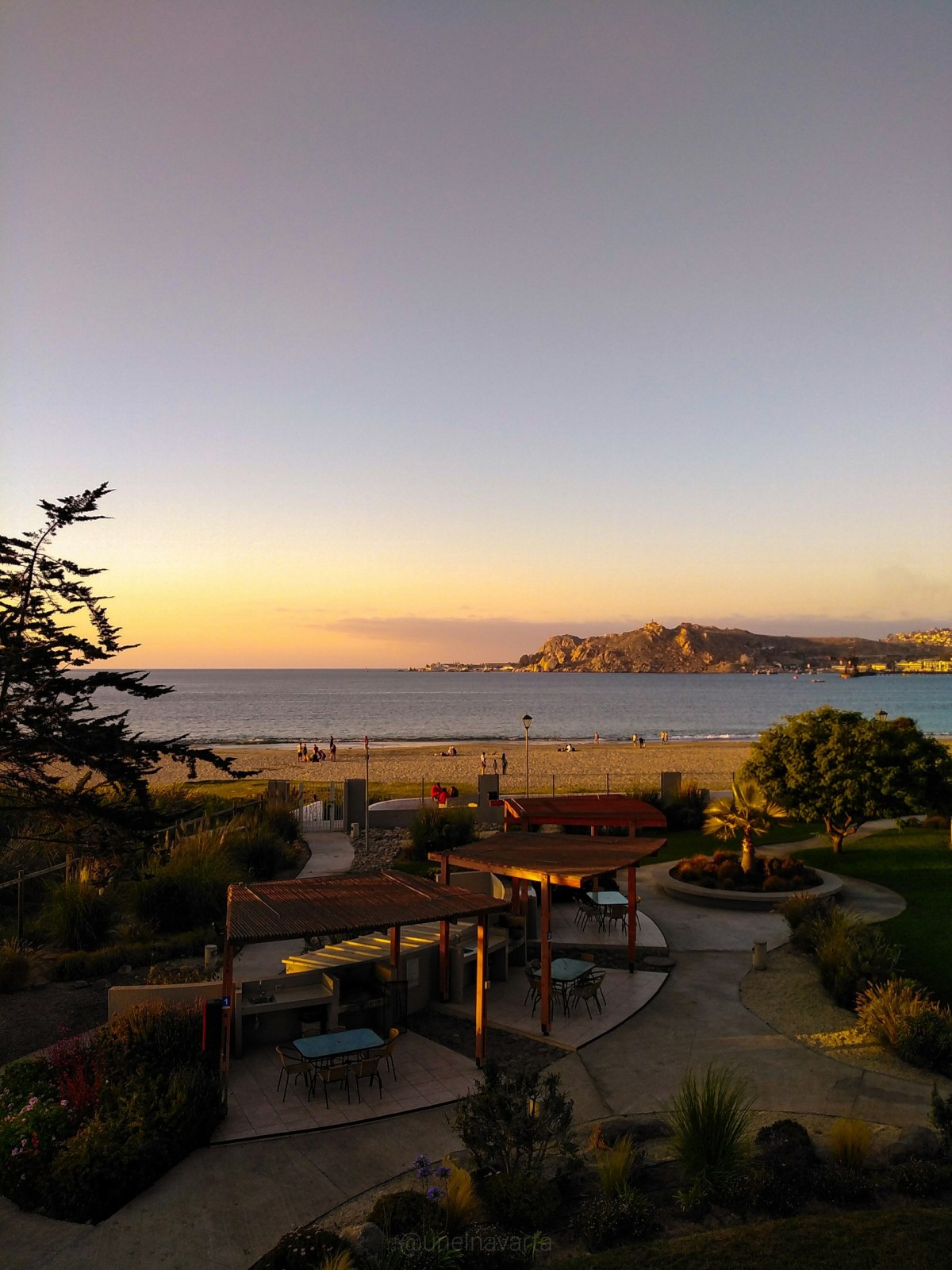
The beach of La Herradura is especially interesting. It is located in a protected bay, making the water here calmer than in the open areas of the coast. Nearby there is a yacht club and a fishing bay, where you can get acquainted with the marine life of the city and try seafood dishes.
For tourists, La Herradura is suitable not only for swimming, but also for relaxing by the ocean, walking and sea entertainment.
Port atmosphere
Coquimbo has historically developed because of its port, and it is still felt today.
Unlike some resorts that are fully tourist-oriented, Coquimbo has retained the character of a working sea town.
In the port you can see fishing boats, ships, berths and areas associated with maritime trade.
This makes the city especially interesting for those who like:
maritime history;
Port photographs;
fishing culture;
seafood;
Walking along the water;
sun-watching.
English Quarter
One of the most atmospheric parts of the historic Coquimbo is the English Quarter (Barrio Inglés).
It was formed during the economic boom of the city in the XIX - early XX century, when a large number of foreign traders and entrepreneurs came to the port.
Today there is preserved historical architecture, there are cafes, bars, restaurants and shops of handicrafts. The area is especially interesting in the evening, when historic buildings and establishments create a more lively atmosphere. The Chilean Tourist Portal also recommends the English Quarter as a place for an evening walk and exploring the city’s historical heritage.
This is a good place for a traveler who wants to see not only the modern resort of Coquimbo, but also the old port city.
Third Millennium Cross
One of the main symbols of modern Coquimbo is the Cross of the Third Millennium (Cruz del Tercer Milenio).
This is a huge monumental complex located on a hill above the city.
Due to its position, it is not only a religious site, but also one of the best points for viewing Coquimbo, the bay and the Pacific Ocean.
It is especially impressive to be here closer to the evening, when the sun begins to set over the city.
For the tourist, this is one of those attractions that should be included in the itinerary even with a short visit to Coquimbo. The official tourist portal of Chile calls the monument one of the main attractions of the city.
Observation platforms
The relief of Coquimbo allows you to find interesting panoramic points.
The city is partially located on the hills, so from the hills there are views:
on the bay;
port
residential areas;
coast;
neighboring La Serena;
Pacific Ocean.
These places are especially attractive at sunset.
For photographers, Coquimbo is interesting precisely because of the combination of hills, ocean, port and dense urban development.
Marine gastronomy
Coquimbo is a great place to experience the cuisine of the northern coast of Chile.
The main thing that is worth trying:
fresh fish;
sea urchins;
mussels;
oysters;
squid;
shrimp;
various sea soups;
ceviche.
local clam dishes.
It is especially interesting to visit areas near fishing coves and the port area where seafood is part of everyday cuisine.
Kokimbo and the region’s neighbouring coastal communities are known for marine gastronomy; for example, Tonga and Guanaqueros are particularly famous for seafood dishes, including local shellfish.
Nightlife
Coquimbo is not an exceptionally quiet family resort.
The city has:
bars;
restaurants;
café
clubs;
live music venues;
casino;
evening walk areas.
Especially lively atmosphere becomes in the summer and during mass events.
For a tourist, an interesting option may be to combine dinner with a walk through the historic part of the city or along the coast.
Rest with children
Coquimbo is also suitable for family travel.
Families are particularly interested in:
La Herradura beach;
Walking along the coast;
sea excursions;
parks;
observation decks;
travel to nearby La Serena;
excursions to natural areas.
The calm waters of La Herradura make this beach one of the most convenient options for a relaxing family holiday.
Sea trips
The port position of the city creates good opportunities for exploring the ocean.
Depending on the season and the specific offer, you can find:
boat trips;
bay tours;
fishing;
sea voyages;
observation of marine animals;
yacht trips.
The sea tour is especially well complemented by the acquaintance with Coquimbo, as it allows you to see the city from the side from which it has historically developed - from the Pacific Ocean.
Astronomical tourism
One of the greatest strengths of the region is astronomy.
The north of Chile is considered one of the best places on the planet to observe the night sky due to the dry climate, low cloud cover and low levels of light pollution in remote areas.
From the Coquimbo area it is convenient to plan trips to astronomical objects and to the valley of Elqui.
In Chilean tourism materials, the region stands out as a world-class destination for astrotourism; the Tololo and Mamalluca observatories are among the notable sites.
For space enthusiasts, this is one of the main reasons to include Coquimbo on a trip to Chile.
Elki Valley
Coquimbo is particularly advantageously located for the combined journey “ocean + mountains + desert landscapes + astronomy”.
From the coastal zone, you can go towards the Elki Valley, where the landscape changes completely.
This is where they appear:
mountains;
dry valleys;
vineyards
small settlements;
production of pisco;
astronomical sites;
unusual desert landscapes.
As a result, a trip to Coquimbo can turn into not just a holiday on the ocean, but a trip to completely different natural zones.
Visits to Totorolillo and Tonga
If the tourist has extra time, it is worth getting out beyond Coquimbo itself.
Totoralillo is known for light sand and clear water and is perceived as one of the most picturesque beaches in the region.
Tongoy is a calm coastal settlement known for its beaches and sea gastronomy.
Such trips allow you to see a completely different side of the region - small coves, fishing settlements and a calmer rhythm of life.
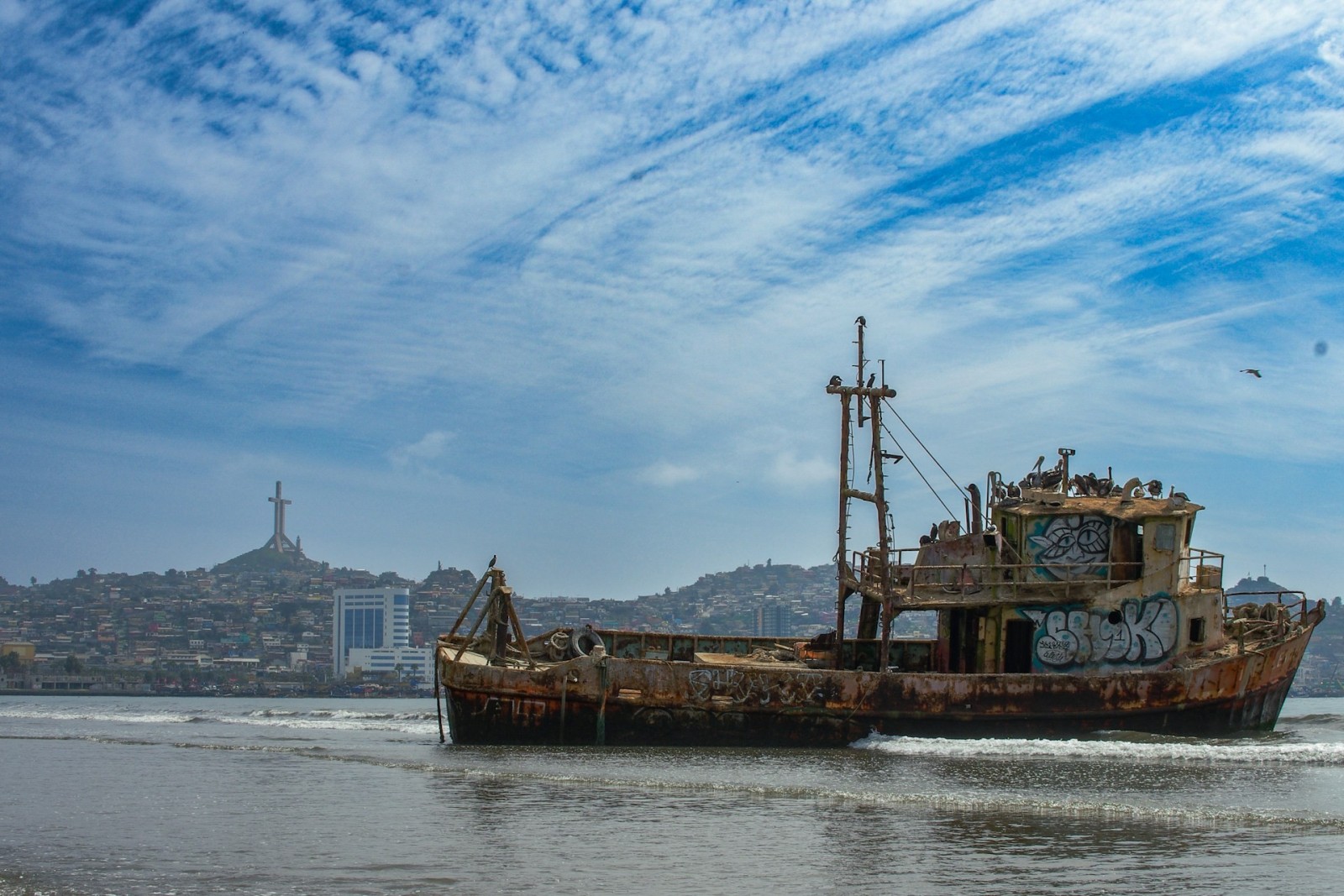
1. High-level hotels
Comfortable hotels and resort complexes offer spacious rooms, restaurants, swimming pools, parking and accommodation near the ocean.
Jardin del Mar Torre is a coastal option for a relaxing holiday resort.
Las Tacas Apart Hotel and Apartments is a complex with apartments suitable for families and long stays.
2. Mid-range hotels
Suitable for most tourists: a separate room, bathroom, Wi-Fi, cleaning and basic hotel services.
Hotel Iberia is an urban option in the central part of Coquimbo, convenient for exploring the port and historical areas.
Hotel Casa de Piedra is an option in the Penuelas area, between the center and the coast.
3. Aparthotels and apartments
One of the most popular formats in Coquimbo. There is usually a kitchen, refrigerator, private bedroom and more space than a hotel room.
ApartHotel Big Apple is an option for independent and family living.
Apartments are particularly common in Penuelas and La Herradura and are comfortable for stays from a few days.
4. Cabañas
Small tourist houses with kitchen and separate rooms. Suitable for families, companies and tourists with a car.
Examples: Cabañas Las Terrazas de La Herradura, Cabañas Tiki Tano, Cabañas Los Refugios.
5. Hostels and guesthouses
An economical option for independent travelers.
Hostel Del Puerto is located closer to the port of the city.
Penuelas Hostel is an option in the Penuelas area.
Hostal Cactus is an inexpensive guest house.
1. Cross of the Third Millennium (Cruz del Tercer Milenio)
The main symbol of modern Coquimbo is a huge monument on the hill of El Vigia. Inside are religious and museum spaces, and from the observation platforms opens a panorama of the city, the bay and the Pacific Ocean.
Transport: It is most convenient to get by taxi or car. Hiking is possible, but because of the location on the hill it is quite steep. From the center, the trip takes about 10-15 minutes.
2. The English Quarter (Barrio Inglés)
Historical area with wooden houses of the XIX century, cafes, restaurants, pubs, art spaces and street art. This is one of the best places in Coquimbo for an evening walk.
Transport: located near the central part of the city, so it is convenient to reach on foot from the center or by city bus and taxi. It is better to explore the area on foot.
3. Plaza Vicuña Mackenna (Plaza Vicuña Mackenna)
The central square of the English Quarter, surrounded by historical buildings. It is convenient to include in a walk through the historic center and port.
Transport: easy to reach on foot from central Coquimbo, city buses and taxis are also available.
4. Fort Lambert (Fuerte Lambert)
Historical fortification of the XIX century on a hill above the coast. It offers beautiful views of the ocean and the port; the place is interesting with a combination of history and panorama. The fort was built in 1865 during Chile’s war with Spain.
Transport: It is more convenient to go by taxi or car. From the center of the road takes about 10-15 minutes. The last section of the route can be walked.
5. Mosque and Cultural Center of Mohammed VI (Centro Cultural Mohammed VI)
An unusual sight for Chile is an Islamic cultural center with a mosque built in the Moorish architectural style. It is located on a hill and is the only mosque in the Coquimbo region.
Transportation: It is better to get by taxi or car. From the center, the trip takes about 10-15 minutes.
6. Coquimbo port and fishing area
The port is the historic heart of the city. Here you can see fishing boats, try fresh seafood and go for a walk along the bay by boat or catamaran.
Transportation: located in the central part of the city. It is most convenient to get on foot, by city bus or taxi.
7. Avenida Costanera (Avenida Costanera)
The main coastal highway of Coquimbo runs along the beaches and connects the city with the tourist area. There are walking areas and a bicycle path about 4 km long.
Transport: it is convenient to travel along the embankment by bus, car, taxi or bicycle. For tourists, this is one of the best routes for combining several places in one day.
8. La Herradura Beach (Playa La Herradura)
One of the most famous beach areas of Coquimbo. The bay is protected from the open ocean, so there is relatively calm water and good conditions for recreation.
Transport: it is convenient to travel from the center by bus or taxi; the road takes about 10-15 minutes by car.
9. Observation deck of La Herradura (Mirador La Herradura)
Panoramic point overlooking the bay, beach and ocean. Especially beautiful here at sunset.
Transport: You can get there by car or taxi, after which you can walk a short distance.
10. Peñuelas Beach (Playa Peñuelas)
Popular beach area on the border of Coquimbo and La Serena. Nearby there is a coastal road, there are restaurants and other tourist facilities.
Transport: Very convenient to get by bus, taxi or car on the coastal road. Penuelas is also convenient to visit with La Serena.
11. O'Higgins Park (Parque O'Higgins)
City park for walking and recreation with green areas, playgrounds, paths, picnic places and a platform for cultural events.
Transport: can be reached by city bus, taxi or on foot from central areas.
1. La Pampilla Coquimbo (La Pampilla) – September
This is the main and most famous holiday of Coquimbo, dedicated to the national holidays of Chile - Fiestas Patrias. The main events usually take place around 18-20 September, although the program can start earlier and last for several days.
The festival takes place in the vast territory of La Pampilla and turns it into a real temporary city with tent camps, fairs, restaurants, fondas and ramadas.
The program usually has:
concerts of famous Chilean and foreign performers;
folklore performances;
kuek
traditional games;
national cuisine;
kebabs and barbecues;
craft fairs;
entertainment for children;
humorous speeches;
festive events and mass celebrations.
La Pampilla is considered one of Chile’s largest folk festival traditions; in 2025, the event gathered about 200,000 people a day.
2. Concerts in La Pampilla - September
The concert program is one of the main reasons to visit the holiday. Every year the composition of the artists changes.
For example, in 2025, Los Fabulosos Cadillacs, Los Tres, Inti-Illimani, Santa Feria, Ráfaga, María José Quintanilla, DrefQuila, Pablo Chill-E and other artists performed.
Therefore, those who want to combine a trip with a big music festival, it is especially interesting to come to Coquimbo in mid-September.
3. Gastronomic Festivals - February
In summer, gastronomic events dedicated to local seafood are held in Coquimbo and the nearest coastal areas.
Traditional events include festivals of Tongoya oysters, giant squid in Guayacan, macha in Penuelas and fried fish in La Herradura.
For the tourist, this is a good opportunity to try the local sea cuisine directly in the coastal areas.
4. Summer concerts and cultural events - January-February
January and February are the busiest tourist time. Concerts, musical performances, family events, fairs and cultural programs are organized in the city and on the coast.
Especially many events take place in the areas of Penuelas, La Herradura and along the coast.
5. Carnival and folklore events - summer
In the summer months you can find various performances of folk groups, dance programs, street performances and events with traditional music.
The region is characterized by kueka, folk dances, musical performances and festive processions.
6. Christmas and New Year - December
In December, the city is decorated for Christmas, family and cultural events, fairs and festive concerts are held.
The New Year is especially interesting due to the location of Coquimbo on the Pacific coast: festive events take place in the coastal zone, and restaurants and tourist areas become much busier.
Summer - December, January, February
This is the best time for beach and tourist holidays.
During the day, usually about 22-24 ° C, at night about 15-17 ° C. February is the warmest month, the average temperature is about 19.8 °C, the maximum is about 23.8 °C.
The temperature of the Pacific Ocean is about 16-18 ° C, the maximum average water temperature falls on February - about 17.9 ° C.
There is almost no rainfall, many sunny days.
For relaxation: a great time for beaches, excursions, walks and festivals.
Autumn - March, April, May
The weather is gradually getting cooler.
In March in the afternoon about 23 ° C, in April about 21 ° C, in May about 19 ° C. At night, the temperature drops to about 13-16 ° C.
The water gradually cools: approximately 17 °C in March, 15.8 °C in April and 14.8 °C in May.
Precipitation is already increasing in May, although rainfall is still relatively low.
March is a very good month, especially for excursions. April-May is more suitable for walking and traveling around the region than for a beach holiday.
Winter - June, July, August
This is the coolest period.
During the day, the temperature is usually about 17-18 ° C, at night about 10-11 ° C. The coldest month is July: the average temperature is about 12.9 °C, the maximum is about 16.9 °C.
The ocean at this time is cold - about 13-14 ° C. The minimum average water temperature is in August - about 13.3 ° C.
It is in winter that most of the annual precipitation falls, although compared to many other regions, they are still small.
For leisure: suitable for excursions, historical sights and trips to the Elki Valley, but for a beach holiday the season is not the best.
Spring - September, October, November
The weather is gradually getting warmer.
In September in the afternoon about 19 ° C, in October about 20 ° C, in November about 22 ° C. At night, approximately 11-14 °C.
The water temperature gradually rises from 13.5 °C in September to 14.7 °C in November.
For rest: a good period for excursions and walks. November is already quite warm, but the water remains cool.
Language of communication
The main language is Chilean Spanish. It has a characteristic pronunciation and local expressions, so some words may sound unusual for tourists who know European Spanish.
In Coquimbo you can also find people who speak English, especially:
in large hotels;
in travel agencies;
at the airport;
in restaurants of tourist areas;
when organizing excursions.
However, only Spanish is used in buses, small shops, markets and regular cafes.
Basic traditions and rules of conduct
1. Greetings
When meeting, they usually greet each other with the words Hola - "Hello" or Buenos días - "Good day."
In an informal setting, a greeting with a light kiss on the cheek is common between familiar women and a man and a woman. But it is better to focus on the behavior of the local person and not to take the initiative too actively.
With strangers, the usual verbal greeting is enough.
2. Politeness
In Chile, great importance is attached to polite treatment.
It is desirable to use:
Por favor -- "Please."
Gracias - "Thank you."
Disculpe - "Sorry."
Perdón - "Sorry."
When addressing a stranger, it is better to use the polite form of usted, especially with the elderly and in a formal setting.
3. Punctuality
In ordinary everyday life, Chileans can relate to time quite freely, especially in informal meetings.
However, at:
excursions;
transfers;
Air travel;
bus journeys;
hotel booking
It is better to come in advance.
4. Communication
Chileans are usually quite friendly and open to tourists.
Do not be surprised by active gestures, emotional manner of conversation and close enough distance during communication.
At the same time, it is not recommended to immediately move to too personal issues.
5. Dress
In tourist areas and on the beach, regular summer clothes are allowed.
However, when visiting:
churches;
religious buildings;
official institutions;
Some restaurants prefer to choose more closed and neat clothes.
In a beach town, you should not wear a bathing suit for shopping, public transport or the historic center.
Religious traditions
Chile has predominantly Christian cultural traditions, so it is necessary to observe the usual rules of conduct when visiting churches.
Preferably:
speak softly;
Do not interfere with worship;
Do not photograph people without permission;
comply with the requirements of a particular temple;
Wear sufficiently closed clothes.
Kokimbo also has an Islamic cultural center and a mosque, so when visiting them, you should follow the rules established by the administration of the facility.
Beach behavior
On the beaches of Coquimbo should follow the instructions of rescuers and warning signs.
It is especially important to take into account the state of the ocean: even in summer the water is quite cool, and in open areas of the coast there can be strong waves and currents.
Not recommended:
enter the water in forbidden places;
ignore the red flags;
Swimming in a state of alcoholic intoxication;
leaving valuables unattended;
pollute the beach.
In some areas there are separate rules regarding animals, bonfires, alcohol and water entertainment.
Alcohol and smoking
In Chile, there are restrictions on drinking alcohol in public places. Therefore, you should not drink alcohol on the streets, squares, beaches and other places, unless it is expressly allowed.
Smoking is prohibited in many enclosed public spaces and is regulated by special regulations. You should pay attention to the designation No fumar - "Smoking is forbidden."
The age of sale of alcohol and tobacco products in Chile is 18.
Laws that are especially important for tourists to know
1. Documents
The foreigner must hold a valid passport and comply with the conditions of his/her entry and stay in Chile.
When travelling within the country, it is advisable to carry an identity document or a secure copy.
2. Prohibited substances
Chile has strict drug regulations. It should not be transported across the border or purchased prohibited substances.
It is especially dangerous to transport unknown drugs, powders or tablets without clear origin.
3. Photography
Photography of tourist attractions is usually allowed.
However, care must be taken when photographing:
military objectives;
police facilities;
port infrastructure;
close-ups.
People should be photographed with their consent.
4. Nature and animals
In natural areas, you cannot:
leave the trash;
damage plants;
take away natural objects;
disturbing wild animals;
Make fires in forbidden places.
For trips to the natural areas of the region, the requirements of a specific reserve or natural object should be met.
5. Garbage
Do not leave garbage on beaches, streets and natural places. In the tourist and natural areas of Chile, this is given great attention.
1. Basic words
Hola - hello / hello Transcription: Ola
Buenos días - good morning / good afternoon Transcription: Buenos dias
Buenas tardes - good afternoon / good evening Transcription: Buenas tardes
Buenas noches - good evening / good night Transcription: Buenas noches
Adiós - Goodbye Transcription: Adios
Gracias - thank you Transcription: Gracias
Por favor - please Transcription: Por Favor
De nada - not for what transcription: De nada.
Sí - daTranscription: C'
No - no Transcription: But
Perdón - sorry Transcription: Perdone
Disculpe - sorry Transcription: Disculpe
Bien - good Transcription: Bien
Mal is bad Transcription: Mal
Ayuda - help Transcription: Ayuda
Entrada - Entrada - Transcription: Entrada
Salida - ExitTranscription: Salida
Abierto - OpenTranscription: Abyerto
Cerrado - closed Transcription: Sarrado
2. Useful phrases of the tourist
¿Habla inglés? - Do you speak English? Transcription: Abla Ingles?
No hablo español. - I don't speak Spanish. Transcription: But Ablo Espanyol.
Hablo un poco de español. - I speak a little Spanish. Transcription: Ablo un poko de Espanyol.
No entiendo. - I don't understand. Transcription: But entiendo.
¿Puede repetir, por favor? - Can you repeat it, please? Transcription: Puede rapper, por favor?
¿Puede hablar más despacio? - Can you speak more slowly? Transcription: Puede ablar mas despacio?
¿Qué significa? - What does that mean? Transcription: Ke Significa?
¿Cómo se dice...? - How do you say...?Transcription: Komo Se Dise...?
¿Dónde está...? - Where it is. Transcription: Donde Estha...?
¿Cuánto cuesta? - How much is it? Transcription: Quanto Cuesta?
¿Puede ayudarme? - Can you help me? Transcription: Puede ayudarme?
3. At the hotel.
Tengo una reserva. - I have a reservation. Transcription: Tengo una reserva.
Tengo una reserva a nombre de... - I have a reservation in a name... Transcription: Tengo una reserva a nombre de...
Quiero registrarme. - I want to register. Transcription: Chiero Rehistrarme.
¿A qué hora es el check-in? - What time is the check-in? Transcription: What about you?
¿A qué hora es el check-out? - What time is the eviction? Transcription: What about you?
Tiene Wi-Fi? - Do you have Wi-Fi? Transcription: Thiene Wi-Fi?
¿Cuál es la contraseña del Wi-Fi? - What's the Wi-Fi password? Transcription: Kual es la contrasenha del wi-fi?
¿Está incluido el desayuno? - Breakfast included? Transcription: Esta Incluido el Desayuno?
Necesito una habitación. - I need a number. Transcription: Nececito una abitaion.
Necesito una habitación para dos personas. - I need a room for two. Transcription: Nececito una abitasion parra dos parsonas.
4. Restaurant and café
Una mesa para dos, por favor. - Table for two, please. Transcription: Una mesa para dos, por favor.
¿Tiene un menú? - Do you have a menu? Transcription: Tiene un menu?
Quiero esto. - I want this. Transcription: Chiero Esto.
¿Qué recomienda? - What do you recommend? Transcription: Kae Recomyenda?
Sin picante, por favor. - No spicy, please. Transcription: Shin Picante, por favor.
Soy alérgico a... - I am allergic to...Transcription: Soi alerhiko a...
La cuenta, por favor. - Check, please. Transcription: La Cuenta, por favor.
¿Puedo pagar con tarjeta? - Can I pay with a card? Transcription: Puedo pagar con tarcheta?
¿Aceptan efectivo? - Do you accept cash? Transcription: Aseptan effective?
5. Seafood
Since Coquimbo is a port city, it is useful to know the names of the main products.
Pescado - Fish Transcription: Pascado
Mariscos - seafoodTranscription: Mariscos
Camarones - shrimp Transcription: Camarones
Calamar - Squid Transcription: Kalamar
Ostras - Oysters Transcription: Ostras
Mejillones - Mussels Transcription: Majillones
Ceviche - ceviche Transcription: Saviche
Agua - water Transcription: Agua
Cerveza - beer Transcription: Serveza
Vino - Wine Transcription: Wine
6. On the beach.
Donde está la playa? - Where's the beach? Transcription: Donde Esta la Playa?
¿Se puede nadar aquí? - Can I swim here? Transcription: Se puede nadar aki?
¿Es seguro nadar aquí? - Is it safe to swim here? Transcription: Es seguro nadar aki?
¿Hay duchas? - Is there a shower? Transcription: Hey, dude?
¿Dónde están los baños? - Where's the toilet? Transcription: Donde Estan Los Baños?
¿Hay salvavidas? - Are there lifeguards here? Transcription: Ai salvavidas?
Está prohibido nadar. - No swimming. Transcription: Estha proibido nadar.
7. Transportation
¿Dónde está la parada de autobús? - Where's the bus stop? Transcription: Donde esta la parada de bus?
¿Este autobús va al centro? - Is this bus going downtown? Transcription: Este bus wa al sentro?
Quiero ir a Coquimbo. - I want to go to Coquimbo. Transcription: Chiero il à Coquimbo.
Quiero ir a La Serena. - I want to go to La Serena. Transcription: Chiero Ir à La Serena.
¿Cuánto cuesta el viaje? - How much is the trip? Transcription: Quanto Questa El Viahe?
Pare aquí, por favor. - Stop here, please. Transcription: Pare aki, por favor.
Lléveme a esta dirección, por favor. - Take me to this address, please. Transcription: Yeweme and Esta Direxion, por favor.
1. Food and gastronomic products
Dried seafood is one of the most typical options for a trip from the port of Coquimbo. You can find dried fish, squid and other seafood. Before buying, make sure that the product is allowed to be imported into your country.
Canned seafood is a convenient option for a gift. Especially interesting canned mussels, shellfish, tuna and other local seafood.
Manjar is a Chilean variety of milk caramel, similar to boiled condensed milk. It works well as a sweet souvenir.
Alfajores are two-cookie sweets with filling, often with manjar. It is convenient to buy as a small gift.
Mermeladas artesanales are homemade and craft fruit jams. In the region you can find options from local fruits.
Aceitunas - olives and products from them. Northern Chile is known for growing olives, so you can buy olive oil and olive products.
Honey is a natural Chilean honey of various varieties.
2. Wine and drinks
Chilean wine is one of the most versatile gastronomic souvenirs. As a gift, you can choose a bottle of wine from the famous wine regions of Chile.
Pisco is a traditional strong drink produced in Chile. This is the famous Pisco Sour.
Pisco Elqui is a particularly interesting option for a traveler in the Coquimbo region, as the Elqui Valley is one of the main production areas of Chilean pisco.
Mote con huesillos is a traditional soft drink made from boiled wheat and dried peaches. In finished form, it is better to try it directly in Chile, and for a gift look for dry sets or ingredients.
3. Products from the Elqui Valley
Coquimbo is a good starting point for a trip to the Elki Valley, so you can find products from there in the city.
Especially interesting:
dried grapes;
raisins;
local jams;
honey
almonds;
herbal teas;
fruit products;
Pisco.
The Elqui Valley is also known for grape cultivation and pisco production.
4. Medicinal and natural remedies
Herbal teas – local herbal teas can be purchased, which are consumed as regular beverages.
Cosmetics based on natural ingredients - creams, soaps, oils and balms of local production.
Essential oils are a compact and convenient souvenir, especially if they are of local plant origin.
Natural soap is an inexpensive, practical gift.
When buying products with therapeutic promises, it is better to treat them as traditional or cosmetic products: local herbs and natural remedies do not replace medicines.
5. Souvenirs and handicrafts
Wood products - small figures, decorative items and souvenirs.
Ceramics - cups, plates, small decorative products and traditional dishes.
Textiles - scarves, blankets, ponchos and other products with traditional Chilean patterns.
Wool products are especially practical for the cool climate of the coast.
Handmade jewelry - bracelets, earrings, pendants and other small products of local craftsmen.
Souvenirs with the image of the Third Millennium Cross are a good symbol of Coquimbo.
Magnets and postcards with Coquimbo views are the easiest option for a small gift.
1. What documents are needed
For travel it is necessary to have:
a valid passport or other recognized entry document;
documents confirming the right of entry, if a visa or prior permission is required for the citizenship of the tourist;
confirmation of residence – it is desirable to have a hotel reservation;
return ticket or ticket for further travel;
proof of sufficient funds for the period of travel – the Chilean migration authorities may require proof of financial security for the stay.
Upon entry into Chile, a foreign tourist is issued a Tarjeta Única Migratoria (TUM), a migration card that records the permitted period of stay. It should be kept until you leave the country.
If you are traveling with children, you should check additional documentation requirements and parental consent in advance.
2. Do I need health insurance?
For a tourist trip, it is recommended to obtain health insurance, even if it is not required directly to obtain an entry permit.
It is desirable that the policy covers:
emergency medical care;
hospitalization;
call an ambulance;
treatment of injuries;
transportation to a medical institution;
medical evacuation if necessary;
Accident costs;
Baggage insurance – if desired.
Insurance is especially useful for trips to the Coquimbo region, water sports, long excursions and trips to mountainous areas.
3. Emergency services phones
The following numbers are used in Chile:
131 Medical Ambulance (SAMU)
132 - Fire service
133 - Carabineros, police
134 - PDI, investigative police
136 Mountain Rescue Service
137 Maritime Search and Rescue Service
138 – Airborne Search and Rescue Service
139 - Police Information Service
These numbers are listed on the official tourist resource of the Government of Chile.
For Coquimbo, it is especially useful to remember the 131, 133 and 137 – medical care, police and rescue at sea, respectively.
4. Mobile communications
Mobile communication is well developed in Chile. The main operators are:
Entel
Movistar
Claro-VTR
WOM
According to Chilean regulator SUBTEL, these four companies controlled about 99.1% of the mobile market by number of subscribers at the end of 2025.
In 2026, the mobile network continues to actively develop: as of January 2026, there were more than 10 million 5G connections in the country.
For tourists, there are three main options:
use roaming of its operator;
Buy a local SIM card;
Use eSIM if your phone supports it.
In Coquimbo and tourist areas, communication is usually good, but when traveling to remote areas of the region, coverage may deteriorate.
5. Emergency alert system
In Chile, there is the SAE (Sistema de Alerta de Emergencias), a system of mass warnings on mobile phones.
It is used, in particular, when threatening:
tsunami;
forest fires;
volcanic eruptions;
other emergencies.
For Coquimbo, the system is particularly important because of the city’s location on the Pacific coast and the potential danger of a tsunami.
Therefore, tourists should not ignore emergency messages on the phone and instructions from local services.
6. Safety on the beaches
The main natural danger of Coquimbo is related to the ocean.
Even in summer, the water here is relatively cool, and strong waves and currents are possible in some areas.
Should:
bathe only in permitted places;
Pay attention to flags and warnings of rescuers;
Do not enter the sea when swimming is prohibited.
Do not swim in a state of alcoholic intoxication;
follow the instructions of the rescuers;
When warning about a tsunami, immediately leave the coast for a hill.
7. City security
It is advisable to follow the usual precautions:
Do not carry large amounts of money in sight;
Do not display expensive watches, jewelry and electronics;
Do not leave your phone or bag unattended;
Do not leave things on the beach;
use official or verified taxis;
At night, avoid poorly lit and crowded streets;
Keep your passport and money in a safe place;
Have a copy of the passport and documents separately from the originals.
It is especially worth watching things during La Pampilla and other mass events.
8. How many tourists can stay in Chile
For tourists, the Permanencia Transitoria mode is used - temporary stay.
The standard period is up to 90 days from the date of entry. However, citizens of some states require a preliminary visa or permit to enter.
If necessary, the allowed period can be extended once for a maximum of 90 days. The application must be submitted before the end of the initial period of stay. The cost of renewal is $100, and for minors it is free.
Thus, with the approved extension, a tourist in the appropriate status can stay in Chile for up to 180 days continuously.
Important: the specific period allowed to you, see the issued at the entrance TUM. The delay of the allowed period is a migration violation.
Create a query and local guides will offer you the best options