Independent tourism and recreation in Flensburg Historical information about the city of Flensburg Flensburg i...
Flensburg is a city in northern Germany located on the banks of the Flensburg fjord near the border with Denmark. Its history is closely connected with maritime trade, Schleswig and centuries-old rivalry between German and Danish influence.
1. Emergence of the city
The first settlements appeared here due to its convenient location near the sea bay and the ancient trade route of Herwag (Ochsenweg), connecting Jutland with Central Europe.
Around 1200, Flensburg began to form as a trading settlement. In the XIII century, markets, churches and urban fortifications appeared here. In 1284, Duke Waldemar IV confirmed Flensburg city law.
2. Medieval shopping center
In the XIV-XV centuries, Flensburg developed as a port and trading city. Through it transported grain, fish, wood and other goods. The city maintained trade links with Lübeck and other northern European centres.
At the beginning of the XV century for Flensburg and Schleswig was fought between the Danish crown and the North German rulers. In 1411, the fortress Duburg was built to strengthen Danish power.
3. XVI century flourishing
The XVI century was one of the most favorable periods in the history of the city. Flensburg actively traded with Denmark, Norway and other Nordic countries and became one of the most important trading centers of the Danish crown.
Rich merchants built houses, warehouses and public buildings. Education and urban governance developed in the city, and the Reformation led to major changes in religious life.
4. War and trade development
The seventeenth century brought Flensburg heavy consequences of the Thirty Years' War. The city was repeatedly occupied by troops, trade declined and the population suffered.
In the eighteenth century, the economy gradually recovered. Flensburg merchants began to actively engage in trade with Danish possessions in the West Indies. Sugar and other colonial goods came to the city. Especially famous was the production and trade of rum, which became part of the local economic history.
5. XIX century and industrialization
The Napoleonic Wars disrupted traditional trade ties, but Flensburg quickly modernized. The port, shipbuilding, trade and industry developed, railway communication appeared.
At the same time, the conflict between supporters of Danish and German national identity intensified. After the war of 1864, Schleswig came under the rule of Prussia, and in 1871 Flensburg was part of the German Empire.
In the late XIX - early XX century, the city became a major port and industrial center. Shipyards, trading companies and sea transportation developed. In 1910, the Marineschule Mürwik was opened in Murvik.
6. 1920 referendum
After the First World War, the question of Schleswig’s ownership again became the subject of international decision. Referendums were held in the region in 1920.
A majority of Flensburg residents voted to keep the city as part of Germany. As a result, the border between Germany and Denmark passed north of Flensburg, and the city finally became the German border center.
At the same time, the city has a significant Danish minority with its schools, cultural organizations and public institutions.
7. World War II and 1945
During the Nazi regime in Flensburg, political opponents and members of various groups were persecuted. The military importance of the city grew due to the naval infrastructure located in Murvik.
In the spring of 1945, after the fall of Berlin, a government headed by Karl Dönitz moved to Flensburg. It was the last government of Nazi Germany. On May 7, 1945, the surrender of the German armed forces was signed, and on May 23, British troops arrested Dönitz and members of his government.
8. Post-war period
After the war, Flensburg recovered and gradually regained its economic importance. Particularly important was the improvement of relations between Germany and Denmark.
In 1955, the Bonn-Copenhagen Declaration enshrined the protection of the German minority in Denmark and the Danish minority in Germany. This contributed to the development of cross-border cooperation.
9. Modern Flensburg
After the unification of Germany in 1990, the border position became one of the advantages of the city. Flensburg promotes trade, education, culture, port activities and tourism.
Today, medieval churches, historical shopping streets, merchant houses and port buildings are preserved here. Danish cultural influence remains a prominent part of urban life.
The historical feature of Flensburg is the combination of German and Danish heritage, maritime trade and border culture. This is what makes the city unusual among other German cities.
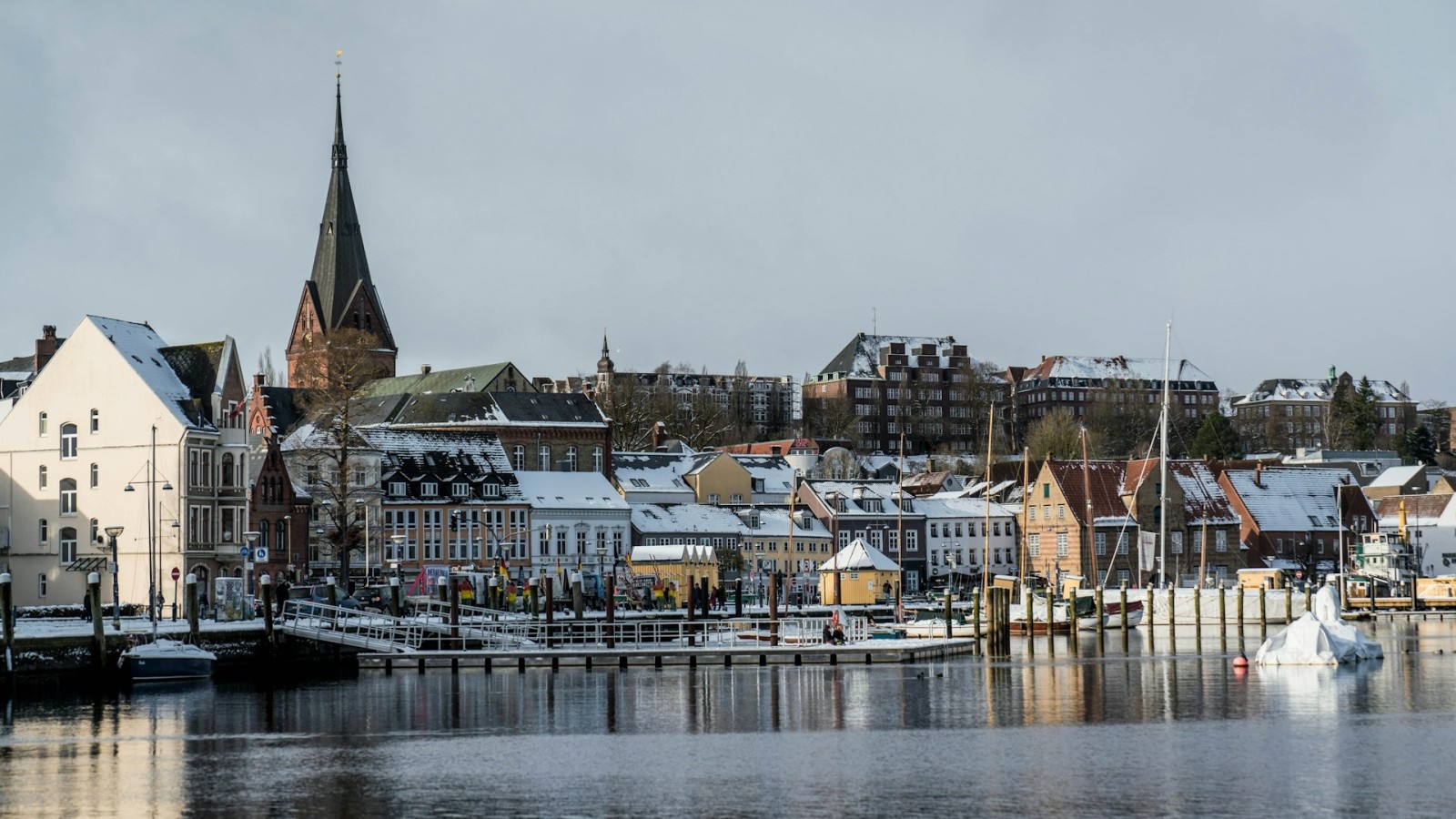
The historical center attracts narrow streets, ancient merchant houses, small squares and medieval churches. Particularly interesting are the North Market (Nordermarkt), the South Market (Südermarkt), the Church of St. Mary (St. Marien) and the Church of St. Nicholas (St. Nikolai).
The Flensburg Fjord is one of the main natural attractions of the city. Along the water there are walking routes, cafes and restaurants, and from the port there are views of the bay and the opposite shore. It is nice to walk, ride a bike and watch yachts and small boats.
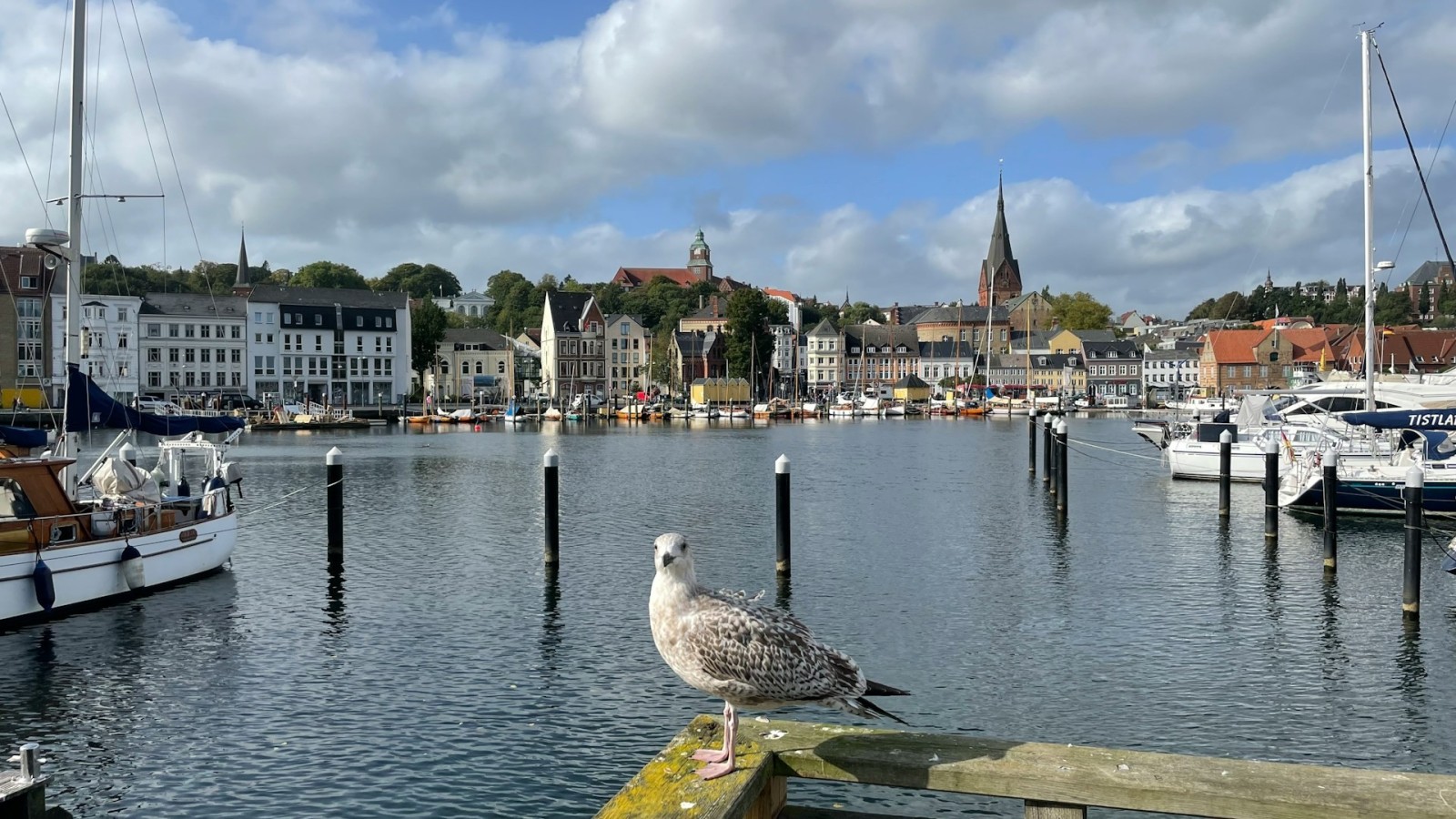
The port of Flensburg retains the atmosphere of the old sea town. Historic buildings, piers, ships and promenade make it possible to feel the connection of the city with the centuries-old trade history.
Marine culture is particularly noticeable in areas around the harbor. Tourists can get acquainted with the history of navigation, visit marine facilities and take a boat trip along the fjord.
The Danish heritage makes Flensburg an unusual tourist destination. Danish schools and cultural organizations operate in the city, there are signs in the Danish language, and border connections are noticeable in architecture, cuisine and urban culture.
Merchants yards and old streets allow you to see the traditional architecture of Schleswig. Of particular interest are the small historical courtyards located in the back of the blocks behind the main streets.
The North Gate is one of the symbols of Flensburg and a well-preserved element of the old city fortifications. It reminds us of the city’s medieval past.
The Marineschule Mürwik Maritime School is interesting for lovers of history and architecture. The complex is characterized by characteristic North German architecture and is associated with the naval history of the city.
Museums and cultural institutions allow you to learn more about the history of Flensburg, maritime trade, local crafts and the culture of the German-Danish border.
Gastronomy is another reason to visit the city. In local establishments, you can try North German cuisine, fresh fish and seafood, pastries, as well as traditional drinks. Flensburg is particularly known for its history of rum production and brewing traditions.
Cycling is suitable for acquaintance not only with the center, but also with the surroundings of the fjord. From the city it is convenient to go along routes along the water and to the neighboring border areas.
The proximity of Denmark allows you to combine a trip to Flensburg with a visit to Danish cities and attractions. This is especially convenient for travelers planning a route in northern Germany and southern Denmark.
The calm atmosphere distinguishes Flensburg from the major tourist centers of Germany. The city is suitable for those who prefer leisurely walks, historical quarters, embankments and seascapes.
Events and city holidays complement the tourist program: cultural events, concerts, festivals, fairs and events related to maritime and border culture are held throughout the year.
1. High-level hotels
Hotel Hafen Flensburg is one of the notable options to stay in the historic part of the city. The hotel is located directly by the harbor, next to the Maritime Museum and the historical center. It is suitable for those who want to combine comfort with the atmosphere of the old port city. Hotel Hafen Flensburg
Das James is a modern high-level hotel in Sonwik, just off the Flensburg Fjord. The hotel has rooms and spacious suites, restaurants, swimming pools and a large spa complex. Many rooms have water views.
2. Mid-range hotels
Hotel Alte Post is a convenient option in central Flensburg, close to shops, historic streets and the harbor. Suitable for independent acquaintance with the city. Hotel Alte Post
Hotel am Fjord is a city hotel near the center and the harbor. Suitable for tourists who are interested in the central location and convenient access to the main areas of the city. Hotel am Fjord
Central Hotel is an option in the central part of the city, convenient for short tourist and business trips. Central Hotel
Hotel Xenia is a small city hotel near the historic center. Suitable for a quiet stay when traveling for a few days. Hotel Xenia
3. Budget hotels
B&B Hotel Flensburg-City is a practical option for travelers who primarily need a convenient location and basic living conditions. The hotel is located in the urban part of Flensburg. B&B HOTEL Flensburg City
ibis budget Flensburg City - one of the options for economical living in the city. The hotel is centrally located next to the central bus station and offers compact rooms with a basic set of facilities.
Hotel Flensburger Hof is a central option with a simpler level of accommodation, suitable for short trips and travelers who spend most of their time outside the hotel. Hotel Flensburger Hof
4. Hostels
DJH Jugendherberge Flensburg is a youth hostel suitable for students, young travelers and tourists who want to reduce their living costs. DJH Jugendherberge Flensburg
Hostel Flensburg is a budget accommodation option with a simpler infrastructure. Hostel Flensburg
Seemannsheim Hostel Flensburg is a hostel in the harbor area, interesting for those who want to stay near the port part of the city. Seemannsheim Hostel Flensburg
5. Guesthouses and small hotels
Flensburg has small family hotels and guesthouses that are suitable for a more relaxed stay. This format is often chosen by travelers who prefer a home atmosphere to large hotels.
For example, Guest House Lavender City is located in the central part of the city and is suitable for a short trip. Guest House Lavender City, Flensburg
Smaller hotels in areas outside the city centre, such as Hotel Gästehaus Flensburg Engelsby, can also be considered. Hotel Gästehaus Flensburg Engelsby
1. Flensburger Harbour (Flensburger Hafen)
The harbor is one of the main attractions of the city and a place from which it is convenient to start acquaintance with Flensburg. Along the embankment of Schiffbrücke there are historical merchant buildings, warehouses and traditional ships. Here is the museum harbor and the Maritime Museum.
Transport: From the train station to the harbor you can walk in about 20-25 minutes. You can also use the city bus from the center. The waterfront itself is most convenient to explore on foot.
2. Historic Centre and Grosse Straße Street
The old town of Flensburg is interesting with historic houses, shopping streets, small squares and old courtyards. Especially popular is the pedestrian street Grosse Strasse, which runs through the historical center.
Transport: The central part is better viewed on foot. From the main railway station to the Old Town you can walk in about 15-20 minutes or take a bus to the central bus station (ZOB).
3. North Gate (Nordertor)
The North Gate is one of the symbols of Flensburg and a well-preserved element of the old city fortifications. They were built at the end of the XVI century and marked the northern entrance to the historic city.
Transport: The gate is located on the northern edge of the historic center. From the main streets to them is convenient to walk. There are also city bus routes nearby.
4. Flensburg Maritime Museum (Flensburger Schifffahrtsmuseum)
The museum is dedicated to the maritime history of the city, shipping, trade and the famous rum trade of Flensburg. It is housed in a historic former customs building near the harbor.
Transport: The museum is located directly on the Schiffbrück embankment. From the Old Town you can walk, and from the station - on foot or by bus to the central part of the city.
5. Museum Harbor and Historical Shipyard
Museum Harbour (Museumshafen) introduces the traditional wooden ships and maritime traditions of Flensburg. Nearby is a historic shipyard, where they continue to work with traditional ships.
Transport: located on the same waterfront as the Maritime Museum. It is most convenient to get on foot, combining a visit with a walk along the harbor.
6. Museum Hill (Museumsberg)
Museum Hill (Museumsberg Flensburg) combines several museum buildings with collections of art and cultural history of Schleswig. Here you can see works of North German art, furniture, household items and expositions related to the history of the region.
Transport: From the train station you can take a bus to the central bus station and then walk. Bus 2 stops at Museumsberg, bus 3 stops at Stadttheater. The center can also be reached on foot in about 15-20 minutes.
7. Flensburg Museum of Science (Naturwissenschaftliches Museum)
The museum is dedicated to the nature of the region, the animal and plant world of Schleswig-Holstein. It is located on Museum Hill and is therefore conveniently combined with a visit to Museumsberg.
Transport: the same routes as to Museumsberg: bus No. 2 to Museumsberg stop or bus No. 3 to Stadttheater, then on foot.
8. Phenomena (Phänomenta)
Phänomenta is an interactive research center focused primarily on families with children. Visitors can independently conduct experiments and get acquainted with various physical phenomena.
Transport: located on Norderstraße Street, near the North Gate. From the historic center it is convenient to walk, you can also use the city bus.
9. The Flensburg Water Tower (Wasserturm Flensburg)
The water tower is a notable landmark of the Volkspark district. It is interesting not only for its architecture, but also for its views of the city and the Flensburg fjord.
Transport: from the center is most convenient to get by city bus towards Volkspark, and then walk. By car, the area can also be reached without difficulty.
10. Flensburg Rum Museum
The Rum Museum tells the story of the period when Flensburg was one of the most important European rum trading centers. The exhibition deals with maritime trade, sugar and the history of the port city.
Transport: The museum is located in the historic port area. From the center and other attractions of the harbor is convenient to walk.
11. The Flensburg Fjord (Flensburger Förde)
The fjord is the natural basis of urban history. Along it are walking routes, and on the water you can see yachts, pleasure boats and traditional ships. The Flensburg Fjord also allows travel to Denmark.
Transport: The urban part of the fjord can be reached directly from the historic center and the harbor. For remote areas of the coast, it is more convenient to use a bus or bicycle.
12. Murvik Maritime School (Marineschule Mürwik)
The Naval School complex in the Murvik area is one of the most famous architectural sites in Flensburg. It is connected with the history of the German Navy and the events of 1945.
Transport: from the center you need to go by city bus towards Murvik, after which part of the way to walk. By bicycle to the area is also convenient to get along the fjord.
13. The beach of Solitude (Strand Solitüde)
Solitude Beach is located on the shore of the Flensburg Fjord and is suitable for walking, relaxing by the water and exploring the nature of the northern part of the city.
Transport: From the center you can take a bus to Solitude, then walk a short distance. You can also drive directly to the beach area.
Folk music festival "FolkBaltica" (folkBALTICA) - April-May. International festival with concerts of folk and modern music, dedicated to the cultural relations of the Baltic and Northern regions.
Roma Regatta (Rumregatta) - May. One of the most famous events of Flensburg. Numerous historical sailing ships come to the harbor, races, concerts and festive events take place. The festival is connected with the history of the maritime trade and rum industry of the city.
The Flensburger Kurzfilmtage Short Film Festival is spring. The program includes short films by German and foreign directors, meetings and special film screenings.
Festival of Culture in the Courtyards (Flensburger Hofkultur) – July-August Concerts, theatrical productions, cabaret and other performances take place in the inner historical courtyards of the Old Town.
Flensburg Nautics (Flensburg Nautics) is a summer holiday. The holiday program is dedicated to maritime culture, yachts and traditional shipping. Various events and meetings of sailing lovers take place in the harbor.
Festival of Classic Yachts (Flensburger Klassiker-Festival) Historical sailing and motor vessels can be seen in the harbor, and the program is complemented by activities on the shore.
Feast of steam and steam machines (Dampf Rundum) - summer. A major meeting of historical steamships, steam engines and other equipment. The event is especially interesting for fans of technical and industrial history.
Apple Fleet Festival (Apfelfahrt) is autumn. A traditional maritime event involving the transport of apples through the Flensburg Fjord. The program includes the arrival of historic ships and festive events in the harbor.
KLANG Festival - throughout the year. Musical event with concerts and performances of various performers. The festival is included in the official cultural program of the city.
The Honky-Tonk Kneipenfestival is in autumn. Music festival, during which concerts are held simultaneously in various institutions of the city.
1. Winter - December, January and February
In winter, Flensburg is cool, but severe frosts are rare. During the day, the temperature is usually kept within 2-5 ° C, at night it can drop to about -1 ... + 1 ° C. Often there is cloudiness, rain, strong wind and high humidity. The water temperature in the fjord is about 3-6 ° C, so this time is not suitable for swimming.
2. Spring - March, April and May
Spring is gradually getting warmer. In March, the air warms up to about 6-8 ° C, in April - to 11-12 ° C, and in May - to 16 ° C. The water remains cold: about 4-7 °C in March-April and 11-12 °C in May. The end of spring is already suitable for walks along the promenade, cycling trips and exploring the city.
3. Summer - June, July and August
Summer is considered the most comfortable time to travel. During the day, the temperature is usually 19-21 ° C, sometimes warmer days. In July and August, the water in the Flensburg fjord warms up to about 18-19 °C, allowing swimming, although the water remains cool. In summer, there are also more opportunities for yachting, trips along the fjord, cycling routes and visiting city festivals.
4. Autumn - September, October and November
In September, the weather is still quite comfortable: about 17-18 ° C during the day, and the water can have a temperature of about 17 ° C. In October, the air cools to 12–13 °C, and the water to about 13 °C. In November, the afternoon is about 8 ° C, water is about 10 ° C. In autumn, the number of cloudy and rainy days increases, so it is advisable to have waterproof clothes for walks.
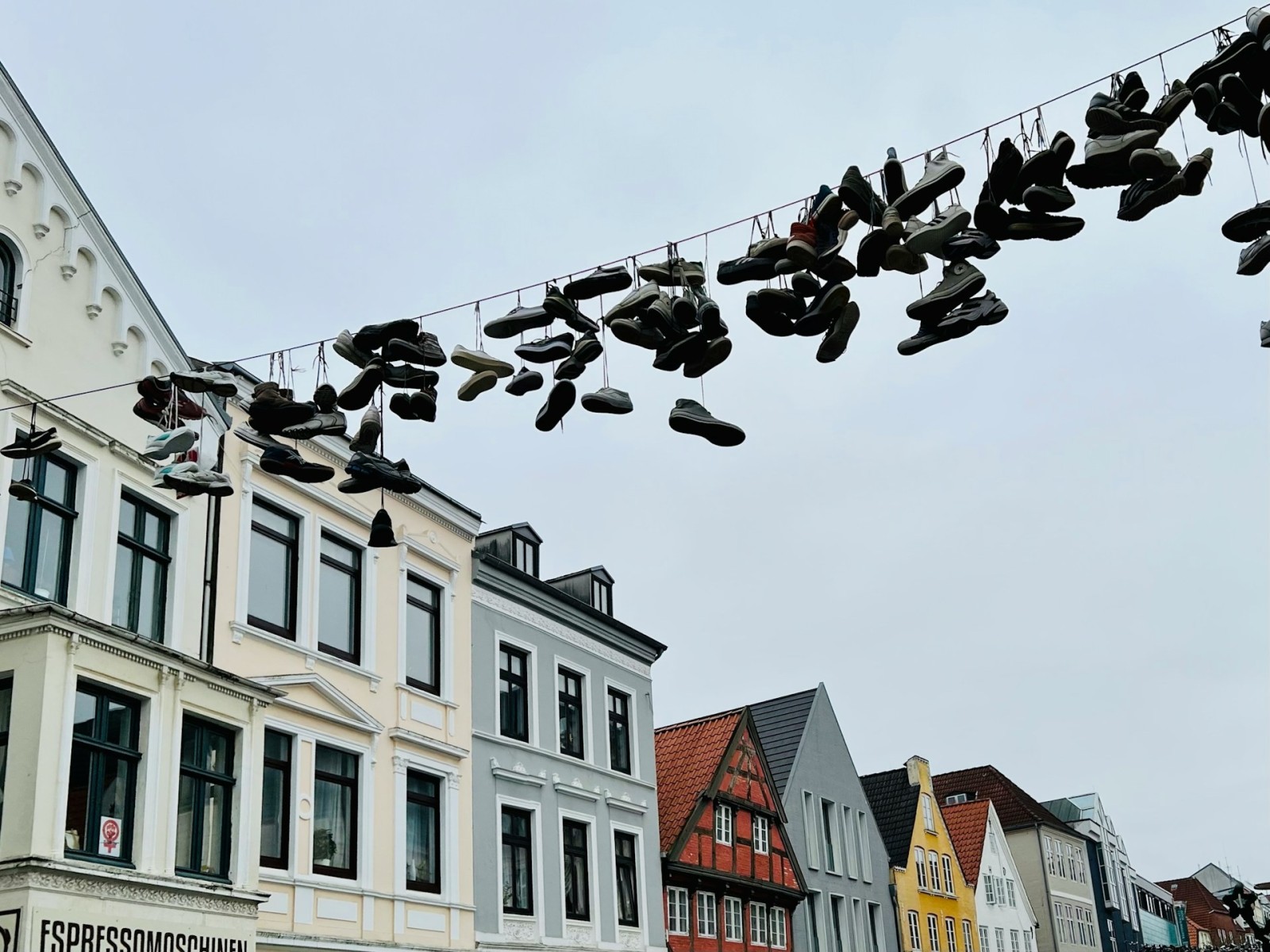
1. Language of communication
The main language is German. In hotels, restaurants, shops, and tourist destinations, English can often be explained. Due to the proximity of Denmark, the presence of the Danish language is also noticeable in the city: Danish cultural and educational institutions operate, and some residents use Danish in everyday life.
For a tourist, basic German or English is enough. When addressing strangers, it is customary to use the polite Sie form.
2. Communication and local customs
In Germany, politeness, calm tone and respect for personal space are appreciated. When entering a small store or when addressing an employee, it is customary to say hello - Guten Tag (Good day).
In queues, you should observe order and not try to pass without a queue. In public places, it is not customary to talk loudly or make a strong noise, especially in the evening and at night.
Punctuality is considered an important part of business and everyday culture. If you have agreed on the time of the excursion, meeting or check-in, it is better to come in advance.
3. Cycling culture
In Flensburg, as in many cities in Germany, cyclists are full-fledged road users. It is not necessary to walk on designated bicycle paths. When crossing the road, you need to pay attention to cyclists, even if there are no cars nearby.
If you rent a bicycle, you must follow road signs, traffic lights and traffic rules.
4. Rules in public places
Garbage must be disposed of in designated containers. Separate waste collection is widespread in Germany.
Smoking is prohibited in many closed public places, as well as where appropriate signs are installed. Do not leave bottles and cans in ordinary bins if they belong to containers with a Pfand deposit system.
Alcohol is permitted by law, but should be consumed subject to local restrictions and local regulations. Appearance in a public place in a very drunk state can lead to problems with the police.
5. Photo and personal life
Do not take close-up pictures of people without their consent, especially in situations involving privacy. When shooting children, you need to be especially careful.
In museums, churches and other attractions, you need to pay attention to the rules of photography. In some places, shooting with a flash is either completely prohibited or restricted.
6. Traffic rules
In Germany, traffic rules are strictly enforced. Pedestrians should cross the road at the crossings and at the permitting signal of the traffic light. At controlled crossings, you should not cross the road to red even in the absence of cars.
Seat belts are mandatory for cars, and using a phone while driving without an authorized system is prohibited. Speed limits must be observed even on roads with little traffic.
7. Visiting shops and restaurants
Many shops operate on a limited schedule, especially on Sundays and holidays. Therefore, it is better to plan purchases in advance.
In restaurants and cafes, tips are usually left with good service. A common option is to round out the invoice amount or add about 5-10%.
Before paying, it is advisable to clarify whether bank cards are accepted, especially in small establishments.
8. Danish specificity of Flensburg
Flensburg is right next to the Danish border, so the city has a distinct German-Danish cultural identity. Danish institutions, shops and cultural events can be found here.
A tourist is not required to speak Danish, but a simple Hej ("Hello") or Tak ("Thank you") may be appropriate when communicating with Danes. The main language of everyday communication in the city is German.
9. Border visit
Flensburg is located in the Schengen area, so there are usually no normal border controls when travelling to neighbouring Denmark, however temporary checks may be introduced. Tourists are advised to carry a valid passport or other document entitling them to cross the border.
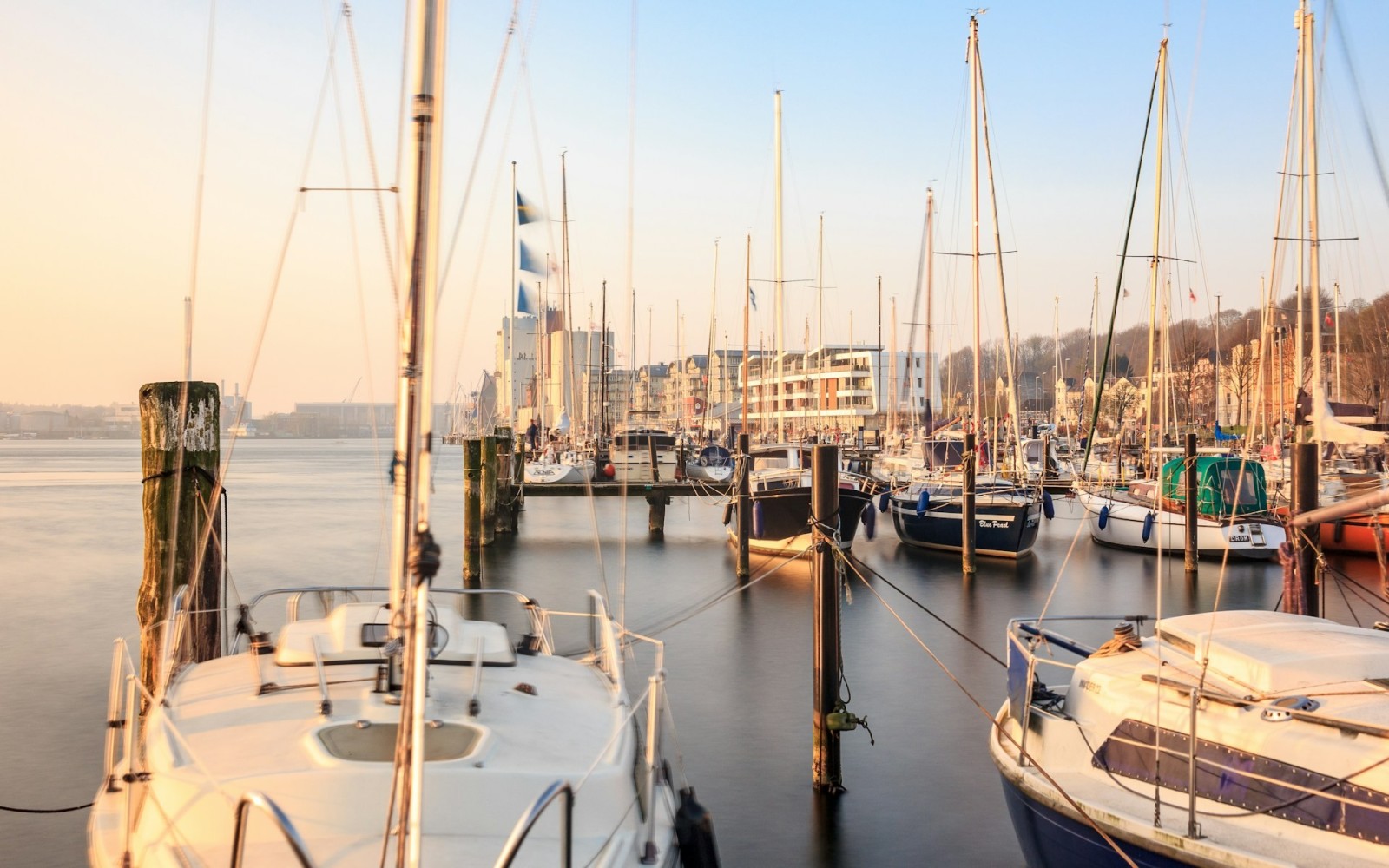
1. Greetings and polite words
Guten Morgen - Good Morning Transcription: Guten Morgen
Guten Tag - Good day Transcription: Guten Tag
Guten Abend - Good evening Transcription: Guten Abent
Hallo - Hello / Hello Transcription: Hallo
Auf Wiedersehen - Goodbye Transcription: Auf Wiedersehen
Tschüss - Until Transcription: Chuss
Bitte - Please / Not for What Transcription: Bitte
Danke - Thank you Transcription: Danke
Vielen Dank - Thank you very much
Entschuldigung - Sorry Transcription: Entschuldigung
Ja - DaTranscription: I
Nein - No Transcription: Nine
Natürlich - Of course Transcription: still lifelich
2. If you don't understand German
Sprechen Sie Englisch? - Do you speak English? Transcription: Shprahan zi English?
Sprechen Sie Russisch? - Do you speak Russian? Transcription: Shprahan zi Rusish?
Ich spreche nur ein bisschen Deutsch. - I speak a little German. Transcription: Their Shprahe Nur Ain Bischen Deutsch
Ich verstehe nicht. - I don't understand. Transcription: their fairstee nicht
Können Sie das bitte wiederholen? - Can you repeat it, please? Transcription: kenen zi das bitte viderholen?
Sprechen Sie bitte langsamer. - Speak more slowly, please. Transcription: Shprahan zi bitte Langzamer
Was it bedeutet das? - What does that mean? Transcription: Are you a badoitet das?
3. Hotel
Ich habe eine Reservierung. - I have a reservation. Transcription: their habe aine reservirung
Ich möchte einchecken. - I want to move in. Transcription: their mehte Aincheken
Wo ist mein Zimmer? - Where's my number? Transcription: East Main Zimmer?
Wann ist das Frühstück? - When's breakfast? Transcription: van est das frustyuk?
Is WLAN Kostenlos? - Is Wi-Fi free? Transcription: East Vilan Cousinlos?
Können Sie mir bitte helfen? - Can you help me? Transcription: kenen zi world bitte helfeng?
Ich möchte auschecken. - I want to move out. Transcription: their mehte auscheken
4. Restaurant and café
Einen Tisch für zwei Personen, bitte. - Table for two, please. Transcription: ainen tish für zwei parzonen, bitte
Haben Sie eine Speisekarte? - Do you have a menu? Transcription: haben zi aine spisekarte?
Was empfehlen Sie? - What do you recommend? Transcription: Are you emmphelene zi?
Ich möchte das bestellen. - I want to order this. Transcription: their mehte das beshtellen
Ohne Fleisch, bitte. - No meat, please. Transcription: one fluish, bitte
Ohne Alkohol, bitte. - No alcohol, please. Transcription: one alcohol, bitte
Die Rechnung, bitte. - Check, please. Transcription: di rehnung, bitte
Kann ich mit Karte bezahlen? - Can I pay with a card? Transcription: Can their mit carte bezaalen?
5. Shops and purchases
Wie viel kostet das? - How much does it cost? Transcription: Whifil Costa das?
Haben Sie das in einer anderen Größe? - Do you have a different size? Transcription: haben zi das in ainer anderen groesse?
Ich möchte das kaufen. - I want to buy this. Transcription: Their mehte das Kaufen
Kann ich mit Karte bezahlen? - Can I pay with a card? Transcription: Can their mit carte bezaalen?
Kann ich eine Tüte haben? - Can I have a bag? Transcription: Can their aine tute haben?
Wo ist die Kasse? - Where's the cash register? Transcription: East di Casse?
Ich schaue nur. - I'm just looking. Transcription: their shaue noor
1. Food and drink
Flensburger Bier is one of the most recognizable local products. Especially popular varieties of the local brewery, produced in characteristic bottles with a folding ceramic lid.
Flensburg rum is historically associated with the rum trade, so rum and products based on it are considered one of the main gastronomic features of Flensburg.
Rum candies and chocolate are a convenient souvenir option if you want to bring local taste without alcoholic products.
Smoked and pickled fish – due to the location of the fjord and the proximity of the North and Baltic Seas, fish products are common in the region. For transportation, it is better to choose a factory vacuum packaging.
North German sweets and pastries – you can try marzipan, biscuits, gingerbread and other products typical of Schleswig-Holstein and neighboring Denmark.
2. Useful and Healthy Purchases
Herbal teas - in German pharmacies and specialized stores you can find a variety of herbal mixtures. This is a useful gastronomic souvenir, not a medicine.
Natural cosmetics - creams, balms, oils, products for skin care and hair care of German manufacturers.
Salts and bath products are a practical option for a small souvenir, especially if you want to bring something for home care.
Pharmacy products – German products for skin care, teeth and personal hygiene are popular with tourists. Medicines should be bought only for specific needs and taking into account the rules of their import into your country.
3. Souvenirs
Sea souvenirs – models of ships, miniatures of sailboats, decorative steering wheels, anchors and other items related to the maritime history of Flensburg.
Souvenirs depicting the fjord and the harbor - postcards, magnets, mugs, paintings and small decorative products.
Gifts with the symbols of Flensburg - T-shirts, mugs, key chains, glasses and other things with the name of the city.
Products in Danish style - thanks to the proximity of Denmark in Flensburg, you can find products that reflect the German-Danish culture of the region.
Rum paraphernalia - glasses, small decorative bottles, books and souvenirs associated with the history of the local rum trade.
1. Documents
To travel, you must have a valid passport or other document that is recognized for entry into Germany. For EU citizens, a valid national identity card is usually sufficient.
For citizens of countries that require a visa, it is necessary to issue a visa in advance. For short trips, a Schengen C visa is used.
If the traveler does not require a visa, the passport on the planned date of departure from Germany must be valid for at least another three months and issued no more than 10 years ago. Border guards may also be asked to confirm the purpose of the trip, the availability of accommodation and return travel.
It is recommended to carry copies of your passport, visa or residence permit, as well as electronic copies of documents in a secure cloud storage.
2. Health insurance
For a tourist trip, it is advisable to obtain health insurance valid throughout the Schengen area and for the entire period of travel. It is especially important that the policy covers emergency medical care and, if possible, the transportation of tourists to their homeland.
To apply for a Schengen visa, health insurance must cover the entire Schengen area for the duration of the trip and have a minimum coverage of 30,000 euros.
3. Emergency phones
112 - Ambulance and Fire Service. The room is free and works around the clock from a mobile and landline phone.
110, police. It is used in cases of threat to life or safety, crime, assault and other situations where urgent police intervention is required.
116 117 - Medical service on duty for situations where urgent medical care is needed, but there is no immediate threat to life.
In case of a serious health threat, it is better to call 112 immediately.
4. Mobile communications
There are four main mobile networks in Germany: Telekom, Vodafone, Telefónica Germany (o2) and 1&1. In addition to these operators, there are many other companies that use their infrastructure.
In Flensburg, mobile communication is usually convenient for touristic tasks: navigation, buying tickets, communicating with the hotel and using an interpreter. Before traveling, it is worth checking the roaming conditions of your operator.
If an EU SIM card is used, in most cases the principle of roaming at home fare applies under EU rules, however, the specific conditions depend on the tariff.
5. How long can you stay in Germany?
For third-country nationals who are allowed short-term visa-free entry, the standard restriction is no more than 90 days in any period of 180 days. These 90 days are considered not only for Germany, but for the entire Schengen area.
Departure from Germany, for example, does not automatically start a new 90-day period, as Denmark is also part of the Schengen area.
For EU citizens, the rules are different: they can stay in Germany on the basis of the right of free movement, with separate requirements for residence for more than three months.
Staying longer than 90 days usually requires an appropriate basis, such as a national visa or residence permit.
6. Crossing the border with Denmark
Flensburg is located near the Danish border. Germany and Denmark are part of the Schengen area, so there are no regular permanent border controls between the countries, but temporary checks are possible.
Even when traveling from Flensburg to Denmark, it is advisable to carry a passport or ID card, as checks at internal borders can be carried out.
Create a query and local guides will offer you the best options

