Independent tourism and recreation in the city of Gelsenkirchen Historical information about the city of Gelse...
Gelsenkirchen is a large city of North Rhine-Westphalia, located in the heart of the Ruhr region. It is not a classic tourist city with a compact medieval center, but primarily a city of industrial heritage, football, modern culture, parks and reimagined industrial areas. It is especially interesting for those who want to see another Germany - not only castles and ancient squares, but also former mines, industrial facilities, modern cultural spaces and the atmosphere of the Ruhr.
The history of Gelsenkirchen is particularly interesting because of how much the city has changed over the past two centuries. At the beginning of the XIX century it was mainly rural, and then for several decades it has become one of the most important industrial centers of Germany.
1. Ancient settlements
The first written mention of Gelsenkirchen dates back to around 1150. Before industrialization, the territory of the modern city was mainly rural with small villages, farms and craft settlements.
At the beginning of the XIX century there lived only about 6 thousand people. The basis of the economy was agriculture and small crafts. Among the historical monuments of this period are castles and estates, including Schloss Horst, Schloss Berge and House Lüttinghof.
2. Beginning of the Industrial Revolution
Decisive changes began in the XIX century due to the development of the coal industry.
Gelsenkirchen was in the center of the Ruhr coal basin. The opening of mines, the construction of railways and the development of metallurgy led to rapid population growth.
In the city began to appear mines, coke plants, metallurgical enterprises, machine-building industries and enterprises of the chemical industry.
The industry has developed particularly rapidly since the 1850s. The city created blast furnaces, steel and rolling plants, foundries and enterprises serving the mining industry.
3. Obtaining city rights
On November 29, 1875, Gelsenkirchen received city rights. At that time, a little more than 11 thousand people lived in the city. This is one of the most important stages in the transformation of a small settlement into an independent industrial city.
But the real demographic explosion is just beginning.
4. City of a Thousand Lights
In the second half of the XIX - early XX century Gelsenkirchen became one of the largest industrial centers in Germany.
A large number of mines and industrial enterprises worked in the city. At night, the lights of coke batteries, steel mills and mines created a characteristic glowing industrial landscape.
This is why Gelsenkirchen is known as the City of a Thousand Lights (Stadt der tausend Feuer).
For tourists, this is especially interesting today, since many objects of that era have not completely disappeared, but have been turned into parks, cultural sites and monuments of industrial heritage.
5. Population growth
Industrial development caused a huge influx of workers from other regions of Germany and abroad.
The city grew rapidly, with working-class neighborhoods, new roads, railway lines, schools, hospitals and public buildings.
By the middle of the XX century Gelsenkirchen became one of the largest cities of the Ruhr region. In 1958, the population reached about 386,874, a historic high.
6. Coal and metals
For decades, Gelsenkirchen has been closely associated with the coal and steel industries.
The urban economy was built around:
coal mining;
coke production;
metallurgy;
engineering;
chemical industry;
Production of industrial equipment.
Especially important was the production of coking coal, thanks to which coking plants and related industries developed.
7. Gelsenkirchen in the XX century
During World War II, the industrial Gelsenkirchen was bombed as its facilities were essential to the German war economy.
After the war, the city was rebuilt and again became a major industrial center.
However, in the following decades, a gradual crisis of the coal industry began.
8. Mine closures and the industrial crisis
In the second half of the twentieth century, the German coal industry began to lose its economic importance.
Mines were gradually closed, jobs were reduced, the population decreased.
Gelsenkirchen was faced with the need to completely rebuild the economy. This process was complex and was accompanied by serious social problems.
9. Turning industrial areas into tourist sites
One of the main results of structural adjustment was the rethinking of former industrial territories.
Abandoned mines and industrial sites have become:
parks;
museums;
cultural centres;
concert venues;
bicycle routes;
observation decks.
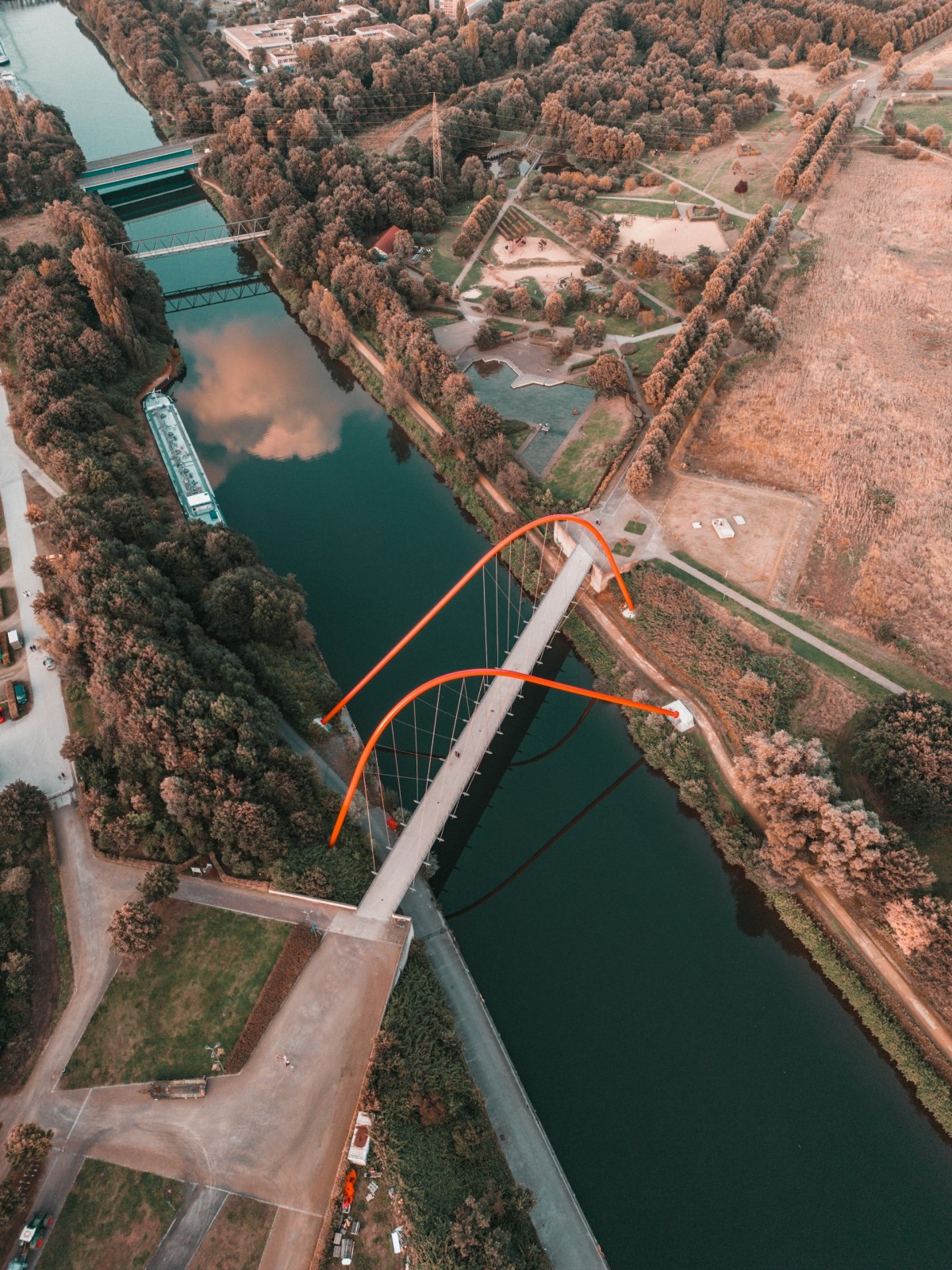
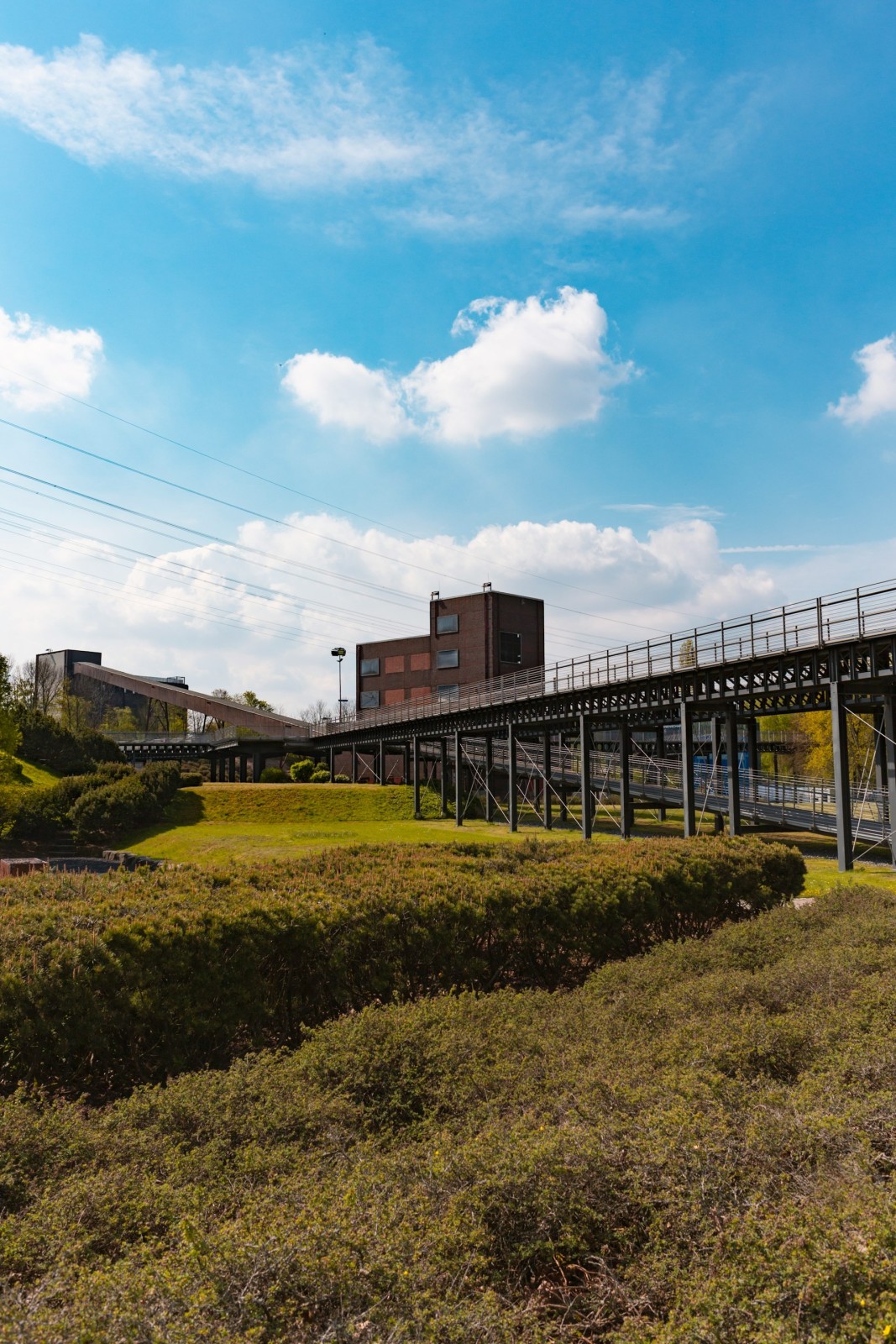
This is especially evident in the example of Nordsternpark, created on the territory of the former Nordstern mine. Today it is a green area with industrial heritage, walking and cycling routes, playgrounds and an amphitheatre.
10. Modern Gelsenkirchen
Today, the city continues its transition from a classical industrial economy to a more diverse model.
Gelsenkirchen bets on:
services;
culture;
education;
sport;
tourism;
green infrastructure;
Preservation of industrial heritage.
Football plays a special role, most notably Schalke 04 (FC Schalke 04) and its home arena.
Gelsenkirchen is suitable primarily for travelers who are interested in industrial history, football, architecture, modern culture, music, family holidays and unusual urban spaces.
The main advantage of the city is contrasts.
Here you can visit the zoo in the morning, explore the former mine in the afternoon, go to a football match or a concert in the huge arena in the evening.
The official tourist portal of the city specifically highlights the combination of nature, culture, industrial heritage and football as the main reasons to visit.
Premium and high level
Heiner’s Parkhotel is one of the most interesting options for tourists, especially if you want to combine comfort with proximity to Nordsternpark.
Welcome Hotel Gelsenkirchen is a higher level of accommodation in the Schloss Berge area.
Arena Hotel is a convenient option for those who come primarily for a football match or concert at VELTINS-Arena.
Medium level
PLAZA Premium Gelsenkirchen is a city hotel in Stadtgarten.
ibis Styles Gelsenkirchen is a convenient option for tourists who are close to the central part of the city and the train station.
Hotel Monopol Gelsenkirchen is an option in the Buer area.
Cost-effective options
Good Morning Gelsenkirchen City is a practical option near the main station.
Schacht III/ABZ is a simpler placement format.
Gästehaus Bismarck is a guest house suitable for economical living.
SchlafGElegenheit is a small accommodation option.
Also in the city there are apartments, private apartments, guest houses and campsites. The City Tourist Service separately provides information on private accommodation and campgrounds.
1. Feltins Arena (VELTINS-Arena)
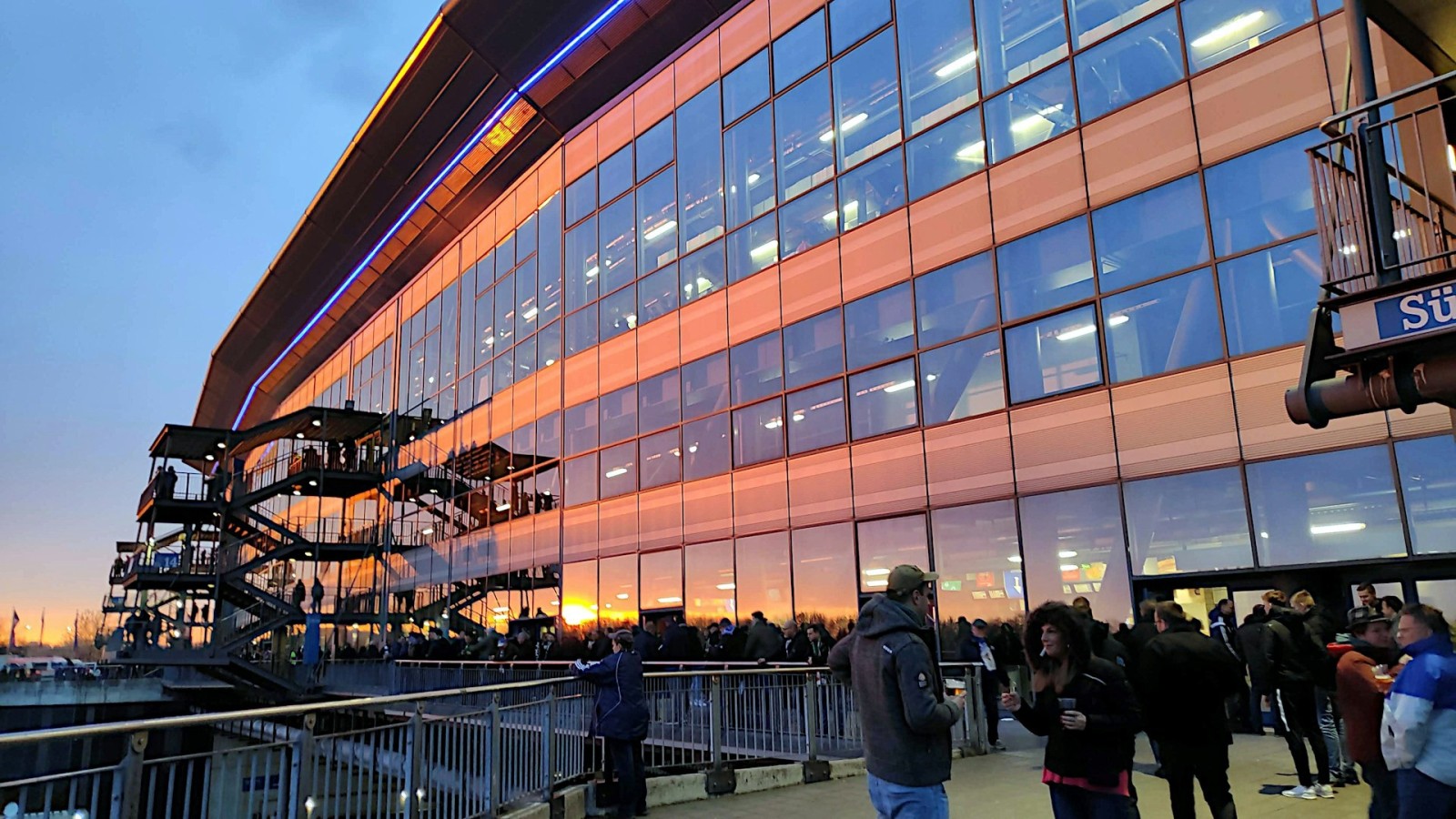
The Feltins Arena is the main sports attraction of Gelsenkirchen and the home stadium of the Schalke 04 football club. The arena opened in 2001 and is considered one of the most modern stadiums in Germany. It hosts football matches, major concerts and various sports events. A feature of the building is a retractable football field and a closing roof.
For tourists, not only a visit to the match is of interest, but also a tour of the stadium, during which you can see the stands, rooms for teams and other internal areas of the arena.
Transport accessibility: from the main railway station of Gelsenkirchen (Gelsenkirchen Hauptbahnhof) to the arena area, it is convenient to get there by the city railway and tram. On the days of matches and major concerts, transport works taking into account the large flow of visitors.
2. ZUM Erlebniswelt (ZOOM Erlebniswelt)
ZUM Erlebniswelt is one of the main family tourist sites of Gelsenkirchen. The area of more than 30 hectares is divided into thematic zones dedicated to Alaska, Africa and Asia. It contains about 900 animals of more than 100 species, and the spaces are designed to resemble the natural habitat of animals.
Transport accessibility: the complex can be reached by public transport from the central part of the city. There are several parking areas for driving.
3. Castle Horst (Schloss Horst)
Horst Castle is one of the most significant Renaissance monuments in Gelsenkirchen and one of the oldest preserved architectural objects of the city. Today inside there is a museum dedicated to the life and construction of the castle in the XVI century. The visit is especially interesting because the exposition is built in an interactive format: visitors can get acquainted with the crafts, tools and life of the Renaissance.
The castle also hosts concerts and other cultural events, and there is a park and playground nearby.
Transport accessibility: The Horst area can be easily reached by city rail, tram or bus. From the stops to the castle you can walk.
4. Nordsternpark (Nordsternpark)
Nordsternpark is one of the most interesting parks of Gelsenkirchen, created on the territory of the former Nordstern coal mine. Today, it combines industrial heritage, green areas, walking and cycling routes, playgrounds, recreation areas and cultural facilities. The park covers about 100 hectares and is one of the most characteristic examples of the transformation of a former industrial area into a modern public space.
Of particular interest is Nordsternturm, a former mine tower built with modern glass volume. At the top is a large sculpture of Hercules by Marcus Lupertz, and from the observation deck there is a panoramic view of Gelsenkirchen and the Ruhr region.
The park also houses the Amphitheater Gelsenkirchen, located directly at the Rhine-Herne Canal. In the summer concerts and festivals are held here.
Transport accessibility: Nordsternpark can be reached by urban transport to the Horst district, after which you can walk. For cyclists, the park is especially convenient due to the paths along the canal.
5. Nordsternturm (Nordsternturm)
Nordsternturm is one of the most recognizable symbols of modern Gelsenkirchen. The tower survived from the Nordstern mine, but received a new cultural purpose.
At the top is a huge figure of Hercules, and inside there is a video art center. The observation deck allows you to see the city from a height and appreciate the characteristic industrial landscape of the Ruhr region.
Transport accessibility: the attraction is located directly in Nordsternpark, so after arriving in the park you need to walk. The visit is conveniently combined with a walk in the park, a visit to the Amphitheatre and a walk along the Rhine-Herne Canal.
6. Castle Berge (Schloss Berge)
Berge Castle is a historical complex in the north of Gelsenkirchen, surrounded by a large park. This is one of the most pleasant places in the city for a quiet walk.
Around the castle are green areas, a pond and a park, so the attraction is especially attractive in the warm season. Here you can combine acquaintance with historical architecture with rest in nature.
Transport accessibility: the Buhr area can be reached by bus or tram, after which you can walk to the castle. There is a bus route 380 through the area. The castle is also included in tourist bus tours around Gelsenkirchen.
7. Music Theater in the Ruhr (Musiktheater im Revier)
The musical theater in the Ruhr is one of the main architectural and cultural symbols of Gelsenkirchen. The building was opened in 1959 and is considered an outstanding example of post-war architecture.
Famous artists took part in the decoration of the building, including Yves Klein and Jean Tengeli. Particular attention is drawn to the characteristic artistic elements of the interior and the famous blue sponge reliefs of Yves Klein.
On the stage there are operas, operettas, musicals, ballet, symphonic concerts and other productions.
Transport accessibility: The theater is located near the central part of the city, so it is convenient to reach it by tram, bus or on foot from the central railway station.
8. Terricon Rungenberg (Halde Rungenberg)
Terrikon Rungenberg is one of the most unusual natural and industrial attractions of Gelsenkirchen. It appeared as a result of the activities of the former Hugo mine and today it is a large green hill with walking routes.
At the top is the light installation "Nachtzeichen". Two powerful floodlights are directed in such a way that their rays intersect over the top of the terricon, creating a kind of light pyramid.
The terricon offers good views of Gelsenkirchen and the surrounding Ruhr region.
Transport accessibility: the foot can be reached by bus to the Bure area and then continue on foot. It is also convenient to travel by car or bicycle. The climb to the top is on foot.
9. The Terricon and the Sculptural Forest of the Rheinelbe (Halde und Skulpturenwald)
In the south of Gelsenkirchen is the Reinelbe Terricon, clearly visible from afar due to its characteristic conical shape.
At the top is a large-scale sculpture “Heavenly Stairs” (Himmelstreppe), created by artist Herman Prigann from large concrete elements. To the terricon lead winding paths through the so-called industrial forest Reinelbe.
The peculiarity of this place lies in the combination of nature, industrial heritage and modern art. Along the way you can see various sculptures of concrete and metal.
Transport accessibility: the southern part of the city can be reached by bus or tram, and then continue on foot. Comfortable shoes are recommended for inspection.
10. Water Castle (Wasserburg Haus Lüttinghof)
Water Castle House Luttinghof is one of the oldest historical sites of Gelsenkirchen. Unlike the industrial attractions of the city, it allows you to get acquainted with the earlier history of the region.
The castle is surrounded by green areas and has preserved the characteristic features of the old manor. Its location away from dense urban development creates a calm atmosphere.
Transport accessibility: the castle is located on the outskirts of Gelsenkirchen, so it is most convenient to get there by car or bicycle. By public transport you will need to go to the nearest area, and then walk.
1. Carnival in Gelsenkirchen (Gelsenkirchener Karneval) – February
The carnival season falls mainly in February, and the most notable events are street processions and holidays in certain areas of the city.
Especially interesting are the children’s carnival processions in Bur and Earle, which are traditionally held during the period of Rose Monday and carnival weekends. In 2026, the processions took place on February 15 and 16.
For tourists, this is a good opportunity to see the traditional German carnival culture of the Rhine-Ruhr region: costumes, decorated streets, music, festive columns and treats.
Best time: Feb.
2. FigurenTheaterWoche Gelsenkirchen (January-February)
In late January and early February, the city hosts a festival of puppet and subject theater.
The program features performances using puppets, puppets, large figures and other forms of theatrical art.
The event is especially interesting for families with children and tourists interested in unusual theater productions.
3. Jugend Jazz Festival (February)
In February, a youth jazz festival is held in Gelsenkirchen, where novice musicians and young jazz bands perform.
This is a cultural event for those who want to get acquainted with the modern musical life of the city, rather than a mass tourist holiday.
Best time: Feb.
4. Rock Hard Festival - May
Rock Hard Festival is one of the most famous musical events of Gelsenkirchen.
The festival is held at the Gelsenkirchen Amphitheatre and is aimed primarily at fans of heavy rock and metal. It usually takes place on Pentecost – Pfingsten, so its dates change from year to year. The city calls RockHard Festival one of the highlights of its festival calendar.
Best time: late May.
5. Cultural picnic on the console (Kulturpicknick auf Consol) - May
A cultural picnic takes place on the grounds of the former Consol mine and combines music, dance, poetry, creative workshops and entertainment for families.
This is a good option for tourists who want to get acquainted not only with major concerts, but also with the modern cultural life of the city.
6. Spanish festival Gespaña - May
At the end of May, the center of Gelsenkirchen turns into a kind of Spanish square.
The program includes Spanish music, dance, gastronomy, festive events and entertainment.
The festival is especially interesting because it allows you to combine a walk through the city center with a gastronomic and musical program.
7. ExtraSchicht - June
ExtraSchicht is a large-scale cultural festival throughout the Ruhr region, which takes place on the territory of former mines, industrial enterprises and other industrial heritage sites.
Gelsenkirchen regularly participates in this event. In the evening and at night, former industrial facilities are transformed into venues for concerts, theatrical performances, light shows and art projects.
For tourists, this is a particularly interesting event, as it allows you to see the industrial heritage of the Ruhr from a completely different angle.
Best time: June.
8. Concerts at the Gelsenkirchen Amphitheatre - May-September
In summer, the amphitheater turns into one of the main concert venues of the city.
There are concerts of rock, metal, folk and other performers. The venue is directly next to the Rhine-Herne Canal, so the concerts take place in an unusual atmosphere among the water and industrial landscape.
Best time: May to September.
9. Summer Festival at Sommerfestival Schloss Berge (July)
One of the most famous traditional festivals of Gelsenkirchen. The festival has been held around Schloss Berge and Berger See for over 50 years.
Here are the groups:
folk festival;
fairground rides;
concerts;
gastronomic pavilions;
entertainment for children;
evening festive program;
big fireworks show.
For a tourist, this is one of the best options to see the traditional atmosphere of the big summer holiday of the Ruhr region.
10. SommerSound - July-August
In summer, a series of free open-air concerts are organized in the city garden of Gelsenkirchen.
The format is especially pleasant for tourists: you can combine a walk along Stadtgarten with an evening concert.
Best time: end of July – August.
Winter - December, January and February
Winter in Gelsenkirchen is comparatively mild. During the day, the temperature is usually about +3 ... +6 ° C, and at night - about 0 ... +2 ° C. January is the coldest month of the year. The average temperature of January is about +3 °C, February is about +4 °C.
Snow is possible, but sustained snow cover is uncharacteristic for the city. Much more often in winter there are rain, wet snow, cloudy weather and strong wind.
December: about +4...+6 °C during the day and +1...+2 °C at night. January: about +3...+5 °C during the day and about 0...+1 °C at night. February: about +4...+6 °C during the day and about 0...+1 °C at night.
For travel, winter is suitable primarily for museums, theaters, concerts, football matches, Christmas events and exploring urban architecture. For long walks in parks and terricons, this is a less comfortable time.
Spring - March, April and May
In spring, the temperature gradually rises, there are more sunny days, urban parks and natural areas begin to turn green.
March: approximately +9...+10 °C during the day and +2...+3 °C at night. April: about +14...+15 °C during the day and +5...+6 °C at night. May: about +18 °C during the day and +9 °C at night.
May is already warm enough for long walks. At this time, it is especially pleasant to visit Nordsternpark, Berge Castle, the Rhine-Herne Canal, terricons and city parks.
Spring also marks the start of a season of major festivals and open-air concerts.
Summer - June, July and August
Summer is the best time for a tourist trip to Gelsenkirchen, especially if the main goal is walking, festivals, concerts and visiting industrial attractions.
In June, the average temperature is about +17 °C, in July - about +19 °C, and in August - about +18 °C. During the day on ordinary summer days, the temperature is most often in the range of +20. +24 °C, but during heat waves can rise significantly above +30 °C. Historically, the city has experienced temperatures above +35 °C.
June: approximately +20...+21 °C during the day and +12 °C at night. July: approximately +22...+23 °C during the day and +14...+15 °C at night. August: approximately +22...+23 °C during the day and +14 °C at night.
July is one of the warmest months, but also quite humid. Therefore, summer trips should be planned taking into account the possibility of short-term rains.
In summer it is especially good to visit ZOOM Erlebniswelt, Nordsternpark, Berge Castle, Rhine-Herne Canal and Terricons. During the same period, most of the major festivals and concerts of the city take place.
Autumn - September, October and November
In September, the weather is usually pleasant, but from October it becomes noticeably cooler and the number of cloudy days increases.
September: about +19 °C during the day and +12 °C at night. October: about +14...+15 °C during the day and +8 °C at night. November: about +9 °C during the day and +4 ... +5 °C at night.
September is one of the most comfortable months to travel. There is no summer heat, but it is still warm enough for a walk.
October is well suited for museums, theaters, architectural sights and walks through autumn parks. In November, the weather becomes cooler, wet and windy.
Gelsenkirchen is located in the federal state of North Rhine-Westphalia, so the main language of communication is German (Deutsch). In tourist places, hotels, restaurants, at major events and train stations, you can often explain yourself in English. However, outside of the tourist infrastructure, knowing at least a few German phrases will make travel a lot easier.
Gelsenkirchen is a multinational industrial city with a population of different cultures, so foreigners are quite familiar. When communicating, it is advisable to observe the general rules of German politeness: greeting at the entrance to small shops, cafes and institutions, addressing strangers on Sie (“You”), and switching to du (“you”) after the proposal of the interlocutor.
Main features of behavior
Punctuality. In Germany, it is customary to arrive on time. For an excursion, a business meeting, an organized trip or an appointment with a doctor, it is better to come 5-10 minutes before the appointed time. A delay of more than a few minutes should be explained in advance.
Personal space. Germans usually prefer to keep a certain distance when talking. Do not touch an unfamiliar person, hug him or get too close during a conversation.
Lines. In shops, ticket offices, ticket points and other places it is customary to observe the order. You should not try to get ahead of other people.
Silence. In residential areas of Germany, calm is taken seriously. It is especially important not to make noise late in the evening and at night. Loud music, shouting and parties in apartment buildings can cause complaints from neighbors.
Welcome. In everyday situations, it is enough to say Guten Tag (Good afternoon), in the morning – Guten Morgen, in the evening – Guten Abend. Hallo is often used in informal settings.
Restaurants and cafes. Usually first wait for the waiter to offer a table or independently occupy a free table, if the institution works on this principle. You can ask for an invoice with the words Die Rechnung, bitte – “Invoice please”.
Tips. In restaurants and cafes tips are not absolutely mandatory, but with good service, it is customary to leave about 5-10% or just round the amount. Usually the amount of tip is called to the waiter when paying.
Attitudes to football
For Gelsenkirchen, football is of particular importance thanks to the Schalke 04 club (FC Schalke 04). On the days of home matches, the atmosphere in the city changes markedly: there are significantly more fans in the area of the stadium and public transport.
Tourists should respect fans and not provoke conflicts. Do not intentionally insult the club or its fans, especially during a match or near the stadium.
When attending a football event, you must follow the rules of the stadium. Prohibited items cannot be carried inside, and safety requirements can be particularly stringent at major matches and concerts.
Attitudes towards photography
Photography of buildings, streets, monuments and public spaces is usually permitted. However, it is advisable to be careful when shooting specific people.
Do not take close-up photos of strangers without permission, especially children. When visiting museums, exhibitions, theaters and other institutions, you should pay attention to signs prohibiting photography.
Separately, the rules for the protection of personal data and the rights of a person to their own image should be taken into account: publishing a photo of a person on the Internet without the appropriate permission can become a problem.
Conduct in public transport
In buses, trams and trains, it is advisable to observe silence and not interfere with other passengers.
Do not occupy several seats with bags if the transport is full. Elderly people, pregnant women and people with limited mobility are given seats.
The ticket must be purchased and/or activated in accordance with the rules of the particular mode of transport. Ticketless travel can result in a significant fine.
During football matches and major concerts, public transport can be overcrowded, so it’s best to plan ahead.
Rules of conduct on the streets
In Germany, a lot of attention is paid to the observance of traffic rules.
You need to be especially careful when crossing the road: you should cross the street at a pedestrian crossing or in a permitted place. At adjustable intersections, traffic lights should be observed even when there are no cars nearby.
Special attention should be paid to cyclists. In Gelsenkirchen, as in other German cities, bike paths can pass directly next to pedestrian areas. It is not necessary to walk on the designated bike path.
Alcohol and smoking
Alcohol consumption is regulated by German law and the rules of specific public places. In restaurants, bars and festivals, alcohol is sold according to established rules.
You cannot drive in a state of alcoholic intoxication. Germany has strict rules regarding driving after drinking alcohol.
Smoking is prohibited inside most public buildings, restaurants and other enclosed spaces. Specially permitted places must be used.
Garbage and cleanliness
In Germany, great attention is paid to cleanliness and sorting of waste.
Garbage should be disposed of in containers intended for it. On the streets, in parks and near attractions should not leave bottles, packaging or food waste.
In Germany, the Pfand system is also widespread - a pledge for certain types of bottles and cans. When buying a drink, a deposit can be added to the price, which can be returned when the corresponding container is delivered.
Important laws and restrictions
You can't litter. Fines may be imposed for violation of local cleanliness rules.
City property cannot be damaged. Graffiti, damage to monuments, buildings, transport facilities and other property may entail administrative or criminal liability.
You can't disturb public order. Aggressive behavior, fights, threats, heavy noise and other violations can lead to police intervention.
Smoking is prohibited where smoking is prohibited.
Police officers or other people should not be photographed for the purpose of interfering with their work, and the publication of images of people should also take into account the law on the right to own image.
You cannot cross the railway tracks in the wrong place. At railway stations and railway facilities it is necessary to use crossings, bridges and tunnels.
Parking rules must be followed. You can only leave your car where it is allowed. In the city centre and near major events, parking controls can be quite strict.
Features of Sunday
For tourists, this is one of the most noticeable features of Germany.
Sunday is traditionally considered a day of rest. Most regular shops are closed on this day, although restaurants, cafes, some tourist facilities, station shops and individual establishments may be open.
Therefore, products and necessary purchases are better done in advance. On certain days, the city may hold official verkaufsoffener Sonntag - Sundays with permitted trade, but this only happens on specified occasions.
1. Basic words and expressions
Hallo! Transcription: Hallo
Guten Morgen! Transcription: Guten Morgen
Guten Tag! - Good afternoon! / Hello!Transcription: Guten tag
Guten Abend! - Good evening! Transcription: Guten Abent
Gute Nacht! - Good night! - Transcription: gute naht
Tschüss! - Goodbye!
Auf Wiedersehen! - Goodbye! Transcription: auf viderzeen
Bitte. - Please. Transcription: bitte
Danke. - Thank you. Transcription: danke
Vielen Dank! - Thank you very much!Transcription: Filen Dunk
Entschuldigung! Transcription: Entschuldigung
Kein Problem. - No problem. Transcription: The Caine of Problems
Ja. - Yes. Transcription: I
Nein. Nope. Transcription: nain
Vielleicht. - Maybe. Transcription: Filaicht
Natürlich. - Of course. Transcription: still lifelich
2. If you don't understand German
Ich spreche kein Deutsch. - I don't speak German. Transcription: Their Spreche Kaine Deutsch
Ich spreche nur ein bisschen Deutsch. - I speak a little German. Transcription: Their Shprahe Nur Ain Bischen Deutsch
Sprechen Sie Englisch? - Do you speak English? Transcription: Shprahan zi English?
Sprechen Sie Russisch? - Do you speak Russian? Transcription: Shprahan zi Russish?
Ich verstehe nicht. - I don't understand. Transcription: their fairstee nicht
Ich habe das nicht verstanden. - I didn't understand that. Transcription: their habe das nith ferstangan
Können Sie das bitte wiederholen? - Can you repeat it, please? Transcription: kenen zi das bitte viderholen?
Bitte sprechen Sie langsamer. - Please speak more slowly. Transcription: Bitte Shprahan zi Langzamer
Können Sie das aufschreiben? - Can you write this down? Transcription: kenen zi das aufsreiben?
Was it bedeutet das? - What does that mean? Transcription: Are you pooroitet das?
3. How to ask the way
Entschuldigung, wo ist der Bahnhof? - Excuse me, where is the station? Transcription: Entschuldigung, East Der Banhof?
Wo ist der Hauptbahnhof? - Where's the main train station? Transcription: East Der Hauptbanhof?
Wie komme ich zur VELTINS-Arena? How do I get to the Feltins Arena? Transcription: Vi come their tsur veltins arena?
Wie komme ich zum ZOOM Erlebniswelt? How to get to ZOOM Erlebniswelt? Transcription: wi kome their tsum zoom erlebnisvelt?
Ist es weit? - Is that far? Transcription: East SS White?
Ist es zu Fuß erreichbar? - Can I walk there? Transcription: East s zu fus erreichbar?
Wie lange dauert der Weg? - How long does the road take? Transcription: Wi langue d'auert der veg?
Links. - Left. Transcription: linx
Rechts. - To the right. Transcription: Rachts
Geradeaus. - Straight. Transcription: Geradeaus
Hier. - Here. Transcription: chir
Dort. There. Transcription: dort
4. Public transport
Wo ist die nächste Haltestelle? - Where's the nearest stop? Transcription: East di Nexte Hallestale?
Welche Straßenbahn fährt zum Zentrum? - Which tram goes downtown? Transcription: velhe strasenban fert tsum centrum?
Welche Linie muss ich nehmen? - Which route should I take? Transcription: velhe linie mus their nemen?
Fährt dieser Bus zum Hauptbahnhof? Is this bus going to the main station? Transcription: Firth Dieser Bus Zum Hauptbanhof?
Wo kann ich eine Fahrkarte kaufen? - Where can I buy a ticket? Transcription: in kan their Aine Farkarte Kaufen?
Eine Fahrkarte nach Gelsenkirchen, bitte. - One ticket to Gelsenkirchen, please. Transcription: Aine Farkarte nah gelzenkirchen, bitte
Muss ich umsteigen? - Do I need to change seats? Transcription: Mus their umstein?
Wo muss ich aussteigen? - Where do I need to get out? Transcription: to Moses their Austeigen?
Isst dieser Zug richtig? - Is this train right? Transcription: East Diser Zug Rihtih?
Wann fährt der nächste Zug? - When does the next train leave? Transcription: Van Firth der Nexte Zug?
5. At the hotel.
Ich habe eine Reservierung. - I have a reservation. Transcription: their habe aine reservirung
Ich habe ein Zimmer reserviert. - I've booked a room. Transcription: their habe ain zimmer reservirt
Auf welchen Namen? - What name? Transcription: auf velhen namen?
Hier ist mein Reisepass. - Here's my passport. Transcription: Chir East Main Risepas
Wann ist der Check-in? - When's the settlement? Transcription: van east der cheque-in?
Wann ist der Check-out? - When's the eviction? Transcription: Van East Der cheque-out?
Ist das Frühstück inklusive? - Breakfast included? Transcription: ist das frustyuk inclusive?
Wo ist mein Zimmer? - Where's my number? Transcription: East Main Zimmer?
Gibt es WLAN? - Is there Wi-Fi? - Transcription: killed es velan?
Wie lautet das WLAN-Passwort? - What's the Wi-Fi password? Transcription: V lautet das ve-lan-pasworth?
6. Restaurant and café
Einen Tisch für zwei Personen, bitte. - Table for two, please. Transcription: ainen tish für zwei parzonen, bitte
Haben Sie eine Speisekarte? - Do you have a menu? Transcription: haben zi aine spisekarte?
Was empfehlen Sie? - What do you recommend? Transcription: Are you emmphelene zi?
Ich möchte das bestellen. - I'd like to order this. Transcription: their mehte das bashtellan
Ich nehme das. - I'll take this. Transcription: their neme das
Ein Bier, bitte. - One beer, please. Transcription: ain bir, bitte
Ein Wasser, bitte. - Water, please. Transcription: ain vasser, bitte
Ohne Fleisch, bitte. - No meat, please. Transcription: one fluish, bitte
Ohne Zucker, bitte. - No sugar, please. Transcription: one tsuker, bitte
Die Rechnung, bitte. - Check, please. Transcription: di rehnung, bitte
Kann ich mit Karte bezahlen? - Can I pay with a card? Transcription: Can their mit carte bezaalen?
1. Potato dishes
Potatoes occupy an important place in the traditional cuisine of North Rhine - Westphalia.
It is worth trying Kartoffelpuffer - potato pancakes, which in Germany are also called Reibekuchen.
They are usually served with sweet applesauce, sometimes with other additives. This is a simple, but very typical dish for the region.
What to bring: ready-made potato products of long-term storage are found in stores, but it is more practical for a tourist to buy regional mixtures for cooking potato dishes.
2. Currywurst
Currywurst is one of the most popular dishes of German street cuisine. It's a tomato-curry-based sausage.
The dish is especially characteristic of the Ruhr region and the large industrial cities of Northern Germany. In Gelsenkirchen, it can be found in diners, markets, city holidays and events.
It is more a gastronomic symbol of the everyday culture of the Ruhr than an exclusive dish of Gelsenkirchen alone.
3. Bratwurst and other German sausages
Fans of meat products should try different types of Bratwurst - fried German sausages.
The following are also common in the region:
Mettwurst;
Bockwurst;
Blutwurst;
Leberwurst;
Kochwurst.
For a trip home, it is better to choose products in factory vacuum packaging and be sure to take into account the customs rules of the country where you are returning.
4. Pumpernickel and rye bread
Pumpernickel is a dense, dark rye bread traditionally associated with Westphalia.
It has a rich taste, dense texture and a long shelf life compared to fresh baking.
This is one of the most interesting products you can buy in a supermarket or specialty bakery and try at home.
5. Westphalian ham
Westfälischer Schinken is a traditional Westphalian ham.
This is a good gastronomic souvenir for those who love meat delicacies. It is better to buy products in the original packaging indicating the manufacturer and expiration date.
When transporting across the border, it is necessary to check the rules for the import of meat products in advance.
6. Local sweets and pastries
In the bakeries of Gelsenkirchen you can find traditional German pastries:
Streuselkuchen - cake with a crispy crumb;
Apfelkuchen is an apple pie.
Bienenstich - cake with almonds and cream;
Berliner - donuts with filling;
Different types of Plätzchen are German cookies.
For a gift, it is better to choose packaged cookies, chocolate or candies with regional symbols.
7. Honey and regional products
An interesting gift can be German honey, especially the products of local apiaries.
It can be purchased:
flower honey;
Fake honey;
forest honey;
Honey gift sets.
This is a handy small souvenir that is relatively easy to transport.
However, honey also refers to products of animal origin, so it is advisable to check the rules of importation into a particular country before an international trip.
What to bring from Gelsenkirchen
8. Souvenirs with symbols of Schalke 04
One of the most recognizable souvenir options from Gelsenkirchen is the products of the Schalke 04 Football Club (FC Schalke 04).
It can be purchased:
scarf;
football shirt;
cap;
cup;
keychain;
magnet
flag;
souvenir ball;
objects with club symbols.
For a football fan, this is perhaps the most obvious souvenir from the city.
9. Souvenirs depicting the Feltins Arena
Souvenirs associated with the stadium are also popular.
You can find miniature models of the stadium, magnets, mugs, keychains, scarves and other paraphernalia.
A particularly interesting option will be a souvenir purchased directly during a tour of the stadium or a visit to a football match.
1. What documents do tourists need?
To travel to Gelsenkirchen, you need documents to enter Germany, since there is no separate visa regime for the city itself.
The main document is a foreign passport. For entry, it must meet the requirements of Germany: on the planned departure date, the passport must remain valid for at least 3 months, and the document must be issued no more than 10 years ago.
Depending on nationality, you will need:
a valid foreign passport;
Schengen visa, if a visa obligation is established for a citizen of the country;
or a document confirming the right to visa-free entry;
confirmation of accommodation – for example, hotel reservation;
return ticket or confirmation of further route;
confirmation of the availability of sufficient funds;
health insurance;
documents confirming the purpose of the trip, if required at the entrance.
EU citizens do not need a visa to travel to Germany. For third-country nationals, the requirements depend on citizenship. The official list of visa requirements is published by the German Federal Ministry of Foreign Affairs.
2. Health insurance
Travellers are advised to take out health insurance for the entire trip.
If a Schengen visa is required for travel, health insurance must be valid throughout the Schengen area and for the duration of stay, and the minimum insurance amount must be 30,000 euros.
It is desirable that the policy include:
emergency medical care;
hospitalization;
transportation to the hospital;
medical evacuation;
Return to the homeland for medical reasons;
Accident assistance.
Even citizens of countries that do not formally require insurance for visa-free entry, Germany recommends that they have health insurance, including travel back to their country of residence.
3. Emergency services phones
Germany has a single European emergency number:
112 - Ambulance and Fire Service.
You should call if life is threatened, severe trauma, loss of consciousness, severe bleeding, serious burn, severe allergic reaction, severe shortness of breath and other dangerous conditions. The number works around the clock from a mobile and landline phone.
110, police.
This number is used for crimes, security threats, assault, robbery and other situations where police are required.
116 117 - on-duty medical service.
This number is suitable for urgent but not life-threatening medical situations when a regular doctor is not available, such as at night, on weekends or holidays.
There is also a NORA app in Germany that allows you to contact emergency services in writing. It can be especially useful for people who find it difficult to explain their voice.
4. What to do when losing your passport
If a passport is lost or stolen, you must contact the police and obtain confirmation of the incident.
After that, you should contact the consulate or embassy of your country in Germany for the documents necessary to return home.
Therefore, it is recommended to have:
photo or scan of the passport;
a copy of the visa if required;
a copy of the insurance policy;
a copy of the tickets;
Contact details of your consulate.
Copies are best kept separate from the originals and have a secure electronic copy.
5. Security of money and bank cards
In touristic places, train stations and in crowded public transport, the usual precautions should be followed.
Better:
Do not carry all the money in one place.
Do not show large amounts of cash;
Keep your phone and wallet in your pockets.
Do not leave the bag unattended;
Do not store bank cards together with the passport;
Do not leave valuables in the car.
When paying by card, it is recommended to use the official terminal and check the amount before confirming the payment.
6. Mobile communications
The main national mobile operators operate in Germany:
Deutsche Telekom, Vodafone and Telefónica Germany (O2). In addition, there are numerous virtual operators using the infrastructure of these networks.
For tourists available:
international roaming;
German SIM card;
eSIM;
Tourist rates with the Internet.
If you are coming from another EU country, it is usually possible to use mobile communications roaming at home, however, the specific conditions depend on your operator and fare.
It is advisable to have a mobile Internet for the trip, as it is necessary for:
navigation;
search for transport;
electronic tickets;
Hotel connections;
translator;
emergency communications.
7. Safety in the evening and night
In the central areas of Gelsenkirchen, you can usually move independently, but late at night it is advisable to adhere to well-lit streets and crowded routes.
Particular care should be taken:
near major railway stations;
near transport hubs;
in sparsely populated industrial areas;
near the places of mass events;
after football matches;
near the stadium during major matches and concerts.
After a late event, it is better to use official public transport or a licensed taxi rather than walking through low-light industrial areas.
8. Safety during football matches
Football is an important part of Gelsenkirchen's life thanks to Schalke 04.
On the day of the match, there may be a large number of fans near the Feltins Arena. Most matches are calm, but the tourist is better:
Do not engage in provocations;
Do not argue with aggressive fans;
Do not display offensive symbols;
follow the instructions of the police and security services;
Plan your way back in advance.
After the match, public transport around the stadium can be very busy.
9. How many tourists can stay in Germany
For a standard tourist trip, the rule is not more than 90 days in any 180-day period for third-country nationals who are allowed short-term visa-free entry, as well as for holders of a standard Schengen visa - within the period and number of days indicated by the visa.
Important: these 90 days count not only for Gelsenkirchen or Germany, but for the entire Schengen area.
For example, if a tourist has:
20 days in Germany;
15 days in France;
10 days in Italy;
Of the 90 days allowed, 45 days have already been used.
Just going from Germany to another Schengen country and coming back is not enough to nullify the deadline.
Longer stays – such as studies, work or long-term residence – require an appropriate basis and usually a national visa or residence permit.
10. If the tourist resides in another Schengen country
If a third-country national has a valid residence permit issued by a Schengen state, a separate German visa is usually not required for a short trip to Germany. For a visit to Germany in this case also applies the rule of stay up to 90 days within 180 days, if the person does not work in Germany.
Create a query and local guides will offer you the best options

