Independent tourism and recreation in Memmingen Historical information about the city of Memmingen 1. Ancient...
1. Ancient settlements and the Roman period
The history of Memmingen goes back to ancient times. Due to its location between the Swabian Alps, the Danube and Lake Constance, the territory of the modern city was close to important trade and military routes. The first large settlements here appeared in the Roman era. The Romans used the area as a point on transport routes linking various parts of southern Germany.
After the weakening of the Roman Empire, the settlements gradually changed, but the advantageous position of the future Memmingen retained importance for this territory in the following centuries.
2. The Emergence of the Medieval City
In the early Middle Ages, the territory was in the possession of noble feudal families, and the Welfs played a particularly important role. In the XI-XII centuries, a trading settlement near the Welf possessions and an older craft settlement gradually merged here. It was during this period that Memmingen began to acquire the features of a real medieval city: dense buildings were formed, fortifications and commercial areas appeared.
The first documented mention of Memmingen dates back to 1128 - the city is named in the charter associated with the foundation of the Oxenhausen monastery. At the end of the XII century, Memmingen passed from the Welfs to the Stauffens and gradually became associated with the possessions of the German kings.
3. Establishment of a Free Imperial City
After the end of the Stauffen dynasty in the XIII century, Memmingen was able to significantly expand its independence. In 1268, after the death of the last Staufen Conradin, the city finally came under the rule of the empire.
Memmingen gradually became a free imperial city of the Holy Roman Empire. This meant that he was subordinated directly to the emperor, not to the local prince or duke. The city received its own government, court, tax system and significant trade privileges. In 1286 and 1296 his rights were further confirmed by royal charters.
Thus began one of the most important periods in the history of Memmingen. Self-government created conditions for the development of trade, crafts and urban culture.
4. Trade flourishing in the XIV-XV centuries
Memmingen was located at the intersection of trade routes connecting Upper Swabia, Bavaria, Alga, Italy and the territory north of the Alps. Through the city passed merchants, artisans and travelers.
In 1347, a guild constitution was introduced in Memmingen. The management of the city became closely connected with the workshops of merchants and artisans. Weaving, metal processing, paper production, trade in fabrics and other goods developed. In the XV century, the city gradually expanded its possessions outside the city walls.
Charity also played an important role. The city institution of Spital was concerned with helping the poor and sick, and its possessions eventually became a significant part of the territory controlled by Memmingen.
By the end of the XV century, the city was already a noticeable commercial center of the region. In 1478, the paper mill was first mentioned here, and from about 1480, the printing house of Albrecht Kuhnne worked in Memmingen. This encouraged the spread of books and new ideas.
5. Merchants and relations with distant countries
In the late XV - early XVI century Memmingen was included in international trade. Especially famous was the trading company Welin-Welser, associated with large South German merchant houses.
Since 1498, representatives of the company made long-distance trade trips. At the beginning of the XVI century, its activities spread far beyond Europe: trade expeditions reached India, and from 1529 the company was associated with trade in Venezuela. For a small city by modern standards, this testified to the significant economic influence of local merchants.
6. Reformation
In the sixteenth century, Memmingen was at the center of religious change. Since 1521, the ideas of the Reformation began to spread in the city. Especially influential was the preacher Christoph Schappeler, who criticized the ecclesiastical and social order.
The reformation gradually changed the life of the city. In 1528, the traditional Catholic Mass was abolished, and in the following years a new religious system spread to the city-dependent territories.
Memmingen was also involved in the formation of the Protestant movement in southern Germany. In 1530, the city, together with Strasbourg, Constantz and Lindau, participated in the preparation of the Confessio Tetrapolitana, one of the important documents of early Protestantism. Memmingen later joined other imperial conventions of the Protestants.
7. The Peasant War and the Twelve Articles of 1525
The most famous page in the history of Memmingen is connected with the Peasant War of 1524-1525.
In the surrounding villages, peasants opposed high duties, serfdom, restrictions on the use of forests and other resources. At the beginning of 1525, their representatives addressed the city council with their demands. The Memmingen Council made a number of concessions, including agreeing to discuss the abolition of serfdom while preserving a number of city rights.
It was in Memmingen that an event occurred that made the city famous far beyond the region. The Memmingian citizen Sebastian Lotzer systematized the demands of the peasants. In late February and early March 1525, the famous Zwölf Artikel (Twelve Articles) appeared.
In them, the peasants demanded, among other things, a reduction in duties, a change in the judicial order, the abolition of serfdom and the granting of greater autonomy to the communities. The document quickly spread throughout the Holy Roman Empire and became one of the most famous programs of the Peasant War.
March 6-7, 1525 in Memmingen, representatives of peasant associations of Upper Swabia gathered in the building of the shop of merchants and artisans - Kramerzunftstube. There the Christian Association was established and its union organization was adopted.
The situation soon changed. The armed peasant detachments suffered defeats from the troops of the Swabian Union. In June 1525, about 20,000 peasants surrounded Memmingen, but the city was not captured. The war ended with the suppression of the uprising.
Today, the events of 1525 occupy a special place in the historical memory of the city. Memmingen emphasizes the importance of the Twelve Articles as an important historical document related to the ideas of freedom, rights and public participation in government.
8. XVI-XVII centuries: religious conflicts and wars
After the Peasant War, Memmingen remained an independent imperial city. However, religious differences have not disappeared. Catholic institutions were preserved in the city, while the Protestant church system was strengthened.
In 1552, under pressure from the emperor, the old guild management system was replaced by the patrician one. After the Augsburg religious world of 1555, the Protestant structure of the city received legal recognition, although Catholic monasteries continued to exist inside the city walls.
The seventeenth century was particularly difficult. During the Thirty Years' War, armies repeatedly passed through Memmingen, the city was subjected to troop deployment and military hardships. In 1630, the military commander Albrecht von Wallenstein was here for several months. In 1647 Memmingen suffered a long siege.
After the war, the city was gradually restored. In 1655, the Collegium Musicum was founded here, which shows the gradual return of cultural life.
9. XVIII century and the end of independence
In the XVIII century, Memmingen remained a free imperial city, retaining its own governing bodies and a significant territory of possessions. However, his situation became increasingly difficult due to major European conflicts.
In 1702-1704 the city was occupied by the troops of the Bavarian Elector Max Emmanuel. At the end of the XVIII century, during the wars of revolutionary and Napoleonic France, Memmingen repeatedly faced military posts and troop movements.
In 1802, the centuries-old history of Memmingen as a free imperial city came to an end. The city was occupied by the Bavarian authorities and incorporated into Bavaria. In 1804 a new system of city administration was introduced with a Bavarian commissioner at the head.
10. XIX century: railways and industrial growth
As part of Bavaria, Memmingen gradually transformed from an old trading city into a modern regional center. One of the most important events was the construction of the railway.
The city authorities themselves actively sought railway communication. In 1862-1863, a railway was built connecting Memmingen with Kempten and Ulm. To do this, it was necessary to partially dismantle the urban fortifications on the east side. New industrial areas began to form around the station, gas plant and railway tracks.
The railway sharply strengthened Memmingen’s economic ties. In the 1870s, new railway lines appeared on Buchloe and Leutkirch, and later local lines towards Ottoboeren and Legau. The population grew, new businesses, residential neighborhoods and public institutions arose.
In the XIX century, the city actively developed education, public organizations, fire service, sports associations and cultural life. At the same time, the Jewish community grew, whose representatives were engaged in trade and crafts.
11. Early twentieth century
By the beginning of the XX century, Memmingen was already a developed regional center. New schools, a hospital, administrative facilities, sports facilities and residential areas have appeared in the city. In 1909, a new synagogue was built, which became an important center of the Jewish community.
The First World War and the subsequent economic crisis disrupted the development of the city. After the revolutionary events of 1918-1919, political instability arose in Memmingen, as in other cities of Germany. In the 1920s, the authorities were engaged in the modernization of urban infrastructure and the expansion of residential development.
12. Memmingen under the Nazi regime
After the Nazis came to power in 1933, urban life was rebuilt in accordance with the policies of the National Socialist regime. Representatives of opposition parties were excluded from the government, and Jewish residents were subjected to discrimination, persecution and subsequent deportation.
Especially tragic was November 9, 1938, when during the pogroms were destroyed the premises and shops of Jewish residents of Memmingen, and the synagogue was looted and destroyed.
During World War II, military facilities operated near the city. On the territory of the former sports school of the SA since 1942 there was a camp for prisoners of war. Memmingen was also subjected to air raids in 1944-1945. On April 26, 1945, the city was occupied by American troops.
13. Post-war reconstruction
After the war, Memmingen faced the challenges of rebuilding the destroyed infrastructure, returning to the normal functioning of urban institutions and housing refugees and displaced persons.
In 1946, the first post-war city council elections were held. The city simultaneously rebuilt the destroyed buildings and hosted a large number of immigrants from the former eastern territories of Germany. In 1948, Memmingen again received the status of an independent city, not part of the district.
In the 1950s and 1960s, active construction of schools, housing, hospitals and sports facilities began. Memmingen gradually expanded beyond the historical center.
14. Development in the second half of the twentieth century
In the 1970s, the city continued to expand due to the addition of neighboring settlements. Buxach Hart and Ammendingen were added to Memmingen in 1972, and Dickenreishausen, Eisenburg and Steinheim in 1976.
The development of transport infrastructure was also important for the city. In 1972, the first section of the A7 motorway between Memmingen and Altenstadt was opened, strengthening the city’s position as a transport hub between Bavaria, Swabia and Alga.
At the same time, the historical center gradually turned into a pedestrian and shopping area. Old buildings, city walls, towers and squares have become an important part of the modern urban environment.
15. Memmingen today
Modern Memmingen has preserved an unusual combination of medieval heritage and modern urban infrastructure. The historic center largely preserves the layout of the former free imperial city, and the city walls and towers remind of its medieval past.
The economic importance of Memmingen is still largely determined by its location. The city lies on important road and rail routes and serves as a regional hub for the surrounding territories of Alga and Swabia. The railway development of the XIX century and the modern network of highways made it an important transport hub.
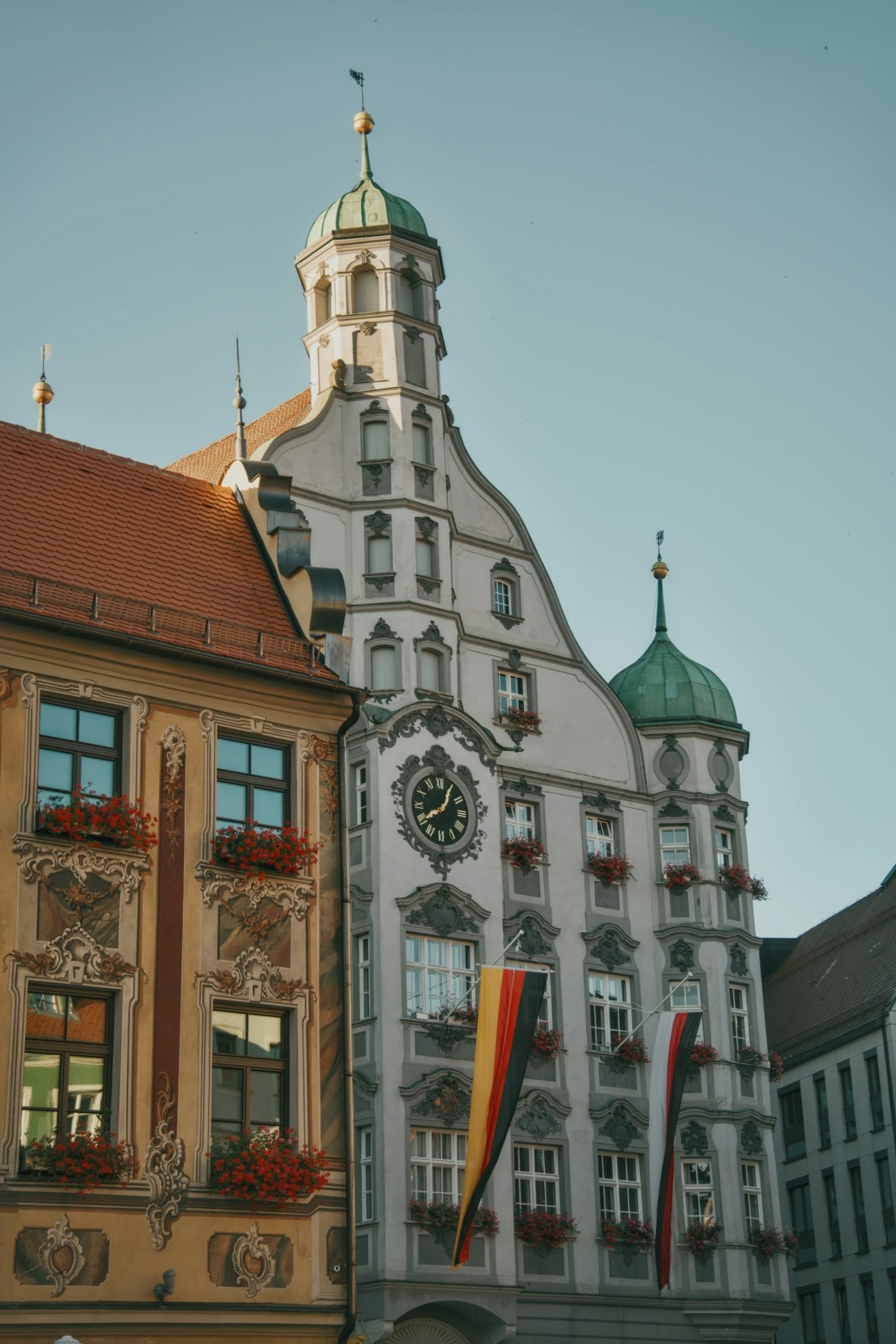
Memmingen is a small historical town in the south of Germany, which is especially interesting with a combination of medieval architecture, ancient city fortifications, museums and traditions of Swabia. The historical center has preserved the character of the old imperial city: here you can see the town hall, guild and patrician houses, towers, gates, churches and the remains of the city wall.
Historic center. The main reason to visit Memmingen is its compact Old Town. Here it is convenient to walk, going from square to square and considering the colorful facades, old houses and small streets. For self-examination, there are two designated routes: Red passes through the main historical sights, and Green - along the city wall and fortifications.
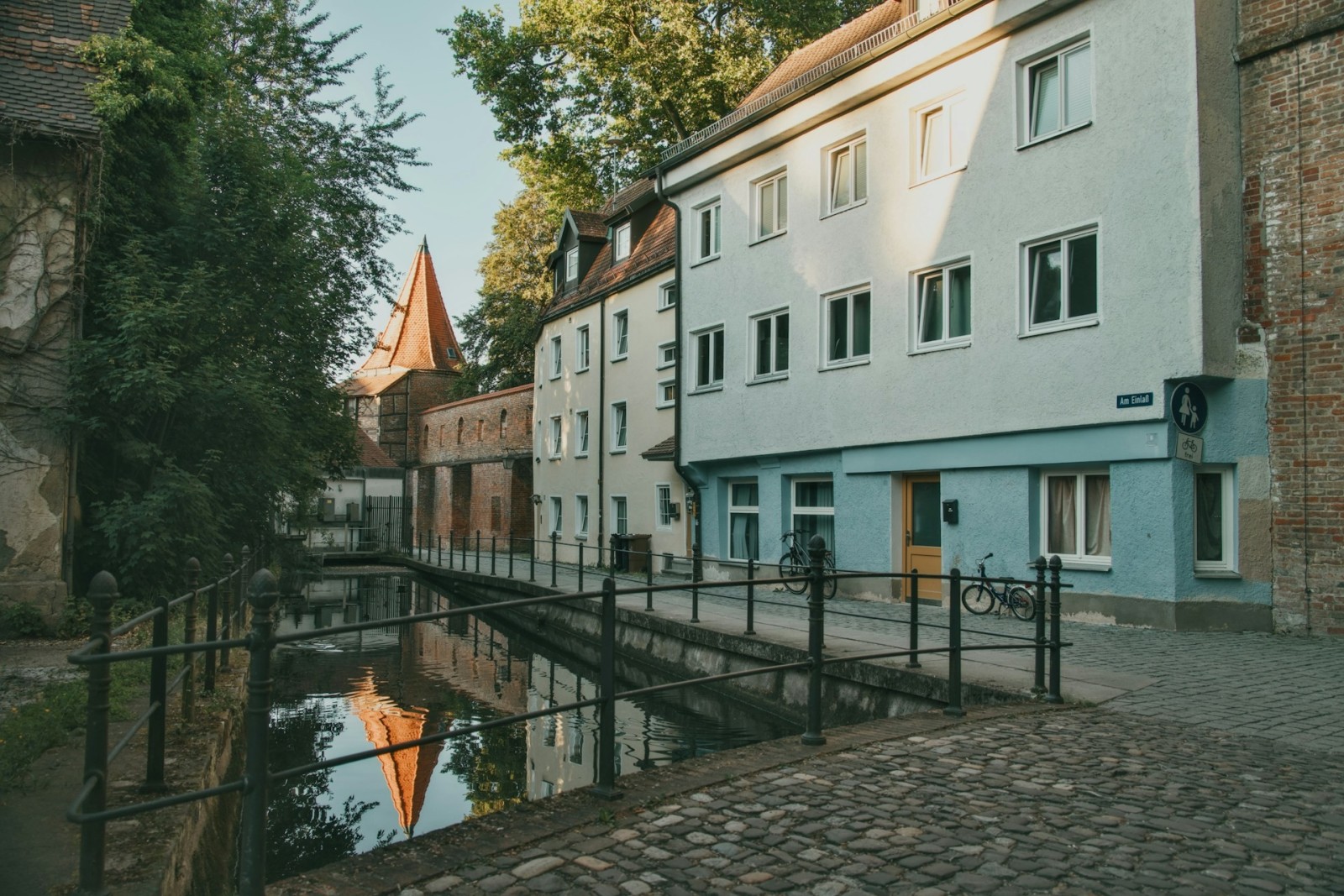
medieval walls and towers. One of the visiting cards of the city is the preserved system of fortifications. The city wall with gates and towers is considered the largest historical monument of Memmingen. Of particular interest is the ancient covered defensive passage in the Kohlschanze area.
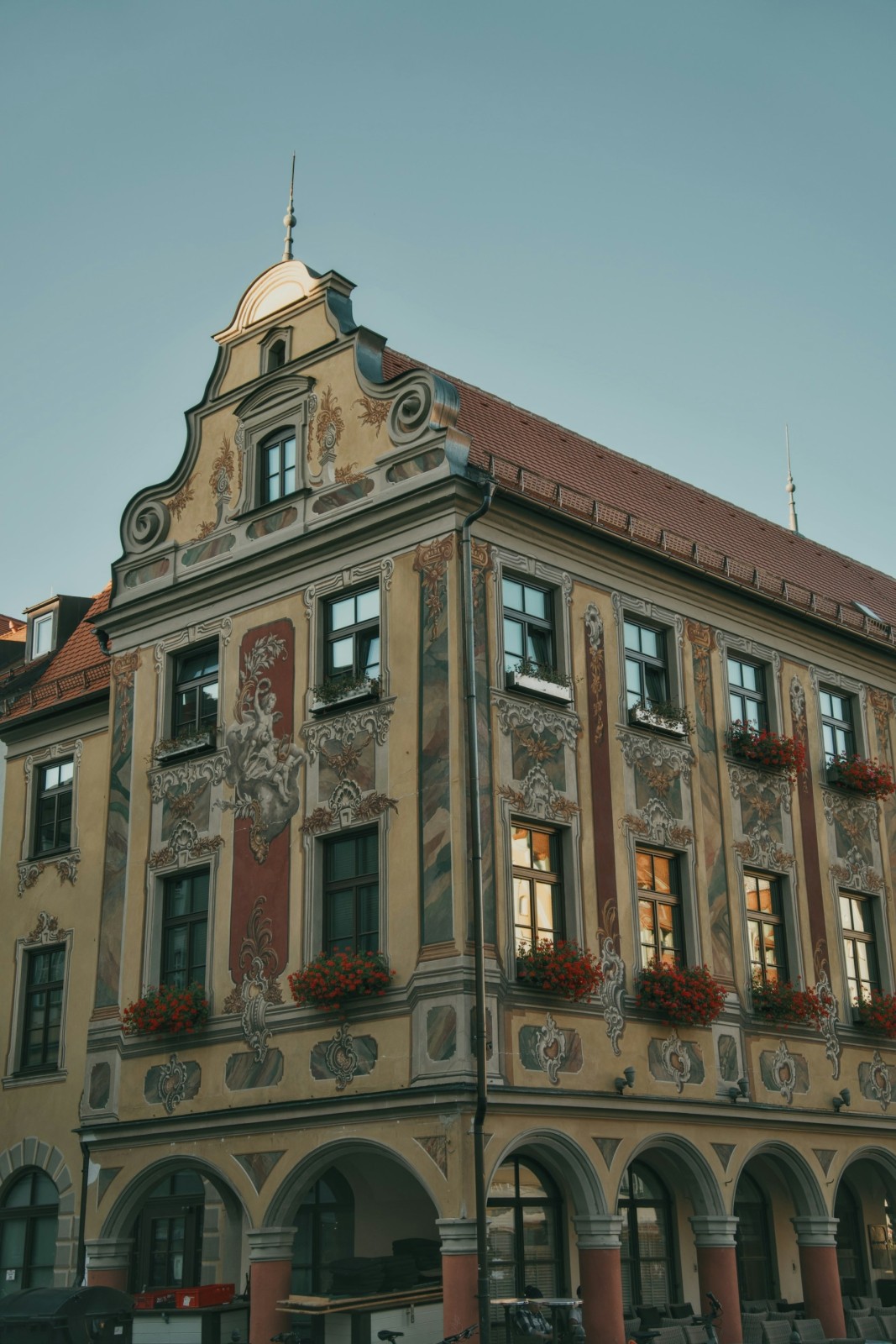
Architecture and atmosphere. The city has preserved buildings of different eras - from medieval houses of artisans to Renaissance and Baroque structures. Among the most notable are the town hall, Steuerhaus, workshop houses and ancient city squares. This combination makes walking interesting even without visiting museums.
History of Freedom and the Twelve Articles. Memmingen has an unusual historical feature: in 1525, the famous Twelve Articles related to the Peasant War were formulated here. Today, the city highlights this heritage and uses the name "City of Freedom Rights." For tourists there are special historical routes to the places of events of 1525.
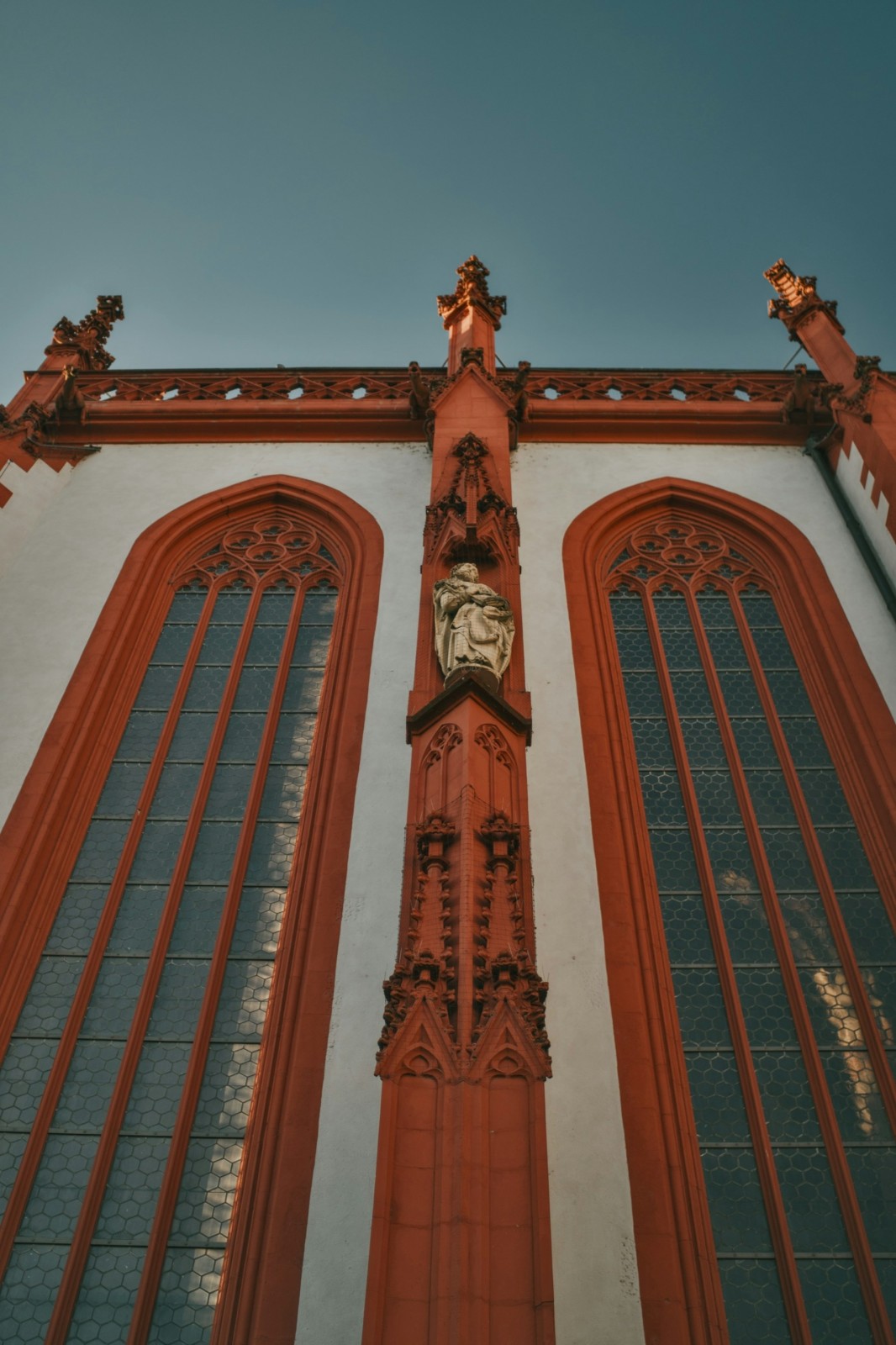
Churches and cultural heritage. Lovers of history and art should pay attention to the Church of St. Martin, Frauenkirche and other historical buildings. Especially interesting are Gothic and late medieval elements, ancient painting and church art.
City stream Stadtbach. Through the Old Town passes a picturesque city stream with small terraces, cafes and restaurants. It creates a special atmosphere and is one of the characteristic features of Memmingen.
Museums and art. Memmingen is not only suitable for walking. The city has museums and art spaces, and some cultural institutions are available free of charge. It is especially convenient that some of the museums are located directly on the route through the Old Town.
Traditional holidays. Urban culture is manifested in ancient holidays and mass events. Especially famous is Fischertag, a traditional fishing festival associated with the city stream. An even larger historical event is the Wallensteinwoche, held every four years with historical processions, performances and reconstructions of the events of the XVII century.
Outdoor recreation. Memmingen is convenient for those who want to combine urban tourism with walks in nature. There is a large network of cycling and walking routes with a total length of about 1,100 km, so the city can serve as a starting point for trips to Lower Swabia and Alga.
Convenience of independent travel. The main attractions are close together and the Old Town is convenient to explore on foot. The railway station is located near the historical center, so a trip to Memmingen does not require complex transport organization.
1. High-level hotels
For a comfortable stay, four-star hotels with spacious rooms, breakfast, parking and additional services are suitable.
Drexel’s Parkhotel is located next to the historic center and the city park. From the hotel it is convenient to walk to medieval buildings, churches and the city wall.
Hotel Engelkeller is a four-star hotel in the center of Memmingen with a restaurant, breakfast, Wi-Fi and parking.
Hotel Weisses Ross is a four-star hotel in a historic building of the XV century in the Old Town, next to the former salt warehouse.
2. Mid-range hotels
For most independent tourists, middle-class hotels are suitable. This is usually a separate room, private bathroom, Wi-Fi and breakfast for an additional fee or included in the price.
Popular options:
Hotel am Schrannenplatz is convenient for living in the central part of the city.
Joesepp’s Hotel am Hallhof is located near the railway station and the historic center.
Joesepp’s Hotel am Schweizerberg is another variant of Joesepp’s chain in central Memmingen.
Hotel Falken Garni is a small city hotel near the central streets.
Hotel Weber am Bach is an option to stay in the historic part of the city.
3. Economy hotels
For a short trip, you can choose a simpler hotel without a large set of additional services. Such options are convenient for tourists who spend most of the day in the city or drive around the neighborhood.
The economical segment and low-cost accommodation include small hotels, Pension Erb, guest houses and some accommodation options outside the historic center. The cost depends on the season, the day of the week and the load of hotels.
4. Guesthouses and boarding houses
Pension and small guest houses are suitable for those who prefer a more peaceful and homely atmosphere. These are usually small rooms, sometimes with breakfast.
Among the options presented by the Memmingen travel portal are Pension Erb, Gästehaus am St.-Ulrich-Platz, Amendinger Ferienzimmer and other small accommodations.
5. Apartments
The apartments are comfortable when traveling for a few days or a week. They usually have a kitchen or kitchen area, so you can cook and save on food.
Memmingen features WIBapartments, Küchlinhaus, Apartment Storchenfärbe, City-Apartment as well as several separate Ferienwohnungs.
1. Town Hall (Rathaus)
One of the main attractions of Memmingen is on the Market Square. The building was built in the Renaissance style in 1589, and the modern appearance of the facade was formed after the restructuring of the XVIII century. There are other historical buildings nearby, so a visit to the town hall is convenient to combine with a walk in the center. Transport: from the train station to the square can be reached on foot in about 10-15 minutes; you can also use the city bus to stops in the central part.
2. St. Martin's Church (St. Martin)
One of the most important Gothic temples of the city. Of particular interest is the large late Gothic choral space and carved choral places. The church tower is one of the best observation points in Memmingen: in good weather, you can even see the Alps from it. Transport: located in the center, so it is most convenient to come on foot from the station or Market Square.
3. House of Seven (Siebendächerhaus)
One of the most recognizable historical houses of Memmingen. Its unusual design with several roof rays is associated with the traditional crafts of the city. It is a typical example of medieval urban architecture. Transport: Located in the Old Town, near other attractions; it is most convenient to explore on foot.
4. City wall and towers
Memmingen has preserved a significant part of the medieval fortifications. The city wall with gates and towers is considered the largest historical monument of the city. Preserved, in particular, Ulm Gate (Ulmer Tor), Western Gate (Westertor), Kempter Gate (Kempter Tor), Powder Tower (Pulverturm) and other elements of the defensive system. Transport: the “Green Road” pedestrian route passes around the historic center, so a car or bus is practically not needed to inspect the fortifications.
5. Ulm Gate (Ulmer Tor)
The medieval city gate of the XIV-XV centuries is one of the best preserved elements of the old system of fortifications. A road passed through them in the direction of Ulm. Transport: located near the Old Town and accessible on foot from the central square.
6. West Gate (Westertor)
Tower gate, the modern appearance of which dates back to the XVII century after the destruction of an older structure during the Thirty Years' War. They fit well into a walk along the city wall. Transport: It is most convenient to walk; from the center the road takes a few minutes.
7. House of Merchants Guild (Kramerzunft)
The historic building is especially important due to the events of 1525. Here, representatives of the peasants of Upper Swabia discussed and drew up the famous “Twelve Articles” associated with the Peasant War. Memmingen is therefore called the “city of freedom”. Transport: located in the historic center and easily included in the pedestrian route.
8. Steuerhaus - Home of the IRS
A historic building based on a late medieval trading house. In the XVIII century it was rebuilt and overbuilt, and later the facade received a decorative design. Together with the Town Hall and other buildings of the square, it forms one of the most expressive architectural ensembles of Memmingen. Transport: located in the center, accessible on foot.
9. Frauenkirche (Frauenkirche)
Historical church, known primarily for wall paintings of the XV century, associated with the family of artists Striegel. This is an interesting place for tourists who want to get acquainted with the religious art of the late Middle Ages. Transport: Located within the Old Town; best visited on foot with other historic sites.
10. Antoniter- und Strigel-Museum (Antoniter- und Strigel-Museum)
The museum is dedicated to the history of the Antonite Order, urban culture and the work of the artist Bernhard Striegel, one of the most famous natives of Memmingen. Transport: Close to St. Martin’s Church, so it is easily included in the central walking route.
11. City Museum (Stadtmuseum)
The museum introduces the history of Memmingen, its trade, crafts, religious life and the development of the free imperial city. It is especially useful for those who want to better understand the history of the Old Town buildings and streets. Transport: located in the historic part of the city and accessible on foot.
12. Kreuzherrnsaal (Kreuzherrnsaal)
Baroque hall of the former monastery complex. It is distinguished by a richly decorated interior with decorative stucco of the Wessobrun school. The city refers it to the notable monuments of the historical and artistic heritage of Memmingen. Transport: Located in the Old Town; it is most convenient to walk.
Memmingen blüht ("Memmingen blooms") - May Spring city holiday and fair with shopping arcades, entertainment and a program for families.
Streetfood-Festival - May. Festival of street food, where you can try dishes of different cuisines and spend time in a festive atmosphere.
Memminger Meile ("Memmingen Mile") - June A major cultural festival of the city, which lasts about three weeks. The program includes concerts, theater, cabaret, exhibitions, street performances and other cultural events.
Stadtfest ("City Holiday") - June. Festive program in the center of Memmingen, usually with music, performances and entertainment in the main square.
Kulturnacht (Culture Night) – June Evening cultural program with concerts, exhibitions, theater events and unusual formats in different places of the city.
Pflasterspektakel - June. Street festival with artists, musicians and open-air theater performances. It is part of the Memminger Meile cultural program.
Kinderfest ("Children's Holiday") - July. One of the main traditional holidays of Memmingen. Students participate in joint songs and dances, after which a festive procession to the stadium grounds takes place.
Fischertag (Fishermen’s Day) is the end of July. The most famous traditional festival of Memmingen. It is associated with the centuries-old tradition of cleaning the city stream Stadtbach. In the morning there is a procession of fishermen, then the fishing from the stream begins, and the winner receives the title of fishing king. The festival has the status of intangible cultural heritage of Bavaria.
Fischertagsvorabend (Evening before Fishermen’s Day) – end of July. On the eve of Fischertag in the Old Town there are performances of drummers and wind bands, a festive announcement of the beginning of the holiday and evening entertainment.
1. Winter - December - February
In winter, Memmingen is usually cool. During the day, the air temperature is about +1 ... +5 ° C, at night most often -3 ... 0 ° C. Snowfall, fog and ice are possible. The water temperature in the rivers and lakes of the region is usually about +2 ... +5 ° C.
Winter is suitable for quiet walks in the historic center, visiting museums and the Christmas market.
2. Spring - March-May
In March, the air warms up to about +8 ... +11 ° C, in April - to +13 ° C. +16 °C, and in May daytime temperatures reach +18 °C. +20°C. At night in spring, usually from +1 to +10 °C.
Water in local water bodies gradually warms up from about +5 ... +7 ° C in March to +14 ... +17 ° C in May. Spring is suitable for walking and touring the surrounding area, especially in the second half of the season.
3. Summer - June - August
Summers are usually warm, but without prolonged intense heat. The average daily temperature is about +21 ... +25 ° C, at night - +11 ... +15 ° C. In some periods, the temperature can rise above +30 ° C.
The water temperature in the lakes of the region in warm periods can reach about +18 ... +23 ° C. For walking, cycling and relaxing in nature, summer is the most comfortable time.
4. Autumn - September - November
In September, the weather is quite warm - about 18. +20°C in the afternoon. In October, usually +12 ... +15 ° C, and in November - about +6 ... +9 ° C. At night, the temperature gradually decreases from +9 ... +11 ° C in September to +1 ... +3 ° C in November.
The water cools from about 17... +19 °C in September to +7 ... +10 °C in November. In autumn there are more cloudy and rainy days.
1. Language of communication
The main language in Memmingen is German. In everyday speech, you can hear the Swabian dialect, characteristic of southern Germany and the Swabian region. In touristic places, hotels, restaurants and train stations, you can usually explain yourself in English.
For a traveler, it is enough to know several German expressions: Guten Tag - "Hello", Bitte - "Please", Danke - "Thank you", Entschuldigung - "Sorry", Sprechen Sie Englisch? "Do you speak English?" In small shops and cafes, it is better to speak German first, even if the conversation continues in English.
2. Respect for local traditions
Memmingen is known for its respect for historical heritage and local customs. Especially noticeable are the traditions associated with Kinderfest and Fischertag, which have a centuries-old history. Fisher tag is held annually at the end of July and is associated with the traditional cleaning of the city stream; during the holiday, residents participate in historic processions and fishing activities.
During city holidays, tourists should be calm about local costumes, processions and ceremonies, do not interfere with participants and follow the instructions of the organizers.
3. Conduct in public places
In Germany, great importance is attached to order and respect for others. Do not talk loudly at night near residential buildings, litter, break queues or go behind fences at historical sites. In the old town, it is especially important to take care of buildings, the city wall and other monuments.
4. Sundays and public holidays
In Bavaria there is a special regime of Sundays and holidays. On such days, some noisy work and activities are limited, and during the main church service near the temples, activities that create unnecessary noise are prohibited.
Therefore, tourists should not plan noisy entertainment near houses or churches early on Sunday morning and official holidays.
5. Photography rules
It is usually possible to photograph attractions, but museums, churches and individual events may have their own restrictions. If a person is photographed close-up, especially during a private event, it is correct to ask permission first.
6. Regulations on transport
In public transport, you must have a valid ticket and comply with the rules of the carrier. Cyclists and pedestrians should be allowed to pass where it is stipulated by traffic rules. You need to cross the road at a traffic light, even if the street seems completely empty.
7. Alcohol and smoking
Alcohol is allowed to adults, but it should be consumed taking into account the specific rules of the place and event. Smoking restrictions apply in catering and other public spaces. You can not create inconvenience to other visitors or violate special prohibitions of the organizers.
8. Documents and compliance
A foreign tourist must have a valid identity document and, if necessary, a visa or other residence permit. Specific requirements depend on citizenship and purpose of travel.
German and Bavarian laws and local Memmingen regulations should be followed. The city has its own official system of municipal regulations and regulations.
Basic words
Hallo - hello - hallo
Guten Morgen - Good Morning by Guten Morgen
Guten Tag - Good afternoon - Guten Tag
Guten Abend - Good Evening by Guten Abent
Auf Wiedersehen - Goodbye to Auf Wiedersehen
Tschüss - for now - chuss
Bitte - please / nothing for bitte
Danke - thank you - danke
Vielen Dank - thank you very much - fillen dank
Entschuldigung - sorry - entschuldigung
Ja - yes - I
Nein - no - nain
Vielleicht - possibly - Fileicht
Gut - good - gut
Hilfe - help - Hilfe
Toilette - toilet - toilet
Bahnhof - Station - Banhof
Bushaltestelle - bus stop - bushaltestelle
Fahrkarte - ticket - Farkarte
Hotel - Hotel - Hotel
Zimmer - Number - Zimmer
Schlüssel - key - schlussel
Restaurant - Restaurant - Restaurant
Speisekarte - menu - Spisekarte
Rechnung - score - rehnung
Wasser - water - vasser
Brot - bread - brot
Kaffee - coffee - cafe
Bäckerei - Bakery - Bakery
Supermarkt - Supermarket - Supermarkt
Phrases for communication
Sprechen Sie Englisch? - Do you speak English?
Ich spreche nur ein bisschen Deutsch. - I speak a little German. - their shprahe noor ain bishan deutsch.
Ich verstehe nicht. - I don't understand. - They're good.
Können Sie das bitte wiederholen? - Can you please repeat it? - Kenen zi das bitte viderholen?
Können Sie bitte langsamer sprechen? Can you talk a little slower?
Wie heißt das auf Deutsch? - What do you call it in German?
Was it bedeutet das? - What does that mean?
Können Sie mir helfen? - Can you help me?
Wo ist die Toilette? - Where's the toilet?
Wo ist der Bahnhof? - Where's the station?
Wie komme ich ins Stadtzentrum? - How do you get to the city center?
Ist es weit? - Is that far?
Können Sie mir den Weg zeigen? Can you show me the way?
At the hotel.
Ich habe eine Reservierung. - I have a reservation. - their habe aine reservirung.
Ich habe ein Zimmer reserviert. - I booked a room. - their habe ain cimmer reservirt.
Auf welchen Namen? - What name?
Wann ist das Frühstück? - When's breakfast? - Van East das Frustyuk?
Is WLAN Kostenlos? - Is Wi-Fi free? - Is it free?
Wo ist mein Zimmer? - Where's my number?
Ich brauche ein Handtuch. - I need a towel. - their brauche ain handtuch.
Ich möchte auschecken. - I want to leave the hotel. - their mehte auscheken.
Cafe and restaurant
Eine Speisekarte, bitte. - Menu, please. - Aine Spisekarte, Bitte.
Ich möchte das bestellen. - I'd like to order this. - their mehte das bashtellen.
Was empfehlen Sie? - What do you recommend? - What do you recommend?
Was wast das? - What is this?
Ist das vegetarisch? - Is it vegetarian? - Yes.
Ohne Fleisch, bitte. - No meat, please. - One fluish, beatte.
Ohne Zucker, bitte. - No sugar, please. - One zukkar, bitte.
Ein Wasser, bitte. - Water, please. - Ain vasser, bitte.
Die Rechnung, bitte. - Check, please. - Di Rehnung, bitte.
Kann ich mit Karte bezahlen? - Can I pay with a card? - Can their mit carte bezaalen?

Food and local products
Alga cheese is one of the most characteristic gastronomic souvenirs of the region. Especially pay attention to cheeses from mountain and hay milk. In Memmingen itself and its surroundings, local cheese makers are sold.
Käsespätzle is a traditional dish of southern Germany made of Spezle and cheese. As a souvenir, it is better to buy not a ready-made dish, but local cheese or a set for cooking.
Allgäuer Käsesuppe is a cheese soup in a jar that can be brought home and heated. It is an unusual regional product made using local cheese and dairy products.
Meat and sausage products - regional sausages, smoked meats and other meat delicacies. In Memmingen, there are local butcher shops and farm outlets selling their own products.
Alga honey is a good natural gift. You can find mountain and meadow honey collected on local apiaries.
Herbal teas and mixtures – products from local herbs, meadow plants and mountainous areas are popular in the region.
Dandelion products - jam, syrups and other products from dandelion flowers belong to the unusual regional products of Algoy.
Pesto from young spruce shoots is an unusual product with a coniferous aroma, which is produced by small regional manufacturers.
Regional drinks - you can pay attention to soft drinks with apple, currants, mint and mountain herbs. For example, Berglimo is made using local mint and hay from mountain meadows.
Local pastries and sweets - a good option will be fresh products of German bakeries, biscuits, gingerbread and regional options for traditional pastries.
Useful and natural remedies
Herbal teas are suitable as an easy and inexpensive gift, especially mixtures with mountain herbs.
Honey and bee products - you can buy natural honey, propolis and other apiary products. They should be treated as food and not as medicines.
Herbal balms and cosmetics – in pharmacies and shops of the region you can find remedies with herbal extracts, mountain plants and essential oils.
Natural cosmetics – creams, soaps and care products with herbs and dairy components can be a practical souvenir.
Cold pressed oils – the region produces a variety of vegetable oils, including the unusual redhead oil (Leindotteröl), which refers to local regional products.
Souvenirs
Magnets and postcards with Memmingen are the easiest option with images of the old town, town hall, city gate and other attractions.
Souvenirs with the symbols of Fischertag are especially interesting during the famous city festival of fishermen. You can find products with images of fishing themes and symbols of the festival.
Products with Algoy symbols - mugs, textiles, wooden products and other gifts depicting mountains, cows, alpine landscapes and regional symbols.
Ceramics and handmade products – small plates, mugs, cups and decorative items are well suited for a gift.
Wooden products are small figurines, kitchen utensils and decorative items in the traditional South German style.
Regional kitchen accessories - shapes and devices for cooking spetsle, wooden spoons, cutting boards and other practical things.
1. Documents
To travel, you must have a valid passport or other document entitling you to enter Germany. For citizens of countries with a visa-free regime, the document must be valid for at least another 3 months when leaving Germany and be issued no more than 10 years ago. In some cases, the border may be asked to confirm the purpose of the trip, the availability of funds for stay and the ability to return home.
If a citizen requires a Schengen visa, it must be obtained before the trip. Documents are best stored in a safe place, and a copy of the passport and insurance – separately or electronically.
2. Health insurance
For a tourist trip, it is recommended to obtain medical insurance valid in Germany. It is desirable that it cover emergency medical care, hospital treatment and medical transportation or return to the homeland if necessary. The German Foreign Ministry also recommends that travelers have health insurance with repatriation coverage.
3. Emergency services phones
112 – ambulance and fire service. The room works around the clock and free of charge from a mobile phone and a fixed network.
110, police.
116117 - Medical service on duty for situations where help is urgently needed, but there is no threat to life.
For severe trauma, loss of consciousness, severe shortness of breath, suspected heart attack or other condition that poses an immediate threat to life, call 112.
4. Mobile communications
There are four main mobile networks in Germany:
Telekom
Vodafone
Telefónica (o2)
1&1
Many low-cost operators use the infrastructure of these networks. The quality of the coverage may vary depending on the location, so it is useful to check the coverage of the selected operator before traveling.
In Memmingen, mobile communication is usually available without problems, however, in trips outside the city and in the countryside, there may be differences in signal quality.
5. City security
Memmingen is generally suitable for a quiet independent journey. Basic precautions are standard in Germany: keep an eye on documents and wallets, do not leave valuables unattended and do not keep all money and bank cards in one place.
Special attention should be paid to things at the station, on public transport and during major city holidays, when there are significantly more people in the center.
6. Traffic rules
Pedestrians should cross the street at pedestrian crossings and at the permission signal of the traffic light. When riding a bicycle, it is necessary to use the paths intended for this and follow the rules of movement.
On the roads of Germany, it is especially important to consider cyclists and public transport, and when crossing the street do not count only on the absence of cars nearby.
7. How long can you stay in Germany without leaving?
For nationals of countries who are allowed short-term visa-free entry into the Schengen area, the standard limit is no more than 90 days in any period of 180 days. This includes days of stay in the entire Schengen area, not just in Germany.
This means that you cannot spend 90 days in Germany, then briefly travel to another Schengen country and get a new term again - days of stay continue to be counted under the 90/180 rule.
Longer residence requires appropriate grounds and residence permits, such as study, work or other statutory purposes.
Create a query and local guides will offer you the best options

