Independent tourism and recreation in Oldenburg Historical information about the city of Oldenburg The history...
The history of Oldenburg dates back almost a thousand years. The city originated on an important crossing of the Junte River and gradually developed from a fortified settlement and the residence of the counts into the capital of the duchy, and then into the modern cultural, university and economic center of northwestern Germany. Oldenburg was first mentioned in writing in 1108, and received city status in 1345.
1. The oldest settlements and the appearance of the fortress
The history of the territory of modern Oldenburg began long before the first written mention. Archaeological finds show that the settlement existed here already in the VII-VIII centuries. It arose on an elevated site near the Junte River, not far from a convenient crossing point.
The location was very favorable: the land routes between Bremen, Westphalia and Frisia intersected here, and the river provided the possibility of transporting goods. Thanks to this, agriculture, crafts and trade gradually developed.
Around the XI century, a large fortified system known as Heidenwall was created near the modern central part of the city. Archaeologists date its construction approximately 1032-1042 years. Presumably, the fortification controlled the crossing of the Junta and protected an important route.
2. First mention of Oldenburg
In 1108, the name of the settlement first appears in a written source in the form of Aldenburg, which can be translated as "Old Fortress" or "Old Castle".
The document mentions Count Egilmar von Oldenburg, associated with the local count dynasty. It was from the name of the fortress that the name of the city, and later the entire historical Oldenburg region, was derived. At the same time, historians are not completely sure whether the mention of 1108 referred to the fortress on the site of the modern castle or to an earlier fortification a few kilometers from the current center.
In the XII century the counts of Oldenburg strengthened their position. Near the castle gradually formed a settlement of merchants and artisans, the market and the first city quarters.
3. Medieval trading city
In the XII-XIII centuries Oldenburg gradually turned into an important trading point. Its position between the interior of northern Germany and Frisia allowed local merchants to trade grain, cattle, fish, salt and handicrafts.
The first markets are documented since the XIII century. In 1234, market rights were already fixed, and since 1254, the trade agreements between Oldenburg and Bremen are known. In 1310, the city had its own mint.
The Junte River was of particular importance. In 1383, the Stau marina was first mentioned, which became an important point for river trade. Thanks to this, Oldenburg was connected not only with land trade routes, but also with river transport.
4. Obtaining City Rights in 1345
One of the most important events in history was January 6, 1345. Count Conrad I granted Oldenburg city rights on the model of Bremen.
This greatly strengthened the situation of the residents. The city received a clearer system of governance, opportunities for holding markets and additional trade privileges. Around the old settlement began to build more powerful fortifications.
There were city walls, gates, moats and an organized system of streets. The city gradually acquired the character of a medieval shopping center. The surviving charter of 1345 is considered one of the main historical documents of Oldenburg.
5. The Oldenburg dynasty and European politics
In the fifteenth century, a small county suddenly acquired great international importance.
A particularly famous representative of the dynasty was Count Christian of Oldenburg. In 1448 he became King of Denmark under the name Christian I. He later received the crown of Norway and was elected King of Sweden in 1457.
Thus, the small North German dynasty was associated with the ruling houses of Scandinavia. This greatly increased the political prestige of the Oldenburg House.
6. XVI century: strengthening of the city
In the sixteenth century Oldenburg experienced a period of defense and administrative development.
The old medieval fortress was gradually rebuilt taking into account new military technologies. In the sixteenth century, artillery became increasingly important, so traditional walls and towers were no longer enough.
At the same time, trade activities continued. The city remained the administrative center of the county, and the castle was the residence of the rulers.
During this period, the historical center was gradually formed, which has survived to the present day in a changed form.
7. The Board of Count Anton Gunther
A particularly important stage was the reign of Count Anton Gunther, who ruled from 1603 to 1667.
Under him, Oldenburg experienced one of the most prosperous periods of its early history. The count made the city his permanent residence and significantly transformed the old fortress.
In 1607 the medieval castle was rebuilt into a more modern residence. Thus appeared the palace complex, which later became one of the main symbols of the city.
Anton Günter also proved to be a cautious diplomat. During the Thirty Years’ War of 1618–1648, he managed to save Oldenburg from the massive destruction that befell many other German cities.
There is a famous episode in 1623: the count made sure that the troops of General Tilly did not go to Oldenburg, giving him valuable horses. Thanks to diplomacy, the territory has avoided many military disasters.
Under Anton Gunther, urban trade also developed. In 1608, it was granted the right to hold the famous Kramermarkt - a large fair, the tradition of which has survived to the present.
8. Transition to Danish rule
After the death of Anton Günther in 1667, the male lineage of the old Oldenburg dynasty was suppressed.
The county came under the Danish crown. For the city, this was the beginning of a less prosperous period. Oldenburg gradually lost the importance of an independent residence, and the attention of the rulers shifted to other possessions.
In the 1670s, the city began to be strengthened again. However, Oldenburg's military importance gradually declined as the old fortifications became less effective.
9. The Great Fire of 1676
One of the most tragic events of the city history was the fire of 1676.
After the lightning strike, the fire quickly spread through the dense wooden building. Nearly 600 houses, a large part of the city, were destroyed.
The disaster changed the face of Oldenburg. After the fire, many buildings had to be rebuilt, and the city gradually began to move from medieval wooden buildings to more sustainable architecture.
10. Oldenburg becomes a duchy
In 1774, an important political change took place: the counties of Oldenburg and Delmenhorst were transformed into the Duchy of Oldenburg.
The city again received the status of an important state center. This created the conditions for a new period of development.
Duke Peter Friedrich Ludwig was particularly influential. Since 1785, he began a large-scale transformation of the city. Old medieval elements were gradually combined with the new architecture of the Classicist era.
11. Classic Oldenburg
The end of the XVIII - the beginning of the XIX century became the time of formation of the characteristic architectural appearance of the city.
New squares, public buildings, palace structures and streets appeared. The city actively applied the principles of classicism - symmetry, strict facades and a more spacious urban layout.
The period of approximately 1785-1829 is considered to be an important era of the classic construction of Oldenburg. It was then that the city began to acquire a more modern and representative look.
In 1786, Landesschparkasse was founded in Oldenburg, an institution that today is called the oldest savings bank in the world.
12. French occupation
At the beginning of the XIX century Oldenburg did not escape the consequences of the Napoleonic wars.
In 1811-1813 the city was under French administration. This period was called the French Time (Franzosenzeit).
The French administration included the territory in the system of Napoleonic Europe, introduced new administrative rules and taxes. For the population, this period was difficult, and after the defeat of Napoleon Oldenburg again came under the rule of his dynasty.
13. XIX century: the return of residence status
After the Napoleonic Wars, Oldenburg again became the center of an independent state.
Of particular importance was Peter Friedrich Ludwig, who moved his permanent residence to Oldenburg. The city once again became a ducal residence.
Under his rule, the construction of representative buildings, the development of streets, parks and public institutions continued. That is why a significant part of the historical center of modern Oldenburg has a calm classical appearance.
In the XIX century, trade, crafts and industry began to develop rapidly. However, industrialization here was somewhat slower than in the largest industrial centers of the Ruhr region.
14. Railways and industrial development
In the second half of the XIX century, the railway became the most important factor of growth.
It significantly improved Oldenburg’s connection with Bremen and other cities in northern Germany. Trade became faster, and businesses were able to deliver raw materials and goods over long distances.
Gradually, industrial enterprises related to the food industry, textiles, glass, mechanical engineering and other industries appeared.
Breweries, food industry enterprises, glass production and spinning enterprises worked in the city. Oldenburg retained a more diverse economic structure and did not become a purely industrial city.
15. Late XIX - early XX century
At the turn of the XIX and XX centuries Oldenburg continued to grow. Education, culture, trade and public administration developed.
In 1905, a large Land Exhibition (Landesausstellung) was held here, combining industrial and commercial expositions with artistic and cultural events.
This was a demonstration of the economic and cultural potential of the region.
16. World War I and the Weimar Republic
The First World War changed the life of the city. As throughout Germany, food shortages, economic hardships and social tensions have emerged.
After the fall of the monarchy in 1918, ducal power ceased. Oldenburg became part of the new republican Germany.
During the Weimar Republic, the city developed as the administrative and cultural center of the region, although the economic crises of the 1920s severely affected the population.
17. Oldenburg during Nazi Germany
After the Nazis came to power in 1933, the political life of the city was completely rebuilt.
As in other German cities, democratic institutions were dismantled, political opponents of the regime, the Jewish population and other groups persecuted.
During World War II Oldenburg was subjected to air raids and military destruction, although the scale of damage was different in different parts of the city.
In April 1945, at the final stage of the war, the city was in a combat zone. The building of the city archive, for example, was subjected to artillery shelling several times.
18. Post-war reconstruction
After the surrender of Germany Oldenburg was in the British zone of occupation.
The city was gradually rebuilt. Its administrative functions, trade, education and services played an important role.
In the postwar decades, the population increased rapidly. Oldenburg has become an attractive place to live due to its relatively quiet economy, university, public institutions and proximity to the North Sea and Bremen.
The urban economy gradually shifted from traditional industries to trade, education, government, services and modern technology.
19. Development of the city in the second half of the XX century
In the 1960-1980s Oldenburg was actively modernized.
New residential areas, roads, shopping facilities and educational institutions appeared. At the same time, the historical center was preserved.
An important development was the creation of one of the first major pedestrian zones in Germany. In 1967, Oldenburg opened a pedestrian zone, which was a notable example of a new approach to the organization of urban space.
At the same time, the city increasingly acquired the status of an educational center.
20. Oldenburg today
Today Oldenburg is one of the notable cities of northwestern Germany and the administrative center of the historical state of Oldenburg.
In its appearance, several historical epochs have been preserved at once:
medieval origin of the city;
Castle and Heritage of the Earls of Oldenburg;
classical architecture of the XVIII-XIX centuries;
Old shopping streets;
buildings of the ducal period;
industrial monuments;
post-war urban architecture.
Oldenburg has long ceased to be only the former residence of the rulers. Today it is a university, cultural and commercial center with a developed urban environment.
The peculiarity of Oldenburg is that its history is almost continuously connected with one dynasty and one region. The name of the city became the name of a whole historical state, and representatives of the Oldenburg dynasty in the XV century even received the crowns of Denmark, Norway and Sweden.
1. Historic centre
The main advantage of Oldenburg is a compact historical center, which is convenient to explore on foot. Here are preserved buildings of different eras: medieval buildings, half-timbered houses, classic architecture and former ducal buildings.
One of the features of the city is a large pedestrian zone - one of the oldest in Germany. On the central streets there are shops, cafes, restaurants and small squares, so a walk around the city is easy to combine with rest and shopping.
2. Oldenburg Castle
Oldenburg Castle is the main symbol of the city and one of its most recognizable buildings. The modern palace arose on the site of an older fortress and is especially associated with the reign of Count Anton Gunther in the XVII century.
Today, the castle houses a museum of art and culture, which presents objects from the Middle Ages to the XX century: paintings, furniture, decorative art and historical materials. The building itself is interesting as an architectural monument, where you can see elements of different periods of European construction.
3. Schlossplatz Square and architectural ensemble
In front of the castle is Schlossplatz, one of the most beautiful squares in Oldenburg. From here it is convenient to start acquaintance with the central part of the city.
Within walking distance are the Old Town Hall, St. Lambert Church and historic houses. This location allows you to see several main attractions in almost one walk.
4. Lappan is the symbol of the city
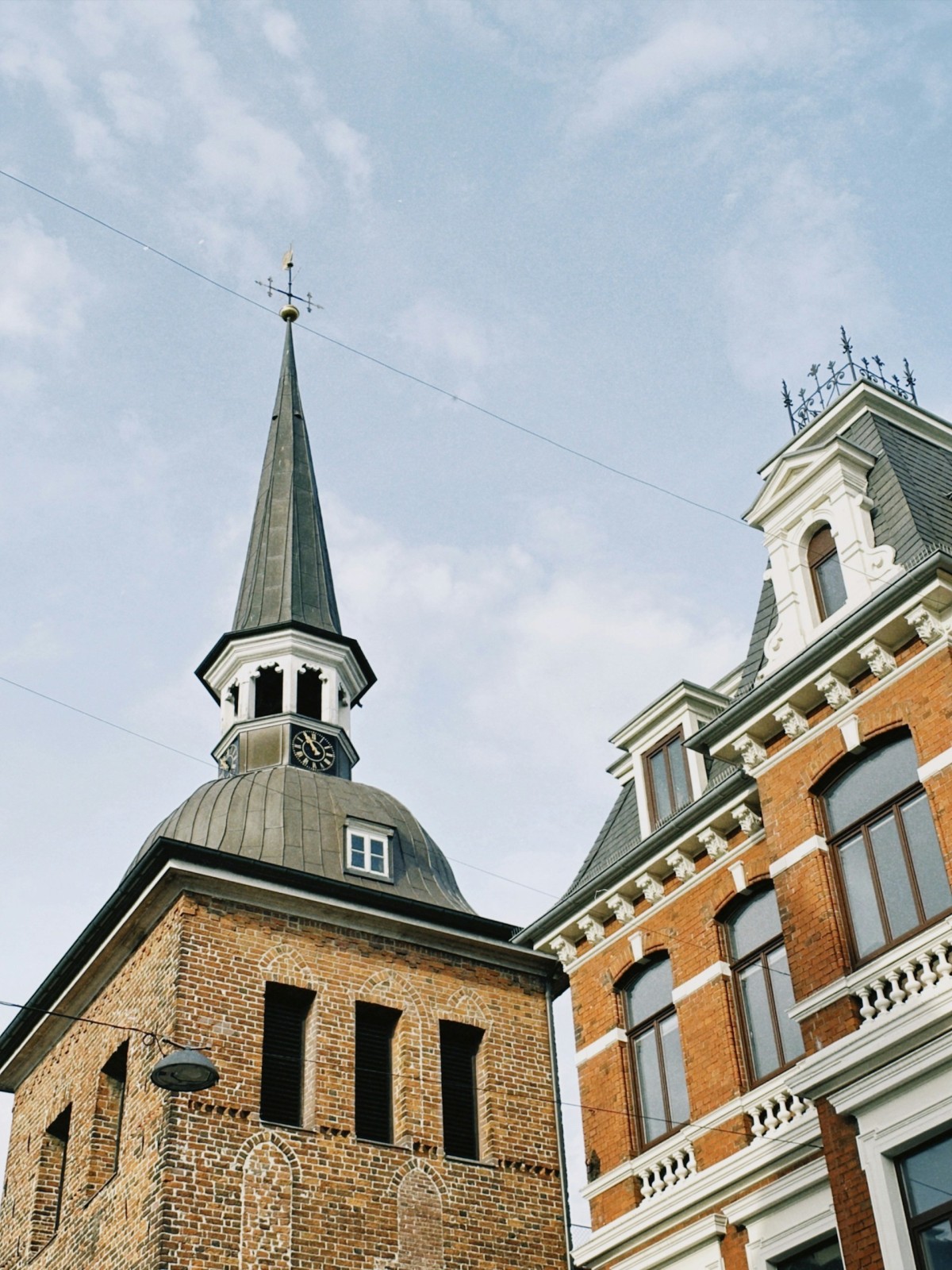
Lappan is a medieval bell tower and one of the main symbols of Oldenburg.
It fits particularly well into the atmosphere of the old town and is a popular starting point for walks. From Lappan, the main pedestrian streets begin, so it is convenient for a tourist to build a route from here.
5. Old houses and urban architecture
In the center there are several remarkable historical houses. One of the most famous is the Degodehaus, built in 1617. Its half-timbered facade shows how Oldenburg was before the large-scale architectural transformations of the XVIII-XIX centuries.
An interesting contrast between the old half-timbered houses and the more strict buildings of the classic period. Thanks to this, even an ordinary walk through the central streets turns into a small tour of the history of the city.
6. Parks and green spaces
Oldenburg is often seen as a very green city. One of the best places to relax is Schlossgarten Oldenburg.
The park is located directly next to the castle and is decorated in the style of an English landscape garden. There are old trees, lawns, ponds and calm walking paths. This is a good place to relax after visiting the center.
In addition to Schlossgarten, the old Wallanlagen is interesting - a green belt around the center, created on the site of former city fortifications.
7. Botanical garden
The botanical garden is suitable for tourists who are interested in plants and quiet walks.
The garden appeared in the XIX century as an educational garden, and today there are various plant areas, medicinal plants, alpinarium and exotic species. In total, about 7000 species of plants are grown here, so a visit is interesting not only in summer, but also in different seasons.
8. Museums and art
Oldenburg is especially interesting for lovers of culture. There are several major museums in the city.
The Horst Janssen Museum is dedicated to the famous German graphic artist, draftsman and illustrator Horst Janssen. Here are his drawings, engravings and other works, as well as exhibitions of graphics and modern art.
The Oldenburg City Museum (Stadtmuseum Oldenburg) tells about the history of the city and the life of its inhabitants. The museum is especially useful for tourists who want to better understand the history of Oldenburg, rather than just viewing the beautiful buildings.
The city is also home to the State Museum of Art and Culture and the State Museum of Nature and Man, making the cultural program easy to expand for the whole day.
9. Theatres and cultural life
Oldenburg is a university and cultural city, so there is quite a rich theatrical and concert life.
A special place is occupied by the Oldenburg State Theatre (Oldenburgisches Staatstheater), where different directions of the stage art are presented.
In the evening, a tourist can combine a walk in the historical center with a visit to a performance, concert or other cultural event.
10. The Junte River and the city port
Another attractive aspect of the city is its connection to water. Oldenburg is located on the Hunte River, which has historically been of great importance for the trade and development of the city.
In the area of the city port, you can walk along the water, look at ships and modern city quarters. This is especially pleasant in the warm season.
11. Oldenburg for bike lovers
The city and its surroundings are well suited for cycling. The smooth relief of northwestern Germany allows you to take long walks without significant ascents.
By bicycle you can quickly leave the center to parks, natural areas and suburbs. Therefore, Oldenburg is interesting not only for classic sightseeing holidays, but also for active tourism.
12. Gastronomic feature of the city
Oldenburg is known not only for its architecture but also for its regional cuisine. A special place is occupied by Grünkohl, a traditional North German leafy cabbage.
In the cold season, a whole local gastronomic tradition is formed around this dish. Therefore, winter and late autumn can be interesting for tourists who want to get acquainted with North German culture.
1. High-level hotels
Oldenburg has several quality hotels with modern rooms, good service, restaurants, fitness areas and additional services. This option is suitable for a comfortable rest for a few days.
HIIVE Oldenburg - Designhotel is a modern design hotel in the central part of the city. A good option for tourists who are interested in modern design, location and a high level of comfort.
Hotel Wieting is a traditional city hotel close to the historic center, castle and pedestrian area. It is convenient to choose for a classic excursion holiday.
2. Mid-range hotels
This is the most common option for tourists. Usually, a separate bathroom, Wi-Fi, breakfast, sometimes parking and additional services are offered.
ALTERA HOTEL is one of the popular options in the center of Oldenburg. The hotel has several types of rooms, including studios and lofts, as well as a fitness area.
Hermes Hotel Oldenburg is a three-star high-level hotel near the station and the center. Among the services are breakfast, Wi-Fi, parking, sauna and places for bicycles.
Best Western Hotel Heide Oldenburg is a three-star hotel with spacious rooms, suitable for both tourists and business trips.
Hotel Sprenz is a small city hotel near the center, convenient for exploring Oldenburg on foot.
3. Budget hotels
For travelers who spend most of the day in the city, you can choose a simpler hotel without a large set of additional services.
B&B Hotel Oldenburg is a practical option for an economical trip. The hotel is close to the centre and is suitable for a short stay. On booking services, it is regularly among the popular low-cost Oldenburg options.
Aspire Oldenburg, Trademark Collection by Wyndham is another option with relatively affordable rates, located near the city center.
In this category you can usually find small rooms with the required minimum: bed, bathroom, Wi-Fi and sometimes breakfast.
4. Apartments and apartments
The apartments are convenient for families, companies of friends and tourists who plan to stay for a few days or longer. The main advantage is the presence of a kitchen or kitchen area, the ability to cook food independently and more space.
Comfort Apartment Oldenburg is an option for independent living with an apartment format.
Boardinghome Oldenburg is a serviced apartment, suitable not only for a short tourist trip, but also for a longer stay.
Downtown Apartments Oldenburg is an option directly in the central part of the city, convenient for tourists who want to be close to shops, cafes and attractions.
5. Guesthouses and small guest houses
Guesthouses are suitable for those who prefer a more homely atmosphere and want to save money compared to a large hotel. In Oldenburg you can find small family options with separate rooms and sometimes shared kitchen.
Pension u. Apartments im Ziegelhofviertel is a small accommodation option in a residential area of the city, combining the format of a boarding house and apartments.
Such options are especially convenient for travelers by car or for those who plan to stay in the city for a few days.
1. Oldenburg Castle (Oldenburger Schloss)
Oldenburg Castle is the main historical landmark of the city. The former residence of the Counts and Dukes is now part of the State Museum of Art and Culture. Inside you can see works of art, historical objects, furniture and expositions related to the history of the region.
Transport: located directly in the center, on Schlossplatz. From the central station you can walk in about 15-20 minutes or take the city bus to stops in the center. From Lappan - about 5-7 minutes walk.
2. Schlossplatz (Schlossplatz)
Schlossplatz is the central square in front of the castle and one of the best places to start exploring the city. Several important historical routes converge here, nearby are the castle, the Old Town Hall, the Church of St. Lambert and other buildings of the historical center.
Transportation: It is most convenient to walk. From the train station - about 15 minutes, from Lappan - a few minutes.
3. Lappan (Lappan)
Lappan is one of the main symbols of Oldenburg and the oldest surviving building of the city. The tower was originally part of a hospital complex with a chapel, and its characteristic brick appearance was formed in the Middle Ages.
Today, Lappan is located right at the beginning of the pedestrian zone and is a convenient starting point for a tour of the center.
Transportation: located in the center. From the station - about 15 minutes walk; also there are numerous city buses.
4. Old Town Hall (Altes Rathaus)
The old town hall is located on the central market square. Its unusual triangular plan makes the building one of the most interesting architectural sights of the city. Together with the Church of St. Lambert and the House of Degode, it forms the historical ensemble of the center.
Transport: It is located in a pedestrian area. From Lappan - about 5 minutes walk, from the castle - also a few minutes.
5. St. Lamberti-Kirche Church (St. Lamberti-Kirche)
The Church of St. Lambert is one of the main historical buildings of Oldenburg and the tallest building in the city. It is located next to the market square and is clearly visible from different parts of the center.
Transport: It is most convenient to walk from Lappan, the Old Town Hall or the castle. From the station - about 15-20 minutes.
6. House of Degode (Degodehaus)
Degodehaus is one of the oldest houses in Oldenburg, built in 1617. Its half-timbered facade clearly shows what urban development looked like before the large-scale restructuring of Oldenburg in the XVIII-XIX centuries.
Transport: located in the center, on the market square. It is better to walk; from Lappan - about 5 minutes.
7. Schlossgarten (Schlossgarten)
Schlossgarten Oldenburg is a large historical park next to the castle. It is created in the style of an English landscape garden and occupies about 16 hectares. There are old trees, ponds, meadows, winding paths and historical garden structures. The park is especially beautiful during the flowering of rhododendrons.
Transport: From the castle - a few minutes walk. From the station - about 20 minutes walk or several bus stops.
8. Wallanlagen
Wallanlagi is a green belt around the historic center, created on the site of former city fortifications. The walk allows you to simultaneously see the remains of the old defensive system and relax among the greenery.
Transport: Several entrances are located directly around the center. From Lappan and the castle you can walk in 5-15 minutes.
9. Powder Tower (Pulverturm)
Pulverturm is a preserved part of the old city fortifications. The tower was used to store gunpowder and today recalls Oldenburg’s military past. It is located near Schlosswal and conveniently joins the route between the castle and the Wallanlagas.
Transport: from Oldenburg Castle - about 5-10 minutes walk. From the station - about 20 minutes on foot or by bus to the central part of the city.
10. Horst Janssen Museum (Horst-Janssen-Museum)
The Horst Janssen Museum is dedicated to the famous German graphic artist Horst Janssen. Here are his drawings, engravings and other works, as well as temporary exhibitions.
Transport: The museum is located in the center, near Lappan. From the main station you can walk in about 10-15 minutes.
11. Oldenburg City Museum (Stadtmuseum Oldenburg)
Stadtmuseum Oldenburg tells about the history of the city itself, its inhabitants and the development of urban culture. The museum is located in a historical complex of buildings and together with the Horst Janssen Museum forms a single museum complex.
Transport: from the station - about 10-15 minutes walk; from Lappan - a few minutes walk.
12. State Museum of Nature and Man
The museum is dedicated to the natural and cultural history of northwestern Germany. Expositions tell about archaeology, nature, swamps, coast, landscapes of the region and human history.
Transportation: located near the historic center. From the castle you can walk in about 10 minutes.
13. Oldenburg Botanical Garden
The botanical garden is a good place for a quiet walk. It was founded in 1882, and today there are about 7,000 plant species, including medicinal plants, alpine flora and exotic trees.
Transportation: located northwest of the center. From the station or castle it is more convenient to go by city bus, and then walk a short distance on foot. By bicycle from the center can be reached in about 10-15 minutes.
14. Old Port of Oldenburg (Hafen)
The city port is located on the Junta River and recalls Oldenburg’s trading past. Here you can walk along the water, look at ships and modern buildings, and in the warm season the area is especially pleasant for evening walks. The tourist route around the city also includes the Junte embankment.
Transport: from the castle - about 10 minutes walk, from the station - about 20 minutes. The area can also be reached by bus.
15. Oldenburg State Theatre (Oldenburgisches Staatstheater)
The theater is an important cultural center of the city. It hosts dramatic and musical productions, operas, ballets and other events.
Transport: located near the center and Wallanlags. From the castle you can walk in about 10 minutes, from the station - about 15-20 minutes.
16. Oldenburg Computer Museum
Oldenburger Computer-Museum is an unusual attraction for tech lovers. The exposition is devoted to the history of personal computers, game consoles and digital equipment.
Transport: The museum is located near the main station, so it is especially convenient to reach by train. From the central station - a few minutes walk.
Oldenburg City Holiday (Oldenburger Stadtfest) is a major musical festival with concerts at several venues, performances of groups, artists and DJs. It is traditionally held at the end of August.
Kramermarkt (Oldenburger Kramermarkt) is the main national holiday of the city with attractions, fairgrounds, concerts, a festive procession, fireworks and family entertainment. The tradition has existed since 1608.
The Oldenburg International Film Festival (Internationales Filmfest Oldenburg) is a well-known festival of independent cinema, where European and international films are shown, meetings with directors and actors are held.
KIBUM is a large exhibition of children’s and youth literature with book presentations, meetings with authors, readings and programs for children and families.
Lamberti-Markt Christmas Market is a traditional festive market in the historic center with decorated houses, craftsmen's products, gifts, sweets and hot drinks.
Concerts and theatrical productions - throughout the year, performances, opera, ballet, musicals and musical performances are regularly held at the Oldenburg State Theatre (Oldenburgisches Staatstheater), concert halls and cultural centers. Oldenburgisches Staatstheater
City markets and fairs – the center regularly hosts farmers’ and grocery markets, flea fairs and small trade events that allow you to get acquainted with local products and everyday life of the city.
Winter
December, January and February are the coolest months. During the day, the temperature is usually about 4-6 ° C, at night it can drop to about 0 ° C and slightly lower. Snow happens, but stable snow cover is rare. The weather is predominantly cloudy, humid and windy.
spring
In March, the air warms up to about 9 ° C, in April - to 13-14 ° C, and in May - to 17-18 ° C. At night in early spring it is still cool, about 2-5 ° C, and by May the temperature usually rises to 8-9 ° C. Spring is suitable for walking, excursions and cycling, especially in the second half of the season.
Summer.
Summer in Oldenburg is moderately warm. In June, the daytime temperature is about 20-21 ° C, in July and August - about 22-23 ° C. In some hot periods, the temperature can rise above 30 ° C, but the heat is unusual for the city. Precipitation is possible in summer, especially in July.
autumn
September is still quite comfortable - about 18-19 ° C in the afternoon. In October, the temperature drops to 13-14 ° C, and in November - to 8-9 ° C. Nights become cool, the number of cloudy and rainy days increases.
Language of communication
The main language in Oldenburg is German (Deutsch). The city uses standard German, which is well understood in all regions of Germany. In touristic places, hotels, restaurants and large shops, many employees also speak English.
Traditions, customs and rules of conduct
Welcome. When meeting, it is customary to say hello and shake hands. In everyday communication, Germans value politeness and referencing “you” – Sie, especially with strangers and employees of organizations.
Punctuality. In Germany, it is customary to arrive on time. For a meeting, excursion or check-in at a hotel, it is better to arrive in advance or at the appointed time.
Lines. In shops, cash desks, museums and other institutions, it is customary to calmly wait for your turn. Do not walk in front of other people unnecessarily.
Silence. Do not talk loudly or play music in residential areas, especially late at night. In Germany, much attention is paid to the tranquility of others.
Purity. Garbage should be disposed of in containers intended for it. In Germany, separate waste collection is common, so different containers can be used in residential areas and hotels.
Traffic rules. In Oldenburg, it is especially important to be attentive to cyclists. It is impossible to walk or park on bicycle paths without the need to walk or park a car. Cross the road should be at permitted places and at a green traffic light.
Bicycles. Oldenburg is a cycling city, so cyclists are full-fledged road users. When renting a bicycle, it is necessary to observe road signs and use cycle paths where it is provided.
Alcohol and smoking. Drinking alcohol should be done where permitted. Smoking in enclosed public spaces, restaurants and other places is regulated by separate rules; it is necessary to pay attention to the relevant signs.
Photo and video. Before taking close-up pictures of people, it is best to ask permission. In museums and some historic buildings, photography may be restricted.
Nature and parks. In parks and natural areas, you can not damage plants, leave garbage or violate established rules. There are special restrictions for certain natural areas. In Oldenburg itself, city rules govern public order, transport, parks, nature and other areas.
Public transportation. The ticket must be purchased and correctly issued before the trip, if it is provided by the transport system. Do not enter transport without a valid travel document.
Shops and pay. In small shops and establishments, it is not always equally convenient to pay with a card, so it is advisable to have a small supply of cash euros.
Personal boundaries. In Germany, personal space is usually respected. It is not customary to ask strangers too personal questions or interfere in their affairs without an invitation.
City rules. In addition to German laws, Oldenburg has municipal rules governing public order, markets, road traffic, the use of public areas, natural areas and other matters.
1. Greetings and polite words
Hallo! Transcription: Hallo!
Guten Morgen! Transcription: Guten Morgen!
Guten Tag! - Hello there! Good afternoon! Transcription: Guten is right!
Guten Abend! - Good evening! Transcription: Guten Abent!
Auf Wiedersehen! - Goodbye! Transcription: Auf Viderzeen!
Tschüss! Transcription: Chuss!
Bitte. - Please. Transcription: Bitte.
Danke. - Thank you. Transcription: Danke.
Vielen Dank! Transcription: Filan Dunk!
Entschuldigung! Transcription: Entschuldigung!
Kein Problem. - No problem. Transcription: Kine is a problem.
Gern geschehen. - You're welcome. Transcription: Garne Geshen.
2. If you speak German poorly
Sprechen Sie Englisch? - Do you speak English? Transcription: Sprahan Z'English?
Ich spreche kein Deutsch. - I don't speak German. Transcription: Their shprahe kine deutsch.
Ich verstehe nicht. - I don't understand. Transcription: They're fine.
Können Sie das bitte wiederholen? - Can you repeat it, please? Transcription: Könen zi das bitte viderholen?
Sprechen Sie bitte langsamer. - Speak more slowly, please. Transcription: Sprahan zi bitte Langzamer.
Können Sie das aufschreiben? - Can you write this down? Transcription: Könen zi das aufsreiben?
Was it bedeutet das? - What does that mean? Transcription: Are you poor?
3. The main words that often occur
Ja-Yes. Yay
Nein - No.
Heute - Tonight. Wait.
Morgen - Tomorrow. Morgen.
Jetzt, now. est
Hier is here. Hir
Dort - There.
Links - Left/left. linx
Rechts - Right/right. Rachts
Geradeaus - Straight. geradeaus
Nähe - Close/Intimacy. Nah.
Weit is far away. white
Eingang - Entrance. Aingang
Ausgang - Exit. Ausgang
Toilette is a toilet. Toilet
Bahnhof is the railway station. Banhof
Haltestelle - Stop. Hultashtall
Fahrkarte is a transport ticket. Farkarte
Stadtzentrum is the city center. State centrum
4. How to ask the way
Entschuldigung, wo ist das Stadtzentrum? - Excuse me, where's downtown? Transcription: Entschuldigung, East das Statcentrum?
Wo ist der Bahnhof? - Where's the station? Transcription: East der Banhof?
Wo ist die Bushaltestelle? - Where's the bus stop? Transcription: In the east bushaltestall?
Wie komme ich zum Schloss? - How do I get to the castle? Transcription: What do you think?
Ist es weit von hier? - Is that far from here? Transcription: East S. White von Hir?
Kann ich zu Fuß gehen? - Can I walk there? Transcription: Can their zu fus geen?
Können Sie es mir auf der Karte zeigen? - Can you show me that on the map? Transcription: Kyonen zi es mir auf der karte zaigen?
Nach links oder nach rechts? - Left or right? Transcription: Nah linx oder nah rachts?
Geradeaus? Transcription: Geradeaus?
For Oldenburg, the words Bahnhof (station), Haltestelle (stop), Schloss (castle), Schlossgarten (palace garden), Innenstadt (town center) and Hafen (port) are particularly useful.
5. At the station and on the bus
Wo kann ich eine Fahrkarte kaufen? - Where can I buy a ticket? Transcription: Do you want to see them?
Wie viel kostet die Fahrkarte? - How much is the ticket? Transcription: Vfil Costet de Farcarte?
Fährt dieser Zug nach Oldenburg? - Is this train going to Oldenburg? Transcription: Fart Disar Zuk nah Oldenburg?
Wann fährt der nächste Zug? - When does the next train leave? Transcription: Van fart der nekste zuk?
Muss ich umsteigen? - Do I need to change seats? Transcription: Mus their umstein?
Wo ist Gleis fünf? Where is the fifth path/platform? Transcription: East Glais Fuenf?
Hält der Bus hier? - Does this bus stop here? Transcription: Halt der boos hir?
Ich möchte zum Stadtzentrum. - I want downtown. Transcription: Their mehte tsum station.
6. At the hotel.
Ich habe eine Reservierung. - I have a reservation. Transcription: Their habe aine reservirung.
Ich habe ein Zimmer reserviert. - I booked a room. Transcription: Their hub ain zimmer roservirt.
Kann ich einchecken? - Can I move in? Transcription: Can their Aincheken?
Wann ist das Frühstück? - When's breakfast? Transcription: Van East das Fruit?
Wo gibt es das Frühstück? - Where's breakfast? Transcription: To die es das fruit?
Gibt es WLAN? - Is there Wi-Fi? Transcription: Gibt es VI-LAN?
Wie lautet das WLAN-Passwort? - What's the Wi-Fi password? Transcription: V Lautet das Vi-Lan Passworth?
Wann muss ich auschecken? - When do I need to move out? Transcription: Van Mus their Auschken?
Können Sie mir helfen? - Can you help me? Transcription: Kyonen zi world Helfen?
7. Restaurant and café
Einen Tisch für zwei, bitte. - Table for two, please. Transcription: Ainen Tish Fuhr Zwei, Bitte.
Ich hätte gern ... - I'd like to... Transcription: Their hatte garn...
Die Speisekarte, bitte. - Menu, please. Transcription: Spiezekarte, bitte.
Was empfehlen Sie? - What do you recommend? Transcription: You're Emphelan Z?
Was wast das? - What is it? Transcription: Ist das?
Ein Wasser, bitte. - Water, please. Transcription: Ayn Vasser, Bitte.
Ein Bier, bitte. - Beer, please. Transcription: Ain bir, bitte.
Ich möchte Kaffee. - I want coffee. Transcription: Their mehte kafé.
Ohne Zucker, bitte. - No sugar, please. Transcription: One Tsukka, Bitte.
Ist das vegetarisch? - Is it vegetarian? Transcription: East das vegan?
Die Rechnung, bitte. - Check, please. Transcription: Dee Rehnung, Bitte.
Kann ich mit Karte bezahlen? - Can I pay with a card? Transcription: Can their mit karte bezalen?
Kann ich bar bezahlen? - Can I pay in cash? Transcription: Can their bar bezalen?
Grünkohl is the main gastronomic acquisition. In traditional cuisine, it is served with potatoes, smoked meat and Pinkel sausage. If it is inconvenient to bring the finished product home, you can choose more compact options.
Gruncol pesto is a convenient souvenir that carries the road well. It can be used for pasta, sandwiches, vegetables and other dishes.
Chocolate and praline with gruncol is an unusual sweet gift with a bright local theme. This is one of the most original options for those who want to bring not ordinary German chocolate, but something from Oldenburg.
Gruncol tea is an unusual gastronomic souvenir associated with the local tradition. Suitable for a gift and takes up little space in luggage.
Mustard and chutney from gruncol is an interesting option for fans of unusual sauces. Such products can be used with meat, sausages, cheeses and bread.
Gruncol in a jar is a more traditional option for those who want to try a local dish at home. There are classic and vegan options.
Local sausages and meat products - in Oldenburg and Lower Saxony, various types of sausages and smoked meats are popular. However, for international travel, it is worth considering customs restrictions on the import of animal products.
Regional cheeses, honey, jam and farm products are a good option for a gastronomic gift. Local markets sell fresh vegetables and fruits, bread, cheese, fish, meat products, tea and other products from regional producers.
Souvenirs with symbols of Oldenburg - postcards, small gift products, objects depicting the historical center, castle or other city attractions. Such souvenirs can be purchased in the tourist shop of the city.
Souvenirs with gruncol are one of the most unusual options: socks, bags, T-shirts and other small things with the image of local cabbage. For Oldenburg, this is not just a jokey souvenir, but a reference to an important urban gastronomic tradition.
Cosmetics and gruncol care products - there are unusual local products, such as soap and skin care products with a theme of gruncol. This is a good option for a small gift if you do not want to carry food.
Local beer and strong drinks - you can pay attention to regional beers and drinks from small producers. When buying alcohol for transportation abroad, it is necessary to take into account the customs regulations of the destination country.
Oldenburg is considered a calm and safe city for tourists. The main risks are not related to serious crime, but to ordinary situations: loss of documents, theft of things, inattention on the road and especially on bicycle paths.
1. Documents required
A valid foreign passport is required for travel. If a tourist requires a visa, it must cover the entire period of the trip. To enter without a visa, the passport must meet the requirements of Germany: on the planned departure date, it must remain valid for at least three months and be issued no more than 10 years ago. Border guards may also be asked to confirm the purpose of the trip, the availability of funds and the ability to return home.
It is advisable to have copies of your passport, visa and other important documents with you or on your phone, and keep the original passport in a safe place.
2. Health insurance
Tourists are advised to obtain medical insurance for travel abroad, which covers treatment and, preferably, transportation to their homeland. To apply for a Schengen visa, tourist health insurance must be valid throughout the Schengen area and for the entire duration of the trip, and the minimum amount of coverage is 30,000 euros.
It is also useful to check in advance whether insurance covers:
emergency medical care;
hospitalization;
treatment of injuries;
transportation to a medical institution;
Return to the home country for medical reasons.
3. Emergency services phones
112 - Ambulance and Fire Service. The number works around the clock from a mobile and landline phone.
110, police.
116117 - medical care for urgent but non-life-threatening conditions, when ordinary medical offices are closed.
If there is an immediate threat to life, serious injury, fire or other emergency, call 112.
4. Mobile communications
There are four main mobile networks in Germany:
Telekom;
Vodafone;
Telefónica (O2);
1&1.
In addition to the operators themselves, there are many virtual operators that use these networks. In Oldenburg, modern mobile communication is generally available, but signal quality can depend on the specific building, area and network load.
For a short trip, it is usually convenient to use your operator’s roaming or tourist eSIM. Before traveling, it is worth checking the roaming conditions and the cost of mobile Internet.
5. How long can you stay in Germany?
For citizens of countries that are allowed visa-free entry into the Schengen area, the standard rule is no more than 90 days in any period of 180 days. These 90 days are counted collectively throughout the Schengen area, not separately for Germany.
If you need to stay in Germany for longer than 90 days, you must have the appropriate basis and permission for a long stay – for example, a national visa or a residence permit.
Create a query and local guides will offer you the best options

