Independent tourism and recreation in the city of Messina Historical information about the city of Messina 1....
1. The oldest settlements and the foundation of the city
The history of Messina begins long before the city itself. The area around the present-day Strait of Messina was inhabited by the ancient peoples of Sicily and later by Greek colonists. Around the VIII century BC. e. immigrants from the Greek Chalkis founded a settlement called Zankle.
The name was associated with the Greek word for sickle: the natural harbor of Messina, along with the peninsula of San Rainer, really resembles a curved sickle. The convenient bay and position on the sea route between the Eastern Mediterranean, Sicily and Southern Italy made the city an important port center from the very beginning.
2. Greek Messen
In the fifth century BC, the city experienced political changes and received the name Messene. Its population was replenished by immigrants from the Greek Messenia and other areas.
Thanks to the port, the city actively participated in trade. It passed the sea routes between Sicily and mainland Greece, as well as between the various Greek settlements of southern Italy.
Messena gradually became one of the notable cities of northeastern Sicily. Its position was both an advantage and a source of constant danger: whoever controlled the city was able to control the most important section of the Strait of Messina.
3. The Mamertinians and the Coming of Rome
In the third century BC. Messen was captured by the Mamertinians, a group of mercenaries of Italian origin. Their presence was one of the reasons for the strengthening of Roman influence in Sicily.
During the First Punic War, the city was in the zone of confrontation between Rome and Carthage. As a result, Messena came under the patronage of Rome and became its ally.
The Romans used the advantageous location of the city and its harbor. In the Roman era, Messana was called Messana. Through trade and shipping, the city continued to develop. Later Roman authors described it as a large and rich city.
4. The Late Roman Empire and Byzantium
After the division of the Roman Empire and subsequent political upheavals, Sicily found itself in the zone of struggle of various states and peoples.
After the fall of the Western Roman Empire, Messan was for some time under the rule of the Ostrogoths, and then passed to the Byzantine Empire. It was the Byzantines who fixed the name Messina outside the city, close to the modern one.
The Byzantine period left a noticeable mark on the religious and cultural life of the city. Messina remained an important port and communication point between Sicily and the eastern Mediterranean.
5. Arab conquest
In the ninth century, Sicily underwent an Arab conquest. Messina was captured by the Arabs in 843.
The city acquired great strategic importance: it was almost at the entrance to the Strait of Messina and was a natural gateway between Sicily and Calabria.
During this period, the city was strengthened and gradually turned into a kind of fortress city. The Arab presence influenced the architecture, agriculture, commerce and culture of Sicily. Some pre-existing Christian buildings were converted for Muslim purposes.
6. Norman Conquest
In the eleventh century, the Norman conquest of Sicily began. In 1061, Messina was taken by the Normans led by Roger I of Otville.
A new period of recovery has begun for the city. The Normans restored Christian institutions and strengthened the importance of the port. Ships headed for the Mediterranean passed through Messina, and during the Crusades its harbor was used by the Crusaders as one of the points of departure to the East.
7. Kingdom of Sicily
In 1130 the Kingdom of Sicily was established. Messina became one of its most important cities and actually shared metropolitan significance with Palermo.
Trade, navigation and crafts developed particularly rapidly. The port provided Sicily with connections to other Mediterranean states.
During this period, the construction and development of many important religious buildings began. One of the main symbols of the city was the Messina Cathedral, the construction of which began under Roger II around the XII century. The cathedral was subsequently repeatedly destroyed and restored, but retained the importance of the main religious monument of the city.
8. Medieval Messina
In the following centuries, Messina remained a major commercial and maritime center. Through its port passed goods, people and ships from different parts of the Mediterranean.
The city has also become an important center of culture and education. His position allowed him to maintain contacts with both the Italian states and the Eastern Mediterranean.
In the XVI century Messina continued to develop as an intellectual center. In 1548, a Jesuit college was founded here, which became an important part of the educational history of the city. Later, on this basis, the university tradition of Messina developed.
9. Revolt against Spain in the seventeenth century
In the XVII century Messina was under the rule of the Spanish monarchy. In 1674, a major uprising against Spanish rule began in the city.
Initially, the rebels hoped to gain the support of France. However, the French intervention failed to change the situation and the uprising was suppressed.
After that, Messina was severely repressed and lost much of her former privileges. This had a negative impact on its political and economic situation.
10. The 1783 earthquake
In the XVIII century, the city experienced one of the first major natural disasters of modern history. In 1783, a series of powerful earthquakes swept southern Italy and Sicily.
Messina suffered severe destruction. Residential neighborhoods, public buildings and port facilities were affected. The city had to be partially rebuilt.
This disaster was a harbinger of an even more devastating earthquake, which will occur in Messina 125 years later.
11. Messina in the nineteenth century
In the nineteenth century, the city gradually regained its economic importance. Due to its port and location near the Strait, Messina remained an important center of trade and maritime communication.
During the struggle for the unification of Italy, the city became involved in the events of Risorgimento. In 1860, after the campaign of Giuseppe Garibaldi and the unification of Sicily with other Italian territories, Messina became part of the emerging Italian state.
In the second half of the XIX century, the city experienced an economic recovery. The port, trade, industry and urban infrastructure developed. During this period, Messina gradually acquired a modern urban appearance.
12. The 1908 disaster
The most tragic page in the history of Messina was the earthquake of December 28, 1908.
At 5:20 am, a powerful earthquake of magnitude about 7.1 occurred in the area of the Strait of Messina. It almost completely destroyed Messina and severely damaged Reggio Calabria. The historic center and coastal part of the city were particularly badly affected.
About ten minutes after the earthquake, a tsunami hit the coast. The waves intensified the destruction and led to new victims among people who survived the first collapses.
The total death toll in the crash is estimated in the tens of thousands; Italian civil protection puts an estimated 80,000 victims. A huge number of buildings were destroyed, and the urban infrastructure was almost paralyzed.
The disaster changed Messina forever. Much of the medieval and early modern construction was lost. After the tragedy, the city began to be built anew, taking into account new requirements for seismic resistance of buildings.
13. Recovery after the earthquake
After 1908, Messina actually turned into a huge construction site.
The urban layout was changed, wider streets and new buildings designed for seismic hazard appeared. Many historic buildings that have been preserved or partially restored have become important monuments of the city’s past.
Messina gradually regained its importance as a major port and trading center. The disaster also had an impact on the development of Italian construction regulations: after the 1908 earthquake, new national requirements related to seismic safety were introduced.
14. World War II
World War II brought new destruction to Messina. Between 1940 and 1943, the city was heavily bombed.
After the 1908 earthquake, Messina had already been largely rebuilt, so the fighting again destroyed some of the buildings and historical heritage. Some monuments had to be rebuilt.
Messina was one example of a city that experienced two massive waves of destruction in less than half a century: an earthquake and military bombing.
15. Post-war Messina
After the war, the city continued to rebuild. The port, transport, trade, education and services developed gradually.
Of great importance was the position of Messina at the intersection of sea and land routes. The strait is the most important link between Sicily and mainland Italy.
At the same time, the city began to develop cultural and tourist potential. Restored monuments, the cathedral, fountains, museums and preserved buildings of different eras have become part of the modern historical center.
16. Messina today
Today Messina is one of the largest cities in eastern Sicily and the most important port center of the island.
The modern city is a peculiar combination of several historical layers. There are traces of the Greek, Roman, Byzantine, Arab, Norman, Spanish and Italian periods. Much of the modern architecture is associated with the restoration of the city after the earthquake of 1908 and the destruction of World War II.
The main historical center is the Duomo Square with the Messina Cathedral and the famous astronomical tower. In modern Messina, the port, embankments, museums, university, areas near the strait and coastal areas are also important.
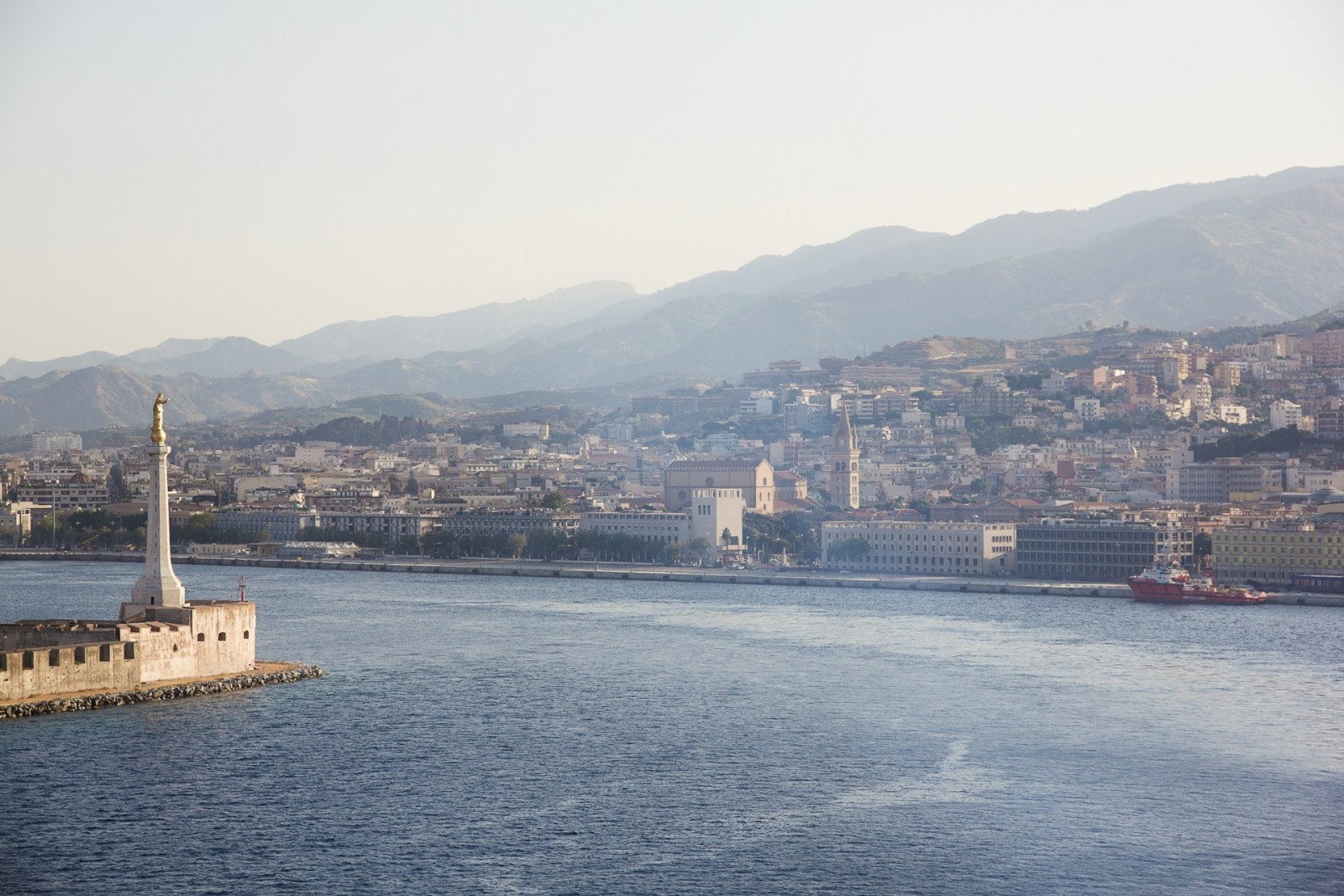
1. Historic centre
The main place to explore Messina is Duomo Square and the surrounding streets. Here is the Messina Cathedral (Duomo di Messina), whose history dates back several centuries. Nearby stands the bell tower with the famous astronomical clock, which every day demonstrates a mechanical representation.
Especially interesting are the fountain of Orion of the XVI century and the fountain of Neptune, associated with the history and mythology of the Strait of Messina. A walk around the center is convenient to combine with a visit to cafes and pastry shops.
2. Strait of Messina and embankments
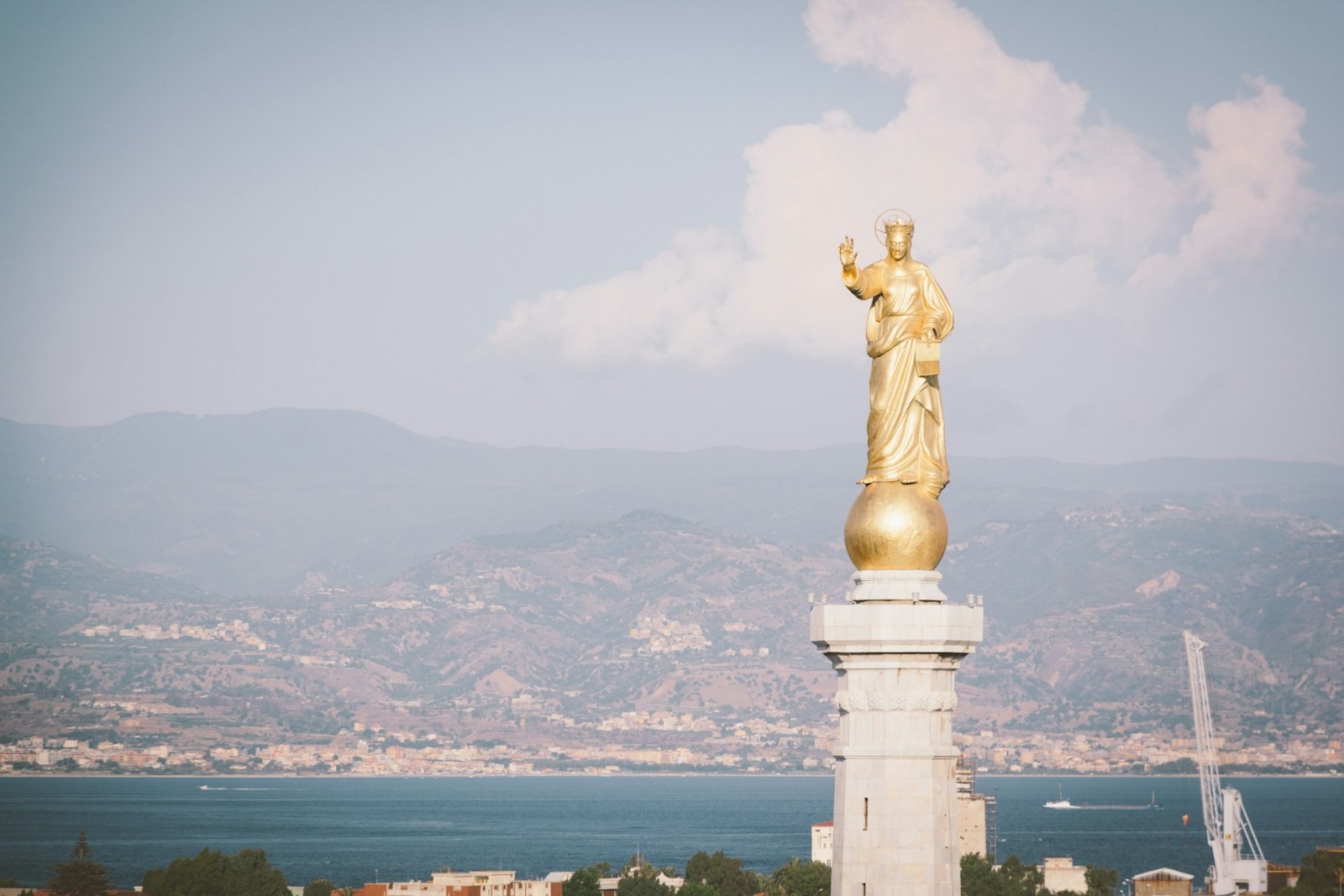
The sea is one of the main features of the city. Embankments allow you to walk with views of the strait, port and passing ships. In the port area is the famous statue of the Madonna, installed at the entrance to the harbor and became one of the symbols of Messina.
For tourists, sea walks, boat trips, observation of the strait and various water activities are available. Of particular interest is the acquaintance with the traditions of fishing, including the ancient swordfishing.
3. Beach holiday
Messina is suitable not only for excursions, but also for a beach holiday. On the coast there are areas with clear water and equipped beaches, and some coastal areas make it possible to combine swimming with walking and visiting local institutions.
Especially interesting are the northern coastal regions and the Lakes Ganzirri region, where the seascape is combined with natural areas.
4. Peloritani Mountains
A great advantage of Messina is the proximity of the Peloritani mountains. Almost next to the city begins a completely different landscape: forests, mountain roads, small settlements, observation decks and pedestrian routes.
From the height, panoramas of the Strait of Messina, the coast of Sicily and Calabria open. Even the Aeolian Islands can be seen in clear weather. Therefore, Messina is interesting not only for lovers of the sea, but also for tourists who prefer walking, nature and active rest.
5. Art and museums
The cultural appeal of the city is associated with the works of famous artists, primarily Antonello da Messina and Caravaggio. The Regional Museum of Messina presents works of art and historical materials that trace the development of the city and Sicily over many centuries.
Of particular interest is the architecture in the style of Liberty - the Italian version of Art Nouveau. After the devastating earthquake of 1908, the city was largely rebuilt, so you can see an unusual combination of historical monuments and architecture of the early XX century. For self-examination of the city, there are special walking routes along the historical center, Liberty architecture, embankment and observation platforms.
6. Sicilian cuisine
Messina is attractive for gastronomic travel. Here you should try the local granite, especially coffee granite with brioche, cannoli with ricotta, dishes of fresh fish and swordfish.
The local cuisine combines seafood with the traditions of Sicily. Therefore, a walk around the city is conveniently complemented by visiting trattorias, cafes and small establishments with traditional dishes.
7. Myths and legends
Messina is especially interesting for those who love ancient history and mythology. The Strait of Messina is associated with the legend of Odysseus and Scyllus and Charybdis. These images are found in urban art, fountains and tourist routes.
Thus, a walk through Messina can be perceived not just as a tour of monuments, but as a trip to a place where ancient myths are closely intertwined with modern life.
8. Traditions and city holidays
Large-scale religious and folk traditions have been preserved in Messina. Especially famous is the procession of Vara, which takes place on August 15 in honor of the Assumption of the Virgin. A huge structure with a height of about 13.5 meters on the central streets move thousands of participants and spectators. The tradition has existed for almost five centuries and is one of the most characteristic events of the city.
1. High-level hotels
In Messina, the choice of large premium hotels is relatively small, but there are several comfortable options with a good range of services.
VMaison Hotel Messina is a boutique hotel with designer interiors, spacious rooms and suites, a restaurant and a roof terrace. Suitable for tourists who are interested in comfort and unusual interior.
Best Western Plus Fontana Falconieri Hotel is a modern hotel option in the central part of the city, designed for travelers who are interested in standard hotel service and convenient location.
2. Mid-range hotels
This is the most practical option for most tourists: a separate room, private bathroom, breakfast and a standard set of hotel services.
The Royal Palace Hotel is one of the city’s famous 4-star hotels. Located in the central part of Messina, next to the railway station and the sea terminal; Duomo Square can be reached on foot.
Hotel Villa Morgana is an option for those who prefer accommodation closer to the coast and the northern part of the city.
Hotel La Residenza is a city hotel suitable for an inexpensive stay for a few days.
Hotel Sant'Elia is a small option in the central part of Messina, convenient for exploring the historical center.
3. Budget hotels
There are enough hotels in Messina aimed at travelers on a limited budget. Usually these are small hotels with a basic set of services, but a convenient location.
Messina41 Hotel is a compact option for living in the city.
Hotel Royal Palace is also often considered among the relatively affordable hotel options of Messina.
Hotel Sant'Elia is suitable for a short stop while traveling in Sicily.
Elysium B&B is an inexpensive version of the B&B format, combining accommodation and breakfast.
4. B&B hotels
The Bed & Breakfast format is especially common in Messina. These are small accommodation facilities, often located in ordinary city buildings. They are suitable for tourists who care more about price and location than the infrastructure of a large hotel.
Among the options are B&B Liberty, RE Vittorio de Luxe, B&B Casa dello Stretto, B&B Crystal, Blu Mediterraneo and Garibaldi R&B Messina. Many such options are close to the center and the main transport routes.
5. Guesthouses
Guesthouses are suitable for independent travelers and couples who need a more homely atmosphere.
Guest House Residence is an option with separate rooms and amenities for independent living.
Vespro Guesthouse Messina is a small guest facility.
Suttasali Guest House - accommodation in a quieter part of the city.
1. The Cathedral of Messina (Duomo di Messina)
The main historical and religious monument of the city. The cathedral was founded in the Norman era, and after earthquakes and military destruction was repeatedly restored. Nearby is the famous bell tower with an astronomical clock. Every day around noon, a complex mechanism sets in motion numerous figures and is accompanied by a musical performance.
Transport: located in the center, on Duomo Square. From the railway station you can walk in about 10-15 minutes. There are also city buses and trams to the square. It is most convenient to visit together with other attractions of the center.
2. Duomo Square (Piazza Duomo)
The main square of Messina and a natural starting point for exploring the city. Here are concentrated the cathedral, the bell tower with an astronomical clock and the fountain of Orion.
Transport: easily accessible on foot from the central areas, from the station and the port. There are city transport stops nearby.
3. Fountain of Orion (Fontana di Orione)
Renaissance fountain of the XVI century, created by the Florentine sculptor Giovanni Angelo Montorsoli. It is located directly next to the cathedral and is considered one of the most interesting works of art of Messina.
Transportation: Walk from the cathedral - a few minutes.
4. Fountain of Neptune (Fontana del Nettuno)
Monumental fountain of the XVI century, dedicated to the sea god Neptune. It is associated with the history of the Strait of Messina and its ancient myths of Scyllus and Charybdis.
Transport: From Duomo Square you can walk in about 15-20 minutes or take public transport.
5. Regional Museum of Messina (Museo Regionale di Messina)
One of the most important museums in the city. The collection features works of art from different eras, including works by Antonello da Messina and Caravaggio, as well as works by other Sicilian and Italian masters.
Transport: The museum is located north of the historic center. From the central part you can get by city bus or tram with a further short walk. The trip takes less time by car, but parking in the city can be difficult.
6. The Church of Santissima Annunziata dei Catalani
One of the most interesting medieval churches of Messina. It survived the catastrophic earthquake of 1908 and preserved elements of Norman architecture.
Transport: It is close to Duomo Square, so it is best to come on foot.
7. Theatre of Vittorio Emanuele II (Teatro Vittorio Emanuele II)
The main historical theater of Messina. The building is associated with the cultural life of the city and continues to be used for performances, concerts and other events.
Transportation: located in the central part of the city. From Duomo Square you can walk in about 10 minutes.
8. Church of Christ the King (Tempio Votivo di Cristo Re)
A monumental temple located on a hill above the city. The main reason to visit it is not only architecture, but also panoramic views of the Strait of Messina, the city and the port.
Transport: Walking from the center is quite cool, so it is more convenient to use a bus or taxi. It takes less time to climb by car; it is easier to stop near a landmark than in the historic center.
9. Port of Messina and the statue of Madonna
The port is one of the most important parts of the city. At the entrance to the harbor is a monumental statue of the Madonna della Lettera, facing the strait. The coast around the port is suitable for walking and watching ferries and vessels.
Transport: You can walk from Duomo Square in about 10-15 minutes. There are also city routes nearby.
10. Messina Embankment
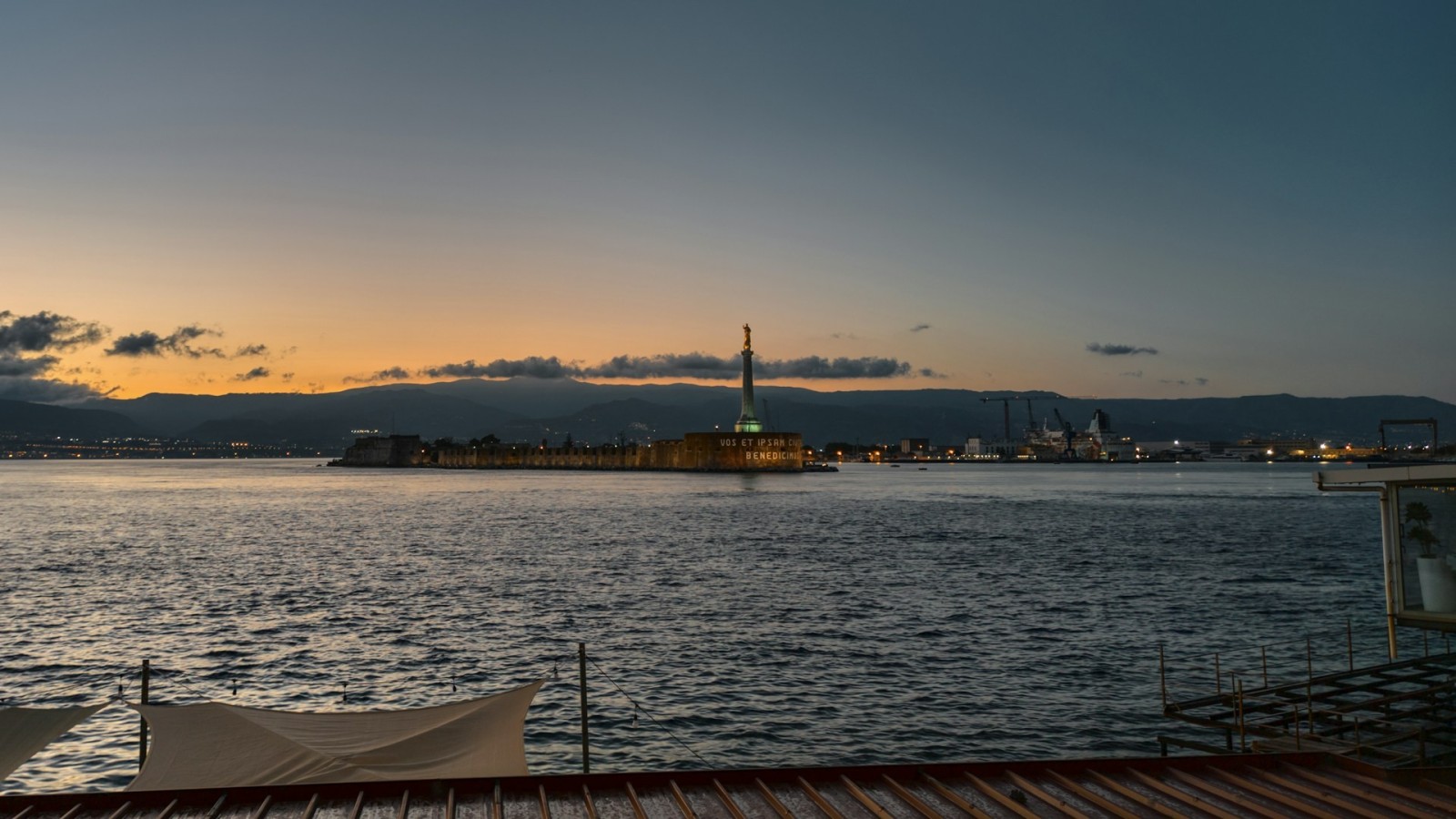
The embankment allows you to see the strait from a close distance and feel the sea atmosphere of the city. It is a good place to walk, especially in the evening.
Transport: Central areas are accessible on foot. To more remote areas, it is better to use a bus or a car.
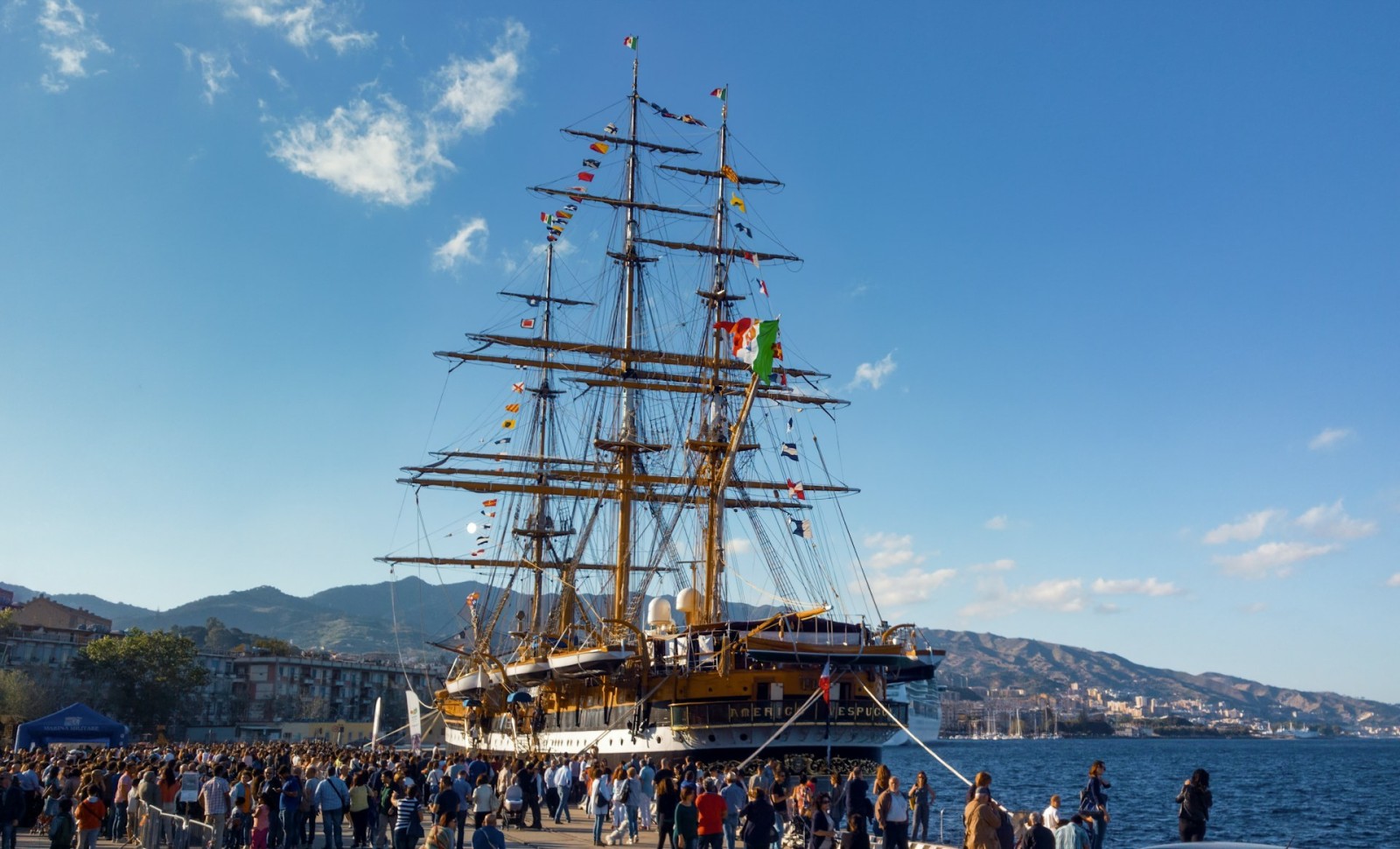
Carnival and Carnival Events (February–March)
During the Italian carnival in Messina are festive processions, costume performances, concerts, children's programs and street entertainment. Dates change each year depending on the Easter calendar.
Easter and Holy Week (March to April)
The city hosts religious services, processions and traditional events, especially notable in the historic center and at the city churches. The Easter period allows you to get acquainted with the religious traditions of Sicily.
Spring cultural events (April-May)
During this period, exhibitions, theater productions, concerts, lectures and events dedicated to the history and culture of Messina are organized. Spring is also suitable for walking around the city and surroundings.
Music Festivals and Concerts (May-September)
In the warm season in Messina there are especially many musical events. Concerts are organized in squares, theaters, outdoor venues and off the coast. In summer there are also coastal clubs with live music and DJ programs.
Historical reconstruction of the landing of don Juan of Austria (August)
The historical reconstruction of the landing of don Juan of Austria (Sbarco di Don Giovanni d'Austria) is being carried out in Messina. The event is dedicated to the return of the commander to the city after the Battle of Lepanto. The program uses historical costumes, marine reconstruction and theatrical scenes.
Festival of Giants Mata and Grifone (August)
The huge figures of Mata and Grifone are one of the symbols of Messina. On the days of city celebrations, their processions are held, accompanied by music, folklore groups and festive events. Especially busy is the week before August 15.
Feast of the Assumption of the Virgin and the procession of Var (August 15)
This is the main traditional event of Messina. Through the central streets of the city there is a huge construction of Vara (La Vara) with a height of about 13.5 meters and a weight of about 8 tons. It is pulled by more than a thousand participants, many of whom go barefoot. The tradition has existed for almost five centuries.
1. Winter - December - February
Winter in Messina is mild and quite humid. During the day, the temperature is usually about 13-15 ° C, at night - 10-12 ° C. Rains during this period are much more frequent than in summer. The sea water remains cool - about 14-17 ° C, so swimming is suitable only for the most seasoned tourists.
Winter is well suited for quiet excursions, walks in the historical center, visits to museums and acquaintance with architecture.
2. Spring - March-May
In spring it becomes much warmer and sunnier. In March afternoon about 14 °C, in April - 17 °C, and in May - about 20 °C. At night, the temperature gradually rises from about 11 to 16 °C.
The sea warms up more slowly: about 15 °C in March, 16 °C in April and almost 19 °C in May. For a beach holiday, the water is still cool, but May is already very comfortable for excursions, walks and trips to Sicily.
3. Summer - June - August
Summers are hot, sunny and dry. In June, the average daily temperature is about 24 °C, in July - 27 °C, in August - about 28 °C. At night, usually 20-24 °C.
The water temperature is rising rapidly: approximately 23 °C in June, 26 °C in July and 26-27 °C in August. August is the warmest month for the sea and one of the most suitable for a beach holiday.
In summer, it is especially good to combine a beach holiday with evening walks in the center and promenades, since it can be hot during the day.
4. Autumn - September - November
Autumn in Messina remains warm for a long time. In September afternoon about 25 ° C, in October - 22 ° C, in November - about 18 ° C. At night, the temperature gradually decreases from about 22 to 15 °C.
The sea remains comfortable for swimming: around 25°C in September, 22–23°C in October and around 20°C in November. September is especially convenient for combining the beach and excursions. In October, the sea is still quite warm, although the likelihood of rain is gradually increasing.
1. Language of communication
The official language of Messina is Italian. In tourist areas, hotels, restaurants, port and large shops you can find employees who speak English. However, outside of tourist destinations, knowing at least a few Italian phrases will make communication much easier.
In everyday life, you can hear features of Sicilian speech and local expressions. In this case, the tourist is enough standard Italian.
2. Attitudes towards locals
Sicilians usually value polite and friendly communication. When addressing strangers, it is better to use the polite Lei form, especially when talking to the elderly, employees of institutions, hotels or shops.
In small cafes and family establishments do not rush the staff: eating in Italy is often perceived as a quiet part of communication and recreation.
3. Food traditions
In Messina, local cuisine is of great importance. Fish and seafood, Sicilian pastries, granite, brioche and other traditional dishes are part of the local culture.
Restaurants do not require only the usual tourist cuisine - interest in local dishes is perceived positively. Italy officially recommends that travelers get acquainted with the local cuisine and support small local establishments and crafts.
4. Coffee culture
Coffee in Messina, like the rest of Italy, is an important part of everyday life. Espresso is usually drunk in small portions, often standing at the bar counter.
Cappuccino and other milky coffee drinks are traditionally preferred in the morning. After eating, many people prefer espresso.
5. Behavior in churches
Messina has a large number of historical temples, so tourists should observe the rules of conduct in religious buildings.
When visiting the church, it is desirable:
dress modestly enough;
Do not speak loudly;
Turn off or transfer the phone to silent mode;
Do not interfere with worship;
Do not take pictures where it is prohibited;
Follow the instructions of the temple staff.
During major religious festivals and processions, believers should be treated with special respect and ceremonies should not be interfered with.
6. Religious holidays
For Messina, Catholic traditions are especially important. One of the most famous city events is the procession of Vara (La Vara) on August 15, dedicated to the Assumption of the Virgin.
During such events, central streets can be filled with people, and traffic is limited. Tourists should take into account the temporary closures of streets in advance and not interfere with the procession participants.
7. Conduct in public places
In the city center, on squares and embankments, the usual rules of public behavior should be observed:
Don't litter.
Do not damage monuments and historical buildings;
Do not create excessive noise in residential areas;
follow the queues;
respect private property;
Don't interfere with pedestrians.
Special attention should be paid to historical monuments: many buildings and works of art have great cultural value.
8. Beaches and sea
On the coast, it is necessary to follow the rules of a particular beach, especially the instructions of rescuers and warnings about the state of the sea.
Do not leave debris behind, damage the beach equipment or go into the water in dangerous weather conditions. In some places there may be restrictions on certain types of recreation.
9. Photography
It is possible to photograph city streets, squares, architecture and most tourist sites, but within museums and churches you should pay attention to special designations.
Do not take close-up photos of people without their consent, especially in situations related to personal life or religious rites.
Military and certain protected objects should not be photographed without permission.
10. Alcohol and smoking
Alcohol is allowed for adults but should be used responsibly. Driving after drinking alcohol is strictly regulated by law.
Smoking is prohibited in many closed public areas. Local restrictions on smoking in specific establishments and public places should also be respected.
11. Rules for renting a car
In Italy, the movement is on the right. Road signs, speed limits and parking rules must be observed.
Special attention should be paid to the ZTL (Zona a Traffico Limitato) areas, which are often found in historical centers. Entering without permission can result in a fine.
In Messina, you should also pay attention to parking: blue lines usually indicate paid spaces, white lines indicate permitted parking according to signs, yellow lines indicate special places.
12. Documents
During the trip it is necessary to have a valid identity document.
For EU citizens, a valid national ID card or passport is usually sufficient. For non-EU nationals, the requirements depend on citizenship; in particular, a passport must meet the requirements of Italy and the Schengen area, and in some cases a visa is required.
It is recommended to have copies of your passport, accommodation reservation, tickets and insurance policy on your phone.
13. Money and shopping
Euros are used in Messina. In shops, supermarkets, hotels and most restaurants, you can pay with bank cards.
In markets and small establishments, it is advisable to specify the method of payment in advance. When buying products, souvenirs and products of local craftsmen, it is worth saving checks.
Customs restrictions apply when importing and exporting certain goods, cash, products, medicines and cultural property. When transporting cash worth EUR 10,000 or more, the declaration rules must be taken into account.
14. Tipping
Tipping in Italy is not mandatory in the same sense as in some countries. If you like the service, you can leave a small additional amount.
In some establishments, there are already separate service fees or other payments in the bill, so it is useful to check the bill before paying.
1. Greetings and polite words
Ciao! Hello! Transcription: Ciao
Buongiorno! - Good afternoon! Transcription: buonjourno
Buonasera! - Good evening! Transcription: buonasera
Buonanotte! - Good night! - Transcription: buonanotte
Arrivederci! - Goodbye! Transcription: Arrivaderchi
Per favore. - Please. Transcription: Peer Favore
Grazie. - Thank you. Transcription: Gracie
Prego. - You're welcome. Transcription: Prago
Scusi. - Excuse me. Transcription: Scoozy
Mi dispiace. - I'm sorry/sorry. Transcription: mi dispyache
Sì. Yes. Transcription: si
No. No. Transcription: but
Va bene. - All right/okay. Transcription: wa bene
2. Phrases for communication
Parla inglese? - Do you speak English? Transcription: Parla Inglese?
Non parlo italiano. - I don't speak Italian. Transcription: non parlo Italiano
Parlo un po' italiano. - I speak a little Italian. Transcription: parlo un in Italiano
Non capisco. - I don't understand. Transcription: non capisco
Può ripetere, per favore? - Can you repeat it, please? Transcription: Puo ripeteré, Peer Favore?
Può parlare più lentamente? - Can you speak more slowly? Transcription: Puo parlare drinking tapemente?
Come si dice in italiano? - How do you say that in Italian? Transcription: Kome chi diche in Italiano?
Che cosa significa? - What does that mean? Transcription: ke goat blueifika?
Dov'è...? - Where it is. .?Transcription: Dove...?
Dove posso trovare...? - Where can I find...?Transcription: Dove posso trovare...?
3. Cafe and restaurant
In Messina, it is especially useful to know the names of local foods and dishes. The tourist portal of Sicily separately marks the local granita, brioche, cannolo, Messinian focacchu and pitone. Messina is also characterized by “mezza con panna” – coffee granite with cream.
Un tavolo per due, per favore. - Table for two, please. Transcription: Un Tavolo Peer Due, Peer Favore
Posso avere il menù? - Can I have a menu? Transcription: Posso avere il manu?
Cosa mi consiglia? - What do you recommend? Transcription: the goat mi consilla?
Vorrei una granita. - I'd like granite. Transcription: Worray una granita
Una granita al caffè, per favore. - Coffee granite, please. Transcription: Una Granite Al Kaffa, Peer Favore
Vorrei una brioche. - I'd like brioche. Transcription: Worray una briosh
Vorrei un cannolo. - I'd like a cannolo. Transcription: Worrei Un Cannolo
Senza zucchero, per favore. - No sugar, please. Transcription: Senza Tsukkaro, Peer Favore
Senza carne. - No meat. Transcription: Sanza Karne
Sono vegetariano / vegetariana. - I'm vegetarian/vegetarian. Transcription: Sono Vegetariano/Vagetarian
Il conto, per favore. - Check, please. Transcription: Il konto, Peer Favore
Posso pagare con la carta? - Can I pay with a card? Transcription: Posso pagare con la carta?
Quanto costa? - How much does it cost? Transcription: quanto Costa?
4. At the hotel.
But una prenotazione. - I have a reservation. Transcription: O una prenotatsyone
Ho prenotato una camera. - I've booked a room. Transcription: about Prenotato una Camera
A che ora è il check-in? - What time is the check-in? Transcription: What about ke ora ora chek-in?
A che ora è il check-out? - What time is the eviction? Transcription: How about a checkout?
La colazione è inclusa? - Breakfast included? Transcription: la colazione en inclusion?
Dov'è la mia camera? - Where's my number? Transcription: Dove la mia chambera?
Avete il Wi-Fi? - Do you have Wi-Fi? Transcription: Avete or Wi-Fi?
Ho bisogno di aiuto. - I need help. Transcription: o bisonho di ayuto
5. On the street and in search of attractions
Dov'è il Duomo? - Where's the cathedral? Transcription: dove or duomo?
Dov'è Piazza Duomo? Transcription: Dove Piazza Duomo?
Dov'è la stazione? - Where's the station? Transcription: Dove la Stacione?
Dov'è il porto? - Where's the port? Transcription: dove or porto?
Come posso arrivare al centro? - How do you get to the center? Transcription: Come posso arrivare al centro?
È lontano? - Is that far? Transcription: Lontano?
È vicino? - Is it close? Transcription: Wichino?
A destra. - Right/right on the side. Transcription: a destra
A sinistra. - Left. Transcription: a synestra
Sempre dritto. - All the time straight. Transcription: Sampre Dritto
1. What to try from local food
Pignolata messinese is one of the most characteristic desserts of Messina. These are small fried pieces of dough, covered with two types of glaze - vanilla and chocolate. If you really want to taste local sweetness, this is one of the first options.
Granite with brioche (Granita con brioche) is a traditional Sicilian version of breakfast or a light snack. In Messina, coffee granite with cream is especially popular, as well as lemon, strawberry, almond and other options. Brioche often has a characteristic top – “tuppo”.
Cannolo messinese is a crispy tube filled with ricotta, often with pistachios or hazelnuts. In Messina, there are also options with chocolate filling.
Arrancino in Messinian (Arancino messinese) is a popular street food made of rice with saffron and meat filling, covered with crispy breading. In Messina, arrancino often has a conical shape.
Focaccia messinese (Focaccia messinese) is a local species of focaccia with escariole, anchovies, cheese and tomatoes. This is a good option for a quick snack.
Python (Pitoni messinesi) - fried pastries with filling, which can often be found in bakeries and fast food establishments of Messina.
Swordfish (Pesce spada) is one of the main products of the cuisine of the Strait of Messina. It is cooked on the grill, used in roulettes, carpaccio and other dishes. Especially characteristic of the local cuisine is the combination of swordfish with traditional Sicilian ingredients.
Swordfish (Pesce spada alla ghiotta) is a dish with swordfish, tomatoes, olives, capers and other fragrant ingredients. This is one of the options worth trying in the city.
Messina brascole (Braciole messinesi) - small meat rolls with filling of breaded crackers, cheese, parsley and spices. There is also a version of swordfish.
Pane cunzato is bread with olive oil and various local additives. Simple, but very characteristic of Sicily food.
Pickled anchovies are another typical snack, especially suitable for fans of fish cuisine.
2. What to bring in from food
Pignolat is convenient to buy as a sweet gift, especially if you choose a well-packed option.
Pistachios and pistachio products - Sicilian pistachios are considered one of the characteristic products of the island. You can buy peeled pistachios, cream, pasta or sweets with pistachios.
Almond cookies are a good option for a small and relatively convenient gift. Traditional Sicilian almond-based pastries tolerate transportation well.
Chocolate from Modica (Cioccolato di Modica) is not a product of Messina itself, but of Sicily as a whole, but it is convenient to bring home.
Valdemone DOP olive oil is a regional olive oil from Messina and northeastern Sicily. It is appreciated for the pronounced aroma of fresh olives and herbaceous notes.
Lemon Interdonato is a local lemon variety from the Messina Ionian zone, which has the status of IGP. As a gift, it is more convenient to look for products from it: jam, candies, lemon sweets or liqueur.
Capers and capers-berries (cucunci) are especially characteristic of the Aeolian Islands, located in the province of Messina. They're sold in salt or marinade.
Sicilian sweets - almonds, torrone, cookies, chocolate, pistachio candies and other products are convenient to take as small gifts.
3. Healthy and Healthy Products
Here it is more correct to talk not about medicines, but about traditional products and care products that can be used as gastronomic or cosmetic souvenirs.
Olive oil is a traditional product of Mediterranean cuisine that can be used in the home diet.
Citrus products - lemon jams, candied fruit, honey with citrus notes and other products based on local fruits.
Herbal teas and fees - in Sicily shops you can find mixtures of local aromatic plants. This is more of a gastronomic souvenir than a medical remedy.
Almonds and almond products are a convenient option for those who want to bring a natural local product.
Soap and cosmetics based on olive oil, citrus fruits and almonds are a light and practical souvenir that does not require special storage conditions.
When buying funds with promises of therapeutic effect, it is better to choose conventional certified cosmetics or pharmacy drugs, rather than buying products of unknown origin as a substitute for medicines.
4. Souvenirs with a Sicilian character
Ceramics are one of the most famous types of Sicilian crafts. You can choose small plates, cups, magnets, decorative tiles or figures.
Ceramic “Moor’s head” (Testa di Moro) is one of the most recognizable Sicilian decorative motifs. A small figure is well suited as a souvenir for the house.
The symbol of Trinacria is the traditional symbol of Sicily. It can be found on magnets, keychains, jewelry and ceramics.
The ceramic pine cone (Pigna) is a traditional Sicilian symbol of wishing health, good luck and well-being.
Coral products are a traditional Sicilian decoration; you can choose small earrings, pendant or bracelet.
Obsidian jewelry is a black volcanic stone characteristic of Sicily and the Aeolian Islands. It is used for pendants, bracelets and other jewelry.
The Sicilian coffa bag is a traditional woven bag that can be both a souvenir and a practical accessory.
Sicilian puppet figures (Pupi Siciliani) are a souvenir associated with the traditional Sicilian puppet theater, included by UNESCO in the list of intangible cultural heritage.
1. Documents required
To travel to Messina, you must have a valid foreign passport or other document entitling you to enter Italy.
For EU citizens, a valid national identity card or passport is usually sufficient.
Citizens of countries requiring a Schengen visa must obtain a visa in advance. For short-term entry, the passport must be issued no more than 10 years ago and valid for at least 3 months after the intended end of the stay in the Schengen area. Confirmation of the purpose of the trip and availability of sufficient funds for the duration of the trip may also be required.
When traveling, it is desirable to have:
foreign passport;
visa, if necessary;
reservation of a hotel or other accommodation;
tickets or confirmation of further route;
a copy of the passport and insurance;
A bank card and a small amount of cash.
Copies of documents should be stored separately from the originals and have electronic versions.
2. Health insurance
It is recommended to obtain tourist medical insurance for the entire period of the trip. It is especially important that it covers emergency medical care, hospitalization and, if necessary, medical transportation.
To obtain a Schengen visa, health insurance is mandatory: the policy must cover emergency medical care, hospitalization and repatriation, and the minimum insurance amount is 30,000 euros.
EU citizens are encouraged to bring a European Health Insurance Card (EHIC). It makes it easier to obtain the necessary public health care, but is not a complete substitute for travel insurance.
3. Emergency services phones
The main number you should remember is 112. This is a free single emergency number in Italy: the operator will contact the relevant service.
Main numbers:
In a serious emergency, it is easiest for a tourist to call 112.
4. Mobile communications
The main mobile operators operate in Italy:
TIM?
Vodafone Italia;
WindTre;
Iliad Italia.
In addition, various virtual operators operate on Italian networks. The official regulator AGCOM lists TIM, Vodafone Italia, WindTre and Iliad Italia among operators working with mobile roaming in Italy.
EU citizens are usually comfortable using their SIM card in Italy under EU roaming rules. For tourists from countries outside the EU, you can check the roaming cost with your operator in advance or purchase an Italian SIM/eSIM.
5. Safety on the streets
In the tourist areas of Messina, it is recommended to observe the usual precautions:
Do not leave your phone and wallet unattended.
Do not keep all money and documents in one place.
in crowded places to monitor the bag and backpack;
Do not display large amounts of cash;
Do not leave things in the car;
use official taxis and proven services;
At night, in unfamiliar areas, stick to well-lit streets.
If you lose your passport or steal documents, you should contact the police and contact the consulate of your country.
6. Road safety
If you plan to rent a car, it is necessary to take into account the Italian traffic rules. Restricted Traffic Zones (ZTLs) operate in the historic center and some other areas, where a car can only enter if the rules are met.
Particular attention should be paid to narrow streets, motorcycles and scooters, intensive urban traffic and parking.
In Italy, the permissible level of alcohol for most drivers is 0.5 g / l of blood, but for drivers under the age of 21, beginners and professional drivers there is a zero limit.
7. Safety at sea and in mountains
When traveling on the coast and swimming, it is necessary to take into account the state of the sea and warnings of rescue services. For walks in the Peloritan Mountains, it is better to use equipped routes and take into account the changing weather.
When traveling to small beaches and remote areas of the coast, it is advisable to check the transport back in advance and the availability of mobile communication.
For an emergency at sea, the number 1530 is valid.
8. How long can you stay in Italy without leaving the country?
For third-country nationals who are allowed a short stay in the Schengen area, the standard rule is no more than 90 days in any 180-day period. This includes days of stay in the entire Schengen area, not only in Italy.
You can’t spend 90 days in Italy, then just move to France or Germany and get another 90 days.
For a stay of more than 90 days, an appropriate basis is required – for example, a national long-term visa or a residence permit.
For EU citizens, the rules are different: they enjoy the right of free movement and residence in EU countries, with separate requirements for long-term residence.
Create a query and local guides will offer you the best options

