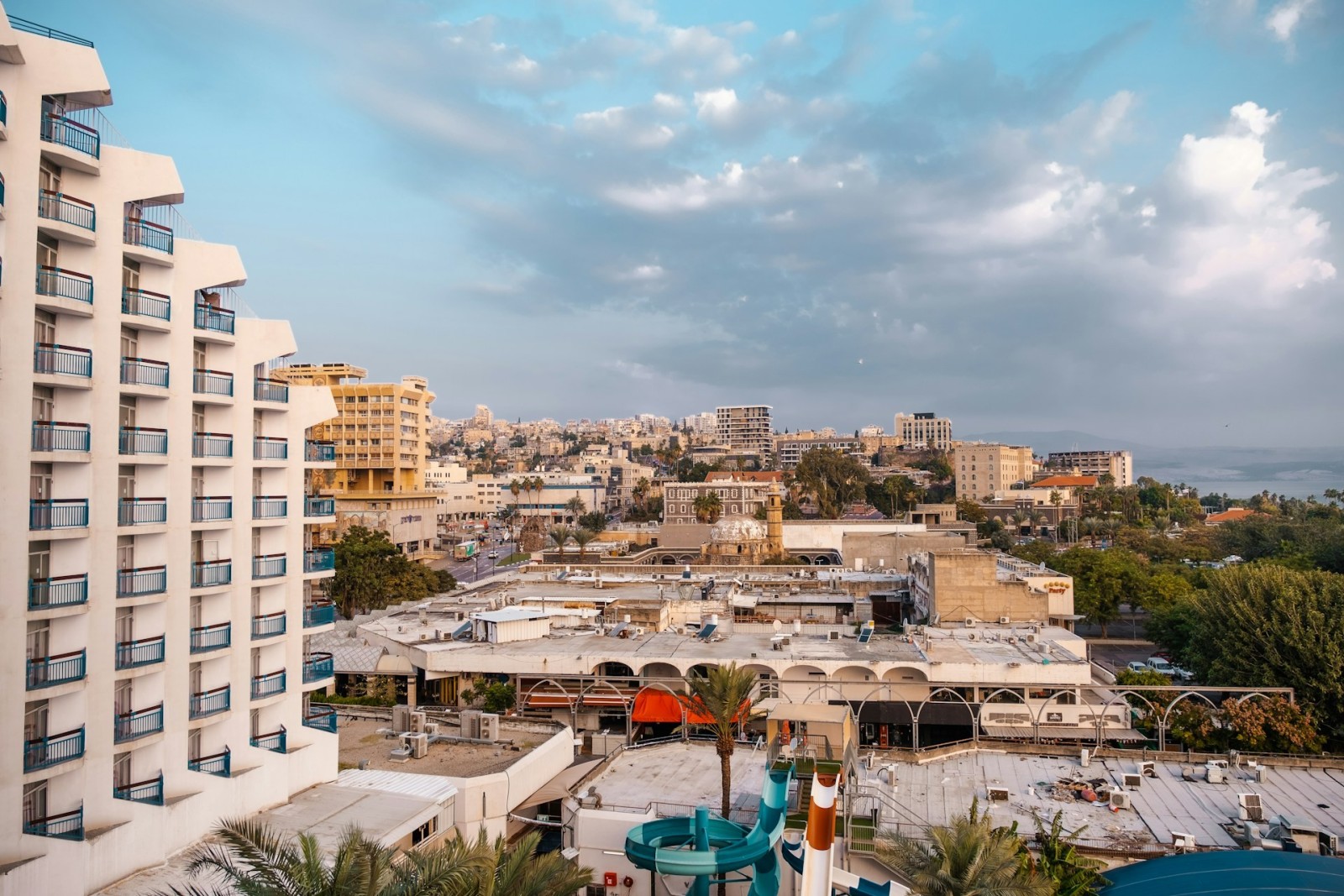
Independent tourism and rest in the city of Tveria
A Brief History of the City of Tiberias
The city of Tiberias, also known as Tiberias, is located on the western shore of Lake Kinneret (Sea of Galilee) in Israel. The history of this city dates back more than two thousand years, and it has important religious and cultural significance for Judaism and Christianity.
Antiquity and Roman Time: The city was founded in 20 BC by the Tetrarch of Galilee Herodes Antipas and was named after the Roman Emperor Tiberius. During this period, Tiberias became the center of Judaism and one of the four holy cities of the Jewish people. Here was built the Synagogue of Antipas, one of the oldest synagogues in the world, preserved to this day.
Byzantium and the Caliphate Period: In the 4th century, the city became an important Christian center. Christian churches and monasteries were built here. In the seventh century, after the conquest of the Arab Caliphate, Tiberias became one of the major cities of Palestine.
Crusaders and Mamluks: In the 12th century, the city was captured by the Crusaders, but soon returned to Muslim control. The city changed hands several times between the Crusaders and the Mamluks.
The Ottoman Empire: In the 16th century, the city became part of the Ottoman Empire. Under Ottoman rule, the city acquired a new look, including the construction of fortresses and mosques.
British Mandatory Palestine: As a result of the collapse of the Ottoman Empire, in 1918 the city came under the control of the British Mandate in Palestine.
Modern Israel: In 1948, after the Israeli War of Independence, the city became part of the new Jewish state. Tiberias has become an important center of culture, tourism and religion in Israel.
Contemporary attractions: Today, Tiberia attracts tourists with its thermal springs, cultural monuments, religious places and a beautiful location near Lake Kinneret. The city is a popular place for pilgrimage and recreation, and is also known for its fishing traditions.
Interesting places for entertainment in Tiberias
Tiberia, located on the shores of the beautiful Lake Kinneret in the Galilee, is a unique and attractive place for tourists. Here are a few things that make the city interesting for travelers:
Thermal springs and resorts: Tiberias is famous for its thermal springs, which have healing properties. Tourists can enjoy spa treatments, relaxation in thermal pools and enrichment of the body with useful minerals. Resorts in the city provide unique opportunities for health and recreation.
Historical and religious attractions: Tiberias is rich in history and cultural heritage. Travelers can visit ancient ruins, including the Synagogue of Antipas, as well as Christian churches and mosques. These places not only immerse in the history of the region, but also create amazing cultural experiences.
Lake Kinneret: The location of the city near Lake Kinneret makes it an ideal place for lovers of outdoor activities. Tourists can engage in fishing, water scooters, and enjoy cruises on the lake, discovering the beauty of the surrounding landscape.
Gastronomic pleasures: Tiberias offers a rich variety of local dishes and culinary traditions. Tourists can enjoy dishes made with fresh local produce and lake delicacies. Restaurants and cafes offer unique taste experiences.
Natural landscapes: The city is surrounded by picturesque natural routes and parks. Tourists can go on hiking or cycling tours, enjoying the green hills and lake views.
Cultural events and festivals: Tiberia organizes various cultural events, festivals and holidays. This provides tourists with the opportunity to immerse themselves in the local atmosphere, get acquainted with traditions and enjoy a variety of art and entertainment.
Combining history, nature and modern comfort, Tiberias provides unique opportunities for travelers seeking to enjoy the diversity of Israel.
In the city of Tiberias, you will be met by private guides and will offer individual, individual excursions.
Options for accommodation in the city of Tiberias
In Tiberias, Israel has a variety of accommodation options, from luxury hotels to more economical options. Here are a few hotel levels and examples of popular places to stay:
Luxury hotels:
The Scots Hotel: Located in the old building of the former hospital school, this hotel offers luxurious rooms, high level of service, its own restaurant and spa treatments. The hotel also offers beautiful gardens.
Leonardo Plaza Hotel Tiberias: Located by the shore of the lake, this hotel offers a wide range of amenities including a swimming pool, restaurants overlooking the lake and luxury rooms.
Medium level:
Galei Kinnereth Hotel: Modern hotel with comfortable rooms, restaurants, swimming pool and spa. Located near the city center and the lake.
Prima Too Hotel: This hotel offers a combination of affordable prices and good amenities. Located in the city center, which is convenient for visiting local attractions.
Economy options and guest houses:
Tiberias Hostel: For budget travelers, it provides a hostel with various accommodation options. Located near the city center.
Vila Europe Tiberias: This option provides apartments with a kitchen, which can be convenient for those who prefer to cook on their own. It is also within reach of tourist destinations.
Rentals:
Airbnb: In Tiberias, there are many offers for rental housing on the Airbnb platform. This can be a great option for those who prefer to feel at home and have more space.
Booking.com: On this site you can find a variety of options for hotels, hostels and apartments with different price categories.
Thus, in Tiberias there are many accommodation options, corresponding to the different budgets and preferences of travelers.
What to see in Tiberias
The city of Tiberias in Israel offers many attractions combining historical, religious and natural heritage. Here are some of the main attractions and information about transport accessibility:
Synagogue of Antipas: This ancient synagogue was built during the time of the Roman ruler Herodes Antipas and is considered one of the oldest synagogues in the world. It is located in the city center and is an important site for Jewish pilgrims.
Roman ruins: Archaeological finds and Roman ruins can be found in various parts of the city, including ancient walls and an amphitheatre.
Mount Tavor Catholic Monastery: Located on Mount Tavor, near Tiberias, this monastery offers beautiful views of the surrounding landscapes and sacred sites.
Al-Omariya Mosque: This mosque, built in the XII century, is one of the oldest mosques in Israel. It has a unique architecture and religious significance for Muslims.
Lake Kinneret: Lake Kinneret itself is an important natural attraction. Tourists can enjoy beautiful views, outdoor activities such as fishing and water sports.
Transport accessibility in Tiberias is provided by various means of transportation:
Car: Tiberias is well connected to the road network, and using a car can be convenient for visiting various attractions in and around the city.
Public transportation: The city is served by buses that connect it to other cities in Israel. Important sites such as the Synagogue of Antipas are easily accessible by public transport.
Taxis and taxi services: Taxis are available in the city and can be used for easy travel within the city and nearby areas.
Thus, Tiberias offers many interesting places to visit, and the transport infrastructure makes them easily accessible to tourists.
Cultural life and activities in Tiberias
Tiberias in Israel is a venue for various events, festivals and festivals throughout the year. Here are a few of them:
Tver Cultural Festival (Tiberias Cultural Festival) This festival, held annually, offers a wide range of cultural events including musical performances, theatre productions, arts and crafts. The festival usually attracts both local and international artists.
Kinneret Music and Dance Festival: This festival, held near Lake Kinneret, is a celebration of dance and music. It includes performances by local and international artists, as well as master classes and dance events.
Lake Kinneret Festival (Kinneret Festival) This festival offers a variety of events including concerts, exhibitions and sports competitions. It is often organized in beautiful coastal areas and provides an excellent opportunity to enjoy culture and nature.
Festival of Lights (Festival of Lights): Although this holiday is not directly associated with Tiberias, Jerusalem, which is not far away, hosts an annual Festival of Light, including illuminations and projections on historic buildings. This event can be interesting for those who live in Tiberias and are ready to visit the neighboring city.
Religious holidays: Events related to religious holidays such as Jewish Passover, Shavuot and others can also be held in Tiberias, which are often accompanied by traditional events and festive services.
The exact dates of events may change each year, so it is recommended to check the current information before traveling. In general, Tiberias offers a variety of opportunities for travelers who want to enjoy the culture and atmosphere of the city.
What weather is suitable for a trip to the city of Tiberias
Tiberias is located in the Galilee region, and its climate is typical of the Mediterranean region. Here is a general characteristic of the climate in Tiberias at different times of the year:
Spring (March-May):
Air temperature: In spring, the average air temperature is moderate and pleasant, usually between 15°C and 25°C.
Water temperature: The water temperature in Lake Kinneret begins to rise, usually between 18°C and 22°C.
Spring is one of the best times to visit when nature blossoms and the warm sun brings comfort.
Summer (June to August):
Air temperature: In summer, the air becomes noticeably warm and dry, the average temperature ranges from 25 ° C to 35 ° C.
Water temperature: The water temperature in the lake reaches its maximum, often exceeding 25°C.
The summer months are popular among tourists, and this time is suitable for outdoor activities on the lake and visiting natural attractions.
Autumn (September-November):
Air temperature: In autumn, temperatures are still quite warm, ranging from 20°C to 30°C.
Water temperature: The waters of the lake remain warm, making this period suitable for swimming.
Autumn is also a favorable time for travel, when there are fewer tourists and the weather remains pleasant.
Winter (December to February):
Air temperature: In winter, the air temperature can be cool, varying from 10°C to 20°C.
Water temperature: The water in the lake becomes cooler, but quite acceptable for those who are not afraid of cool bathing.
Winter can be a quiet period and the weather is usually mild, making it a good time to visit tourists who prefer a quieter time of year.
The best time to visit depends on your preferences. Spring and autumn are often considered optimal when the weather is pleasant and the tourist flow is not as intense as in the summer months.
What traditions and customs should be observed in the city of Tver
In Tiberias, as in Israel in general, the official language of communication is Hebrew. However, many people, especially in touristic places, also speak English, and in a number of places you can find conversations in Arabic and Russian.
When traveling to Tiberias or other parts of Israel, it is useful to consider the following traditions, customs and laws:
Religious traditions:
Israel is a country of many religions, predominantly Judaism, and therefore adheres to a number of religious traditions. For example, Shabbat (Saturday) is considered a sacred day, and at this time many shops and public places may be closed.
Clothes:
When visiting religious sites and holy places, it is important to wear modest clothing. Men are advised to avoid shorts and wear closed shoes. Women often require a dress with their shoulders and knees closed.
Public places:
Smoking is prohibited in public buildings and on public transport. Be sure to follow directions and rules in public places.
Tip:
In restaurants, it is customary to leave a tip, usually in the amount of 10-15% of the bill. In hotels, tips can also be left to room cleaners and other staff.
Safety:
Israel is a country with a high level of security. It is important to follow the instructions of the local authorities and be careful about personal safety.
Transport:
Follow the rules of the road and regulation. In Israel, the steering wheel of the car is on the left, and traffic is on the right side of the road.
Photos:
When visiting religious sites or people, especially in ultra-Orthodox areas, make sure photography is allowed. Some places may require compliance with certain rules.
Water supply:
Israel may face water shortages, so it is important to conserve water. Follow the rules of water use in hotels and public places.
Observance of local traditions and laws promotes respect for the local culture and provides a more comfortable and selfless journey to Tiberias and throughout Israel.
Popular phrases and dialogues with translation for a trip to Tiberias
When traveling to Tiberias and Israel, it is useful to know a few basic phrases and expressions in Hebrew. Here are some words and phrases with translation and transcription:
Greeting:
Shalom: Hello / Hello / Peace.
Transcription: [cha lom]
Please and thank you.
.שה (Bevakasha): Please.
Transcription: [be-wa-ka-sha]
ו ה (Toda): Thanks.
Transcription: [so-yes]
Excuse me:
.יה (Slicha): Sorry/Sorry.
Transcription: [if-ha]
Yes and No:
KEN: Yeah.
Transcription: [Ken]
א (Lo): Nope.
Transcription: [lo]
Understanding and Misunderstanding:
(Ani Lo Mevin): I don't understand.
Transcription: [a-ni lo me-vin]
(Ani Mevin): I understand.
Transcription: [a-ni me-vin]
What's your name?
(Ma Shmecha?) What's your name?
Transcription: [ma she-mha]
(Ma Shmech?) What's your name?
Transcription: [ma sheh-mh]
How much does it cost?
מה או ה? (Kama Zeh Ole?): How much does it cost?
Transcription:
Where is the...? :
(Eifo Nimtza): Where is...?
Transcription:
Assistance:
Ezra: Help.
Transcription: [e-zra]
I'd like to order...:
Ani Rotse Lehazmin: I'd like to order...
Transcription: [a-ni ro-ce le-haz-min]
These phrases will help you interact better with locals and make your stay in Tiberias and Israel easier.
What to try and what souvenirs and gifts to bring from the city of Tiberias
The city of Tiberias and its surroundings in Israel are rich in various unique products, souvenirs and medicinal remedies. Here are a few options to consider when shopping:
Honey from Galilee: Galilee, the region around Tiberias, is famous for its high quality honey. Here produce a variety of varieties of honey, such as floral, orange and eucalyptus. Honey from Galilee is not only tasty, but also known for its medicinal properties.
Olive oil: Israel is known for its high-quality olive oil. There are many olive groves in the Galilee, and local producers offer a variety of olive oil varieties that can be a great souvenir or gift.
Cosmetics based on Dead Sea minerals: The Dead Sea is known for its mineral wealth. Dead Sea mineral-based cosmetic products such as creams, oils and clays are popular as gifts and have a reputation for beneficial effects on the skin.
Traditional Jewish sweets: Bring Israeli sweets as a gift or for your own pleasure. Halva (sweet from tahini and sugar), lokum (Turkish cooked desserts), and a variety of candies and chocolate products are all often found in local shops.
Fragrant spices: Israel is a country with a rich history of cooking, and local spices can be a great gift. Try a variety of mixtures such as zahav, tahini, shaurma, and others to prepare delicious dishes at home.
Traditional jewelry and souvenirs: Israel is known for its traditional decorations, including jewelry depicting the Old City in Jerusalem or symbols of Judaism. It can be beautiful pendants, bracelets, earrings and much more.
Books and souvenirs with religious themes: Jerusalem and the surroundings of Tiberias are rich in religious history. Souvenirs with religious themes, such as books, pictures, crosses and many other items, can be a unique gift.
When choosing souvenirs and products, it is recommended to pay attention to their origin and quality in order to get the best experience and preserve memories of the trip to Tiberias.
What to have for a safe holiday in Tiberias
Holidays in Tiberias and Israel in general are generally safe, but it is important for tourists to follow some precautions and know a few basic safety details.
Documents and insurance:
Passport and visa:
Make sure your passport is valid for at least 6 months after the end date of your trip.
Tourists from most countries require a visa to enter Israel, check the requirements according to your citizenship.
Insurance:
It is recommended to take out insurance that covers medical expenses if necessary. Israel has high-quality medical care, but insurance can be useful in case of emergency.
Emergency services:
Police:
Telephone: 100
Ambulance:
Telephone: 101
Fire service:
Telephone: 102
Mobile operators:
Mobile communication is widely available in Israel. You need to check the compatibility of your mobile device in advance and resolve the roaming issue. There are several major mobile operators in Israel, such as Cellcom, Pelephone and Partner.
Duration of stay without leaving the country:
Tourists are usually allowed to stay in Israel for up to 90 days without having to leave. If you need to stay longer, contact your local Home Office for appropriate information and permission.
General safety recommendations:
Take precautions: Avoid suspicious situations and places, especially at night.
Stay up to date: Follow the news and current situation in the country.
Do not leave valuables in the car: If you rent a car, make sure that valuables don’t stay in it.
Follow the rules of the road: If you are driving, knowing and following local traffic rules is important.
Be careful about the environment: If you have any questions or concerns, contact your local travel industry or consular services.
Observance of basic security measures will ensure a calm and pleasant stay in Tiberias and Israel.
The site uses a web analytics service
Yandex Metrics
using cookie technology to make the site more convenient. You can prevent the processing of cookies in the browser settings.
Details in Privacy policy.


 Guide license