
 Tatiana Nechaeva
Independent tourism and recreation in Magnitogorsk Historical information about the city of Magnitogorsk Magni...
Magnitogorsk is one of the most famous industrial cities in Russia, which arose during the period of Soviet industrialization. Its history is inextricably linked with the richest deposits of iron ore of Mount Magnitnoy, the construction of the Magnitogorsk Metallurgical Combine, the development of Soviet metallurgy and the heroic history of the rear during the Great Patriotic War. Today, the city is one of the largest industrial centers of the Southern Urals.
The first settlements and the fortress Magnetic
The history of the territory of modern Magnitogorsk began long before the appearance of the city. In the XVIII century, the southeastern border of the Russian Empire passed here. In 1743, the Magnitnaya fortress was founded, which was part of the system of fortifications of the Orenburg border line.
Nearby was a mountain, called Magnetic due to its unusual magnetic properties and rich deposits of iron ore. Gradually around the fortress was formed village Magnitnaya, whose inhabitants were engaged in agriculture, cattle breeding and various crafts.
Opening of fields
Already in the XVIII-XIX centuries, Mount Magnetic attracted the attention of geologists and researchers. It was studied by specialists of various scientific expeditions, trying to determine the size and quality of iron ore deposits.
Especially active research was conducted in the late XIX - early XX century. Famous geologists and engineers participated in the study of the deposit, and in the early XX century the first attempts were made to assess the industrial reserves of ore.
Huge reserves of high-quality ore have made the area of Magnetic Mountain extremely attractive for future industrial construction.
The first projects of the metallurgical plant
The idea of building a large metallurgical enterprise near Magnetic Mountain appeared before the revolution, but it was not possible to implement it then.
The first serious project of the plant appeared in 1918, but the Civil War stopped its implementation. After the war, interest in the field increased, and in the mid-1920s, the Soviet leadership began to develop plans to create a huge metallurgical base in the Urals.
In 1925, it was decided to consider the construction of large metallurgical enterprises as one of the priorities of industrialization. Among the main sites, the territory near the Magnitnoy Mountain was chosen.
Beginning of Magnetostroy
The turning point was 1929. In January, the management of Magnitostroy was created, which was engaged in the construction of the future metallurgical giant.
At the same time, the construction of a railway line began, which was to link the future industrial center with the main railway network. On June 30, 1929, the first train with builders arrived at Magnetic Mountain. This date is today considered the birthday of Magnitogorsk.
Thousands of people began to arrive at the construction site from all over the country. Engineers, metallurgists, builders, workers, Komsomol members, special settlers and prisoners worked here.
Construction of a metallurgical giant
The Magnitogorsk Metallurgical Plant was to become one of the largest enterprises of Soviet industry.
On July 1, 1930, the first blast furnace was solemnly laid, in which about 14,000 workers participated. Construction was carried out with great speed and was accompanied by the use of advanced technologies for that time. Foreign specialists, including American and European engineers, also participated in the design and construction.
The work took place under extremely difficult conditions. Around there was practically no modern urban infrastructure, lack of housing, construction materials, food and equipment.
The first builders lived in tents, barracks, dugouts and temporary houses. At the same time, industrial construction developed much faster than the creation of normal living conditions for the population.
Birth of Magnitogorsk
At the same time a new city was formed. The authorities wanted to create a completely new type of Soviet industrial settlement – a “city of the future” that was unlike the old Russian cities.
In 1930, the construction of capital housing began. Much attention was paid to the layout of streets, the placement of working quarters, schools, public buildings and industrial facilities.
Famous Soviet architects worked on the design of Magnitogorsk, and then European specialists led by the German architect and town planner Ernst May, a representative of the architectural direction associated with the Bauhaus, were involved in the work.
Thus arose the famous Sotsgorod of Magnitogorsk – one of the most famous examples of Soviet urban planning of the 1930s.
First cast iron
The main event of the early history of the city was February 1, 1932. On this day, the first blast furnace of the Magnitogorsk Metallurgical Combine issued the first cast iron.
This date is considered the birthday of MMK. Moreover, the first Domain was launched in winter, which was an unusual achievement for the world metallurgy of that time.
Soon steel and rolled steel production began. In 1933, the first steel was obtained, and in 1934 the first large rolling mill was launched. Thus, the enterprise quickly turned into a full-cycle metallurgical plant.
Development of the city in the 1930s
In the first half of the 1930s, the population of Magnitogorsk increased rapidly. Along with industry, schools, hospitals, theaters, clubs, shops and sports institutions developed.
In 1931, the Civil Engineering Institute was opened - the future Magnitogorsk State Technical University. In 1932, the first school, theater, cinema and other city institutions appeared.
In 1936, the first tram line was opened. At the same time, the active construction of the city on the right bank of the Ural River began, where a significant part of modern residential Magnitogorsk was subsequently formed.
Transfer of the city to the right bank of the Urals
Initially, the industrial zone and most of the residential development were located on the left bank of the Urals, next to the metallurgical plant.
However, gradually it became clear that further development of the city is more expedient to carry out on the right bank. Here began the construction of new residential quarters, public buildings and streets.
Thus, a characteristic feature of Magnitogorsk was formed - the city is divided by the Ural River into industrial and residential parts. The river is the geographical border between Europe and Asia.
The Great Patriotic War
A special place in the history of Magnitogorsk occupies the period of 1941-1945.
After the beginning of the Great Patriotic War, the city became one of the most important industrial centers of the Soviet rear. The Magnitogorsk plant dramatically increased the production of metal necessary for the military industry.
During the war years, Magnitogorsk metal was used to produce tanks, guns, ammunition, armored steel and other military equipment. According to the tourist portal of the city, every second Soviet tank and every third shell was produced from Magnitogorsk metal during the war.
During this period, Magnitogorsk actually operated in a huge industrial front. Workers worked for many hours, production was rebuilt for military needs, and the city hosted evacuated enterprises and specialists.
Post-war development
After the war, Magnitogorsk continued to develop rapidly.
Large-scale housing and infrastructure growth has begun. Residents of barracks and temporary buildings gradually moved to comfortable apartments.
In the second half of the 1940s, the first city bridge, the Central Passage, was built across the factory pond, linking different parts of the city. Active construction of new residential areas on the right bank of the Urals began.
Magnitogorsk in the 1950s-1980s
In the postwar decades, the city finally turned into a major industrial and cultural center of the Southern Urals.
Developed:
metallurgical production;
engineering;
construction;
energy;
transport;
education;
medicine;
sport;
culture.
Residential neighborhoods expanded, new schools, hospitals, cultural palaces and sports facilities appeared.
During this period, Magnitogorsk acquired a modern urban scale and became one of the largest centers of ferrous metallurgy of the Soviet Union.
Magnitogorsk after the collapse of the USSR
The 1990s were a difficult period for the city. The transition to a market economy was accompanied by economic difficulties, industrial restructuring and changes in the employment system.
However, the city-forming enterprise retained key importance for the economy of Magnitogorsk. The metallurgical industry continued to develop in new economic conditions.
The city gradually began to pay more attention not only to industry, but also to trade, education, sports, tourism and services.
Magnitogorsk in the XXI century
In the XXI century, the city continues to be one of the largest metallurgical centers of Russia. At the same time, its tourist image is changing.
Today, travelers are attracted to:
history of Magnitostroy;
Soviet architecture;
industrial tourism;
Mount Magnetic;
Ural river;
monument "Rear-front";
museums;
theaters;
sports facilities;
ski resort "Bannoye" in the vicinity;
The proximity of the Southern Urals and natural attractions.
A special place is occupied by the industrial heritage of MMK, which remains a city-forming enterprise and one of the symbols of Magnitogorsk.
1. The unique history of the city
Magnitogorsk emerged as a major industrial center in the late 1920s. The city was built almost from scratch around the metallurgical plant, so there are many objects associated with the era of industrialization.
For tourists, this is an opportunity to see the city, whose history was literally created together with the development of Soviet industry.
2. A city on the border of Europe and Asia
The Ural River is traditionally considered the border between Europe and Asia. It passes directly through Magnitogorsk, dividing it into two parts.
The embankment of the Urals is suitable for walking, recreation and photography. It is especially pleasant to visit it during the warm season.
3. Industrial heritage
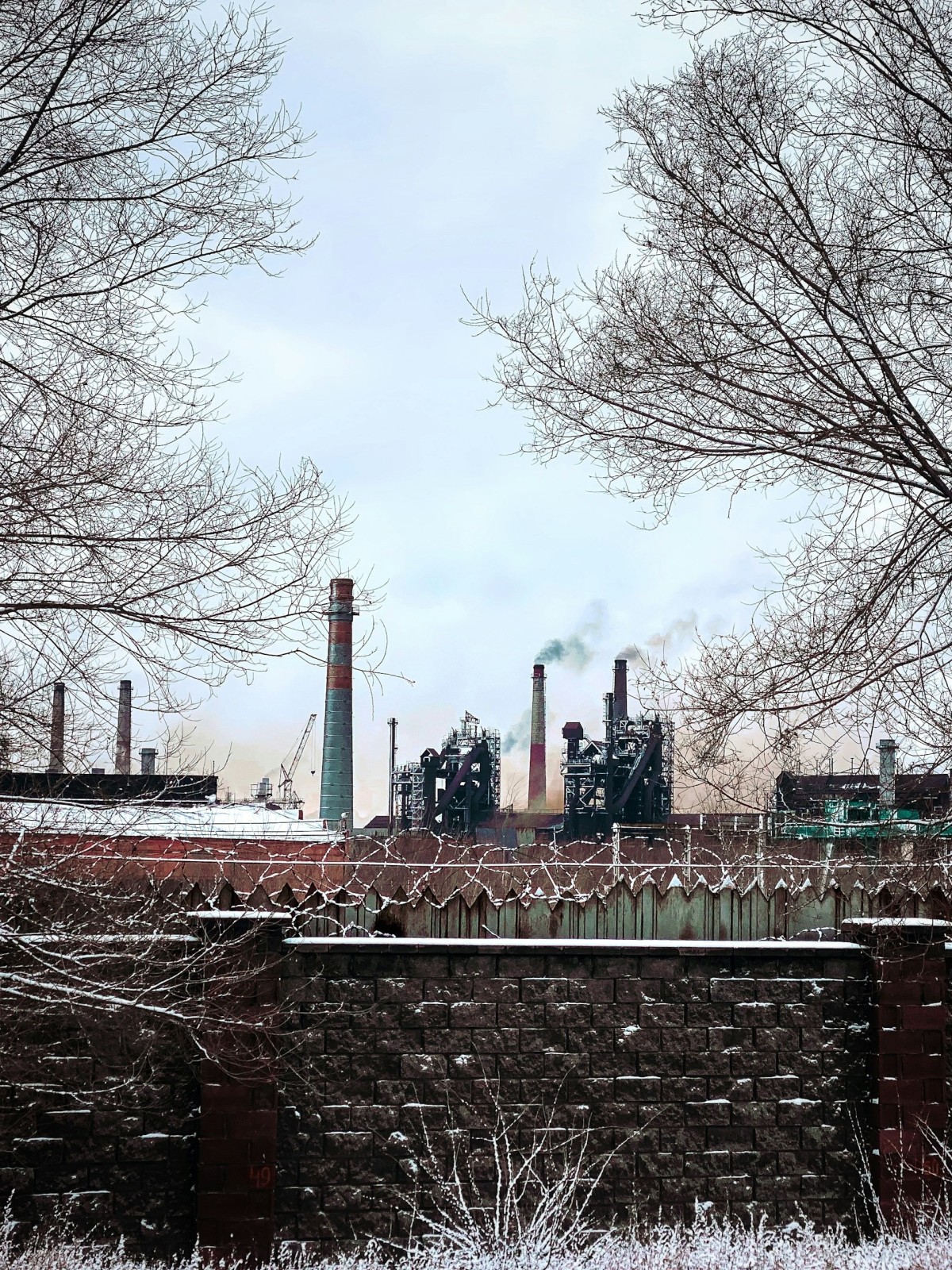
Magnitogorsk is one of the largest centers of Russian metallurgy. Tourists interested in industrial history will be interested to get acquainted with the history of the Magnitogorsk Metallurgical Combine and the development of the city around it.
A special place is occupied by the museum of the enterprise, where materials on the construction of the plant, the work of metallurgists and the development of Magnitogorsk are presented.
4. Monument "The rear to the front"
One of the main symbols of the city is the monument “Rear – Front”, dedicated to the labor feat of the residents of Magnitogorsk during the Great Patriotic War.
The monument is especially impressive for its scale and location. His visit allows us to better understand the importance of Magnitogorsk as one of the most important industrial centers of the Soviet rear.
5. The tent of the first builders of the magnet
The monument reminds of the first builders of the city, who came here in the late 1920s. It is associated with the beginning of the construction of the future metallurgical giant.
This is an interesting place for those who want to learn how the modern Magnitogorsk appeared literally from the tent camp.
6. Local History Museum
The museum introduces the history of the territory, the nature of the Southern Urals, archaeological finds and the development of Magnitogorsk.
Particularly interesting are the expositions dedicated to the construction of the city, metallurgy, the Great Patriotic War and the daily life of Magnitka residents.
7. Sotsgorod
Lovers of architecture should pay attention to the historical quarters of Sotsgorod. They were created during the first five-year plans and reflect the ideas of Soviet architects about the new industrial city.
Here you can see the characteristic architecture of the 1930s and feel the atmosphere of early Magnitogorsk.
8. Modern urban resort "Attraction"
"Attraction" became one of the new symbols of the city. It is a large public space with walking areas, parks, sports facilities and recreational places.
The complex is especially interesting for families with children and tourists who want to combine the excursion program with modern rest.
9. Theatres and cultural life
The city has theaters, concert venues, museums and exhibition spaces. During the year there are performances, concerts, festivals, sports and city events.
The cultural program allows you to diversify the trip, especially if the trip is in the cold season.
10. Hockey and sport
Magnitogorsk is known for its metallurg hockey team. Visiting a hockey match can be an interesting part of the trip and allows you to feel the atmosphere of the city, where sports play an important role.
In addition to hockey, in the city and its surroundings, skiing, snowboarding, mountain hiking and other types of outdoor activities are available.
1. High-level hotels
For travelers who prefer increased comfort, suitable hotels with spacious rooms, restaurants, parking, Wi-Fi and additional services.
Hotel "Aurora" is one of the notable accommodation options in the city. Located on Karl Marx Avenue, suitable for both tourists and business trips. Hotel Aurora
Komilfo is a modern hotel in the central part of the city, suitable for travelers who are interested in comfort and convenient location. Comilfo
Hotel "Europe" is a popular option with a good location and a fairly high level of comfort. hotel
2. Mid-range hotels
This is the most common option for tourists. Usually offered standard and improved rooms, Wi-Fi, bathroom in the room, sometimes breakfast, cafe or restaurant.
The Forum Hotel is located on Lenin Avenue and is suitable for exploring the central part of Magnitogorsk. Forum Hotel
Hotel "Ural" is a variant of the average price level in the central part of the city. Hotel Ural
Hotel "Club" is a relatively compact option for a short trip. Hotel
“Granat” is a hotel complex that can be considered for standard accommodation. Grenade, hotel complex
3. Small hotels
For a short trip, you can choose small hotels and mini-hotels. They usually offer fewer additional services, but may be more convenient in location and cost.
Hotel "Visit" is a small option on Karl Marx Avenue. hotel
Star House is a small hotel with good reviews, suitable for a quiet stay. Star House.
4. Apartments
The apartments are especially convenient for families, companies and tourists who come for a few days or longer. Unlike a regular hotel room, there is often a kitchen, refrigerator, washing machine and a separate living area.
For example, you can see the Five Star Apartments in the central part of the city. Apartment Five Stars
There is also a format of apart-hotels, for example, "Apart-Hotel on Voznesenskaya, 11". Aparthotel on Voznesenskaya, 11
For an independent traveler, apartments are often one of the most convenient options, since they allow you to cook independently and not depend on the operating mode of the hotel restaurant.
5. Guesthouses
The guest house is suitable for those who prefer smaller and more homely accommodation options.
"Home. Guesthouse" is an option with good reviews that can be considered for a quiet stay. Home. Guesthouse
This format is especially convenient for travelers who do not need the services of a large hotel complex.
6. Budget hotels
For an economical trip, you can choose small hotels without a lot of additional services.
Economy hotel on Lenin Avenue is an option for those who primarily need affordable accommodation and convenient location. Economy hotel on Lenin Avenue
Smaller hotels and mini-hotels can also be considered, comparing room rates, location and reviews just before booking.
1. Monument "The rear to the front"
The rear to the front is the main symbol of Magnitogorsk and one of the most important monuments of the city. The monument is located in the park near the Eternal Flame on the right bank of the Urals. The site offers a panorama of the industrial part of the city and the Magnitogorsk Metallurgical Combine.
Transport: you can reach the stops "House of Soviets" or "Kuranti". Numerous tram routes go to the “Kurants”, including Nos. 1, 6, 7, 9, 11, 15, 17, 20, 22, 23, 24, 27, 29, 31 and 33.
2. Park by the eternal flame
The Eternal Flame Park is one of the most popular places for walking. There is a complex of war memorials and a monument "Rear - front". The park can be included in the route along with the embankment of the Urals.
Transport: the most convenient way to get to the stops in the area of Lenin Avenue and “Kurant” by tram or bus.
3. The tent of the first builders of the magnet
The tent of the first builders of Magnitka is a monument to the first builders of the city. It recalls the time when modern Magnitogorsk was just beginning to form in the late 1920s.
Transport: the facility is located on Builders Street; the area can be reached by city bus or tram, after which you can walk.
4. Museum of History of Magnitostroy
The History Museum of Magnitostroy tells about the construction of the city, the metallurgical plant and the life of the first generations of Magnitogrians.
Transport: The museum is located on Soviet Street. It is more convenient to get by bus or tram to stops in the central part of the city, then on foot.
5. Magnitogorsk chimes
Chimes are one of the recognizable city symbols. They are located on Karl Marx Avenue and are well suited for inclusion in the central excursion route.
Transport: The area is well connected to the rest of the city by trams, buses and shuttle taxis. From here it is convenient to continue a walk to the park by the Eternal Flame.
6. Victory Square
Victory Square is a significant public and historical space of the city. The square is connected with the memory of the Great Patriotic War and urban history.
Transport: can be reached by bus, tram or shuttle taxi; from the central areas the road takes relatively little time.
7. Ecological Park
Ecological Park is a large green area for walking and recreation. This is a good option for tourists who want to spend time in nature after visiting museums and monuments.
Transport: The park is located on Lesoparkova Street. There is public transport to the area, after which part of the way can be walked.
8. City resort "Attraction"
“Attraction” is a modern year-round public space with parks, sports and entertainment facilities. On the territory there is a large lake, a beach area, a boat station and an observation hill with a panorama of the city. Entrance to the park itself is free, individual entertainment is paid extra.
Transport: The area can be reached by public transport. For example, bus No. 16 connects the southern districts with the railway station and two main park areas - the park near the Eternal Flame and the Attraction.
9. Cathedral of the Ascension of Christ
The Great Orthodox Church is one of the notable religious buildings of Magnitogorsk. It is interesting architecture and interior decoration.
Transport: located in the city, you can get by buses, trams and shuttle taxis with a transfer from the central areas.
10. "German Quarter"
The historical quarter is associated with the development of Magnitogorsk during the period of industrialization and the participation of foreign specialists in the design and construction of the city.
Transport: located in the central part of Magnitogorsk, so it is convenient to visit during a sightseeing tour of historical areas.
11. Ensemble of prospect Metallurgists
Metallurgists Avenue is interesting architecture and urban planning, formed during the active development of Magnitogorsk. It is a good place to walk and get acquainted with the historical urban environment.
Transport: The area is well served by trams, buses and shuttle taxis.
12. Metallurg Monument
The monument is dedicated to the workers of the metallurgical industry and is one of the symbols of industrial Magnitogorsk.
Transport: located in the central part of the city and included in sightseeing excursion routes. The official tourist route “Magnitogorsk – a place of attraction” unites it with other historical sites of the city.
13. Embankment of the Ural River
The promenade is suitable for a quiet walk and photography. Here you can combine a visit to historical monuments with a rest by the river. The waterfront also connects several interesting urban locations.
Transport: you can reach stops in the central part of the city, and then continue the route on foot.
14. Museum of military equipment
Museum of military equipment, DOSAAF of Russia will be interesting for tourists interested in military history and technology.
Transport: located on the street of the Soviet Army. The area can be reached by public transport, then walk.
1. Winter (December-February) – New Year and Christmas events, festive concerts, theater performances, sports competitions and hockey matches are held. In winter, events related to ski holidays and resorts of the Southern Urals are also especially relevant.
2. Spring (March-May) – Maslenitsa, festive programs for March 8 and May 9, concerts, exhibitions, theater productions and sports events are held. In the spring, the city gradually transitions to an active season of street and family events.
3. Summer (June-August) is the busiest time for tourists. The main events are City Day and Metallurgist Day, which are traditionally celebrated simultaneously. In 2026, the main celebrations were held on July 17-19 at the city resort "Attraction" and included concerts, sports competitions, festivals, master classes, a laser show, a fountain show and "Golden bonfires of Magnitka".
Also in summer there are festivals of colors, open-air, family sports holidays, festivals, concerts and events for children. In July-August, the city is especially interesting for event tourism.
4. Autumn (September-November) – the season of concerts, theater productions, exhibitions and sports events continues. One notable sporting event is the Asia-Europe Half Marathon, which will be held on September 12, 2026.
1. Winter (December-February) is cold and snowy. During the day, usually about -8 ... -10 ° C, at night -14 ... -19 ° C. January is the coldest month. Suitable for winter entertainment and trips to ski resorts.
2. Spring (March-May) - the weather changes rapidly: in March about -6 ° C, in April already +5 ° C, in May about +13 ° C. In early spring, snow and frost are still possible, and by May it becomes warm.
3. Summer (June-August) is the warmest and most comfortable period. In June, about +18 ° C, in July +19 ° C, in August +17 ... +18 ° C on average. In the summer, usually +22... +26 °C, but in hot years the temperature can exceed +30 °C.
4. Autumn (September-November) - September is still quite warm, about +11 ° C, in October about +4 ° C, and in November the temperature drops to about -5 ° C. By the end of autumn, steady frosts and snow begin.
Language of communication
1. Russian is the main and in fact the only language necessary for everyday communication. Russian is spoken in hotels, cafes, shops, transport, museums and other public places.
2. English can be used in large hotels, tourist and some business organizations, but fluency is limited. Foreign tourists should have an interpreter on their phone.
Traditions and characteristics of behavior
1. Respect for local residents. In the city there are no special complex rules of behavior, but it is customary to observe the usual norms of politeness and respect the personal space of others.
2. Respect for the industrial history of the city. Magnitogorsk is closely connected with metallurgy and labor traditions. When visiting monuments dedicated to builders, metallurgists and participants of the Great Patriotic War, you should behave calmly and respectfully.
3. Behavior at memorials. Monuments of military glory and the Eternal Flame do not make noise, litter or behave defiantly.
4. Visiting temples. When visiting Orthodox churches, it is recommended to choose modest clothes, not to talk loudly and follow the rules of a particular church. Photographing services and parishioners is better only with permission.
5. Attitude to nature. During trips outside the city, you can not leave garbage, damage plants, make fires in forbidden places or pollute water bodies.
6. Public places. Do not drink alcohol where it is prohibited, make noise at night and disturb the peace of residents.
Basic laws and regulations
1. Documents. The tourist is advised to carry a passport or other identity document.
2. Alcohol. Drinking alcoholic beverages in public places where it is prohibited by law is not allowed.
3. Smoking. Smoking is allowed only in places where it is not prohibited by law.
4. Photo and video footage. Ordinary city sights can be photographed, but when visiting industrial enterprises, sensitive areas and some sites must comply with the established restrictions.
5. Natural areas. When leaving in the vicinity of the city, it is necessary to comply with the rules of a specific natural area and fire safety requirements.
6. Night time. Regional and municipal noise restrictions should be observed and residents should not be disturbed at night.
1. Food and local products
1. Ural sweets - chocolate, sweets, gingerbread and other confectionery products of local production. This is a convenient and inexpensive gift.
2. Honey - you can buy natural Ural honey, including from herbs.
3. Jam from forest berries is a good option for a gastronomic souvenir. Especially interesting are products from lingonberries, blueberries, cranberries and other berries.
4. Herbal teas are collections from willow tea, mint, oregano, thyme and other plants of the Southern Urals.
5. Ural meat delicacies - smoked meats, sausages and meat products of local production.
6. Fish products - in stores you can find smoked and dried fish, characteristic of the Ural cuisine.
2. Useful and health-improving products
From Magnitogorsk you can bring herbal collections, natural teas, honey, berry products and cosmetics based on plant components.
Such products are better treated as food or care products rather than medicines. If we are talking about medicinal herbs, it is necessary to pay attention to the composition and contraindications.
3. Metallurgy-related souvenirs
This is one of the most characteristic categories of gifts from Magnitogorsk.
1. Small metal souvenirs are metal products with the symbolism of the city.
2. Magnets and key fobs with the image of metallurgists, an industrial plant and city attractions.
3. Badges and commemorative medals with the symbols of Magnitogorsk.
4. Souvenirs with the image of the monument “Rear to the front”.
5. Products with symbols of the Magnitogorsk Metallurgical Combine.
For tourists, this is a particularly interesting option, since metallurgy is a major part of the history and modern image of the city.
Magnitogorsk is generally suitable for tourist trips. The main risks are associated with ordinary city security, winter frosts and travel outside the city to mountainous and natural areas.
Documents
1. It is enough for Russian citizens to have a passport or other identity document.
2. Foreign tourists will need a foreign passport, and depending on citizenship – a visa or other basis for entry into Russia. For citizens of different countries, the rules differ; for example, Lithuanian citizens require a visa to enter Russia, while an electronic visa is available for up to 30 days.
3. Foreigners are also required to comply with immigration rules. When staying in a hotel, the necessary registration actions are usually performed by the receiving party.
Health insurance
1. It is advisable for Russian tourists to have a valid insurance policy and, if necessary, additional travel insurance.
2. Foreigners are advised to obtain medical insurance valid in Russia.
3. For trips to the mountains, ski resorts and active sports, it is advisable to choose insurance, which includes accidents and active rest.
Emergency services phones
In Magnitogorsk, there is a single number 112 - it can be dialed for free from a mobile phone even without a SIM card.
101 is the fire department. 102, police. 103 - ambulance.104 - gas service. 112 - Unified Emergency Service.
In addition, for the city:
31-67-26 - search and rescue squad of Magnitogorsk.37-12-72 - rescue station on the waters. 200-303 - PASF Rescue Service.
Mobile communications
Major Russian mobile operators operate in Magnitogorsk, including MTS, Beeline, MegaFon and T2. In the central part of the city, mobile communication and mobile Internet are usually available well.
When traveling to mountains and remote natural areas, communication may be unstable or completely absent. For such trips, it is recommended to download offline maps in advance and inform loved ones of the route.
Basic safety rules
1. In winter, severe frosts, ice and sudden changes in weather should be taken into account.
2. When traveling outside the city, you need to check the weather forecast and the condition of the roads in advance.
3. It is not necessary to independently enter the territory of industrial enterprises, railway facilities and other closed territories.
4. When resting in nature, it is necessary to observe fire rules and not leave garbage.
5. When swimming in the Ural River, you should use equipped places and observe warning signs.
6. When traveling to ski resorts, you must follow the rules of the tracks and use protective equipment.
How many foreign tourists can stay in Russia
It is important to consider the citizenship of the tourist and the reason for entry.
For foreigners arriving in Russia on a visa-free basis, from 2025, the general rule provides for a stay of no more than 90 days in total during one calendar year, unless an international agreement or other basis establishes a different period. Continuous stay should not exceed 90 days.
For tourists entering on a visa, the period is determined by the conditions of the visa.
For example, Lithuanian citizens have a visa regime; an electronic visa allows them to stay in Russia for up to 30 days, so a longer trip will require another suitable basis.
Create a query and local guides will offer you the best options
