



 Blog
Blog
Murom is a city in the Vladimir region of Russia, the oldest Russian city, on the territory of which already i...

Dear friends in this tour I will introduce you first of all to the history of Murom the Orthodox. We will visit 2 monasteries and …

Murom - one of the oldest Russian cities - for the first time It is mentioned in the Tale of Bygone Years under 862. We all know t …

This is a standard review program for Murom. It includes an inspection of the Holy Trinity convent, which houses the relics of St. …
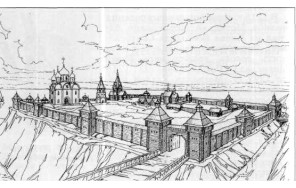
The tour will be interesting for all lovers of military history, as well as those interested in the myth and reality of the life o …

Favor. When we say this word, we remember one of the greatest events of the gospel – the Transfiguration of our Lord and God Jesus …
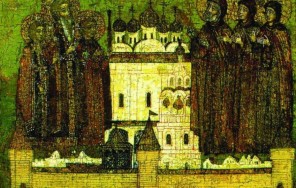
We will pass along the roads that the saints of Muroma walked from the first prince, the faithful Gleb Vladimirovich. We will vis …

Dear friends! I invite you to Murom - a city located in the Vladimir region on the left bank of the Oka. A sightseeing tour of Mur …

I conduct tours of Murom and Vyksa. These are both survey and more detailed travel. Vyksa is not yet very famous in term …

Excursions on foot, by car and by bus; individually and in group; from 1 hour to 2-3 days.We will meet you at the railwa …

I offer excursions for pilgrims - our city is rich with its Holy, active monasteries and golden-domed Churches. During t …
 Guide license
Dear guests of Murom! I invite you to make an atmospheric journey through the ancient Russian city in the company of a c …
 Guide license
Vladimir region is an amazing corner of the Russian land. "Here is the Russian spirit, here Rus smells." Ancient cities …

Dear guests, I invite you to a fascinating journey around Murom and its environs. I will try to discover for you the his …

Day 1. Voronezh, collection and dispatch 22-00 Collection in Voronezh, "City Park Grad" 3rd km Voronezh-Moscow highway, Park 3, o …

2 days / 1 night Literally a stone's throw from the roaring highway Moscow - Nizhny Novgorod lurks on the Golden Ring of Russia un …

3 days/2 nights Journey to an amazing place, which is closely associated with the name of Seraphim of Sarov and is considered t …

Day 1. Krasnodar, collection and dispatch 08-30 - Group gathering in Krasnodar Drama Theater stop Budyonny (corner of Krasnoarmey …

Murom - Goose-Crystal 2 days / night In the impenetrable forests of the Meshchersky Territory, on the river Goose, there is a smal …

Murom - Goose-Crystal 2 days / night In the impenetrable forests of the Meshchersky Territory, on the river Goose, there is a smal …

Murom is a city in the Vladimir region of Russia, the oldest Russian city, on the territory of which already in the 6-7 centuries there was a village of the Ugro-Finnish Muroma tribe.
In The Tale of Bygone Years, Moore has been mentioned since 862. The city is located 137 km southeast of Vladimir.
The population is 105,572 (2021).
Murom became a Slavic city in the 9-10 centuries, turning into an outpost of colonization of the northeastern lands by Kievan Rus.
In the early 12th century Murom became the center of an independent principality. In 1237, the city was defeated by the Tatar-Mongol troops of Batu Khan. Murom was revived under Prince Yuri Yaroslavich, but by the end of the 14th century the political importance of the Murom principality weakened and it became dependent on Moscow.
During the reign of Ivan the Terrible Murom army took part in the capture of Kazan. After the Time of Troubles, Moore entered the period of development of trade and crafts. Since 1778, it is a county city of the Vladimir governorship.

The oldest monument of Murom architecture is the Spassky Monastery, located on the precipitous left bank of the Oka. In gratitude to the residents of Murom for participating in the campaign to Kazan, Tsar Ivan the Terrible ordered to build the Savior-Transfiguration Cathedral in the monastery. In 1691, the Intercession Church was built in the northern part of the monastery.
The only monument of civil architecture located on the territory of the monastery is the Rectorial Corps (1687).
Located in the center of Murom, the complex of buildings of the Trinity Monastery (1642-1652) belongs to one of the most significant examples of Russian architecture of its time, is distinguished by a variety and richness of details.
The five-domed Trinity Cathedral (1642-1643) was built at the expense of the merchant Tarasy Borisov in the style of “Russian Uloric”, which is characterized by the use of picturesque jewelry cornices, colored tiles and beads.
The Kazan Gate Church (1648) and the adjacent bell tower (1652) in terms of the beauty of the architectural solution are superior to the Trinity Cathedral. Not far from the Trinity is the Annunciation Cathedral, which was built by Ivan IV in 1553 and renewed in 1664.
The Ascension Church (1729) was built on the site of a wooden church that existed since the beginning of the 16th century. When Murom's master plan was drawn up in 1778, it served as a hub for the main streets.
A significant monument of Russian architecture of the 16th century is the Kozmodemian Church (1556-1565), located near the Spassky Monastery, built on the site where the royal tent was located during the campaign to Kazan.

According to its significance for Russian culture, this tent church is on a par with the Cathedral of St. Basil and the Church of the Ascension in Kolomenskoye.
Although the tent of the temple collapsed in 1868, the preserved part of the church can be judged by the constructive simplicity and elegance of the architectural appearance.
In 1804-1838 the Smolensk (New Kozmodemyanskaya) church was built. Set on the high bank of the Oka on the territory where a convent existed until 1764, the Resurrection and Vvedenskaya churches (mid-17th century) complete the Murom ensemble.
On the city embankment is located the Nikolo-Naberezhnaya Church (1717). Civil construction of Murom was actively carried out after the fires of 1792 and 1805. The architectural monuments of that time include the house of Karatygin (1840), the house of Zworykin (early 19th century).

In Art Nouveau style, the railway station building was made (1912, architect A.V. Shchusev).
Provincial Murom is associated with the life and work of the artist A. E. Arkhipov, who repeatedly visited Moore in 1913-1914.
Here for many years lived and worked composer, pianist and teacher PK Valenkov (born in 1873 in Murom).
Here also passed the young years of the founder of domestic petroleum geology I. M. Gubkin.
The expositions of the Murom Historical and Art Museum present bronze decorations of the Muroma tribe, a collection of ancient Russian art, works of facial sewing, objects of cult wooden sculpture, paintings by Russian and Western masters of the 17-19 centuries, a collection of rare books.
Photo: J. Kostrov
Create a query and local guides will offer you the best options

