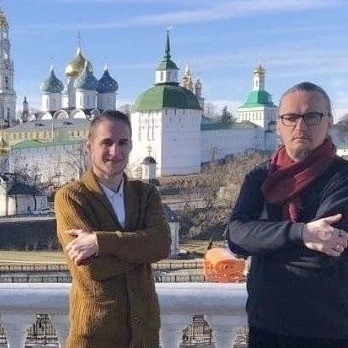
Answer: The Trinity-Sergius Lavra, founded in 1337 by St. Sergius of Radonezh, is the spiritual center of Russia and a UNESCO site. The ensemble includes the Assumption Cathedral of the XVI century with frescoes of the XVII century and a five-tiered bell tower with a height of 88 meters. The museum of toys, where a collection of Russian folk dolls and first nesting dolls is kept, is a must-see. The historical center of the city has preserved the buildings of the XIX century with shopping rows and chambers.
Answer: The Lavra ensemble demonstrates the evolution of Russian architecture from early Moscow architecture to Baroque. The Trinity Cathedral (1422-1423) was built in the traditions of the Vladimir-Suzdal school, its iconostasis was created by Andrei Rublev and Daniel Cherny. The Assumption Cathedral (1559-1585) was built on the model of the temple of the same name in Moscow by architects Ivan the Terrible. The gate church of John the Forerunner (1693-1699) is made in the style of Naryshkin Baroque.
Answer: The Museum of Soviet Childhood presents toys of the 1950s-1980s, including mechanical machines and doll houses. On the territory of the ethnopark "Nomad" children can get acquainted with the life of nomadic peoples and feed camels. In the historical and art museum-reserve master classes on painting dolls are held. The unique Museum of Peasant Life "Once upon a time" demonstrates old spinning wheels and folk costumes.
Answer: The view of the lavra from Pancake Mountain opens a panorama of golden domes against the background of the fortress walls. Near the pond "White" preserved merchant mansions of the XIX century with carved casings and wooden balconies. Along Karl Marx Street there are ancient temples with tent bell towers and tiles. A unique angle is the observation deck at the Vifan ponds, from where the entire architectural ensemble is visible.
Answer: Chernihiv Skete (1845-1850) is hidden in the forest and is known for its cave temples and underground cells. In the Gethsemane Skete there is a rare tent church of Archangel Michael (1870) in pseudo-Russian style. A unique monument is the water tower (1913) on Red Army Avenue, decorated with majolica panels. In the vicinity is the Desert of St. Paraclite with a wooden church built in the 1920s.
Answer: Ivan the Terrible was baptized in the lavra, Peter I took refuge here during the Strelets riot of 1689. In Bogolyubsk kinovia lived the philosopher Konstantin Leontiev, who took monastic tonsure under the name Clement. Artist Mikhail Nesterov created sketches for paintings of the Pokrovsky temple of the Marfo-Mariinsky monastery. In 1919, the Commission for the Preservation of Antiquities under the leadership of Igor Grabar worked in the city.
The site uses a web analytics service
Yandex Metrics
using cookie technology to make the site more convenient. You can prevent the processing of cookies in the browser settings.
Details in Privacy policy.