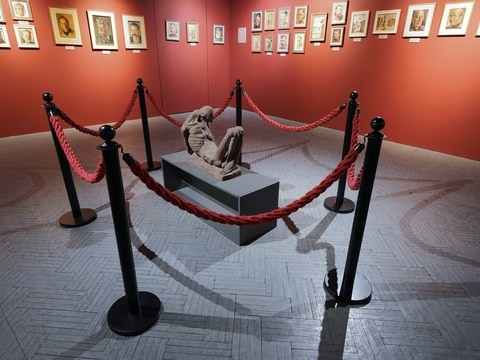
Historical Museum of Serbia
About the company:
The Historical Museum of Serbia (Istorijski muzej Srbije), officially known as the Serbian Historical Museum (Srpski istorijski muzej) since September 2026, occupies the first floor of the former Agrarian Bank in Nikola Pasic Square, 11 – a stone’s throw from the parliament. Its task, formulated in 1966, is simple: to collect and show materials on the history of the Serbian people and Serbia from ancient times to the present. Today it is more than 50 thousand items in 25 collections and six funds.
The museum was established on 20 February 1963 and absorbed the Museum of the First Serbian Uprising, established in 1954 in Konaka by Prince Milos in Topcider. It has not had its own building for decades; since 2006 it occupies the palace of the Privileged Agricultural Bank, built in 1932-1934 by architects Petar and Branko Krstić. This is one of the best examples of Belgrade Art Deco: a monumental facade, a front lobby, and the former bank safes in the basement have been turned into a museum vault. The building was badly damaged during World War II and was later restored.
The collections include weapons and military equipment, uniforms, maps, banners and flags, seals, numismatics, photographs, postcards, old and rare books, copies of frescoes and icons. Among the most famous exhibits are the seal of Prince Stroimir of the IX century, a saber from the collection of the Obrenović dynasty and the death mask of King Alexander I Karadjordevich. There is no permanent exhibition: the museum shows changing thematic exhibitions, which are collected from storage facilities and supplemented with documents, from the First Serbian Uprising to Yugoslavia of the XX century.
The exhibition space is open from Tuesday to Sunday from 12:00 to 20:00, the box office closes at 19:00, Monday is a day off. Entrance is paid, tickets are sold locally; students and pensioners are entitled to a discount. Nikola Pasic Square is a transport hub: near the stops of trams and buses, Pionirski Park and the building of the People's Assembly. Ten minutes on foot is Knez Michael Street and Terasie Street, so the museum is conveniently connected with a walk in the center.
The museum is designed for those who want to understand the political history of Serbia of the XIX-XX centuries: dynasties, wars, state symbols. Expositions change, so it is worth checking in advance on the site, which is open now. With children, it will be more difficult - there are few interactive zones; but for those who are interested in heraldry, weapons and numismatics, there is something to see.
Photograph: Petar Milošević, CC BY-SA 4.0 license, Wikimedia Commons - https://commons.wikimedia.org/wiki/File:Istorijski muzej Srbije (Historical Museum of Serbia, expo II).jpg
Photographs (1)