Nisha People's Museum
ooh General Milojk Leshianin, 14
About the company:
The National Museum of Niš (Narodni Museum of Niš) is the main museum of South-Eastern Serbia, founded on 1 April 1933. It does not have one building: the historical and art halls occupy the 1927 villa on General Milojk Leshanin Street, 14, and the archaeological exposition is the former bank of 1894 on 59 Nikola Pasic Street. There are about 40,000 items in the funds.
The museum arose on the initiative of a circle of Niš lovers of antiquity - Adam Oršić-Slavetić, Rudolf Bratanich, Borivoje Gojković and their comrades who created the Museum Society. The first exposition opened in the autumn of 1933 in the house of Christodoulovich. On September 2, 1944, during the bombing of the city, the building received a direct hit: a significant part of the collection, especially the ethnographic one, died. After the war, the museum was restored, and in 1950 he moved to the current villa - the house of merchant Velko Stefanovic with an attic, stucco and a small fountain in the courtyard.
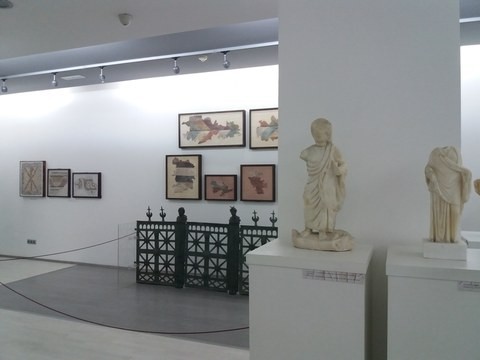
The exposition “The Archaeological Wealth of Niche from the Neolithic to the Middle Ages” covers the period from about 6000 BC to the end of the XV century. In the windows - flint and bone tools, ceramics, glass, jewelry, weapons, Roman sculpture and mosaics from Mediana, tombstones with inscriptions, medieval frescoes and coins. Separate rooms are given to numismatics, epigraphy and ethnography of Ponishavia. Two memorial collections are dedicated to writers Stevan Sremtz and Branko Milkovich; the museum library has more than 14,000 publications.
The main exposition is open from Tuesday to Friday from 10:00 to 17:00, on Saturday and Sunday until 15:00, Monday is a day off. A ticket to the archaeological hall costs 300 dinars, a single ticket to all sites - 1200; children under seven years old, members of ICOM and visitors with disabilities are free. The museum is two steps from the city center. It also includes Chele Kula, a Red Cross camp (Crveni Krst) and an exhibition hall in the former synagogue.
It is worth going here if you want to understand Nis as a whole: the Roman Naiss, the Ottoman city, the wars of the XX century. The collection is good for schoolchildren and students, but the signatures in the halls are mostly in Serbian, so an audio guide or pre-studied context will be useful for a foreigner. It takes one and a half to two hours to inspect the main halls; antiquities lovers should take a single ticket at once and add Mediana.
Photograph: Miljan Simonović, license CC BY-SA 4.0, Wikimedia Commons - https://commons.wikimedia.org/wiki/File:Narodni muzej Ni%C5%A1 04.jpg
Photographs (1)