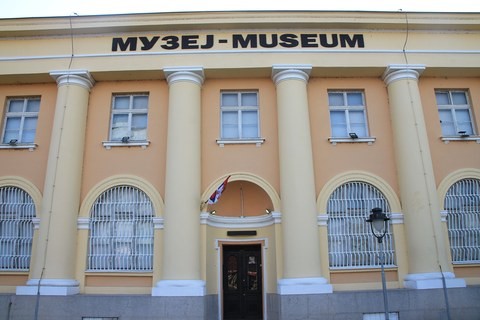
Zaechar People's Museum
Dragoslava Srejevic 2, 19000 Zaechar
About the company:
The Zaechar People’s Museum (Narodni Zaechar Museum) occupies a 1927 building on the main square of the city, in the house 2 on Dragoslav Sreevich Street, a stone’s throw from the city administration. This is the main repository of the heritage of the Timok region - eastern Serbia on the border with Bulgaria and Romania, in the region of winemaking and ancient ruins.
The museum was founded on March 27, 1951 and in the same year moved to the current building; the house is included in the register of cultural monuments of Serbia. From the very beginning, the historical department focused on the Timoch Uprising of 1883 and the people’s liberation struggle, and there were two permanent exhibitions on these topics. The new permanent exhibition tells about the beginning of life on the site of the current city and about Romulian, using modern multimedia means.
Archaeological pride is made up of the materials of Felix Romuliana (Gamzigrad) - about 3000 items, including coins: of the 684 coins of the numismatic collection, 163 come from Gamzigrad. The historical collection includes more than 2,500 items and includes four memorial collections: Nikola Pasic, Antony Antich and politicians Dobrivoy Radosavlevich Bobi and Zhivan Vasilevich. Ethnology stores about 5,000 objects of the late XVIII - XXI century, and the Department of Art History - the work of the drawing teacher Dusan Adamovich and Russian emigrants who settled in Zaechar after the October Revolution.
The museum is open from Tuesday to Saturday from 8:00 to 16:00, on Mondays from 8:00 to 15:30, Sunday is a day off. It includes Radul-begov konak - the oldest building of Zaechar (XVIII century) with the exposition "Old Zaechar", Turkish water mill and archaeological monument Felix Romulian in Gamzigrad about 11 km from the city. Zaechar lies in eastern Serbia, about an hour from Bohr and three hours from Belgrade.
The museum will be interesting for lovers of antiquity: the palace complex of Romulian, built by Emperor Galerius, is included in the UNESCO World Heritage List. The collection of Russian art adds an unexpected story about white emigration in a provincial Serbian city, and expositions about the Timoch uprising explain why the region remained a troubled suburb for centuries.
Photograph: Vanilica, CC BY-SA 4.0, Wikimedia Commons — https://commons.wikimedia.org/wiki/File:Wiki.Biseri III Zaje%C4%8Dar Museum647.jpg
Photographs (1)