Independent tourism and recreation in the city of Anchorage Historical information about the city of Anchorage...
1. Indigenous peoples and first settlements
Long before the appearance of Europeans on the territory of modern Anchorage lived the Denain – the indigenous people of the Athabascan language group. They were engaged in hunting, fishing, gathering and trading. The region was important due to rivers, forests and access to marine resources.
2. The arrival of Europeans and the transition of Alaska to the United States
In the XVIII century, European navigators began to explore Alaska. In 1778, James Cook explored the bay, which later took his name. In 1867, Russia sold Alaska to the United States, but the territory of modern Anchorage remained sparsely populated for a long time.
3. Foundation of Anchorage
The history of the city began in 1914, when a camp of builders of the Alaskan railway was organized here. The settlement arose at the river Ship Creek and gradually turned into a commercial and transport center. In 1915, the sale of land began, and in 1920, Anchorage received official city status.
4. Railroad development
The construction of the railway was a major factor in the early growth of Anchorage. It connected coastal areas to the interior of Alaska and facilitated the transportation of people, goods and building materials. The city gradually became an important transport hub.
5. World War II and Military Importance
During World War II and the subsequent confrontation between the United States and the USSR, Anchorage gained strategic importance. Military bases, airfields and transport infrastructure were expanding in the region. The military presence contributed to population growth and economic development.
6. Obtaining Alaska State Status
In 1959, Alaska became the 49th state in the United States. This strengthened the administrative and economic position of Anchorage, which gradually became one of the main centers of administration, trade and service of the vast territory.
7. The 1964 earthquake
On March 27, 1964, there was a 9.2 magnitude earthquake in Alaska. It was one of the strongest recorded earthquakes in history. Anchorage was seriously damaged: buildings, roads and entire areas of urban development were destroyed. Recovery led to the renewal of infrastructure and changes in urban planning approaches.
8. Oil boom and rapid growth
The discovery of large oil fields in northern Alaska in the late 1960s and the construction of the Trans-Alaska Pipeline in the 1970s dramatically accelerated the development of the city. In Anchorage there were new jobs, residential areas, offices and shopping centers. The population has increased significantly.
9. Municipality consolidation
In 1975, Anchorage merged with the surrounding administrative district to form a single municipality. This made it possible to more coherently manage transport, utilities, construction and development of suburban territories.
10. Indigenous culture
Despite the strong development of the city, the culture of the Denain and other indigenous peoples remains an important part of the local identity. In Anchorage, there are museums and cultural centers that present traditional crafts, art, history and customs of the indigenous people of Alaska.
11. Modern Anchorage
Today, Anchorage is the largest city in Alaska, an important center of air travel, commerce, tourism and government. Its development is associated with the oil industry, military infrastructure and international freight transportation. At the same time, the city retains a close connection with the nature and historical heritage of the region.
1. Anchorage is a city among the wildlife of Alaska
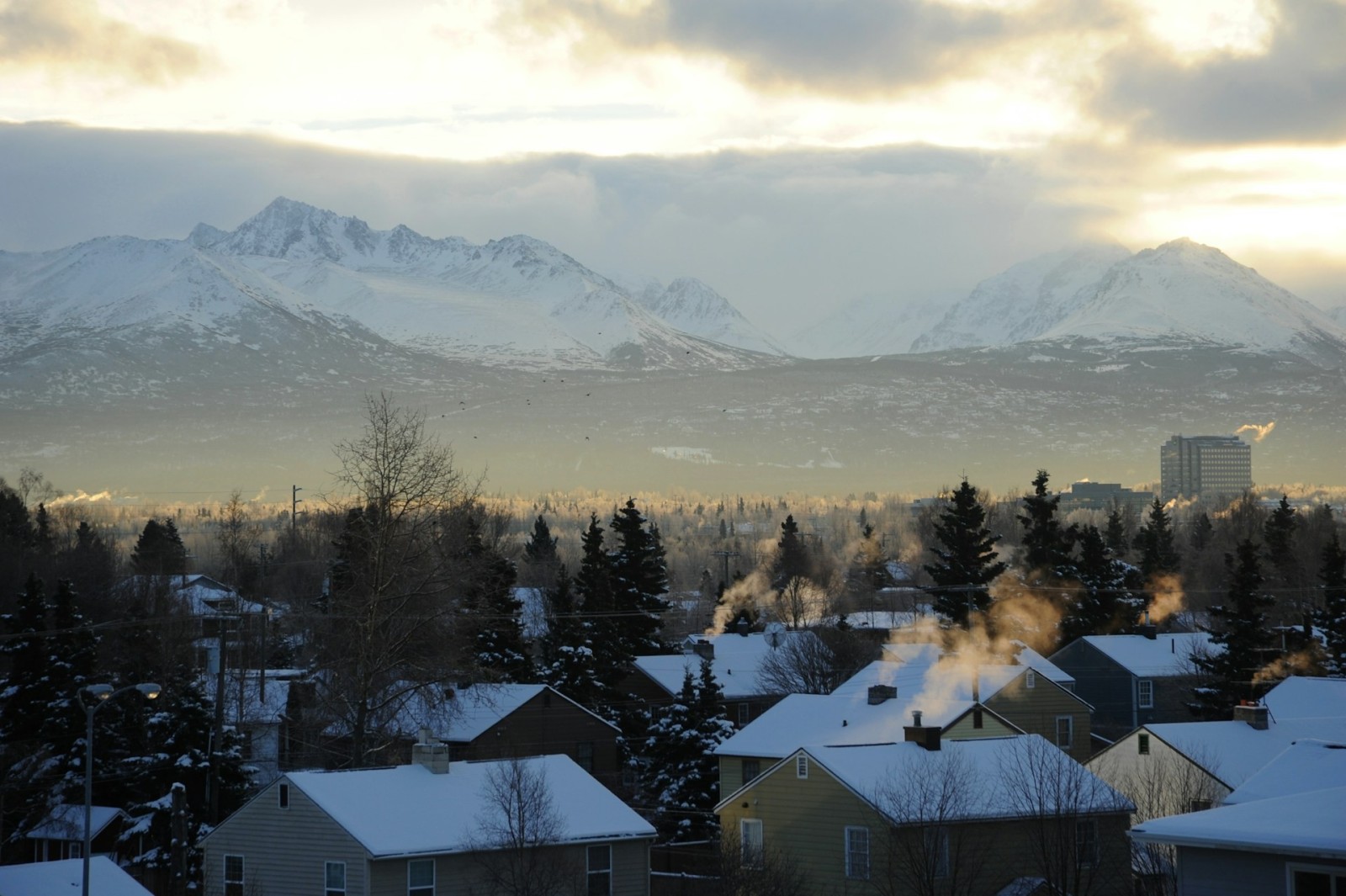
Anchorage is the largest city in Alaska, located between the Chugach Mountains and Cook Bay. It attracts travelers with an unusual combination of urban infrastructure and northern nature: here you can visit museums and restaurants, go for a walk along forest trails, see glaciers and observe wild animals. The city serves as a convenient starting point for exploring the natural attractions of Alaska.
2. Natural attractions and active recreation
Anchorage is especially attractive with mountain landscapes, lakes, forests and coastal areas. Fans of outdoor activities can go to the Chugach State Park, where routes for hiking, cycling and winter sports are laid. The Tony Knowles Coastal Trail is also popular, suitable for walking and cycling with views of the bay and surrounding mountains.
3. Animal surveillance
Anchorage is interesting because wildlife is very close to residential areas. In the vicinity of the city you can find moose, eagles and numerous migratory birds, and in the natural zones of the region live bears and other large animals. For bird watching, the Potter March natural area is suitable, where paths and observation decks are equipped. When meeting wild animals, it is important to keep your distance and not try to approach them.
4. Alaskan culture and history
Travelers interested in history and culture should visit the Anchorage Museum and the Alaska Native Heritage Center. Here you can get acquainted with the history of the development of the region, the traditions of indigenous peoples, their art, crafts and lifestyle. Such visits help to better understand the cultural diversity of Alaska and its historical development.
5. Gastronomy impressions
The local cuisine is another reason to visit Anchorage. The restaurants offer dishes from salmon, halibut and other seafood, as well as meat dishes and cuisine from different countries. The city has both cozy establishments with local products and restaurants of a higher level. Trying regional dishes is especially interesting for those who want to get acquainted with the gastronomic traditions of Alaska.
6. Entertainment and unusual impressions
From Anchorage you can go on a sightseeing flight over the mountains and glaciers, ride on the picturesque railway or organize a trip to coastal settlements. Depending on the season, fishing, kayaking, watching marine animals, skiing and snowshoeing are available. In winter, under suitable weather conditions, travelers also try to see the Northern Lights.
1. High-level hotels
Anchorage offers comfortable hotels with spacious rooms, restaurants, fitness centers, conference rooms and additional services. Such options are suitable for business trips, family holidays and tourists who prefer a high level of service. Most of the city-friendly hotels are located in the center, and near the airport there are hotels designed for transit travelers.
Captain Cook Hotel is one of the most famous hotels in downtown Anchorage. Suitable for travelers who care about comfort, restaurants nearby and access to city attractions.
Marriott Anchorage Downtown is a modern hotel in the central part of the city, convenient for business trips and acquaintance with shops, restaurants and cultural facilities.
The Wildbirch Hotel is a boutique hotel in the center, decorated with motifs related to the culture of Alaska. Suitable for tourists who prefer a modern interior and location near city establishments.
2. Mid-price hotels
Mid-range hotels are a common choice for tourists who need a separate room, private bathroom, Wi-Fi and parking. Depending on the hotel, the price may include breakfast, airport transfer or access to the gym. Similar options are found both in the center and in the Midtown and Spenard areas.
Wyndham Garden Anchorage Airport is a hotel in the airport area suitable for stopping before or after the flight.
Puffin Inn of Anchorage is a practical option for travelers who are interested in transport accessibility and the ability to stay near the airport.
Microtel Inn & Suites by Wyndham Eagle River/Anchorage Area is an option outside the city centre that can be considered when travelling by car.
3. Economical hotels and motels
Budget hotels and motels allow you to reduce living costs, while maintaining the usual amenities: bed, bathroom, heating and Internet access. They are often located along major roads, in the airport area and in Midtown. Before booking, it is worth checking the availability of breakfast, parking, transfer and additional fees.
Ramada by Wyndham Anchorage Downtown is a downtown hotel that can be considered when looking for a relatively inexpensive room.
Independent motels in the area of Spenard are an option for tourists traveling by car and do not need additional services.
Small hotels on the outskirts can be more profitable than the central ones, especially if the traveler plans to travel a lot around the neighborhood.
4. Hostels and shared accommodation
Hostels are suitable for independent travelers, youth and tourists who want to save money. They usually offer shared rooms with multiple beds, a shared kitchen and places to socialize. In some establishments, separate rooms are available, but their cost is usually higher than the bed.
Base Camp Anchorage Hostel is a popular option with an informal atmosphere.
Spenard Hostel is a hostel in the Spenard area suitable for those looking for more affordable accommodation.
Backpackers is an accommodation option for tourists traveling on a limited budget.
When choosing a hostel, it is important to clarify whether bed linen and towels are provided, whether there are lockers, time limits for occupancy and the ability to use the kitchen.
1. Anchorage Museum
Anchorage Museum is one of the main cultural sites of the city. The expositions present the history of Alaska, art, culture of indigenous peoples, development of the northern territories and the development of the region. The museum is suitable for those who want to get acquainted with the history of Anchorage and learn more about life in Alaska.
Transport accessibility: the museum is located in the city center, so it is convenient to reach it on foot from central hotels. From other areas can be reached by city bus or taxi.
2. Alaska Indigenous Cultural Heritage Center
Alaska Native Heritage Center is a cultural complex dedicated to the traditions and history of the indigenous peoples of Alaska. Visitors can get acquainted with national dwellings, crafts, art, dances and peculiarities of life of various peoples of the region.
Transport accessibility: the center is located outside the central part of the city, so it is more convenient to get there by car, taxi or excursion transport. Before the trip, it is worth clarifying the seasonal schedule of work and the availability of public transport.
3. Tony Knowles Coastal Trail
The Tony Knowles Coastal Trail is one of Anchorage’s most scenic walking trails. The trail runs along the coast of Cook Bay, offering views of the mountains, forests and sea expanses. Here they walk, ride bicycles and watch birds. In clear weather you can see the distant mountain peaks.
Transport accessibility: the route can be accessed from the central part of the city, as well as individual entrances by car or bicycle. To walk along the entire route, it is advisable to calculate the distance and time of return in advance.
4. Park Chugach
Chugach State Park is a vast natural area with mountains, forests, lakes and numerous hiking trails. The park is popular among lovers of hiking, watching animals, photographing landscapes and winter holidays. Here you can see the natural Alaska, almost without leaving the surroundings of the city.
Transport accessibility: The different entrances to the park are at a considerable distance from each other. For most routes, it is more convenient to rent a car or take an organized tour. Before the hike, you should assess the complexity of the trail and weather conditions.
5. Earthquake Park
Earthquake Park is a natural memorial site associated with the Great Earthquake of 1964. During the disaster, part of the coastal area was destroyed by landslides. Today you can walk along the forest paths, see information materials about the history of the earthquake and admire Cook Bay.
Transport accessibility: the park can be reached by car or bicycle. It is also convenient to include it in a walk along coastal routes, if the selected starting point allows.
6. Potter March Reserve
Potter Marsh Bird Sanctuary is a wetland area south of downtown Anchorage known for its bird diversity. Visitors are equipped with decking and observation areas from which you can observe birds and other representatives of the local fauna. The reserve is especially interesting during seasonal migrations.
Transport accessibility: The reserve is located along Seward Highway. It is most convenient to get by car or as part of a tour. When traveling by public transport, it is necessary to check the route in advance and the ability to safely reach the entrance.
7. Kincaid Park
Kincaid Park is a large park in the west of the city, where forest areas are combined with open spaces and views of the coast. In summer they walk and ride bicycles, in winter they use prepared ski slopes. This is a good place for relaxing in nature away from urban development.
Transport accessibility: it is most convenient to come by car or bicycle. The park is quite large, so you should choose a specific entrance and walk route before visiting.
8. Alaska Aviation Museum
The Alaska Aviation Museum explores the importance of aviation to Alaska and the connectivity of remote communities to the rest of the country. The museum presents aircraft, historical materials and exhibits dedicated to the development of air transport. It is especially interesting for lovers of technology and travel history in the North.
Transport accessibility: The museum is close to Ted Stevens Airport. It can be reached by car, taxi or public transport, taking into account the route and schedule.
9. Delaney Park
Delaney Park is a green area in the central part of the city, suitable for walking and relaxing between visiting museums and shops. There are open spaces and sports grounds, and in the warm season the park becomes a convenient place for relaxing in the fresh air.
Transport accessibility: Due to its central location, the park is easily accessible on foot from many hotels and cultural sites. There are also city bus routes nearby.
10. Eklutna Historic Park
Eklutna Historical Park is located north of Anchorage and introduces visitors to the history of Alaska Natives and the Orthodox traditions of the region. This place is interesting with a combination of local culture, history and architectural heritage.
Transport accessibility: the park is located outside the center, so it is more convenient to go by car or as part of a tour. Before visiting, you should check the opening hours and access conditions.
1. The Fur Rendezvous Winter Festival usually takes place in late February and early March. The program includes dog sled racing, parades, snow sculptures, fairs and carnival entertainment. One of the unusual events is a race with reindeer.
2. The Anchorage Folk Festival is usually held in January. Guests are waiting for concerts of folk musicians, performances of local performers, musical meetings and master classes.
3. The Iditarod Trail Sled Dog Race is a famous sporting event, the solemn start of which usually takes place in Anchorage in early March. Spectators can see the curtains and dog sleds before the start of the multi-day route to the city of Nome.
4. Spring Carnival at Alyeska Spring Carnival is usually held in April and is dedicated to the end of the ski season. The program may include musical performances, competitions and an unusual ride through a cold water pool on skis or snowboarding.
5. Summer Solstice Festival takes place in June, during the longest light days. In the center of Anchorage, concerts, performances of artists, family entertainment, fairs and venues with local food are organized.
6. The Mayor's Marathon is a sporting event usually held in June. It includes a marathon, half marathon and other running distances. Routes pass through city streets and picturesque natural areas.
7. US Independence Day (Fourth of July) is celebrated on July 4. In Anchorage, festive processions, family events, fairs and musical performances are arranged. Residents spend time outdoors and have picnics.
8. Bear Paw Festival takes place in the summer in the Eagle River area, usually in July. The program includes parades, carnival rides, automobile exhibitions, sports and entertainment for the whole family.
9. The Girdwood Forest Fair is a summer event in Girdwood, south of Anchorage. Craftsmen, artists and musicians gather here, trading platforms work, local products and handicrafts are sold.
10. Blueberry Festival is held in summer, usually in August, in the Girdwood area. Visitors are waiting for treats with berries, local products, shopping areas and an entertainment program.
11. Anchorage RunFest - usually held in August and combines a marathon, half marathon and other running competitions. Participants cover routes through city streets, green areas and coastal areas.
12. The Alaska Federation of Natives Convention is a cultural and social event that usually takes place in the fall. It is dedicated to the history, traditions and contemporary issues of life of the indigenous peoples of Alaska. The program can include performances and fairs of traditional art.
13. The Anchorage International Film Festival is usually held in late autumn or early winter. The program presents independent and international cinema, documentaries and works by young directors.
1. Winter
In winter, Anchorage is dominated by frosty weather, snow and short daylight hours. The average air temperature in December and January is about −7 to −9 °C, and in February it becomes slightly warmer. During cold snaps, the temperature can drop significantly below -15 ° C.
The water temperature in Cook Bay is about 1-2 °C. Swimming at this time is not suitable for a normal tourist holiday.
Winter is suitable for skiing, snowshoeing, exploring winter landscapes and visiting the Fur Rendezvous festival. Travel requires warm clothing, winter shoes and protection from the wind.
2. spring
Spring is coming gradually. In March, the average air temperature remains about -5 °C, in April it approaches 0 °C, and in May it is about +6 °C. Snow begins to melt, but on certain routes and in the mountains, winter conditions may persist.
The water in Cook Bay warms up slowly: from about 0-1 °C in early spring to 3-4 °C in May.
Spring is suitable for observing the awakening of nature, visiting museums and exploring the city. In March, you can catch dog sled racing, and in April - the end of the ski season. For long hikes, it is better to choose routes taking into account the state of snow and trails.
3. Summer.
Summer is the warmest period of the year. In June, the average air temperature is about +12 ° C, in July - +14 ° C, and in August - +13 ° C. During the day, the temperature often reaches +15. +20 °C, although cool and rainy days are possible.
The water in Cook Bay warms up to about +9 °C in June, +13 °C in July and +13-14 °C in August. Even in the warmest period, the water remains cold, so the bay is not suitable for a normal beach holiday.
Summer is best for hiking, trips to glaciers, cycling, watching animals and visiting national parks. There are also many festivals and concerts in June and July. It should be noted that August is usually more rainy than the beginning of summer.
4. autumn
In autumn, temperatures drop rapidly. In September, the average air temperature is about +9 °C, in October - +2 °C, and in November it drops to about -5 °C. The amount of precipitation increases, rain, wet snow and the first stable frosts are possible.
The water temperature in Cook Bay gradually decreases: to about +12 °C in September, +8 °C in October and +4 °C in November.
September is suitable for walking, touring the surrounding area and watching autumn landscapes. In October and November, nature vacations become less predictable due to the cold and shortened daylight hours. During this period, it is better to combine excursions with visits to museums and cultural events.
1. Main language of communication
The official language of Alaska is English, and it is most commonly used in Anchorage. In English, employees of hotels, restaurants, shops, tourist centers and transport services communicate. In the tourism sector, you can usually explain simple phrases, but knowledge of English is especially useful when renting a car, seeing a doctor and solving organizational issues.
Anchorage is also home to Alaskan indigenous people, including Denain, Athabasca and Inupiat. Their languages and cultural traditions are an important part of the region’s heritage. In the city you can meet people who speak Spanish, Russian and other languages, but you should not count on ubiquitous service in Russian.
2. Traditions and norms of politeness
In everyday communication, Anchorage residents usually adhere to a friendly, but unobtrusive style of behavior. Greetings such as “Hello” and “Good morning”, “Please” and “Thank you” help to establish contact.
In public places, it is customary to respect personal space, observe the queue and not talk too loudly. When addressing a stranger, they usually use a polite form of communication. Restaurants and cafes thank the staff for the service.
3. Alaska Indigenous Culture
Indigenous culture plays an important role in Anchorage. Visiting cultural centers, exhibitions and events, one should be attentive to local traditions, not to ridicule customs and not to perceive cultural objects solely as tourist souvenirs.
Before photographing people, traditional performances or ceremonies, it is advisable to obtain permission. Do not touch exhibits, ritual items and elements of traditional dwellings, unless authorized by the organizers.
4. Rules of conduct in public places
In Anchorage, it is necessary to keep clean, do not leave garbage in parks and natural areas, do not damage plants and do not go beyond the fences installed to protect visitors. Campgrounds are allowed to stay only in specially designated places.
Smoking, including the use of e-cigarettes, may be prohibited in certain public spaces and on the territory of certain organizations. Attention should be paid to warning signs and local rules.
5. Alcohol and tobacco laws
In the United States, alcohol can be bought and consumed from the age of 21. When buying alcohol or visiting establishments where age checks may require a document with a photo. The consumption of alcoholic beverages in public places in Anchorage, including streets and parks, is generally prohibited unless a special permit is in place.
Do not smoke where it is prohibited or use cannabis in public places. Even if a particular substance is permitted under specific circumstances by state law, that does not mean it can be used anywhere.
6. Rules of behavior in nature and animal safety
Anchorage is surrounded by forests and mountains where moose, bears and other wild animals meet. You can't feed them, approach them for a photo, or try to touch them. Keep a safe distance and follow the instructions of park staff.
During walks along natural routes, it is recommended to inform your loved ones in advance about your route, take water, suitable clothes and a charged phone. In forest areas, you should be careful not to use headphones at high volume and not leave food unattended.
7. Features of the coast and tides
On the coast of Anchorage there are extensive muddy shoals that can look like an ordinary beach. However, silt is able to tighten the legs, and strong tidal currents are a serious danger. Do not go far along the banks and try to cross them yourself. For walks it is better to choose equipped observation decks and official trails.
8. Traffic rules
In the United States, cars drive on the right side of the road. To cross the streets, you should use pedestrian crossings and observe traffic lights. If you rent a car, you must have a valid driver's license, comply with speed limits and wear a seatbelt.
In winter and off-season, road conditions can be challenging due to snow, ice and poor visibility. When traveling outside the city, you should take into account the distances between settlements, the state of roads and the limited number of services on some routes.
9. Tipping and service
Tipping is a common practice in US restaurants. In normal service, the table often leaves about 15-20% of the bill if the service fee is not already included. In a cafe with a self-order tip may be optional. Before paying, it is worth checking the check so as not to leave an additional amount twice.
10. Documents and compliance with legislation
Tourists should carry an identity document, as well as copies of bookings, insurance policy and tickets. Before traveling, you must check the requirements for entry into the United States, visa or travel authorization, taking into account citizenship and itinerary.
It is important to observe the conditions of stay, not to work without the necessary permission and to comply with the requirements of border and law enforcement officers. When renting a house or a car, you need to carefully read the contract and specify additional fees.
1. Basic words and expressions
In Anchorage, the main language of communication is English. Below are useful words and phrases for tourists with translation into Russian and approximate transcription in Russian letters. The stress is in capital letters.
Hello, hello, hello, hello.
Good morning, good morning, good morning.
Good afternoon, good afternoon, good afternoon.
Good evening, good evening, good evening.
Goodbye, good-bye, good-bye.
Please, please.
Thank you - Senk Yu - thank you.
You're welcome - Mr. Wel-Cam, please.
Sorry, sorry, sorry, sorry, sorry.
Sorry - So-ri - sorry, I'm sorry.
Yes/No - yes/no - yes/no.
Help - help - help.
Water is water.
Food - food - food.
Restroom - Restroom - toilet.
Cash - cash - cash.
Card - card - card.
Receipt is a check.
Entrance / Exit - EN-Trans / EG-Zit - input / output.
2. Phrases for communicating with locals
Do you speak Russian? - Do you speak Russian? - Do you speak Russian?
I don't speak English very well. I don't speak English very well.
Could you speak more slowly, please? - Could you speak more slowly?
Could you repeat that, please? - Could you say it again?
I don't understand. I don't understand.
What does this mean? - What does this mean? - What does that mean?
Can you help me? - Can you help me? - Can you help me?
Thank you for your help. - Senk yu for yor help - Thank you for your help.
3. Hotel phrases
I have a reservation. I have a reservation.
I'd like to check in. - I'd like to check in.
Do you have a room available? - Do you have a room available? - Do you have a room available?
How much is it per night? - How much is it per night? - How much is a night?
Is breakfast included? - from BREK-Fast in KLU-DID? - Breakfast included?
What time is check-out? - What time is check-out? - What time do I have to leave?
Could I have the Wi-Fi Password? - What's the Wi-Fi Password? Can I get a Wi-Fi password?
The heating isn't working. Heating is not working.
4. Phrases in restaurant and cafe
A table for two, please. - T.B. for t.P. - Table for two, please.
Could I see the menu, please? - Can I see the menu?
I'd like to order. - I like that OR-DAR - I would like to order.
What do you recommend? - What do you recommend? - What do you recommend?
Does this contain seafood? - Dazis Ken-Tain C-Food - Is there seafood in this dish?
I'm allergic to nuts. I'm an e-leur jik to nuts - I'm allergic to nuts.
Could I have some water, please? - Can I have some water, please?
Could I have the bill, please? - Can I have the bill, please?
Can I pay by card? - Can I pay by card? - Can I pay with a card?
Could I have this to go? - Whoa. - Can I take this with me?
1. Local products and gastronomic souvenirs
Anchorage is a good place to experience Alaskan cuisine. Wild fish, seafood, berries and products from local wild plants are especially valued here. When buying food for transportation home, it is necessary to take into account the customs rules of the destination country.
Alaskan salmon. One of the main gastronomic symbols of the region. As a gift, you can bring canned, smoked or vacuum-packed salmon, if its import is allowed.
Halibut and other seafood. Popular dishes from halibut, crab and other northern marine products. For transportation, it is better to choose factory-packed canned food.
Jam and berry syrup. In Alaska, products from blueberries, lingonberries, raspberries and other northern berries are common. They are convenient for transportation and are suitable as an edible souvenir.
Tea from local herbs and berries. You can find mixtures with ivan tea, berries and fragrant plants. You should check the composition, especially if it contains wild herbs.
Honey and sweets. In souvenir shops there are local bee products, chocolate, candy and biscuits with northern berries.
Smoked fish and fish delicacies. This is one of the most characteristic gifts from Anchorage. Preferably sealed factory packaging with an indication of the composition and shelf life.
2. Useful goods and means based on local raw materials
Makeup with berry extracts. Creams, lip balms and soap with extracts of northern berries can be a practical gift. It is better to choose products with a full composition and labeling of the manufacturer.
Means to protect the skin from cold. Nutritional creams, moisturizing balms and protective products are especially relevant for the cold and windy climate of Alaska.
Grass fees. Teas and collections from local plants can be found on sale. They should be treated as food, not as a substitute for drugs.
Insect repellent. Repellents are useful for travelers who are going to relax in nature. When choosing, it is important to take into account the purpose of the tool and the instructions for use.
Balms and ointments for external use. You can pay attention to cosmetics with herbal components, but they should not be considered a proven treatment of diseases without appropriate medical data.
Important: Products labeled “natural”, “herbal” or “traditional” do not necessarily have a therapeutic effect. Before buying funds with unknown components, it is worth checking their composition and limitations.
3. Unique souvenirs and products of local masters
Products of the indigenous peoples of Alaska. In Anchorage you can find works of masters of denain, yupik, inupiat and other indigenous peoples of the region. These can be jewelry, decorative arts, textiles and traditional ornaments. When buying, it is advisable to clarify the origin of the product and support the masters themselves.
Jewelry with northern symbols. Earrings, pendants, bracelets and brooches with images of bears, salmon, eagles and mountains remind of the nature of Alaska.
Wood and bone products. There are carved figures, small sculptures and decorative objects. Before buying products made of bone or other materials of animal origin, it is necessary to check the legality of their export and import.
Ceramics and objects with images of Alaska. Mugs, plates, magnets and small decorative items with views of Anchorage, glaciers, mountains and northern lights are suitable for inexpensive gifts.
Clothes with local symbols. T-shirts, hoodies, hats and socks with Alaska inscriptions or images of wildlife are practical souvenirs for everyday use.
Paintings and postcards by local artists. You can buy landscapes of the Chugach mountains, images of animals, glaciers and northern lights. Small prints are convenient to carry in luggage.
Products with traditional ornaments. Textiles, bags and accessories with indigenous patterns can be a memorable gift. It is worth choosing things with a reliable indication of the author and cultural origin.
1. General safety rules in Anchorage
Anchorage is generally suitable for independent travel, however, it is important for tourists to take into account the harsh weather, wildlife and long distances outside the city. When walking on mountain trails, it is necessary to monitor the weather forecast, have suitable clothes and do not approach bears and moose. On routes far from the city, mobile communication may not be available.
2. Documents for entry into the United States
A passport that meets the requirements of the United States.
A U.S. visa if required for traveler citizenship or an approved ESTA electronic permit for those eligible for the visa waiver program.
Tickets back or to the next country, as well as proof of residence and travel plans – they may be asked to show when passing through border control.
Confirmation of hotel booking and travel itinerary information.
Driving license, if you plan to rent a car; it is advisable to check in advance with the rental company whether an international driving license is required.
Requirements depend on the nationality, the purpose of the trip and the circumstances of the traveler. An approved ESTA does not in itself guarantee entry into the United States: the final decision is made by the Border Patrol.
3. Health insurance
Before traveling, it is recommended to obtain tourist medical insurance valid in the United States. Medical care in the country can be very expensive, and hospitalization and transportation costs can be significant.
When choosing a policy, it is worth checking whether it covers:
Emergency medical care and hospitalization;
Emergency call and medical evacuation;
Injuries during hiking, skiing and other activities, if planned
repatriation for medical reasons;
Cancellation of travel and loss of baggage if such risks are important to the traveler.
It is useful to have an electronic and paper copy of the policy, the number of the round-the-clock support service and a list of exemptions from insurance coverage.
4. Emergency services phones
911 is a single emergency number: police, firefighters, ambulance.
211 is an Alaskan reference line for information on available resources and assistance to the public; it is not a replacement for 911 in immediate danger.
311 - City number for a number of non-emergency calls in Anchorage; availability of a particular service should be specified.
When calling 911, you need to name the location, describe the incident and tell if there are any victims. If you are on a nature trail, try to specify the route name, nearest parking or landmarks.
5. Mobile operators and communications
There are several mobile operators in Anchorage:
GCI is a local operator in Alaska that offers mobile and 5G services in Anchorage and other communities in the state.
AT&T is an American carrier with coverage in Anchorage and parts of Alaska.
Verizon is another major U.S. operator operating in Anchorage.
Coverage depends on the area and the specific route. Outside the city, especially in the mountains and remote natural areas, communication may be lost. Before the trip, it is recommended to download offline maps, inform your loved ones about the route and time of return, and for remote trips, consider a satellite communication device.
6. How long can a tourist stay in the United States?
The allowed period of stay depends on the citizenship and the document on which the traveler entered the country.
Under the Visa Waiver Program, citizens of participating countries who meet the requirements of the program and have received ESTA approval can visit the United States for tourist purposes for up to 90 days per trip.
For tourist visa B-1/B-2 or B-2: the duration of stay is determined by the border guard at entry. You cannot automatically assume that such a visa allows you to stay in the country for six months: you need to check the authorized date of departure.
For any method of entry, you should be guided by the official entry record and the permitted period of stay, in particular the electronic form I-94, if it is applicable to a particular traveler.
Create a query and local guides will offer you the best options

Install the app «PersonalGuide»
www.personalguide.ru
