Independent tourism and recreation in the city of Abensberg Historical information about the city of Abensberg...
Abensberg is a small historical town in Bavaria, located in the Kelheim district, on the Abens River, near the Danube. Its history dates back several millennia: the surroundings of the city were inhabited in the Stone Age, and in the Middle Ages the possession of the noble Abensberg family was formed here. A special place in the history of the city is also occupied by the famous Bavarian historian Johann Thurmayr, known as Aventinus.
Ancient settlements
The history of the territory of modern Abensberg begins long before the city itself. The favorable position between the Danube, Altmul and the Abens River contributed to the emergence of settlements here in the Neolithic era.
One of the most important archaeological sites is the Arnhofen flint mine, located near Abensberg. About 7 thousand years ago, people mined flint here - one of the most valuable materials of the Stone Age. From it made knives, arrowheads, drills and other tools. Archaeologists have discovered on the territory of ancient developments more than 20 thousand individual mines. Therefore, the area around modern Abensberg is important not only for the medieval, but also for the prehistoric history of Bavaria.
Roman era
In the Roman era, the surroundings of Abensberg were in the zone of influence of the Roman border system. Nearby was the military camp Abusina (Abusina) in the modern district of Eining (Eining), associated with the protection of the northern border of the Roman Empire.
It is important not to confuse the history of Abensberg with the history of Abusina. Sometimes the city is mistakenly called a direct continuation of the Roman military camp, but modern Abensberg appeared much later. Its own medieval history begins about the XII century.
The Roman presence, however, had a major impact on the entire region. Trade and military routes passed through the territory, settlements and agricultural farms existed, and the local population was gradually incorporated into the economic system of the Roman province.
The Emergence of Medieval Abensberg
The direct history of the city begins in the XII century. The formation of the local noble family is associated with the name of Gebhard I (Gebhard I), who came from a noble family, later called the Abensbergs.
Around 1135, Gebhard built a fortified settlement or castle in the area of modern Abensberg. In the document of 1138 there is a name associated with Abensberg, Habensperch. Later, the name Abensperch appears in the sources.
The castle became the core of the future city. In 1256, the fortress “castrum Abensperch” was mentioned in written sources. Around it gradually formed a settlement of artisans, merchants and peasants.
genus Abensberg
In the Middle Ages, Abensberg became the center of the possessions of a powerful local noble family. The Abensbergs gradually expanded their possessions and strengthened the political position between the major Bavarian centers.
The peculiarity of their position was that they were between the interests of various influential forces - primarily the dukes of Bavaria, church princes and other aristocratic families.
In the XIII-XV centuries, the possessions of the Abensbergs included castles, markets, land holdings and dependent settlements. Abensberg itself gradually became the administrative and economic center of this small territory. Historians note that the possession of the Abensbergs was one of the few in the region that managed to maintain relative independence from the Wittelsbach dynasty that ruled Bavaria for a long time.
Obtaining City Rights in 1348
One of the most important events in the history of Abensberg was the year 1348.
On June 12, 1348, Ludwig der Brandenburger and his brother Duke Stephen of Bavaria confirmed important rights to Abensberg. The settlement received market privileges, the right to fortify the city with walls, and certain judicial powers.
For Abensberg, this was the beginning of the transformation from a fortified settlement into a real medieval city.
Soon, city fortifications began to be built around the historical center. The walls protected residents from military attacks and at the same time marked the special legal status of the city.
In 1366 the city council was established. This indicates the gradual formation of local self-government bodies.
Medieval city
In the XIV-XV centuries, Abensberg experienced a period of greatest prosperity as an independent small possession.
There were:
market;
parish church;
craft workshops;
school;
city administration;
commercial space;
monastery;
strengthening;
aristocratic residence.
Abensberg was not a major city in the Holy Roman Empire, but for the surrounding countryside it was an important commercial and administrative center.
Urban markets allowed locals to sell agricultural products, livestock, handicrafts and purchase goods from other regions.
Carmelite monastery
The most important event of urban history was the foundation of the Carmelite monastery.
In 1389, Count Johann II von Abensberg and his wife Agnes von Lichtenstein gave the Carmelites a place to build a monastery. The construction of the monastery church began around 1392, and the complex was finally formed over the following decades.
The monastery quickly became one of the main spiritual and cultural centers of Abensberg.
The Carmelites engaged not only in religious activities but also in education and culture. Thanks to the monastery, the city gained closer ties with other centers of ecclesiastical and intellectual life in Bavaria.
In 1468, representatives of the Abensberg family moved the family tomb from the Rohr monastery to the Carmelite church. The last representative of the family, Nikolaus von Abensberg, was later buried here.
Avantina - the most famous native of the city
A special place in the history of Abensberg is occupied by Johannes Turmair, who went down in history under the Latinized name Aventinus.
He was born in Abensberg on July 4, 1477. The future historian received his initial education at the local school at the Carmelite monastery, and then studied in Ingolstadt, Vienna, Krakow and Paris.
Avantin is considered one of the founders of the scientific historiography of Bavaria. He sought to study history not only through church chronicles and legends, but also through written documents, ancient sources and critical analysis.
A particularly important work was his Bavarian Chronicle (Bayerische Chronik), in which he systematized the history of Bavaria.
Thanks to Avantin, Abensberg gained importance far beyond Bavaria itself. Today his name is found in the names of city objects, cultural institutions and historical sights of the city.
The Last Abensberg and the End of Independence
The history of independent ownership of the Abensbergs ended in 1485.
The last member of the genus was Nikolaus von Abensberg. There was a serious conflict between him and Duke Christophe of Bavaria. Nicklaus was eventually killed near Freising.
After his death, the male line of the Abensberg family ceased. Independent ownership was in the hands of the Bavarian Wittelsbach, and Abensberg finally became part of Bavaria.
From this point on, the city ceased to be the center of an independent nobility and was administered on behalf of the Bavarian Duke.
XVI century and the Reformation
In the sixteenth century, Abensberg, like many German cities, was affected by the religious conflicts of the Reformation.
However, the Catholic tradition of the city is preserved. The parish church and the Carmelite monastery continued to play an important role.
It was during this period that the importance of Avantin became especially noticeable, who after his death gradually became one of the main historical figures of Bavaria.
Thirty Years' War
One of the most difficult trials for Abensberg was the Thirty Years' War of 1618-1648.
The region was embroiled in hostilities throughout southern Germany. Military units moved through Bavaria, towns and villages were looted, the population suffered from hunger, epidemics and economic crisis.
The Abensberg fortress was also seriously damaged. Despite attempts to protect the city and obtain security guarantees, the castle complex was destroyed by Swedish troops. Later buildings appeared on the site of the medieval fortress.
The war severely damaged the city’s economy, and reconstruction continued for years to come.
Economic Recovery in the XVII-XVIII Centuries
After the Thirty Years' War, Abensberg gradually recovered.
In the city developed crafts and small industries. One of the most interesting enterprises was glass and mirror manufacturing, founded in 1656. Its products were sold far beyond the region, up to Hamburg.
The production of needles and various types of hand crafts were also of particular importance. There were many small workshops in the city.
Abensberg’s economy remained closely linked to the agriculture of the surrounding area. The city served as a local market for peasant farms and at the same time a center of handicraft production.
The Napoleonic Wars and the Battle of Abensberg
The beginning of the XIX century was a new turning point.
In 1809, Abensberg was directly connected with the events of the Napoleonic Wars. On April 20, 1809, the Battle of Abensberg (Schlacht bei Abensberg) took place here, one of the battles of the Fifth Coalition War.
Napoleon's French and Bavarian troops clashed with the Austrian army. The battle ended with a victory for French-Bavarian forces and was part of a larger campaign that led to the defeat of Austrian forces in Bavaria.
This battle left such a noticeable mark in the history of the city that it was later reflected in its coat of arms. The modern coat of arms depicts Bavarian diamonds and two crossed swords, symbolizing the events of 1809.
Abensberg in the Kingdom of Bavaria
After the Napoleonic era, the political map of Germany changed significantly. Abensberg finally became part of the emerging Bavarian state.
In the XIX century, the city gradually lost part of its medieval appearance. The city walls, which no longer had the former defensive value, were partially dismantled. Much of the old fortifications were demolished between about 1820 and 1870.
At the same time, the city was gradually modernized. Old artisan forms of production gave way to new economic relations, and Abensberg was increasingly integrated into the transport and economic system of Bavaria.
XIX century: interest in local history
In the XIX century, the city gradually increased interest in its own past.
Residents and local researchers began collecting antique documents, household items, weapons, tools, artwork and other evidence of urban history.
In the 1860s, priest Peter Paul Dollinger and merchant Nikolaus Stark began to form a historic collection. In 1899, it was first presented to the public in the town hall building. These collections became the basis of the future city museum.
XX century and world wars
In the first half of the XX century, Abensberg, like other Bavarian cities, experienced the consequences of the First World War, the political turmoil of the Weimar Republic, the coming of the Nazis to power and the Second World War.
During World War II, the city did not become one of the largest industrial centers in Germany, so its historical buildings are much better preserved than in some major cities of Bavaria.
After 1945, Abensberg faced new social challenges. IDPs and refugees from the former eastern territories of Germany and other regions of Central Europe arrived in the city and surrounding areas.
This changed the demographic composition of the population and became part of the post-war reconstruction of the city.
Abensberg after 1945
In the second half of the XX century, Abensberg gradually turned from a predominantly agrarian and craft city into a modern small urban center.
At the same time, the authorities and residents tried to preserve the historical heritage.
Particular attention was paid to the medieval city gate, preserved sections of the wall, churches, the monastery complex and the old city buildings.
The former Carmelite monastery also got a new life. After secularization around 1802, the monks left it, and later the premises were used, in particular, as a hospital. Today, the complex is known as the cultural center of Aventinum, where educational and cultural institutions are located.
Abensberg today
Today, Abensberg is a small Bavarian town where modern life is closely intertwined with medieval heritage.
The main feature of the city is the unusual concentration of historical monuments in a relatively small area. There are fragments of medieval fortifications, city gates, historical buildings, religious buildings and a former Carmelite monastery.
The Old Town is the main place to walk
Acquaintance with Abensberg is best to start from the historical center.
There are old burgher houses, town hall, squares, small shops, cafes and restaurants. The city center is especially pleasant for a leisurely walk: the distances are small, so the tourist does not have to constantly use transport.
The surviving elements of the medieval city wall recall the time when Abensberg was a fortified city. In the past, the defensive system was much larger: the city was surrounded by a wall with numerous towers. Today, the surviving fragments allow us to imagine what Abensberg looked like in the Middle Ages.
For tourists, this is especially convenient: historical monuments are not scattered over a large area, but form a compact route through the city center.
Maderturm - a symbol of medieval Abensberg
One of the most notable historical towers is the Maderturm.
The tower is part of the former system of city fortifications and fits well into the historical appearance of the center. The medieval atmosphere of the city is particularly well felt.
The visual combination of the old tower with the modern Kuhlbauerturm is also interesting. Almost in the same urban space there are two completely different eras – the Middle Ages and modern architecture.
Kuhlbauerturm - the main unusual attraction
For many modern tourists, Kuhlbauerturm is the main reason to come to Abensberg.
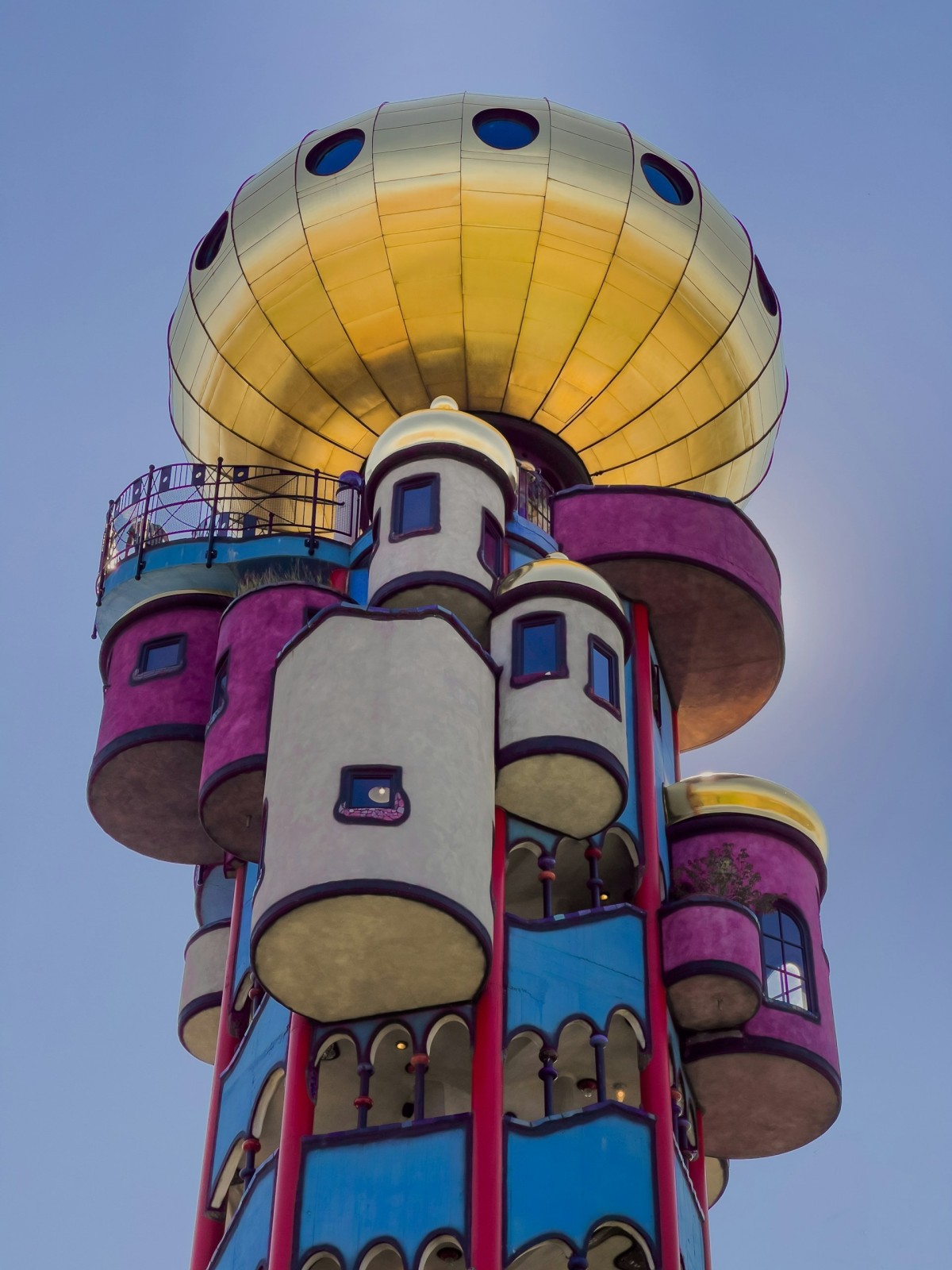
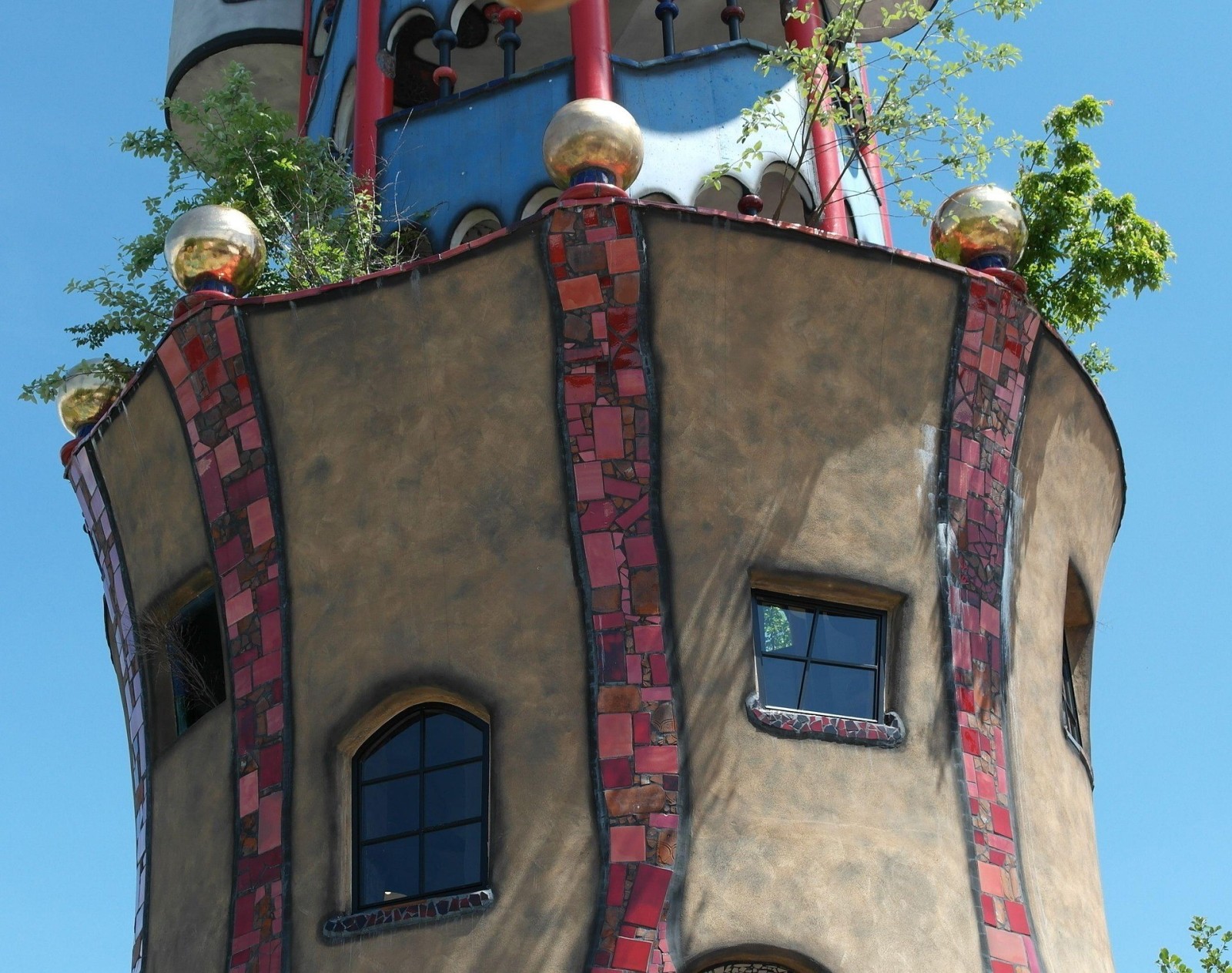
This 35-meter tower on the territory of the brewery Kuhlbauer (Brauerei zum Kuchlbauer), created on the architectural ideas of Friedensreich Hundertwasser and implemented by architect Peter Pelican. Its design is completely different from the usual Bavarian architecture: rounded shapes, colorful elements, unusual windows and a golden dome are used here.
The tower is dedicated to art, Bavaria and beer. It is this combination that has made it one of Abensberg’s most recognizable symbols.
A visit to the tower is included in a tour of the world of the Kuchlbauer brewery. The tour lasts approximately 90 minutes and includes an acquaintance with the brewery and an independent visit to the tower; from the observation deck overlooks Abensberg and the surrounding Hallertau region.
Art of Hundertwasser
Near the tower is KunstHaus Abensberg, another unusual object of the city.
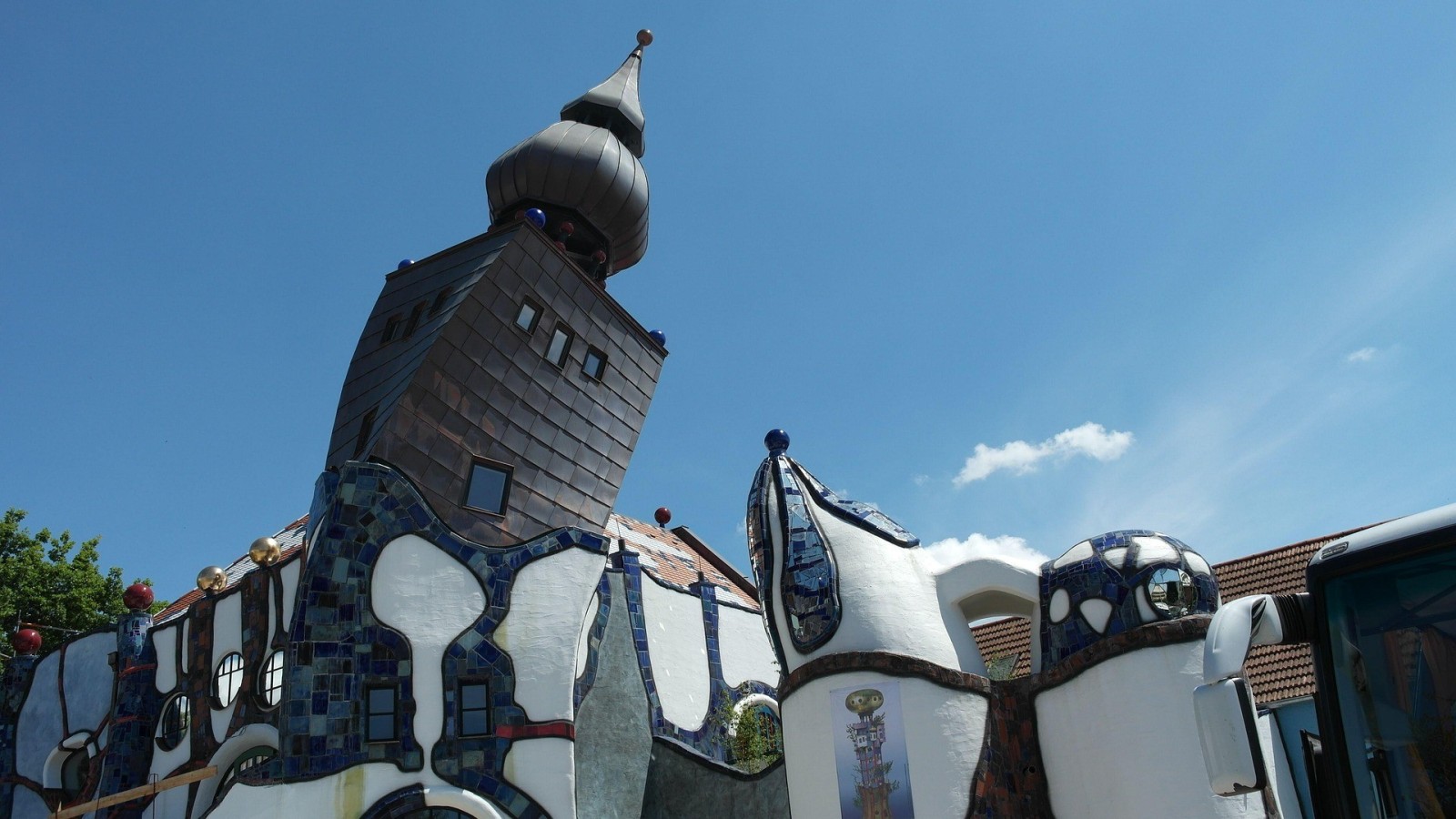
The building was designed by architect Peter Pelican, who collaborated with Hundertwasser for many years. Particularly prominent is its heavily tilted tower, thanks to which the building looks like a kind of modern opposite to the medieval towers of the city.
Inside are the works of Hundertwasser, materials about his life and information about the implementation of his architectural projects. The museum opened in 2014.
Thus, Abensberg can be interesting even for those travelers who do not usually visit small historical cities: there is a bright modern architecture that is easy to remember and interesting to photograph.
Beer and Bavarian gastronomy
Another reason to visit Abensberg is the local beer culture.
Kuhlbauer Brewery combines excursion program, architecture, art and traditions of Bavarian brewing. After the tour, the tourist can visit the beer garden and try traditional Bavarian dishes.
Abensberg is also located in an area known for growing asparagus. Especially interesting is the period from mid-April to about the summer solstice, when local establishments can taste dishes of fresh Bavarian asparagus. The regional tourism portal directly recommends paying attention to local asparagus along with beer and cultural attractions.
1. Small hotels 3-4 stars
Abensberg is dominated by small family hotels rather than large chain hotels. This is a good option for tourists who are interested in comfort, breakfast and location near the historical center.
One of the best ways to explore the city. The hotel is located directly in the historical center, in a quiet part of the Old Town. This is especially convenient for tourists who want to see the sights on foot.
The hotel has very good guest ratings - about 8.9/10 on Booking with a large number of reviews. Among the advantages travelers note the central location, cleanliness, service and proximity of restaurants.
Best suited: couples, individual travelers, older tourists and those who come for the sake of the Old Town.
2. Traditional hotels with restaurant
For Bavaria, the Gasthof format is characteristic - a traditional inn, in which there are rooms for living. For Abensberg, this is a particularly interesting option, since you can simultaneously get accommodation and get acquainted with the local cuisine.
Brauereigasthof Zum Kuchlbauer Hotel & Restaurant - Abensberg
This is one of the most interesting accommodation options for tourists, as the hotel is connected to the Kuhlbauer Brewery and is located on the city square.
It is especially convenient for those who come to Abensberg for the famous Kuhlbauer Tower and the local beer culture. The hotel has a restaurant, and the location allows you to almost immediately be in the historical center.
According to current offers of accommodation, the object receives very high ratings of guests - about 9.2/10.
Best suited: tourists interested in Bavarian cuisine, breweries, Hundertwasser architecture and the atmosphere of the historic city.
3. Small family hotels
Jungbräuu
A traditional small hotel in the central part of Abensberg. This is a simpler option compared to major resort hotels, but it is convenient for a short stay.
On booking services, Hotel Jungbräu receives a score of around 8.2/10. Guests especially note the location and the ability to quickly reach the main facilities of the Old Town.
Best suited: for a short tourist trip, individual travelers and those who from the hotel primarily need a bed, breakfast and a convenient location.
4. Garni-format hotels
Hotel Garni Salleck
Another option is accommodation directly in Abensberg. Hotel Garni format usually includes hotel rooms with an emphasis on accommodation and breakfast, without a large restaurant complex.
The hotel is located on Bahnhofstraße, so its location is convenient for travelers using the railway.
Best suited: independent tourists traveling in Bavaria without a car, and those who plan to make day trips from Abensberg.
5. Apartments and Ferienwohnung
For a few days or weeks, an apartment is often more practical than a hotel room.
In Abensberg, there are both separate apartments and Ferienwohnung with a kitchen, living room and several beds.
Ferienwohnungen an der Abens
The apartments are located about 0.5 km from the center. The current tourist catalog of Abensberg lists free Wi-Fi and parking, and the cost of living starts from about 59 euros per room.
This is a good option for travelers who are interested in independence and the ability to cook their own food.
Ferienwohnung Ecker
The apartment is located about 1.7 km from the center. It has two separate bedrooms, additional beds in the living room, a kitchen and a bathroom. The official tourist directory lists the cost of approximately 38–43 euros per person per night for short stays and about 32–38 euros per person for longer stays.
Best suited: families, two couples, small businesses and tourists who stay in the city for a few days.
6. Modern apartments
GOLTAN Apartments - Ferienwohnungen
Modern accommodation in Abensberg. This format is especially convenient for independent travelers and families who need a full-fledged apartment instead of a standard hotel room.
On booking services, apartments in Abensberg are generally in high demand: for example, Ferienwohnungen Eisler receives about 9.7/10 according to guest reviews.
1. Historical Centre of Abensberg (Altstadt)
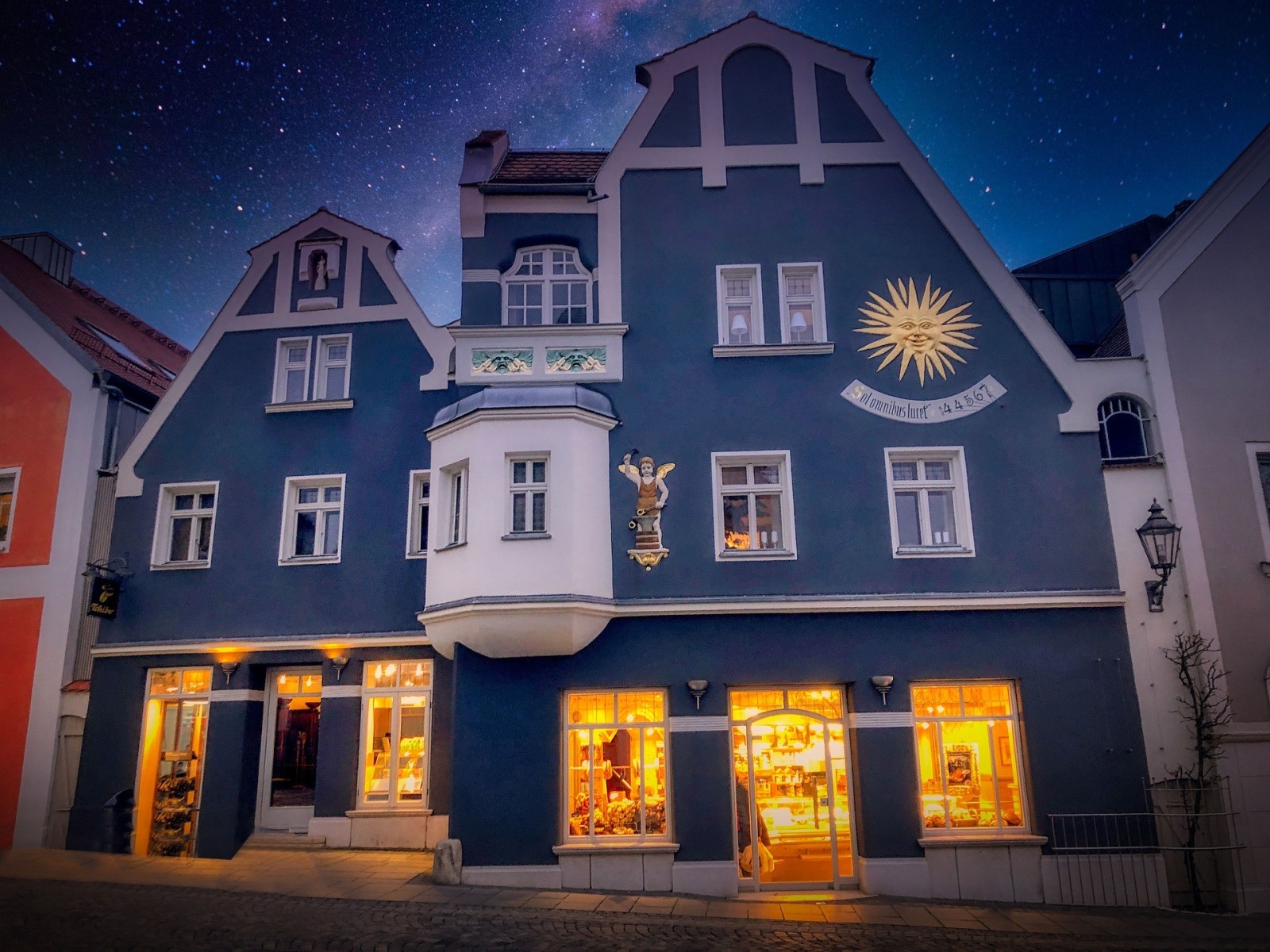
The Old Town is the main attraction of Abensberg. Historical burgher houses, town hall, old streets, fragments of medieval fortifications and small squares are preserved here.
Especially interesting is the central city square, around which are concentrated cafes, restaurants and historical buildings. A walk through the Old Town allows you to feel the atmosphere of a small Bavarian town.
Transport accessibility: From the train station to the Old Town you can walk. Inside the historical center, it is most convenient to walk.
2. City Square (Stadtplatz)
The central square of Abensberg is surrounded by historic buildings and is one of the most beautiful places in the city. Here is the old town hall, as well as several buildings related to the history of local trade and brewing.
The square is suitable for starting a tour, relaxing in a cafe and exploring the traditional architecture of Bavaria.
Transport accessibility: located in the center. The train station can be reached on foot in about 10 minutes.
3. Maderturm (Maderturm)
Maderturm is one of the most famous medieval towers of Abensberg and an important part of the former city fortifications.
Once the city was surrounded by a powerful fortress system with numerous towers. Only the Maderturm has survived to this day, so it has a special historical significance.
Transport accessibility: located in the historic center. Stadtplatz can be reached in a few minutes, so it is best to visit the tower on foot.
4. Kuchlbauer Turm (Kuchlbauer Turm)
Kuhlbauerturm is the most unusual attraction of Abensberg. The 35-meter tower is based on the architectural concept of Friedensreich Hundertwasser.
The tower is distinguished by bright colors, unusual forms, numerous decorative elements and a golden dome. It is associated with the history of the local brewery and is one of the most recognizable symbols of the city.
A visit to the tower is held as part of a tour of the Kuhlbauer brewery.
Transport accessibility: From the train station to the tower can be reached in about 5 minutes. The historic centre can also be reached on foot.
5. Kunsthaus Abensberg (KunstHaus Abensberg)
The Kunsthaus is a modern art museum associated with the work of Friedensreich Hundertwasser.
The building itself is an architectural landmark. It has unusual shapes, bright elements and an inclined tower. Inside are the works of Hundertwasser and materials telling about his work.
Transport accessibility: it is close to Kuhlbauerturm, so both sites are convenient to visit at the same time. From the train station - about 5 minutes walk.
6. City Museum of Abensberg (Stadtmuseum Abensberg)
The city museum is housed in the historic Ducal Castle (Herzogskasten). The exposition tells about the history of Abensberg since the Stone Age.
Here you can learn about ancient settlements, flint mining in Arnhofen, the Abensberg family, the medieval city, the Napoleonic Wars and the famous historian Avantine, born in Abensberg.
Transport accessibility: The museum is located in the historic part of the city. From the city square and other attractions can be reached on foot.
7. Carmelite Monastery (Karmelitenkloster)
The former Carmelite monastery is one of the most important historical complexes of Abensberg. It was founded in the Middle Ages and for several centuries played an important role in the religious and cultural life of the city.
Today, the monastery complex is part of the cultural space of Abensberg.
Transport accessibility: located in the Old Town. It is most convenient to walk from Stadtplatz and the city museum.
8. Aventinum (Aventinum)
Aventinum is located in the historic building of the former Carmelite monastery. Today there are cultural events and various city institutions.
For tourists, interest is primarily a combination of ancient monastic architecture and modern cultural life of the city.
Transport accessibility: located in the center of Abensberg, so a visit is easy to combine with a walk around the Old Town.
9. St. Barbara Church (Stadtpfarrkirche St. Barbara)
The Church of St. Barbara is a historical temple, the construction of which is associated with the late medieval period.
The church is of interest due to its Gothic architecture, historical interior and high tower, clearly visible among the urban buildings.
Transport accessibility: located in the central part of Abensberg. The church can be easily reached on foot from Stadtplatz.
10. The remains of the Abensberg Castle (Schloss Abensberg)
The castle is associated with the history of the noble family of Abensbergs, who in the Middle Ages owned the city and surrounding lands.
It was the fortified settlement around the castle that became the basis for the development of medieval Abensberg. Today, some historical elements have been preserved from the original castle complex.
Transport accessibility: located near the historic center. A visit can be combined with a visit to the city walls and other medieval monuments.
11. Kunstweg - an art route along the city wall
Kunstweg is a walking route along preserved sections of the medieval city wall.
The peculiarity of the route is the combination of ancient fortifications and modern art. This is an interesting option for a quiet walk and photography.
Transport accessibility: located directly in the historical center. It is better to visit the route on foot.
12. Castle Garden (Schlossgarten)
The castle garden is a small green area near the historic castle complex. It is a pleasant place to relax after exploring the Old Town.
It is especially suitable for visiting in the warm season.
Transport accessibility: located in the central part of Abensberg, so you can walk from the main attractions.
13. Bird Park of Abensberg (Vogelpark Abensberg)
Bird Park is an interesting place for family holidays. There are various species of birds and other animals.
The attraction is especially suitable for tourists with children and those who want to combine a cultural program with a rest in nature.
Accessibility: located outside the historic center. It is most convenient to travel by car or bicycle.
14. Galgenberg
Halgenberg is a hill and observation point in the vicinity of Abensberg. It offers views of the city and the surrounding Bavarian landscape.
This is a good place for photos and a quiet walk in nature.
Accessibility: located outside the centre. It is optimal to get by car or bicycle, after which to walk a small part of the route.
15. The inner dunes of Offenstetten (Binnendünen bei Offenstetten)
In the vicinity of Abensberg there are unusual natural formations - the internal sand dunes of Offenstätten.
They are of interest to nature lovers and unusual landscapes. The attraction can be included in a longer trip around the city.
Transport accessibility: located outside the center of Abensberg. It is most convenient to travel by car or bicycle.
16. Castle Offenstetten (Schloss Offenstetten)
The castle is located in the Offenstätten district, which is part of Abensberg. It is of historical and architectural interest.
A visit to the castle is better combined with a trip to the surroundings and natural attractions.
Transport accessibility: it is more convenient to get from the center of Abensberg by car or bicycle.
1. Faschings-Gillamoos (February)
In February, an unusual carnival version of the famous Gillamus - Fashing Gillamus - takes place in Abensberg. The main events fall on the Fashingsdienstag - the last day of the carnival season, when the city turns into a large festive venue.
Carnival processions, performances of musical groups, dance and entertainment programs, costume competitions and a large festive program on the city square are held.
The traditional award for the best masks and costumes is especially interesting: individual costumes, group images and children's costumes are evaluated separately.
Best time to travel: February, if you want to see the traditional Bavarian carnival.
2. Spring Market (Frühjahrsmarkt) – March–April
In the spring, market events related to the onset of the new season are held in the center of Abensberg. Trade tents appear on the streets and squares, local sellers, cafes and enterprises of the city work.
Such activities are well suited for exploring the daily life of a small Bavarian town and buying local produce and souvenirs.
Best time to travel: Spring.
3. Asparagus Market in Sandharlanden (Spargelmarkt in Sandharlanden)
Sandharlanden, part of Abensberg, is known for growing asparagus. In the spring, there are events dedicated to the famous regional asparagus.
Tourists can try fresh asparagus dishes, purchase local agricultural products and get acquainted with the gastronomic traditions of the region.
The best time to travel is April-May.
4. KunstNachtMarkt (June)
KunstNachtMarkt is one of the most interesting cultural events of Abensberg. It takes place in the summer in the area of the Old Town and the city moat.
In the evening, the historical center turns into a space of art and entertainment: exhibitions, musical performances, shopping and craft areas work, and the city streets are filled with a festive atmosphere.
Officially, the event is positioned as a summer night event of Abensberg.
Best time to travel: June.
5. Summer Music Season “SommerLaune” – July-August
In the summer, a series of SommerLaune concerts takes place in Abensberg. Musical events are organized on the city square, in the garden of the castle, on Libezinzel and other venues.
The program can include rock, pop, folk and jazz bands, as well as local performers.
The best time to travel is July and August.
6. Weinfest - July
In summer, Libesinzel hosts a wine festival - Weinfest.
This is a quieter event compared to Gillamus: here you can spend an evening outdoors, taste wines, chat and listen to music.
Best time to travel: July.
7. Holiday of citizens (Bürgerfest) - early July
Bürgerfest is a traditional city holiday that usually takes place in early July.
The central streets and squares of the city become a platform for concerts, entertainment, gastronomic events and meetings of local residents.
For a tourist, this is a good way to see Abensberg not only as a historic city, but also as a vibrant modern Bavarian community. The official tourist portal lists Bürgerfest among the traditional annual city holidays.
Best time to travel: early July.
8. Festival of the Castle Garden (Schlossgartenfest) – July
In summer, Schlossgartenfest takes place in the castle garden.
The event combines outdoor recreation, music, food and the local festive atmosphere.
Best time to travel: July.
9 Gillamoos - early September
Gilamus is the main and most famous event of Abensberg. It is one of the oldest national fairs in Bavaria, dating back to at least 1313.
Modern Gillamus is held annually from Thursday to Monday around the first Sunday of September. For five days there are huge festive tents, fair rides, trading platforms and numerous gastronomic establishments.
The program includes concerts, traditional Bavarian music, festive processions, dances, beer festivals, performances of local groups and various activities for families.
1. Winter - December, January, February
Winter in Abensberg is cool, sometimes frosty and snowy. In January, the average daily temperature is about 0 ... + 3 ° C, at night usually about -4 ... - 1 ° C. In some periods, the temperature can drop significantly below zero. February is gradually getting warmer, but still remains a winter month.
December: during the day about +1 ... +3 ° C, at night about -2 ... 0 ° C. January: in the afternoon about 0 ... + 2 ° C, at night about -4 ° C. February: in the afternoon about +3 ... + 5 ° C, at night about -4 ... -1°C.
Precipitation in winter is not too much, but rain, wet snow and snow are possible. Due to cloudiness and short daylight, outdoor excursions are less comfortable.
Water temperature: Open bodies of water usually have a temperature of about 0-5 °C. Swimming in natural waters for ordinary tourist holidays is not suitable.
For travel: Winter is interesting primarily for the Christmas atmosphere in December, museums, historic buildings and winter events.
2. Spring - March, April, May
Spring is a good time to get acquainted with Abensberg. The temperature gradually rises, there are more sunny days, parks and surroundings begin to turn green.
March: in the afternoon about +9 ° C, at night about 0 ° C. April: in the afternoon about +14 ... +15 ° C, at night about +3 ° C. May: in the afternoon about +18 ... +19 °C, at night about +7 ... +8 °C.
May is already warm enough for long walks, cycling trips and visiting outdoor attractions.
In the spring, the amount of precipitation gradually increases. This is especially noticeable in May, so you should have a lightweight waterproof jacket for the trip.
Water temperature: approximately 6-15 °C, depending on the month and the specific reservoir. In May, the water in the open waters is still cool.
For travel: the end of April and May are especially well suited - it is already quite warm, but there is no summer tourist influx yet.
3. Summer - June, July, August
Summer is the most comfortable season for a tourist trip. During the day, usually +22 ... +25 ° C, and at night the temperature drops to about +12 ... +14 ° C. The warmest month is July.
June: in the afternoon about +22 ° C, at night about +11 ... +12 ° C. July: in the afternoon about +24 ... +25 ° C, at night about +13 ° C. August: in the afternoon about +24 ° C, at night about +12 ... +13 ° C.
In some hot periods, the temperature can rise above +30 ° C, but the constant heat for Abensberg is not characteristic. In summer, showers and thunderstorms are possible, and July usually refers to the wettest months.
Water temperature: In the region’s natural water bodies in summer, it is usually around 18–23 °C, depending on the specific lake, river and weather conditions. In July and August, the water is most comfortable for swimming.
For travel: this is the best season for active tourism - walking around the Old Town, cycling routes, visiting Kuhlbauerturm, parks and surroundings. In addition, a large number of concerts, city holidays and cultural events take place in the summer.
4. Autumn - September, October, November
The beginning of autumn remains quite warm, and then the temperature gradually decreases. September is especially pleasant for tourists.
September: afternoon around +19... +20 °C, at night about +9 °C. October: in the afternoon about +13 ... +14 °C, at night about +4 ... +5 °C. November: in the afternoon about +7 ... +8 °C, at night about +1 ... +2 °C.
September is one of the best months to travel: the weather is still quite warm, but the strong summer heat is already over. Especially attractive is the beginning of September, when the famous Gillamus (Gillamoos) takes place.
It gets cooler in October, but the weather still makes it comfortable to explore the city. In November, cloudiness increases and becomes wetter.
Water temperature: in September about 16-19 °C, in October about 11-15 °C, in November usually 7-10 °C. For swimming, September is mostly comfortable, and much depends on the specific reservoir.
1. Language of communication
German (Deutsch) is the main official language and language of everyday communication.
English can be used in tourism. However, knowing a few German phrases will be an advantage: locals are generally positive about tourists who try to address them in German.
Useful phrases:
Guten Tag! Hello, Hallo! - Hello there! Auf Wiedersehen! - Goodbye, Bitte. - Please. Danke. - Thank you. Entschuldigung. - Excuse me. Sprechen Sie Englisch? - Do you speak English? Ich spreche kein Deutsch. - I don't speak German. Wie viel kostet das? How much does it cost? - How much is it? - Where is the train station? - Die Rechnung, bitte - Check, please. Hilfe! - Help me!
In Bavaria, you can hear local dialect expressions, but tourists do not need to study them specifically - standard German is enough.
2. Greetings and communication
In the official setting, it is customary to greet a person with the words Guten Tag and refer to Sie - "You". Switching to du – “you” – is usually worth it only after the interlocutor himself offers a more informal appeal.
When meeting, it is customary to shake hands. In an informal setting, friends and close acquaintances may greet each other differently.
Do not talk too loudly in public places, interrupt the interlocutor or show excessive familiarity. Germans, including residents of small Bavarian towns, usually value courtesy, tranquility and respect for personal space.
3. Punctuality
Punctuality is very important in Germany.
If a tourist has booked an excursion, a table in a restaurant, a excursion program or arranged a meeting, it is advisable to come in advance or exactly by the time.
Being a few minutes late in an informal situation is usually not a serious problem, but for business meetings, excursions and advance bookings, it is better not to be late.
4. Bavaria traditions
Abensberg is located in Bavaria, so local traditions are especially noticeable here.
One of the most recognizable is the wearing of traditional clothes on national holidays. Women can wear Dirndl and men can wear Lederhosen. It is especially common to see these clothes during Gillamus and other local holidays.
At the same time, it is not necessary for a tourist to buy a national costume - ordinary neat everyday clothes are quite suitable.
5. Bavarian Beer Culture
Beer is an important part of Bavarian gastronomic culture, and in Abensberg this is especially noticeable due to the local brewing traditions and the Kuhlbauer complex.
However, alcohol consumption is not a mandatory part of a tourist holiday. In restaurants and beer establishments, it is perfectly normal to order a soft drink.
During a visit to a traditional beer store, you should observe the usual rules of behavior: do not interfere with other visitors, do not occupy a common table for a long time without the need and respect the staff.
6. Behavior during Gillamus
During Gillamoos, the city becomes much more lively. Concerts, fair events, processions and festive programs are held.
At this time, it is advisable to book a hotel in advance, since the number of visitors increases significantly.
At mass events, you should follow the instructions of the organizers, not create conflicts, respect other visitors and especially carefully monitor personal belongings in large crowds.
7. Restaurants and tips
In restaurants in Germany, tipping is not mandatory in the same sense as paying the bill itself, but for good service, it is customary to leave about 5-10%.
Usually, the amount can be rounded up directly when paying. For example, if the bill is 47 €, you can tell the waiter 50 € if you want to leave a 3 € tip.
It is not necessary to leave a large tip, especially if the service is already included in the price or if the service does not suit you.
8. Shops and opening hours
In Germany, there is a tradition of Sonntag - Ruhe- und Familientag, that is, Sunday is traditionally a day of rest.
Most regular shops are closed on Sundays, with the exception of individual outlets, station stores, some bakeries and special Sunday events.
Therefore, it is better to purchase products and necessary purchases in advance.
9. Silence and respect for others
In Germany, much attention is paid to the observance of silence.
Not recommended:
loudly turn on music in the hotel;
make noise at night;
shouting in residential areas;
interfere with neighbors;
Use the car signal without need.
It is especially important to observe Ruhezeiten - periods of rest established by the rules of a particular hotel, apartment house or municipality.
10. Cleanliness and sorting
Germany is known for its strict waste sorting system. Hotels, apartments and public places can use separate containers for different types of garbage.
Garbage should be disposed of in an appropriate container and not left outdoors or in nature.
Administrative fines may be applied for discarded garbage in the wrong place.
11. Traffic rules
If a tourist travels by car or bicycle, it is necessary to strictly observe German traffic rules.
Particular attention should be paid to:
pedestrian crossings;
bicycle paths;
speed limits;
traffic signs;
parking regulations;
Prohibition of parking in the wrong places.
Cyclists are also required to follow traffic rules. On bicycle paths should not be unnecessarily walk or block traffic.
12. Alcohol driving
Driving after drinking alcohol is taken very seriously in Germany.
It is safer for a tourist to adhere to a simple rule: if you have to drive a car, do not drink alcohol at all.
This is especially true during local festivals and festivals, where alcohol is part of traditional gastronomic culture.
13. Photo and video recording
Photographing sights, streets and public spaces is usually possible.
However, when shooting specific people, their right to image should be taken into account. Do not obsessively photograph strangers close-up without their consent.
In museums, churches and exhibitions, it is necessary to pay attention to the rules of a particular institution - photography of some exhibits may be limited.
14. Visiting churches
When visiting churches, it is advisable to behave calmly and respectfully.
Should:
speak quietly;
Turn off or transfer the phone to silent mode;
Do not interfere with worship;
Do not photograph parishioners without permission;
comply with the requirements of a particular temple for clothing and photography.
There is usually no strict dress code, but overly open beach clothing for church visits is inappropriate.
15. Smoking
Smoking is prohibited in many enclosed public places, including restaurants and other places where there are restrictions.
Before smoking in an open area, make sure that it is allowed and does not interfere with others. You can't throw cigarette butts on the ground.
16. Laws and documents
When traveling in Abensberg, it is necessary to comply with German law.
It is advisable for a tourist to have an identity document with him, and if necessary - documents confirming the legality of his stay in the country.
It is also recommended to have health insurance in Germany.
If you are traveling by car, you must have a driving license, registration documents and valid car insurance.
1. Greetings and polite words
Hallo! Hello! Transcription: Hallo!
Guten Morgen! - Good morning!Transcription: Guten Morgen!
Guten Tag! - Good afternoon! / Hello!Transcription: Guten so!
Guten Abend! - Good evening! Transcription: Guten Abent!
Gute Nacht! - Good night! Transcription: Gute naht!
Auf Wiedersehen! - Goodbye! Transcription: Auf Viderzeen!
Tschüss! Transcription: Chuss!
Bitte! - Please! Transcription: Bitte!
Danke! Transcription: Danke!
Vielen Dank! Transcription: Filen Dunk!
Entschuldigung! Transcription: Entschüldigung!
Kein Problem! - No problem! - Transcription: Kane problem!
Ja. - Yes. Transcription: Me.
Nein. Nope. Transcription: Nine.
2. If you don't speak German
Sprechen Sie Englisch? - Do you speak English? Transcription: Sprehan Z'English?
Sprechen Sie Russisch? - Do you speak Russian? Transcription: Sprehan zi rusish?
Ich spreche nur ein bisschen Deutsch. - I speak a little German. Transcription: Their Sprehe noor ain bishan deutsch.
Ich spreche kein Deutsch. - I don't speak German. Transcription: Their Spreche Kine Deutsch.
Können Sie das bitte wiederholen? - Can you repeat it, please? Transcription: Kenen zi das bitte viderholen?
Bitte sprechen Sie langsamer. - Please speak more slowly. Transcription: Bite Sprehen Zi Langzamer.
Ich verstehe nicht. - I don't understand. Transcription: They're good.
Was it bedeutet das? - What does that mean? Transcription: Are you poor?
3. Orientation in the city
Wo ist die Altstadt? - Where is the Old Town? Transcription: In the East?
Wo ist der Bahnhof? - Where's the station? Transcription: East Der Banhof?
Wo ist die Bushaltestelle? - Where's the bus stop? Transcription: In the East di boschaltestall?
Wo ist das Hotel? - Where's the hotel? Transcription: East das Hotel?
Wie komme ich zum Stadtzentrum? - How do you get to downtown? Transcription: What do you think?
Ist es weit? - Is that far? Transcription: East S. White?
Ist es zu Fuß erreichbar? - Can I walk there? Transcription: East s zu fus Erreichbar?
Links. - Left. Transcription: Lynx.
Rechts. - To the right. Transcription: Rachts.
Geradeaus. - Straight. Transcription: Garadeaus.
Hier. - Here. Transcription: Hir.
Dort. There. Transcription: Dort.
4. At the train station.
Eine Fahrkarte nach Abensberg, bitte. - One ticket to Abensberg, please. Transcription: Aine Farkarte nah Abensberg, Bitte.
Eine Fahrkarte nach Regensburg, bitte. - One ticket to Regensburg, please. Transcription: Aine Farkarte nah Regansburg, Bitte.
Wann fährt der nächste Zug? - When does the next train leave? Transcription: Van Firth der nekste zuk?
Von welchem Gleis fährt der Zug? What platform does the train leave from? Transcription: Von Velham Glais Firth der Zuk?
Ist das der Zug nach München? - Is that a train to Munich? Transcription: East das der zuk nah Muncheng?
Muss ich umsteigen? - Do I need to change seats? Transcription: Mus their umstein?
Wie lange dauert die Fahrt? - How long is the trip? Transcription: Vi Lange d'auert di fart?
5. At the hotel.
Ich habe eine Reservierung. - I have a reservation. Transcription: Their habe reserve.
Ich habe ein Zimmer reserviert. - I booked a room. Transcription: Their hub ain zimmer reserve.
Auf welchen Namen? - What name? Transcription: Auf velhen námen?
Wann ist das Frühstück? - When's breakfast? Transcription: Van East das Fruit?
Ist das Frühstück inklusive? - Breakfast included? Transcription: East das french inclusive?
Wo ist mein Zimmer? - Where's my number? Transcription: East mine zimmer?
Können Sie mir helfen? - Can you help me? Transcription: Kyonen zi world Helfen?
Ich brauche ein Taxi. - I need a cab. Transcription: Their bruhe ain taksi.
6. Restaurant and café
Einen Tisch für zwei Personen, bitte. - Table for two, please. Transcription: Ainen tish für zwei parzonen, bitte.
Haben Sie eine Speisekarte? - Do you have a menu? Transcription: Haben zi áine spisekarte?
Was empfehlen Sie? - What do you recommend? Transcription: You're emmphelen zi?
Was wast typisch für Bayern? What is traditional for Bavaria? Transcription: Do you want to hear from Fuhr Bairn?
Ich möchte das bestellen. - I'd like to order this. Transcription: Their mehte das bestellen.
Ein Wasser, bitte. - Water, please. Transcription: Ain Vasser, Bitte.
Ein Bier, bitte. - Beer, please. Transcription: Ain bir, bitte.
Ein alkoholfreies Bier, bitte. - Nonalcoholic beer, please. Transcription: Ayn alkogolfreyes bir, bitte.
Die Rechnung, bitte. - Check, please. Transcription: Di Rehnung, bitte.
Kann ich mit Karte bezahlen? - Can I pay with a card? Transcription: Can their mit karte betzalen?
Das war sehr lecker. - It was delicious. Transcription: Das var zea lekka.
1. Bavarian asparagus from the Abensberg region
One of the most characteristic local products is asparagus (Spargel). Abensberg is located in the well-known region of asparagus growing, and the neighboring Sandharlanden is considered one of the important centers of production of this vegetable.
In the season, you can buy fresh white asparagus directly from farmers and local markets. The season usually falls on April-June.
Especially appreciated is thick white asparagus with a delicate taste. In Bavaria, it is traditionally served with potatoes, butter or Dutch sauce.
What to bring: fresh asparagus, if the duration of the trip and the conditions of transportation, or asparagus products - sauces, canned goods and other goods.
2. Local breweries beer
Abensberg has a long brewing tradition. One of the most famous local manufacturers is Kuchlbauer.
For tourists, various varieties of Bavarian beer, souvenir bottles and gift sets are interesting.
Gillamus-related beer is especially popular when breweries produce special holiday varieties.
What to bring: bottle or canned beer, gift set, beer mug or glass with the symbols of the local brewery.
When buying alcohol, it is necessary to consider the customs rules of the country to which you return.
3. Bavarian mustard
The traditional sweet Bavarian mustard (Bayerischer süßer Senf) is a simple but very distinctive gastronomic souvenir.
It is traditionally served with white Weißwurst sausages, but it is well suited to other meat dishes.
A can of mustard takes up little space in luggage and can be a good addition to a gastronomic gift.
4. White Bavarian sausages
Weißwurst is one of Bavaria’s most famous products.
These are white sausages made of veal and pork with traditional spices. They are usually eaten fresh, so bringing ready-made Weißwurst home from a trip is not always convenient.
It is better to try them directly in Abensberg or buy an industrial packaging product taking into account the requirements of the country of import.
5. Bavarian meat delicacies
In local butcher shops and shops you can find various types of sausages, smoked meats and meat delicacies.
It is more convenient for the traveler to choose products in factory vacuum packaging if they are allowed to be imported into the destination country.
Before buying animal products, be sure to check the current customs rules of the country where you are returning.
6. Horseradish products
In Bavaria, horseradish (Meerrettich) is common, which is used as a seasoning for meat dishes and sausages.
You can buy jars of grated horseradish, sauces and various ready-made seasonings.
This is a practical souvenir: it is inexpensive, compact and well preserved.
7. Honey and local apiary products
In the vicinity of Abensberg you can buy regional honey and other beekeeping products.
Especially interesting are the varieties of honey produced by local apiaries. This is a good option for those who prefer natural products instead of standard tourist souvenirs.
What to bring: honey, beeswax candles and other products of local apiaries.
8. Herbal teas and Bavarian herbal fees
In the region, you can find various herbal teas and fees from mint, melissa, chamomile and other plants.
This is a handy souvenir that takes up little space and can be used at home.
In this case, such products should be considered as food products, and not as medicines.
9. Natural cosmetics
In shops and pharmacies in Germany you can find high-quality natural cosmetics with plant components.
10. Pharmacies
Germany is known for a large selection of pharmacy and cosmetic products.
From the trip you can buy ordinary over-the-counter drugs, vitamins and cosmetic products, but drugs should be bought only in accordance with the instructions and take into account the rules of their import into your country.
Do not buy unknown drugs solely as a “local remedy”. If we are talking about the treatment of a specific disease, it is better to consult a doctor or pharmacist in advance.
11. Souvenirs with the image of Kuhlbauerturm
One of the best souvenirs is from Abensberg – objects with the image of the famous Kuchlbauer Turm.
1. What documents do tourists need?
A valid foreign passport is required for travel.
For citizens of countries requiring a Schengen visa, a valid Schengen visa is required unless there is another basis for visa-free entry or residence. For short-term travel, the standard Schengen rule is no more than 90 days in any 180-day period.
If the tourist is a citizen of a country exempt from visa requirements, a visa for a short tourist trip is not required, but the remaining entry conditions remain.
The passport for the planned departure from Germany must be valid for at least three months and be issued no more than 10 years ago.
2. What is desirable to have with you
In addition to the passport, it is recommended to have:
1. confirmation of booking of a hotel or other accommodation;
2. return ticket or confirmation of further route;
3. proof of sufficient financial resources for the trip;
4. health insurance;
5. a copy of the passport and visa separately from the originals;
6. electronic copies of documents in a phone or secure cloud storage;
7. the driver’s license and documents for the car, if the journey takes place by car.
German authorities can ask for documents confirming the purpose of the trip, living conditions and the availability of funds for stay and return home. A fixed amount of funds for each day for all tourists is not established.
3. Health insurance
For tourists, health insurance is highly desirable.
If insurance is required to obtain a Schengen visa, it must be valid throughout the Schengen area and for the entire period of travel; the minimum insurance amount for such a visa is 30,000 euros.
Even for a traveler who does not need a visa, it is advisable to obtain tourist medical insurance.
It is optimal that it covers:
outpatient medical care;
hospitalization;
emergency dental care;
transportation to a medical institution;
medical evacuation;
repatriation to the home country if necessary.
If you are planning outdoor activities, cycling or other potentially traumatic activities, you should check if they are covered.
4. Emergency phones
Germany has a single European emergency number:
112 - Ambulance and Fire Service.
The room works around the clock and free of charge from mobile and landline. It is used for life-threatening, severe injuries, serious illness, fire and other emergencies.
110, police.
This number is used in crime, security threat, assault, theft and other situations requiring police intervention.
116 117 - Medical duty.
The room is intended for situations where urgent medical attention is required, but there is no immediate threat to life and a regular doctor is not available.
5. If you lose your passport
If your passport is lost or stolen, you must:
1. report the incident to the police;
2. to receive confirmation of the application;
3. contact your country’s consulate in Germany;
4. to issue a document necessary for returning home.
Therefore, it is advisable to save the contacts of your embassy or consulate in advance.
6. City security
At normal times, a tourist can safely walk around the historical center, visit attractions, restaurants and shops.
However, standard precautions should be followed:
1. do not leave your phone and wallet unattended;
2. not to leave things in the car in plain sight;
3. keep your passport and money in a safe place;
4. do not carry large amounts of cash with you;
5. closely monitor things during mass events;
6. avoid crowded places at night if you do not know the area.
This is especially true during Gillamoos, when the number of visitors in the city increases significantly.
7. Security during Gillamus
During Gillamus, Abensberg becomes much more crowded.
Main recommendations:
1. book accommodation in advance;
2. not to leave valuables in the vehicle;
3. use a small bag over the shoulder or a lap bag;
4. monitor the phone and wallet in the crowd;
5. determine the meeting place in advance if you are travelling in a group;
6. observe the rules of the organizers;
7. do not drive after drinking alcohol.
At mass holidays, the main problem for the tourist is usually not serious crime, but the loss of things, excessive alcohol use and accidents.
8. Mobile communications
The main national mobile networks operate in Germany:
TelekomVodafoneO2 (Telefónica Germany)
There are also many virtual operators that use the infrastructure of these networks.
In Abensberg, mobile communications and mobile internet are normally available, but coverage outside the city and in some rural areas may vary.
If you have a SIM card from another EU country, you should check the EU Roam Like at Home conditions with your carrier. Some tariffs are subject to data limits or special conditions.
For tourists from outside the EU, it may be more profitable to purchase a German or European tourist SIM/eSIM.
9. Internet and Wi-Fi
Wi-Fi is usually provided in hotels, cafes, restaurants and some public places.
Mobile Internet is recommended for navigation, especially if you plan to use public transport yourself.
Before the trip, it is useful to download an offline map of Abensberg and the surrounding area - this will allow you to navigate even in the absence of communication.
10. Safety on the road
If you are traveling by car, you must strictly follow German traffic rules.
Particular attention should be paid to:
pedestrian crossings;
cyclists;
speed limits;
traffic signs;
parking regulations;
restricted traffic areas.
In Germany, parking violations and speeding are taken seriously.
Alcohol and driving should not be combined.
11. Safety of cyclists
The surroundings of Abensberg are suitable for cycling, but traffic rules must be followed.
Use marked cycle paths where they are provided, observe traffic lights and road signs.
At night, the bike should have the necessary lighting.
12. Medical assistance
If the situation is serious and there is a threat to life - 112.
If the situation is urgent, but does not pose an immediate threat to life - 116 117.
Apotheke pharmacies are also widespread in Germany. On-duty pharmacies operate on a special schedule at night, weekends and holidays.
It is advisable to have a list of medications taken and information about allergies, especially if it is a long trip.
13. How many tourists can stay in Germany
For a regular short-term tourist stay, the rule applies:
No more than 90 days in any 180-day period.
It is important that these 90 days are counted for the entire Schengen area and not separately for Germany. You can’t spend 90 days in Germany and then go to France or Austria and get another 90 days.
For example, if a tourist has:
30 days in Germany + 20 days in France + 10 days in Italy, then 60 of the 90 days of the Schengen limit have been used.
For a longer stay, another basis is required – for example, a national visa of category D or a corresponding residence permit.
Create a query and local guides will offer you the best options