Independent tourism and recreation in Esslingen am Neckar Historical information about the city of Esslingen-o...

Tours and tours (VIP, shopping) in Germany and EuropeTransportation services and various transfersInterpretation and sup …
1. The oldest settlements and the foundation of the city
The history of Esslingen am Neckar begins long before the Middle Ages. The city is located on the banks of the Neckar River, near Stuttgart, on the territory of the modern federal state of Baden-Württemberg. Thanks to fertile lands and convenient trade routes, this area attracted people in ancient times. In the Roman era, there were settlements here, and later the territory entered the area of settlement of the Alemannes.
The first documented mention of Esslingen dates back to 777 and is associated with the will of Abbot Fulrad. Around 800, the settlement was granted the right to hold a market, and in 866 the market rights were confirmed by King Louis of Germany. Trade contributed to the growth of the population, the development of crafts and the transformation of the settlement into a regional center.
2. Formation of the medieval city
In the XI-XIII centuries, Esslingen acquired an important commercial and administrative importance. In 1077, a meeting of the nobility was held here, and in the XII century the city was associated with the possessions of the Stauffen dynasty. In 1229, the existence of city law was documented.
In the XIII century, Esslingen became an independent urban center with its own governing bodies. Craft workshops, trade, religious institutions and viticulture were developed. Due to its location near Neckar, the city maintained connections with other Swabian settlements.
3. Esslingen as a Free Imperial City
In 1298, Esslingen was officially referred to as the Free Imperial City of the Holy Roman Empire. This meant direct submission to the emperor and considerable autonomy in administration, commerce, litigation and taxation.
The main political rival of the city was the Württemberg County, which surrounded its possessions. The two sides have repeatedly clashed over land, duties and trade rights. Despite the opposition, Esslingen managed to maintain independence until the beginning of the XIX century.
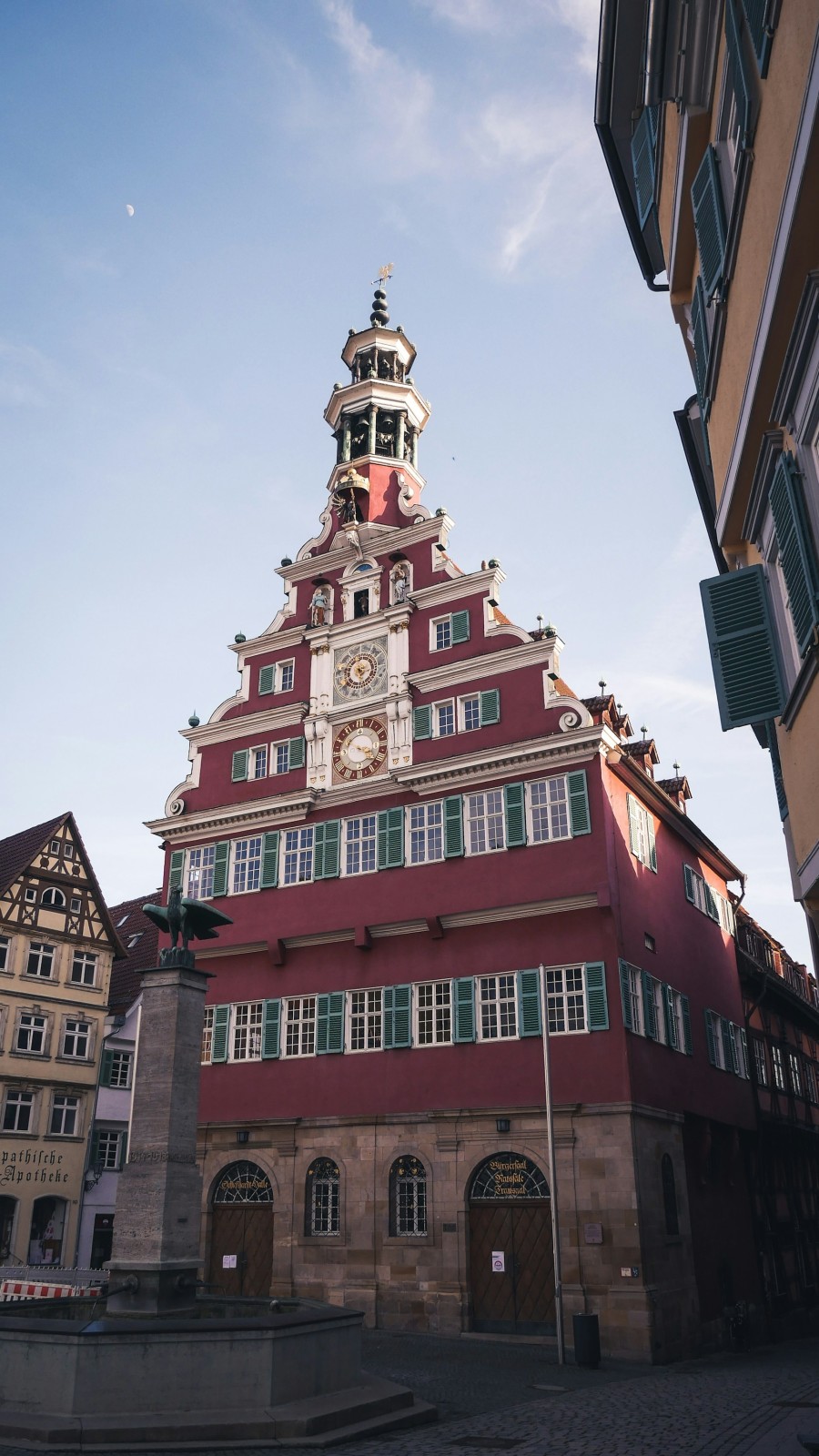
In the XIV-XV centuries, the city flourished thanks to trade, fabric production, metalworking and viticulture. Churches, public buildings and fortifications were built. In 1422-1424 the building of the Old Town Hall was erected, which became one of the symbols of the historical center.
In 1488, Esslingen became a member of the Swabian Union, created to protect the political and economic interests of the cities and principalities of the region.
4. Reformation and Religious Change
In the sixteenth century, Esslingen was involved in the religious transformations of Germany. In 1531, the city council supported the spread of evangelical teaching, and the city joined the Schmalkalden Union of Protestant Princes and Cities.
The Reformation affected church activities, education, charity and public life. At the same time, the city continued to maintain its own political traditions and develop trade.
5. The Thirty Years' War and the Great Fire
In the XVII century, Esslingen suffered from the Thirty Years' War of 1618-1648. Military standings, trade disruptions and epidemics have led to population decline and economic hardship. After the Peace of Westphalia, the city retained its status as a free imperial city, but restoration was slow.
In 1688 and 1693, Esslingen was occupied by French troops. An additional blow was the great fire of 1701, which destroyed a significant part of the city. Residents restored houses and public buildings, while the medieval layout of the streets is largely preserved.
6. The Napoleonic Era and the Loss of Independence
At the end of the XVIII century, Esslingen became involved in wars between France and the states of Central Europe. In 1796, the surrounding area became the scene of military clashes.
In 1802, the city was occupied by the troops of Württemberg, and in 1802-1803 finally lost the status of a free imperial city. Esslingen became part of the Württemberg state and became the administrative center of the district. The centuries-long period of political independence is over.
7. Industrial Revolution and Railroad Development
In the XIX century, Esslingen turned from a craft center into an industrial city. Textile production, metalworking and mechanical engineering developed here. In 1846, the Esslingen Machine Building Factory was founded, which produced machines and railway equipment.
In 1845, a railway line connected Esslingen with Cannstatt. This accelerated the transportation of raw materials and products, facilitated the movement of people and strengthened ties with Stuttgart. In the following decades, telegraph communications, gas lighting and urban infrastructure developed.
Industrial growth has led to an increase in population, the construction of new residential areas and the expansion of urban boundaries. Esslingen became one of the important industrial centers of the Kingdom of Württemberg.
8. Esslingen in the early twentieth century
In the early twentieth century, the city continued to expand. Enterprises, transport, education and residential areas developed. In 1912, a tram line was opened, and in 1916 classes began at the Esslingen State Higher School of Mechanical Engineering, which played an important role in the training of engineering specialists.
The First World War brought economic hardship and human losses. In the postwar years, the city restored the economy, developed educational institutions and improved infrastructure.
9. The Nazi Period and World War II
After the Nazis came to power in 1933, the city government came under the control of the dictatorship. The Jewish population was persecuted, disenfranchised and deported. During the pogroms of November 1938, the local synagogue was destroyed.
During World War II, Esslingen’s industry worked for the war economy. Although the city avoided the massive destruction of the historic center, the war led to human losses and serious economic difficulties. On April 22, 1945, Esslingen was occupied by American troops.
10. Post-war reconstruction and modern development
After the war, Esslingen rebuilt businesses, transportation and residential areas. In the 1950s and 1960s, the city was actively expanding: new districts, roads, bridges and public institutions were built. Technical education and industry continued to play an important role in the local economy.
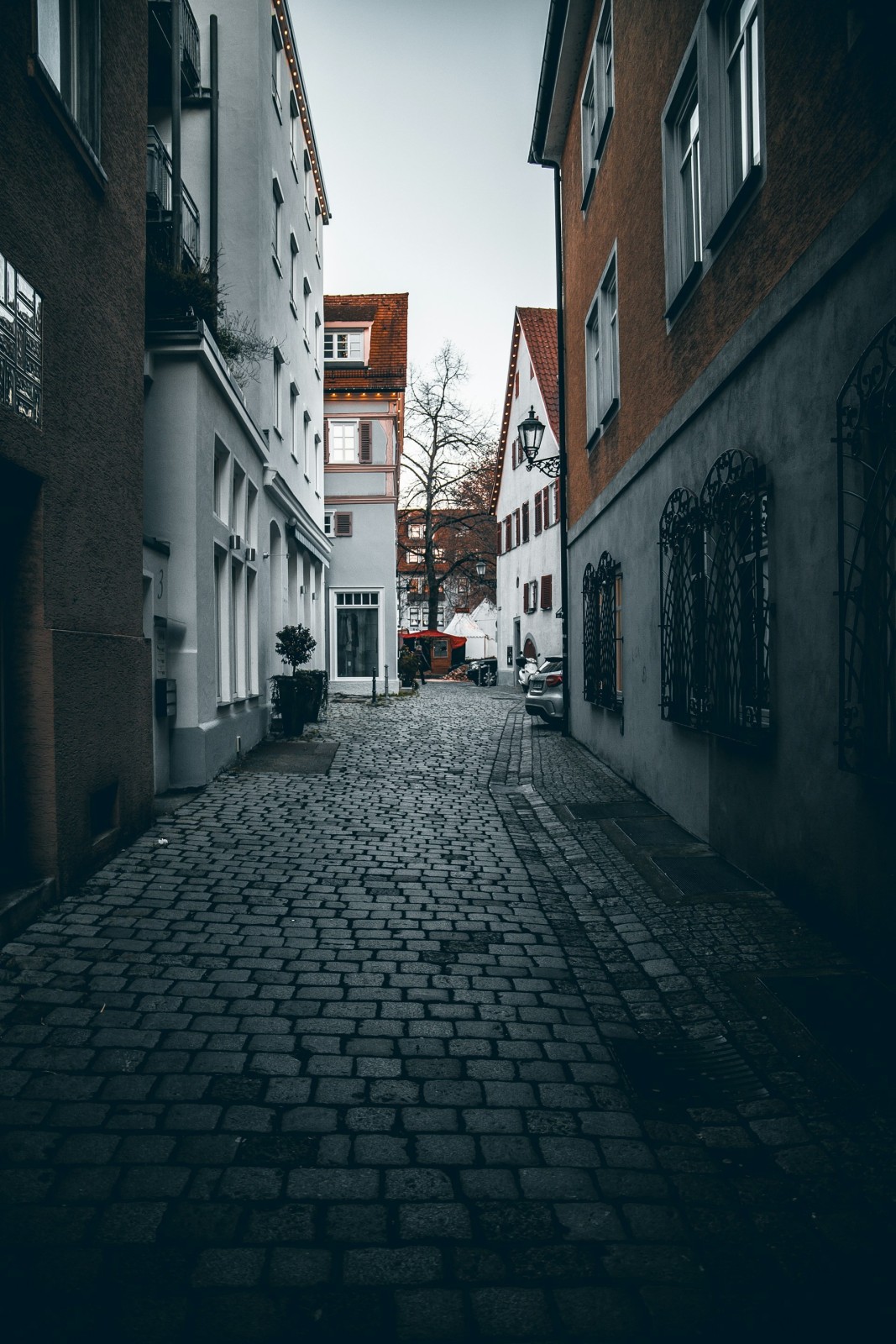
In the second half of the XX century, the city authorities began to pay more attention to the preservation of historical heritage. Old buildings were restored, pedestrian zones, museums and cultural sites were developed. Medieval streets and half-timbered houses have gradually become an important part of the tourist attraction of the city.
In the twenty-first century, Esslingen combines industry, engineering education, trade and tourism. The city has modern enterprises, educational institutions and cultural centers. At the same time, the historical center retains a significant part of the ancient buildings.
1. The overall attractiveness of the city
Esslingen am Neckar is a picturesque historic city in southwestern Germany, located in the federal state of Baden-Württemberg, near Stuttgart. It attracts travelers with medieval architecture, narrow cobbled streets, ancient bridges, vineyards and the cozy atmosphere of the old German city. Esslingen is suitable for cultural tourism, romantic trips, gastronomic travel and relaxing for a few days.
2. Medieval architecture and historical center
The main advantage of Esslingen is a well-preserved historical center with half-timbered houses, ancient squares, churches and buildings of different eras. Walking through its streets allows you to get acquainted with the architecture of the Middle Ages and early modern times. Particularly impressive are the Old Town Hall, historical trading buildings and picturesque alleys that have preserved the traditional look of the city.
3. Castle and Old Town Fortifications
On the slope above the historic center are the remains of medieval fortifications known as the Esslingen Fortress. This is one of the most recognizable places in the city. It offers beautiful views of the old roofs, the Neckara Valley and the surrounding vineyards. The ascent to the fortifications is especially interesting for lovers of hiking and historical monuments.
4. Churches and cultural heritage
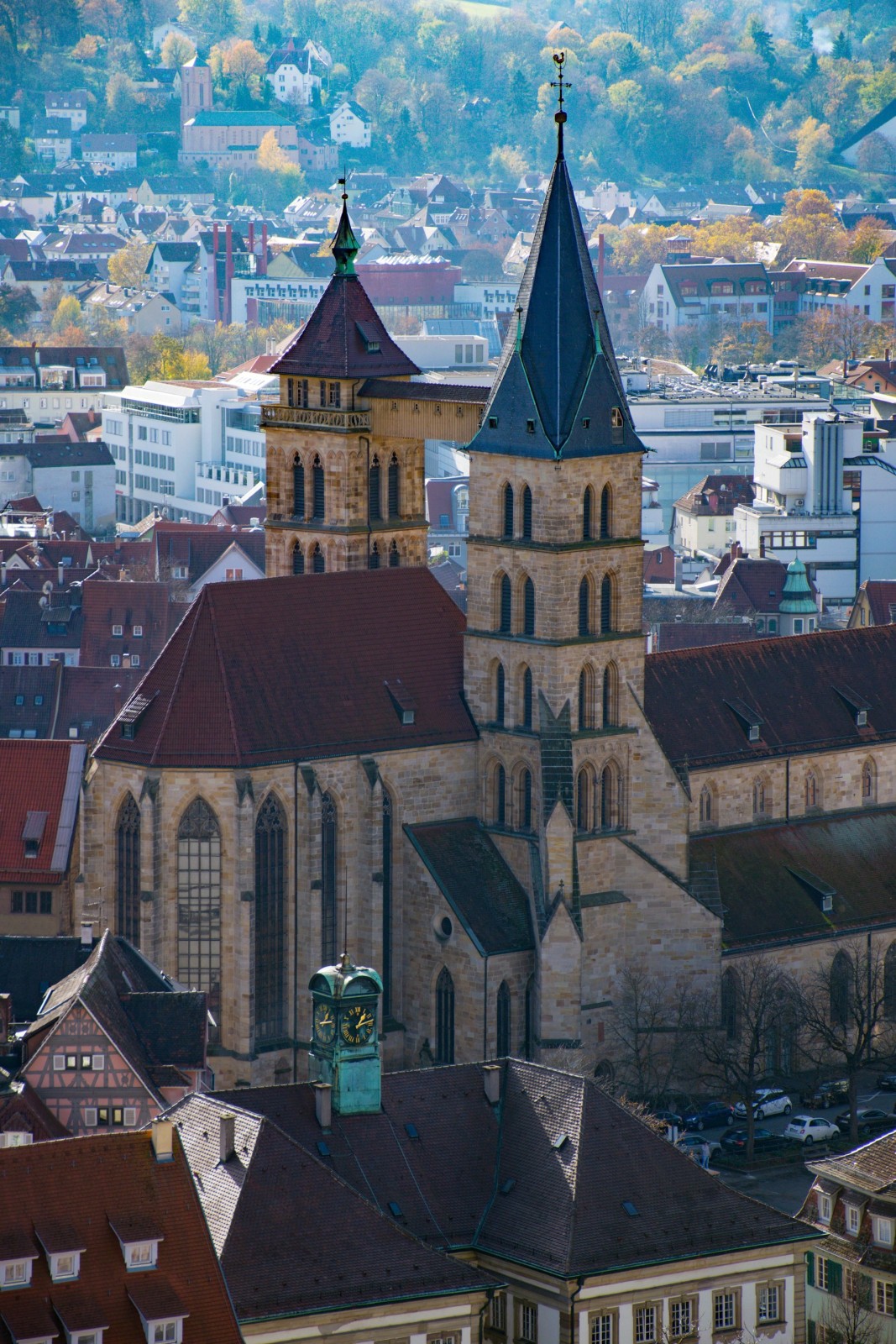
Esslingen is known for its historic temples, among which stands out the Church of St. Dionysius (Stadtkirche St. Dionys). Its architecture reflects the centuries-old religious history of the city. Church buildings, monastic complexes and ancient public buildings help tourists better understand the development of urban culture, art and architecture.
5. Bridges and embankments of the Neckar River
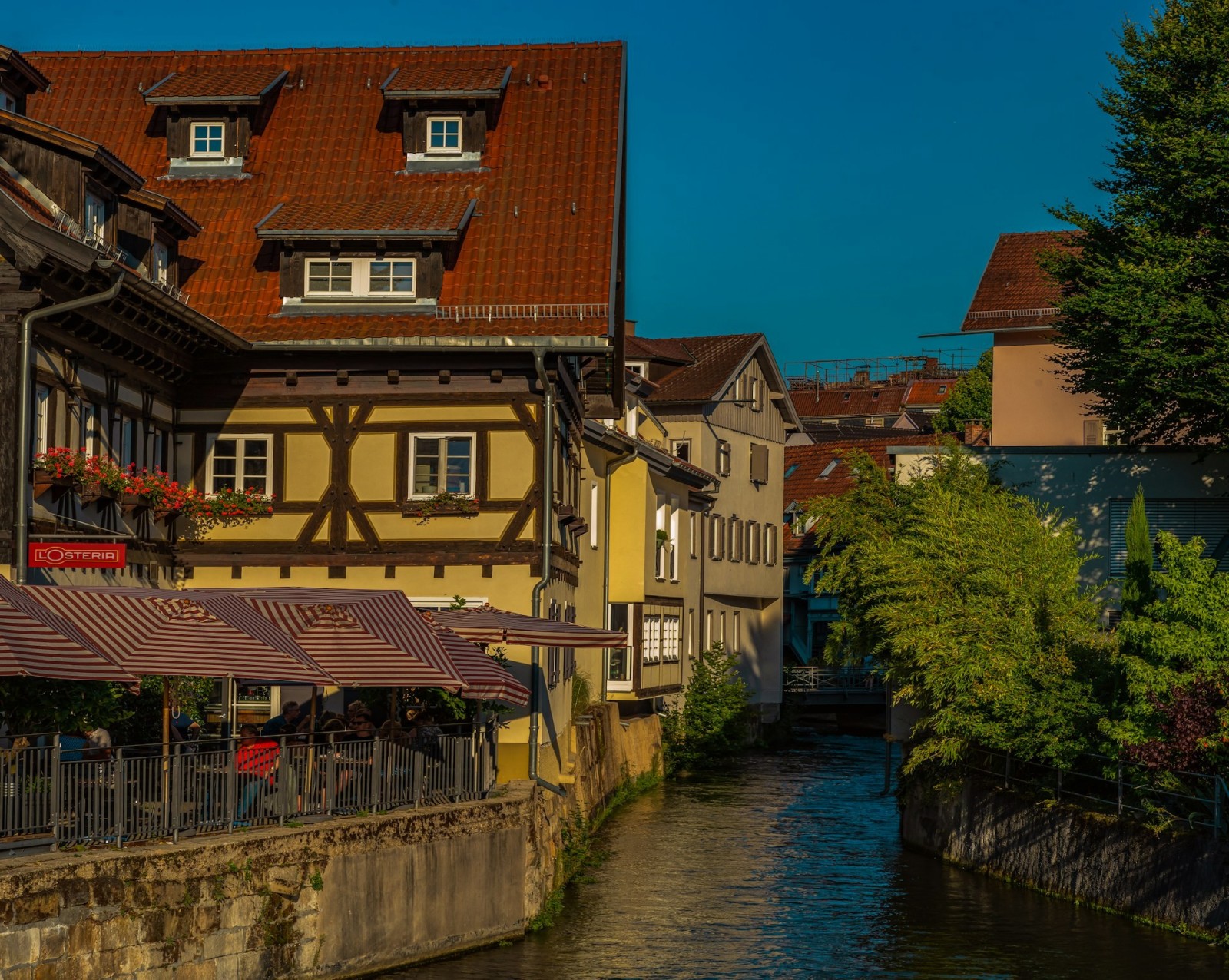
The Neckar River gives the city a special charm. Historic bridges, embankments and canals create scenic views suitable for walking and photographing. In the area of the old town you can see traditional buildings by the water, small squares and cozy places for recreation. A walk along the river allows you to get acquainted with the city at a calm pace.
6. Vineyards and natural landscapes
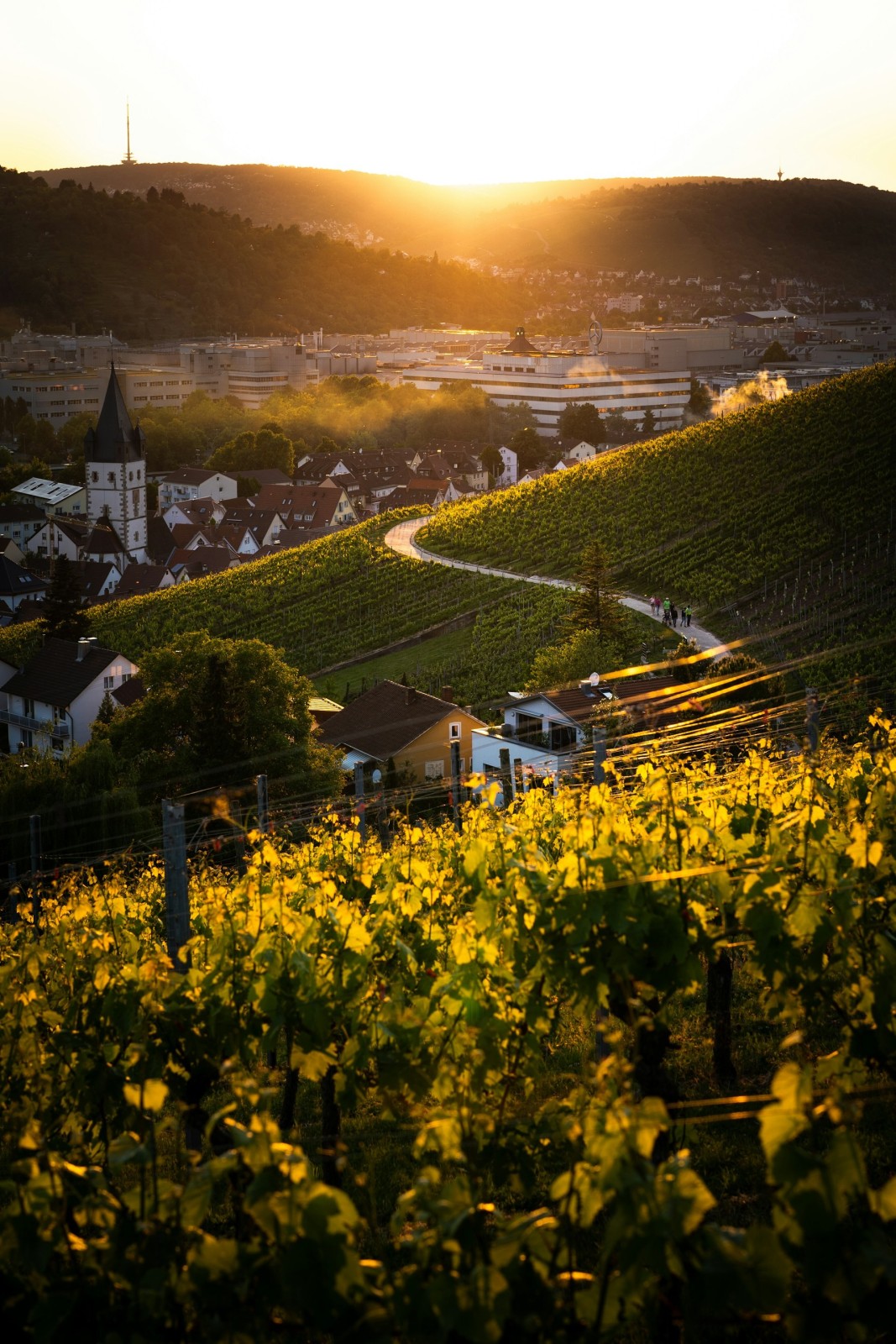
Esslingen is surrounded by hills with vineyards, which are an important part of the local landscape and traditions. Hiking trails lead through the grape slopes and offer panoramic views of the city and the Neckara Valley. These places are especially attractive in spring, summer and early autumn. In the vicinity, you can combine walks in nature with a visit to wineries.
7. Gastronomic tourism
The local cuisine reflects Swabian culinary traditions. In restaurants and cafes, tourists are offered Swabian dishes, including maultashen, spetsle, hot and seasonal specialties. A special place is occupied by local winemaking: the region is known for vineyards and wine production. In the historical center there are traditional restaurants, bakeries, coffee shops and small establishments where you can relax after walks.
8. Festivals and city holidays
Throughout the year, Esslingen hosts fairs, concerts, cultural events and seasonal celebrations. Especially popular is the medieval and Christmas market, during which the historical center is decorated with festive scenery, shopping arcades and thematic performances. In summer, the city comes to life thanks to street events, musical performances and wine festivals.
9. Museums and cultural events
For art and history lovers, Esslingen has museums, exhibition spaces and galleries. They introduce visitors to the past of the city, the development of crafts, industry and local culture. The cultural programme is complemented by concerts, theatre productions and events in historic buildings.
10. Shopping and relaxing in a cafe
In the old town there are shops, small shops, souvenir shops and markets. Here you can buy products of local manufacturers, gastronomic souvenirs and goods with regional symbols. Cafes and restaurants with outdoor terraces allow you to enjoy the architecture and atmosphere of the historic center.
1. High-level hotels and comfortable accommodation
Esslingen has modern hotels with spacious rooms, restaurants, breakfasts, wellness services and a convenient location relative to the historic center. They are suitable for tourists who value comfort, travel for business or plan a few days off.
1. Leonardo Hotel Esslingen is a modern hotel in the central part of the city, next to the Neckar Forum Congress Center and within walking distance from the historic center. Suitable for cultural trips and business visits. Restaurant and health services are provided.
2 Neo Hotel Linde Esslingen is a four-star hotel in Berkheim. Suitable for a relaxing holiday, offers a wellness area and a restaurant. Convenient for travelers by car and those who want to combine a visit to Esslingen with a trip around the neighborhood.
3. GINN Apartments Stuttgart-Esslingen is an aparthotel near the train station. Apartment-type rooms with kitchen utensils are convenient for self-cooking and living for several days.
2. Mid-price hotels
Mid-range hotels are suitable for most tourists who need a separate room, private bathroom, access to public transport and the ability to quickly reach the sights.
1. Hotel am Schelztor is a small city hotel near the historic center. Suitable for short trips, walks around the old town and visits to seasonal events.
2. Hotel am Schillerpark is a family-run hotel close to the city centre and train service. It can be convenient for tourists traveling through the Neckara Valley by bicycle.
3. Hotel Berkheimer Hof is a small family hotel in the Berkheim area with a restaurant. Suitable for those who prefer quiet accommodation outside the busiest part of the city.
4. Hotel-Restaurant Kelter is a hotel with a restaurant in the Neckarhalde area, near vineyards and walking routes. Especially interesting for tourists who prefer to relax in nature.
3. Budget hotels
Economical hotels allow you to reduce the cost of living, while maintaining basic amenities. When choosing, you should take into account the distance from the center, the availability of breakfast and the cost of parking.
1. Hotel am Charlottenplatz is a practical option with simple rooms located in Oberslingen. Suitable for a short trip and independent acquaintance with the city.
2. Hotel am Bad is a small family-run overnight and breakfast hotel in Berkheim. Suitable for those who are looking for a quiet accommodation and do not need a large set of additional services.
3. Hotel Zeller Zehnt is a family-run hotel in Zell, near the city railway station. It is convenient for trips to Stuttgart and other cities in the region, although the historic center of Esslingen will have to be reached by transport.
4. ECOINN Hotel am Campus is a central hotel near the Neckar Canal and the university campus. Suitable for tourists who are important walking accessibility of attractions and an environmental approach to the organization of accommodation.
4. Apartments and apartments for tourists
Renting an apartment is especially convenient for families, companies of friends and travelers who plan to stay in the city for a few days. Apartments often have a kitchen, refrigerator, washing machine and a separate living room.
1. Kielmeyerhaus - apartments in the historic center, directly near the market square. Suitable for those who want to live among ancient buildings, cafes and main attractions.
2. MAVO Hospitality Esslingen is an apartment in the central part of the city, next to the pedestrian area and the canal. Suitable for both short trips and longer stays.
3. Denkmal im Herzen der Altstadt - apartment in a historic half-timbered building. A good option for a couple or an independent traveler looking to stay in the old town.
4. Vermietungen Bader - furnished apartments for temporary residence. This format is convenient for long trips, business trips and the need to have a kitchen and working space.
1. Old Town (Altstadt). The historical center of Esslingen attracts with medieval streets, half-timbered houses, small squares, cafes and traditional shops. The architecture of different eras is preserved here, allowing you to imagine what a German trading city looked like several centuries ago. The old town is best visited on foot. From the main train station to the main streets can be reached in about 10-15 minutes.
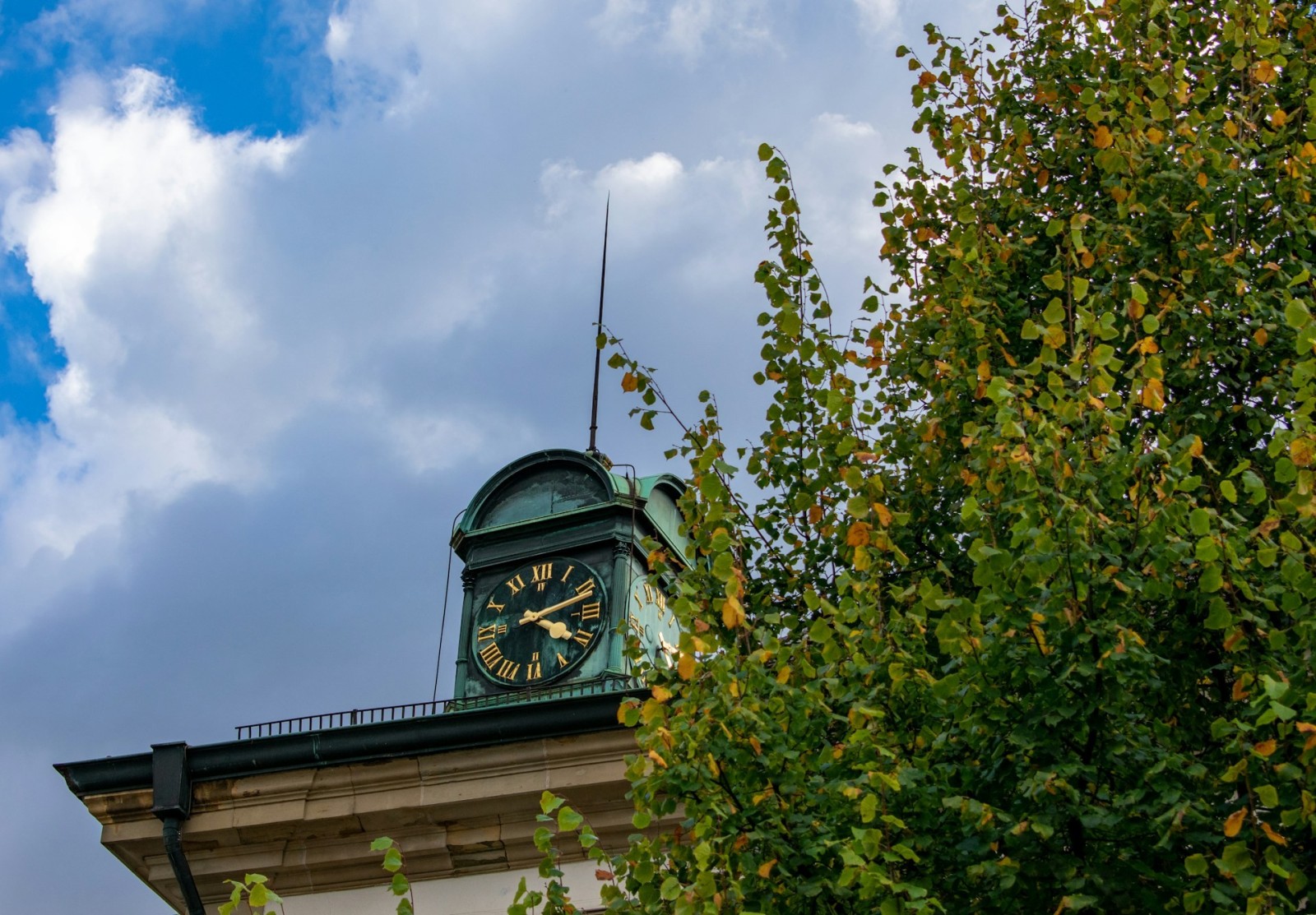
2. The Old Town Hall (Altes Rathaus) The building of the XV century is one of the main symbols of the city. It is distinguished by a wooden frame, a decorative facade and an astronomical clock. The Town Hall is located on Rathausplatz Square, next to other historic buildings and shopping streets. From the station you can walk in about 10-15 minutes.
3. The Esslinger Burg Fortress. Medieval fortifications are located on a hill above the city. Here are preserved defensive walls, towers and observation decks, which offer views of the old city, the Neckara Valley and vineyards. The fortress can be reached on foot from the center, but the path includes a steep climb and stairs. From the station you should expect about 20-30 minutes.
4. Church of St. Dionysius (Stadtkirche St. Dionys) The Gothic temple is famous for its two tall towers, historic interior and stained glass windows. It is located next to the market square and belongs to the most important religious monuments of Esslingen. It is convenient to reach the church on foot from the station in about 10-15 minutes. A visit can be combined with a walk in the historic center.
5. The Church of Frauenkirche. The Late Church stands out with a high spire, sculptural design of portals and elegant architectural details. It is of interest to lovers of medieval art and church architecture. You can walk from the market square in about 5-10 minutes, from the station in 15-20 minutes.
6. Little Venice (Klein-Venedig) This is the name of the picturesque area, where the sleeves of Neckar and canals run between ancient houses. Bridges, water flows and half-timbered facades create an unusual atmosphere. It is a pleasure to walk and photograph the city landscapes. The area is within walking distance of the Old Town Hall and the Inner Bridge, so public transport is not required.
7. The Inner Brücke (Inner Bridge) The historic stone bridge, built in the thirteenth century, links parts of the old town and recalls Esslingen’s trading past. The bridge offers views of canals, ancient houses and water structures. It is located in the center, near Little Venice. From the station you can walk in about 10-15 minutes.
8. Market Square (Marktplatz). One of the central squares of the city is surrounded by historic buildings, cafes and shops. Markets, seasonal fairs and city events are held here. Fresh products, pastries, cheeses and regional goods can be purchased on the market. From the station to the square about 10-15 minutes walk.
9. The Yellow House Museum (Stadtmuseum im Gelben Haus) The museum introduces visitors to the history of Esslingen, the development of crafts, trade, industry and the daily life of citizens. It is located in a historic building in the old town. It is convenient to get to the museum on foot from the market square in about 5 minutes, and from the station in 15 minutes. It is better to specify the working hours in advance.
10. The J. F. Schreiber Museum. The exposition is devoted to publishing, children's books, paper models and paper theater. The museum is especially interesting for families with children and visitors interested in the history of printing. It is close to the old town, so you can walk from the central squares in a few minutes.
11. Esslinger Weinberge vineyards. The grape slopes around the city form the characteristic landscape of the Neckara Valley. There are pedestrian routes, which offer panoramic views of the city and the surrounding area. Especially beautiful in the warm season and during the ripening of grapes. Before the beginning of some routes, you can walk from the center, and to more remote areas it is more convenient to get by bus or car. There are steep trails on the slopes, so comfortable shoes are recommended.
12. Villa Merkel and Villa Merkel Park. The historic villa is used as a gallery of contemporary art. It hosts temporary exhibitions, and the adjacent park is suitable for walking and relaxing by the Neckar River. From the railway station you can walk in about 10-15 minutes. Visiting the gallery is better planned taking into account the schedule of exhibitions.
13. Nymphea Park and Zoo (Tierpark Nymphaea) This is a natural park with ponds, walking paths and animals, suitable for family holidays. Here you can spend a few hours away from busy streets. The park is located outside the historic center, so it is more convenient to get there by bus or car. Before traveling, check the opening hours and availability of public transport routes.
14. Neckar Forum Cultural Centre. The modern congress and cultural complex is used for conferences, concerts, exhibitions and other events. It complements the historical appearance of the city with modern architecture and public spaces. The station can be reached on foot in about 10 minutes. If the trip is related to a specific event, it is worth specifying the start time and entry conditions in advance.
1. Esslinger Frühling Spring Festival
It is held in spring, usually in March or April. City streets and squares are revitalized by seasonal fairs, shopping events, entertainment and programs for families. During this period, gardening exhibitions and events dedicated to the improvement and decoration of gardens can also be held.
2. Festival of Spring Arts and Crafts (Kunst- und Handwerkermarkt)
Art and craft fairs are held throughout the year, including spring and autumn. Visitors can purchase ceramics, jewelry, wood products, textiles and other handmade items. This is a suitable event for meeting local craftsmen and buying souvenirs.
3. Vineyard Walking Day (Weinwandertag)
It is usually held in May. Participants go on hiking routes among vineyards, get acquainted with the wine traditions of the region and taste local wines. The event is suitable for those interested in nature, gastronomy and winemaking.
4. Strawberry Festival (Erdbeerfest)
It is held in the warm season, usually at the beginning of the summer season. The main theme is strawberries and dishes based on it. On such holidays you can find seasonal treats, sweets and drinks, as well as shopping and entertainment areas. Specific dates and programs may change.
5. Street Art Festival (STRAKU-Festival)
It takes place in the summer and is dedicated to street art and performances of artists. The program can include theatrical performances, circus performances, acrobatics, music, comic performances and other open-air art forms. The festival revives the historical center and is interesting for visitors of different ages.
6. City Holiday and Oath Day (Esslinger Schwörfest)
It usually takes place on the first weekend of July. The holiday is connected with the historical tradition of Oath Day, when in the past the rights and obligations of the city community were reaffirmed. The modern program includes music, performances of local associations, street trade, food and drinks. A large flea market is also held as part of the holiday.
7. Esslingen Summer Festival (ESTiVAL)
It is held in the summer in the historic center of the city. This multi-day event combines gastronomy, music, cultural performances and outdoor entertainment. ESTiVAL replaces the traditional Zwiebelfest, which was previously one of the city’s famous festivals.
8. Open-air cinema in the fortress (Kino auf der Burg)
It is organized in the summer months on the territory of the Esslingen fortress. Films are shown in the open air, and the historical walls and panorama of the city create a special atmosphere. Usually the program features feature films, popular films and special screenings. A visit is better planned for the evening, given the cool weather on the hills.
9. Musical concerts and summer theater performances
During the year, concerts of classical, jazz, rock and folk music are held in Esslingen. In the summer, part of the performances and theatrical productions are transferred to open areas. An important role is played by the Württemberg Land Theatre (Württembergische Landesbühne), which organizes performances and seasonal productions. For lovers of modern music and small concert venues, the cultural centers of the city are interesting.
10. Esslingen Wine Festival (Weinfest)
It is usually held in autumn when the vineyards and wine traditions of the region are in the spotlight. Guests get acquainted with local wines, taste Swabian cuisine and visit shopping and gastronomic sites. Dates and format may vary depending on the organizers.
11. LesArt Literary Festival (LesArt)
Passes in autumn. The program usually involves writers, poets and other representatives of the literary environment. Readings, meetings with authors, book discussions and literary evenings are organized. The festival is suitable for those who prefer chamber cultural events to noisy mass holidays.
12. Esslingen Jazz Festival (Jazzfestival Esslingen)
Musical event, which usually refers to the autumn cultural program of the city. The concerts are performed by jazz musicians and bands representing various directions of the genre. The program can include both traditional jazz and modern experimental performances.
13. International Carillon Music Festival Tower and Sound (Turm und Klang)
The festival is dedicated to the music of the bell carillon of the Old Town Hall. Musicians perform works on a historical instrument, turning the tower of the town hall into an unusual concert venue. The event is held for two days, but specific dates should be specified according to the program of the corresponding season.
14. Medieval and Christmas Market (Esslinger Mittelaltermarkt & Weihnachtsmarkt)
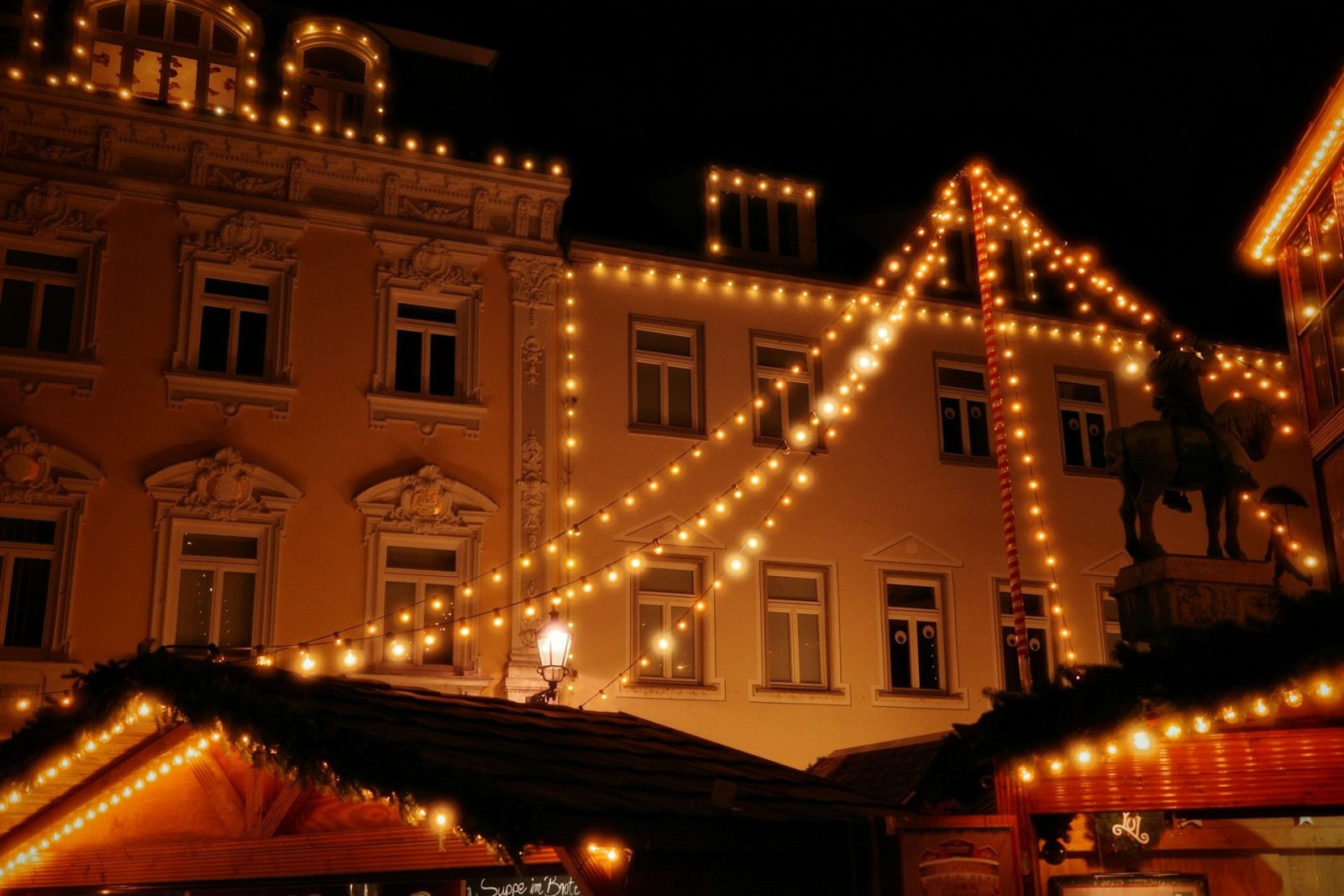
It is held annually in late November and December and is considered the main winter event of the city. The historic center is filled with shopping arcades, craft workshops, festive decorations and gastronomic tents. On the medieval part of the market there are performances of musicians, artists, jugglers and acrobats, ancient crafts are demonstrated. The traditional Christmas part offers decorations, gifts, sweets and hot drinks.
15. Advent Crafts Fair (Adventsmarkt)
It is held on weekends during the Advent period, that is, in the weeks before Christmas. The fair presents handmade products, jewelry, interior items and original gifts. It is convenient to combine it with a visit to the medieval and Christmas markets.
1. Spring (March-May)
In spring, the city gradually becomes warmer, trees bloom, parks and vineyards turn green. In March, the weather is still cool, and in April and May conditions become more suitable for long walks in the historic center.
Air temperature: in March afternoon about +9 ... +11 ° C, in April +14 ... +15 ° C, in May +18 ... +19 ° C. At night, the temperature can drop to about 0 ... + 9 ° C.
Water temperature: in the Neckar River in spring, the water is usually cold, approximately +5 ... +15 ° C depending on the month and weather conditions.
Features of the weather: possible rains, cool windy days and sharp temperature changes.
What to do: explore the old city, visit museums, walk through parks, climb to the fortress and explore the vineyards.
What to take: a light jacket, sweater, umbrella or raincoat and comfortable shoes.
2. Summer (June-August)
Summer is the warmest time of the year. The days are long, so you can spend more time on the streets, attend city festivals, concerts and open-air events. In July and August, there are sometimes periods of extreme heat, but thunderstorms with rain are also possible.
Air temperature: in June afternoon about +21 ... +23 ° C, in July and August +23 ... +25 ° C. At night, usually about +11 ... +14 ° C.
Water temperature: approximately +16 in Neckar +23 °C depending on the section of the river, precipitation and the duration of warm weather. The river is not intended for swimming in all places, so it is necessary to take into account the current and local restrictions.
Features of the weather: warm and sunny days alternate with rain and thunderstorms.
What to do: visit city holidays, summer concerts and open-air cinema, walk along the promenade, vineyards and historical quarters.
What to take: light clothes, headdress, sunscreen, comfortable shoes and a light jacket for the evening.
3. Autumn (September-November)
In early autumn, the weather is often comfortable for excursions. Vineyards acquire golden and reddish shades, and cultural and gastronomic events take place in the city. In October, it becomes cooler, in November, cloudy days and cold evenings are more common.
Air temperature: in September in the afternoon about + 19 ... + 20 ° C, in October + 14 ... + 15 ° C, in November + 7 ... + 9 ° C. At night, the temperature gradually decreases from about +9 ° C to +1 ... +2 ° C.
Water temperature: in early autumn, the water in Neckar can keep the temperature around +15. +20 °C, and by November it usually cools to about +6 ... +12 °C.
Features of weather: possible fog, rain, cool mornings and shortened daylight hours.
What to do: explore the architecture, visit museums, get acquainted with local wine traditions and attend autumn cultural events.
What to take: demi-season jacket, closed shoes, sweater and umbrella.
4. Winter (December-February)
In winter, Esslingen is cool, and in some periods the temperature drops below zero. Snow is possible, but sustained snow cover is not guaranteed. In December, the historic center with festive decoration and a medieval Christmas market is especially attractive.
Air temperature: during the day usually about +3 ... +6 ° C, at night about -3 to +1 ° C.
Water temperature: The water in Neckar is usually cold, approximately +2...+7 °C.
Weather features: short daylight, dampness, fog, rain and sometimes snow or ice.
What to do: visit the Christmas market, historic buildings, museums, cafes and indoor cultural events.
What to take: a warm jacket, scarf, gloves, waterproof shoes and clothes for multi-layer insulation.
1. Language of communication
The official language of Esslingen-on-Nekkar is German. In everyday life, residents use German, and Swabian dialectal features are also common in the region.
German is useful in shops, cafes, public transport, hotels and when communicating with locals.
English is often understood by employees of hotels, tourist facilities and establishments aimed at foreign guests. However, outside the tourism industry, English proficiency may vary.
Tourist information and signage are usually available in German; materials in English may be found in major tourist establishments.
Polite treatment: at the first acquaintance it is customary to refer to "Sie" - polite "You". The form "du" is used with friends, relatives and by mutual agreement.
Greetings: "Guten Tag" - good afternoon, "Guten Morgen" - good morning, "Auf Wiedersehen" - goodbye, "Danke" - thank you, "Bitte" - please.
Politeness: When entering small shops and some establishments, it is customary to say hello, and when leaving - goodbye.
2. Traditions and characteristics of behavior
Punctuality. For excursions, meetings, concerts and other events, it is better to arrive on time. When late for a pre-arranged meeting, it is advisable to warn the receiving party.
Calm behavior in public places. Do not talk loudly in transport, hotels and residential areas, especially late at night.
Respect for personal space. It is not accepted without having to get too close to strangers or ask them overly personal questions.
Lines. In shops, cash desks and other public places, you should observe the queue and not try to get ahead of other visitors.
Payment and maintenance. In cafes and restaurants, it is customary to pay for the order after service. Tipping is optional, but with good service, you can round the bill or leave about 5-10%.
Holidays and local customs. In Esslingen, the traditions of winemaking, city fairs and Christmas holidays are preserved. At mass events, the instructions of the organizers should be followed and historical buildings and monuments should be respected.
Sunday rest. In Germany, Sunday is traditionally considered a day of rest. Most regular shops are closed, although restaurants, some tourist facilities and establishments at train stations may operate.
3. Basic laws and regulations for tourists
Documents. During the trip, it is necessary to have a valid identity document and documents necessary for entry and stay in Germany. Foreign tourists are advised to carry a passport or other suitable document, as well as proof of the legality of their stay.
Traffic rules. Cross the road should be on pedestrian crossings and on the permitting signal of the traffic light. Bicycle lanes are designed for cyclists, so pedestrians should not occupy them unnecessarily.
Public transportation. Before traveling, you must purchase a suitable ticket and check its validity. Travel without a valid ticket can result in a fine.
No smoking. Smoking is restricted or prohibited in a number of public spaces and vehicles. Pay attention to the signs and use specially designated places.
Alcohol. Alcohol consumption is regulated by the rules of specific public places and events. You cannot drive while intoxicated; there are strict restrictions on drivers.
Prohibited substances. Illegal drugs can have serious legal consequences. Unknown substances or medicines should not be transported without checking the rules for their importation.
Public order. Threats, violence, damage to property and actions that violate public order are prohibited. Damage to historic buildings and monuments is punishable.
Protection of personal rights. You should not take close-up pictures of people or post pictures of them without consent, especially in situations involving privacy. When shooting inside museums, churches and events, you must follow the established rules.
Garbage separation. Waste sorting is common in Germany. Garbage should be thrown into the appropriate containers, and bottles with collateral value should be returned to reception points.
Silence. In residential areas, it is necessary to avoid loud music and noise at night. Sundays and official holidays are also associated with restrictions on noisy work.
1. Greetings and polite expressions
Guten Morgen! - transcription: "Guten Morgen" - translation: "Good morning!"
Guten Tag! - transcription: "Guten so" - translation: "Good day!"
Guten Abend! - transcription: "Guten Abent" - translation: "Good evening!"
Hallo! - transcription: "Hallo" - translation: "Hello!", "Hello!"
Grüß Gott! - transcription: "Grues Goth" - translation: "Hello!" A regional greeting distributed in southern Germany.
Auf Wiedersehen! - transcription: "auf viderzeen" - translation: "Goodbye!"
Tschüss! - transcription: "chus" - translation: "Bye!"
Bitte. - transcription: "Bite" - translation: "Please", "Nothing."
Danke! - transcription: "danke" - translation: "Thank you!"
Vielen Dank! - transcription: "Filen dank" - translation: "Thank you very much!"
Bitte schön. - transcription: "Bite Shen" - translation: "Please", "Here, please".
Entschuldigung! - transcription: "entschuldigung" - translation: "Sorry!"
Es tut mir leid. - transcription: "Here is the world light" - translation: "I am very sorry."
Ja. - transcription: "I" - translation: "Yes."
Nein. - transcription: "Nine" - translation: "No".
Kein Problem. - transcription: "Kine problems" - translation: "No problem."
Gern geschehen. - transcription: "Gearn Gesheen" - translation: "Please", "pleasure to help".
Schönen Tag noch! - transcription: "Shönen so noh" - translation: "Good day!"
2. Acquaintance and communication with local residents
Wie heißen Sie? – transcription: “vi haisen zi?” – translation: “What is your name?”
Ich heiße ... - transcription: "their haise..." - translation: "My name is..."
Freut mich. - transcription: "fruit mich" - translation: "Very nice."
Woher kommen Sie? - transcription: "whir kommen zi?" - Translation: "Where are you from?"
Ich komme aus ... - transcription: "their komme aus ..." - translation: "I am from ..."
Ich komme aus Russland. - transcription: "their Kome aus Ruslant" - translation: "I am from Russia."
Ich bin Tourist/Touristin. - transcription: "their bin tourist / tourist" - translation: "I am a tourist / tourist".
Sprechen Sie Englisch? - transcription: "Sprehen zi English?" - Translation: "Do you speak English?"
Sprechen Sie Russisch? – transcription: “Sprehen zi Rusish?” – translation: “Do you speak Russian?”
Ich spreche nur ein wenig Deutsch. Transcription: "their spreche noor ain venig deutsch" - translation: "I speak German very little."
Ich verstehe nicht. - transcription: "their furstee niht" - translation: "I don't understand."
Können Sie das bitte wiederholen? - transcription: "Könen zi das bite viderholen?" - Translation: "Could you repeat?"
Bitte sprechen Sie langsamer. - transcription: "Bite Sprehen Zi Langzamer" - translation: "Please speak more slowly."
Können Sie mir helfen? - transcription: "Könen zi mir helfen?" - translation: "Can you help me?"
3. Questions about the city and attractions
Wo ist die Altstadt? - transcription: "In the East di Altstadt?" - translation: "Where is the old city?"
Wie komme ich zum Bahnhof? - transcription: "Whi kome their tsum banhof?" - Translation: "How do I get to the station?"
Wo ist das Rathaus? – transcription: “In East Das Rathaus?” – Translation: “Where is the Town Hall?”
Wo ist die nächste Bushaltestelle? - transcription: "In the east di nehste bushlestele?" - Translation: "Where is the nearest bus stop?"
Wie weit ist es zu Fuß? - transcription: "Vi whit is es zu fus?" - Translation: "How far to walk?"
Ist es weit von hier? – transcription: “Is this a long way from here?”
Können Sie mir den Weg zeigen? - transcription: "Könen zi mir den vek zeigen?" - Translation: "Can you show me the way?"
Ich suche diese Adresse. - transcription: "their zuhe dize adrese" - translation: "I'm looking for this address."
Gibt es hier eine Touristeninformation? - transcription: "Hypt es hier eine Touristeninformation?" - Translation: "Is there a tourist information center here?"
Wann ist das Museum geöffnet? - transcription: "van ist das museum geöfnet?" - Translation: "When is the museum open?"
Wie viel kostet der Eintritt? - transcription: "Vi fil Costat der Aintrit?" - Translation: "How much is the entrance ticket?"
Gibt es eine Führung auf Englisch? - transcription: "Hipt es aine fürung auf english?" - Translation: "Is there an excursion in English?"
Darf ich hier fotografieren? - transcription: "Darf their hir photographiren?" - translation: "Can I take pictures here?"
Wo ist die öffentliche Toilette? - Transcription: "In the East di yofentlihe tualete?" - Translation: "Where is the public toilet?"
4. Phrases for hotel and other accommodation
Ich habe eine Reservierung. - transcription: "their habe aine reserve" - translation: "I have a reservation."
Ich habe ein Zimmer gebucht. - transcription: "their habe ain qimer gebucht" - translation: "I booked a room."
Auf welchen Namen? - transcription: "auf welchen namen?" - Translation: "In what name?"
Auf den Namen ... - transcription: "auf den namen ..." - translation: "In the name ..."
Ich möchte einchecken. - transcription: "their mehte aincheken" - translation: "I would like to register."
Wann gibt es Frühstück? - transcription: "van gipt es fruit?" - Translation: "When is breakfast served?"
Ist das Frühstück im Preis inbegriffen? - transcription: "Ist das Früstuke them price inbegrifen?" - Translation: "Is breakfast included in the price?"
Wann muss ich auschecken? - transcription: "van mus their auscheken?" - Translation: "When do I need to leave the room?"
Gibt es WLAN? – transcription: “Hypt es velan?” – translation: “Is there Wi-Fi?”
Wie lautet das WLAN-Passwort? – transcription: “Wee lautet das velan passvort?” – Translation: “What is the Wi-Fi password?”
Können Sie ein Taxi rufen? - transcription: "Könen zi ain taksi rufen?" - translation: "Can you call a taxi?"
Könnte ich ein anderes Zimmer bekommen? - transcription: "Könte their ain Anderes cimer bekommen?" - Translation: "Can I get another number?"
1. Local foods and drinks
Wine from the Neckara Valley. In the vicinity of Esslingen, grapes are grown for red and white wines. Popular varieties are trollinger (Trollinger), Riesling (Riesling) and Lemberger (Lemberger).
Sparkling wine Kessler Sekt. Esslingen is known for the tradition of producing sparkling wines. A bottle of local zecta would be a good gift.
Swabian egg noodles Spätzle. A traditional product of the region that can be prepared at home with cheese, meat or lentils.
The Swabian Maultaschen. Large dough products with stuffing of meat, spinach and other ingredients. For the trip, it is better to choose packaged products with a long shelf life.
Honey, jams and fruit products. Local honey, apple chips and jam from the fruits of the region are convenient for transportation and are suitable as an edible souvenir.
Regional sweets and pastries. In local bakeries, cookies and traditional sweet products can be purchased.
2. Medicines and health products
Esslinger Zollberggeist. An unusual herbal elixir associated with a local pharmacy. Before buying, check the composition and content of alcohol. It should not be considered a medicine with proven therapeutic effectiveness.
German herbal teas. Chamomile, mint, fennel and ready-made herbal mixtures are suitable for lovers of natural drinks.
Natural makeup. Hand creams, lip balms, soaps and products with vegetable oils can be purchased in pharmacies and specialized stores.
First aid. Plasters, antiseptics and other goods for the first aid kit will come in handy on trips, although they are not unique to the city.
3. Unique mementos
Souvenirs called Esslingen. Mugs, bags, magnets and other items with the symbols of the city.
Goods from Äffle und Pferdle. Souvenirs with images of a monkey and a horse - famous characters of Swabian culture.
Products with the image of the Old Town Hall. Postcards, magnets and decorative items with one of the main symbols of the city.
Souvenirs with half-timbered houses. They remind of the historical architecture of Esslingen.
Books about the city and region. Historical albums, guidebooks and publications about medieval architecture are suitable for history lovers.
Postcards and magnets. Compact and inexpensive gifts with views of the old city, fortress and canals of Neckar.
1. What documents are required to have
A foreign passport. It must be valid for the entire duration of the trip. Short-term entry into the Schengen area usually requires a passport to be issued within the last 10 years and valid for at least three months after the intended departure from the Schengen area.
Visa or document confirming the right of entry. The visa requirement depends on the citizenship and status of the traveler. EU citizens do not need a visa to travel to Germany.
Confirmation of residence. Keep your hotel reservation, apartment or host party address.
Return ticket. He may be asked to appear at border control.
Confirmation of funds. It is advisable to have a bank card and access to accommodation and return travel.
Copies of documents. Keep electronic copies of your passport, visa, insurance policy and bookings separate from the originals.
Entry requirements depend on citizenship and reason for stay.
2. Health insurance
Travel health insurance. It is recommended to arrange it for the entire period of the trip, including treatment for sudden illness or injury.
Minimum coverage for a Schengen visa. When applying for a short-term Schengen visa, health insurance must cover the costs of at least 30,000 euros and be valid throughout the Schengen area.
Additional terms. It is desirable that the policy covers hospitalization, emergency dental care and medical evacuation or return to the homeland.
European Health Insurance Card. Citizens and insured persons eligible for an EHIC can benefit from the necessary public health care on the conditions of the host country. It does not replace full travel insurance.
Before traveling, check the restrictions on age, chronic illness, outdoor activities, and franchise size.
3. Emergency services phones
The following numbers apply in Germany:
112 – ambulance and fire service.
110, police.
116 117 Medical care for diseases that require medical advice but do not pose an immediate threat to life.
116 116 – blocking of bank cards and certain other electronic means upon loss if the relevant bank or operator supports this service.
Calls to 112 and 110 are free. 112 should be used for serious injury, life-threatening or fire.
4. Mobile operators and communications
There are four main mobile network operators in Germany: Telekom, Vodafone, O2 and 1&1.
Telekom - mobile communications, mobile Internet and prepaid tariffs.
Vodafone – voice, mobile internet and travel connectivity options.
O2 (Telefónica) – mobile rates, including prepaid options.
1&1 - mobile fares using its own network and national roaming.
For a short trip, it is usually convenient to use your SIM card if the fare provides for roaming in Germany. For EU citizens, there are roaming rules at home rates with restrictions. If you come from a country outside the EU, check the cost of calls and mobile Internet in advance or purchase a local SIM card or eSIM.
5. How long can you stay in Germany without leaving?
EU citizens. They can enter Germany under the rules of free movement to the EU. For long-term residence there are separate conditions associated with the basis of stay.
Citizens of countries with visa-free regime. They can stay in Germany for up to 90 days in any 180-day period for tourism and short trips.
Tourists with a Schengen visa. They may stay within the period and number of days specified on the visa, subject to a general limit of 90 days for a 180-day period.
For a stay of more than 90 days. A national visa or an appropriate residence permit is usually required.
Travel in the Schengen area. Days spent in other Schengen countries are also included in the overall short-term stay limit. Exit for a short time does not nullify this period.
Create a query and local guides will offer you the best options

Install the app «PersonalGuide»
www.personalguide.ru