Independent tourism and recreation in the city of Tauranga Historical information about the city of Tauranga 1...
1. Ancient history and settlement of Maori
The territory of modern Tauranga was inhabited by Maori long before the arrival of Europeans. The first communities settled here thanks to a favorable climate, fertile lands, fish stocks and convenient natural bays. According to local legends, the ancestors of the Maori arrived in the area in traditional ocean canoes - waka, which crossed the Pacific Ocean.
Of particular importance were the Iwi tribes, most notably the Ngāi Te Rangi, as well as other local communities. They established fortified settlements, pā, engaged in fishing, farming, growing kumara sweet potatoes, collecting seafood and exchanging goods with neighboring tribes.
The location at Tauranga Harbour provided local residents with access to maritime trade routes. The lands around Mount Mauao, also known as Maunganui, were of strategic and spiritual importance. They were used for defense, residence and traditional rites.
2. Europeans and First Contacts
In the late XVIII - early XIX century, European seafarers and traders began to explore the coast of New Zealand. In the first half of the XIX century, European traders, missionaries and whalers began to arrive in the Tauranga region.
Some of the first permanent Europeans were missionaries who spread Christianity, opened schools and introduced European education. In 1838, an Anglican mission station was founded in the Tauranga area. She played an important role in the development of permanent contacts between Māori and Europeans.
Gradually, there were shops where they exchanged wood, agricultural products and other goods. However, the relationship between European settlers and Maori was ambiguous: along with trade and cooperation, disputes over land, political influence and control of the territory arose.
3. Treaty of Waitangi and Land Conflicts
In 1840, representatives of the British Crown and Maori leaders signed the Treaty of Waitangi, which became one of the founding documents in the history of New Zealand. He defined a new political relationship between the British administration and the indigenous population.
However, differences between the English and Maori versions of the treaty, as well as disputes over land rights, have led to numerous conflicts.
In 1864, the Tauranga area became one of the centers of military clashes between British troops and Maori defenders of their territories. One of the most famous events was the Battle of Gate Pā on April 29, 1864. Maori soldiers managed to inflict a serious defeat on the British troops, despite their numerical and technical superiority.
Later, on June 21, 1864, the Battle of Te Ranga took place, in which British troops won. The consequences of the hostilities were severe for the local Maori communities: much of the land was confiscated by the colonial administration.
These events became an important part of the historical memory of Tauranga and the whole Bay of Plenty region.
4. The foundation of the city and the development of the European settlement
After the military events of 1864, a permanent European settlement began on the Te Papa peninsula. A military garrison was placed here, and land was provided to former servicemen who were supposed to stay in the region and ensure its security.
It was after these events that Tauranga gradually acquired the features of an organized European city. In the 1870s, trade began to develop, the construction of residential buildings, administrative buildings and small businesses. By 1875, the name Tauranga was widely used to refer to the settlement itself, not just the surrounding area.
An important role in the early history of the city was played by the missionary complex The Elms, associated with the family of Alfred Brown. Its historic buildings have survived to this day and are among the oldest European buildings in the region.
5. The development of port and trade in the late nineteenth century
Thanks to the natural protected harbor, Tauranga gradually became an important trading point. Shipping connected the city with Auckland and other New Zealand settlements.
At the end of the XIX century, the main directions of economic activity were:
Fisheries and seafood trade.
Transportation of wood and agricultural products.
Development of small businesses and warehouses.
Maintenance of ships and passenger transportation.
The center of commercial life was the coastal street Strand, where shops, hotels, warehouses and retail establishments were located. In 1883, one of the most famous historical commercial buildings, the Bond Store, appeared here.
1. Beach rest and sea entertainment
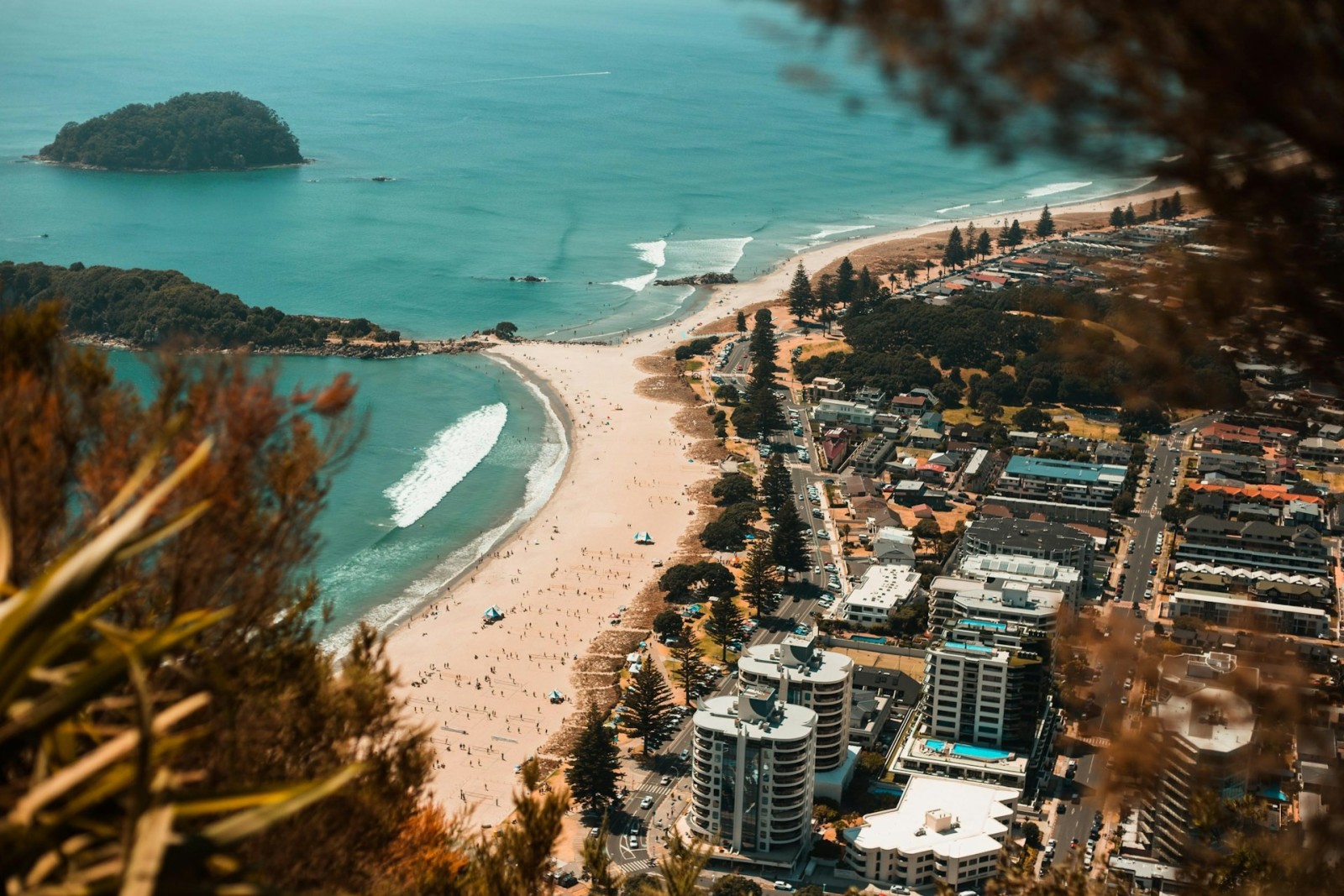
The main tourist feature of Tauranga is a long coast with sandy beaches and clean sea water. Mount Maunganui is especially popular, where conditions are created for swimming, sunbathing, walking and water sports.
Tourists can surf, kayaking, sap surfing, sailing and sea fishing. On the coast there are cafes, restaurants, sports equipment rental points and recreation areas.
2. Natural attractions and beautiful landscapes
Tauranga is surrounded by picturesque natural landscapes. One of the main symbols of the region is Mount Mauao, located at the entrance to Mount Maunganui Harbour. It is known for hiking trails, panoramic views of the ocean, beaches and the city.
Walking along the coast, visiting natural parks, watching sea birds and sea animals are also popular. Due to the mild climate, many natural routes are available almost all year round.
3. Excursions and sea travel
The city is a convenient starting point for sea excursions around the Bay of Plenty. Tourists are offered boat trips, fishing tours, watching dolphins and other marine animals.
Of particular interest are excursions to the islands and volcanic areas of the region. The popular destination was previously the island of Whakaari, however, after the eruption of 2019, tourist access to it is limited, so you need to check the current conditions before planning a trip.
4. Historical and cultural attractions
Tauranga is interesting not only for its beach holiday, but also for its historical heritage. The city has preserved monuments related to the Maori culture, the development of the region by Europeans and the development of maritime trade.
Particular attention should be paid to:
The Elms (Te Papa) is a historic missionary complex of the XIX century with preserved buildings and an ancient garden.
Gate Pā (Pukehinahina) is the historic site of the battle between Maori and British forces in 1864.
Monmouth Redoubt - the remains of the British military fortification of the XIX century.
Tauranga Art Gallery is an art gallery with exhibitions of New Zealand and foreign artists.
Te Papa is a historic district associated with the early development of the city.
1. Five-star and premium hotels
Suitable for tourists who prefer a high level of comfort, quality service, spacious rooms and additional services. Such hotels usually offer restaurants, bars, swimming pools, fitness rooms, conference rooms and rooms with panoramic views.
Examples:
Trinity Wharf Tauranga is one of the famous hotel complexes of the city, located directly by the water. It offers modern rooms, a restaurant, a bar, terraces overlooking the harbor and venues for events.
Clarence Boutique Hotel is a boutique hotel in a historic post office building. It is distinguished by elegant interiors, individual decoration of rooms and a restaurant.
CitySide Hotel Tauranga is a modern five-star accommodation option in the urban part of Tauranga, with comfortable rooms and parking.
2. Four-star hotels of medium and high level
This is a good option for travelers who need comfortable conditions without excessive costs. Usually offered private bathrooms, air conditioning, Wi-Fi, parking, breakfast and convenient location relative to the center and attractions.
Examples:
Hotel on Devonport is a modern city hotel with spacious rooms, a restaurant and a convenient location near shopping streets.
Mercure Tauranga is a hotel with comfortable rooms, a restaurant and conditions for business trips.
Quest Tauranga Central is an apart-hotel with equipped kitchens, recreation areas and the possibility of a long stay.
3. Three-star hotels and motels
Suitable for tourists who spend most of their time on excursions, beaches and walks. The main advantages are affordable cost, practicality, availability of parking and the ability to cook food independently.
Examples:
ASURE Macy's Motor Inn is a motel with comfortable rooms, swimming pool and family accommodation facilities.
Cobblestone Court Motel is an accommodation option with separate apartments and kitchen utensils.
Roselands Motel is a motel in the central part of Tauranga, convenient for visiting city attractions.
850 Cameron Motel is a modern motel with equipped rooms and convenient location.
1. Mount Mauao (Mauao / Mount Maunganui)
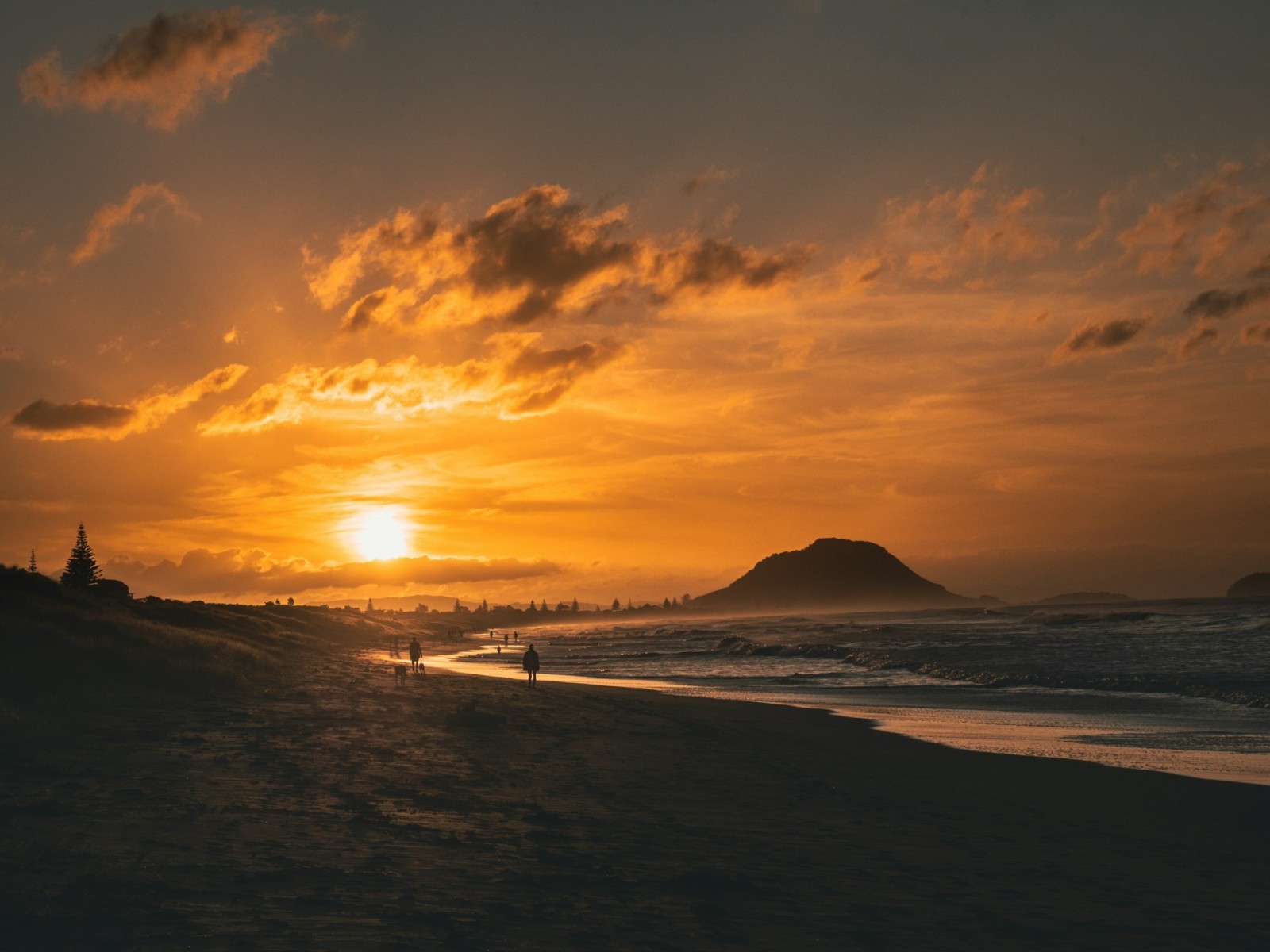
One of the main natural attractions of the region and a symbol of Tauranga. The mountain, about 232 meters high, is located on the Mount Maunganui Peninsula at the entrance to the harbor. It has great spiritual and historical significance for the Maori people.
There are hiking trails on the mountain leading to and around the top. From the observation platforms there are panoramic views of the Pacific Ocean, the harbor, beaches and urban surroundings. The climb to the top takes about 40–60 minutes one way depending on the route and physical fitness.
Transport accessibility: From the center of Tauranga you can take a city bus to Mount Maunganui, then walk to the beginning of the route. The road by car takes about 10-15 minutes.
2. The main beach is Mount Maunganui Main Beach.
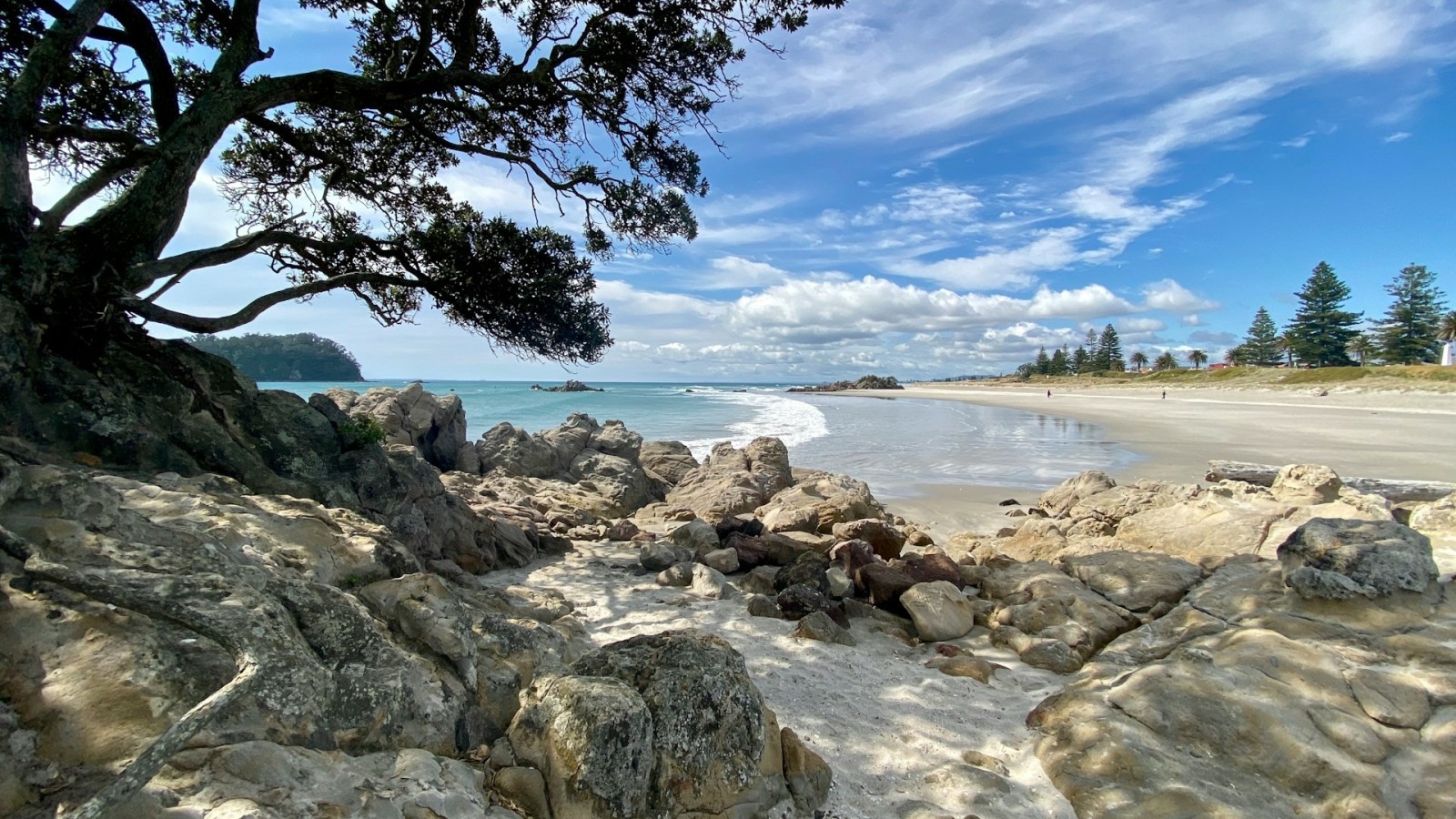
One of the most famous beaches in New Zealand, located at the foot of Mount Mauao. It attracts tourists with its wide sandy coast, clean water, beautiful ocean landscapes and developed infrastructure.
Here you can swim, sunbathe, surf, play beach sports and walk along the ocean. Nearby there are cafes, restaurants, shops and sports equipment rental points. Rescue services work in popular bathing areas during the summer.
Transport accessibility: from the center of Tauranga you can take a bus to Mount Maunganui. From the stops to the beach a few minutes walk. The journey by car takes about 10-15 minutes.
3. Pilot Bay (Pilot Bay)
A calm coastal bay on the inner side of Mount Maunganui Peninsula. It has a more protected water area from ocean waves and is suitable for swimming, relaxing with children, kayaking and watching yachts and sea vessels.
From the shore there are beautiful views of Taurangi Harbour, cruise ships and the surrounding hills. It is a popular place for evening walks and watching the sunsets.
Transport accessibility: you can take a bus to Mount Maunganui, then walk. From the main beach the road takes about 10-15 minutes.
4. The Elms | Te Papa Tauranga Historic Complex
One of the most significant historical sites of the city, which is a former mission station of the XIX century. The complex includes an old residential house, a library, outbuildings and a historical garden.
The Missionary House was built in 1847. Today you can get acquainted with the history of the early European development of the region, the activities of missionaries and the relationship between European settlers and Maori.
Transport accessibility: the complex is located on Mission Street, near the center of Taurangi. It can be reached on foot in about 10-15 minutes from the central embankment or by city bus.
5. Historic Fortification of Monmouth Redoubt
Historical military fortification of the XIX century, associated with armed conflicts between British troops and Maori in the 1860s. Here are preserved earthen fortifications, which allow you to imagine the structure of military positions of that time.
The site is of interest to travelers studying the colonial history of New Zealand and the events of the New Zealand Wars. A visit to the fortification can be combined with a walk in the historical center.
Accessibility: Located on Monmouth Street in downtown. From the embankment The Strand can be reached on foot in about 5-10 minutes.
6. Tauranga Art Gallery (Toi Tauranga Art Gallery)
The main art gallery of the city, where the works of modern New Zealand and foreign artists are presented. In the expositions you can see paintings, sculpture, photography, installations and works related to the Maori culture.
The gallery regularly organizes temporary exhibitions, cultural events and educational programs. It is a suitable place to get acquainted with contemporary art and cultural life of the region.
Transport accessibility: Located on Willow Street in downtown Tauranga. The Strand can be reached on foot in a few minutes. City buses are also available.
7. The Historic Village (The Historic Village)
Cultural and historical complex, decorated in the form of a small ancient New Zealand village. On its territory there are historical buildings, art workshops, small shops, galleries and exhibition spaces.
Visitors can get acquainted with the architecture of past centuries, local crafts, history of trade and everyday life of the inhabitants of the region. It also hosts cultural events, exhibitions and creative meetings.
Transport accessibility: located on 17th Avenue West, about 5-10 minutes drive from the city center. You can take a bus or taxi. There is parking for cars.
8. McLaren Falls Park (McLaren Falls Park)
Large natural park located near Tauranga. It is known for a picturesque lake, waterfalls, forests, well-groomed gardens and walking routes. On the territory you can arrange picnics, go fishing, kayak, watch birds and walk along forest trails.
Especially interesting are evening walks, during which in some places you can see glowing larvae of fireflies.
Transport accessibility: the park is about 20-25 minutes drive from the center of Tauranga. It is most convenient to travel by rented car or taxi. Regular bus service to the park is limited.
9. Te Puna Quarry Park (Te Puna Quarry Park)
An unusual natural and art park, created on the territory of a former stone quarry. Today there are themed gardens, decorative plants, small ponds, sculptures and walking paths.
The park is interesting for its variety of plants, artistic compositions and observation platforms, which offer views of the surrounding hills and Plenty Bay. It is a good place for relaxing, taking pictures and exploring the local nature.
Transport accessibility: located in the Te Pun area, about 15-20 minutes drive from the center of Tauranga. It is most convenient to travel by car or taxi.
10. Papamoa Hills Regional Park
Natural area with green hills, pastures and hiking trails. The park has historical significance due to the archaeological traces of the ancient fortified settlements of Maori Pa.
The main reason for visiting is the opportunity to climb the observation decks and see the panorama of the coast, agricultural land and Plenty Bay. The routes are suitable for lovers of hiking and natural tourism.
Transport accessibility: the park is located in the Papamoa area, approximately 20-30 minutes from the city center. It is most convenient to get by car or as part of an organized tour.
11. Memorial Park (Memorial Park)
Popular urban recreation area located near the harbor. There are spacious green lawns, walking paths, children's playgrounds and sports facilities.
The park is suitable for family walks, picnics and relaxation after exploring the city attractions. Due to the landscaped area, it is popular among locals and travelers.
Accessibility: Located on Eleventh Avenue. From the central part of Tauranga you can walk in about 15-20 minutes or use the city bus.
12. Kulim Park (Kulim Park)
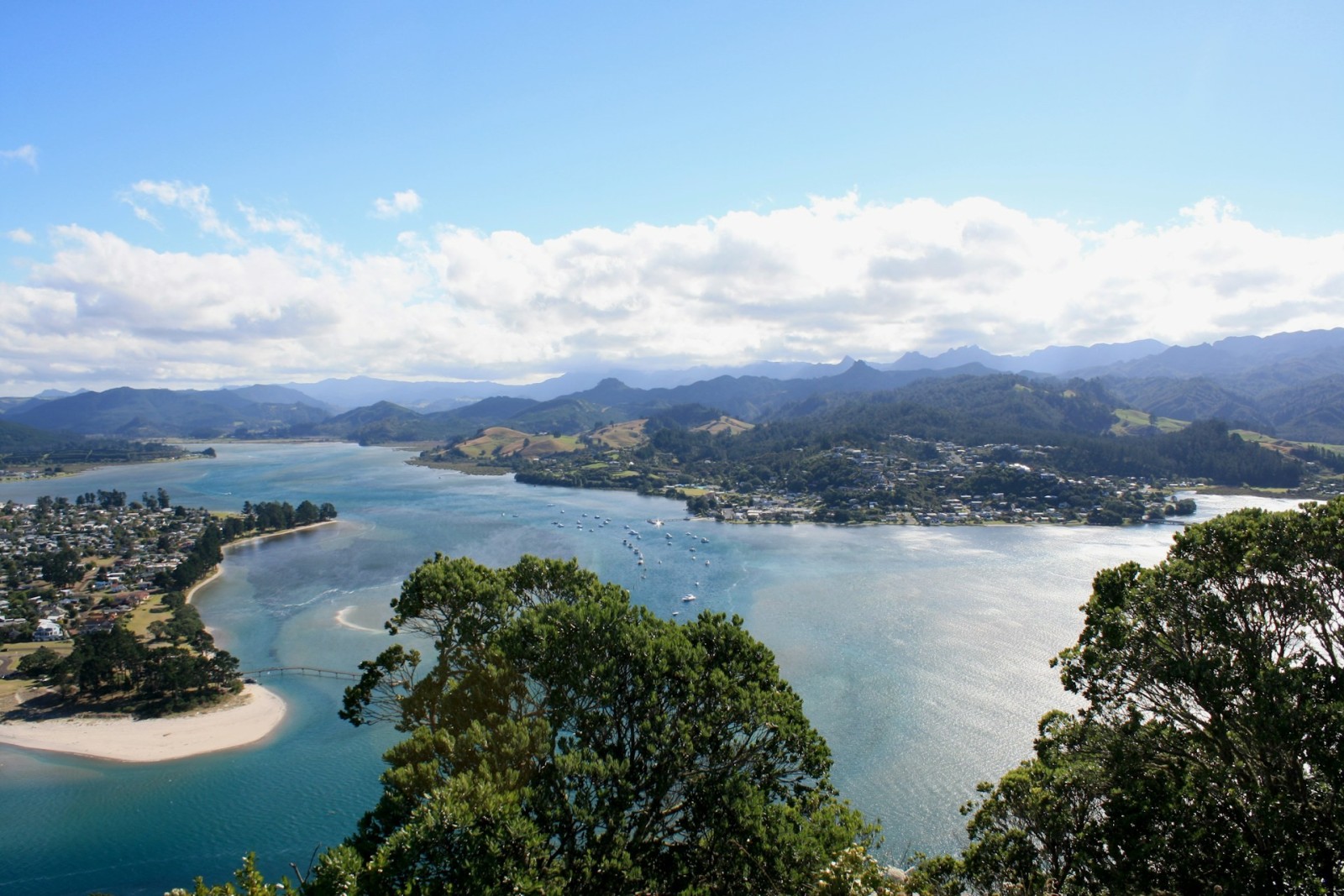
Picturesque coastal park in the Oumaethai area. It is known for beautiful views of the harbor, Matakana Island and Mount Mauao. The territory is equipped with walking paths, recreation areas, playgrounds and places for picnics.
This is a good place for a relaxing holiday away from the busiest tourist areas. The park is especially popular among families and lovers of walking by the water.
Transport accessibility: located about 10-15 minutes drive from the center of Tauranga. You can get there by car, taxi or city bus.
13. Vaimarino Adventure Park (Waimarino Adventure Park)
Entertainment complex on the river Vairoa, offering a variety of activities. Here you can kayaking, supboarding, use water rides and participate in organized water entertainment.
Of particular interest are evening kayak walks, during which, under suitable conditions, you can see glowing larvae in the natural surroundings.
Transport accessibility: located in the Bethlehem area, about 10-15 minutes drive from the center of Tauranga. It is most convenient to travel by car or taxi.
14. Papamoa Beach (Papamoa Beach)
A long sandy beach east of Mount Maunganui. It attracts tourists with its wide coastline, ocean scenery and a calmer atmosphere compared to the central beaches of the resort.
Here you can surf, swim in places allowed for this, walk along the ocean, sunbathe and relax with your family. Along the coast are residential quarters, cafes and small shops.
Transport accessibility: from the center of Tauranga can be reached by bus or car. The trip by car takes about 20-30 minutes, depending on the chosen beach area.
15. The Strand Waterfront (The Strand Waterfront)
Central walking area of Taurangi, located along the city harbor. Here are concentrated restaurants, cafes, bars, shops and public spaces for recreation.
Tourists can watch the movement of sea vessels, admire yachts and cruise ships, taste local cuisine and relax on the open terraces. On the waterfront there are also sculptures dedicated to the famous characters of children's books Hairy Maclary.
Transport accessibility: located directly in the city center. The promenade is easily accessible on foot from most central hotels or by city bus.
1. Waitangi Day (February 6) is the main national holiday of New Zealand, dedicated to the signing of the Treaty of Waitangi between the Maori and the British Crown. Ceremonies, concerts and cultural events are held.
2. Anzac Day (April 25) is the day of remembrance of the dead soldiers. There are commemorative ceremonies, military processions and laying flowers.
3. Matariki (June-July) is the Maori New Year associated with the appearance of the Pleiades star cluster in the sky. Celebrated by family gatherings, concerts, traditional food and cultural programs.
4. Christmas (Christmas, December 25) is a family holiday that is celebrated with summer picnics, decorating houses, concerts and relaxing on the beaches.
5. Boxing Day (December 26) is the continuation of the Christmas weekend. Many residents spend time on the coast, attend shops and sports events.
6. Diwali (October–November) is an Indian festival of lights, accompanied by dancing, music, treats and festive illuminations.
7. The Lunar New Year (January–February) is a celebration of East Asian communities with cultural performances, traditional dishes and family celebrations.
1. Summer (December-February)
Air temperature: +22 ... +26 ° C, sometimes above +30 ° C.
Water temperature: +20 ... +23 °C.
The weather is mostly sunny and warm, short-term rains are possible.
The best time for beach holidays, swimming, surfing, sea walks and visiting the islands.
2. Autumn (March-May)
Air temperature: +17 ... +24 °C.
Water temperature: +18 ... +22 °C.
In March, summer heat persists, gradually becomes cooler, the number of rainy days increases.
Suitable for excursions, walks along the coast, fishing and recreation in nature. In early autumn it is still comfortable to swim.
3. Winter (June-August)
Air temperature: +10 ... +16 °C.
Water temperature: +14... +16°C.
The weather is cool, it rains periodically, windy days are possible. Strong frosts for the city are unusual.
Suitable for relaxing, exploring the city, visiting cafes, natural parks and thermal springs in the vicinity.
4. Spring (September-November)
Air temperature: +14 ... +21 °C.
Water temperature: +15... +19°C.
Gradually it becomes warmer, the number of sunny days increases, but the weather can be changeable.
A good period for hiking routes, excursions, nature observation and active recreation.
Language of communication
In Taurang, as in all of New Zealand, the main language of communication is English. It is spoken in hotels, restaurants, shops, tourist centers and public transport.
The country also officially recognized:
Te Reo Māori is the indigenous language of New Zealand.
New Zealand Sign Language (NZSL) is used by people with hearing impairments.
Maori words are common in everyday speech, especially names of places, greetings and expressions of respect for local culture.
Traditions and customs
1. Welcome. Locals are usually friendly and sociable. When dating, it is customary to smile, say hello and address each other by name. A common greeting is "Kia ora".
2. Respect for Maori culture. Maori traditions occupy an important place in the life of the region. National symbols, traditional ceremonies, carvings and cultural objects should be respected.
3. Visiting sacred places. When visiting Marae (traditional Māori social and cultural centres), the host country’s rules must be followed. Before photographing people and ceremonies, it is advisable to obtain permission.
4. Attitude to nature. New Zealanders care about the environment. You can not leave garbage on beaches, damage plants, disturb animals and pollute water bodies.
5. Communication and behavior. The country values courtesy, equality and personal space. It is not customary to speak loudly in public places, impose communication or show arrogance.
6. Shoes and house visits. When entering a private house or some cultural premises, it is customary to take off your shoes if the owners ask for it.
7. Tips. Tipping is not required in restaurants and cafes. They are left at will, if the service is especially liked.
Laws and rules of conduct for tourists
1. Documents. When traveling, you must have a valid foreign passport, an appropriate entry permit – a visa or NZeTA, if required, as well as confirmation of further departure if necessary.
2. Alcohol. Alcohol is allowed from the age of 18. In some public places there are restrictions on the use of alcoholic beverages and being with an open bottle.
3. Smoking. Smoking is prohibited in many enclosed public spaces and workplaces. Special designations and local restrictions should be considered.
4. Traffic rules. In New Zealand, left-hand traffic. All passengers are required to wear seat belts. The use of the phone by the driver while driving is prohibited.
5. Conservation. It is forbidden to collect protected plants, harm animals and leave garbage in natural areas. Warning signs should be observed on beaches and tourist routes.
6. Food imports. New Zealand strictly controls the import of food, plants, seeds, meat, honey and other biological materials. All items subject to declaration must be indicated in the traveler’s declaration.
7. Photography. When filming locals, especially during traditional Maori ceremonies, you should first ask for permission.
8. Public order. Vandalism, damage to property, violation of public peace and illegal entry into private territory are prohibited.
1. Main greetings and polite expressions
Hello, hello, hello. Transcription: Hallow.
Kia ora – hello, hello, thank you. Transcription: Kia ora.
Good morning is good morning. Transcription: Good Morning.
Good afternoon. Good afternoon. Transcription: Good Aftenun.
Good evening. Good evening. Transcription: Good Evening.
Goodbye, goodbye. Transcription: Goodbye.
Haere rā – goodbye (to the departing man, Maori). Transcription: Haare Raa.
Thank you, thank you. Transcription: Senk Yu.
Ngā mihi – thank you, best wishes. Transcription: gaa mihi.
Please, please. Transcription: Pliz.
Excuse me, excuse me, let me pass. Transcription: Ixcuz mi.
Sorry, sorry. Transcription: Sori.
Yes, yes. Transcription: Yes.
No, no. Transcription: know.
- How are you? Transcription: How?
I'm fine, thank you, I'm fine, thank you. Transcription: Ime Fine, Senk Yu.
2. Useful words and expressions in the Maori language
Aotearoa is New Zealand. Transcription: aotearoa.
Whānau - family, relatives. Transcription: Faanau.
Aroha - love, care, compassion. Transcription: arocha.
Mana - dignity, authority, spiritual power. Transcription: mana.
Tapu is sacred and has a special status or prohibition. Transcription: tapu.
Marae is a traditional Maori social and cultural space. Transcription: marae.
Kai is food, food. Transcription: Kai.
Wai is water. Transcription: Wai.
Moana is sea, ocean. Transcription: moana.
Whenua - land, country, territory. Transcription: Fenois.
Haere mai - welcome. Transcription: Haare May.
Tēnā koe, salutation to one person. Transcription: Tenaaa koe.
Tēnā koutou - hello (address to a group of people). Transcription: Tenaaa Coutou.
Ka kite anō - see you soon. Transcription: ka chite anoo.
3. Phrases for traveling and moving around the city
Where is the city center? - Where is the city center? Transcription: Uea from ze city sente?
Where is the beach? - Where's the beach? Transcription: Whea of ze bich?
How can I get there? - How do I get there? Transcription: How Ken Ai Get Zea?
Is it far from here? - Is that far from here? Transcription: from it headlights from chia?
Where is the bus stop? - Where's the bus stop? Transcription: eh ze bass stop?
How much is a ticket? - How much is the ticket? Transcription: How mach from etiqit?
Does this bus go to the center? - Is this bus going downtown? Transcription: daz zis bass go tu ze sente?
I need a taxi, I need a taxi. Transcription: ay nid e texi.
Can I walk there? - Can I walk there? Transcription: Ken I Wok Zea?
Could you show me on the map? Could you show me on the map? Transcription: Where does he go?
4. Phrases for hotels and accommodation
I have a reservation, I have a reservation. Transcription: I'm heavy.
I would like to check in, I would like to check in. Transcription: ay wood like that check in.
What time is breakfast? - What time is breakfast? Transcription: What time is it from Brackfast?
Is Wi-Fi available? - Is there Wi-Fi? Transcription: Wi-Fi Level?
Is there a swimming pool? - Is there a pool? Transcription: from zea e swiming pool?
Can I leave my luggage here? - Can I leave my luggage here? Transcription: Ken I Liv May Lagij Chia?
I need another towel, I need another towel. Transcription: ai nid enaze tauel.
What time is check-out? - What time is the hotel? Transcription: What time of checkout?
1. Local food and food
Kiwi. A famous product of the region, especially the Gold variety. Popular jams, dried fruits and sweets.
Avocado. Fresh fruits, avocado oil and locally produced sauces.
Seafood. Mussels, oysters, shrimp and fresh fish. It is worth trying fish and fries (Fish and Chips).
Green mussels. A famous New Zealand product that is steamed or baked.
Manuka honey. A well-known natural product with a characteristic taste.
Pavlova. A popular dessert made of meringue, cream and fresh fruit.
2. Useful and medicinal products
Manuka honey. Known for its antibacterial properties, it is used as a food product.
Avocado and macadamia oil. It is used in cooking and cosmetic care.
Manuka honey makeup. Creams, balms and skin care products.
Lanolin. A natural remedy for the care of dry skin and lips.
3. Traditional souvenirs
Maori jewelry. Suspension with the traditional symbols Koru and Hei Matau.
Pounamu green stone. Coulombs, bracelets and decorative products made of New Zealand jade.
Merino wool products. Sweaters, scarves, socks and blankets.
Paua shell jewelry. Earrings, brooches and pendants with iridescent shades.
Ceramics from local craftsmen. Cups, plates and decorative products.
Taurangi souvenirs. Magnets, postcards and articles depicting Mount Maunganui.
1. Required documents for travel
To travel to Tauranga, a tourist must have:
A foreign passport. It must be valid for at least three months after the expected date of departure from New Zealand.
Visa or NZeTA. Requirement depends on citizenship and type of passport. For example, citizens of the Netherlands for a short-term tourist trip usually need to pre-issue NZeTA.
Return ticket. They may require proof of departure from the country within the prescribed time.
Confirmation of residence. Reservation of the hotel, apartments or the address of the receiving party.
Confirmation of finance. With visa-free entry, you may need to show the availability of funds for living: from 1000 New Zealand dollars per month or from 400 dollars for prepaid housing.
New Zealand Traveller Declaration (NZTD) Electronic declaration of the traveler, which must be completed before passing the border control.
2. Health insurance
Foreign tourists are advised to obtain medical insurance for the entire period of travel. Most tourists pay for medical care on their own.
Insurance should include:
Emergency medical care and hospitalization.
Call an ambulance and transport to the hospital.
Treatment of injuries and accidents.
Dental care in urgent need.
Medical evacuation and return home.
Covering surfing, diving, kayaking and other outdoor activities, if planned.
Important: New Zealand has an ACC accident compensation system, which in some cases applies to foreign tourists, but does not replace full health insurance.
3. Emergency services phones
New Zealand has a single emergency number:
111 - Police, ambulance and fire service. The call is free, including from a mobile phone without money in the account.
105 – police for non-urgent matters: theft, reports of incidents and other appeals.
0800 611 116 – Healthline, a free medical consulting service, is available around the clock.
4. Mobile operators and communications
The main New Zealand mobile operators operate in Taurang:
Spark is a major operator with extensive 4G and 5G coverage.
One NZ, formerly Vodafone, provides mobile and internet services.
2degrees is an operator with mobile services and prepaid tariffs.
Tourists can purchase a local SIM card or eSIM with internet and calls. To do this, you need to have an unlocked phone that is compatible with local 4G/5G frequencies.
In the city, communication is usually well available, but outside settlements and in some natural areas, coverage may be limited.
5. Basic safety rules
Personal safety. Do not leave documents, money, phones and bags unattended. Do not store valuables in the car in plain sight.
Beach vacation. Swim on equipped beaches between red and yellow flags of rescuers. Consider strong ocean currents and warning signs.
Solar activity. Use SPF 30-50 sunscreen, headgear and drink enough water.
Natural hazards. New Zealand is prone to earthquakes. In case of a strong or prolonged earthquake off the coast, it is necessary to immediately head to higher ground due to the danger of a tsunami.
Night walks. Choose illuminated streets, avoid deserted places and do not leave personal belongings unattended.
Rent a car. Observe left-hand traffic, speed limits and parking rules.
6. How many tourists can stay in New Zealand without leaving
The length of stay depends on citizenship, passport and type of entry permit.
Citizens of visa-free countries, such as the Netherlands, can stay in the country for up to 3 months per trip when applying for NZeTA and obtaining an entry permit.
UK citizens can stay for up to 6 months on a single trip.
Tourists with a Visitor Visa can obtain a residence permit for 6 or 9 months depending on the conditions of the visa issued.
Under the visa-free regime through NZeTA, you are allowed to stay in the country for a total of up to 6 months during any 12 months.
Create a query and local guides will offer you the best options

Install the app «PersonalGuide»
www.personalguide.ru
