


 Vorobyov Mikhail
Conditions for travel to the city of Kolomna.History of the city of KolomnaKolomna is a city in the Russian Fe...

Iconic places for Orthodox pilgrims and connoisseurs of history. Events, personalities and architecture of medieval Russia. I …

This is an interactive tour, quest or “traveler”, during which treasure hunters will get acquainted with the legends and secrets o …

Inspection of the fortress wall. Visit two monasteries located on the territory of the Kremlin. Acquaintance with architectural mo …

Having got acquainted with the peculiarities of the Kolomna Kremlin, and this will take 1.5-2 hours, we will smoothly move to the …
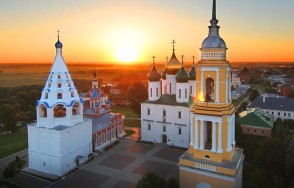
Kolomna is a city of legends and ancient legends, mysterious stories and undiscovered treasures. We will see the battle towers an …
 Guide license
Dear friends! I am glad to offer you fascinating walking and car excursions around the Kolomna Kremlin, Posad, existing …

I will take you through the old streets of the city. I will tell stories and legends that have come to us from ancient t …
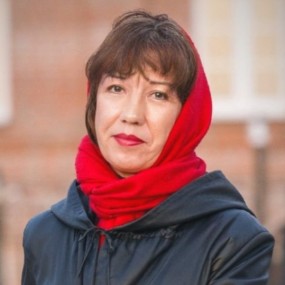
I offer author's excursions to the cities of the south and east of the Moscow region - Kashira, Kolomna (Kolomna Kremlin …

Kolomna Kremlin (walking tour, 1.5 hours). Kolomna Posad (walking tour, 1.5 hours). Walls and towers are a route f …

A city with an ancient history. A huge number of temples and monasteries, interesting museums and unique architectural …

Diverse, original tours of Ryazan, Ryazan region. Unusual Tula. Merchant, delicious Kolomna. The highlight of the Moscow …

Day 1. Departure from Kolomna. Night move. Day 2. Arrival in Vyborg.Breakfast.Sightseeing tour with a visit to the territory of …

Excursion tour "Oki binder thread" includes a weekend route : Kashira - Sokolova Pustin - Belopesotsky Monastery-Gorodishche - Lak …

Day 1. Departure from Kolomna. Night move. Day 2. Breakfast.Visit the most beautiful village in Russia - Kinerma.Going to Olone …

03.01-08.01.2024 Day 1. Departure from Kolomna. Night move. Day 2: Breakfast. Photostop at the Polar Circle sign. Excursion in t …

Departure to Kolomna at 07.00 hours (Jubileinaya Square, Lenin Square, M. Grasshoppers). Arrival in Kolomna. Sightseeing tour of …
Kolomna is a city in the Russian Federation, the district center of the Moscow region.
Kolomna appeared on the site of an ancient settlement. It was first mentioned in the Lavrentiev chronicle under 1177 as a border town of the Ryazan principality. Kolomna finally became part of the Moscow principality in 1306. The history of Kolomna is connected with the history of the formation of the Russian state. On the maiden field at Kolomna took place the famous Kulikovo battle in 1380.
In 1606, the rebellious peasants under the leadership of Bolotnikov defeated the army of Tsar Vasily IV of Shui and occupied the city. In 1608, Kolomna was captured by Polish invaders. The city was liberated by Russian troops under the command of Dmitry Pozharsky. Later, in one of the towers of the Kremlin - Marinkino Tower, the wife of both False Dmitry Marina Mnishek ended her life. Until the end of the 18th century, Kolomna retained an important trade importance due to its position at the intersection of land and waterways. Since the 1770s, Kolomna was built according to a regular plan under the leadership of the architect M. F. Kazakov, who later transferred many of the techniques first applied in Kolomna to Moscow. The industry of Kolomna actively developed in the 19th and 20th centuries. Here there was a silk weaving industry, which then spread in the eastern suburbs. In 1863, on the basis of mechanical workshops was founded Kolomna machine-building plant. In Soviet times, Kolomna became a major center of mechanical engineering.

Kolomna is rich in architectural monuments representing a variety of epochs and periods of development of the city. The historical center of Kolomna is built on the model of the Moscow Kremlin at the old mouth of Kolomenka. The surviving buildings of the Kremlin ensemble include sections of stone (with brick cladding) walls and six towers, including the twelve-sided Kolomenskaya (Marinkina) tower, as well as the rectangular Yamskaya and Spasskaya towers. On the territory of the Kremlin there is the Cathedral Square with a four-pillar five-domed Assumption Cathedral (1672-1682), a tent bell tower (1692) and the Resurrection Church (built in the first half of the 16th century on a white-stone subclet of the 14th century, rebuilt in 1786 in the late Baroque style). Here is the complex of the Bishops' Compound (since 1801 Novolutvin Monastery), including the Trinity Church in the style of Moscow Baroque (1680s), a number of buildings of the late 17th century (Pokrovskaya Church, a bishop's house with a one-pillar chamber), rebuilt in 1778 by M. F. Kazakov in the style of pseudo-Gothic, a fence with towers (1778), a slender three-tiered bell tower in the Empire style (1825).
On the territory of the Kremlin there are also buildings founded in 1552 of the Brusensky monastery, which is now not operating, - the tented Assumption Church (1552), the Vozdvizhensky Cathedral (1852-1855), the house of the abbess, cells, a fence of the 19th century.
Of the other temple buildings of Kolomna stand out those that were erected in the 16-17 centuries on the posad south-east of the Kremlin: the Church of Nikola Posadsky of the late 17th century, Nikitsk Church (1695), Epiphany (formerly Zachatevskaya) Church (1680-1689). In the Yamskaya Sloboda, southwest of the Kremlin, the cube-shaped Trinity Church (1696) has been preserved. To the south of the Kremlin are the Ascension Rotunda Church (1792-1799) and the Church of John the Theologian (1756), rebuilt in the first half of the 19th century in connection with the construction of arcades in the Empire style. To the east of the Kremlin is the Church of Michael the Archangel with powerful Corinthian porticoes and a high dome rotunda (late 18th century, rebuilt in 1828-1833 in the spirit of mature classicism).
The numerous monuments of civil architecture of Kolomna include the voivode's house (late 17th - early 18th century), the building of the guardhouse in the style of classicism (early 19th century), noble and merchant mansions of the late 18th - early 19th century (former houses of Ozerov, Tupitsyna, Shevlyagina, Meshchaninov).
The strategic importance of the Kolomna Kremlin was reinforced by the construction of several monasteries. The Epiphany Oldogolutvin Monastery was founded at the confluence of the Oka River into the Moscow River in 1374 or 1385 at the request of Prince Dmitry Donskoy by St. Sergius of Radonezh. The main architectural monuments of the monastery are the Epiphany Cathedral (the first half of the 18th century), the Sergiev Refectory Church (founded in the 16th century, rebuilt in 1828-1833 in the Empire style), a three-tiered gate bell tower in the style of classicism with the Vvedensky Church of the early 19th century, the Rectory Corps and cells (19th century), six island Gothic towers built in 1778 by M. F. Kazakov. Starogolutvin Monastery resumed its monastic life in 1994. In 1779, part of the monks of the Old Golutvin monastery moved to the Bishops' House in the Kolomna Kremlin, founding the Novolutvin monastery. The house of bishops was restored after the fire of 1778 by M.F. Kazakov. Novolutvin Monastery was revived in 1989 as a female monastery.
On the left bank of the Moscow River in 1381, Dmitry Donskoy founded the Mother of God-Christmas Bobrenev monastery, owed its name to the voivode Dmitry Donskoy Dmitry Mikhailovich Bobrok-Volynsky. The monastery was closed in 1929, only in the 1980s was the restoration of some of its buildings started. To this day, the Cathedral of the Nativity of the Virgin with a refectory and bell tower (1757-1790, reconstructed in 1830), the Fyodorovskaya Church (1860), the Abbot and Keleniy Corps (completed in 1861), a high fence with four round bunk towers in the style of psevodgothics (1790-1795).
In Kolomna was born and spent his childhood writer I. I. Lazhechnikov. In 1842-1843 in Kolomna lived the composer A. A. Alyabiev, who returned from exile. About the history of the city, archaeological finds on the site of the settlement tells Kolomna Museum of local lore.
The surroundings of Kolomna are rich in architectural monuments no less than the city itself. So, in the village of Andreevskoe, the Assumption Church (1770) was preserved, in the village of Bogorodskoe - built by order of Prince V. M. Golitsyn in the style of early classicism, the Church of the Nativity of the Virgin (the last quarter of the 18th century), in the village of Nepetsino - Znamenskaya Church (1806) in the former estate of A. B. Novikov. An interesting monument of temple architecture is located in the village of Prusy, once bought by the Kolomna bishop from the boyars of the Sheremetyevs, the brick Ilyinskaya Church, built before 1578.

Kolomna is an ancient and beautiful city in Russia, located in the Moscow region, just a few hours from Moscow. This unique city has a rich history, exciting architecture and a cozy atmosphere that attracts thousands of tourists every year. Here are a few reasons to visit Kolomna:
1. Historical heritage: Kolomna was founded in the XIII century, and its history dates back more than 800 years. The city has many historical monuments, including the Kolomna Kremlin, the Cathedral of the Intercession on the Nerli and ancient churches. Walking along the narrow streets, tourists will plunge into the atmosphere of ancient Russian architecture.
2. Kolomna Kremlin: This historical complex is a real pearl of Kolomna. There are museums, expositions, as well as beautiful gardens and parks. A visit to the Kolomna Kremlin provides an opportunity to feel the greatness and importance of this city in the history of Russia.
3. Unique architecture: Kolomna is famous for its diverse architecture, including wooden buildings, old houses and colorful churches. Tourists can enjoy a unique combination of styles representing different eras of Russian history.
4. Traditional Russian treats: Guests of the city can taste real Russian delicacies and national dishes in local cafes and restaurants. Kolomna is famous for its sweet products such as gozinaki, gingerbread and pastiles.
5. Festivals and events: Kolomna regularly hosts various festivals and cultural events where tourists can get acquainted with local tradition, art and craftsmanship.
6. Natural beauty: The city is located in a picturesque place surrounded by rivers and forests. Opportunities for outdoor activities, such as boat trips along the river, add to the attractions for tourists.
A visit to Kolomna provides a unique opportunity to plunge into the atmosphere of old Russia, enjoy the beauty of nature and discover amazing historical monuments. This city will leave unforgettable impressions for all lovers of history, culture and coziness.
The climate in Kolomna, as in many regions of Russia, is continental, with characteristic seasons. Here is a brief description of the climate in Kolomna throughout the year:
Winter (December to February):
Spring (March-May):
Summer (June - August):
Autumn (September to November):
Travelers who prefer different seasons can enjoy the beauty of Kolomna at any time of the year. In winter, the city offers winter entertainment, in spring and summer all the charm of nature is revealed, and in autumn you can enjoy a unique palette of autumn colors.

At the time of my last update in January 2022, I am unable to provide specific information about current prices and service in Kolomna, as this data may change over time. However, I can provide an overview of what is usually expected in the city.
Hotels:
Restaurants and cafes:
Transport:
Level of service:
Prices:
It is best to check current tourist reviews and hotel ratings before planning a trip to get more specific information about the current level of service and pricing policy in Kolomna.
When traveling to the city of Kolomna in Russia, it is useful to take into account local traditions, customs and laws in order to enjoy a pleasant and safe stay. Here are a few important aspects:
Respect for religious traditions:
Politeness and friendliness:
Photos:
Safety regulations:
Buying souvenirs:
Laws and norms of conduct:
Opening hours of shops and institutions:
Remember that courtesy and respect for local traditions contribute to a pleasant interaction with the local population and create a positive travel experience.

Kolomna hosts a number of popular events, holidays and festivals that reflect the rich cultural and historical atmosphere of this Russian city. Here are a few of them:
Festival "Colomen Autumn":
Easter celebrations:
Maslenica:
City Day:
Concerts and musical events:
Sports events:
Festival of Arts and Crafts:
When planning a trip to Kolomna, it is worth clarifying the current dates and programs of events in order to fully enjoy the cultural diversity of this city.

Safety and documentation issues are important for a successful and carefree journey. Here is some information on these issues for visiting Kolomna and other regions of Russia:
Safety:
General recommendations:
Health and medicine:
Public transport:
Visa:
Registration
Extension of stay:
Other documents:
Customs regulations:
It is always advisable to check up-to-date information and consult with consular services before travelling for accurate and up-to-date information on visa requirements and residency rules.
Create a query and local guides will offer you the best options


