Independent tourism and recreation in the city of Sevastopol Historical information about the city of Sevastop...

Fiolent and Balaklava The approximate timing of the excursion and what we will see 9:00 Meeting in Yalta / Alushta at the ad …

The tour is conducted daily. Start at 9:00. The place of collection can be agreed in advance. Our excursion will open before you …

Sevastopol is a city, by Crimean standards, young, it is only a little more than two centuries, but for this moment in history the …

Mount Ak-Kaya is not only a geological landmark, but also an interesting natural monument of the Crimean foothills on the road fro …

Alimova Balka is one of the most mysterious and mystical places in Crimea. At the bottom of the Alim beam flows a clean spring wit …

The tour is held on Tuesdays, Thursdays, Saturdays weekly. Gathering of the group: Sevastopol. square Nakhimov. Board of Honor. E …

Sevastopol - Mountain road between the cave towns of Mangup and Eski Kermen - Karalez Valley of Sphinxes - Marmara Caves and Emine …
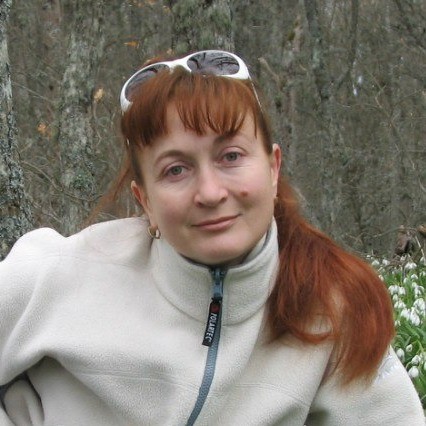
I love and appreciate my work. I like talking to different people and fall in love with Crimea. I drive all routes along …
 Guide license
In my understanding, the tour is not just a convenient and quick transfer from the hotel to the museum and back. The tou …

Sevastopol is my life and love, it is impossible to treat this city without admiration and respect. I invite you to a fa …

Individual and group tours of Sevastopol, Big Yalta, the "Cave Cities of Crimea" and the western Crimea.
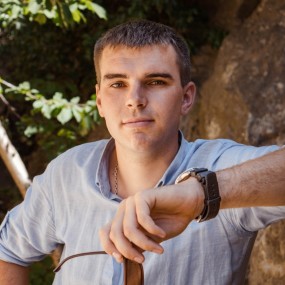 Guide license
I conduct individual excursions without fuss and haste on business class cars. Form routes for each guest, taking into a …

Sightseeing tour of Sevastopol: Count's Wharf, Nakhimov Square, Primorsky Boulevard, the memorial to the Heroic Defense of Sevasto …

Tour laureate of the All-Russian award "Route of the Year 2016 (1st place) in Sevastopol" The national event tour in the framework …

This is not just a yachting is a musical gastronomic yachting trip! We have prepared for you a super cocktail from the exciteme …

Tour programme: 1 day. 07:00. Sevastopol, Ushakov Square. Transit to Crimea. Visiting Mount Mithridates. Passage on the Crimean b …

1 day.Meeting at the airport from 11:30 to 12:00 (near the yellow building, at the entrance with columns). Transfer to the souther …

Artflot Group of Companies +7 (495)125-8845 Victory Day is a celebration of the victory of the Soviet army and the Soviet peopl …
Ancient times and antiquity
The territory of modern Sevastopol has been inhabited since ancient times. Archaeological finds indicate settlements of people here in the IV-III millennia BC.
In the first millennium BC, these were the lands of the tribes of the Taurus and Scythians. Taurus, known for their belligerence, are mentioned in ancient sources.
In the IV-III centuries BC, the Greeks founded several colonies on the coast, including the city of Chersonese (now Chersonese Tauride) on the southwestern outskirts of modern Sevastopol.
Chersonese became an important commercial, cultural and religious center. Crafts flourished here, temples were built, schools of philosophy and science functioned.
By the end of the fourth century AD, the city came under the influence of the Roman Empire and then Byzantium.
Middle Ages
After the fall of Byzantium, nomadic peoples began to rule the region - the Khazars, then the Polovtsy and the Pechenegs.
By the XIII-XIV centuries, Genoese trading stations began to appear on the territory of modern Sevastopol. The Genoese used local coves for fishing and trade in grain, slaves and other goods.
During this period, the region was strategically important for the control of the Black Sea.
Ottoman and Crimean Tatar Era
In the XV-XVIII centuries, the territory was part of the Crimean Khanate - a vassal of the Ottoman Empire.
Sevastopol Bay was used for the parking of Tatar and Turkish ships.
At this time, the region was sparsely populated, with rare fortifications and small villages.
Founding of the city by the Russian Empire
1783 - after the annexation of Crimea to Russia, Empress Catherine II initiated the construction of a naval base.
1784 – General Mordvinov laid down fortifications at Cape Khrustalny and began the construction of Sevastopol as a military fortress and port.
The city received the name Sevastopol from the Greek words “sev” (magnificent) and “stapol” (city, place).
nineteenth century
Sevastopol became the largest naval base of the Black Sea Fleet.
Russian-Turkish Wars (1787–1791, 1806–1812, 1828–1829)
The city was fortified as a fortress and naval base.
In 1853-1856, during the Crimean War, Sevastopol became famous for its heroic defense: the famous Defense of Sevastopol of 1854-1855 became a symbol of the courage of Russian soldiers.
After the war the city was rebuilt and fortified.
XX century
During the Civil War (1917-1920), Sevastopol changed hosts several times: white, red, Anglo-French interventionists.
During the Great Patriotic War (1941-1944), Sevastopol again became a symbol of heroism.
The defense of Sevastopol (1941-1942) was an almost year-long struggle of Soviet troops against the offensive of German-Romanian forces.
The city received the title of "Hero City" for the courage of its defenders.
After the war, Sevastopol was restored and continued to be the key naval base of the USSR.
Modern period
After the collapse of the USSR in 1991, Sevastopol became part of Ukraine, but with a special status, given the deployment of the Russian Black Sea Fleet.
In 2014, as a result of political events in Ukraine, control over Crimea and Sevastopol passed to Russia, which sparked international discussions and led to the introduction of a number of sanctions.
Today, the city is an important port, naval center, and a popular tourist center with a rich historical heritage.

Sevastopol welcomes guests with the bright sun, fresh sea air and charming coves, where the noise of the waves is mixed with the history of centuries. This city is a real storehouse of impressions for lovers of history, culture and nature.
Marine atmosphere and coves
Sevastopol is a city on water. Its bays, especially the Reed and Artillery, like picturesque paintings, are ideal for walks, photo shoots and sea walks.
A walk on a yacht or boat offers views of fortresses, lighthouses and rocky shores that are impossible to forget.
A story woven into every stone
Chersonese Tauride - ancient city-state with temples, amphitheatre and archaeological excavations. You can feel the breath of millennia here.
Panorama “Defense of Sevastopol” and Malakhov Kurgan tell about the heroic events of the Crimean War.
Warships of the Black Sea Fleet and memorials create a special atmosphere where history lives next to everyday life.
Nature and landscapes
Sevastopol is not only a city, but also nature: picturesque rocks, clean sea and beaches for every taste - from pebble to sandy.
Outdoor enthusiasts will find itineraries for hiking and cycling along the coast and the surrounding mountains.
Culture and gastronomy
The city keeps unique maritime traditions and cuisine: fresh seafood, fragrant coffee in cozy promenades of cafes, wine from local wineries.
Concerts, theaters, exhibitions and festivals make the city lively and dynamic, especially during the summer season.
Unique atmosphere
Sevastopol combines the grandeur of history and a relaxed maritime atmosphere. Walks along the ancient streets with sea views, sunsets over the bay and meetings with hospitable locals make the stay unforgettable.

1. Luxury Hotels (High-end / 5) *
For those who want to relax with maximum comfort, Sevastopol offers several luxury options. Such hotels have spas, swimming pools, restaurants with panoramic sea views and high-class service.
Examples: Mriya Resort & Spa, Aquamarine Hotel, Black Sea Hotel.
Features: direct access to the sea, modern rooms with balconies, often included additional services: breakfast, transfer, entertainment.
Prices: from 10,000 . per night.
2. Medium level (Mid-range / 3–4) *
This is the best option for tourists who care about comfort, but without excessive costs. Such hotels offer cozy rooms, often with breakfast, convenient location near the sea or the city center.
Examples: Hotel "Sevastopol", Hotel Panorama, guest house "Bay of Dreams".
Features: comfortable conditions, often terraces with views of the city or bay, family atmosphere.
Prices: approximately 3000-8000 . per night.
3. Budget options (Hostels / Mini-hotels)
For tourists on a budget, there are hostels and mini-hotels. Here you can stay inexpensively, while getting the basic amenities: a bed or a separate room, a common kitchen and a bathroom.
Examples: Hostel Sevastopol, mini-hotel "Primorsky", hostel "Balcony by the sea".
Features: convenient location, the opportunity to meet other travelers.
Prices: 800-2 500 . per night.
4. Private sector and apartments
Sevastopol offers a wide range of apartments and rooms rented by local residents. This is a convenient option for families or groups of friends, allowing you to cook on your own and live like locals.
Features: apartments and rooms are located throughout the city - from the center to the coast of Balaklava and Inkerman, sometimes overlooking the sea.
Prices: 1,500–5,000 . per night.
1. Tauride Chersonese
This is an ancient city-state founded by the Greeks over 2,000 years ago. Here you can see the ruins of temples, an amphitheater, city walls and museums.
Why you should visit: a unique opportunity to immerse yourself in the history of the ancient world, see the archaeological excavations and the picturesque coast.
How to get there: buses 4, 17, 27 or minibuses from the city center; you can also walk from the embankment (about 25-30 minutes).
2. Panorama "Defense of Sevastopol 1854-1855"
What is it: a museum with a huge panorama dedicated to the Crimean War. Visitors can see both visually and through the exhibits what happened during the defense of the city.
Why you should visit: one of the brightest places to study the history of the XIX century and the heroism of the defenders of Sevastopol.
How to get there: buses No1, 2, 19 from the city center; located on the Malakhov mound, you can combine with a walk through historical places.
3. Malakhov kurgan
What it is: a key fortification and historical site of the Crimean War, a memorial overlooking the city and the bay.
Why you should visit: an excellent observation deck and a symbol of the heroism of the city.
How to get there: bus number 1 or on foot from the city center (~20 minutes on the historical part of Sevastopol).
4. balaklava
What it is: a picturesque bay and a village with the history of a naval base and an underground factory from the Soviet era.
Why you should visit: unusual underground structures, walks along the bay, beautiful beaches and mountain views.
How to get there: bus number 109, minibuses from the center of Sevastopol, the trip takes about 30-40 minutes.
5. Cape Fiolent
What it is: a rocky promontory with clean sea, beaches and ancient shrines, including St. George’s Church.
Why you should visit: some of the most beautiful landscapes of Sevastopol, a great place for photos and outdoor activities.
How to get there: by car or taxi about 20-30 minutes from the center; buses No. 109 and No. 85 with a transfer, hiking trails to the beaches.
6. Primorsky Boulevard and Embankment
What it is: the central walking area of the city along the sea with cafes, shops, monuments and panoramic views.
Why you should visit: the heart of the city, a place for evening walks, sea sunsets and photos.
How to get there: from almost any area of the city center on foot; there are many bus and minibus stops nearby.
7. Panorama of Balaklava Bay and Genoa Fortress
What is it: a historical fortress of the XIII century on a cape near Balaklava.
Why you should visit: medieval architecture, views of the bay and mountains. Great combination of history and nature.
How to get there: better by car or excursion bus from Sevastopol (about 30-40 minutes).
Transport accessibility in the city
Public transport: buses, trolleybuses and minibuses connect the city center with most attractions.
Taxi and car sharing: convenient for trips to remote places, such as Cape Fiolent or Balaclava.
Hiking: many historical sites (Primorsky Boulevard, Chersonesos, Malakhov Kurgan) are within walking distance from each other in the center.
Car: The best option for combined routes – a trip to the bays, capes and beaches takes from 20 to 40 minutes from the city center.

Spring (March-May)
Spring in Sevastopol is the time of revitalization of the city, the beginning of the tourist season, the first festivals and holidays.
Main events and holidays:
March 8 - International Women's Day, many festive concerts, exhibitions and thematic events.
Victory Day (May 9) is one of the main events of the city. Parade on Nakhimov Avenue, military reconstructions, fireworks, concerts on Nakhimov Square and in Victory Park.
Festival "Baltic Lighthouse" (sometimes in spring, depending on the year) - musical and theatrical performances on the embankment.
Seasonal features:
The weather begins to warm, the sea is still cool, but the embankments come to life.
Tours on boats and walks to historical places are popular.
Summer (June-August)
Summer is the peak tourist season, numerous festivals, carnivals and outdoor concerts.
Main events and holidays:
Day of the city of Sevastopol (May 9 officially, but in summer there are additional festive programs) - concerts, exhibitions, parades on the water.
International Maritime Festival "Balaklava Fest" - sometimes held in June-July; focus on yachting, regattas and maritime culture.
The festival “Great Cinema by the Sea” is an open-air cinema on the embankment.
Musical concerts in squares and parks - jazz, rock, classics; especially popular with tourists.
Seasonal features:
The sea warms up to a comfortable temperature.
Many open beaches and embankments with concerts and festivals.
Autumn (September-November)
Autumn in Sevastopol is a cultural season, fewer tourists, more themed festivals and fairs.
Main events and holidays:
Sevastopol City Day - festive events can last until September.
Festival "Sevastopol meetings" - cinema, theater productions, literary evenings.
Russian Navy Day (last Sunday in July, sometimes with autumn events) - exhibitions of military equipment, concerts and flash mobs.
Fairs and gastronomic festivals - wine and honey festivals.
Seasonal features:
The weather is cooler, but beautiful views of the bays and historical areas.
Great time for walking and sea excursions without crowds of tourists.
Winter (December-February)
In winter, Sevastopol is less touristic, but the city is not empty - New Year and Christmas holidays take place.
Main events and holidays:
New Year and Christmas (December 31 – January 7) – the main Christmas tree on Nakhimov Square, festive fairs, concerts, winter fireworks.
Epiphany (January 19) is a religious holiday with swimming in the sea in specially equipped areas.
Festival "Winter Sevastopol" - exhibitions, theatrical productions and New Year events (less massive than in summer).
Seasonal features:
Mild sea winter is rarely frosty.
The city looks particularly atmospheric with festive illuminations and seascapes.

Spring (March-May)
Spring in Sevastopol is soft and changeable. In March afternoon usually +9 ... +13 ° C, at night +2 ... +5 ° C, and the water in the sea warms up to +9 ° C. +10°C is still cool for swimming. In April, the air in the afternoon +14 ... +18 ° C, at night +6 ... +10 ° C, the sea is about +10 ... +13 ° C. May already brings comfortable heat: during the day +19 ... +23 ° C, at night +11 ... +14 ° C, and the water warms up to +15 ... +17 ° C. Spring is a great time for excursions, walks and first festivals, although swimming is not yet comfortable.
Summer (June-August)
Summer in Sevastopol is hot and sunny. In June, the air in the afternoon +24 ... +28°C, at night +16...+19°C, sea +20... +22°C is comfortable for swimming. July afternoon +27... +30°C, at night +18...+21°C, water +23... +25°C, this is the warmest month with many festivals and concerts on the waterfront. August is almost the same: air +26... +29°C in the afternoon, +18... +21°C at night, water +23...+25°C. Summer is the best season for beach holidays, sea walks and all outdoor activities.
Autumn (September-November)
Autumn is soft and calm. In September afternoon +23 ... +26 ° C, at night +15 ... +18°C, sea about +21... +23°C - you can still swim. October afternoon +17... +21°C, at night +10... +13°C, water +18... +20°C. November becomes cool: during the day +11 ... + 15 ° C, at night +5 ... + 8 ° C, water +14 ... + 16 ° C. Autumn is ideal for sightseeing and cultural tourism, wine and gastronomic festivals, but swimming is no longer comfortable everywhere.
Winter (December-February)
Winter is mild and rainy, snow is rare. December day +7 ... +11 ° C, at night +1 ... +3 ° C, water +11 ... +12 ° C. January is the coldest month: during the day +6 ... + 9 ° C, at night 0 ... + 2 ° C, water + 9 ... + 11 ° C. February is a little warmer: during the day +7... +10°C, at night 0 ... +3°C, water +9 ... +11°C. In winter, swimming is impossible, but the city lives a festive atmosphere: Christmas trees, concerts, excursions without crowds of tourists.
Language of communication
The main language is Russian. It is used in everyday life, in transport, shops, on excursions and in communication with locals.
Knowledge of English is limited, especially outside tourist areas. In hotels and major museums you can find staff who speak English.
Advice for tourists: basic phrases in Russian, for example, “thank you”, “please”, “how much it costs”, will greatly facilitate communication.
Traditions and customs
Greetings and courtesy
It is customary to say hello to the words “Hello” or “Good afternoon” when entering a store, cafe or when meeting strangers.
When communicating with older people, use the “you” form respectfully.
Conduct in public places
In public transport give way to the elderly, pregnant and people with children.
On the embankment, in parks and on beaches, cleanliness is observed, garbage should be thrown into urns.
Religious and cultural norms
In temples and monasteries (for example, St. George Monastery) it is customary to dress modestly: shoulders and knees should be closed.
Photography inside churches is sometimes forbidden - check the signs and ask permission.
Communication with locals
The locals are proud of the city’s history, especially the military and sea. Politely interested in history and avoid sharp political questions.
Noisy behavior in public places and excessive drinking on the street are not welcome.
Laws and regulations for tourists
Documents
You must have a passport with you. For foreigners, a passport with a visa, if required.
Police can check documents, especially near government facilities and ports.
Road rules
Be sure to follow traffic rules. Speeding and parking penalties are real and strictly enforced.
Pedestrians must cross the road only at pedestrian crossings, otherwise a fine is possible.
Maritime and natural safety
Swimming is allowed only in equipped areas on the beaches. It's dangerous to swim behind buoys.
It is forbidden to fish in protected waters or damage flora and fauna.
Smoking and alcohol
Smoking is prohibited in closed public places (restaurants, museums, transport).
Alcohol can not be consumed on the streets - a fine.
Photography
Photography of military objects is prohibited.
The rest is free but respectful of local and cultural sites.

1. Food and drink
Sevastopol is famous for its sea and Crimean flavor.
Seafood
Fresh and dried fish, mussels, shrimp and octopuses.
Popularly dried "black sea" - dried squid and cuttlefish as a snack.
Wine and drinks
Crimean wines: especially white varieties (muscat, risling) and locally produced red.
Tinctures and liqueurs on herbs: juniper, Crimean lemon.
Honey and bee products
Different types of honey: acacia, buckwheat, lime.
Bee products: propolis, royal jelly, perga.
Crimean sweets and delicacies
Churkkhela, nut candies, Crimean dried fruits (figs, apricots).
Useful: fresh foods (honey, dried fruits, nuts) are great for gifts and are considered healthy.
2. Medicines and natural products
Sevastopol and Crimea are known for their natural resources.
Mineral water
For example, with healing properties from springs near the city and Crimea.
Sea salt and mud
Small sea salt for baths, therapeutic mud from local estuaries.
Herbal fees and oils
Infusions and teas from Crimean herbs: thyme, mint, rosehip, St. John's wort.
Essential oils of juniper, rosemary and eucalyptus.
Useful: such products are used for healing, prevention of colds and relaxing procedures.
3. Souvenirs and crafts
Sevastopol is unique for its maritime and historical motifs.
Sea-themed souvenirs
Models of ships, decorative anchors, magnets with bay views.
Shells, sea stones, jewelry with natural elements of the sea.
Handicrafts and crafts
Ceramics and Crimean handmade dishes.
Wood carvings with marine themes, paintings with seascapes.
Textiles
Souvenir scarves, tablecloths with Crimean ornaments.
Useful: small souvenirs are convenient to take in hand luggage, and natural elements (salt, honey) can be used at home.
1. Documents required by the tourist
Russian citizens: enough passport of the Russian Federation.
Foreign nationals: A passport with a valid visa (if required by your country), a migration card or registration is required.
Registration of accommodation: Tourists staying in hotels are usually registered automatically. If you live with private individuals, the owner must register you with the local Ministry of Internal Affairs.
2. Health insurance
Mandatory for foreigners.
Coverage is recommended in case of accident, hospitalization, emergency care.
Traveling with children is useful if the insurance covers pediatric services.
3. Emergency services phones
Police: 102
Ambulance: 103
Fire service: 101
Uniform emergency number (analogue 112): 112
Maritime Rescue Service: +7 (8692) 54-92-44 (for the Black Sea and bays)
4. Mobile and Internet
Russian tourists: all the main operators (MTS, Beeline, Megafon, Tele2) work in Sevastopol.
Foreign tourists: Roaming is possible, but often expensive. It is recommended to buy a local SIM card (for example, MTS or Beeline) to call and use the Internet.
Wi-Fi is available in hotels, cafes and some museums, but the stability can vary.
5. Term of stay of the tourist
Citizens of Russia: there are no restrictions, you can live as long as you want.
Foreigners: the period of stay without departure depends on the visa:
Visa-free tourists (e.g. citizens of the EU, CIS, some Asian countries) can stay up to 90 days within 180 days.
It is important to clarify the visa deadline and not exceed it, otherwise fines or a ban on entry are possible.
6. General safety advice
Avoid secluded and poorly lit places at night.
Do not leave valuables unattended on the beach or in transport.
It is dangerous to swim outside the equipped areas on the sea and bays.
Observe the rules of traffic and public order.
Respect local customs and military installations: photography is prohibited.
Create a query and local guides will offer you the best options