


 Kaygorodova Natalia Vasilyev...
Independent trip to the city of Irkutsk! History of the city of Irkutsk Irkutsk is the administrative center o...

Two-day excursion "From Kurykans to Cossacks - the development of Eastern Siberia". We will visit the iconic places in Kachug dis …

You will visit the southern part of Olkhon Island;Walk through the original village of Khuzhir;You will see the most famous attrac …

The Siberian winter is beautiful - a lot of sparkling snow, the purest transparent ice, shimmering with all shades of blue, evergr …

The feeling of complete freedom and “forest in the palm” begins with the first ascent. You walk along a soft, strewn with needles …

During our trip you will enjoy the pristine beauty of Siberian nature, you will see the authentic nature. Settlements, get acquain …

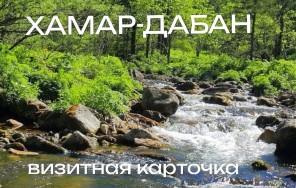
The Tunkin Valley is an unflooded lowland surrounded by the mountains of Eastern Sayan and Hamar-Daban. Numerous sacred places, so …
 Guide license
Some of the main areas are: Irkutsk region: Irkutsk, sightseeing or thematic tourListvyanka with a visit to the Ta …

Travels combining wildlife and comfort: We have thought through every detail: from living to choosing the best places …

What I suggest is: Author's routes on Baikal and Mongolia.Fascinating excursions, where I will tell not only about natu …

Especially for you my "arsenale" there are several interesting tours that I offer you: 1. Sightseeing tour of Irkutsk. …

1. Sightseeing walking tour around the city center "Secret courtyards of Irkutsk" (1 hour) Looking for the hidden pla …
 Guide license
Excursions urban and suburban, survey and thematic, walking, automobile, individual and group. We will help you to crea …

During the tour "Winter Nomads of Baikal" you will see Baikal from both sides! First you will visit the heart of Lake Baikal - on …
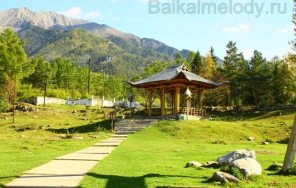
The resort village "Arshan" Rivers rage there, waterfalls rumble, The springs feed their eternal snow. And above the clou …

Dates: From 14.06.2025 to 23.06.2025 From 05.07.2025 to 14.07.2025 From 12.07.2025 to 21.07.2025 From 26.07.2025 to 04.08.2025 …

7 days - the optimal duration of the tour to have time to visit interesting locations, visit excursions and at the same time relax …

Excursion and educational tour of southern and middle Baikal. Irkutsk – mountain resort Arshan – Slyudyanka – KBZD – Listvyanka – …

Tour area: Oz. Baikal Price and prices: With a group of 8 people: the price for one person 90000 rubles With a group of 16 people: …

Discover amazing places on Baikal: Olkhon Island and the unique Ushkany Islands, Chivyrkui Bay, the Holy Nose Peninsula and the Ba …
Irkutsk is the administrative center of the Irkutsk region of Russia, a large industrial and cultural city of Eastern Siberia. The city is located on the Irkutsk-Cheremkhov plain at the confluence of the Irkut River into the Angara on its right bank 66 km southwest of Lake Baikal, 5042 km east of Moscow. The population is 623 562 thousand people (2020).
Irkutsk is an important transit point for Russia’s trade with Mongolia and China. The city has developed engineering (heavy, easel, repair and mechanical, electric dredges for the gold mining and diamond industry, blast furnace equipment, drive shafts), there are an aviation plant, factories of reinforced concrete products, mica processing factory (parts of radio electronics), enterprises of light (garment, shoe, leather) and food industry (chaeranging, pasta, confectionery, mill, meat and oil processing plants). Within the city on the Angara built a hydroelectric power plant. The city is divided into four districts. The banks of the Angara are lined with concrete slabs, a bridge will be thrown over Irkut.
History
By the time the Russians appeared on the banks of the Angara, the Baikal region was inhabited by tribes of Buryats and Evenks. In 1661, on the right bank of the Angara, the Irkutsk fort was laid. In 1669 a fortress was built on the site of the fortress, and in 1672 a wooden church of the Savior was built. In 1686, Irkutsk acquired the status of a county city. At first, the settlement of the Baikal region was carried out by voluntary or forced resettlement of peasants and servicemen from Russia. In 1764, Irkutsk became the provincial center. In 1790, the coat of arms of Irkutsk was approved, representing “in the silver field of the shield of a running tiger, and having a sable in the jaws.” Since 1803, Irkutsk has been the residence of the Governor-General of Siberia, since 1822 - of Eastern Siberia.
Since the 18th century, Irkutsk has been the center of trade, industrial and diplomatic relations between Russia and Asian countries. The city grew rapidly, in the early 19th century the mansion of Sibiryakov (1800-1804, the workshop of Quarenghi, with a fence according to the drawings of Stasov and Ruska), Alexander Square, houses with baroque carved decor were built. In 1851, the Siberian branch of the Russian Geographical Society was founded in Irkutsk. The building of his museum in the "Moorish" style (1882, architect G. V. Rosen) has been preserved to this day.
Since the 1840s, capitals of gold miners, merchants and foreign companies have flocked to Irkutsk, the “capital of Lenin’s gold”. In 1862, customs from Kyakhta was transferred to Irkutsk. The most crowded fairs in Siberia, Irkutsk was famous from the turn of the 18-19 centuries. The main local production is gold sewing, lace weaving, sewing beaver caps, making furs, weaving hemp nets.
Irkutsk was badly damaged by the fire of 1879, but the city rebuilt and by the beginning of the 20th century became one of the most beautiful cities in Siberia, the best buildings in the city belonged to educational and charitable institutions. Then there was a public garden, a theater, a public library, a magnetic and meteorological observatory, built in 1886, two triumphal gates, one of which was erected in memory of the conclusion of the Aigun Treaty with the inscription "Road to the Great Ocean".
A new rise in the economic life of the city came with the arrival of the first train in Irkutsk in 1898. In 1905, the city water supply was launched, in 1906 and 1910 power plants were built. In 1897, the building of the Drama Theatre was built according to the project of V. A. Schroeter, in 1903 - the Russian-Asian Bank in the Art Nouveau style, in the same year an educational center with the Prince-Vladimir Monastery and a school was founded on the funds of the merchant V. A. Litvintsev in his estate on the wooded outskirts of Irkutsk.
During the Civil War in 1918, the university was founded. In 1920, on the banks of the Ushakovka River, one of the main leaders of the white movement, Admiral A. V. Kolchak, was shot. During the first five-year plans, a cultural and household complex was built in the style of constructivism (1934-1936), the river landscape was completed with an arched reinforced concrete bridge with openwork structures (1931-1936). During the Great Patriotic War, factories from the European part of the country were evacuated to Irkutsk, which formed a significant part of the industrial complex of the city.
Attractions
The city center was the focus of administrative, administrative, religious and commercial buildings. Built in 1717, a new rectangular small fortress stretches along the bank of the Angara. From the fortress perpendicular to the shore developed the main city highway. On this axis formed the main shopping area with a living yard and a church.
The Posad building first surrounded the fortress with a semi-ring and gradually filled the entire peninsula washed by the Angara and Ushakovka. Until now, in the center of Irkutsk, the oldest in Eastern Siberia, the one-headed stone church of the Savior built in Moscow traditions (1706-1710) with a number of zakomar-kokokoshniks and patterned casings is preserved; the church bell tower (1758-1762) belongs to the era of the Siberian Baroque. Great antiquity for Siberia is the Epiphany Cathedral (1718-1731) with two bell towers (the tent - 1729) and the Baroque iconostasis (1746).
Behind Ushakovka formed the suburb of Znamenskoye, named after a women's monastery founded in 1689-1693 with a church of Signs decorated with tiers of intricate casings (1757-1762). In the monastery under the marble monument was the grave of the polar explorer G. I. Shelikhov (in 1799 he founded the Russian-American trading company in Irkutsk, the office building of the company was preserved). The architectural pearl of Irkutsk is the Church of the Exaltation of the Cross (1758) in the style of Siberian Baroque.
Among other attractions of the city: Philharmonic, circus, planetarium, local history museum (famous for its collection of jade products, monuments of the Scythian-Siberian animal style, including the Ivolginsky stone). Near the city there is an architectural and ethnographic museum of the peoples of the Angara region. The Spasskaya Tower of the Ilim Fortress (1667), the wooden Kazan Church (1679), the manor wooden buildings, fragments of rock painting from the Stone Islands on the Angara are brought here.
Since the 18th century, Irkutsk has been known as a place of exile. Here lived the Decembrists and other exiled revolutionaries. In Irkutsk, a memorial zone was created with the estates of the Decembrists S. P. Trubetsky and S. G. Volkonsky, the mansions of M. M. Speransky and E. A. Kuznetsov, with the Transfiguration Church (1795-1798) and other ordinary buildings of past centuries. The cultural environment of Irkutsk influenced the beginning of the literary activity of writers N. A. Polevoy, P. P. Ershov, M. N. Zagoskin.

Irkutsk is a picturesque historical city in the heart of Siberia, offering a unique experience for tourists. Here are some attractive features of the city that can attract visitors:
Historical wealth: Irkutsk is rich in history, and its center is a real open-air museum. Narrow streets, old houses in the style of Siberian Baroque and wooden churches create a unique atmosphere.
Architectural attractions: In the city center, you can enjoy unique wooden architecture, including the Znamensky Monastery and merchant houses. These monuments perfectly convey the spirit of the time and give the city a special flavor.
Cultural events: Irkutsk actively develops its cultural scene, offering tourists a variety of events - from festivals and exhibitions to theatrical performances. This allows visitors to experience the local culture and art.
Natural beauty: Located on the banks of the Angara River, Irkutsk has picturesque coastal areas and parks. Tourists can enjoy nature by strolling along the embankments or taking beautiful cruises along the Angara.
Unique museums: The city offers interesting museum expositions, including the Decembrists Museum, dedicated to the history of the Russian intelligentsia. These places reveal fascinating chapters of the country's past.
Excursions to the surrounding areas: Irkutsk is an excellent starting point for visiting Lake Baikal and other natural wonders of Siberia.
An attractive mix of history, culture and nature makes Irkutsk a great place for tourists who want to immerse themselves in the atmosphere of a unique region of Russia.
Irkutsk is rich in many attractions, including historical monuments, architectural masterpieces and cultural sites. Here are some of the main attractions and their approximate distance from the city center:
Znamensky Monastery (0.5 km): One of the oldest and most beautiful monastic architectural complexes in Siberia, founded in 1689.
Lermontov Manor (2 km): The house-museum of the great Russian poet Alexander Sergeyevich Lermontov, where he lived from 1822 to 1823.
Decembrists Museum (1.5 km): The complex of buildings where the Decembrists lived and worked after their exile in Irkutsk.
Church of the Transfiguration (1 km): The monument of wooden architecture, built without a single nail in 1706.
Estate of A.V. Vasnetsov (2.5 km): The house-museum of the outstanding artist Viktor Vasnetsov, where he spent his childhood.
Angarskaya embankment (0 km): A great place to walk with views of the Angara River and local attractions.
Spasskaya Church (1 km): Another example of Siberian Baroque, built at the end of the XVII century.
Museum of Art History (1.5 km): One of the oldest museums in Siberia, which contains works by Russian and European artists.
Distances can vary depending on the specific location in the city center, and when visiting it is recommended to use local vehicles or walking routes for optimal travel between attractions.

Irkutsk is located in central Russia, and its climate is typical of the Siberian region, with cold winters and relatively warm summers. Here is an overview of the climate throughout the year:
Winter (December to February):
Spring (March-May):
Summer (June - August):
Autumn (September to November):
Each season offers unique opportunities for travelers. Summer attracts nature lovers, winter - lovers of winter sports and freezing Baikal, and spring and autumn - those who prefer more moderate temperatures and beautiful natural scenery.

The level of comfort, service and prices in Irkutsk hotels can vary depending on the specific hotel and its star. The city features hotels of various categories, ranging from more affordable options to luxury hotels. Here's an overview:
Economy class and middle class:
Business class:
Suite and executive class:
It is recommended to read reviews of other travelers to get a more accurate idea of specific hotels and their level of service. It is also important to consider seasonality and events that can affect the cost of living in a given period of time.
When traveling to the city of Irkutsk and Russia as a whole, it is useful to take into account the following traditions, customs and laws:
Respect for local culture:
Compliance with etiquette rules:
Clothes in the church:
Security and laws:
Photography:
Communication with local residents:
Safety in public places:
Typical laws:
Compliance with these simple recommendations will help make your stay in Irkutsk and Russia more enjoyable and safe.

Irkutsk is a city with a rich cultural tradition, and various events, festivals and holidays are held here. Below are some of the popular events in Irkutsk:
Baikal panorama (summer):
Baikal navigation (May - September):
Animation Festival "Multivision" (November):
Irkutsk Carnival (February):
Festival "Trinity foothills" (July):
City Day Celebration (July):
Kinotavr in Irkutsk (April):
Concerts and musical events:
Before traveling, it is recommended to check up-to-date information about events and festivals, as the program may change.

Irkutsk is a relatively safe city, but it is still worth observing the standard precautions typical of large cities. Here are some safety tips:
Beware of pickpockets: Be attentive to your values, avoid displaying expensive jewelry and gadgets in public.
Use official taxis: If you need to call a taxi, it is preferable to use official services to prevent possible problems.
Be careful on public transport: During peak hours, keep an eye on your belongings, especially in transport.
Avoid areas of questionable safety: In some areas of the city, it may be best to avoid a questionable safety zone, especially at night.
Follow the rules of the road: If you rent a car or use public transport, follow the rules of the road.
To travel to Irkutsk you will need the following documents:
Passport: A valid passport for the entire period of stay in Russia.
Visa: If your country requires a visa to enter Russia, make sure that the visa is issued correctly.
Registration Upon arrival in Russia, you must register at the place of stay within seven days.
Health insurance: It is recommended to have health insurance covering your expenses in the event of an accident or illness.
Clarify the current requirements and rules for entering Russia at the consulate or embassy before your trip.
Create a query and local guides will offer you the best options


