


 Kurdyumov Mikhail
Independent tourism and recreation in the city of Gorno-Altaisk Historical information about the city of Gorno...

Our excursion program includes visiting the incredible places of the Altai Mountains. You are waiting for the picturesque tract of …

Blue lakes are a very beautiful and unusual place, they are located on the left bank of Katun, four to five kilometers from the vi …

Can I get to know Altai in one day? Of course I am. A one-day auto-pedestrian tour "Acquaintance with the Altai Mountains" allows …

This tour of the Altai is designed for those who are very limited in time, but want to get the most out of their stay in the Altai …

I invite you to visit the protected village of Yalyu. The village of Yaylyu is located on the right bank of the lake in the valley …

In my author’s tour “Heart of Altai” we visit the Multi Lakes. Thus, on the tour you will find not only an excursion to the Multi …
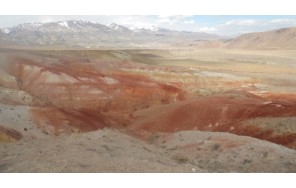
Why fly hundreds of miles to Mars when you can see it on our planet? Increasingly popular among tourists is gaining a place cal …

Car tours along the Chui Highway to Jazzator, Warm Key, to Ukok. Car roll to Tungur and beyond. Rest on Teletskoye Lake. …
 Guide license
1. Group tours with fixed dates of arrivals from 3 to 12 days (5 to 18 guests in the crew); 2. Individual tours and e …
One-day excursions to Chemal, Teletskoye Lake, Chui tract Tours from 2 days: Chuysky tract in detail, Chulyshman, Jaz …
 Guide license
Development and implementation of: Individual tours in the Altai MountainsActive tours in the Altai MountainsOwn Author …

I like to cook meat dishes on fire, I will definitely treat you with delicious national dishes, my own preparation. I c …

With me you will see not only one of the most picturesque protected areas of our Republic, but also one of the largest h …

Active tours and excursions, ordering transport, accommodation. Excursions, walking, mountain, water and speleo routes. …

This year, for the first time, we offer our tourists a unique ascent to the peak of Schenel (2A-2B, 3888 m). The word “unique” is …

An exciting journey through the Altai during the flowering of alpine meadows! This tour will be a real discovery for everyone who …

Fantasticly beautiful places. Photography lovers will be delighted! A well-designed program available for those who do not want to …

The nature of Altai is divine, the soul rejoices from incredible bright colors and endless rainbow colors. The warm sun warms with …

The necklace of the mountain steppes covers the unusually beautiful and peculiar Terekinsky Range, the peaks of which rise above 2 …

The routes offered in this section cover a significant area of the Altai Mountains, showing it in all its natural diversity, …

Route of the tour: Barnaul - Srotki - Manzherok TRP "Turquoise Katun" - Chemal - Mon. Ioanno-Bogoslovsky (Patmos island) - ur Che- …
Gorno-Altaisk is the capital of the Altai Republic and the only official city of the republic. Its history is closely connected with the ancient Altai peoples, the Russian development of Siberia, trade routes, missionary work and the formation of the administrative center of the Altai Mountains.
The oldest history of the territory
The territory of modern Gorno-Altaisk and the whole Altai was inhabited long before the appearance of the city. Altai is considered one of the oldest areas of human habitation in Siberia. Archaeological finds in the Ulalinsky Range and the valley of the Ulalushki River connect this territory with very ancient sites of primitive man. In the XX century, archaeologists discovered stone tools here, which made the area an important object of archaeological research.
Long before the Russian settlers, Turkic-speaking and Altai tribes lived here, including the Teleuts and other groups of the indigenous population of Altai. They were doing:
hunting
pastoralism
fishing
Nomadic and semi-nomadic farming.
The foundation of the settlement of Ulala (XIX century)
The history of the city as a permanent settlement begins in 1824, when the first Russian settlers from Biysk moved here. They founded the village of Ulala at the mouth of the Ulalushki River. The name is associated with the local hydronym and the Altai origin of the word "Ulula / Ulala".
The first residents were engaged:
farming
trade
crafts
animal husbandry.
The village quickly became an important point between the steppe Altai and the mountainous regions.
Role of the Altai Spiritual Mission
One of the key stages of development was the creation of the Altai spiritual mission center here.
In 1831, the main station of the mission began to work in Ulala. They came here:
missionary
priests
translator
teachers.
This greatly influenced the development of:
school
literacy
religious
cultural ties between Russian and Altai peoples.
Shopping center of Altai Mountains
In the second half of the XIX century, Ulala turned into a noticeable trading point of Biysky district of Tomsk province.
There was a trade.
furry
cattle
skin
pine-nut
agricultural commodities.
There are:
shop
craftsmanship
church
school
administrative buildings.
The Revolution and the Soviet Period
After the revolution of 1917, the region became an important administrative center of the Altai Mountains.
In 1922, Ulala became the center of the Oirat Autonomous Region. This increased its political importance and accelerated the development of infrastructure.
In 1928, the settlement received the status of a city.
Renaming the city
The history of Gorno-Altaisk includes several names.
1. ulala
The original name of the settlement.
2. Oirot-Tura (1932–1948)
In 1932, the city was renamed Oyrot-Tura. The word is associated with the ethnonym "oirot", and "tur" in the Altai language means a city or camp.
3. Gorno-Altaisk (since 1948)
After changing the official name of the autonomous region, the city received its modern name - Gorno-Altaisk.
XX century: urban growth
During the Soviet period, the city actively developed as an administrative and cultural center.
Developed:
woodworking
light industry
food-processing
education
medicine
transportation.
There are:
neighbourhood
school
hospital
cultural institutions
roads.
The city became the main center of the region.
After the collapse of the USSR
After 1991, Gorno-Altaisk became the capital of the Altai Republic.
This reinforced its importance as:
administrative centre
centre
cultural centre
tourist gates of the Altai Mountains.
Developed:
university
museum
hotel
transport infrastructure
tourism.
Modern Gorno-Altaisk
Today it is a small but important city of Siberia, located among the mountain ranges and rivers of Maima and Katun. It combines:
altaic
Russian culture
Orthodoxy
natural proximity to the Chui tract and tourist routes of Altai.

Gorno-Altaisk is the capital of the Altai Republic and one of the main tourist centers of southern Siberia. The city attracts travelers with picturesque nature, clean mountain air, proximity to the Altai Mountains and rich culture of indigenous peoples.
The main feature of the city is a good location. Gorno-Altaisk is considered a convenient starting point for trips to the Altai Mountains: to Lake Teletskoye, Chemal, Manzherok, passes, waterfalls and mountain routes.
The city itself is compact, calm and cozy. It combines modern infrastructure and natural beauty: green hills, the Maima River and panoramic views of the mountain ranges.
For tourists, museums, ethno-cultural objects and observation platforms are interesting. Particular attention is drawn to the National Museum named after A.V. Anokhin, where archaeological finds, objects of Altai culture and the famous “Princess of Ukok” are stored.
Gorno-Altaisk is suitable for different types of recreation:
ecological tourism;
active rest (hiking, rafting, quad bikes);
winter holidays and ski complexes near the city;
excursion trips;
Ethnotourism and acquaintance with the culture of Altai.
The city is convenient for travel due to the airport, bus service and proximity to the popular resorts of Altai. There are many hotels, guest houses, cafes with local cuisine and tourist bases.
Gorno-Altaisk will especially appeal to those who want to see beautiful mountains, rivers, forests, get acquainted with Altai traditions and start a trip to one of the most picturesque regions of Russia.
1. High level hotels (comfort/premium)
Suitable for recreation with high service, beautiful views and additional amenities (SPA, restaurants, transfers, nature).
Grand Hotel Altay is one of the comfortable urban options for tourists, convenient for business trips and recreation in the center.
Altai Resort is a premium format of recreation closer to nature, often chosen for relaxing holidays and eco-tourism.
GEOMETRIKA • lounge hotel is a stylish format of country holidays near the tourist areas of Altai.
Average budget: above average and high.
2. Average level (3-4 stars, classic hotels)
A good balance between price, location and comfort.
Igman is one of the most famous hotels in the city, often chosen by tourists because of its convenient location.
Gostinitsa Platina is a quiet option for trips for 2-5 days.
Parnas is suitable for travelers and business trips.
Gornyy Altay, Gostinitsa is a simple hotel format in the city.
Average budget: medium.
3. Economy hotels and mini-hotels
Suitable for those who are in the city for a short time or travel in transit through Altai.
Mini-Hotel Kommunisticheskiy is a compact budget option.
Tihiy Dvorik is often seen as an inexpensive accommodation close to the city.
4. Hostels (the most budget option)
Suitable for students, hitchhikers, tourists with backpacks and short stops.
Start Hostel is a popular hostel.
Ulala Hostel | Hostel Ulala is convenient for short stays.
Layk, Khostel is an inexpensive youth format.
Suitable for: 1-3 nights.
5. Apartments/apartments by day
One of the most convenient formats for families, long-term holidays or independent travelers.
Apartment on Kommunisticheskiy prospekt 92 is a version closer to the center.
Apartamenty Stal' - for a quiet stay.
Fly Altay Apartments are convenient for those who like an independent format of rest.
Apartments in Altai 3/1 - budget apartment option.
Pros: kitchen, more space, profitable for 3-7 days.
1. National Museum of the Altai Republic named after A.V. Anokhin
One of the main attractions of the city. Here are archaeological finds, the history of Altai, everyday objects of indigenous peoples, ancient artifacts and the famous mummy of the Altai Princess.
Transport accessibility: The museum is located in the city center. You can get there by bus, bus or taxi. From most areas of the city, the journey takes 10-20 minutes.
2. Mount Tuugaya
The symbol of the city and a popular observation deck. From the top there is a beautiful panoramic view of Gorno-Altaisk, the river Maima and the surrounding mountains.
Accessibility: Located near the center. You can reach the foot by bus or car, then walk about 20-30 minutes.
3. City Park of Culture and Rest and
A cozy place for walks, family rest and quiet pastime. In summer there are attractions, cafes and walking areas.
Transport accessibility: Located in the central part of the city. You can get there by public transport, on foot or by taxi.
4. Communist Avenue
The main street of the city, where there are shops, cafes, monuments, administrative buildings and cultural objects.
Transport accessibility: Most of the city bus routes pass through the avenue. This is the most convenient transport artery of the city.
5. Monument to G.I. Choros-Gurkin
Monument to the famous Altai artist and public figure. An important cultural site of the city.
Transport accessibility: Located in the center, near the main tourist routes. Comfortable for hiking.
6. Maima River and Embankment Zones
A place for walking, relaxing and beautiful photos. Especially picturesque in summer and autumn.
Transport accessibility: The river is easily accessible on foot from the center or by bus.

Spring (March-May)
Spring is a time of awakening of nature, flowering of mountain slopes and comfortable weather for excursions.
What's interesting:
Chagaa Bayram (February-March) is the Altai New Year, an important national holiday with concerts, dances, rites and folk festivals.
The Snow Leopard Festival (May) is an ecological and cultural holiday with processions, fairs, master classes and performances.
May Folk Fairs and Craft Exhibitions.
Suitable for: walks, museums, excursions and trips to the Altai.
Summer (June-August)
The most popular tourist season. Heat, open mountain routes, lakes and recreation centers.
Main developments:
OinoFest (July-August) is a large multi-genre music festival in the open air with concerts, master classes and gastronomic zones.
Al-Oyyn is a large ethno-cultural holiday of Altai (takes place in summer, usually every few years), where you can see national sports, equestrian competitions, throat singing and fairs.
Summer open-air concerts, ethno festivals and tourist gatherings.
Suitable for: active recreation, hiking, trips to Teletskoye Lake, Manzherok and Chemal.
Autumn (September – October)
A very beautiful time - the mountains are covered with gold and red shades.
Activities:
City Day of Gorno-Altaisk (usually the beginning of September) - concerts, sports events, fairs, festivals, folk festivals and festive programs.
Interregional festivals of culture and folk art.
Autumn gastronomic and craft fairs.
Suitable for: quiet tourism, excursions and beautiful photo trips.
Winter (November – February)
A season of quiet rest, snow and winter sports.
What happens in winter:
New Year holidays and city concerts.
Christmas markets.
Ski holidays in the resorts near the city (for example, Manzherok).
Winter cultural concerts and ethno-programs.
Suitable for: skiing, snowboarding and winter holidays in the mountains.

Spring (March-May)
Spring comes gradually. In March it is still cold, and by May it becomes quite warm.
Air temperature:
March: -8°C to +3° C.
April: +3°C to +12 oh C.
May: +10°C to +20 oh C.
Seasonal features:
Melting snow
Flowering of steppes and mountain slopes
Possible sharp changes in temperature
Sometimes it rains.
Water temperature:
Rivers and lakes: +4°C to +10°C The swimming season has not yet begun.
What is suitable for: excursions, walks, trips to the mountains.
Summer (June-August)
The warmest and most popular time among tourists.
Air temperature:
June: +18°C to +25 oh C.
July: +22°C to +30 oh C.
August: +20°C to +27° C.
At night in the mountains can be cool: +8 ° C to +15 ° C.
Seasonal features:
Many sunny days
Sometimes there are short rains and thunderstorms.
Comfortable for excursions, hikes and recreation in nature
Water temperature:
Lake Manzherok: about +18°C to +22° C.
Mountain rivers: +8°C to +14 oh C.
Teletskoye Lake: in summer about +10°C to +18 oh C.
This is the best time to travel to the lakes and relax in nature.
Autumn (September-November)
Autumn is bright and beautiful, especially in September.
Air temperature:
September: +10°C to +20 oh C.
October: 0°C to +10 oh C.
November: -10°C to +2° C.
Seasonal features:
Golden autumn in the mountains
Fewer tourists
Cool evenings
Snow is possible in November
Water temperature:
September: +10°C to +16 oh C.
October: +5°C to +10 oh C.
November: below +5° C.
The swimming season ends in early autumn.
What is suitable for: photo tours, excursions, quiet rest.
Winter (December – February)
Winter is cold and snowy.
Air temperature:
December: -10°C to -20° C.
January: -15°C to -25° C.
February: -12°C to -20° C.
Sometimes the temperature can drop below -30 ° C.
Seasonal features:
Stable snow cover
Frost dry air
Beautiful mountain scenery
Popular winter tourism and ski holidays
Water temperature:
Rivers and lakes are close to 0 ° C, some of the reservoirs are covered with ice.
What is suitable for: skis, snowboarding, winter excursions.

Language of communication
Major languages in the region:
Russian is the main and most common language. They are used in shops, hotels, cafes, transport and state institutions.
Altai is the official language of the Altai Republic along with Russian. It is often heard in villages, among the locals of the older generation and at cultural events.
In tourist places, basic English is sometimes understood, but more often communication is in Russian.
Traditions and customs
Altai is a region with a strong connection to nature, shamanic traditions and respect for sacred places.
Respect for nature
For the Altaians, nature has a special spiritual significance.
Important:
Do not litter in forests, mountains and near rivers;
Do not break trees and branches;
Do not light fires in forbidden places;
Do not make noise near lakes, passes and sacred places;
Do not pollute rivers and springs.
Sacred places
There are many places in Altai that are considered sacred.
Tourists are encouraged to:
Do not shout or behave noisily;
Do not leave inscriptions on stones;
Do not take away stones, earth, plants;
respect local rites;
Sometimes do not photograph ritual objects without permission.
Visiting behaviour
Altai people are traditionally hospitable.
Copy that:
Say hello at the entrance;
respect the elders;
remove shoes in the house;
calmly take the offered tea or treat;
Don't interrupt the hosts.
National traditions
In the Republic of Altai preserved:
throat singing;
horse competitions;
national games;
crafts;
ethnic holidays;
Shamanic and Buddhist elements of culture.
At festivals, it is important to respect traditional costumes, music and ceremonies.
What laws are important to follow
Since Gorno-Altaisk is located in Russia, Russian laws apply.
Documents
When traveling in Russia, you usually need:
Russian passport;
children - birth certificate;
Passport, migration documents and registration (if required).
Environmental regulations
In the mountains and natural areas there are often restrictions:
ban on fires in the fire-dangerous period;
ban on littering;
Natural objects cannot be damaged;
Hunting and fishing are possible only according to the rules of a particular zone.
In the reserves there are restrictions on visiting.
Alcohol and smoking
Like all over Russia:
Drinking alcohol in public places is prohibited;
You can not smoke in most public areas, transport, cafes and hotels;
The sale of alcohol to minors is prohibited.

Food and local products
Altai honey
One of the most famous products of the region.
Features:
natural and environmentally friendly;
gather in mountainous areas;
There are phony, taiga, buckwheat, grass.
Benefits:
strengthens immunity;
Helps with colds;
rich in vitamins and micronutrients.
This is one of the most popular gifts from Altai.
Pine nuts
The symbol of Altai.
You can buy:
peeled nuts;
in the shell;
cedar paste;
nuts in honey.
Benefits:
rich in protein;
contain useful fats;
They improve metabolism.
Cedar oil
Valuable natural product.
Used:
food;
to strengthen immunity;
for skin and hair.
They are often given as a useful gift.
Altai herbal teas
Very popular souvenir.
Often there are fees from:
thyme
St. John's wort.
ivan-tea;
mints
oreganos;
badana;
Sage.
Suitable for:
strengthening of the body;
calming effect;
Immunity support.
Maral products
Altai is known for maral breeding.
You may meet:
sausages and meat delicacies from maral;
stew;
dried meat.
This is an unusual gastronomic souvenir.
Cheese and dairy products
Popular:
goat cheese;
homemade cheeses;
smoked cheeses;
Farm oil.
Medicinal and natural remedies
Maral pants
One of the most famous Altai medicinal products.
Used as:
balms;
extracts;
creams;
tinctures;
bath.
It is traditionally considered a tonic.
Mumiyo (Altai mummy)
A well-known natural product.
Apply:
in cosmetics;
in folk medicine;
in balms.
It is better to buy in trusted pharmacies and stores.
Herbal balms
Popular:
fir;
cedar
honey
Herbal tinctures.
Cosmetics from natural components
I can bring you:
mummy creams;
herbal shampoos;
handmade soap;
oils;
body balms.
Souvenirs and handicrafts
Cedar products
Very popular:
boxes;
spoons;
cups;
cutting boards;
figurines;
Aromatic cedar shaving pillows.
They have a nice woody aroma.
Ethnic Souvenirs of Altai
You can buy:
amulets;
national decorations;
keychains;
charms;
leather goods;
belts;
felt products.
Musical souvenirs
Sometimes they sell:
Vargans;
ethnic drums;
Souvenir instruments.
Clothing and textiles
Popular:
woolen socks;
mittens
scarves;
felt slippers;
Sheep wool.
Good for cold climates.
General safety of rest
The city is calm and the crime rate is relatively low. However, it is important for tourists to follow the usual precautions.
What to consider:
Do not leave things unattended;
closely monitor documents and money;
Not in the mountains, but in the mountains.
take into account the risk of floods, rockfalls and fires in summer;
In winter, be careful on mountain roads and passes;
Do not swim in fast mountain rivers - the current is strong and the water is cold.
In the forest, there may be ticks (spring-summer).
What documents are needed
For Russian citizens
When traveling to Gorno-Altaisk:
Russian passport;
MLA policy;
driving license (if renting a car);
tickets and accommodation reservations (optional).
For children:
birth certificate;
MHI policy.
For foreign tourists
You'll need:
foreign passport;
valid Russian visa (if required by citizenship);
migration card;
registration at the place of stay (if required);
health insurance;
proof of residence or travel itinerary.
Do I need insurance?
For Russian citizens
There is no compulsory travel insurance, but it is advisable to have:
MLA policy;
additional insurance for active rest;
Accident insurance;
insurance for mountain trekking/rafting.
For foreigners
Medical insurance is usually required to enter Russia (depending on visa regime and citizenship).
Useful to include:
emergency medical care;
evacuation;
hospitalization;
injuries during active rest.
Emergency services
Single number:
112 - All emergency services
Also:
101 - Fire service
102 - police
103 - ambulance
104 - Emergency Gas Service
Mountainous areas:
Emergencies and rescuers are especially important when traveling.
Mobile and Internet
In Gorno-Altaisk the connection is good. In remote areas of Altai (passes, mountains, some valleys) communication may disappear.
Main operators:
MTS
Beeline
MegaFon
Tele2.
Features:
The city usually has 4G.
in mountainous areas, areas without coverage are possible;
It is better to download offline maps in advance;
Powerbank is useful.
Safety in mountains and nature
If you drive outside the city:
communicate the route to loved ones;
Wear warm clothes even in summer.
supply of water and food;
first aid kit;
rainer;
navigator or offline map;
Do not approach near cliffs and fast rivers;
Consider bears and wild animals in remote areas.
How many tourists can stay without leaving the country?
Since Gorno-Altaisk is located in Russia, the rules depend on the citizenship of the tourist.
Russian citizens
There are no restrictions on staying inside the country.
Foreign tourists
The duration of stay depends on:
type of visa;
visa-free regime;
Russian migration rules.
Often this:
30 days;
60 days;
90 days;
or the validity of the visa.
Registration at the place of stay may be mandatory if the stay is long.
Create a query and local guides will offer you the best options