
Elena Lebedeva
About me and my experience
The island of Lanzarote is part of the Canary Islands, as the ancient Greeks called them.
My first acquaintance with Lanzarote took place back in 1993, with a viewing of the multi-part feature film Ocean based on the novel of the same name by Alberto Vazquez-Figueroa. The soundtrack for the film consists of music by Italian composer Pino Donagio. The music is so piercing that there is a full effect of presence, up to the sensation of splashing and breathing of the Ocean.
The Black Pearl of the Canary Islands, the Royal Island, the Fire-Breathing Mountains!
Lanzarote has many names! Unique, fantastic, unlike any other place in the world! Yes, it is the only island fully decorated by the artist, and designed in a single, exclusive style!
The only royal residence in the Canary archipelago is in Lanzarote. Here live Greek Princess Alexia with her family, African royal families.
Quietly and peacefully live on Lanzarote many famous creative people: Nobel laureate, Portuguese writer, Jose Saramago, English pianist Ernst Hall. Alberto Vasquez-Figueroa, who wrote the Ocean trilogy, once said: “I am a very wealthy person, I can choose any place on earth for life, I chose the best – Lanzarote.”
Canadian pop singer Justin Bieber bought a property in Lanzarote a couple of years ago. Spanish film director, Pedro Almadovar, inspired by the views of El Golfo, shot on Lanzarote the picture “Open embrace” with Penelope Cruz in the title role. The films A Million Years BCE (1966) and Mysterious Island (1972) were filmed in Lanzarote!
Lanzarote is one of two (the second is Fuerteventura) "African" islands of the Canary archipelago, located in close proximity to Morocco. Everything here is the work of Caesar Manrique, an artist in love with his native Island!
A large part of Lanzarote is covered with frozen lava due to a geological cataclysm that occurred 300 years ago!
My services and offers
Lanzarote:
Dear travelers!
We offer you a tour of the “Martian” Lanzarote, an island that is a work of art and a platform for all kinds of filming, including Hollywood!
There are 16 national parks in Spain, and four of them are located in the Canary Islands: Lanzarote, Tenerife, Homer and La Palma!
The first most visited National Park of Spain is the Teide Volcano, located on Tenerife, this is the highest point of the Atlantic, 3718 m; on Lanzarote - the Timanfaya Volcanoes National Park, the 2nd most visited in Spain; on Homer (Garajona National Park, ancient forests) and on La Palma - the Caldera de Taburiente National Park (a natural park with a giant crater, deep gorges and pine forests).
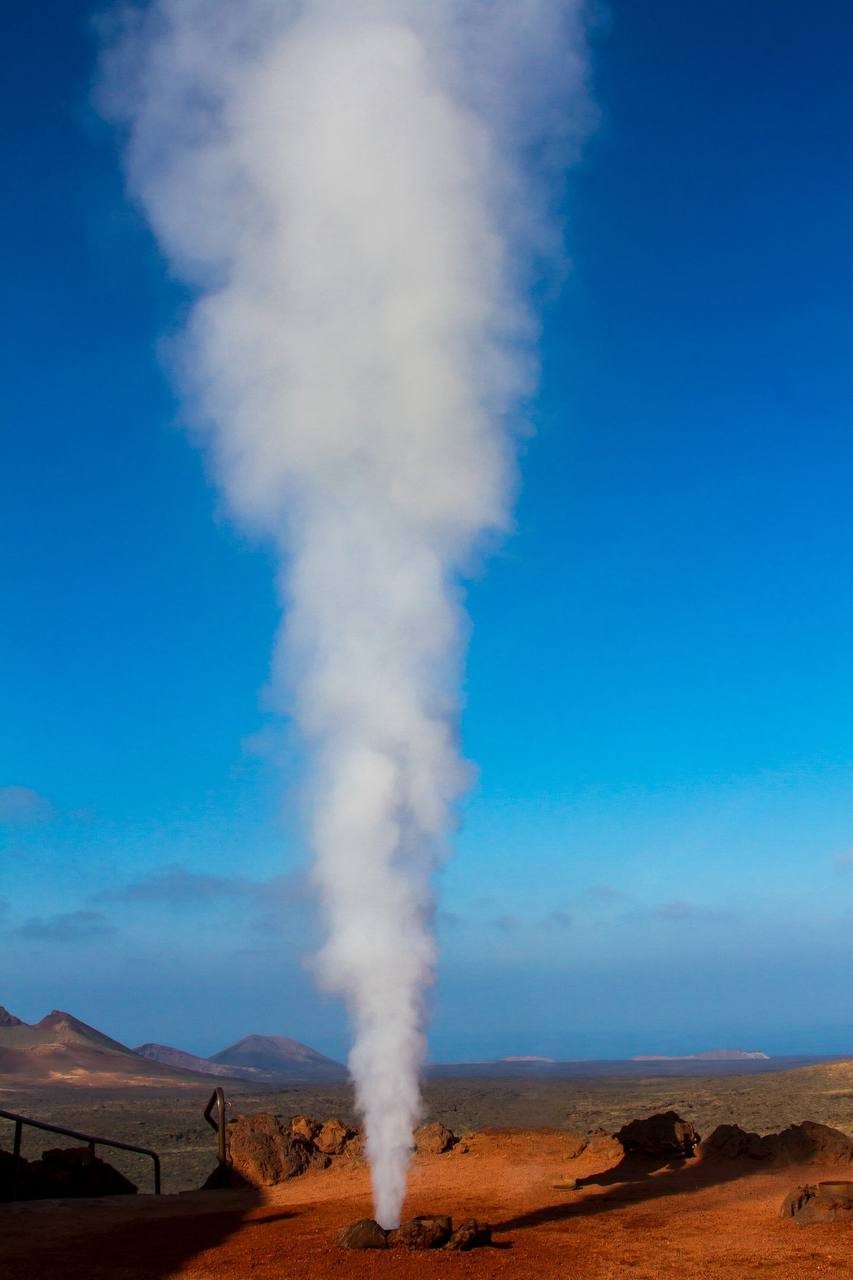
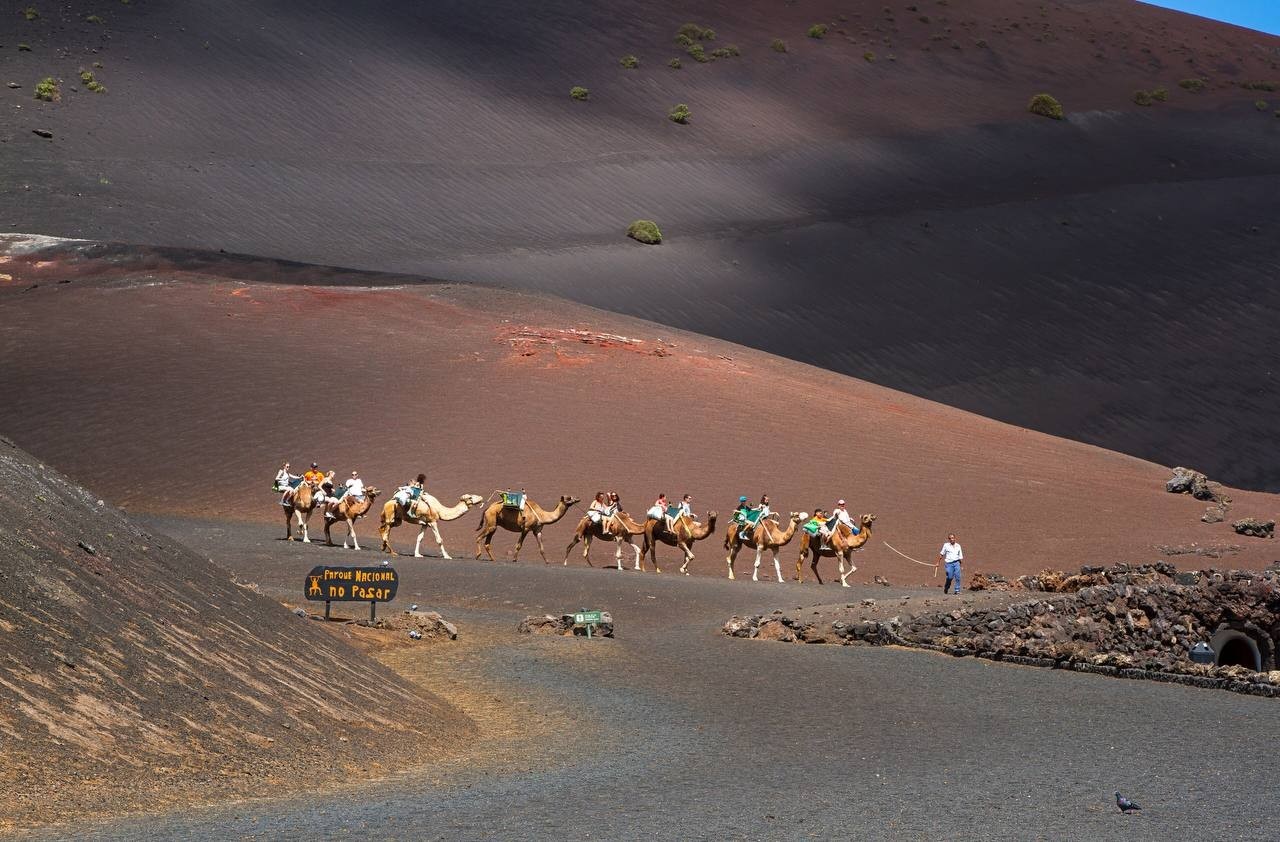
Volcanoes National Park - Timanfaya, located in Lanzarote, is the visiting card of the island! On the territory of the park above the underground flow of magma, there is a restaurant "El Diablo", designed by the artist Caesar Manrique, on which Mater himself and his colleague with neighboring Fuerteventura, Jesus Soto worked. The temperature here is only a few meters from the surface of the earth reaches 400 degrees Celsius, which is what the restaurant uses, preparing excellent steaks in the natural heat.
This is the same "hell" grill from the vent of the volcano! By the way, the steaks are excellent, checked personally on the set of the popular travel show “Eagle and Tails” about the Canary Islands, in which your humble servant worked as a guide to the islands.
We will see how nature and human genius worked to create art ensembles integrated into volcanic caves.
We will visit a residential house built into lava bubbles, where the juicy style of Ibiza, the eclecticism of Tunisia, is steeply mixed, and all this is seasoned with a pinch of Morocco!
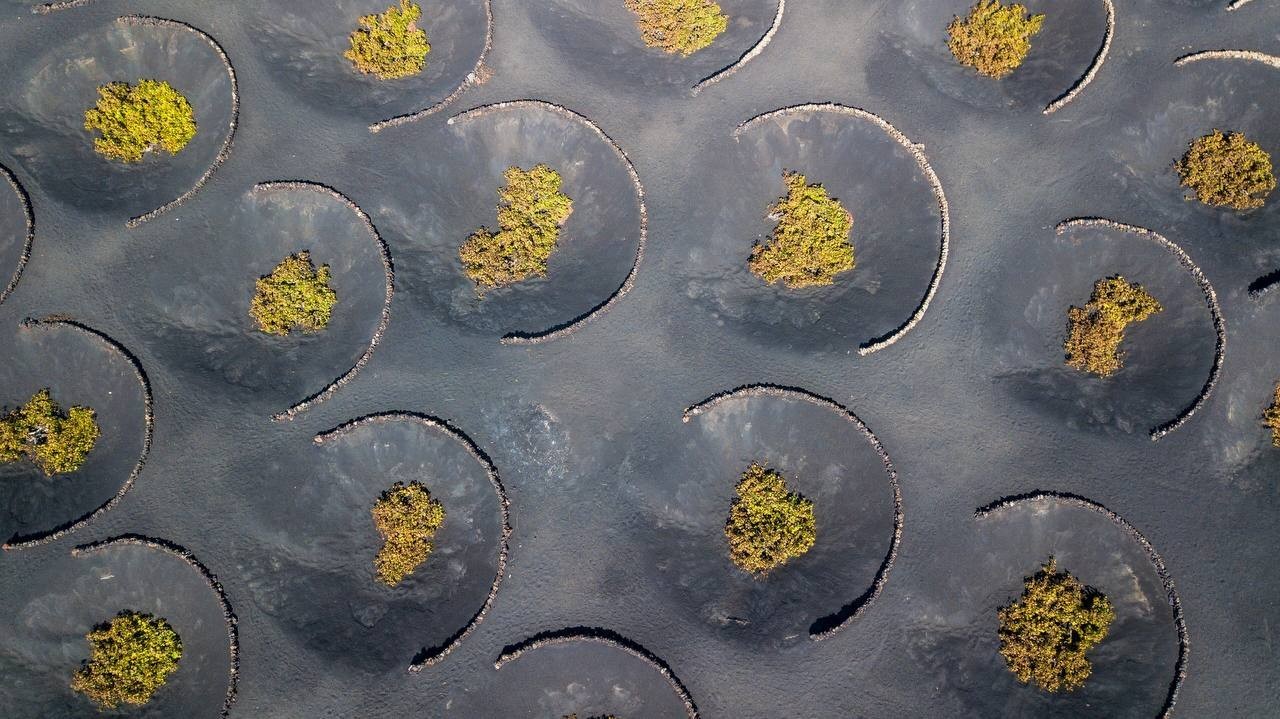
We will find out what Lanzarote lived and breathed before the Conquista, and how things are now. We'll taste aboriginal food, drink juice from cacti fruit, taste volcanic wine. And the way of growing vineyards will amaze you, because there are no such landscapes anywhere else in the world, no wonder Hollywood bosses choose Lanzarote for filming movies! Well, we'll keep up.
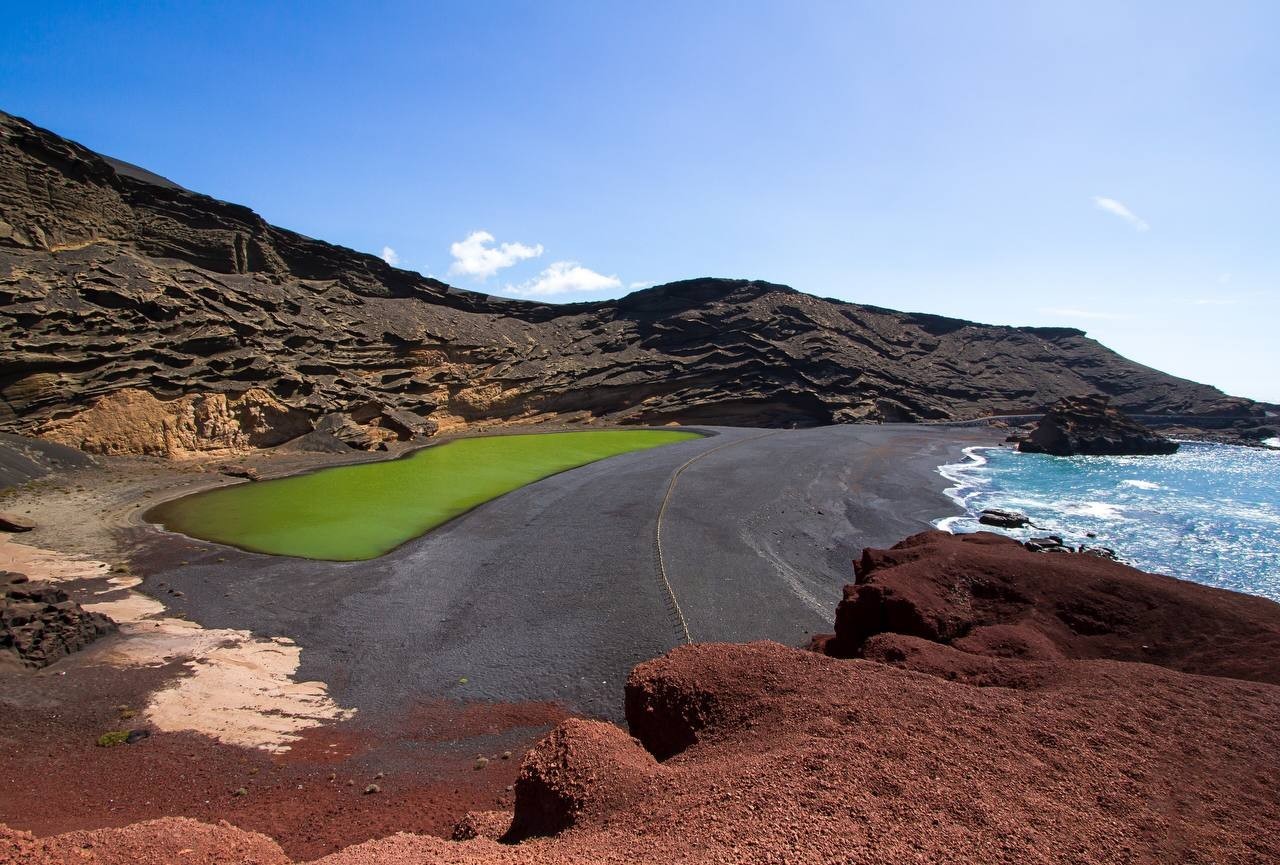
Go to the surreal “green” lake from which Rachel Welsh came out, on the set of the movie “A Million Years BCE”, ride along the roads through frozen lava rivers, as does BMW, Mercedes, Maserati, Lamborghini and other car brands, advertising their iron horses!
We can replace the Timanfaya Volcanoes National Park with the neighboring Natural Park, the entrance is free.
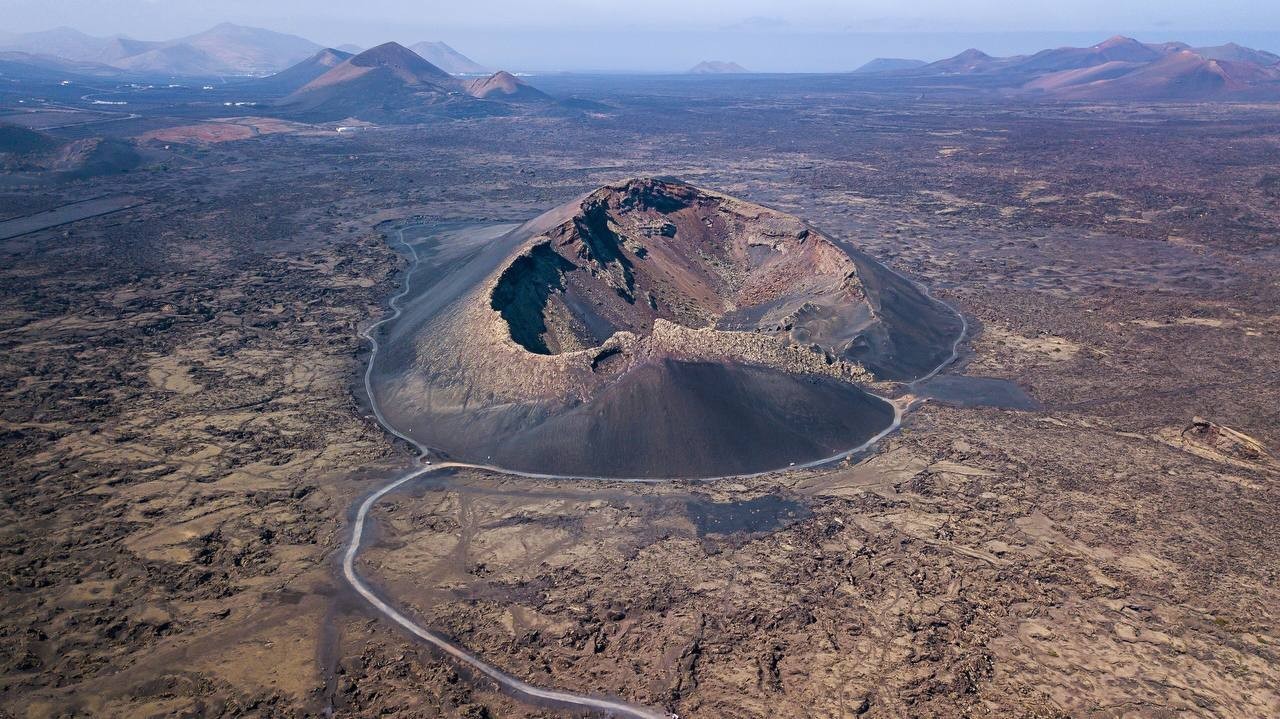
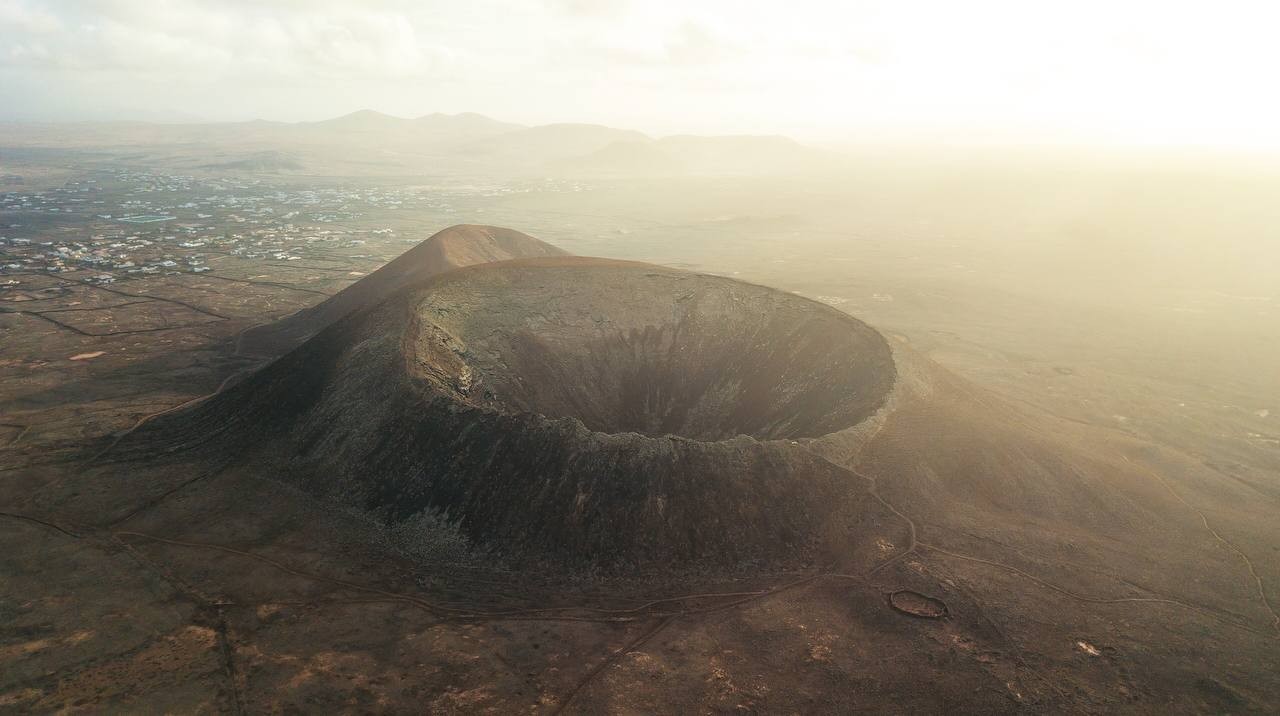
In this park is the famous volcano "crow" volcano, it was from it that began what now determines the appearance of Lanzarote, a six-year volcanic eruption! It was he who gave birth to the Timanfaya Volcanoes National Park. Entrance here is free, you can walk everywhere, go to the crater lying on the ground, soak up its energy and, of course, make a wish!
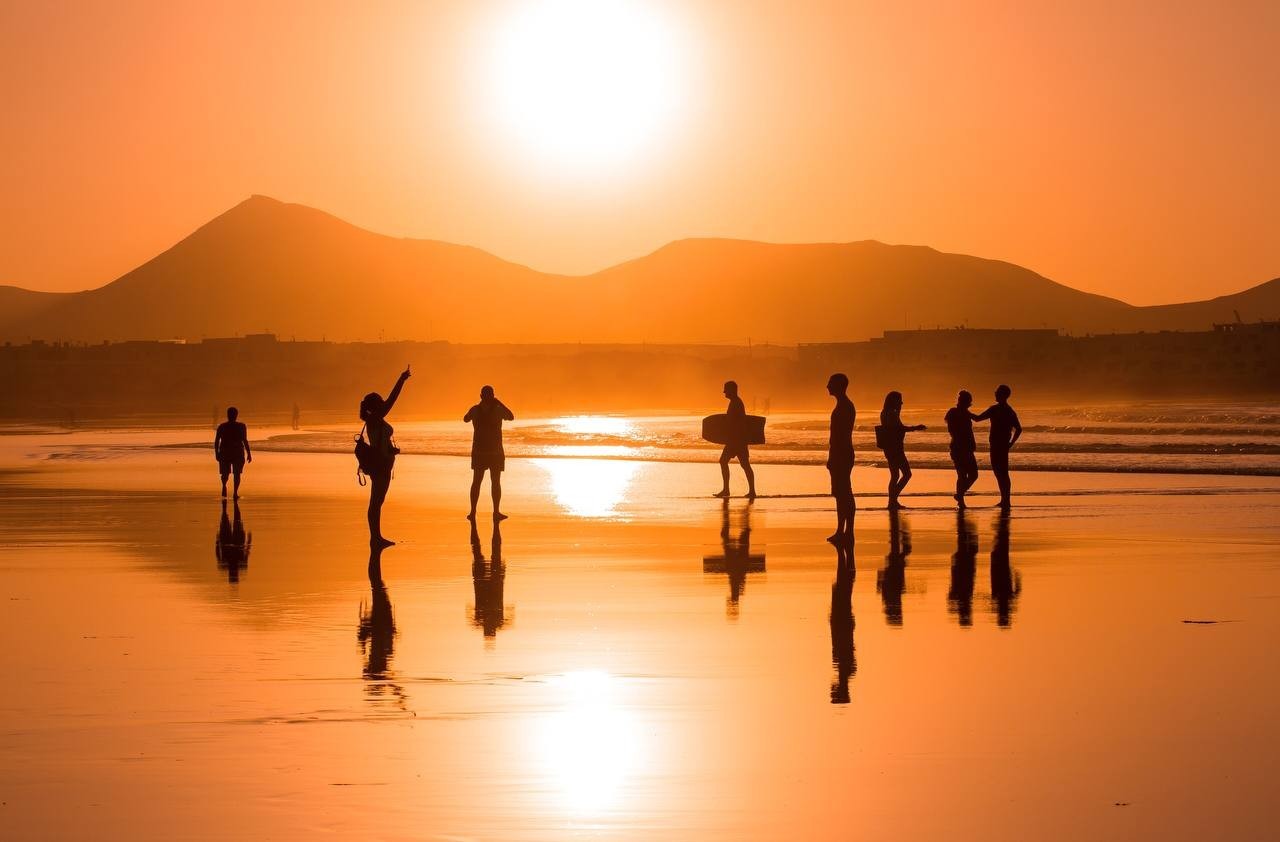
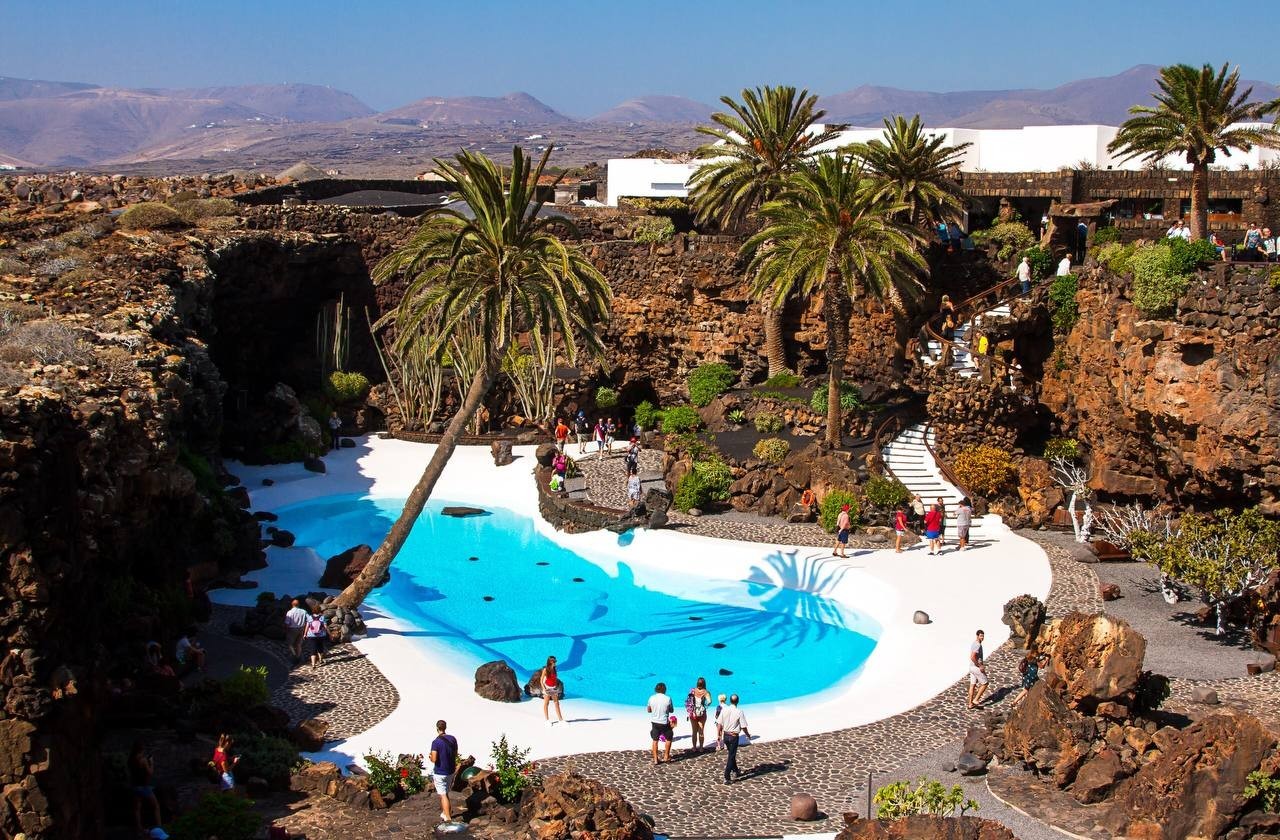
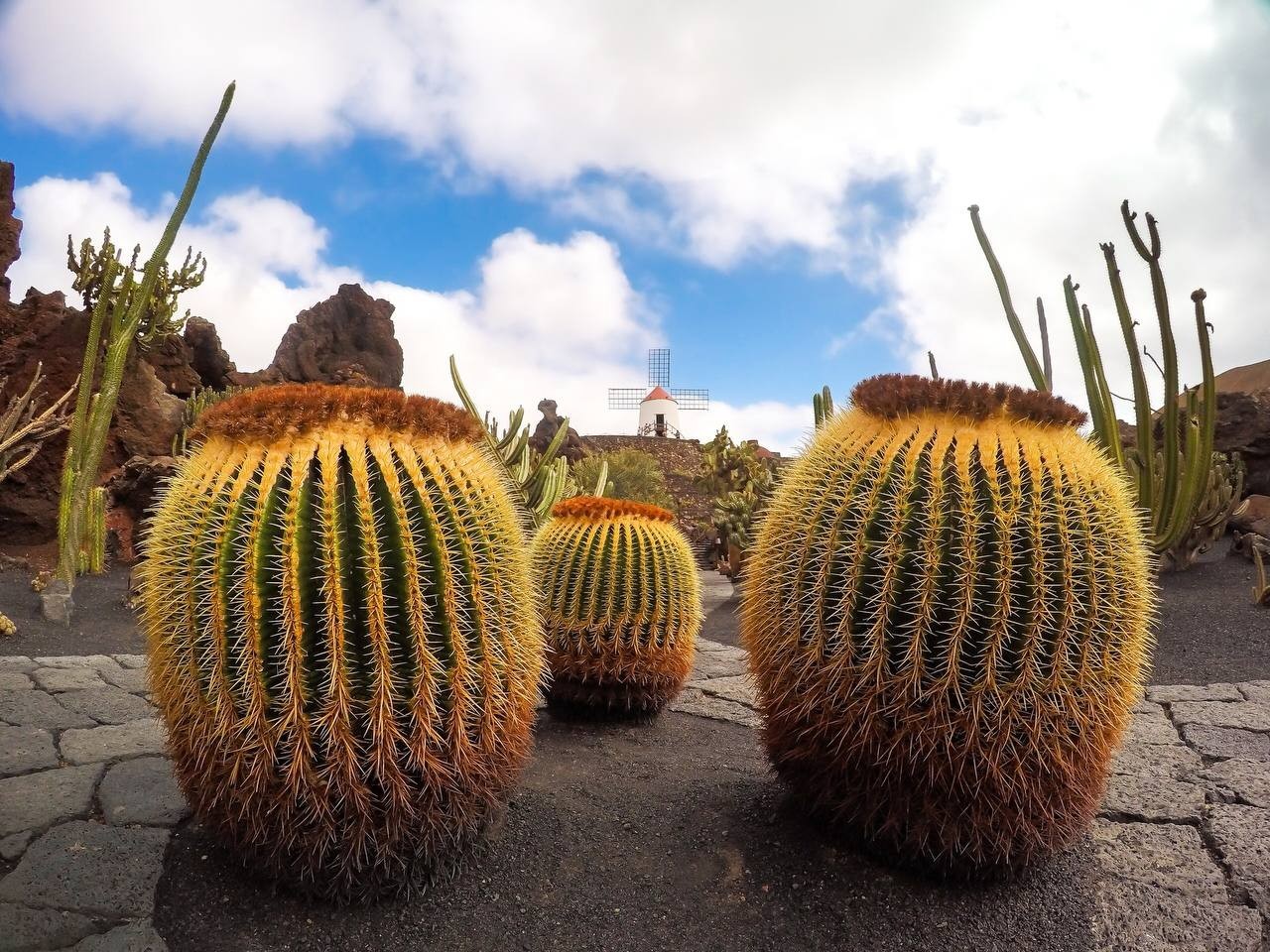
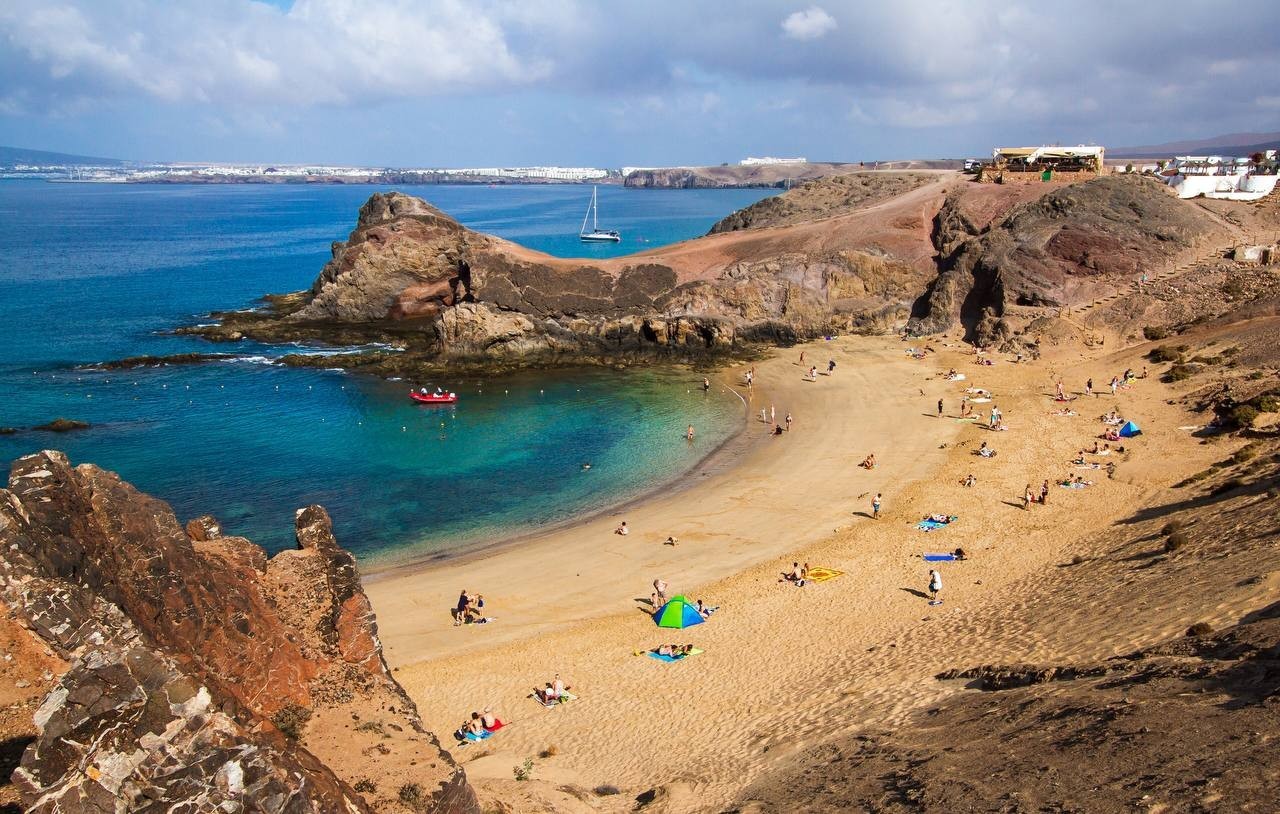
In the northern part of the island, we will look at the neighboring small archipelago, whose name means “baby” from Aboriginal, which is the largest marine reserve in Europe, and this view is the most beautiful in the entire Canary archipelago! We will see the first and last creations of the brilliant artist Caesar Manrique, commissioned by the state. The first is a volcanic cave, transformed into an art ensemble, and now it is a museum, a restaurant, and a place for various events, and bohemian parties from Europe and around the world! The latter is the Cactus Garden, integrated in the form of labyrinths into the old quarry: there are thousands of plants, as well as this place for events, filming, because Lanzarote is an island - a transformer, and functionality - its middle name: day museum, evening - disco. We will visit the houses of Manrique, where the artist lived, worked, walked, because he loved life so much, and she reciprocated him! We will visit the most beautiful beach of the archipelago, where Manrique spent his childhood, and the village on the ocean will amaze you with its identity, and you may want to stay here forever!
Fuerteventura:
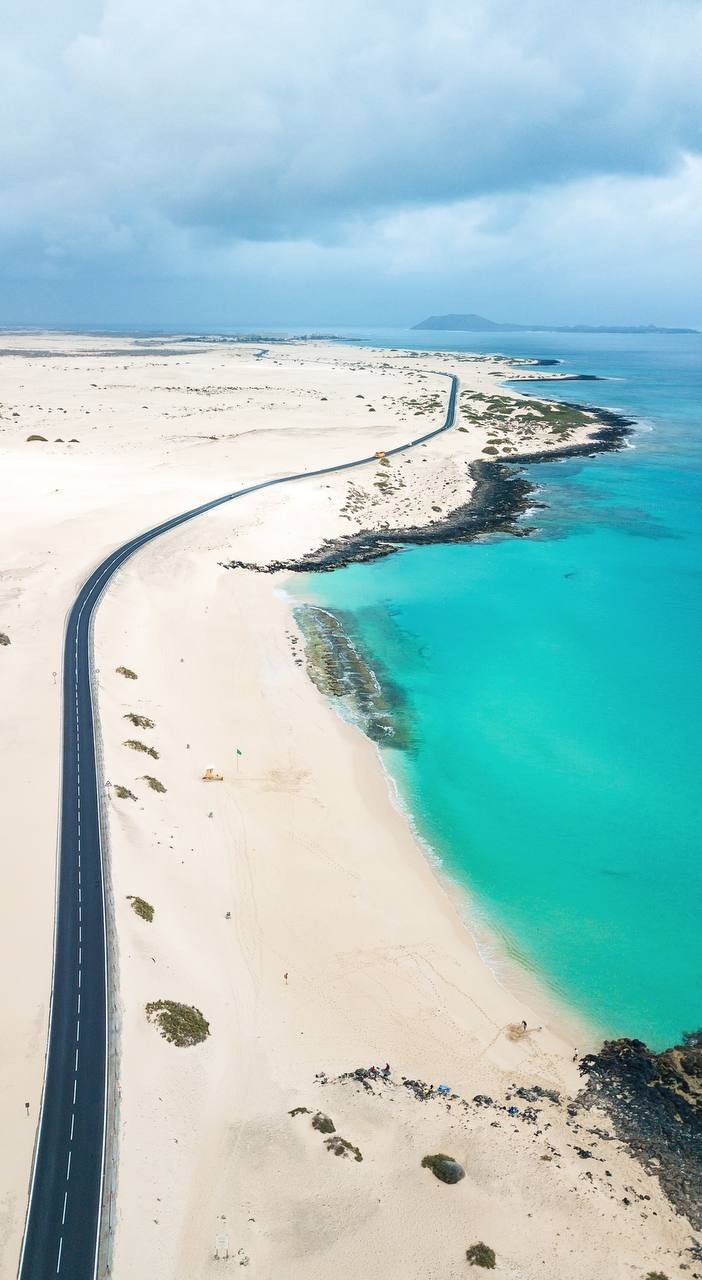
Fuerteventura is the largest, by Canary standards, the second largest island after Tenerife and the oldest of the entire archipelago, 20 million years old! It is the closest island to Africa, only 98 km to Morocco. We will drive along the mountain range in the center of the island through observation decks, go down to the filming locations - oases, the Hollywood film "Eternals", which was recently filmed on Lanzarote and Fuerteventura. We will visit the ancient capitals of the island, at will, dine with a goat, this is one of the symbols of the island, feed the Maghreb squirrels and other inhabitants of the Fuerta mountains. Driving through the main resort town of Corralejo, the capital of surf life of the archipelago, the atmosphere here is incredible! We will walk in the Dune Natural Park, swim on white beaches, try local cheese (one of the best in the world, Fuerteventura is the winner of all the “cheese” competitions on a global scale), see the sacred place of the aborigines - Tindaya volcano, visit the place where the Norman Knights-Conquistadors landed in the early 15th century!
The island has a romantic name (Spanish fuerte - "strong", "reliable" and ventura - "luck", "happiness").
The oldest island of the Canary archipelago, the second largest and closest to Africa. Although there is evidence that Lanzarote and Fuerteventura were a single island.
18,000 years ago, they were separated by rising sea levels.
Fuerteventura is the beaches of the Canary Islands! This is game, power, and, in general, a place where you can get lost! They make films about what the world was like in the beginning!
Well, we will ride through the filming locations of blockbusters!
Gran Canaria: a continent in miniature.
In one day, you will travel from banana plantations to clouds: colonial streets, pine forests, sacred canary rocks and a volcanic crater. The mountains of the island are included in the UNESCO World Heritage List.
Arukas. Start in the Banana Capital of the Island. Here they make the famous rum, and on the colonial streets it is pleasant to just wander without haste.
Teror. An ancient town with cozy squares and the religious capital of the island. The basilica houses a statue of the patroness of Gran Canaria, Our Lady of Pinault.
Tejeda. On the mountain serpentine, past the traditional villages, climb to Cruz de Tejeda, one of the most beautiful villages in Spain. We will make a gastronomic pause: almond sweets, local liqueurs and cheeses.
Roque-Nublo. Through the observation deck overlooking the sacred mountains of the Canarian aborigines, we will leave the pine forest to Roque Nublo, “The Rock in the Clouds”. For the ancient inhabitants of the island it was a sacred place.
Pico de las Nieves. The highest point of the island. In clear weather, you can see the dunes of Maspalomas, deep gorges and the neighboring Tenerife with the Teide volcano (3718 m, the highest point of Spain).
Bandama. Final route: the largest crater of the island, the age of the last eruption is about 2000 years. The scale and views from here are impressive.
Duration: 7+ hours.
La Palma. The island is called Isla Bonita.
Green slopes, black volcanic sand, clouds flowing through mountain ranges, and the night sky, in which there are more stars than seems possible. La Palma is not as popular as its neighbors, and that is why it is considered a real pearl of the archipelago.
Caldera de Taburiente. Start with the main thing. From the port we go to the national park with a huge crater, deep gorges and pine forests. The scale here is such that conversations subside on their own.
The Miradors of Tayu and El-Time. Further along the observation decks: Mirador de Tauya and Mirador el-Time, from where the valley of Los Llanos de Aridane opens. Below you can see the lava flows left after the eruption of Cumbre Vieja.
Cumbre Vieja. In September 2021, a volcano in the south of the island woke up and erupted for almost three months. This is the longest eruption on the island in the history of observations. Today, a new life is already making its way on the site of the streams, and the locals talk about it without pathos, just as what happened.
Santa Cruz de la Palma. We return across the south of the island and end the day in the capital: colonial streets, colored houses with wooden balconies, squares where you want to stay longer.
La Palma sky. The island is considered one of the best places in the world to observe the stars. The highest point, Roque de los Muchachos (2426 m), stands next to the Observatory of the Astrophysical Institute of the Canary Islands, one of the largest in Europe.
Duration: 7+ hours.
Tenerife. The island where the volcano lives
Moonscapes, black glass obsidian, millennial dragon trees and pirate coves. Tenerife can surprise in a day more than any other island in the archipelago.
Teide National Park. Start with the main thing. The most visited national park in Spain and the most popular place on the island. The huge Las Cañadas caldera crowns Tenerife, and around the lava of all shades, from rusty to emerald, the black shine of obsidian and bizarre igneous sculptures. Plants here are special, they grow only in these places. On the way back to the coast, we will pass along the northeastern ridge, where the road goes into dense forests.
Icod de los Vinos. A city in the Icod Valley, one of the island's wine-growing areas. For several centuries, the landowners lived here, and ancient mansions are still visible. The main pride of the city, the Dragon Tree, whose age is estimated by locals in hundreds, and according to legend, thousands of years. This is one of the most famous dracens in the world.
Garachico. The guides call it the “Tenerife Pompey”. In 1706, an eruption covered the main port of the island with lava, but people were saved. Today on the frozen lava lie natural pools where you can swim.
The mask. A tiny village in a gorge where you can't just get there. According to legend, pirates hid the loot here, and the locals jokingly consider themselves descendants of Robert Blake. Narrow paths, stone houses and the silence from which you wean yourself in ordinary life.
Duration: 7+ hours.
Madeira. Island of Eternal Spring
For a cruise day, it's a itinerary in one breath: in six hours you'll see the capital, a fishing village with history, one of Europe's highest sea cliffs and a valley tucked away among the mountains. We return you on board in advance, without haste and with time.
Funchal. We start with a sightseeing trip around the capital: the promenade, the statue of Cristiano Ronaldo (he comes from Madeira), the old town with narrow streets, the flower and fruit market and the Municipality Square.
Camara de Lobos. A quiet fishing village with colorful boats that Winston Churchill loved. He came here to paint, and still in the village show the places where his easel was. Ponsha, the island's main drink, was born here and local cocktails including nickita can be tasted.
Kabu-Girau. One of the highest sea cliffs in Europe, about 580 meters above the ocean. On the glass observation deck there is a void underfoot and far below the wave. Entrance is €5 per person.
Pico douche Barcelona. Circular observation deck at an altitude of 355 meters. Funchal is visible as in the palm of your hand, from the port to the hills, and you can find your liner with your eyes.
Kurral-dash-Freiras, Valley of the Nuns. We go to the center of the island, to the observation deck above the valley, which lies in the bowl of an ancient volcanic crater surrounded by mountains. Nuns used to hide from pirates here. In the village we try chestnut liquor and traditional honey gingerbread.
Return to Funchal. There is little time left for coffee, souvenirs or another lap along the promenade.
Duration: 6+ hours.
Photographs (16)
Excursions (16)

Civilization did not destroy Lanzarote, it tried to make friends with him. There are no banners on Lanzarote, locals build houses …

In the Canary archipelago, Fuerteventura is the second largest after Tenerife. The island is only 90 km from the coast of Morocco. …

The Canary Islands are made for walking! Especially an unusual place like Lanzarote! On the island, the only one among all the isl …

The eruptions of the Timanfaya volcanoes, which occurred between 1730 and 1735, changed the course of Lanzarote and its landscape. …

After the eruptions of Timanfaya in the 18th century, the people of Lanzarote were forced to accept a new reality! And they found …

La Cororna is located in the north of Lanzarote. This majestic volcano erupted about 18 thousand years ago, and it formed a volcan …


